58 Results for "

PANC1

" in MedChemExpress (MCE) Product Catalog:
Products (58)

58 Results for "PANC1" in MCE Product Catalog:

Cat. No.: HY-173477
CAS No.: 2446965-04-2
Target:  

Apoptosis

Research Areas:  

Cancer

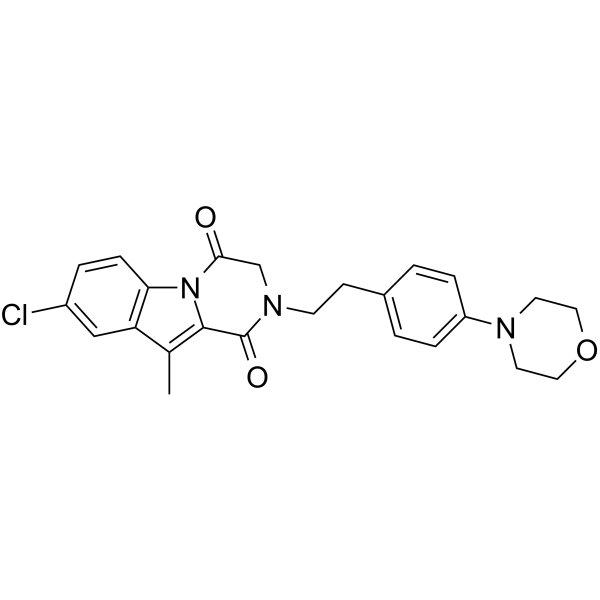
JR5-26B is an orally active apoptosis inducer. JR5-26B induces cell death through copper-mediated apoptosis and necroptosis. JR5-26B exhibits antiproliferative activity on MIA PaCa-2, PANC-1, PAN02, SU.86.86, and KPC-2 cells with IC50s of 0.6, 4.4, 8.0, 1.1, and 3.4μM, respectively [1].
loading...
    loading...
Cat. No.: HY-N8270
CAS No.: 70241-09-7
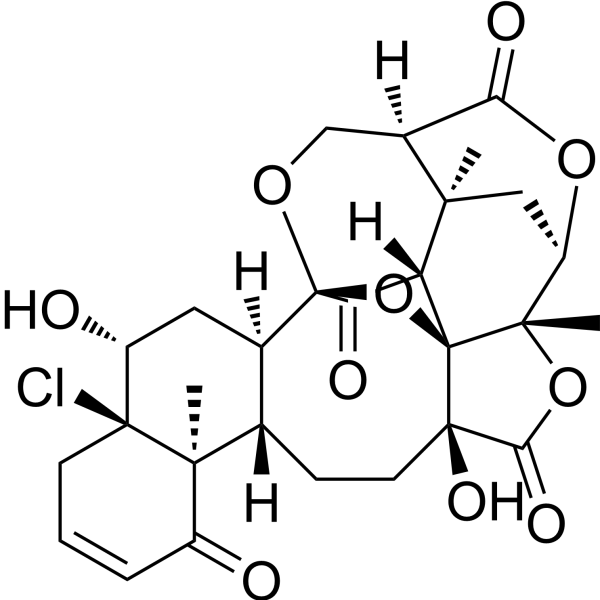
Physalin H is a natural product that can be isolated from Solanum nigrum. Physalin H is an inhibitor of Hedgehog (Hh) signaling and it disrupts GLI1-DNA-complex formation. Physalin H inhibits GLI1 transcription with an IC50 value of 0.7 μM. Physalin H shows cytotoxicity to PANC1 and DU145 cells with IC50 values of 5.7 and 6.8 μM, respectively [1].
loading...
    loading...
Cat. No.: HY-161858
Target:  

PI3K Akt Apoptosis

Research Areas:  

Cancer

EpskA21 is an inhibitor for PI3K/AKT signaling pathway, and inhibits the proliferation of cancer cells MCF-7, A549, MIA-PaCa-2, Panc-1 and HepG2, with IC50 of 1.3-7.24 μM. EpskA21 inhibits the cell migration, arrests the cell cycle at G2/M (MCF-7) and S (MIA-PaCa-2) phase, and induces apoptosis in MCF-7 and MIA-PaCa-2. EpskA21 causes the mitochondrial dysfunction [1].
loading...
    loading...
Cat. No.: HY-158328A
CA IX/VEGFR-2-IN-2 (compound 5e) is a dual-targeted inhibitor. CA IX/VEGFR-2-IN-2 shows strong inhibitory effects on both CA IX (Ki=3.1 μM) and VEGFR-2 (IC50=32.1 nM). CA IX/VEGFR-2-IN-2 can be used for the study of pancreatic (PANC1), breast cancer (MCF7) and prostate cancer (PC3) [1].
loading...
    loading...
Cat. No.: HY-179140
Target:  

EGFR VEGFR Apoptosis

Research Areas:  

Cancer

EGFR/VEGFR2-IN-8 (compound 10k) is a dual EGFR/VEGFR-2 inhibitor (EGFR IC50 = 57 nM, VEGFR-2 IC50 = 21 nM). EGFR/VEGFR2-IN-8 has anti proliferative activity against various tumor cells, such as MCF-7 (IC50 = 20 nM), Panc-1 (IC50 = 22 nM), A-549 (IC50 = 23 nM), HT-29 (IC50 = 23 nM) cells. EGFR/VEGFR2-IN-8 has antioxidant and apoptosis inducing activity. EGFR/VEGFR2-IN-8 can be used for research on various types of cancer [1].
loading...
    loading...
Cat. No.: HY-161859
Target:  

VEGFR STAT

Research Areas:  

Cancer

VEGFR-2/STAT-3-IN-1 (Compound 9f) is a dual inhibitor for VEGFR-2 (IC50=26.3 nM) and STAT-3 (IC50=5.63 nM). VEGFR-2/STAT-3-IN-1 inhibits the proliferation of cancer cells PANC1 and PC3 with IC50 of 0.14 and 0.10 µM. VEGFR-2/STAT-3-IN-1 induces apoptosis in PC3 [1].
loading...
    loading...
Cat. No.: HY-147825
CAS No.: 2492429-45-3
Target:  

EGFR Raf Apoptosis

Research Areas:  

Cancer

EGFR/BRAFV600E-IN-1 (Compound 23) is a potent EGFR and BRAF V600E dual inhibitor with IC50s of 0.08 and 0.15 µM, respectively. EGFR/BRAFV600E-IN-1 induces apoptosis and cell cycle arrest in both pre-G1 and G2/M phases. EGFR/BRAFV600E-IN-1 exhibits antiproliferative activity againist A-549, MCF-7, Panc-1, HT-29 with IC50s of 1.2, 0.79, 1.3, and 1.23 µM, respectively [1].
loading...
    loading...
Cat. No.: HY-158726
CAS No.: 2480150-28-3
Complex 3 is a fluorescent dithiocarbazate-copper complex with anticancer activity, which localizes to mitochondria. Complex 3 displays excitation/emission maxima of 455-495/535 nm, respectively. Complex 3 inhibits the growth of BxPC-3, AsPC-1, PANC-1, and WI38 pancreatic cancer cells with IC50 values of 0.74, 0.41, 0.62, and 2.06 µM, respectively. Complex 3 induces lipid peroxidation and mitochondrial rupture and shrinkage in AsPC-1 cells. Complex 3 also induces mitochondrial apoptosis and cytokine-cytokine receptor interaction dysfunction in AsPC-1 cells. Complex 3 reduces tumor volume in an AsPC-1 mouse xenograft model [1].
loading...
    loading...
Cat. No.: HY-159577
CAS No.: 2896739-91-4
Target:  

PI3K mTOR Akt

Research Areas:  

Cancer

Nic-15 (compound 4n) is an anti-constrictive agent used to antagonize the hypovascularity of pancreatic tumors. The hypovascularity allows cancer cells to adapt to the nutrient-deficient tumor microenvironment and develop drug resistance. Nic-15 can regulate the PI3K/Akt/mTOR pathway and alleviate ER stress induced by Gemcitabine (HY-17026). Nic-15 can significantly inhibit the migration and colony formation of MIA PaCa-2 and PANC-1 pancreatic cancer cells. The combination of Nic-15 and Gemcitabine can effectively solve the problem of pancreatic tumor resistance. In an in vivo xenograft model, Nic-15 can significantly enhance the efficacy of Gemcitabine [1].
loading...
    loading...
Cat. No.: HY-169006
CAS No.: 2820245-53-0
Target:  

Apoptosis PKC

Research Areas:  

Cancer

Evo312 is a dose-dependent inhibitor of protein kinase CβⅠ (PKCβⅠ) (IC50 is 117.34 nM). Evo312 induces PANC-GR (acquired gemcitabine-resistant PC cells) cell cycle arrest and apoptosis by inhibiting PKCβ1 protein expression. Evo312 has antiproliferative effects in pancreatic cancer cells PANC-1 and PANC-GR cells with IC50 of 0.08 μM and 0.07 μM, and in human normal pancreatic ductal epithelial cells HPDE6-c7 with IC50 of 2.95 μM. Evo312 exhibits antitumor activity in a PANC-GR cell transplantation mouse model [1].
loading...
    loading...
Cat. No.: HY-123597
CAS No.: 15427-93-7
Synonyms: DDUG; NCI C04808
Research Areas:  

Cancer

NSC 109555 is an ATP-competitive inhibitor of checkpoint kinase 2 (Chk2; IC50=200 nM in a cell-free kinase assay). It is selective for Chk2 over Chk1 and 16 kinases in a panel but does inhibit Brk, c-Met, IGFR, and LCK with IC50 values of 210, 6,000, 7,400, and 7,100 nM, respectively. NSC 109555 inhibits Chk2 autophosphorylation and phosphorylation of the Chk2 substrate histone H1 in vitro (IC50=240 nM). It inhibits the growth of, and induces autophagy in, L1210 leukemia cells in vitro.2 NSC 109555 (1,250 nM) potentiates gemcitabine-induced cytotoxicity in MIA PaCa-2, CFPAC-1, PANC-1, and BxPC-3 pancreatic cancer cells, as well as reduces gemcitabine-induced increases in Chk2 phosphorylation and enhances gemcitabine-induced production of reactive oxygen species (ROS) in MIA PaCa-2 cells.
loading...
    loading...
Cat. No.: HY-169413
CAS No.: 1619929-59-7
Target:  

Akt

Research Areas:  

Cancer

AKT-IN-25 (Compound 14a) is an inhibitor for Akt, that inhibits the phosphorylation of Akt, and thereby inhibits the PI3K/Akt/mTOR signaling pathway. AKT-IN-25 arrests the cell cycle at G1 phase, inhibits the cell migration of PANC-1, and inhibits the proliferation of cancer cells PANC-1, PATU-T, and SUIT-2 with IC50s of 3.05, 1.32, and 3.85 μM, respectively [1].
loading...
    loading...
Cat. No.: HY-N21627
CAS No.: 1011528-65-6
Phanginin H is an Autophagy inducer with an IC50 of 18.13 μM in PANC-1 cells. Phanginin H induces Reactive Oxygen Species accumulation and mitochondrial depolarization, activates AMPK signaling, inhibits mTORC1/ULK signaling and promotes autophagic flux, and simultaneously induces G2/M phase cell cycle arrest, thereby inhibiting PANC-1 cell proliferation, spheroid formation, and migration. Phanginin H can be used in research related to pancreatic ductal adenocarcinoma [1] .
loading...
    loading...
Cat. No.: HY-N12989
CAS No.: 147022-95-5
3′-O-Demethylarctigenin is a phenolic compound that can be isolated from the seeds of Arctium lappa. 3′-O-Demethylarctigenin shows cytotoxicity for PANC-1 cells with an IC50 value of 4.38 µM [1].
loading...
    loading...
Cat. No.: HY-12440
CAS No.: 1363145-46-3
Target:  

IAP Apoptosis

Research Areas:  

Cancer

HM90822 is an orally active IAP antagonist. HM90822 induces ubiquitination and proteasome-dependent degradation of XIAP, cIAP1 and cIAP2 in sensitive pancreatic cancer cells. HM90822 induces Apoptotic cell death. HM90822 inhibits tumor growth in Panc-1 pancreatic cancer xenograft and orthotopic mouse models. HM90822 can be used for the research of pancreatic cancer [1].
loading...
    loading...
Cat. No.: HY-172748
CAS No.: 80657-58-5
Target:  

Drug Derivative

Research Areas:  

Neurological Disease Cancer

9β-Hydroxyhexahydrocannabinol is a synthetic cannabinoid derivative. 9β-Hydroxyhexahydrocannabinol exhibits cytotoxicity against various tumor cell lines, such as HCT-116, MCF-7, K562, MIAPaCa-2, PANC-1, A549, PC-3 and SW-620, with IC50 values ranging from 15.23 to 33.74 μM. 9β-Hydroxyhexahydrocannabinol can be used in the study of cancer [1].
loading...
    loading...
Cat. No.: HY-N16695
CAS No.: 62043-50-9
(2S,3S)-Pterosin S 14-O-glucoside is a sesquiterpene glycoside compound that can be isolated from the fern Pteris multifida. (2S,3S)-Pterosin S 14-O-glucoside showed no significant cytotoxicity against A549 (human lung adenocarcinoma), LOVO (colon adenocarcinoma), PANC-1 (human pancreatic cancer), and NCI-H446 (human small cell lung cancer) cell lines (IC50 > 100 μM) [1].
loading...
    loading...
Cat. No.: HY-179484
CAS No.: 2915282-32-3
Research Areas:  

Cancer

KRASG12C IN-19 is a selective and orally active KRAS G12C inhibitor. KRASG12C IN-19 exerts potent antiproliferative activity against the KRAS G12C-mutant non small cell lung cancer (NSCLC) cell line H358 with an IC50 of 7.6 nM, and effectively suppresses downstream ERK phosphorylation (IC50 = 24.06 nM). KRASG12C IN 19 has no significant inhibitory activity against KRAS G12V and KRAS G12D-mutant cancer cells (PANC 1, Panc, AsPC 1, and GP2d cells) with IC50 > 10,000 nM. KRASG12C IN-19 rapidly forms a covalent bond with KRAS G12V-GDP, leading to dose-dependent inhibition of the downstream KRAS pathway. KRASG12C IN 19 can be employed for research in KRAS G12C driven cancers, including non small cell lung cancer, pancreatic cancer, and colorectal cancer [1].
loading...
    loading...

