
1112 Results for "

basic

" in MedChemExpress (MCE) Product Catalog:
Products (1112)

1112 Results for "basic" in MCE Product Catalog:

1
1 Cited Publications
Cat. No.: HY-W854445
CAS No.: 80081-06-7
Lewis-b tetrasaccharide is a class of biochemical reagents used in glycobiology research. Glycobiology studies the structure, synthesis, biology, and evolution of sugars. It involves carbohydrate chemistry, enzymology of glycan formation and degradation, protein-glycan recognition, and the role of glycans in biological systems. This field is closely related to basic research, biomedicine, and biotechnology .
loading...
    loading...
1
1 Cited Publications
Cat. No.: HY-P80671
Synonyms: FGF2; FGFB; Fibroblast growth factor 2; FGF-2; basic fibroblast growth factor; bFGF; Heparin-binding growth factor 2; HBGF-2

Host:  

Rabbit

Application:  

WB, IP, FC, IHC-P

Reactivity:  

Human, Mouse

loading...
    loading...
1
1 Cited Publications
Cat. No.: HY-P701228
Purity:  ≥ 90%, as determined by reducing SDS-PAGE.
Synonyms: TFEB; Class E basic Helix-Loop-Helix Protein 35; Transcription Factor EB; T-Cell Transcription Factor EB; BHLHe35; ALPHATFEB; TCFEB; BHLHE35
Species:  
Human
Source:  
E. coli
loading...
    loading...
1
1 Cited Publications
Cat. No.: HY-P80511
Synonyms: BHLHE39, MYC, Myc proto-oncogene protein, Class E basic helix-loop-helix protein 39, Proto-oncogene c-Myc, Transcription factor p64, bHLHe39

Host:  

Rabbit

Application:  

WB, ICC/IF, IHC-P, IP

Reactivity:  

Human

loading...
    loading...
1
1 Cited Publications
Cat. No.: HY-P80378
Synonyms: Ah receptor; Aromatic hydrocarbon receptor; Aryl hydrocarbon receptor; Aryl hydrocarbon receptor precursor; BHLHE76; Class E basic helix loop helix protein 76; HGNC:348; AHR_HUMAN.

Host:  

Rabbit

Application:  

WB, ICC/IF

Reactivity:  

Human

loading...
    loading...
1
1 Cited Publications
Cat. No.: HY-D0214A
CAS No.: 4159-77-7
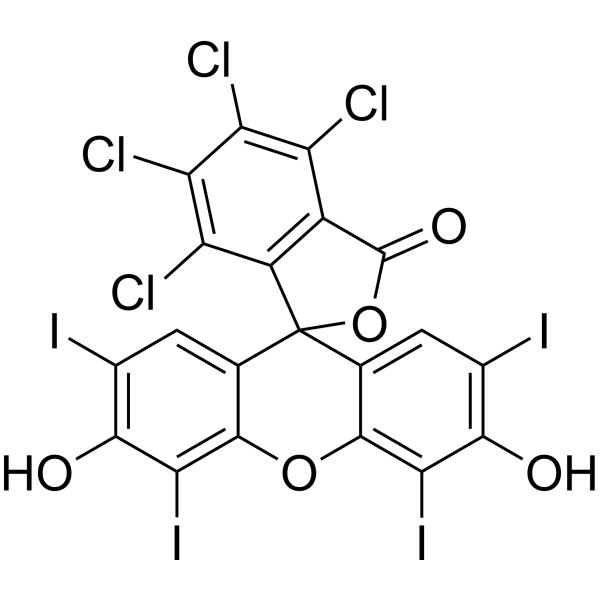
Acid Red 94 lactone is a multifunctional dye. Dyes are important tools in biological experiments. They can help researchers observe and analyze cell structures, track biomolecules, evaluate cell functions, distinguish cell types, detect biomolecules, study tissue pathology and monitor microorganisms. Their applications range from basic scientific research to clinical A wide range of diagnostics. Dyes are also widely used in traditional fields such as textile dyeing, as well as in emerging fields such as functional textile processing, food pigments and dye-sensitized solar cells.
loading...
    loading...
1
1 Cited Publications
Cat. No.: HY-D1223
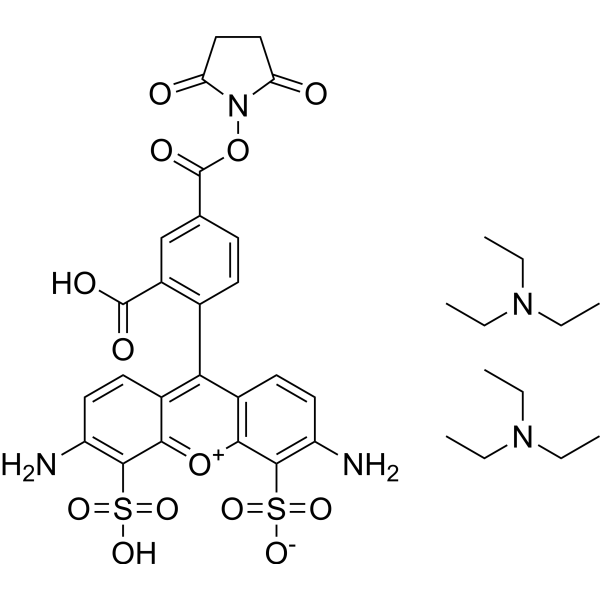
AF488 NHS ester diTEA is a multifunctional dye. Dyes are important tools in biological experiments. They can help researchers observe and analyze cell structures, track biomolecules, evaluate cell functions, distinguish cell types, detect biomolecules, study tissue pathology and monitor microorganisms. Their applications range from basic scientific research to clinical A wide range of diagnostics. Dyes are also widely used in traditional fields such as textile dyeing, as well as in emerging fields such as functional textile processing, food pigments and dye-sensitized solar cells. AF488 exhibits the λem and λex wavelength of 520 nm and 470 nm, respectively .
loading...
    loading...
1
1 Cited Publications
Cat. No.: HY-W110798
CAS No.: 115-39-9
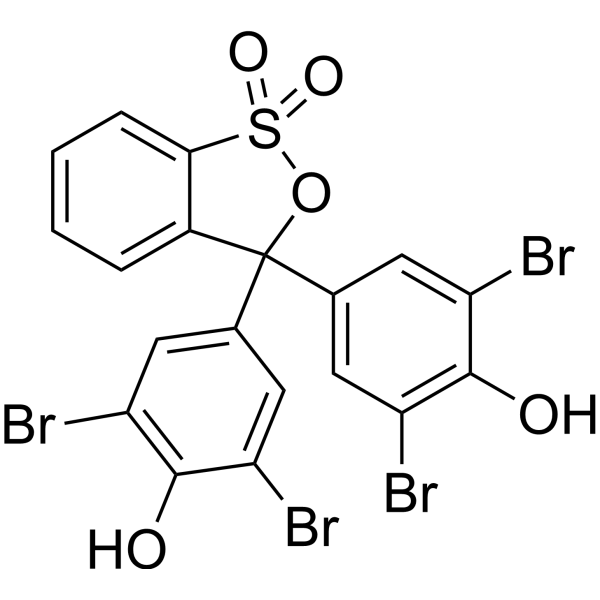
Bromophenol blue indicator (3.0-4.6) is a synthetic dye commonly used as an acid-base indicator with a transition range of pH 3.0-4.6. Bromophenol blue indicator (3.0-4.6) is water soluble and changes color from yellow to blue as the pH of the solution changes from acidic to basic. Its unique chemical properties make it an important ingredient in a variety of scientific applications, especially in biochemistry and molecular biology. In addition, it can be used as a stain in microbiology and histology. However, Bromophenol blue indicator (3.0-4.6) has potential irritating and staining properties.
loading...
    loading...
1
1 Cited Publications
Cat. No.: HY-P704066
Purity:  ≥ 95%, as determined by reducing SDS-PAGE.
Synonyms: MYC; V-Myc Myelocytomatosis Viral Oncogene Homolog; MYC Proto-Oncogene, BHLH Transcription Factor; Class E basic Helix-Loop-Helix Protein 39; BHLHe39; MRTL; Myc Proto-Oncogene Protein; V-Myc Myelocytomatosis Viral Oncogene Homolog (Avian), Isoform CRA_b;
Species:  
Human
Source:  
E. coli
loading...
    loading...
1
1 Cited Publications
Cat. No.: HY-P71282A
Purity:  ≥ 95%, as determined by reducing SDS-PAGE.
Synonyms: SEMA3C; Semaphorin-3C; Prev. SEMAE; Uncharacterized Protein SEMA3C; SemE; Semaphorin E; Sema Domain, Immunoglobulin Domain (Ig), Short basic Domain, Secreted, (Semaphorin) 3C; Semaphorin-E; Semaphorin 3C; Sema E
Species:  
Human
Source:  
HEK293
loading...
    loading...
1
1 Cited Publications
Cat. No.: HY-W040129
CAS No.: 7059-24-7
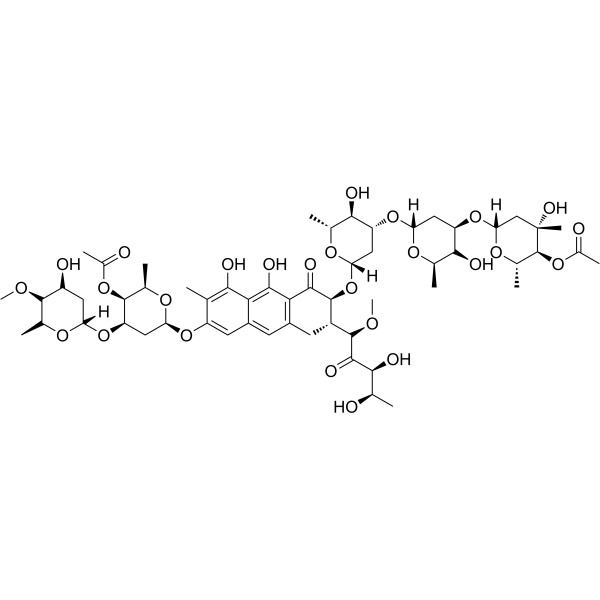
Chromomycin A3 is an inhibitor that selectively binds to GC-rich DNA sequences. Chromomycin A3 targets the DNA minor groove after forming a dimer with Mg 2+. Chromomycin A3 inhibits DNA replication and transcription, blocks the binding of Sp1 transcription factor to target gene promoters, downregulates the expression of anti-apoptotic proteins such as FLIP, Mcl-1, and XIAP, and induces S-phase cycle arrest and caspase-dependent apoptosis in tumor cells. Chromomycin A3 can antagonize oxidative stress induced by glutathione depletion and neuronal apoptosis induced by Camptothecin (HY-15660). Chromomycin A3 can be used in basic research on malignant tumors such as cholangiocarcinoma, and is a potential chemosensitizer and GC-rich region probe .
loading...
    loading...
1
1 Cited Publications
Cat. No.: HY-P71564
Purity:  ≥ 90%, as determined by reducing SDS-PAGE.
Synonyms: SEMA3A; Sema III; Prev. SEMAD; Semaphorin D; Hsema-I; Semaphorin L; Coll-1; Collapsin 1; SEMA1; Hsema-III; SemD; SEMAIII; Sema Domain, Immunoglobulin Domain (Ig), Short basic Domain, Secreted, (Semaphorin) 3A; COLL1; Semaphorin III; SEMAL; Semaphorin-3A;
Species:  
Rat
Source:  
E. coli
loading...
    loading...
1
1 Cited Publications
Cat. No.: HY-P80155
Synonyms: bHLHb39 antibody; C-HAIRY1 antibody; Class B basic helix-loop-helix protein 39 antibody; FLJ20408 antibody; Hairy and enhancer of split 1 antibody; Hairy homolog (Drosophila) antibody; Hairy homolog antibody; Hairy like antibody; Hairy, Drosophila, homolog of antibody; Hairy-like protein antibody; HAIRY1 antibody; HES-1 antibody; HES1_HUMAN antibody; HHL antibody; HL antibody; HRY antibody; MGC129109 antibody; OTTHUMP00000209031 antibody; RHL antibody; Transcription factor HES-1 antibody

Host:  

Rabbit

Application:  

WB, ICC/IF, IHC-P, FC

Reactivity:  

Human, Mouse, Rat

loading...
    loading...
Cat. No.: HY-D0203
CAS No.: 569-64-2
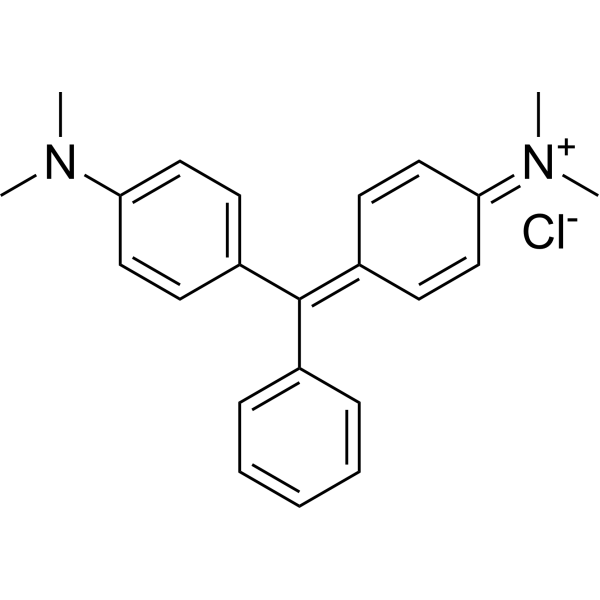
Synonyms: Malachite green
Basic green 4 (Malachite green) is a cationic dye that is widely used as a bactericide in aquaculture and is also commonly used in laboratories for the determination of phosphates. Basic green 4 exhibits high cytotoxicity and carcinogenicity to mammalian cells, specifically shown by its IC50 values of 2.03 µM for HEp-2 human laryngeal cells and 13.8 µM for Caco-2 human colorectal adenocarcinoma cells, and it can promote the development of liver tumors. The maximum absorbance wavelength is 621 nm .
loading...
    loading...
Cat. No.: HY-B1539A
CAS No.: 632-99-5
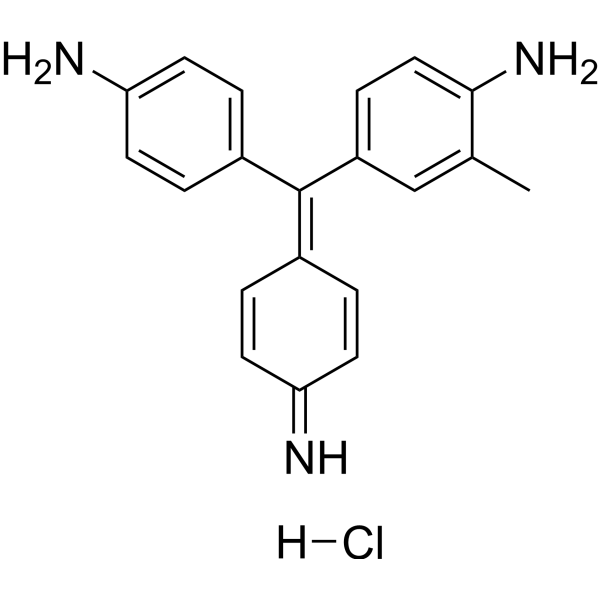
Synonyms: Magenta base monohydrochloride; basic Fuchsin monohydrochloride; Rosaniline Base monohydrochloride
Fuchsine base (Magenta base; Basic Fuchsin) monohydrochloride is a triaminotriphenylmethane dye. Fuchsine base monohydrochloride has anesthetic, bactericidal and fungicidal properties. Fuchsine base monohydrochloride can be used for the staining of collagen, muscle, mitochondria and tuberculosis. Fuchsine base monohydrochloride is commonly used as a counterstain in Gram staining .
loading...
    loading...
Cat. No.: HY-14536A
CAS No.: 61-73-4
Purity:  ≥95.0%
Synonyms: basic Blue 9 (purity≥70%); CI-52015 (purity≥70%); Methylthioninium chloride (purity≥70%)
Methylene blue (purity≥70%) is a guanylyl cyclase (sGC), monoamine oxidase A (MAO-A) and NO synthase (NOS) inhibitor. Methylene blue (purity≥70%) is a vasopressor and is often used as a dye in several medical procedures. Methylene blue (purity≥70%) through the nitric oxide syntase/guanylate cyclase signalling pathway to reduce prepulse inhibition. Methylene blue (purity≥70%) is a REDOX cycling compound and able to cross the blood-brain barrier. Methylene blue (purity≥70%) is a Tau aggregation inhibitor. Methylene blue reduces cerebral edema, attenuated microglial activation and reduced neuroinflammation .
loading...
    loading...
Cat. No.: HY-W127770
CAS No.: 569-61-9
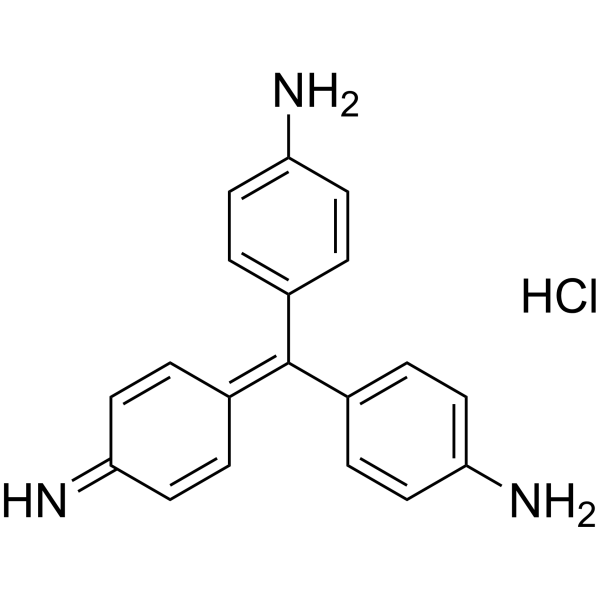
Synonyms: basic red 9
Target:  

Fluorescent Dye

Research Areas:  

Infection

Pararosaniline hydrochloride (Basic red 9) is a pH-responsive basic dye, as a biological stain to track certain proteins. The pH of the acidified Pararosaniline hydrochloride reagent has a significant effect on the color and the maximum absorption wavelength (λmax) of the reaction system, with its optimum pH 0.48 and a λmax at 549 nm. Pararosaniline hydrochloride is also a strong modifier of RNA splicing. Pararosaniline hydrochloride has been used in the analysis of SO2 and formaldehyde and staining of bacteria or other organisms. Pararosaniline hydrochloride is extensively used in industries like textile, printing, paper, cosmetic, and leather .
loading...
    loading...
Cat. No.: HY-W250147
CAS No.: 2580-56-5
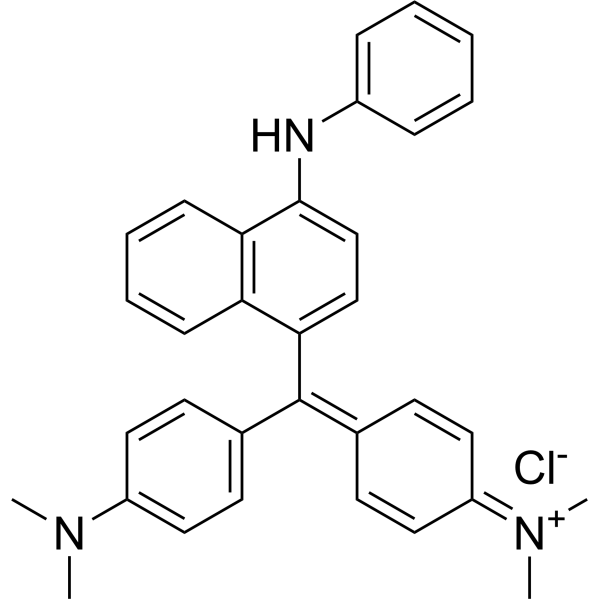
Synonyms: Victoria blue B
Basic blue 26 (Victoria blue B) is a synthetic cationic dye belonging to the class of triarylmethane dyes. It has a bright blue color and is commonly used as a colorant for a variety of applications, including textiles, paper and leather. Basic Blue 26 is also used as a biological stain for DNA and protein detection in laboratories. Due to its ability to bind negatively charged materials, it can be used as an indicator of the presence of specific molecules in biological samples. However, Basic blue 26 has been reported to have potentially harmful effects on human health and the environment and its use is regulated in some countries. Proper handling and disposal procedures are necessary to minimize its impact on the environment.
loading...
    loading...
Cat. No.: HY-P3601
CAS No.: 211362-85-5
Synonyms: FGF basic (1-24)
Target:  

Bacterial HBV

Research Areas:  

Infection Inflammation/Immunology

Brain Derived Basic Fibroblast Growth Factor (1-24) (FGF basic 1-24) is a synthetic peptide, shows anti-bacterial and anti-HBV activities. Brain Derived Basic Fibroblast Growth Factor (1-24) can be used in infection disease and immune disease research .
loading...
    loading...
Cat. No.: HY-P10532
CAS No.: 121196-80-3
Target:  

PKC

Research Areas:  

Others Inflammation/Immunology

Myelin basic protein, MBP (68-86) is the portion of the 68th to 86th amino acid residues in the MBP protein sequence. Myelin basic protein, MBP (68-86) can act as an autoantigen, triggering the immune system to attack its own myelin. Myelin basic protein, MBP (68-86) is used as one of the immunogens in the experimental autoimmune encephalomyelitis (EAE) animal model to study immune responses associated with multiple sclerosis (MS) .
loading...
    loading...

