
719 Results for "

enzyme substrate

" in MedChemExpress (MCE) Product Catalog:
Products (719)

719 Results for "enzyme substrate" in MCE Product Catalog:

Cat. No.: HY-D2379A
CAS No.: 7449-51-6
Target:  

Fluorescent Dye

Research Areas:  

Others

closed-HMRG is an HMRG (HY-D2379) with a closed spiro-ring structure. HMRG is a fluorescent dye, which serves as the fluorescent active product generated by enzyme-activated fluorescent probes targeting proteases and glycosidases. Its detection mechanism relies on the intramolecular spirocyclization equilibrium: HMRG itself exists in an open non-spirocyclic structure under physiological pH, which maintains a conjugated π system and produces strong fluorescence; whereas its probe precursors (such as Leu-HMRG, Ac-GlyPro-HMRG and βGal-HMRG) exist in a closed spirocyclic form and show no fluorescence due to the disruption of the π-conjugated system; when the target enzyme cleaves the substrate fragment linked to the probe precursor, the closed spirocyclic structure converts to the open structure of HMRG, restoring the conjugated system and generating a strong fluorescent signal. Its detection wavelength is Ex/Em = 501/524 nm .
loading...
    loading...
Cat. No.: HY-113143AS1
CAS No.: 478518-80-8
Purity:  99.16%
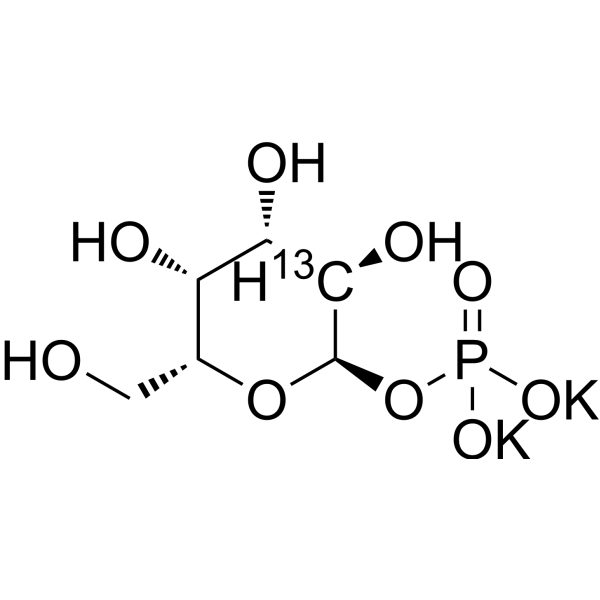
Galactose 1-phosphate- 13C-1 potassium is the 13C-labeled Galactose 1-phosphate Potassium salt (HY-113143A). Galactose 1-phosphate Potassium salt acts as a competitive substrate inhibitor of galactose-1-phosphate uridylyltransferase (GALT). Galactose 1-phosphate Potassium salt is a competitive inhibitor of Phosphoglucomutase, yet the rate at which this enzyme converts Galactose 1-phosphate to Galactose-6-phosphate is 400 times slower than the rate of converting Glucose-1-phosphate. Galactose 1-phosphate Potassium salt can be used in studies related to Saccharomyces cerevisiae infection and type I galactosemia .
loading...
    loading...
Cat. No.: HY-131586
CAS No.: 492-00-2
Synonyms: Resogalangin
3,7-Dihydroxyflavone (Resogalangin) is a flavonoid phytoestrogen, which can be isolated from Adenophora species. 3,7-Dihydroxyflavone is a modulator of estrogen receptors and an inhibitor of human progesterone metabolizing enzyme AKR1C1 and fungal 17β-hydroxysteroid dehydrogenase and a redox inhibitor (IC50=0.6 and 6.0 μM, respectively). 3,7-Dihydroxyflavone is a fluorescent binding substrate for human serum albumin (HSA) with excitation wavelengths of 370 nm (pH 7.4) and 350 nm (pH 3.5), respectively, and emission wavelength of 515 nm .
loading...
    loading...
Cat. No.: HY-90010R
CAS No.: 124937-52-6
Synonyms: Kabi-2234 (Standard); PNU-200583E (Standard)
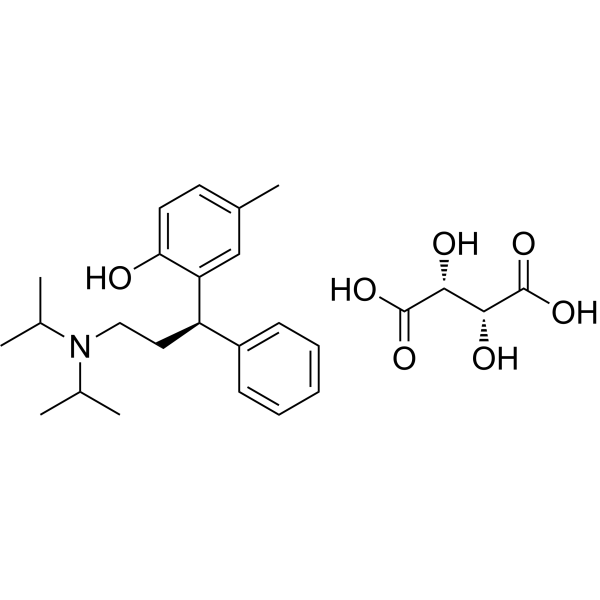
Tolterodine (tartrate) (Standard) is the analytical standard of Tolterodine tartrate. This product is intended for research and analytical applications. Tolterodine ((R)-(+)-Tolterodine) is a mAChR inhibitor and substrate for cytochrome P450 enzymes. Tolterodine competitively binds acetylcholine, reduces sympathetic excitation, and inhibits involuntary bladder muscle contraction. Tolterodine restores the Nrf2/NF-κB signaling pathway, mediates protection against inflammatory response and ferroptosis. Tolterodine ameliorates LPS (HY-D1056)-induced reactive oxygen species production and lipid oxidation. Tolterodine can be used for the research of urinary tract infections and overactive bladder.
loading...
    loading...
Cat. No.: HY-A0024R
CAS No.: 124937-51-5
Synonyms: (R)-(+)-Tolterodine (Standard); (+)-Tolterodine (Standard); (R)-Tolterodine (Standard); PNU-200583 (Standard)
Tolterodine (Standard) is the analytical standard of Tolterodine. This product is intended for research and analytical applications. Tolterodine ((R)-(+)-Tolterodine) is a mAChR inhibitor and substrate for cytochrome P450 enzymes. Tolterodine competitively binds acetylcholine, reduces sympathetic excitation, and inhibits involuntary bladder muscle contraction. Tolterodine restores the Nrf2/NF-κB signaling pathway, mediates protection against inflammatory response and ferroptosis. Tolterodine ameliorates LPS (HY-D1056)-induced reactive oxygen species production and lipid oxidation. Tolterodine can be used for the research of urinary tract infections and overactive bladder.
loading...
    loading...
Cat. No.: HY-D3182
CAS No.: 2252329-12-5
AldeRed 588-A is a fluorescent labeling reagent and a substrate for aldehyde dehydrogenase (ALDH). AldeRed 588-A is metabolized by functionally active ALDH enzymes, thereby specifically labeling viable ALDH bright cell populations with red-shifted fluorescence. AldeRed 588-A supports one-step isolation and sorting of ALDH-expressing cells (including normal stem cells and cancer stem cells), and can be used in combination with green fluorophores for multicolor experimental applications. AldeRed 588-A is widely applicable to research related to various cancers such as bladder cancer, breast cancer, and head and neck cancer .
loading...
    loading...
Cat. No.: HY-W015616R
CAS No.: 2550-26-7
Synonyms: 4-Penylbutan-2-one (Standard)
Benzylacetone (4-Penylbutan-2-one) (Standard) is the analytical standard of Benzylacetone (HY-W015616). This product is intended for research and analytical applications. Benzylacetone is an aromatic compound. Benzylacetone is a mushroom tyrosinase inhibitor with an IC50 of 2.8 mM, a Ki of 1.25 mM for monophenolase and an IC50 of 0.6 mM, a Ki of 0.39 mM for diphenolase. Benzylacetone inhibits free mushroom tyrosinase and enzyme-substrate complex. Benzylacetone acts as an appetite enhancer via olfactory stimulation, reduces spontaneous locomotor activity, induces weight gain. Benzylacetone exhibits repellent, fumigant, and contact toxicity against Tribolium castaneum adults .
loading...
    loading...
Cat. No.: HY-141764S
CAS No.: 1794780-53-2
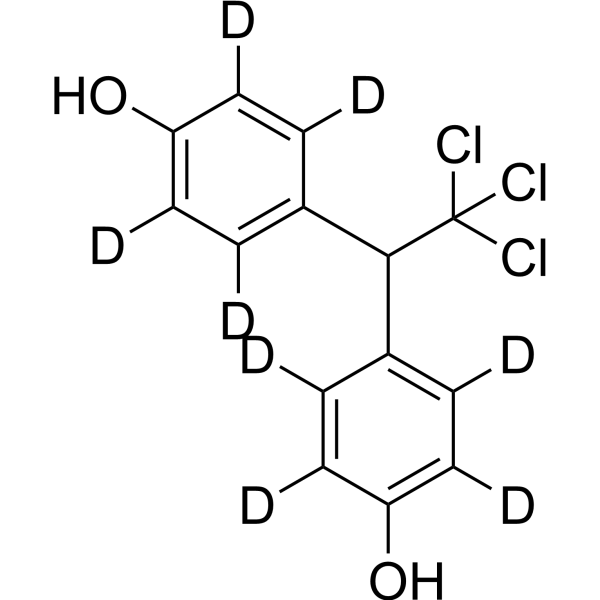
2,2-Bis(p-hydroxyphenyl)-1,1,1-trichloroethane-d8 is the deuterated-labeled HPTE (HY-W490804). HPTE is the active in vivo metabolite of Methoxychlor (HY-B1873), and acts as an inhibitor of 3β‑HSD and 17β‑HSD3. HPTE binds to the substrate-binding pocket of 3β‑HSD in a non-competitive manner, but competitively occupies the coenzyme NAD +-binding site, thereby inhibiting the conversion of pregnenolone to progesterone. HPTE binds to the androstenedione-binding pocket (the substrate pocket) of 17β‑HSD3 in a non-competitive manner, and competitively occupies the coenzyme NADPH-binding site, thus blocking the conversion of androstenedione to testosterone. HPTE interferes with androgen biosynthesis in Leydig cells by inhibiting the activities of these two key steroidogenic enzymes. HPTE can be used in studies related to androgen biosynthesis .
loading...
    loading...
Cat. No.: HY-120971
CAS No.: 72298-63-6
Synonyms: DepNA
N-Decanoyl p-nitroaniline (DepNA) is one of several nitroaniline fatty acid amides which can be used to measure fatty acid amide hydrolase (FAAH) activity.1 FAAH is a relatively unselective enzyme in that it accepts a variety of amide head groups other than the ethanolamine of its endogenous substrate anandamide (AEA). It also will hydrolyze fatty acid amides with fewer carbons and fewer double bonds than arachidonate. Exposure of DepNA to FAAH activity results in the release of the yellow colorimetric dye p-nitroaniline (ε=13,500 at 410 nm). This allows the fast and convenient measurement of FAAH activity using a 96 well plate spectrophotometer.
loading...
    loading...
Cat. No.: HY-131501
CAS No.: 523-39-7
Purity:  ≥98.0%
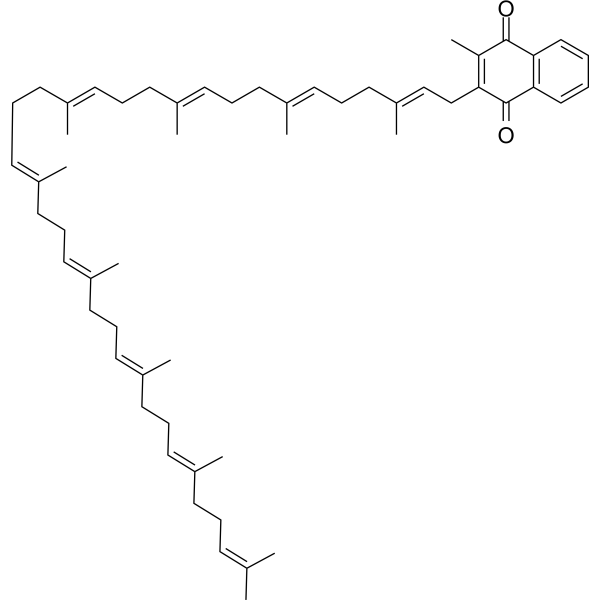
Menaquinone 9 is a naphthoquinone-type vitamin K and electron transport component produced by bacteria. Menaquinone 9 is an orally active analog of Vitamin K2 (HY-109569). Menaquinone 9 acts as an ultraviolet-sensitive, photooxidizable substrate that generates more polar photodegradation products under oxygen and ultraviolet irradiation. Menaquinone 9 binds to the αβ dimer of Escherichia coli nitrate reductase, supporting electron transport within the αβ subunit structure of the enzyme. Menaquinone 9 serves as a precursor for bone Menaquinone-4 (HY-B2156). Menaquinone 9 can be used in studies related to metabolic diseases .
loading...
    loading...
Cat. No.: HY-90010S
CAS No.: 1191280-48-4
Synonyms: Kabi-2234-d14; PNU-200583E-d14
Tolterodine tartrate-d14 (Kabi-2234-d14) is deuterium labeled Tolterodine tartrate. Tolterodine ((R)-(+)-Tolterodine) is a mAChR inhibitor and substrate for cytochrome P450 enzymes. Tolterodine competitively binds acetylcholine, reduces sympathetic excitation, and inhibits involuntary bladder muscle contraction. Tolterodine restores the Nrf2/NF-κB signaling pathway, mediates protection against inflammatory response and ferroptosis. Tolterodine ameliorates LPS (HY-D1056)-induced reactive oxygen species production and lipid oxidation. Tolterodine can be used for the research of urinary tract infections and overactive bladder.
loading...
    loading...
Cat. No.: HY-P2857
CAS No.: 9032-08-0
Synonyms: Amyloglucosidase, Aspergillus niger
Amyloglucosidase, Aspergillus niger (Amyloglucosidase, Aspergillus niger) is a starch-hydrolyzing enzyme with high catalytic efficiency towards soluble starch and raw starch. Amyloglucosidase, Aspergillus niger hydrolyzes α-1,4 and α-1,6 glycosidic linkages in starch and similar substrates, and primarily releases β-glucose molecules from the non-reducing ends. Amyloglucosidase, Aspergillus niger participates in glycogen metabolism and is associated with type II glycogen storage disease. Amyloglucosidase, Aspergillus niger converts starch into glucose, and is applicable to the industrial production of high-fructose syrup, ethanol and other fermented products .
loading...
    loading...
Cat. No.: HY-P2857A
CAS No.: 9032-08-0
Synonyms: Amyloglucosidase, Rhizopus sp.
Target:  

Glycosidase

Research Areas:  

Metabolic Disease

Glucoamylase, Rhizopus sp. (Amyloglucosidase, Rhizopus sp.) is a starch-hydrolyzing enzyme with high catalytic efficiency towards soluble starch and raw starch. Glucoamylase, Rhizopus sp. hydrolyzes α-1,4 and α-1,6 glycosidic linkages in starch and similar substrates, and primarily releases β-glucose molecules from the non-reducing ends. Glucoamylase, Rhizopus sp. participates in glycogen metabolism and is associated with type II glycogen storage disease. Glucoamylase, Rhizopus sp. converts starch into glucose, and is applicable to the industrial production of high-fructose syrup, ethanol and other fermented products .
loading...
    loading...
Cat. No.: HY-15560A
CAS No.: 911004-45-0
Hoechst 34580 (trihydrochloride) is a biochemical assay reagent.
loading...
    loading...
Cat. No.: HY-131740
CAS No.: 67460-15-5
Synonyms: C7dATP
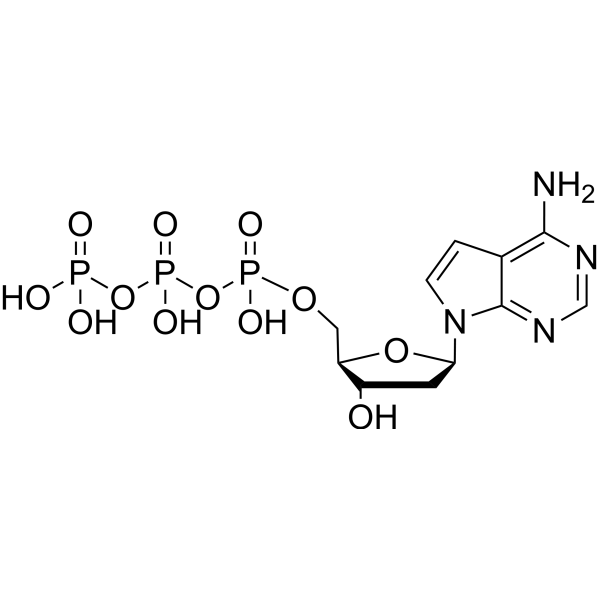
2'-Deoxytubercidin 5'-triphosphate (C7dATP) is a deoxyadenosine triphosphate (dATP) analog that serves as a substrate for DNA polymerases. 2'-Deoxytubercidin 5'-triphosphate eliminates Hoogsteen base-pairing capacity and weakens base-stacking interactions; it is recognized and incorporated into nascent DNA strands by DNA polymerases such as Klenow and T7; it reduces DNA electrophoresis compression artifacts; it is effectively degraded by apyrase, thereby lowering the enzyme product inhibition effect caused by dATPaS. 2'-Deoxytubercidin 5'-triphosphate reduces abnormal electrophoretic mobility caused by compression of G or A residues and is used to improve the quality of DNA sequencing data .
loading...
    loading...
Cat. No.: HY-131740A
Synonyms: C7dATP sodium
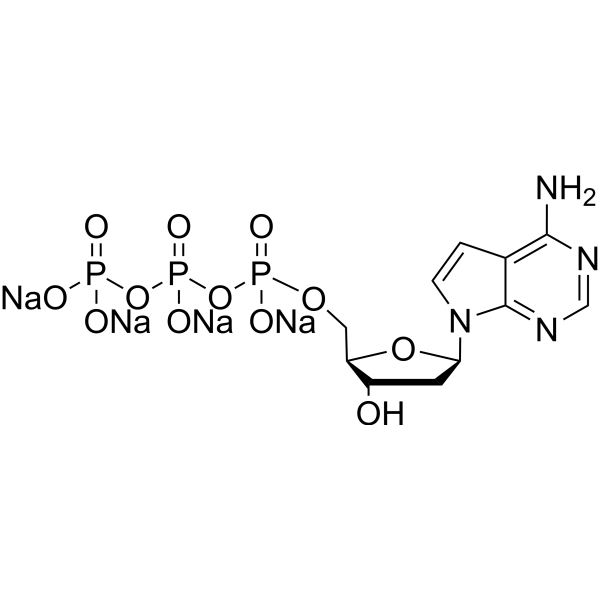
2'-Deoxytubercidin 5'-triphosphate sodium (C7dATP sodium) is a deoxyadenosine triphosphate (dATP) analog that serves as a substrate for DNA polymerases. 2'-Deoxytubercidin 5'-triphosphate sodium eliminates Hoogsteen base-pairing capacity and weakens base-stacking interactions; it is recognized and incorporated into nascent DNA strands by DNA polymerases such as Klenow and T7; it reduces DNA electrophoresis compression artifacts; it is effectively degraded by apyrase, thereby lowering the enzyme product inhibition effect caused by dATPaS. 2'-Deoxytubercidin 5'-triphosphate sodium reduces abnormal electrophoretic mobility caused by compression of G or A residues and is used to improve the quality of DNA sequencing data .
loading...
    loading...
Cat. No.: HY-133233
CAS No.: 116457-99-9
Synonyms: 1-Palmitylthio-2-palmitoylamido-1,2-dideoxy-sn-glycero-3-phosphorylcholine
Research Areas:  

Metabolic Disease

Thioetheramide-PC (1-Palmitylthio-2-palmitoylamido-1,2-dideoxy-sn-glycero-3-phosphorylcholine) is a structurally modified phospholipid that acts as a competitive, reversible inhibitor of secretory phospholipase A2 (sPLA2). Thioetheramide-PC has an IC50 value of 2 μM at a substrate concentration of 0.5 mM. In addition to binding to the catalytic site of sPLA2, Thioetheramide-PC also binds to the activation site of the enzyme. Thioetheramide-PC binds more tightly to the activation site than to the catalytic site. As a result of this dual interaction, at low concentrations, Thioetheramide-PC may activate phospholipase activity rather than inhibit it.
loading...
    loading...
Cat. No.: HY-D3442
CAS No.: 3121565-89-4
ALDH2 probe 5 is a ALDH2 isoform-selective fluorescent probe with an emission wavelength centered at 494 nm. ALDH2 probe 5 is a turn-on fluorescent substrate for ALDH2; in its unreacted aldehyde form, twisted intramolecular charge transfer (TICT) occurs, resulting in fluorescence quenching. After ALDH2 probe 5 is catalytically oxidized to carboxylate by ALDH2, TICT is inhibited and fluorescence is significantly enhanced. ALDH2 probe 5 enables highly sensitive quantitative imaging of ALDH2 activity in recombinant enzymes, live cells, blood, tissue homogenates, and the brains of living mice. ALDH2 probe 5 can be used for studies related to neuroinflammation .
loading...
    loading...
Cat. No.: HY-W243460
CAS No.: 39208-15-6
Research Areas:  

Others

EDTA copper (II) disodium salt, 97% is a negatively charged copper (II)-ethylenediaminetetraacetic acid chelate and also an adsorption substrate. EDTA copper (II) disodium salt, 97% forms amide bonds with chitosan amino groups in weakly acidic (pH 3-5) solutions, while it forms the CuEDTA (OH) 3− hydroxyl complex in strongly alkaline (pH > 12) solutions. EDTA copper (II) disodium salt, 97% can be adsorbed onto granular activated carbon, with electrostatic interactions dominating its pH-dependent adsorption behavior. EDTA copper (II) disodium salt, 97% can be used to eliminate the inhibition of enzyme-catalyzed reactions caused by trace heavy metals .
loading...
    loading...
Cat. No.: HY-117247
CAS No.: 111113-75-8
Target:  

DNA/RNA Synthesis

Research Areas:  

Infection

5,6,7,8-Tetrahydro-8-deazahomofolic acid is a potential thymidylate synthase (TS) inhibitor with inhibitory activity against other folate-related enzymes. 5,6,7,8-Tetrahydro-8-deazahomofolic acid showed mild growth inhibition against enterococci, lactic acid bacteria, and L1210 cells in culture. 5,6,7,8-Tetrahydro-8-deazahomofolic acid also showed weak inhibition against thymidylate synthase, dihydrofolate reductase, glycyl-ribonucleoside aminotransferase, and aminoimidazole-carboxyacyl-ribonucleoside aminotransferase. 5,6,7,8-Tetrahydro-8-deazahomofolic acid showed low substrate activity for thymidylate synthase .
loading...
    loading...

