698 Results for "

T cell activity

" in MedChemExpress (MCE) Product Catalog:
Products (698)

698 Results for "T cell activity" in MCE Product Catalog:

Cat. No.: HY-155577
CAS No.: 2927489-95-8
Target:  

Monoamine Oxidase HSP

Research Areas:  

Cancer

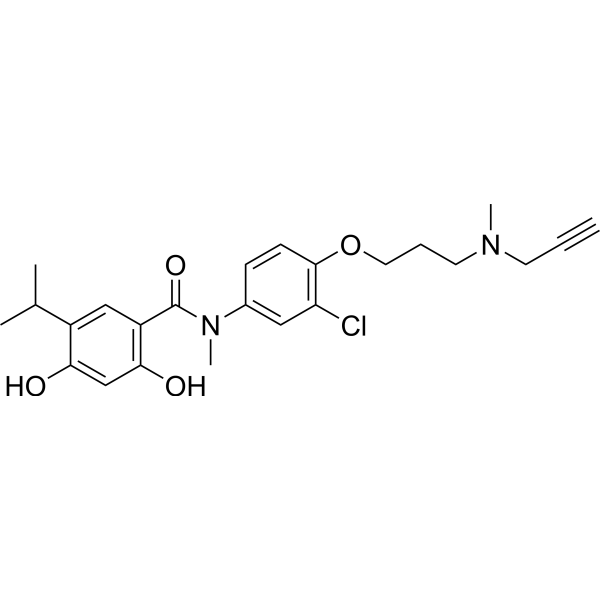
MAO A/HSP90-IN-1 (4-b) is a MAO A/HSP90 dual inhibitor with IC50 value of 1.77 μM and 0.019 μM in Glioblastoma (GBM) GL26 cells and HSP90α, respectively. MAO A/HSP90-IN-1 (4-b) can inhibit MAO A activity, HSP90 binding and the expression of HER2 and phospho-Akt to inhibit the growth of GBM, they also reduce PD-L1 expression, which inhibits T cell activation. MAO A/HSP90-IN-1 (4-b) have potential to inhibit tumor immune escape. MAO A/HSP90-IN-1 (4-b) can be used for brain tumor-related diseases research .
loading...
    loading...
Cat. No.: HY-182239
CAS No.: 2488699-00-7
Target:  

PD-1/PD-L1

Research Areas:  

Cancer

PDL1 degrader-3 (compound e24) is a DUBTAC-like PD-L1 degrader. PDL1 degrader-3 inhibits CSN5 enzymatic activity, increases PD-L1 ubiquitination, and induces PD-L1 degradation via the ubiquitin-proteasome pathway, reducing PD-L1 expression on tumor cell membranes. PDL1 degrader-3 blocks PD-1/PD-L1 interaction, activates the tumor immune microenvironment, enhances tumor-infiltrating T-cell immunity, and inhibits activation of immunosuppressive MDSCs and Tregs. PDL1 degrader-3 exerts antitumor effects in mouse tumor models. PDL1 degrader-3 can be used for the research of colorectal cancer, lung cancer .
loading...
    loading...
Cat. No.: HY-189068
CAS No.: 1240895-94-6
Research Areas:  

Cancer

GL-4512 is an orally active LILRB4/ILT3 inhibitor with an IC50 of 37 nM against human targets, and human Kd values of 18.1 nM and 39.2 nM, respectively. GL-4512 directly binds to the extracellular pockets of LILRB4/ILT3 that accommodate their ligands, blocks the LILRB4-SCG2 signaling pathway, and inhibits the downstream SHP1/SHP2 and STAT3 signaling pathways. GL-4512 restores anti-tumor immune activity, promotes the production of IFN-γ and IL-2, enhances the activation of cytotoxic T cells, reduces tumor cell viability, inhibits tumor growth, and strengthens intratumoral immune activation. GL-4512 can be used in research related to colorectal cancer and acute myeloid leukemia .
loading...
    loading...
Cat. No.: HY-116330AR
CAS No.: 238074-03-8
Synonyms: Hyperforin DCHA (Standard)
Hyperforin dicyclohexylammonium salt (Standard) is the analytical standard of Hyperforin dicyclohexylammonium salt. This product is intended for research and analytical applications. Hyperforin dicyclohexylammonium salt (Hyperforin DCHA) is a transient receptor canonical 6 (TRPC6) channels activator. Hyperforin dicyclohexylammonium salt modulates Ca 2+ levels by activating Ca 2+-conducting non-selective canonical TRPC6 channels. Hyperforin dicyclohexylammonium salt also shows diverse pharmacological activities including anti-depression, anti-tumor, anti-dementia, anti-diabetes. Hyperforin dicyclohexylammonium salt modulates γδ T cells to secret IL-17α, improves Imiquimod (HY-B0180)-induced psoriasis-like mice model .
loading...
    loading...
Cat. No.: HY-179570
CAS No.: 2251132-02-0
Target:  

E1/E2/E3 Enzyme

Research Areas:  

Cancer

XMU-MP-10 is a selective NEDD4 inhibitor with a KD of 43.92 nM. XMU-MP-10 selectively inhibits NEDD4 auto-ubiquitination without affecting other ubiquitination activity, upregulates of β-TrCP and results YAP degradation without affecting NEDD4 protein expression. XMU-MP-10 exhibits significant in vivo efficacy in inhibiting TNBC tumor growth by enhancing CD8 + T cell infiltration. XMU-MP-10 enhances antitumor immune responses through the β-TrCP/YAP/ECM axis. XMU-MP-10 can be used for Triple-Negative Breast Cancer (TNBC) research .
loading...
    loading...
Cat. No.: HY-N0527R
CAS No.: 14937-32-7
Synonyms: Penta-O-galloyl-β-D-glucose (Standard); 1,2,3,4,6-Pentagalloyl glucose (Standard)
Pentagalloylglucose (Standard) is the analytical standard of Pentagalloylglucose. This product is intended for research and analytical applications. Pentagalloylglucose (Penta-O-galloyl-β-D-glucose) is an orally active gallic tannin compound and an inducer of apoptosis and autophagy. Pentagalloglucose induces cell apoptosis and autophagy through the GSK3β/β-catenin pathway. Pentagalloylglucose inhibits UBE2T-mediated p53 ubiquitination, upregulates p53, downregulates RRM1/RRM2 in pancreatic cancer organoids. Pentagalloglucose has antioxidant, anti mutagenic, anti-inflammatory, anticonvulsant, cardioprotective, anti allergic, cholesterol lowering, and anti-tumor activities .
loading...
    loading...
Cat. No.: HY-116054
CAS No.: 1314096-68-8
Ibulocydine is an isobutyrate prodrug of the Cdk inhibitor BMK-Y101 (HY-188159), with oral activity, and exhibits IC50 values of approximately 50 nM against CDK1/CDK2, 530 nM against CDK7/cyclin H/Mat1, and 85 nM against CDK9/cyclin T. Ibulocydine reduces the phosphorylation levels of Rb, nucleolin, and RNA polymerase II CTD Ser-5 and Ser-2, downregulates the expression of Mcl-1, survivin, and XIAP, decreases MMP-9 expression, and lowers the Bcl-2/Bax ratio, activates calpain-mediated Bax cleavage, cytochrome c release, and caspase activation. Ibulocydine induces apoptosis, inhibits the growth of cancer cells and xenografts, enhances the sensitivity of cancer cells to TRAIL and radiotherapy, and blocks cancer cell metastasis. Ibulocydine can be used in research related to various cancers, including hepatocellular carcinoma, triple-negative breast cancer, lung cancer, and colon cancer .
loading...
    loading...
Cat. No.: HY-177300
CAS No.: 1402802-45-2
TLR7/8 agonist 13 is an orally active dual agonist of TLR7 (lowest effective concentrations (LEC) [hTLR7] = 1.6 μM) and TLR8 (LEC [hTLR8] = 1.6 μM). TLR7/8 agonist 13 exhibits agonistic activity against human peripheral blood mononuclear cells (hPBMCs) (LEC [hPBMC] = 0.5 μM). TLR7/8 agonist 13 induces endogenous IFNα, activating myeloid dendritic cells and monocytes toward a TH1 phenotype in mice and cynomolgus monkeys. TLR7/8 agonist 13 reduces viral load and HBV surface antigen expression in a mouse model of chronic AAV-HBV infection. TLR7/8 agonist 13 has the potential to indirectly induce IFNγ, which may promote HBV antigen-specific CD8 T cell-mediated responses. TLR7/8 agonist 13 can be used to study hepatitis B virus .
loading...
    loading...
Cat. No.: HY-126638
CAS No.: 75731-43-0
Synonyms: NSC 324645
Marcfortine A is an indole alkaloid originally isolated from P. roqueforti. It has nematocidal activity against the parasitic nematode H. contortus (LD99=0.06 μg/mL) and inhibits motility of adult worms (EC50=2 μM). Marcfortine A eliminates H. contortus, T. colubriformis, and O. ostertagi from experimentally infected jirds (ED95s=0.33, 0.11, and 2.5 mg/animal, respectively). It dose-dependently inhibits nicotine-induced calcium mobilization in SH-SY5Y and TE-671 cells expressing α3 subunit-containing human nicotinic acetylcholine receptors (nAChRs) and muscle-type nAChRs, respectively.
loading...
    loading...
Cat. No.: HY-180242
Research Areas:  

Cancer

EGFR/CDK2-IN-5 is a potent dual EGFR and CDK2 inhibitor with IC50s of 17.30 and 212.10 nM, respectively. EGFR/CDK2-IN-5 also inhibits EGFR T790M with an IC50 of 123.8 nM. EGFR/CDK2-IN-5 exhibits potent anticancer activity. EGFR/CDK2-IN-5 induces G1 and S cell cycle arrest and apoptosis, accompanied by increased levels of caspase-3/9 and Bax, as well as decreased Bcl-2 levels. EGFR/CDK2-IN-5 can be used for the research of cancers, such as lung cancer, breast cancer, and leukemia .
loading...
    loading...
Cat. No.: HY-159905
CAS No.: 3048537-48-7
Target:  

MAP4K

Research Areas:  

Inflammation/Immunology

HPK1-IN-54 is a potent HPK1 (Hematopoietic Progenitor Kinase 1) inhibitor that enhances T cell activation and proliferation by inhibiting HPK1 activity, thereby exhibiting antitumor effects. Its IC50 value against HPK1 is 2.67 nM, with excellent selectivity over the MAP4K family (>100-fold) and other selected kinases (>300-fold). HPK1-IN-54 displayed moderate in vivo clearance and reasonable oral exposure in mice and rats. Additionally, HPK1-IN-54 demonstrated strong antitumor efficacy in a CT26 murine colon cancer model and synergistic effects when combined with anti-PD-1 (HY-P9902A). HPK1-IN-54 shows promise for research in the field of immunotherapy .
loading...
    loading...
Cat. No.: HY-12292G
CAS No.: 1129669-05-1
IM-12 GMP is IM-12 (HY-12292) produced by using GMP guidelines. GMP small molecules works appropriately as an auxiliary reagent for cell therapy manufacture. IM-12 is an orally active anti-inflammatory agent that targets and inhibits the NF-κB and STAT3 signaling pathways. IM-12 activates the Wnt signaling pathway and promotes the nuclear translocation of β-catenin by inhibiting GSK3β, while also blocking the tyrosine kinase activity of p210BCR/ABL. IM-12 reduces the levels of IL-6, IL-17, NO, prostaglandin E2, iNOS and COX-2, and induces ER stress, Ca 2+ release, autophagy and apoptosis. IM-12 is heat-sensitive and does not induce autophagy in IM-resistant p210BCR/ABL T315I mutant cells. IM-12 is also a component of the 5iLA medium used for naive pluripotent stem cell research. IM-12 has been applied in studies related to carrageenan (HY-125474)-induced hind paw edema, TNBS-induced colitis, and acute and chronic myeloid leukemia .
loading...
    loading...
Cat. No.: HY-N11231
CAS No.: 7176-02-5
Fucoxanthinol, a carotenoid, is a deacetylated Fucoxanthin (HY-N2302) metabolite with oral activity, and inhibits rat pancreatic lipase with an IC50 of 764 nM. Fucoxanthinol reduces expression of Bcl-2, Bcl-xL, survivin, XIAP, cIAP2, cyclin D1, cyclin D2, cyclin E, CDK4, CDK6, β-catenin, JunD, PPARγ, and induces GADD45α expression. Fucoxanthinol activates caspase-3, caspase-8, caspase-9, Nrf2/Keap1/ARE pathway, and inhibits activation of Akt, NF-κB, AP-1, PDPK1, GSK3β phosphorylation. Fucoxanthinol induces apoptosis, G0/G1 cell cycle arrest, inhibits cancer cell viability, proliferation, migration, invasiveness, tumour growth, adipocyte differentiation, oxidative stress, neurotoxicity, triglyceride absorption, angiogenesis, and obesity-induced inflammation. Fucoxanthinol can be used for the research of osteosarcoma, leukemia, lymphoma, adult T-cell leukemia, prostate cancer, colon cancer, breast cancer, hypertriglyceridaemia, Alzheimer’s disease, Parkinson’s disease, obesity, insulin resistance, malignant melanoma, and type II diabetes .
loading...
    loading...
Cat. No.: HY-183393
CAS No.: 1798292-13-3
Target:  

mTOR Fungal

Research Areas:  

Infection

NVP-BHS345 is an ATP-competitive TORC1/TORC2 inhibitor with an IC50 of 1 μM for both targets in yeast. NVP-BHS345 acutely inhibits TORC1/TORC2 kinase activity, even in genetically engineered TOR1 M2282T Saccharomyces cerevisiae strains. NVP-BHS345 also reduces the phosphorylation levels of Ser-232/Ser-233 sites in Sch9, Ypk1/Ypk2 and Rps6, and induces hyperphosphorylation of Slt2 and activation of the cell wall integrity pathway. NVP-BHS345 causes depolarization of the actin cytoskeleton, blocks fluid-phase endocytosis, prevents the accumulation of vacuolar lipophilic dyes, and regulates the phosphorylation levels of Ent1, Pan1, Prk1, Akl1 and other cellular proteins .
loading...
    loading...
Cat. No.: HY-165613
CAS No.: 656831-18-4
Synonyms: Dipalmitoyl-S-glyceryl-cysteine; S-[2,3-Bis(palmitoyloxy)propyl]cysteine
Pam2Cys (Dipalmitoyl-S-glyceryl-cysteine; S-[2,3-Bis(palmitoyloxy)propyl]cysteine) is a TLR2 agonist and immunostimulant. Pam2Cys binds to TLR2 to activate dendritic cells and trigger the TLR2-dependent NF-κB signaling pathway. Pam2Cys also induces dendritic cell maturation by upregulating the expression of cell surface MHC II molecules. Pam2Cys activates innate immune signaling pathways, drives pro-inflammatory and antimicrobial responses, enhances the expression of macrophage activation markers, increases phagocytic activity, induces the release of IL-12 and pro-inflammatory cytokines, and polarizes macrophages into a pro-inflammatory, antimicrobial phenotype without interfering with IL-10-induced macrophage polarization. Pam2Cys also serves as the lipid moiety in synthetic lipopeptide vaccines and possesses self-adjuvant properties. Pam2Cys enhances the immunogenicity of conjugated peptide segments and induces cellular and humoral immune responses. However, it does not activate CD4 T cells in mouse splenocyte cultures when used alone. Pam2Cys activates pulmonary TLR2 signaling pathways, triggers innate immune responses, recruits neutrophils and macrophages, induces the secretion of various cytokines, alleviates symptoms and damages associated with influenza A virus infection in mice without impairing adaptive immunity. Pam2Cys can be used in studies related to tuberculosis and influenza A virus infection .
loading...
    loading...
Cat. No.: HY-154795
CAS No.: 658701-67-8
Purity:  99.81%
Synonyms: 18α-Glycyrrhizic acid Magnesium hydrate; 18α-GA Magnesium hydrate; 18α-Licorice-saponin H2 Magnesium hydrate
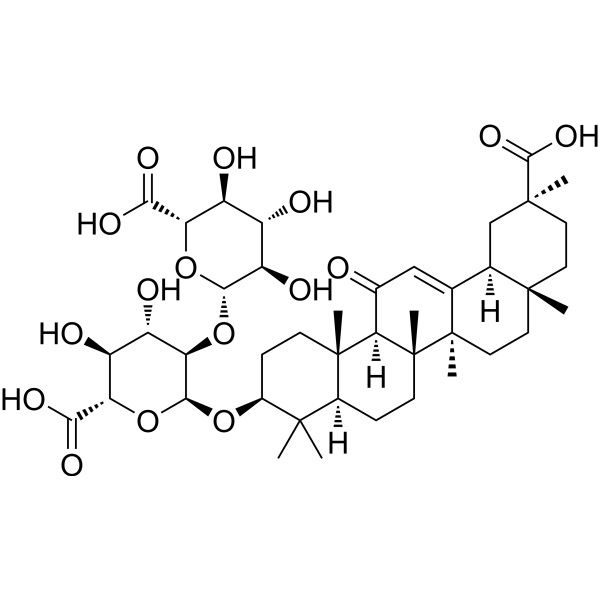
Magnesium isoglycyrrhizinate hydrate (18α-Glycyrrhizic acid Magnesium hydrate; 18α-GA Magnesium hydrate; 18α-Licorice-saponin H2 Magnesium hydrate) is a derivative of glycyrrhizic acid with oral activity. Magnesium isoglycyrrhizinate hydrate exhibits antioxidant, anti-inflammatory, hepatoprotective and cardioprotective activities. Magnesium isoglycyrrhizinate hydrate protects against ethanol-induced alcoholic liver disease in rats by upregulating the expression levels of SOD, GSH, PPAR-α and CPT-1 . Magnesium isoglycyrrhizinate hydrate shows cytotoxicity against T lymphocytes and inhibits HIV-1 replication in these cells . Magnesium isoglycyrrhizinate hydrate alleviates oxidative stress by reducing the levels of ROS, Nrf2, HO-1 and p-P65, and alleviates pyroptosis by downregulating the expression levels of NLRP3, GSDMD-N, P20 and c-IL-1β. Magnesium isoglycyrrhizinate hydrate inhibits autophagy, colonic fibrosis and myocardial fibrosis, and regulates intestinal barrier integrity. Magnesium isoglycyrrhizinate hydrate can be used in research related to alcoholic liver disease, HIV-1 infection, hepatotoxicity, acute liver failure, inflammatory bowel disease and myocardial fibrosis .
loading...
    loading...
Cat. No.: HY-N6911A
CAS No.: 83896-44-0
Synonyms: 18α-GA; Isoglycyrrhizinic acid; 18α-Glycyrrhizic acid
18α-Glycyrrhizic acid (18α-GA; Isoglycyrrhizinic acid; 18α-Glycyrrhizic acid) is a derivative of glycyrrhizic acid with oral activity. 18α-Glycyrrhizic acid exhibits antioxidant, anti-inflammatory, hepatoprotective and cardioprotective activities. 18α-Glycyrrhizic acid protects against ethanol-induced alcoholic liver disease in rats by upregulating the expression levels of SOD, GSH, PPAR-α and CPT-1 . 18α-Glycyrrhizic acid shows cytotoxicity against T lymphocytes and inhibits HIV-1 replication in these cells . 18α-Glycyrrhizic acid alleviates oxidative stress by reducing the levels of ROS, Nrf2, HO-1 and p-P65, and alleviates pyroptosis by downregulating the expression levels of NLRP3, GSDMD-N, P20 and c-IL-1β. 18α-Glycyrrhizic acid inhibits autophagy, colonic fibrosis and myocardial fibrosis, and regulates intestinal barrier integrity. 18α-Glycyrrhizic acid can be used in research related to alcoholic liver disease, HIV-1 infection, hepatotoxicity, acute liver failure, inflammatory bowel disease and myocardial fibrosis .
loading...
    loading...
Cat. No.: HY-L948
11,491 compounds

PD-1/PD-L1 are key immune checkpoint targets that suppress T-cell-mediated anti-tumor immunity, representing a major focus in cancer immunotherapy. While antibody drugs dominate the clinic, they are limited by administration challenges and immune-related side effects. Small-molecule PD-1/PD-L1 inhibitors, with oral availability, good tissue penetration and low cost, have emerged as a promising next-generation strategy.

A PD-1/PD-L1 lead-like library was built via a five-step virtual screening process. After collecting 8,947 inhibitors from BindingDB and PubChem and filtering by activity and duplicates, AI similarity screening was performed using GeminiMol. Key pharmacophores were extracted from the PPI interface of co-crystal structures, and molecular was screened via a pharmacophore model, effectively enhancing target activity.

Containing 10,000 structurally diverse and drug-like molecules well-matched to the PD-L1 pocket, the library supports virtual docking, high-throughput screening and hit discovery, enabling efficient and rapid development of small-molecule immunotherapies.

