761 Results for "

ER

" in MedChemExpress (MCE) Product Catalog:
Products (761)

761 Results for "ER" in MCE Product Catalog:

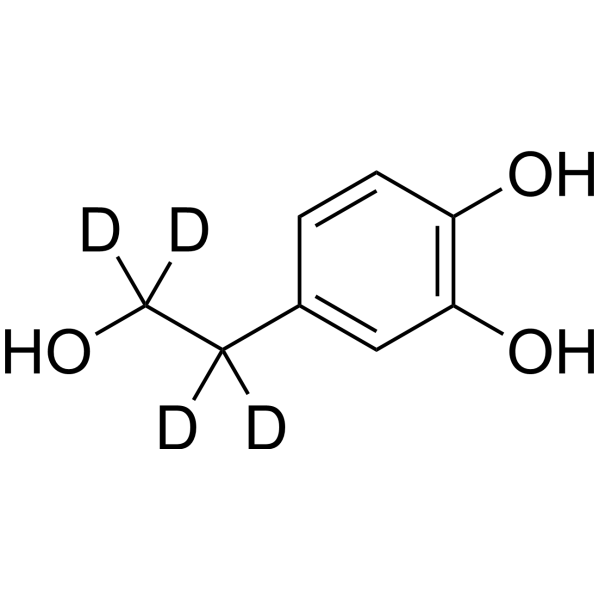
Cat. No.: HY-N0570S
CAS No.: 1330260-89-3
Synonyms: DOPET-d4; 3,4-Dihydroxyphenethyl alcohol-d4; 3-Hydroxytyrosol-d4
Hydroxytyrosol-d4 (DOPET-d4) is the deuterium labeled Hydroxytyrosol (HY-N0570). Hydroxytyrosol is an orally active, blood-brain barrier-permeable multi-active compound with multiple effects including antibacterial, antioxidant, anti-platelet aggregation, and neuroprotective activities. Hydroxytyrosol not only inhibits the growth of Vibrio by increasing bacterial membrane permeability, but also interacts with DNA and mediates supercoiled DNA relaxation. Meanwhile, Hydroxytyrosol effectively reduces thrombosis and inhibits lipid oxidation by inhibiting COX activity and promoting vascular nitric oxide production. In terms of neuroprotection, Hydroxytyrosol significantly alleviates neuronal apoptosis and inflammatory responses by up-regulating the expression level of ERβ, thereby improving cognitive function in Alzheimer's disease models. Hydroxytyrosol has been widely used in scientific research related to Vibrio infection, arterial thrombosis, Alzheimer's disease and other related fields .
loading...
    loading...
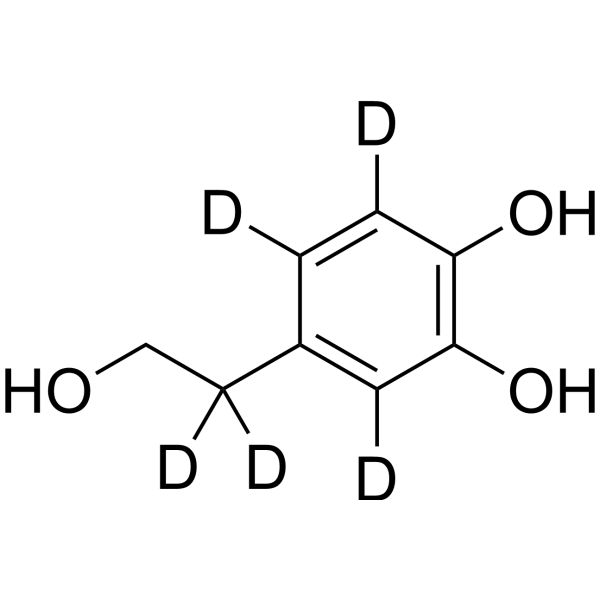
Cat. No.: HY-N0570S1
Synonyms: DOPET-d5; 3,4-Dihydroxyphenethyl alcohol-d5; 3-Hydroxytyrosol-d5
Hydroxytyrosol-d5 (DOPET-d5) is the deuterium labeled Hydroxytyrosol (HY-N0570). Hydroxytyrosol is an orally active, blood-brain barrier-permeable multi-active compound with multiple effects including antibacterial, antioxidant, anti-platelet aggregation, and neuroprotective activities. Hydroxytyrosol not only inhibits the growth of Vibrio by increasing bacterial membrane permeability, but also interacts with DNA and mediates supercoiled DNA relaxation. Meanwhile, Hydroxytyrosol effectively reduces thrombosis and inhibits lipid oxidation by inhibiting COX activity and promoting vascular nitric oxide production. In terms of neuroprotection, Hydroxytyrosol significantly alleviates neuronal apoptosis and inflammatory responses by up-regulating the expression level of ERβ, thereby improving cognitive function in Alzheimer's disease models. Hydroxytyrosol has been widely used in scientific research related to Vibrio infection, arterial thrombosis, Alzheimer's disease and other related fields .
loading...
    loading...
Cat. No.: HY-N6043R
CAS No.: 69039-02-7
Hydroxytyrosol acetate (Standard) is the analytical standard of Hydroxytyrosol (HY-N0570). This product is intended for research and analytical applications. Hydroxytyrosol acetate is an orally active, blood-brain barrier-permeable multi-active compound with multiple effects including antibacterial, antioxidant, anti-platelet aggregation, and neuroprotective activities. Hydroxytyrosol acetate not only inhibits the growth of Vibrio by increasing bacterial membrane permeability, but also interacts with DNA and mediates supercoiled DNA relaxation. Meanwhile, Hydroxytyrosol acetate effectively reduces thrombosis and inhibits lipid oxidation by inhibiting COX activity and promoting vascular nitric oxide production. In terms of neuroprotection, Hydroxytyrosol acetate significantly alleviates neuronal apoptosis and inflammatory responses by up-regulating the expression level of ERβ, thereby improving cognitive function in Alzheimer's disease models. Hydroxytyrosol acetate has been widely used in scientific research related to Vibrio infection, arterial thrombosis, Alzheimer's disease and other related fields .
loading...
    loading...
Cat. No.: HY-P85986
Synonyms: beta Granin; betagranin; N-tERminal fragment of chromogranin A; catestatin; CgA; CHG A; Chga; chromofungin; Chromogranin A; Chromogranin A parathyroid secretory protein 1; Chromogranin A precursor; ChromograninA; CMGA_HUMAN; ER-37; Pancreastatin; Parastatin; Parathyroid secretory protein 1; Pituitary secretory protein I; Secretory protein I; SP I; SP-I; SP1; SPI; vasostatin 2; Vasostatin; Vasostatin I; Vasostatin II; vasostatin-2

Host:  

Mouse

Application:  

IHC-P, ELISA

Reactivity:  

Human, Mouse

loading...
    loading...
Cat. No.: HY-P86527
Synonyms: beta Granin; betagranin; N-tERminal fragment of chromogranin A; catestatin; CgA; CHG A; Chga; chromofungin; Chromogranin A; Chromogranin A parathyroid secretory protein 1; Chromogranin A precursor; ChromograninA; CMGA_HUMAN; ER-37; Pancreastatin; Parastatin; Parathyroid secretory protein 1; Pituitary secretory protein I; Secretory protein I; SP I; SP-I; SP1; SPI; vasostatin 2; Vasostatin; Vasostatin I; Vasostatin II; vasostatin-2

Host:  

Rabbit

Application:  

WB, IHC-P, ICC/IF, IP, ELISA

Reactivity:  

Human, Mouse, Rat

loading...
    loading...
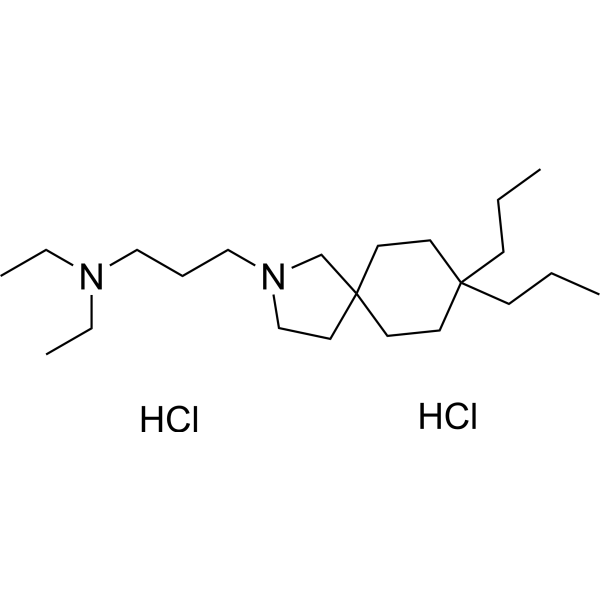
Cat. No.: HY-110102
CAS No.: 130065-61-1
Synonyms: Azaspirane hydrochloride; SKF 106615-12 hydrochloride; SKF 106615
Atiprimod (Azaspirane) hydrochloride is a STAT3 inhibitor with antitumor, anti-inflammatory, and anti-angiogenic activities. Atiprimod blocks the signaling pathways of IL-6 and VEGF by inhibiting the phosphorylation of signal transducer and activator of STAT3. Atiprimod blocks the JAK-STAT signaling pathway by inhibiting the phosphorylation of JAK2 and JAK3. Atiprimod also inhibits cell proliferation, induces cell cycle arrest, and induces autophagy and apoptosis. Atiprimod triggers persistent ER stress-mediated apoptosis in breast cancer cells by activating the PERK/eIF2α/ATF4/CHOP axis and inhibiting the nuclear translocation of STAT3/NF-κB. Atiprimod shows great anti-tumor activities in tumor xenograft mouse models. Atiprimod can be used for the study of pituitary adenoma, breast cancer, multiple myeloma and acute myeloid leukemia (AML) .
loading...
    loading...
Cat. No.: HY-114849R
CAS No.: 27314-13-2
Synonyms: SAN 9789 (Standard)
Norflurazon (Standard) (SAN 9789 (Standard)) is the analytical standard of Norflurazon (HY-114849). This product is intended for research and analytical applications. Norflurazon (SAN 9789) is a pre-emergence Herbicide. Norflurazon non-competitively inhibits phytoene desaturase by competing with the enzyme cofactor and disrupts carotenoid biosynthesis, thereby leading to chlorophyll photodegradation and chlorosis. Norflurazon inhibits MGDG synthase, CDP-choline phosphotransferase, Omega-3 FAD7 desaturase, and PG delta-3-trans desaturase, and activates LysoPC-acyltransferase and Omega-3 FAD3 desaturase. Norflurazon inhibits photosynthetic membrane organization, mitochondrial respiration, ATP production, PI3K signaling, and ERK1/2 phosphorylation. Norflurazon activates MAPK P38 phosphorylation and ER stress signaling. Norflurazon induces morphological malformations and cardiovascular effects in zebrafish embryos .
loading...
    loading...
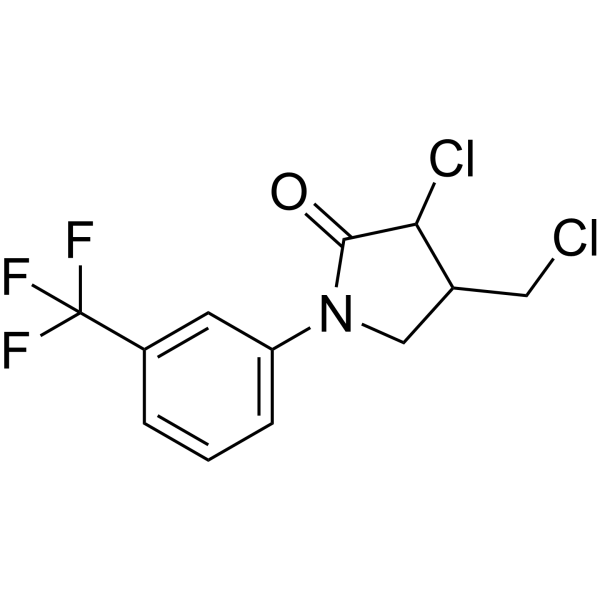
Cat. No.: HY-121337
CAS No.: 61213-25-0
Purity:  99.61%
Synonyms: R-40244
Flurochloridone (R-40244) is an orally active herbicide and an inducer of ER stress, apoptosis, and cytotoxicity. Flurochloridone upregulates GRP78 and activates the PERK-eIF2α-ATF4 UPR axis, ATF6, CHOP, Bax, and Bim. Flurochloridone decreases Akt, p-Akt, GSK3β, and p-GSK3β levels, and induces ROS, oxidative stress, γ-glutamyl cycle activation, and GSH accumulation. Flurochloridone inhibits mitochondrial respiration and ATP production while enhancing glycolysis and cell viability inhibition. Flurochloridone inhibits spermatogonial proliferation, spermatocyte meiosis, and sperm mitochondrial membrane potential, and induces Sertoli cell apoptosis and mitochondrial damage. Flurochloridone non-competitively binds phytoene desaturase, blocking phytoene desaturation and carotenoid synthesis, leading to leaf bleaching and phytotoxicity. Flurochloridone can be used for research on male reproductive toxicity, hepatotoxicity, and as a herbicide .
loading...
    loading...
Cat. No.: HY-13559
CAS No.: 123018-47-3
Synonyms: Azaspirane ; SKF 106615-12; SKF 106615A12
Atiprimod (Azaspirane) is a STAT3 inhibitor with antitumor, anti-inflammatory, and anti-angiogenic activities. Atiprimod blocks the signaling pathways of IL-6 and VEGF by inhibiting the phosphorylation of signal transducer and activator of STAT3. Atiprimod blocks the JAK-STAT signaling pathway by inhibiting the phosphorylation of JAK2 and JAK3. Atiprimod also inhibits cell proliferation, induces cell cycle arrest, and induces autophagy and apoptosis. Atiprimod triggers persistent ER stress-mediated apoptosis in breast cancer cells by activating the PERK/eIF2α/ATF4/CHOP axis and inhibiting the nuclear translocation of STAT3/NF-κB. Atiprimod shows great anti-tumor activities in tumor xenograft mouse models. Atiprimod can be used for the study of pituitary adenoma, breast cancer, multiple myeloma and acute myeloid leukemia (AML) .
loading...
    loading...
Cat. No.: HY-13559A
CAS No.: 183063-72-1
Synonyms: Azaspirane dimaleate; SKF 106615-12 dimaleate; SKF 106615A12 dimaleate
Atiprimod (Azaspirane) (dimaleate) is a STAT3 inhibitor with antitumor, anti-inflammatory, and anti-angiogenic activities. Atiprimod blocks the signaling pathways of IL-6 and VEGF by inhibiting the phosphorylation of signal transducer and activator of STAT3. Atiprimod blocks the JAK-STAT signaling pathway by inhibiting the phosphorylation of JAK2 and JAK3. Atiprimod also inhibits cell proliferation, induces cell cycle arrest, and induces autophagy and apoptosis. Atiprimod triggers persistent ER stress-mediated apoptosis in breast cancer cells by activating the PERK/eIF2α/ATF4/CHOP axis and inhibiting the nuclear translocation of STAT3/NF-κB. Atiprimod shows great anti-tumor activities in tumor xenograft mouse models. Atiprimod can be used for the study of pituitary adenoma, breast cancer, multiple myeloma and acute myeloid leukemia (AML) .
loading...
    loading...
Cat. No.: HY-N0570R
CAS No.: 10597-60-1
Synonyms: DOPET (Standard); 3,4-Dihydroxyphenethyl alcohol (Standard); 3-Hydroxytyrosol (Standard)
Hydroxytyrosol (Standard) (DOPET (Standard)) is the analytical standard of Hydroxytyrosol (HY-N0570). This product is intended for research and analytical applications. Hydroxytyrosol is an orally active, blood-brain barrier-permeable multi-active compound with multiple effects including antibacterial, antioxidant, anti-platelet aggregation, and neuroprotective activities. Hydroxytyrosol not only inhibits the growth of Vibrio by increasing bacterial membrane permeability, but also interacts with DNA and mediates supercoiled DNA relaxation. Meanwhile, Hydroxytyrosol effectively reduces thrombosis and inhibits lipid oxidation by inhibiting COX activity and promoting vascular nitric oxide production. In terms of neuroprotection, Hydroxytyrosol significantly alleviates neuronal apoptosis and inflammatory responses by up-regulating the expression level of ERβ, thereby improving cognitive function in Alzheimer's disease models. Hydroxytyrosol has been widely used in scientific research related to Vibrio infection, arterial thrombosis, Alzheimer's disease and other related fields .
loading...
    loading...
Cat. No.: HY-P810967
Synonyms: ATP6IP2, CAPER, ELDF10, HT028, MSTP009, PSEC0072, ATP6AP2, Renin receptor, ATPase H(+)-transporting lysosomal accessory protein 2, ATPase H(+)-transporting lysosomal-intERacting protein 2, ER-localized type I transmembrane adaptER, Embryonic livER diffERentiation factor 10, N14F, Renin/prorenin receptor, Vacuolar ATP synthase membrane sector-associated protein M8-9, ATP6M8-9, V-ATPase M8.9 subunit

Host:  

Rabbit

Application:  

IHC-P, ICC/IF

Reactivity:  

Human, Mouse, Rat, Chicken, Pig, Dog, Bovine

loading...
    loading...
Cat. No.: HY-120914
CAS No.: 170950-29-5
Synonyms: GO-Y015
TrxR1-IN-B19 (GO-Y015) is a Curcumin (HY-N0005) derivative and TrxR1 inhibitor. TrxR1-IN-B19 inhibits de novo selenoprotein synthesis, suppresses SeP and GPx expression, and impairs selenium incorporation into Sec-tRNA[Sec]. TrxR1-IN-B19 induces Nrf2 accumulation through Keap1 cysteine modification, HO-1 expression, GSH synthesis, ROS accumulation, ER stress, mitochondrial dysfunction, Apoptosis, and G2/M phase arrest. TrxR1-IN-B19 improves glucose tolerance and insulin sensitivity, lowers blood glucose, inhibits tumor growth, and reduces arsenic accumulation. TrxR1-IN-B19 can be used for research on type 2 diabetes, arsenite-induced toxicity, and gastric cancer .
loading...
    loading...
Cat. No.: HY-W778236
CAS No.: 1346603-47-1
Synonyms: SAN 9789-13C,d3
Norflurazon- 13C,d3 (SAN 9789- 13C,d3) is the d3, 13C-labeled Norflurazon (HY-114849). Norflurazon (SAN 9789) is a pre-emergence Herbicide. Norflurazon non-competitively inhibits phytoene desaturase by competing with the enzyme cofactor and disrupts carotenoid biosynthesis, thereby leading to chlorophyll photodegradation and chlorosis. Norflurazon inhibits MGDG synthase, CDP-choline phosphotransferase, Omega-3 FAD7 desaturase, and PG delta-3-trans desaturase, and activates LysoPC-acyltransferase and Omega-3 FAD3 desaturase. Norflurazon inhibits photosynthetic membrane organization, mitochondrial respiration, ATP production, PI3K signaling, and ERK1/2 phosphorylation. Norflurazon activates MAPK P38 phosphorylation and ER stress signaling. Norflurazon induces morphological malformations and cardiovascular effects in zebrafish embryos .
loading...
    loading...
Cat. No.: HY-121337R
CAS No.: 61213-25-0
Synonyms: R-40244 (Standard)
Flurochloridone (Standard) (R-40244 (Standard)) is the analytical standard of Flurochloridone (HY-121337). This product is intended for research and analytical applications. Flurochloridone (R-40244) is an orally active herbicide and an inducer of ER stress, apoptosis, and cytotoxicity. Flurochloridone upregulates GRP78 and activates the PERK-eIF2α-ATF4 UPR axis, ATF6, CHOP, Bax, and Bim. Flurochloridone decreases Akt, p-Akt, GSK3β, and p-GSK3β levels, and induces ROS, oxidative stress, γ-glutamyl cycle activation, and GSH accumulation. Flurochloridone inhibits mitochondrial respiration and ATP production while enhancing glycolysis and cell viability inhibition. Flurochloridone inhibits spermatogonial proliferation, spermatocyte meiosis, and sperm mitochondrial membrane potential, and induces Sertoli cell apoptosis and mitochondrial damage. Flurochloridone non-competitively binds phytoene desaturase, blocking phytoene desaturation and carotenoid synthesis, leading to leaf bleaching and phytotoxicity. Flurochloridone can be used for research on male reproductive toxicity, hepatotoxicity, and as a herbicide .
loading...
    loading...
Cat. No.: HY-W011927
CAS No.: 80-09-1
Synonyms: Bisphenol S; Bis(4-hydroxyphenyl) sulfone
4,4'-Sulfonyldiphenol (Bisphenol S; Bis(4-hydroxyphenyl) sulfone), a substitute for Bisphenol A (HY-18260), is widely used in industrial and consumer products. 4,4'-Sulfonyldiphenol is an oally ative estrogen receptor (ER) agonist and can competitively bind to thyroid hormone receptors (TR) with IC50 values for TRα and TRβ are 2650 μM and 2294 μM respectively, thereby affecting breast development and reducing the expression of androgen receptor (AR) in fetal testes. 4,4'-Sulfonyldiphenol promotes the progression of glioblastoma by upregulating the EZH2 mediated PI3K/AKT/mTOR pathway. Under chronic exposure, 4,4'-Sulfonyldiphenol can cause significant lipid deposition and dyslipidemia in the mouse liver by upregulating JunB and Atf3, and has a role in causing obesity at low doses. 4,4'-Sulfonyldiphenol induces intestinal inflammation by altering the intestinal microbiome. 4,4'-Sulfonyldiphenol accelerates the progression of atherosclerosis in zebrafish embryo larvae .
loading...
    loading...
Cat. No.: HY-130133
CAS No.: 2378831-21-9
DHW-221 is a potent orally active dual PI3K/mTOR inhibitor, exhibiting low nanomolar potency against all four Class I PI3K isoforms and mTOR (PI3Kα, IC50 = 0.50 nM; PI3Kβ, IC50 = 1.9 nM; PI3Kγ, IC50 = 1.8 nM; PI3Kδ, IC50 = 0.74 nM; mTOR, IC50 = 3.9 nM). DHW-221 exerts antitumor effects by blocking the PI3K/Akt/mTOR pathway and inducing mitochondrial apoptosis and paraptosis (via Endoplasmic Reticulum (ER) stress and MAPK signaling) and arrests cell cycle, thereby inhibiting cell migration, invasion and angiogenesis. DHW-221 inhibits tumor growth in both the A549/Taxol (HY-B0015) and the HCC827 xenograft mouse models. DHW-221 can be used for non-small cell lung cancer (NSCLC), colon and breast cancer research .
loading...
    loading...
Cat. No.: HY-W011927R
CAS No.: 80-09-1
Synonyms: Bisphenol S (Standard); Bis(4-hydroxyphenyl) sulfone (Standard)
4,4'-Sulfonyldiphenol (Bisphenol S; Bis(4-hydroxyphenyl) sulfone) (Standard) is the analytical standard of 4,4'-Sulfonyldiphenol (HY-W011927). This product is intended for research and analytical applications. 4,4'-Sulfonyldiphenol, a substitute for Bisphenol A (HY-18260), is widely used in industrial and consumer products. 4,4'-Sulfonyldiphenol is an estrogen receptor (ER) agonist and can competitively bind to thyroid hormone receptors (TR) with IC50 values for TRα and TRβ are 2650 μM and 2294 μM respectively, thereby affecting breast development and reducing the expression of androgen receptor (AR) in fetal testes. 4,4'-Sulfonyldiphenol promotes the progression of glioblastoma by upregulating the EZH2 mediated PI3K/AKT/mTOR pathway. Under chronic exposure, 4,4'-Sulfonyldiphenol can cause significant lipid deposition and dyslipidemia in the mouse liver by upregulating JunB and Atf3, and has a role in causing obesity at low doses. 4,4'-Sulfonyldiphenol induces intestinal inflammation by altering the intestinal microbiome. 4,4'-Sulfonyldiphenol accelerates the progression of atherosclerosis in zebrafish embryo larvae.
loading...
    loading...
Cat. No.: HY-12292G
CAS No.: 1129669-05-1
IM-12 GMP is IM-12 (HY-12292) produced by using GMP guidelines. GMP small molecules works appropriately as an auxiliary reagent for cell therapy manufacture. IM-12 is an orally active anti-inflammatory agent that targets and inhibits the NF-κB and STAT3 signaling pathways. IM-12 activates the Wnt signaling pathway and promotes the nuclear translocation of β-catenin by inhibiting GSK3β, while also blocking the tyrosine kinase activity of p210BCR/ABL. IM-12 reduces the levels of IL-6, IL-17, NO, prostaglandin E2, iNOS and COX-2, and induces ER stress, Ca 2+ release, autophagy and apoptosis. IM-12 is heat-sensitive and does not induce autophagy in IM-resistant p210BCR/ABL T315I mutant cells. IM-12 is also a component of the 5iLA medium used for naive pluripotent stem cell research. IM-12 has been applied in studies related to carrageenan (HY-125474)-induced hind paw edema, TNBS-induced colitis, and acute and chronic myeloid leukemia .
loading...
    loading...
Cat. No.: HY-P85880
Synonyms: beta Granin antibody; betagranin; N-tERminal fragment of chromogranin A; antibody; catestatin antibody; CgA antibody; CHG A antibody; Chga antibody; chromofungin antibody; Chromogranin A antibody; Chromogranin A parathyroid secretory protein 1 antibody; Chromogranin A precursor antibody; ChromograninA antibody; CMGA_HUMAN antibody; ER-37 antibody; Pancreastatin antibody; Parastatin antibody; Parathyroid secretory protein 1 antibody; Pituitary secretory protein I antibody; Secretory protein I antibody; SP I antibody; SP-I antibody; SP1 antibody; SPI antibody; vasostatin 2 antibody; Vasostatin antibody; Vasostatin I antibody; Vasostatin II antibody; vasostatin-2 antibody;

Host:  

Mouse

Application:  

IHC-P, WB, ICC/IF, ELISA

Reactivity:  

Human, Mouse, Rat

loading...
    loading...

