197 Results for "

Cancer therapy

" in MedChemExpress (MCE) Product Catalog:
Products (197)

197 Results for "Cancer therapy" in MCE Product Catalog:

  • Categories Recommended:
    More
Cat. No.: HY-171001
CAS No.: 1454575-38-2
Target:  

CD73

Research Areas:  

Inflammation/Immunology Cancer

ZM522 is a CD73 inhibitor with an IC50 value of 0.56 μM. ZM522 effectively increases the levels of interferon-γ (INF-γ) and enhances immune activity by regulating the activation status of T cells. ZM522 holds promise for research in the fields of immunology and cancer therapy .
loading...
    loading...
Cat. No.: HY-P10513
Synonyms: AP1-Z1
Target:  

Bacterial Fungal Apoptosis

Research Areas:  

Infection Cancer

AcrAP1 (AP1-Z1) is an antimicrobial peptide found in the venom of the Arabian scorpion (Androctonus crassicauda). AcrAP1 has antimicrobial activity and can inhibit the growth of Gram-positive and Gram-negative bacteria as well as yeast. AcrAP1 exerts antitumor activity by promoting apoptosis of cancer cells and inhibiting angiogenesis. AcrAP1 can be used in cancer therapy research .
loading...
    loading...
Cat. No.: HY-P5931
CAS No.: 752984-66-0
Synonyms: Potassium channel toxin alpha-KTx 6.13; SPX; α-KTx6.13
Target:  

Potassium Channel

Research Areas:  

Inflammation/Immunology Cancer

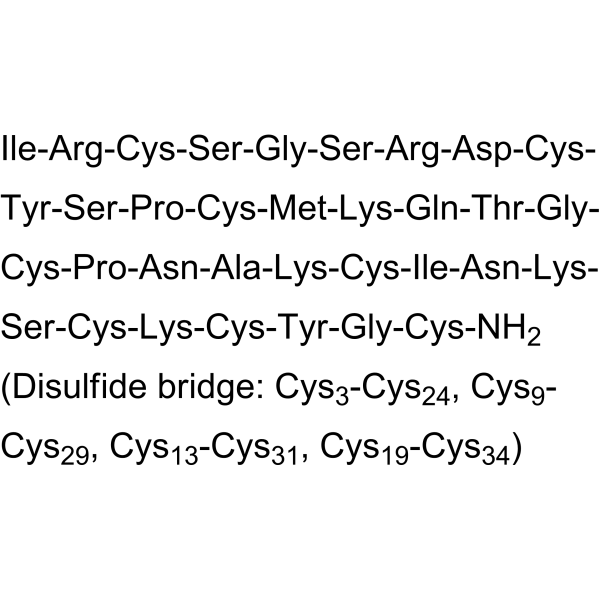
Spinoxin isolated from the venom of scorpion Heterometrus spinifer, is a 34-residue peptide neurotoxin cross-linked by four disulfide bridges. Spinoxin is a potent inhibitor of Kv1.3 potassium channel (IC50 = 63 nM), considering to be valid molecular targets in the diagnostics and therapy of various autoimmune disorders and cancers .
loading...
    loading...
Cat. No.: HY-N15346
Target:  

Others

Menominin B is a cyclic peptide found in the freshwater sponge-associated cyanobacterium Nostoc sp. with cytotoxic properties. Menominin B exhibits antiproliferative activity against the ovarian cancer cell line OVCAR3 (with IC50 of 2.4 μM). Menominin B holds promise for research in the field of anticancer therapy .
loading...
    loading...
Cat. No.: HY-W127725
CAS No.: 62698-55-9
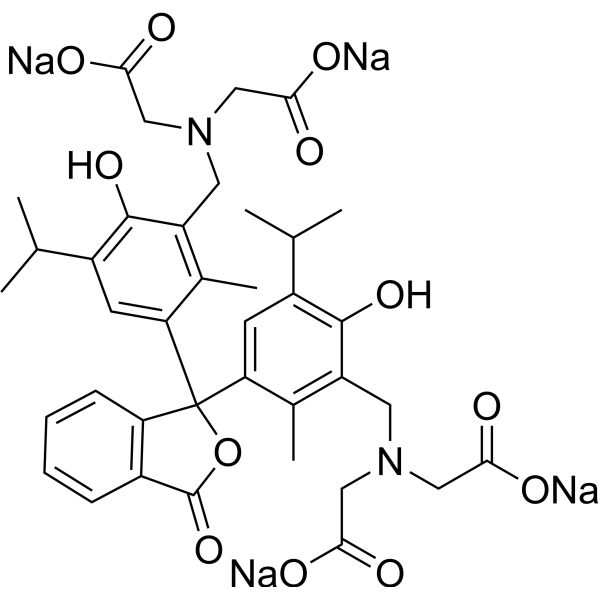
Thymolphthalexon (tetrasodium) is an organic compound commonly used as a reagent in biochemical assays. It belongs to the family of thioxanthone derivatives and has strong antioxidant properties. Thymolphthalexon has several applications in the study of free radical response, oxidative stress, and aging. In addition, it can be used as a photosensitizer in photodynamic therapy for the improvement of cancer and other diseases.
loading...
    loading...
Cat. No.: HY-W008951A
CAS No.: 7651-99-2
Synonyms: EDTMP sodium
Ethylenediaminetetramethylenephosphonic acid (EDTMP) sodium is a bone-targeted chelating agent. Ethylenediaminetetramethylenephosphonic acid sodium‘s phosphonic acid groups possess a unique ability to bind with high affinity to hydroxyapatite in bone, and can form radioactive compounds with 153Sm and 177Lu. Ethylenediaminetetramethylenephosphonic acid sodium is used to study palliative therapy for pain associated with multiple bone metastatic cancers .
loading...
    loading...
Cat. No.: HY-N1453R
CAS No.: 123940-54-5
Hypocrellin B (Standard) is the analytical standard of Hypocrellin B. This product is intended for research and analytical applications. Hypocrellin B, a pigment isolated from the fungi Hypocrella bambusae and Shiraia bambusicola, is an apoptosis inducer. Hypocrellin B can be used as a photosensitizer for photodynamic therapy of cancer. Hypocrellin B also has antimicrobial and antileishmanial activities[1][2][3].
loading...
    loading...
Cat. No.: HY-128973R
CAS No.: 24533-72-0
Research Areas:  

Cancer

Pyropheophorbide-a (Standard) is the analytical standard of Pyropheophorbide-a. This product is intended for research and analytical applications. Pyropheophorbide-a (Ppa) is a photosensitizer used in photodynamic therapy (PDT) for tumors. Pyropheophorbide-a exhibits phototoxic effects on tumor cells, such as cervical cancer cells, and also has anti-lipogenesis activity. Pyropheophorbide-a shows potential for research in the fields of cancer and age-related macular degeneration (AMD). Pyropheophorbide-a derivatives also demonstrate inhibitory activity against tumor cells .
loading...
    loading...
Cat. No.: HY-169060
Target:  

Lactate Dehydrogenase

Research Areas:  

Cancer

LDHA-IN-8 (Compound 6) is a lactate dehydrogenase (LDHA) inhibitor. LDHA-IN-8 inhibits LDHA catalysis of pyruvate in a dose-dependent manner (EC50 value of 14.54 μM), reduces intracellular lactate levels, and increases intracellular reactive oxygen species (ROS) levels, thereby inhibiting the proliferation of pancreatic cancer cells and lung cancer cells. LDHA-IN-8 holds promise for research in the field of LDHA-related antitumor therapies .
loading...
    loading...
Cat. No.: HY-169122
Target:  

Drug Derivative

Research Areas:  

Cancer

LLC1 is an Amiloride (HY-B0285) derivative with cytotoxicity against breast cancer cells, particularly those resistant to treatment. The IC50 values of LLC1 for MCF7, MCF7 MX-100, MCF7 TS, MCF7 TR-1, and MCF7 TR-5 are 13, 12, 25, 26, and 19 mM, respectively. LLC1 shows potential for research in the field of cancer therapy .
loading...
    loading...
Cat. No.: HY-170999
CAS No.: 2705841-17-2
Research Areas:  

Cancer

Antitumor agent-196 (Compound 6a (β, β, β)) is an artemisinin-based oligomer with anticancer activity, showing an IC50 of 90 nM against MCF-7 breast cancer cells. Antitumor agent-196 promotes Apoptosis by regulating the Bax-caspase 3 signaling pathway, and induces Ferroptosis through the modulation of key signaling molecules, including GPX4. Antitumor agent-196 holds promising potential for further research in the field of cancer therapy .
loading...
    loading...
Cat. No.: HY-106072
CAS No.: 67699-40-5
Synonyms: LY 104208
Target:  

Microtubule/Tubulin

Research Areas:  

Cancer

Vinzolidine is a semisynthetic derivative of the catharanthus alkaloid. Vinzolidine exerts its cytotoxic effect on tumor cells by interfering with microtubulin polymerization, thereby inhibiting cell division. Vinzolidine can be utilized in research to investigate synergistic effects when combined with other chemotherapeutic agents or biologic therapies, as well as to study cancer cells' tolerance or resistance to these treatments, and to explore approaches to overcome such obstacles .
loading...
    loading...
Cat. No.: HY-D2620
CAS No.: 3030055-40-1
CAR-2 is a BODIPY-based photosensitizer that induces ferroptosis in photodynamic therapy (PDT) by targeting the endoplasmic reticulum (ER) and lipid droplets (LDs). CAR-2 exhibits phototoxicity in breast cancer cells with IC50 of 0.01-0.02 μM. CAR-2 exhibits antitumor efficacy in 4T1 xenograft mouse models .
loading...
    loading...
Cat. No.: HY-162885
CAS No.: 1194235-46-5
Research Areas:  

Cancer

YSY01A is a proteasome inhibitor that can suppress cancer cell survival by inducing apoptosis (Apoptosis). Its IC50 values are 51.0 nM for HEK293T, 9.2 nM for A549, 5.2 nM for MCF-7, 8.9 nM for MGC-803, and 35.4 nM for PC-3M cells. Additionally, YSY01A eliminates constitutive STAT3 signaling by downregulating gp130 and JAK2 in human A549 lung cancer cells. YSY01A holds promise for research in the field of cancer therapy .
loading...
    loading...
Cat. No.: HY-173139
Target:  

YAP

Research Areas:  

Cancer

TEAD-IN-19 (Compound 1l) is a transcriptional inhibitor of TEAD, exhibiting inhibition rates of 38.5%, 36.2%, 57.8%, and 71.3% against TEAD1, TEAD2, TEAD3, and TEAD4, respectively, at a concentration of 10 μM. TEAD-IN-19 shows potent anti-proliferative and anti-migratory activities in prostate cancer cell lines and significantly reduces the expression of TEAD-regulated downstream genes. TEAD-IN-19 holds promise for research in the field of cancer therapy .
loading...
    loading...
Cat. No.: HY-172922
Target:  

FGFR

Research Areas:  

Cancer

Arg-IN-1 is a selective Arginine (Arg)-targeting covalent inhibitor with IC50s of 9.7 nM and 30.4 nM for FGFR2 and FGFR3,respectively. Arg-IN-1 has the potential to avoid FGFR1/4-targeted toxicity as well as conquer acquired on-target resistance, potential for FGFR-targeting cancer therapy .
loading...
    loading...
Cat. No.: HY-B0002AR
CAS No.: 103639-04-9
Synonyms: GR 38032 hydrochloride dihydrate (Standard); SN 307 hydrochloride dihydrate (Standard)
Research Areas:  

Neurological Disease

Ondansetron (hydrochloride dihydrate) (Standard) is the analytical standard of Ondansetron (hydrochloride dihydrate). This product is intended for research and analytical applications. Ondansetron (GR 38032) hydrochloride dehydrate is an orally active, highly selective and competitive 5-HT3 receptor antagonist (crosses the blood-brain barrier). Ondansetron hydrochloride dehydrate can be used in studies of preventing nausea and vomiting associated with cancer chemotherapy, radiation therapy and surgery .
loading...
    loading...
Cat. No.: HY-116604
CAS No.: 4425-23-4
Synonyms: PD 139530
Target:  

PI3K Akt

Research Areas:  

Cancer

RLX (PD 139530) is a PI3K/Akt/FoxO3a signaling inhibitor, possessing significant therapeutic potential in experimental colon cancer. RLX can effectively modulate the tumor microenvironment, enhancing the efficacy of cancer immunotherapy. RLX demonstrates the ability to improve the retention time of therapeutic agents within the tumor microenvironment by utilizing advanced nanoparticle delivery systems. RLX can be integrated with various treatment modalities, such as chemotherapy and radiotherapy, to enhance overall tumor therapy effectiveness .
loading...
    loading...
Cat. No.: HY-170490
Research Areas:  

Cancer

TTQ-SA is a near-infrared (NIR) spiro-AIEgen (aggregation-induced emission luminogen), that converts near-infrared light (NIR) into thermal energy, causing thermal damage and death of tumor cells. TTQ-SA exhibits cellular uptake and targeting ability in cancer cell MF-7. TTQ-SA silences the expression of survivin gene with combination of DNAzyme, enhances the sensitivity of tumor cells to photothermal therapy .
loading...
    loading...
Cat. No.: HY-116604A
CAS No.: 21314-60-3
Synonyms: PD 139530 hydrochloride
Target:  

PI3K Akt

Research Areas:  

Cancer

RLX (PD 139530) hydrochloride is the hydrochloride of RLX (HY-116604). RLX is a PI3K/Akt/FoxO3a signaling inhibitor, possessing significant therapeutic potential in experimental colon cancer. RLX can effectively modulate the tumor microenvironment, enhancing the efficacy of cancer immunotherapy. RLX demonstrates the ability to improve the retention time of therapeutic agents within the tumor microenvironment by utilizing advanced nanoparticle delivery systems. RLX can be integrated with various treatment modalities, such as chemotherapy and radiotherapy, to enhance overall tumor therapy effectiveness .
loading...
    loading...

