197 Results for "

Cancer therapy

" in MedChemExpress (MCE) Product Catalog:
Products (197)

197 Results for "Cancer therapy" in MCE Product Catalog:

  • Categories Recommended:
    More
Cat. No.: HY-189235
CAS No.: 3078735-55-1
Target:  

5-HT Receptor

Research Areas:  

Cancer

IHCH-8110 is a peripherally restricted, non-brain-penetrant 5-HT2AR and 5-HT2CR agonist (Ki=47.86 nM) that antagonizes 5-HT2BR. IHCH-8110 induces CXCL10 and IL-18 expression by activating 5-HT2AR on enteric glial cells, thereby promoting CD8 + T cell recruitment and effector polarization, and avoids the risk of cardiac valvulopathy associated with 5-HT2BR activation. IHCH-8110 exhibits a low risk of hERG channel inhibition (IC50=5.96 μM) and is well tolerated, sensitizing immunologically cold colorectal cancer to PD-1 blockade therapy, making it suitable for research related to colorectal cancer .
loading...
    loading...
Cat. No.: HY-152293
CAS No.: 1412453-70-3
Target:  

VEGFR ERK

Research Areas:  

Cancer

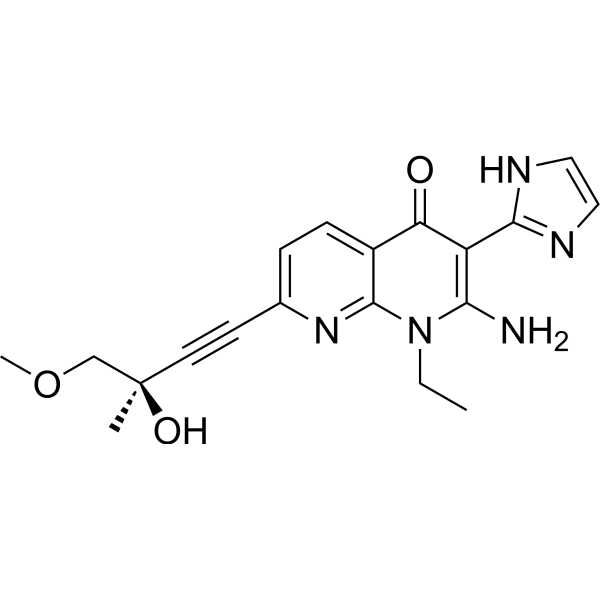
EVT801 is an orally active and selective inhibitor of VEGFR-3 (IC50=11 nM), which has antitumor effects. EVT801 inhibits not only VEGF-C-induced human endothelial cell proliferation, but also tumor (lymphatic) angiogenesis in tumor mouse models. EVT801 can reduce tumor hypoxia, immunosuppressive cytokines (CCL4, CCL5) and myeloid derived suppressor cells (MDSC) production. EVT801 has synergistic effect with immune checkpoint therapy (ICT), which improves ICT response rate and has better inhibitory effect on cancer mouse models . EVT801 is a click chemistry reagent, it contains an Alkyne group and can undergo copper-catalyzed azide-alkyne cycloaddition (CuAAc) with molecules containing Azide groups.
loading...
    loading...
Cat. No.: HY-16561G
CAS No.: 501-36-0
Synonyms: trans-Resveratrol (GMP); SRT501 (GMP)
Resveratrol (GMP) is Resveratrol (HY-16561) produced by using GMP guidelines. GMP small molecules work appropriately as an auxiliary reagent for cell therapy manufacture. Resveratrol (trans-Resveratrol; SRT501), a natural polyphenolic phytoalexin that possesses anti-oxidant, anti-inflammatory, cardioprotective, and anti-cancer properties. Resveratrol (SRT 501) has a wide spectrum of targets including mTOR, JAK, β-amyloid, Adenylyl cyclase, IKKβ, DNA polymerase. Resveratrol also is a specific SIRT1 activator . Resveratrol is a potent pregnane X receptor (PXR) inhibitor . Resveratrol is an Nrf2 activator, ameliorates aging-related progressive renal injury in mice model . Resveratrol increases production of NO in endothelial cells .
loading...
    loading...
Cat. No.: HY-19873
CAS No.: 925438-34-2
Target:  

Photosensitizer

Research Areas:  

Cancer

SL-052 is a hypocrellin-based photosensitizer that has recently shown promising results in clinical and preclinical testing for cancer photodynamic therapy (PDT). SL-052 is encapsulated in biodegradable polylactic-co-glycolic acid (PLGA) polymer nanoparticles optimized using single emulsion solvent evaporation technology. The SL-052-PLGA nanoparticles were more effective in PDT treatment of subcutaneous SCCVII squamous cell carcinoma compared to polyvinylpyrrolidone (PVP)-based and standard liposomal SL-052 formulations. A longer time interval between drug injection and tumor illumination can improve tumor cure rates, and SL-052-PLGA nanoparticles showed the best therapeutic effect among all SL-052 formulations.
loading...
    loading...
Cat. No.: HY-P990716
CAS No.: 2648346-74-9
Synonyms: AZD7789

Target:  

PD-1/PD-L1 Tim3

Research Areas:  

Inflammation/Immunology

Sabestomig (AZD7789) is a monovalent bispecific antibody targeting PD-1 and TIM-3. Sabestomig binds to PD-1 and an epitope in the TIM-3 IgV domain outside the phosphatidylserine-binding cleft, thereby precisely regulating immune responses. Sabestomig promotes IL-2 production, efferocytosis and cross-presentation of tumor antigens, and enhances the release of anti-tumor T cell cytokines, cytotoxicity, and secretion of IFN-γ. Sabestomig inhibits the growth of solid tumors, prolongs the duration of tumor suppression, and significantly enhances anti-tumor responses following anti-PD-1 therapy. Sabestomig has been used in studies related to non-small cell lung cancer and classical Hodgkin lymphoma .
loading...
    loading...
Cat. No.: HY-Y1091
CAS No.: 923-27-3
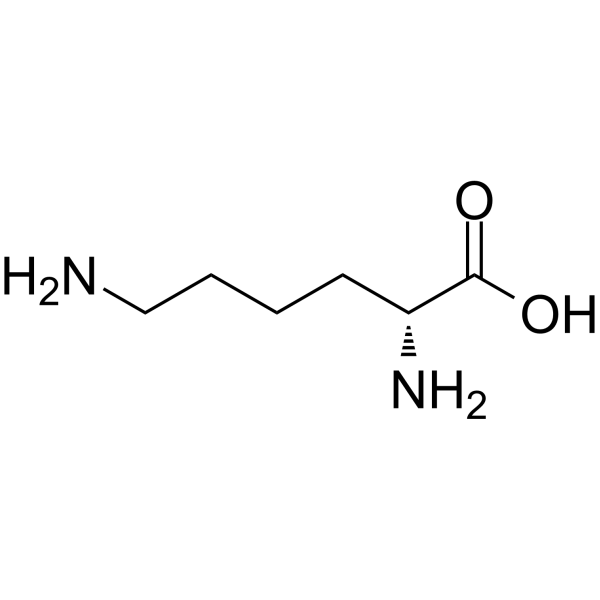
D-Lysine is the D-enantiomer of L-Lysine (HY-N0469). D-Lysine is metabolically inert and not utilized for protein synthesis by mammalian ribosomes. D-Lysine blocks renal uptake of 111In/ 90Y-Octreotide (HY-P0036)-based probes without inhibiting uptake by tumor/receptor tissues, and thus acts as a renoprotective agent in diagnostic imaging and peptide receptor radionuclide therapy (PRRT). D-Lysine specifically inhibits the early steps of non-enzymatic glycation by competing with glucose via its free amino group, theoretically, it can serve as a glycation competitor that "does not interfere with protein synthesis" under chronic hyperglycemia in diabetes. D-Lysine can be used in research related to cancer and diabetes .
loading...
    loading...
Cat. No.: HY-Y1804
CAS No.: 7274-88-6
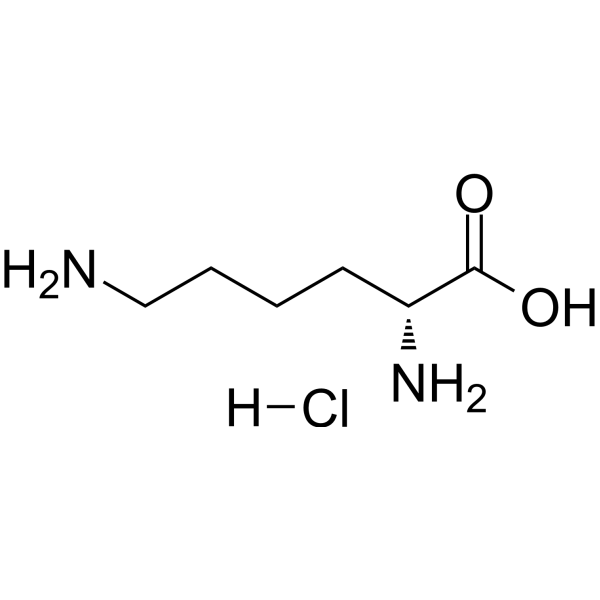
D-Lysine monohydrochloride is the D-enantiomer of L-Lysine (HY-N0469). D-Lysine monohydrochloride is metabolically inert and not utilized for protein synthesis by mammalian ribosomes. D-Lysine monohydrochloride blocks renal uptake of 111In/ 90Y-Octreotide (HY-P0036)-based probes without inhibiting uptake by tumor/receptor tissues, and thus acts as a renoprotective agent in diagnostic imaging and peptide receptor radionuclide therapy (PRRT). D-Lysine monohydrochloride specifically inhibits the early steps of non-enzymatic glycation by competing with glucose via its free amino group, theoretically, it can serve as a glycation competitor that "does not interfere with protein synthesis" under chronic hyperglycemia in diabetes. D-Lysine monohydrochloride can be used in research related to cancer and diabetes .
loading...
    loading...
Cat. No.: HY-L134
193 compounds

Aging is an unavoidable process, leading to cell senescence due to physiochemical changes in an organism. Aging cells cease to divide and drive the progression of illness through various pathways, resulting in the death of an organism ultimately. Anti-aging activities are primarily involved in the therapies of age-related disorders such as Parkinson's Disease (PD), Alzheimer's Disease (AD), cardiovascular diseases, cancer, and chronic obstructive pulmonary diseases.

Natural products are known as effective molecules in anti-aging treatments, which delay the aging process through influencing several pathways and thus ensure an extended lifespan. MCE offers a unique collection of 193 natural products with validated anti-aging activity. MCE anti-aging natural product library is a useful tool for the study of aging-related diseases drugs and pharmacology.

Cat. No.: HY-15244G
CAS No.: 1217486-61-7
Alpelisib GMP is Alpelisib (HY-15244) produced by using GMP guidelines. GMP small molecules works appropriately as an auxiliary reagent for cell therapy manufacture. Alpelisib (BYL-719) is an orally active PI3Kα-selective inhibitor that blocks the conversion of PIP2 to PIP3, thereby inhibiting pathways including PI3K/AKT/mTOR, MAPK/ERK, Notch and JAK-STAT. Alpelisib also induces apoptosis, G0/G1 phase arrest and senescence; it significantly inhibits the proliferation, self-renewal, stemness and epithelial-mesenchymal transition (EMT) of tumor cells, reduces cancer stem cell populations and decreases the expression of stem cell markers. Alpelisib not only enhances the sensitivity to Eribulin (HY-13442) and exerts a synergistic effect with Paclitaxel (HY-B0015), but may also induce drug resistance by upregulating the SGK3/GSK3β/β-catenin signaling pathway. Alpelisib can be applied to research related to breast cancer, gastric cancer and lipomas associated with PTEN hamartoma tumor syndrome .
loading...
    loading...
Cat. No.: HY-116865S
CAS No.: 56588-54-6
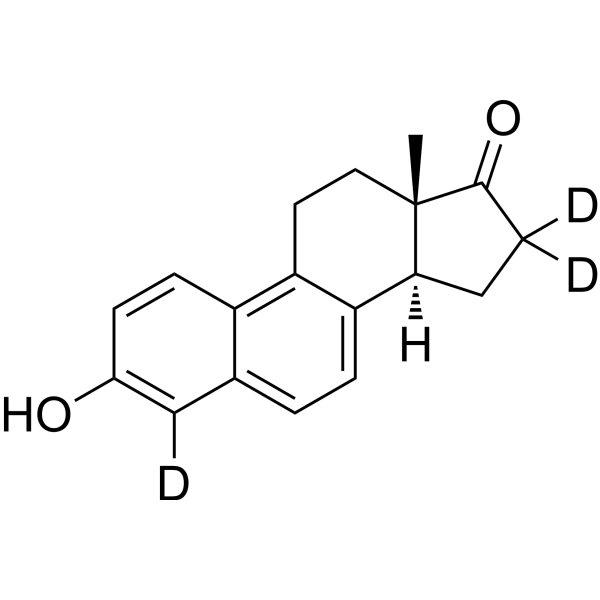
Equilenin-4,16,16-d3 is the d3-labeled Equilenin (HY-116865). Equilenin is a B-ring unsaturated estrogen discovered in pregnant mare urine and is one of the major components of Premarin, a drug commonly used for estrogen replacement therapy. Equilenin binds to estrogen receptors in the body and exerts effects similar to endogenous estrogens. Equilenin weakly binds to and activates the aryl hydrocarbon receptor (AhR) to induce CYP1A1 expression. Equilenin exhibits high affinity for sex hormone-binding globulin (SHBG/SBP) and is metabolized by CYP1A1/1B1 to 4-hydroxy and 17β-dihydro derivatives. Equilenin is used in breast cancer-related research .
loading...
    loading...
Cat. No.: HY-12238G
CAS No.: 1127442-82-3
Synonyms: endo-IWR 1 (GMP); IWR-1-endo (GMP)
IWR-1 (IWR-1-endo) (GMP) is the IWR-1 (HY-12238) produced by using GMP guidelines. GMP small molecules work appropriately as an auxiliary reagent for cell therapy manufacture. IWR-1 (IWR-1-endo) is a tankyrase inhibitor targeting Wnt/β-catenin (IC50 = 180 nM). IWR-1 compromises critical steps of the canonical Wnt signaling, namely translocation of β-catenin to the nucleus and subsequent TCF/LEF activation and expression of Wnt/β-catenin downstream targets. IWR-1 promotes β-catenin phosphorylation by promoting stability of Axin-scaffolded destruction complexes. IWR-1 can be studied in research for anti-tumor purposes, and diseases such as osteosarcoma, colorectal cancer and psoriasis .
loading...
    loading...
Cat. No.: HY-135146G
CAS No.: 2170136-65-7
Synonyms: (R)-GSK3482364 (GMP)
GSK-3484862 GMP is GSK-3484862 (HY-135146) produced by using GMP guidelines. GMP small molecules works appropriately as an auxiliary reagent for cell therapy manufacture. GSK-3484862 is a highly potent non-covalent inhibitor and demethylating agent of DNMT1. GSK-3484862 induces genome-wide DNA demethylation, including the regulatory elements of DNMT3B and the promoter region of TERT, and significantly inhibits cell viability, growth, proliferation and self-renewal. GSK-3484862 blocks the transformation of young AT2 cells, induces apoptosis, and generates transcriptomic features similar to those of senescent cells. GSK-3484862 is widely used in studies related to lung cancer, oral squamous cell carcinoma and lung adenocarcinoma .
loading...
    loading...
Cat. No.: HY-153598
CAS No.: 2782022-40-4
Research Areas:  

Inflammation/Immunology Cancer

LD4172 is a selective RIPK1 PROTAC degrader with a Ki of 4.8 nM. LD4172 induces RIPK1 protein degradation via ternary complex formation with RIPK1 and VHL E3 ligase, driving ubiquitination and proteasomal breakdown. LD4172 abrogates TNF-induced classical NF-κB signaling in TRAF2-deficient cells, impairing IκBα phosphorylation and degradation, and reducing IL-8 production. LD4172 induces apoptosis and immunogenic cell death in tumor cells, enhances tumor-infiltrating lymphocyte responses, and sensitizes tumors to anti-PD1 therapy. LD4172 acts as a chemical probe for investigating RIPK1 scaffolding functions. LD4172 can be used for the research of melanoma, colon cancer .
loading...
    loading...
Cat. No.: HY-170779
CAS No.: 3078291-78-5
Target:  

FAP

Research Areas:  

Cancer

DOTA-NI-FAPI-04 is a FAP inhibitor (IC50 = 7.44 nM). By integrating FAP targeting with hypoxia-sensitive groups (nitroimidazole), DOTA-NI-FAPI-04 significantly enhances tumor uptake and retention capabilities. DOTA-NI-FAPI-04 chelates metallic isotopes (such as 68Ga and 177Lu) through DOTA to produce radioactive probes ([68Ga]Ga/DOTA-NI-FAPI-04 and [177Lu]Lu/DOTA-NI-FAPI-04), which can be used for research in tumor diagnostics and therapeutic agents. DOTA-NI-FAPI-04 holds dual targeting potential in the fields of cancer imaging, tumor microenvironment analysis, and radionuclide therapy, particularly suitable for scenarios where the tumor stroma and hypoxic regions synergistically interact .
loading...
    loading...
Cat. No.: HY-176724
ZnPc-O3-JQ1 is a photoactivatable BRD4-targeting degrader and photosensitizer, composed of monosubstituted amino zinc phthalocyanine (ZnPc), the BRD4 ligand JQ1, and a PEG linker. Upon activation by light, ZnPc-O3-JQ1 generates reactive oxygen species (ROS) and induces BRD4 degradation in an E3 ubiquitin ligase-independent manner. BRD4 degradation further reduces HIF-1α and GCL levels and restricts the SLC7A11/GSH-related antioxidant response, thereby enhancing photodynamic therapy-associated oxidative stress. ZnPc-O3-JQ1 can be used in research related to bladder cancer .
loading...
    loading...
Cat. No.: HY-P992353

Target:  

LILRB

Research Areas:  

Cancer

ES009 is a high-affinity LILRB2 antagonist, with IC50 values of 14.07 nM and 18.61 nM for inhibiting hLILRB2-huANGPTL3 and hLILRB2-huANGPTL4, respectively. ES009 specifically blocks the interactions between LILRB2 and MHC class I as well as non-MHC ligands, thereby effectively inhibiting receptor activation. ES009 can reprogram anti-inflammatory myeloid cells and induce their conversion to a pro-inflammatory phenotype, and also reverse the T cell suppression mediated by macrophages. When combined with anti-PD-1 blockade therapy, ES009 synergistically enhances T cell activation. ES009 can be used in research related to advanced solid tumors and ovarian cancer .
loading...
    loading...
Cat. No.: HY-138794G
CAS No.: 2417089-74-6
XL177A GMP is XL177A (HY-138794) produced by using GMP guidelines. GMP small molecules works appropriately as an auxiliary reagent for cell therapy manufacture. XL177A is a covalent USP7 inhibitor that blocks the deubiquitinase activity of USP7. XL177A destabilizes non-canonical PRC1 complexes or KDM6A and reduces chromatin deposition of H2AK119Ub, thereby relieving the repression of neuronal differentiation programs. Meanwhile, XL177A also regulates the ELOF1-UVSSA-USP7-nuclear β-catenin axis, decreasing the transcription levels of related proteins and the accumulation of nuclear β-catenin. XL177A exerts antiviral effects by reducing the expression levels of coronavirus receptors, and exhibits inhibitory activity against APC-mutated colorectal cancer cells, neuroblastoma, and coronaviruses including SARS-CoV-2 variants. XL177A is mainly used in studies related to colorectal cancer, neuroblastoma, and coronavirus infections .
loading...
    loading...
Cat. No.: HY-L015
1,149 compounds

The PI3K/Akt/mTOR pathway controls many cellular processes that are important for the formation and progression of cancer, including apoptosis, transcription, translation, metabolism, angiogenesis, and cell cycle progression. Every major node of this signaling network is activated in a wide range of human tumors. Mechanisms for the pathway activation include activation of receptor tyrosine kinases (RTKs) upstream of PI3K, mutation or amplification of PIK3CA encoding p110α catalytic subunit of PI3K, mutation or loss of PTEN tumor suppressor gene, and mutation or amplification of Akt1. Once the pathway is activated, signaling through Akt can stimulate a series of substrates including mTOR which is involved in protein synthesis. Thus, inhibition of this pathway is an attractive concept for cancer prevention and/or therapy. Currently some mTOR inhibitors are approved for several indications, and there are several novel PI3K/Akt/mTOR inhibitors in clinical trials.

MCE owns a unique collection of 1,149 compounds that can be used for PI3K/Akt/mTOR pathway research. PI3K/Akt/mTOR Compound Library also acts as a useful tool for anti-cancer drug discovery.

Cat. No.: HY-167854
CAS No.: 904899-25-8
Research Areas:  

Cancer

KW-2450 Free base is a potent multikinase inhibitor targeting Aurora A and B kinases, demonstrating significant antitumor activity against triple-negative breast cancer (TNBC). KW-2450 Free base effectively reduces cell viability, promotes apoptosis, and inhibits colony formation and mammosphere formation in TNBC cells. KW-2450 Free base significantly suppresses the growth of TNBC xenografts, leading to tetraploid accumulation followed by apoptosis or the survival of octaploid cells. KW-2450 Free base enhances the efficacy of combination therapy with the MEK inhibitor selumetinib, resulting in a synergistic antitumor effect in TNBC models. KW-2450 Free base also acts as an orally bioavailable inhibitor of IGF-1R and IR tyrosine kinases, contributing to its potential antineoplastic activity by inhibiting tumor cell proliferation and inducing apoptosis.
loading...
    loading...
Cat. No.: HY-179476
CAS No.: 847232-54-6
3-Oxochol-5-en-24-oic acid is a rare bile acid produced by the intestinal microbiota. 3-Oxochol-5-en-24-oic acid is a potent antagonist of the human androgen receptor (hAR), with an IC50 of 119.4 nM. 3-Oxochol-5-en-24-oic acid has no significant agonistic or antagonistic effects on estrogen receptors (ER) or glucocorticoid receptors (GR). 3-Oxochol-5-en-24-oic acid effectively inhibits the growth of prostate cancer cells. In animal models, it enhances the efficacy of anti-PD-1 therapy by regulating the differentiation of CD8 + T cells. 3-Oxochol-5-en-24-oic acid can be used for research on regulating host immunity and anti-tumor studies .
loading...
    loading...

