

927 Results for "

Lymphomas

" in MedChemExpress (MCE) Product Catalog:
Products (927)

927 Results for "Lymphomas" in MCE Product Catalog:

Cat. No.: HY-170434
CAS No.: 3106363-91-8
Research Areas:  

Cancer

Bfl-1-IN-6 is an orally active BFL1 inhibitor with an IC50 of 19 nM. Bfl-1-IN-6 selectively binds covalently to BFL1, stabilizes the protein and displaces BIM from BFL1, thereby inducing apoptosis activity. Bfl-1-IN-6 stabilizes BFL1 protein, activates cleaved caspase 3, and exhibits antitumor activity in mouse models. Bfl-1-IN-6 can be used for the research of hematological malignancies .
loading...
    loading...
Cat. No.: HY-170434A
CAS No.: 3106364-91-1
Research Areas:  

Cancer

Bfl-1-IN-6 TFA is an orally active BFL1 inhibitor with an IC50 of 19 nM. Bfl-1-IN-6 TFA selectively binds covalently to BFL1, stabilizes the protein and displaces BIM from BFL1, thereby inducing apoptosis activity. Bfl-1-IN-6 TFA stabilizes BFL1 protein, activates cleaved caspase 3, and exhibits antitumor activity in mouse models. Bfl-1-IN-6 TFA can be used for the research of hematological malignancies .
loading...
    loading...
Cat. No.: HY-I0466
CAS No.: 1121-89-7
Glutarimide is a CRBN binder. Glutarimide exerts its function by binding to the thalidomide-binding domain of the CRBN protein. Glutarimide serves as an important structural component of many biologically active compounds. Glutarimide can be used in studies related to anemia, multiple myeloma and cycloheximide .
loading...
    loading...
Cat. No.: HY-P99641
CAS No.: 1808081-43-7

Research Areas:  

Cancer

Gilvetmab is a canine-derived anti-cPD-1 monoclonal antibody, as well as an immune activator/antitumor agent. Gilvetmab binds to canine PD-1, blocks the interaction of PD-1/PD-L1/L2, prevents immunosuppression, reactivates antitumor responses, induces tumor regression or disease stabilization, and may also trigger pseudoprogression. Gilvetmab can be used in research related to malignant melanoma and mast cell tumors .
loading...
    loading...
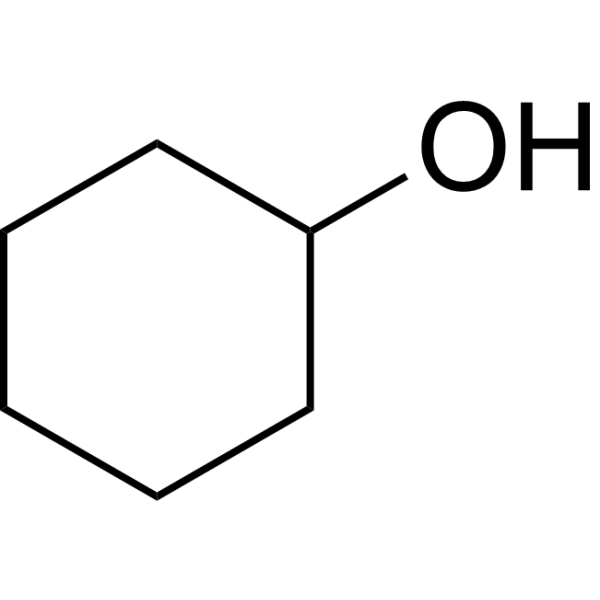
Cat. No.: HY-Y1217
CAS No.: 108-93-0
Synonyms: Hydroxycyclohexane; NSC 54711; Naxol; Cyclohexanol
1-Cyclohexanol (Hydroxycyclohexane; NSC 5471) is an orally active Cramer Class I flavor ingredient that can be used in fragrances. 1-Cyclohexanol has a wide margin of safety and is environmentally friendly .
loading...
    loading...
Cat. No.: HY-111556R
CAS No.: 2361493-16-3
Research Areas:  

Cancer

BSJ-03-123 (Standard) is the analytical standard of BSJ-03-123 (HY-111556). This product is intended for research and analytical applications. BSJ-03-123 is a selective PROTAC degrader of CDK6. BSJ-03-123 degrades CDK6, thereby inhibiting Rb S780 phosphorylation and inducing G1 phase arrest, while remodeling cell cycle and transcriptional signaling, with no effect on CDK4-dependent cancer cells. BSJ-03-123 reduces CDK6 protein levels in mouse ovarian tissues, increases the proportion of primordial follicles, and induces granulosa cell apoptosis, without impairing the ability of oocytes to resume meiosis and mature to the MII stage. BSJ-03-123 alleviates uveitis by blocking the HDACs-CDK6/ID2 axis. BSJ-03-123 can be used in studies related to acute myeloid leukemia, mantle cell lymphoma and autoimmune uveitis .
loading...
    loading...
Cat. No.: HY-L079
4,333 compounds

Blood cancers, also called hematologic cancers, occur when abnormal blood cells start growing out of control, interrupting the function of normal blood cells, which fight off infection and produce new blood cells. Most blood cancers start in the bone marrow, which is where blood is produced. There are three main types of blood cancers: leukemia, lymphoma and myeloma, which afflict millions of children and adults every year, and are often deadly.

Some common blood cancer treatments include stem cell transplantation, chemotherapy, radiation therapy, targeted therapy, immunotherapy or a combination thereof. As we begin to understand the key signaling pathways and molecular drivers of malignant transformation in haematological disorders, new treatment strategies will continue to be developed.

MCE offers a unique collection of 4,333 compounds with identified and potential anti-blood cancer activity. These compounds target blood cancer’s major targets and signaling pathways. MCE anti-blood cancer compound library is a useful tool for anti-blood cancer drugs screening and other related research.

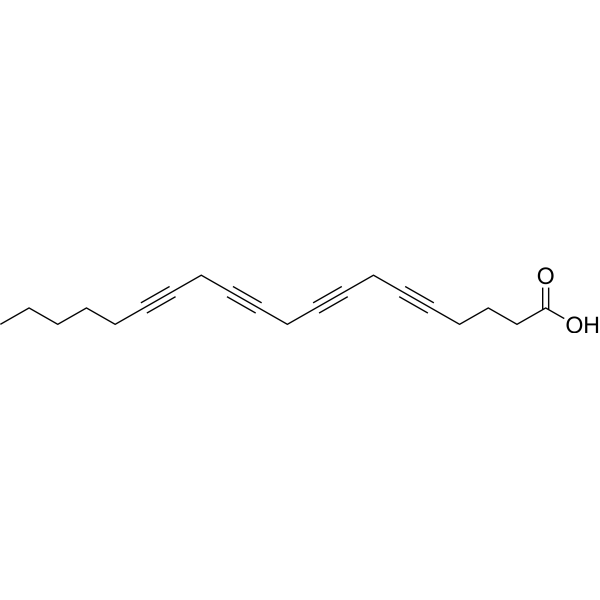
Cat. No.: HY-124108
CAS No.: 1191-85-1
Purity:  ≥99.0%
Synonyms: ETYA
Eicosatetraynoic acid (ETYA) is a non-metabolizable analog of Arachidonic acid (HY-109590) and also an inhibitor of the lipoxygenase (LOX)/cyclooxygenase (COX) pathway (ID50 = 8 μM and 4 μM). Eicosatetraynoic acid acts as a suicide substrate to inhibit the production of inflammatory mediators such as leukotrienes and prostaglandins. Eicosatetraynoic acid acts directly on cell membranes and membrane proteins to exert a wide range of effects, including blocking potassium channels, increasing cell membrane fluidity, elevating intracellular calcium levels, inhibiting DNA synthesis in tumor cells, inducing differentiation of certain cells, and specifically inhibiting the assembly and replication of orthopoxviruses. Eicosatetraynoic acid alleviates acute lung injury induced by chemicals such as phosgene .
loading...
    loading...
Cat. No.: HY-184193
Target:  

PROTACs Aurora Kinase

Research Areas:  

Cancer

M9101 is a selective Aurora A PROTAC degrader with a DC50 of 2.3 nM. M9101 induces G2/M arrest in triple-negative breast cancer cells and potently inhibits the proliferation of multiple tumor cell lines. M9101 can be used in the research of various cancers including triple-negative breast cancer .
loading...
    loading...
Cat. No.: HY-N19666
CAS No.: 1820968-26-0
2-Hexylglutaconic acid is a 2-Pentenedioic acid (HY-W073501A) derivative found in the soil-derived fungus Gongronella butleri. 2-Pentenedioic acid is a chemical building block in synthesis, with research applications focusing on metabolic studies .
loading...
    loading...
Cat. No.: HY-P99215
CAS No.: 1312797-14-0
Synonyms: Anti-EGFL7; RG 7414

Target:  

VEGFR

Research Areas:  

Cancer

Parsatuzumab (Anti-EGFL7; RG 7414) is a humanized monoclonal antibody, acts as an immunomodulator and binds to EGFL7. Parsatuzumab selectively blocks the interaction between EGFL7 and endothelial cells, potentially inhibiting vascular regrowth and reducing vascular endothelial growth factor (VEGF) inhibition .
loading...
    loading...
Cat. No.: HY-129108
CAS No.: 205252-57-9
Synonyms: (9Z)-UAB-30
9-cis-UAB30 is a rexinoid agonist. 9-cis-UAB30 significantly decreases the proliferation, viability, and motility of both patient-derived xenografts (PDXs). 9-cis-UAB30 induced cell-cycle arrest as demonstrated by the significant increase in the percentage of cells in G1 and a decrease in the percentage of cells in S phase by downregulating SKP2 and/or 20S proteasome activity, which leads to increased p27kip1 protein stability. 9-cis-UAB30 downregulates the abundance of stem cell marker mRNAs (Oct4, Nanog, Sox2, nestin) and upregulates the abundance of differentiation marker mRNAs (β3-tubulin, NSE, HOXC9, GAP43). 9-cis-UAB30 has no adverse effects on the central nervous system and cardiovascular system at the tested dose. 9-cis-UAB30 can be used for the study of neuroblastoma, cutaneous T-cell lymphomas, and breast cancer .
loading...
    loading...
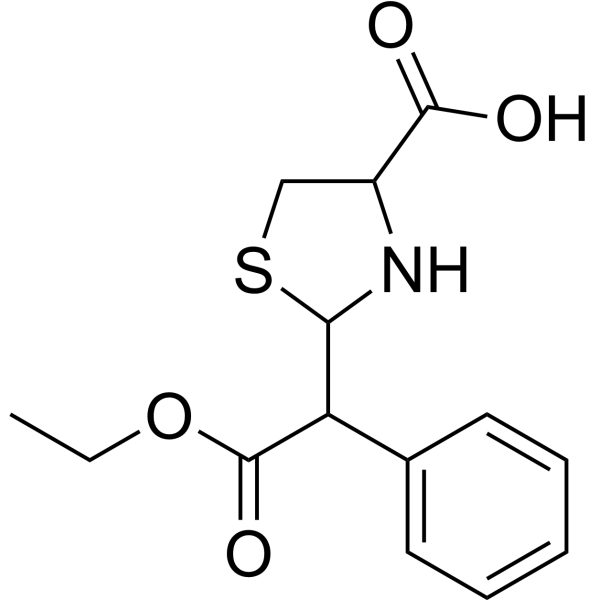
Cat. No.: HY-118028
CAS No.: 1950-36-3
Purity:  99.99%
Leyk is an orally active Cysteine derivative. Leyk stimulates bone marrow hematopoiesis. Leyk exerts a significant protective effect against cyclophosphamide-induced leukopenia. Leyk can be used in studies related to thrombocytopenia and leukopenia .
loading...
    loading...
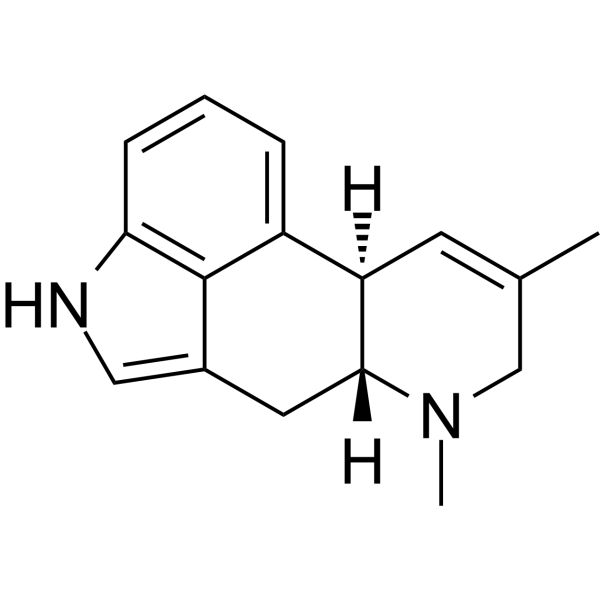
Cat. No.: HY-135525
CAS No.: 548-42-5
Agroclavine acts as an agonist of the D1-dopamine receptor and α1-adrenergic receptor. Agroclavine enhances the sensitivity of the brain to magnetic fields; it impairs spatial memory without affecting hippocampal long-term potentiation (LTP). Agroclavine exerts bidirectional regulatory effects on immune activity: it enhances NK cell activity with low toxicity under normal conditions, while it inhibits NK cell activity and exhibits significant cardiac and hepatic toxicity under stress conditions. Agroclavine can be used for research on neuroelectrophysiology, learning and memory, and immunoregulation .
loading...
    loading...
Cat. No.: HY-P4122
CAS No.: 1676104-81-6
Target:  

HIV

Research Areas:  

Others

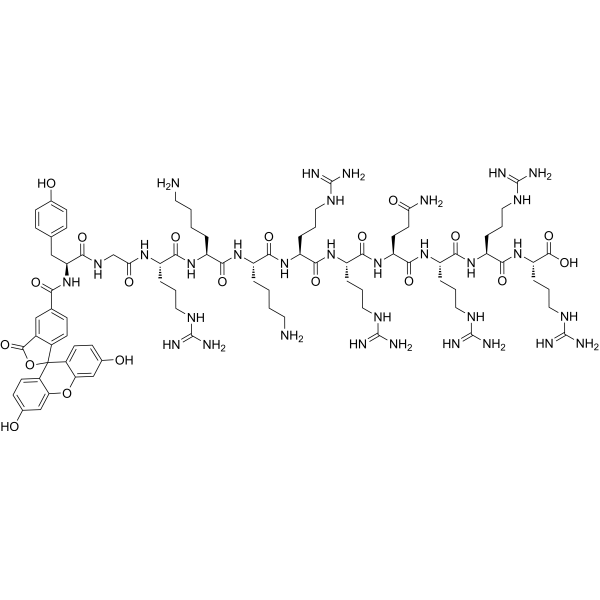
TAT (47-57), FAM-labeled is a 5(6)-Carboxyfluorescein (HY-15940)-labeled TAT (HY-P0281). TAT (YGRKKRRQRRR) is derived from the transactivator of transcription (TAT) of human immunodeficiency virus-1 (HIV-1) and is a cell-penetrating peptide .
loading...
    loading...
Cat. No.: HY-P992439

Target:  

CXCR

Research Areas:  

Cancer

PF-06747143 is recombinant anti-human antibody targeting CXCR4. PF-06747143 blocks CXCL12-induced calcium flux, F-actin polymerization, chemotaxis, cell migration, and leukemic cell bone marrow homing. PF-06747143 reduces tumor burden and improves survival in mouse models of hematologic malignancies. PF-06747143 can be used for the research of chronic lymphocytic leukemia, acute myeloid leukemia, and hematologic malignancies .
loading...
    loading...
Cat. No.: HY-W017180
CAS No.: 72707-66-5
Synonyms: α-(Bromomethyl)acrylic acid; α-Methylated acrylamide; α-MAA
Target:  

Drug Intermediate

Research Areas:  

Cancer

2-(Bromomethyl) acrylic acid (α-MAA) is a component of Ibt-DOX (HY-181546) .
loading...
    loading...
Cat. No.: HY-N7695
CAS No.: 23133-56-4
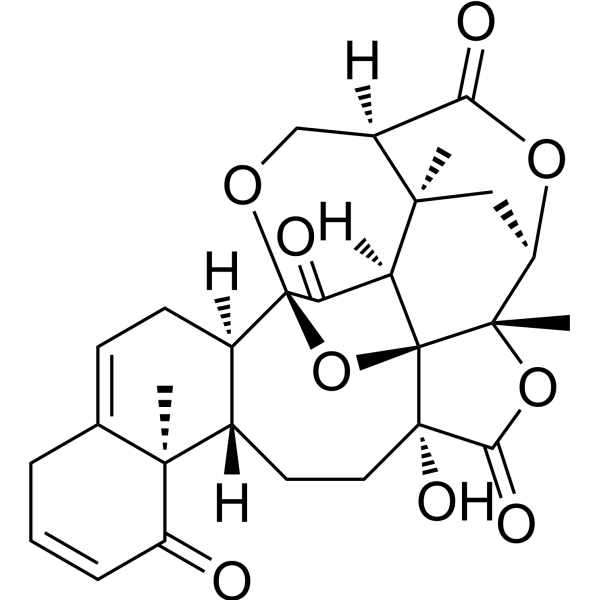
Physalin B is an orally active anti-inflammatory and anticancer agent. Physalin B can be isolated from Physalis alkekengi L. var. Franchetii. Physalin B inhibits the activation of the NF-κB, NLRP3 inflammasome, STAT3, PI3K/Akt and Hedgehog signaling pathways, regulates the phosphorylation levels of GSK-3β, p38 MAPK, ERK1/2 and JNK, and promotes the nuclear translocation of NRF2. Physalin B reduces the levels of pro-inflammatory cytokines and factors, induces mitochondrial reactive oxygen species (mito-ROS) production, Apoptosis, G2/M cell cycle arrest and incomplete Autophagy, alters cytoskeleton structure and alleviates oxidative stress. Physalin B reduces cancer cell viability, ameliorates liver and lung tissue damage and alleviates liver fibrosis. Physalin B can be used in research related to ulcerative colitis, breast cancer, acute lung injury, colon cancer, non-alcoholic steatohepatitis, liver fibrosis, lung cancer, pancreatic cancer, lymphoma, ovarian cancer, sarcoma and leukemia .
loading...
    loading...
Cat. No.: HY-10446A
CAS No.: 1320211-69-5
(S)-Pralatrexate is an orally active anticancer compound. (S)-Pralatrexate exhibits cytotoxic activity against cancer cells and possesses anti-inflammatory activity. (S)-Pralatrexate can be used in research related to prostate cancer, breast cancer, rheumatoid arthritis, etc.
loading...
    loading...
Cat. No.: HY-13464
CAS No.: 1197958-12-5
Purity:  99.94%
Synonyms: Brigatinib analog
Research Areas:  

Cancer

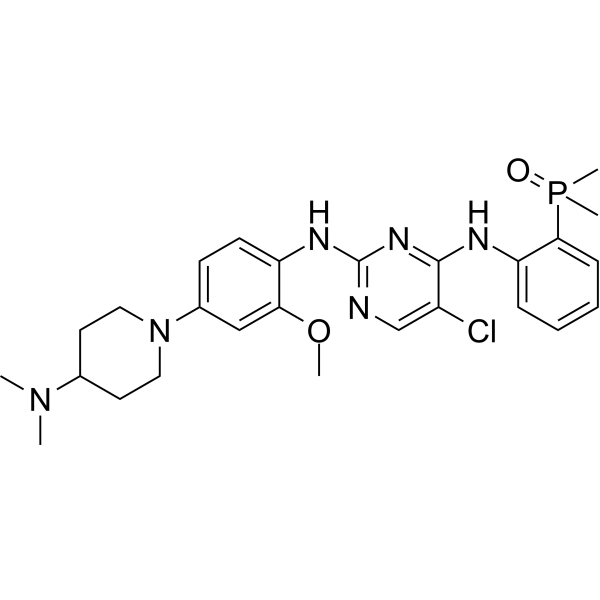
ALK-IN-1 is an orally active, blood-brain barrier-permeable ALK and EGFR inhibitor. ALK-IN-1 binds to and inhibits ALK kinase, ALK fusion proteins, and wild-type and mutant EGFR variants, thereby disrupting their corresponding signaling pathways. ALK-IN-1 can suppress the growth and proliferation of tumor cells and exhibits potential inhibitory activity against mutant EGFR. ALK-IN-1 can be used in the research of non-small-cell lung cancer .
loading...
    loading...

