
1089 Results for "

staphylococcus

" in MedChemExpress (MCE) Product Catalog:
Products (1089)

1089 Results for "staphylococcus" in MCE Product Catalog:

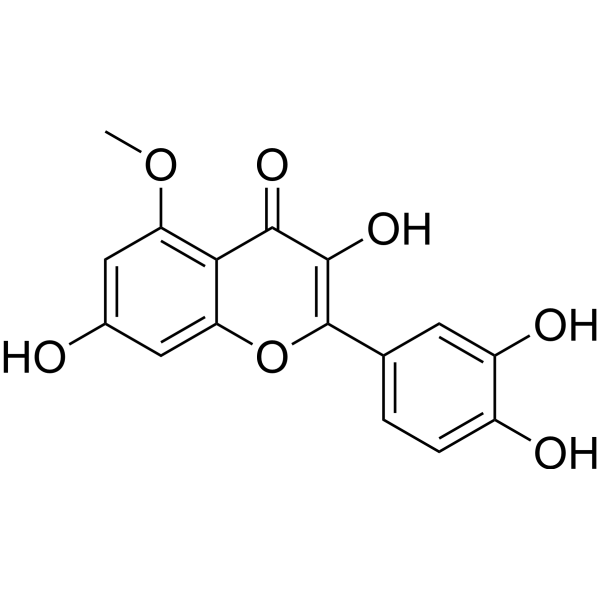
Cat. No.: HY-N7653
CAS No.: 529-51-1
Azaleatin is an orally active inhibitor of hQC, NS2B-NS3 protease and E. coli β-glucuronidase, with IC50 values of 1.1 μM, 38.00 μg/mL and 0.57 μM, respectively. Azaleatin inhibits the activities of NF-κB, MyD88, JAK1, TLR4, STAT3, IL-1β, IL-6, COX-2, TNF-α and β-glucuronidase, blocks pro-inflammatory signaling pathways, reduces the levels of ROS, MDA and uric acid, elevates the levels of GPx, GSR, GST, SOD, CAT, HO-1 and GSH, scavenges free radicals and exerts reducing capacity. Azaleatin inhibits the expression of pro-apoptotic proteins Bax, Caspase-9 and Caspase-3, and upregulates the expression of anti-apoptotic protein Bcl-2. Azaleatin reduces the levels of cardiac injury markers, restores cardiac histological structure, inhibits aggregation, dengue protease activity, hepatic stellate cell proliferation and cancer cell growth, and also exhibits antibacterial activity. Azaleatin can be used in studies related to subchronic cardiotoxicity, Alzheimer's disease, dengue fever, hyperuricemia, liver fibrosis, gastric cancer and bacterial infections .
loading...
    loading...
Cat. No.: HY-12770R
CAS No.: 14367-47-6
Synonyms: Mebeverine metabolite Mebeverine alcohol (Standard)
Research Areas:  

Neurological Disease

Mebeverine alcohol (Standard) is an analytical standard for Mebeverine alcohol. This product is intended for research and analytical applications. Eperezolid (PNU-100592) is an orally active protein synthesis inhibitor that targets the bacterial 50S ribosomal subunit. Eperezolid competitively binds to a specific site on the ribosomal 50S subunit (overlapping with the binding sites of Chloramphenicol (HY-B0239) and Lincomycin (HY-117660)) to inhibit the translation initiation stage and exert antibacterial activity. Eperezolid can induce host cell autophagy to enhance the clearance of intracellular mycobacteria, and its MIC90 for Staphylococcus aureus and Enterococcus is 1-4 μg/mL. Eperezolid is mainly used for antibacterial research on infections with Gram-positive bacteria such as methicillin-resistant (HY-121544) Staphylococci and vancomycin-resistant (HY-B0671) Enterococci, as well as infections with intracellular bacteria such as Mycobacterium tuberculosis .
loading...
    loading...
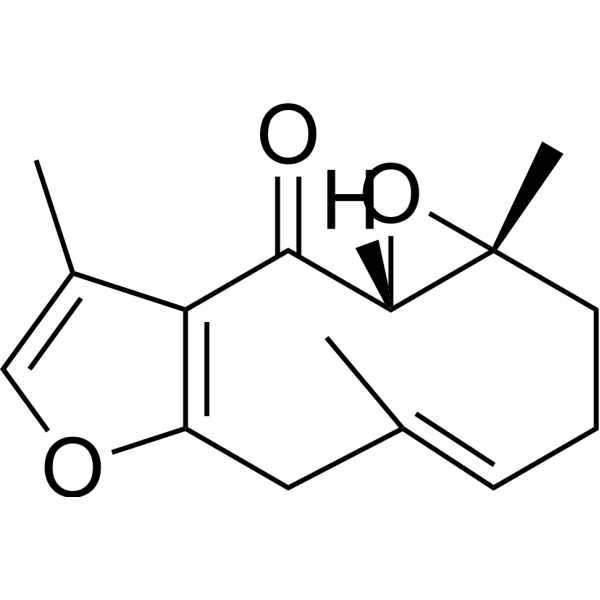
Cat. No.: HY-N1050
CAS No.: 7727-79-9
Zederone is a sesquiterpene. Zederone inhibits ovarian cancer cell proliferation through mTOR/p70s6K signalling pathway. Zederone inhibits CYP activities with IC50s of 2.9 μM (CYP2B6), 9.2 μM (CYP2C9), 11,2 μM (CYP2C19) and >30 μM (CYP1A2 and CYP2D6). Zederone is hepatotoxic with LD50 value at 24 hours in mice of approximately 223 mg/kg and cytotoxic against the KG1a cell line. Zederone shows antibacterial activity against a number of multi-drug resistant and Methicillin (HY-121544)-resistant Staphylococcus aureus strain. Zederone shows cognition improving capacity and assists in the modulation of gut bacterial dysbiosis .
loading...
    loading...
Cat. No.: HY-P11102
CAS No.: 1065010-73-2
Research Areas:  

Infection Cancer

Temporin-Sha is an antibacterial peptide with extensive biological activity. Temporin-Sha exhibits broad-spectrum antibacterial activity (e.g., against L. ivanovii, MIC = 6.25 μM), and is effective against Gram-negative bacteria (such as Escherichia coli, MIC = 10 μM), including drug-resistant strains (such as Methicillin (HY-121544)-resistant Staphylococcus aureus). Temporin-Sha also has inhibitory effects on Candida albicans (MIC = 25 μM), Saccharomyces cerevisiae (MIC = 12 μM), the pre-flagellated and non-flagellated forms of Leishmania infantum (IC50 = 5-20 μM), and Trypanosoma cruzi (IC50 = 17 μM). Temporin-Sha exhibits antiviral activity against HSV-1 and has anti-cancer effects (cytotoxicity against breast cancer cells MCF-7 and lung cancer cells H460, etc.) .
loading...
    loading...
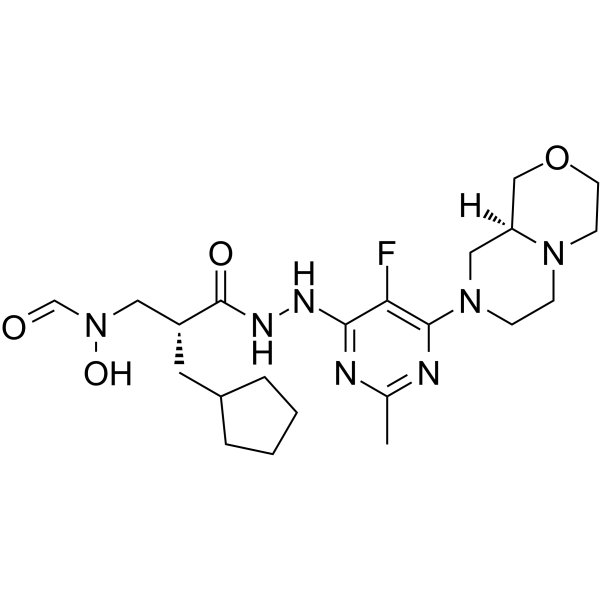
Cat. No.: HY-12480
CAS No.: 1152107-25-9
Purity:  98.62%
Synonyms: GSK 1322322
Target:  

Bacterial

Research Areas:  

Infection

Lanopepden (GSK 1322322) is a peptide deformylase (PDF) inhibitor. Lanopepden exerts antibacterial activity by inhibiting the activity of PDF and preventing the correct synthesis of bacterial proteins. Lanopepden can be used for the research of acute bacterial skin and skin structure infections .
loading...
    loading...
Cat. No.: HY-187580
CAS No.: 97400-75-4
Target:  

Fungal Bacterial

Research Areas:  

Infection

(+)-Tuberine is an alkaloid found in Haplophyllum tuberculatum, with antibacterial and antifungal activities. (+)-Tuberine can be used in studies on antimicrobial natural products and microbial growth inhibition .
loading...
    loading...
Cat. No.: HY-N7926
CAS No.: 629-62-9
Pentadecane is an orally active natural plant volatile alkane with anti-inflammatory, analgesic, antipyretic and anti-leishmanial activities. Pentadecane presents IC50 values of 65.3 μM, 60.5 μM and 194.8 μM against Leishmania infantum promastigotes, amastigotes and intracellular amastigotes, respectively. Pentadecane downregulates the mRNA expression of TNF-α and IL-12 and inhibits the release of inflammatory mediators. Pentadecane arrests the cell cycle of Leishmania infantum and induces apoptosis. Pentadecane can be applied to the research of inflammation and leishmaniasis .
loading...
    loading...
Cat. No.: HY-P10519A
Research Areas:  

Infection

Brevicidine TFA is an antimicrobial peptide with selective bactericidal activity against Gram-negative pathogens. Brevicidine TFA disrupts bacterial morphology by binding to lipopolysaccharide (LPS) on the bacterial cell membrane to form pores. Brevicidine TFA causes dissipation of intracellular proton motive force, outer membrane damage, inhibition of ATP biosynthesis and reactive oxygen species accumulation in bacterial cells. As a sensitizer, Brevicidine TFA exerts synergistic activity when combined with a variety of conventional antibiotics .
loading...
    loading...
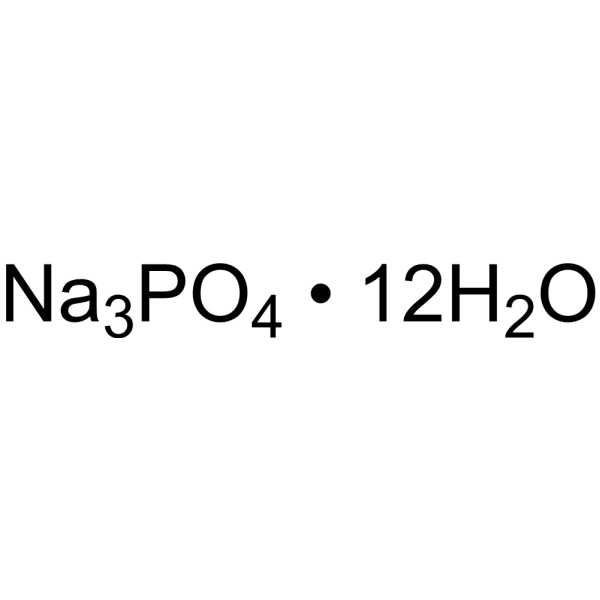
Cat. No.: HY-W088066
CAS No.: 10101-89-0
Target:  

Bacterial

Research Areas:  

Infection

Trisodium phosphate dodecahydrate is an Antibacterial agent. Trisodium phosphate dodecahydrate reduces the counts of Escherichia coli O157:H7 and Salmonella typhimurium attached to the surfaces of beef fat and fascia. Trisodium phosphate dodecahydrate modulates the growth parameters of Listeria monocytogenes in vitro: low concentrations shorten the lag phase and increase the maximum growth rate, while high concentrations prolong the lag phase and decrease the maximum growth rate. Trisodium phosphate dodecahydrate is used in poultry processing .
loading...
    loading...
Cat. No.: HY-W403933
CAS No.: 2458-08-4
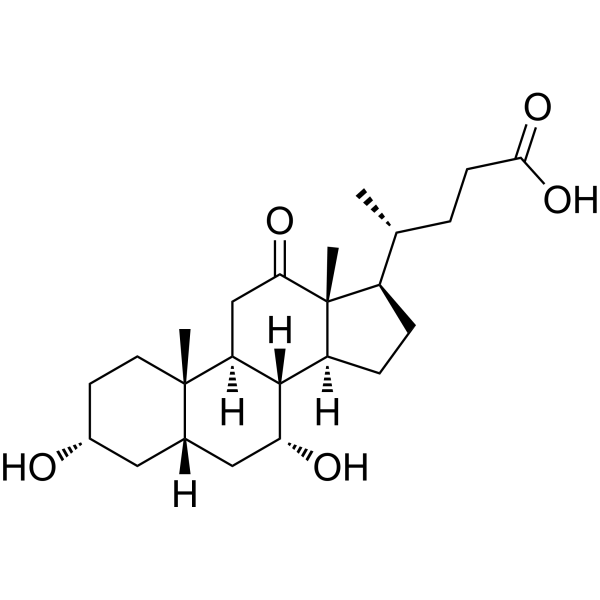
12-Ketochenodeoxycholic acid is an anomalous bile acid and Chenodeoxycholic acid (HY-76847) precursor. 12-Ketochenodeoxycholic acid can be used for the research of hepatobiliary diseases .
loading...
    loading...
Cat. No.: HY-Y1703
CAS No.: 148893-10-1
Research Areas:  

Others

HATU is a third-generation uronium salt peptide coupling reagent. HATU increases the rate of peptide coupling reactions, activates amino acids, promotes peptide bond formation in both solution-phase and solid-phase synthesis, and also facilitates peptide assembly, fragment coupling, and linear peptide cyclization. HATU can promote the N-acylation of chitosan to generate amide-linked cationic derivatives with a controllable degree of substitution. HATU is commonly used in amine acylation reactions .
loading...
    loading...
Cat. No.: HY-W001952
CAS No.: 15231-91-1
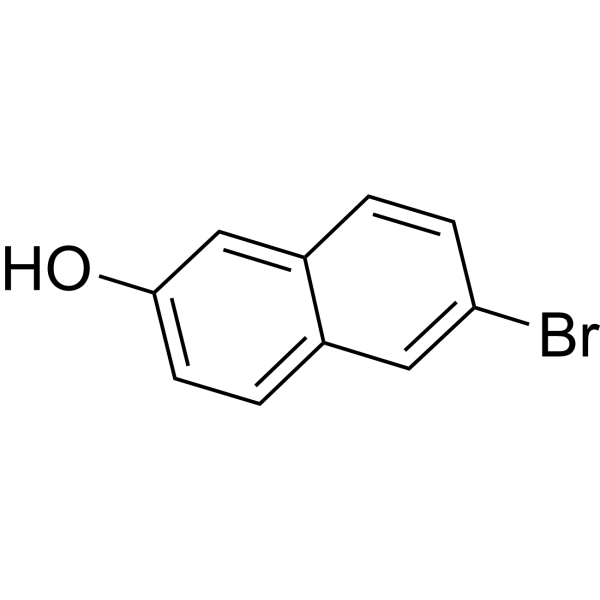
6-Bromo-2-naphthol is an RTP (real-time polymerase chain reaction) probe that forms a 1:1 or 2:1 complex with β-cyclodextrin (β-CD). 6-Bromo-2-naphthol is capable of real-time monitoring of PCR reactions and quantification of specific nucleic acid sequences. RTP probes are a class of small DNA or RNA sequences labeled with fluorescent dyes and quencher molecules, which can be widely used in gene expression analysis, SNP genotyping, and pathogen detection. 6-Bromo-2-naphthol embeds into the cyclodextrin cavity through hydrophobic interactions, inhibits the oxygen quenching effect, and emits a phosphorescent signal at room temperature. 6-Bromo-2-naphthol can also be used as an intermediate for the synthesis of antibacterial azo dyes, and its derivatives show antibacterial activity against Staphylococcus aureus, Escherichia coli and other bacteria .
loading...
    loading...
Cat. No.: HY-126735
CAS No.: 99260-71-6
Target:  

Antibiotic Bacterial

Research Areas:  

Infection

Saquayamycin D is an antibiotic, which can be isolated from Streptomyces nodosus culture broth. Saquayamycin D exhibits antibacterial activity against various gram-positive bacteria with MIC of 12.5-50 μg/mL. Saquayamycin D inhibits the proliferation of Doxorubicin (HY-15142)-sensitive P388/S and Doxorubicin-resistant P388/ADR with IC50 of 0.15 and 0.15 μg/mL .
loading...
    loading...
Cat. No.: HY-170422
CAS No.: 1246303-07-0
Synonyms: Lysyl-DOPG
Target:  

Bacterial

Research Areas:  

Infection

18:1 Lysyl PG (Lysyl-DOPG) is a cationic phospholipid contains a lysine group and a DOPG. 18:1 Lysyl PG inhibits cationic antimicrobial peptide-induced membrane permeabilization. 18:1 Lysyl PG can be used for the research of infection .
loading...
    loading...
Cat. No.: HY-182505
CAS No.: 887833-49-0
Target:  

Bacterial

Research Areas:  

Infection

QS-IN-1 (Compound 10 in Table 2 on page 18) is a quorum sensing (QS) inhibitor with an IC50 of 1.22 μM against agr-type QS. QS-IN-1 is applicable to the research of bacterial infections .
loading...
    loading...
Cat. No.: HY-184800
CAS No.: 38115-21-8
Research Areas:  

Infection

Desacetyl cephapirin is the active metabolite of Cephapirin (HY-A0153). Desacetyl cephapirin retains bactericidal activity by disrupting bacterial cell wall synthesis, but exhibits reduced antimicrobial activity, longer in vivo residual time, and high tissue retention. Desacetyl cephapirin can be used in studies related to Gram-positive bacterial infections .
loading...
    loading...
Cat. No.: HY-187213
Research Areas:  

Infection

Anti-MRSA agent 45 is a dihydrofolate reductase (DHFR) inhibitor and membrane-disrupting agent. Anti-MRSA agent 45 disrupts MRSA membrane integrity, increases membrane permeability and induces bacterial morphological damage. Anti-MRSA agent 45 exerts rapid, time- and concentration-dependent bactericidal activity against MRSA, and inhibits MRSA biofilm formation. Anti-MRSA agent 45 is applicable to research related to MRSA infection .
loading...
    loading...
Cat. No.: HY-187674
CAS No.: 61481-30-9
Dicranin is a 15-lipoxygenase (15-LOX) inhibitor and bacterial agent. Dicranin inhibits the dioxygenation reaction of polyenoic fatty acids by irreversibly binding to lipoxygenase. Dicranin can be isolated from the phospholipids of Philonotis fontana, Leptodontium paradoxum, and Dicranum scoparium. Dicranin can be used in studies related to Gram-positive bacterial infections .
loading...
    loading...
Cat. No.: HY-187725
CAS No.: 2230715-40-7
AM-8722 is an orally active inhibitor of bacterial DNA gyrase and topoisomerase IV. AM-8722 inhibits bacterial DNA synthesis and exhibits broad-spectrum antibacterial activity against Gram-positive and Gram-negative pathogens. AM-8722 can be used for research on bacterial septicemia and bacterial infections .
loading...
    loading...
Cat. No.: HY-N19226
CAS No.: 639079-45-1
1,1,3-Tris (3-indolyl) butane is an indole alkaloid. It is isolated from North Sea bacteria closely related to Vibrio parahaemolyticus. 1,1,3-Tris (3-indolyl) butane shows no activity against a variety of bacteria and fungi .
loading...
    loading...

