130 Results for "

physiological functions

" in MedChemExpress (MCE) Product Catalog:
Products (130)

130 Results for "physiological functions" in MCE Product Catalog:

Cat. No.: HY-156104
CAS No.: 2481744-33-4
Target:  

PROTACs CaMK

Research Areas:  

Neurological Disease

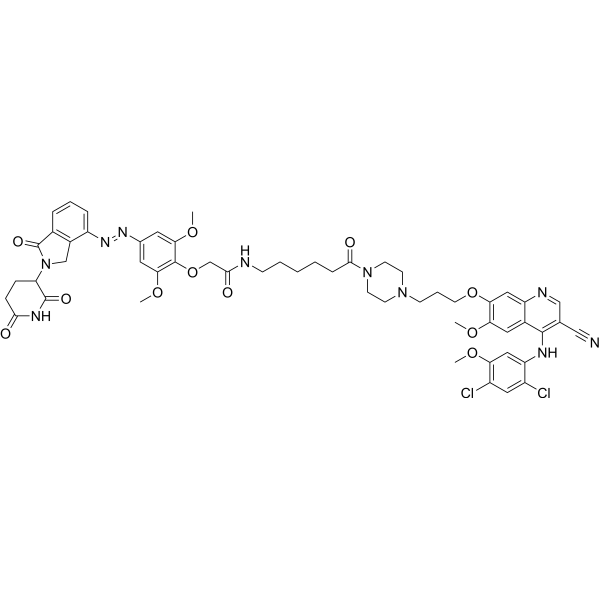
CaMKIIα-PHOTAC is a photochemically targeted chimera (PHOTAC) targeting Ca2+/calmodulin-dependent protein kinase II α (CaMKIIα). Molecules such as PHOTAC can catalyze the ubiquitination and degradation of target proteins through the endogenous proteasome under specific wavelengths of light. CaMKIIα-PHOTAC reduces synaptic function under light conditions, and it attenuates the intensity of evoked field excitatory postsynaptic potentials in the mouse hippocampus in response to physiological stimuli. CaMKIIα-PHOTAC plays a critical role in maintaining long-term potentiation and memory capacity in subcellular dendritic domains .
loading...
    loading...
Cat. No.: HY-109062
CAS No.: 143030-47-1
Synonyms: BGS-649
Target:  

Cytochrome P450

Research Areas:  

Others

CGP 47645 is a long-acting nonsteroidal aromatase inhibitor. CGP 47645 can significantly affect testicular function. CGP 47645 can be used to study the physiological role of estrogen in regulating testicular function .
loading...
    loading...
Cat. No.: HY-13597
CAS No.: 204970-97-8
Target:  

Opioid Receptor

Research Areas:  

Neurological Disease

CJ-15161 is a κ-opioid receptor agonist. CJ-15161 can be used to study physiological functions such as pain relief and emotional regulation .
loading...
    loading...
Cat. No.: HY-180321
CAS No.: 2088453-79-4
Target:  

Glycosidase

Research Areas:  

Others

OAT-1441 is a selective hAMCase inhibitor with oral activity (IC50 = 7 nM). OAT-1441 can be used to study the physiological functions of hAMC enzymes .
loading...
    loading...
Cat. No.: HY-N17770
CAS No.: 2584414-13-9
Obtusinaphthalenside B is a novel naphthyl glycoside compound that can be isolated from Cassia obtusifolia seeds. Cassia obtusifolia has physiological functions related to neuroprotection, anti-inflammation, and hepatoprotection.
loading...
    loading...
Cat. No.: HY-N17768
CAS No.: 2414481-39-1
Obtusichromoneside B is a novel naphthyl glycoside compound that can be isolated from Cassia obtusifolia seeds. Cassia obtusifolia possesses various physiological functions, including neuroprotection, anti-inflammatory effects, and hepatoprotection.
loading...
    loading...
Cat. No.: HY-124033
CAS No.: 157676-96-5
Aspinonene is a bioactive compound that has the function of regulating plant growth and defense mechanisms. It can participate in biochemical signaling pathways in plants and affect various physiological responses such as growth, defense and adaptation to environmental stress.
loading...
    loading...
Cat. No.: HY-113243
CAS No.: 3542-29-8
Target:  

GPR119

1-Oleoyl lysophosphatidylcholine is a GPR119 activator and insulin secretion potentiator with a human GPR119 EC50 of 1.5 μM.1-Oleoyl lysophosphatidylcholine acts as a bioactive lipid mediator with diverse physiological and pathological functions.1-Oleoyl lysophosphatidylcholine can be used for the research of diabetes .
loading...
    loading...
Cat. No.: HY-D3207
CAS No.: 3037311-41-1
DHUCu-1 is a lysosome-targeted NIR divalent copper ion probe with high water solubility. DHUCu-1 serves as a tool for investigating the physiological functions of Cu 2+ and related diseases, such as Menke syndrome, Wilson's disease, and Alzheimer's disease .
loading...
    loading...
Cat. No.: HY-L197
136 compounds

Vitamins are a category of trace organic compounds essential for maintaining normal physiological functions in living organisms. They are classified into fat-soluble and water-soluble vitamins. Fat-soluble vitamins play a role in maintaining vision, bone health, reproductive functions, and blood coagulation. Water-soluble vitamins are involved in energy metabolism, nervous system function, and cellular repair processes. Most vitamins cannot be synthesized by the organism and must be obtained through diet. In recent years, vitamins and their derivatives have become increasingly important in the field of drug development due to their extensive physiological activities. Additionally, vitamins and their derivatives can be used to construct research platforms for vitamin metabolism, which helps to delve into the metabolic pathways and dynamic changes of vitamins within the body and aids in identifying new biomarkers for certain diseases.

MCE included 136 vitamins and their derivatives, including Vitamin A, Vitamin B, Vitamin D, etc., which is a good tool for studying vitamin metabolism.

Cat. No.: HY-186318
Target:  

Sodium Channel

Research Areas:  

Neurological Disease

ICA604025 is a state-dependent inhibitor of human Nav1.9 voltage-gated sodium channel. ICA604025 exerts stronger inhibitory effects on activated/inactivated Nav1.9 than on resting closed Nav1.9, and serves as a tool for investigating the physiological functions of Nav1.9. ICA604025 is applicable to pain-related research .
loading...
    loading...
Cat. No.: HY-17417B
CAS No.: 51481-60-8
Target:  

Opioid Receptor

Research Areas:  

Neurological Disease

Naloxone hydrochloride is an orally active opioid receptor antagonist. Naloxone hydrochloride attenuates spinal cord stimulation‑associated anti‑hyperalgesic effects, antagonizes physiologic effects of endogenous opioid peptides linked to central nervous system injury sequelae, functions as a pressor agent to induce modest elevations in mean arterial blood pressure, exerts neuroprotective effects to improve post‑traumatic neurologic motor function, blocks opioid receptor‑mediated amnesic pathways, enhances memory consolidation, reverses Adrenocorticotropic hormone (ACTH) (HY-106373)‑ and epinephrine‑induced amnesia, and potentiates the memory‑facilitatory effects of ACTH and epinephrine .
loading...
    loading...
Cat. No.: HY-184388
Research Areas:  

Infection

Antifungal agent-168 is an antifungal agent with broad-spectrum inhibitory activity against a variety of pathogenic fungi. Antifungal agent-168 interacts with β-glucan in the cell wall of Botrytis cinerea, disrupting the physiological functions of the cell wall. Antifungal agent-168 damages the hyphal cell membrane, causes electrolyte leakage, and promotes ROS release to accelerate fungal death. Antifungal agent-168 can be used in studies related to Botrytis cinerea infection .
loading...
    loading...
Cat. No.: HY-184873
CAS No.: 463-79-6
Target:  

Others

Research Areas:  

Infection Others

Carbonic acid is a diprotic acid, acidulant and anesthetic. Carbonic acid penetrates living cells more easily than most other acids, exhibits stronger toxicity than inorganic acids at equivalent concentrations, and exacerbates ocean acidification. Carbonic acid binds reversibly to cellular proteins, acidifies cell sap and protoplasmic inclusions, inhibits Paramecium growth and various cellular functions, induces reversible cellular changes, produces lethal effects at high doses, decomposes into carbon dioxide and H2O, and participates in the maintenance of physiological pH balance .
loading...
    loading...
Cat. No.: HY-150172A
CAS No.: 3056945-75-3
Synonyms: ITP lithium salt; Inosine triphosphate lithium salt
Target:  

Endogenous Metabolite

Research Areas:  

Metabolic Disease

Inosine-5'-triphosphate (ITP) lithium salt is a nucleotide analogue that acts on multiple G proteins. Inosine-5'-triphosphate lithium salt can bind to the α -subunit of G proteins and participate in G protein-mediated signal transduction as a substitute for GTP. Inosine-5'-triphosphate lithium salt interacts with the nucleotide-binding site of the G protein α -subunit, affecting the activity and function of G proteins. Inosine-5'-triphosphate lithium salt is used to explore the role of the G protein signaling pathway in cellular physiological and pathological processes .
loading...
    loading...
Cat. No.: HY-L193
1,006 compounds

Since ancient times, promoting blood circulation for removing blood stasis (PBCRBS) has been one of the most popular research contents in the area of traditional Chinese medicine (TCM) and integrated medicine. Rhizoma, Persicae Semen, Carthami Flos, Curcumae Longae Rhizoma and so on are common TCM with PBCRBS characteristic. Studies have shown that the mechanism of action of PBCRBS TCM is to promote blood circulation (improving cardiovascular and cerebrovascular functions, physical and chemical properties of blood, platelet and coagulation system and other physiological functions) and remove blood stasis (anti-myocardial ischemia, cerebral ischemia, inhibition of platelet aggregation, anti-coagulation, anti-thrombosis, etc.). Not only that, PBCRBS TCM has anti-infection, inhibit inflammation, regulate immune function, inhibit immune response, inhibit abnormal tissue proliferation and other functions. Therefore, PBCRBS TCM has high research value in all- field disease research fields.

MCE can supply 1,006 monomer component from more than a hundred sources of PBCRBS TCM, which can be used in TCM studies, drug development and mechanism-based studies.

Cat. No.: HY-110220R
CAS No.: 1031496-06-6
Research Areas:  

Neurological Disease

CIM0216 (Standard) is the analytical standard of CIM0216 (HY-110220). This product is intended for research and analytical applications. CIM0216, a synthetic TRPM3 ligand, acts as a potent and selective agonist of TRPM3. CIM0216 exhibits selectivity for TRPM3 over TRPM1, TRPM2 and TRPM4-8. CIM0216 acts in a TRPM3-dependent manner to induce pain and evoke neuropeptide release from sensory nerve terminals in vitro. CIM0216 is a powerful tool for studies of the physiological functions of TRPM3, and can be used for neurogenic inflammation research .
loading...
    loading...
Cat. No.: HY-L174
276 compounds

Macrophages are effector cells of the innate immune system, engulfing bacteria and secreting pro-inflammatory and antibacterial mediators. They are an important component of the first line defense against pathogens and tumor cells. In addition, macrophages play an important role in eliminating damaged cells through programmed cell death. Like all immune cells, macrophages originate from pluripotent hematopoietic stem cells in the bone marrow. Macrophages play key functions in many physiological processes beyond homeostasis and innate immunity, including metabolic function, cell debris clearance, tissue repair, and remodeling. In order to fulfill their different functional roles, macrophages can polarize into a series of phenotypes, including classic (pro inflammatory, M1) and alternative (anti-inflammatory, healing promoting, M2) activation states, as well as a wide range of regulatory phenotypes and subtypes. Macrophages exist in all vertebrate tissues and have a dual function in host protection and tissue damage, maintaining a good balance.

MCE designs a unique collection of 276 macrophage related compounds. It is a good tool to be used for research on Inflammation, cancer and other diseases.

Cat. No.: HY-L177
1,949 compounds

Antibody inhibitors are compounds with the same activity as the original therapeutic antibodies, which can be used as positive controls for drug efficacy evaluation and other studies. Antibody inhibitors can also assist in verifying the functional activity of the target protein. These antibody inhibitors are active in vivo and can achieve certain physiological functions by blocking or neutralizing target proteins, such as CD20, HER2, EGFR, VEGFR, TNF-α, etc. In drug screening, antibody inhibitor-based screening can be carried out to identify active compounds targeting target proteins and target diseases.

MCE can provide 1,949 antibody inhibitors that can be used for drug development in cancer, immunity, infection and other hot research areas.

Cat. No.: HY-L047
908 compounds

The endocrine system is a chemical messenger system comprising feedback loops of the hormones released by internal glands of an organism directly into the circulatory system, regulating distant target organs. Hormones are chemicals that serve to communicate between organs and tissues for physiological regulation and behavioral activities. Hormones affect distant cells by binding to specific receptor proteins in the target cell, resulting in a change in cell function.

The endocrine system is concerned with the integration of developmental events proliferation, growth, and differentiation, and the psychological or behavioral activities of metabolism, growth and development, tissue function, sleep, digestion, respiration, excretion, mood, stress, lactation, movement, reproduction, and sensory perception caused by hormones. Irregulated hormone release, inappropriate response to signaling or lack of a gland can lead to endocrine disease.

MCE offers a unique collection of 908 endocrinology related compounds targeting varieties of hormone receptors such as thyroid hormone receptor, TSH receptor, GNRH receptor, adrenergic receptor, etc. MCE Endocrinology Compound Library is a useful tool for the discovery of endocrinology drugs.

