10045 Results for "

Chaotropic agent

" in MedChemExpress (MCE) Product Catalog:
Products (10045)

10045 Results for "Chaotropic agent" in MCE Product Catalog:

Cat. No.: HY-Y0191R
CAS No.: 142-08-5
Synonyms: 2-Pyridone (Standard)
α-Pyridone (Standard) is the analytical standard of α-Pyridone. This product is intended for research and analytical applications. α-Pyridone (2-Pyridone) is an antibacterial agent. α-Pyridone can be synthesized via the 1,4-addition of 2-(phenylsulfinyl)acetamide to α,β-unsaturated ketones followed by cyclization and sulfoxide elimination. α-Pyridone can also be used to synthesize a wide range of heterocyclic compounds .
loading...
    loading...
Cat. No.: HY-Y0651
CAS No.: 7757-83-7
Sodium sulfite is an inorganic salt used as an antioxidant and preservative. Sodium sulfite is also used in sulfonation and sulfomethylation reactions. Sodium sulfite can also be used as a bleaching agent, desulfurizer, and dechlorinator. Sodium sulfite inhibits hepatocyte proliferation, promotes hepatocyte apoptosis and necrosis, and impairs mitochondrial integrity. Sodium sulfite induces superoxide anion production, primes neutrophils for enhanced superoxide anion generation, and induces neutrophil gene expression. Sodium sulfite can be used in studies related to pulmonary inflammation and gastric tissue injury .
loading...
    loading...
Cat. No.: HY-Y0958R
CAS No.: 593-56-6
Synonyms: O-Methylhydroxylamine hydrochloride (Standard)
Research Areas:  

Cancer

Methoxyamine hydrochloride (Standard) is the analytical standard of Methoxyamine hydrochloride. This product is intended for research and analytical applications. Methoxyamine (O-Methylhydroxylamine) hydrochloride is an orally active and potent base excision repair (BER) inhibitor. Methoxyamine hydrochloride binds to 3’ hydroxyl groups that are left behind by 3-methylpurine-DNA glycosylase (MPG) following excision of the damaged base and thus inhibits BER activity. Methoxyamine hydrochloride binds directly to the apyrimidinic (AP) sites. Methoxyamine hydrochloride synergistically enhances the therapeutic efficacy of DNA-damaging agents .
loading...
    loading...
Cat. No.: HY-Y1092R
CAS No.: 538-75-0
N,N-Dicyclohexylcarbodiimide(DCC) (Standard) is the analytical standard of N,N-Dicyclohexylcarbodiimide(DCC). This product is intended for research and analytical applications. N,N-Dicyclohexylcarbodiimide(DCC) is a dehydrating and condensing agent. N,N-Dicyclohexylcarbodiimide(DCC) enhances adenylate cyclase activity. N,N-Dicyclohexylcarbodiimide(DCC) inhibits amine accumulation. N,N-Dicyclohexylcarbodiimide(DCC) is used to prepare 3-phenylcoumarin derivatives, sulfated derivatives of purslane polysaccharides .
loading...
    loading...
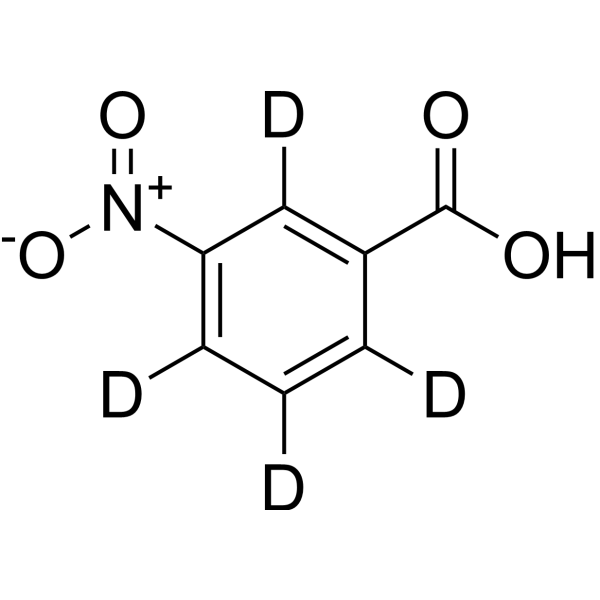
Cat. No.: HY-Y1313S
CAS No.: 78399-78-7
Synonyms: m-Carboxynitrobenzene-d4; m-Nitrobenzenecarboxylic acid-d4; m-Nitrobenzoic acid-d4
3-Nitrobenzoic acid-d4 (m-Carboxynitrobenzene-d4; m-Nitrobenzenecarboxylic acid-d4; m-Nitrobenzoic acid-d4) is the deuterium labeled 3-Nitrobenzoic acid (HY-Y1313). 3-Nitrobenzoic acid is an antioxidant and antibacterial agent that can kill bacteria and fungi. 3-Nitrobenzoic acid can be degraded or reduced by certain bacteria (such as Pseudomonas) and fungi (such as white rot fungi) into aldehydes and alcohols.
loading...
    loading...
Cat. No.: HY-L002
4,884 compounds

An infection occurs when another organism enters a person’s body and causes disease. The organisms that cause infections are very diverse and can include things like viruses, bacteria, fungi, and parasites. The immune system is an effective barrier against infectious agents.

MCE provides a unique collection of 4,884 anti-infective compounds with anti-bacterial, anti-viral, anti-fungal and anti-parasite activities that can be used for drug screening and other research in anti-microbial area.

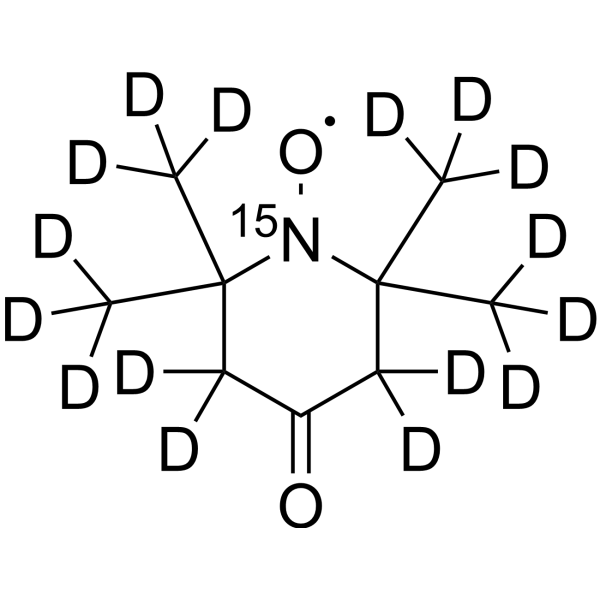
Cat. No.: HY-129242S
CAS No.: 80404-14-4
Synonyms: 4-Oxo-Tempo-15N,d16
Tempone- 15N,d16 (4-Oxo-Tempo 15N,D16) is the deuterated, 15N-labeled Tempone (HY-129242). Tempone (4-Oxo-Tempo) is a nitroxide radical spin label and ROS scavenger. Tempone induces cytotoxicity in lymphoma cells. Tempone serves as a substrate for intracellular reduction to hydroxylamine, rapidly equilibrates between intracellular and extracellular compartments, reduces nitroxide radical spin labels at the ubiquinol site of the respiratory chain, and acts as an alternative terminal electron acceptor when electron flow to oxygen is blocked. Tempone serves as a superoxide sensor, a T2-weighted MRI contrast agent, and a dynamic nuclear polarization polarizing agent for 13C. Tempone inhibits superoxide and peroxynitrite, hydroxyl radical generation, nitrotyrosine formation, and poly (ADP-ribose) formation, and alleviates renal dysfunction and injury in ischemia/reperfusion and hydrogen peroxide-induced injury. Tempone can be used for research on ischemia-reperfusion injury, acute renal failure, and lymphoma .
loading...
    loading...
Cat. No.: HY-W027592R
CAS No.: 61-82-5
1H-1,2,4-Triazol-3-amine (Standard) is the analytical standard of 1H-1,2,4-Triazol-3-amine. This product is intended for research and analytical applications. 1H-1,2,4-Triazol-3-amine consists of a triazole ring system and an amino group attached to carbon atom 3. The compound has potential applications in various fields such as medicinal chemistry, agrochemicals and material science. In medicinal chemistry, 1H-1,2,4-Triazol-3-amine is used as a starting material for the synthesis of pharmaceutical compounds such as antifungal agents, anticancer agents, and enzyme inhibitors associated with cardiovascular disease. In agrochemicals, it can be used as a raw material for the synthesis of herbicides, fungicides and insecticides. Furthermore, 1H-1,2,4-Triazol-3-amine is used as a ligand in coordination chemistry and as a precursor for the production of new functional materials such as polymers and metal-organic frameworks.
loading...
    loading...
Cat. No.: HY-L105S
867 compounds

Peptides, composed of amino acids, serve as crucial building blocks for proteins and have gained significant attention in drug development over the past decade. The advancements in production, modification, and analytical technologies have led to a surge in the potential applications of peptides in medicine. Peptides offer a number of advantages over small molecule drugs, including: greater target specificity and efficacy, more predictable metabolic profiles, easier delivery to where they are needed in the body, and fewer side effects. Peptides are increasingly appearing in all branches of medicine as components of innovative drugs, imaging agents, diagnostic agents, and other complex drugs such as peptide-drug conjugates. To date, more than 80 peptide drugs have been approved to treat a variety of diseases, including microbial infections, obesity, anti-diabetes, and cancer, as well as to develop cell targeting platforms and improve cell penetration properties.

MCE designs a unique collection of 867 peptide compounds. HY-L105S is a peptide compound library that can be provided with solution form based on HY-L105, and can be applied to peptides-based drug development.

Cat. No.: HY-100415S1
Synonyms: WX-UK1-d8 acetate; UKI-1C-d8 acetate
UKI-1-d8 acetate (WX-UK1-d8 acetate) is the deuterium labeled UKI-1 acetate. UKI-1 (WX-UK1) is a potent urokinase-type plasminogen activator (uPA) inhibitor with a Ki of 0.41 μM. UKI-1 is also a low molecular weight serine protease inhibitor. UKI-1 is a potent antimetastatic agent and inhibits the invasive capacity of carcinoma cells .
loading...
    loading...
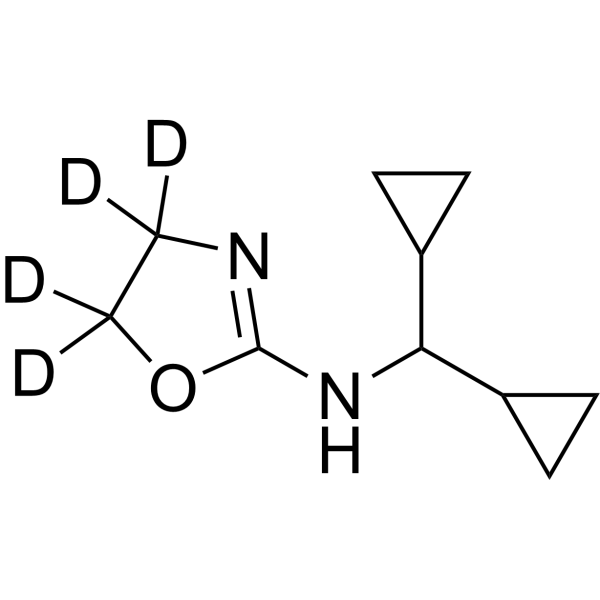
Cat. No.: HY-100490S
CAS No.: 85047-14-9
Rilmenidine-d4 is the deuterium labeled Rilmenidine. Rilmenidine, an innovative antihypertensive agent, is an orally active, selective I1 imidazoline receptor agonist. Rilmenidine is an alpha 2-adrenoceptor agonist. Rilmenidine induces autophagy. Rilmenidine acts both centrally by reducing sympathetic overactivity and in the kidney by inhibiting the Na+/H+ antiport. Rilmenidine modulates proliferation and stimulates the proapoptotic protein Bax thus inducing the perturbation of the mitochondrial pathway and apoptosis in human leukemic K562 cells .
loading...
    loading...
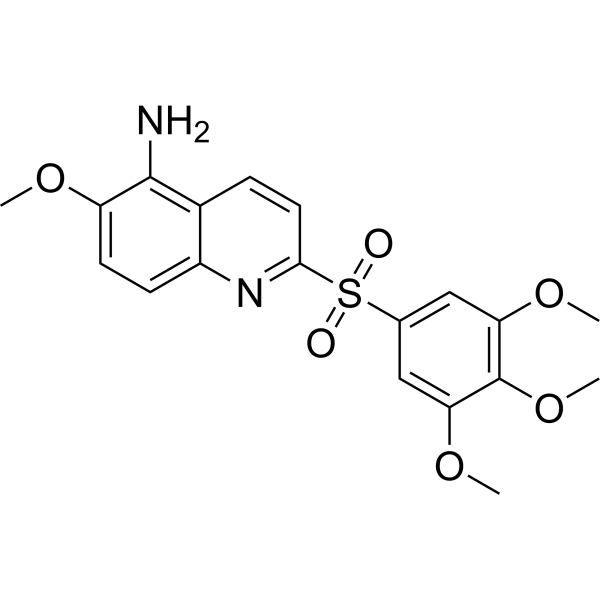
Cat. No.: HY-101287
CAS No.: 1346169-92-3
Purity:  99.63%
Research Areas:  

Cancer

MPT0B392, an orally active quinoline derivative, induces c-Jun N-terminal kinase (JNK) activation, leading to apoptosis. MPT0B392 inhibits tubulin polymerization and triggers induction of the mitotic arrest, followed by mitochondrial membrane potential loss and caspases cleavage by activation of JNK and ultimately leads to apoptosis. MPT0B392 is demonstrated to be a novel microtubule-depolymerizing agent and enhances the cytotoxicity of sirolimus in sirolimus-resistant acute leukemic cells and the multidrug resistant cell line .
loading...
    loading...
Cat. No.: HY-101554
CAS No.: 1113-10-6
Purity:  ≥98.0%
Synonyms: Guancidine
Target:  

Adrenergic Receptor

Research Areas:  

Cardiovascular Disease

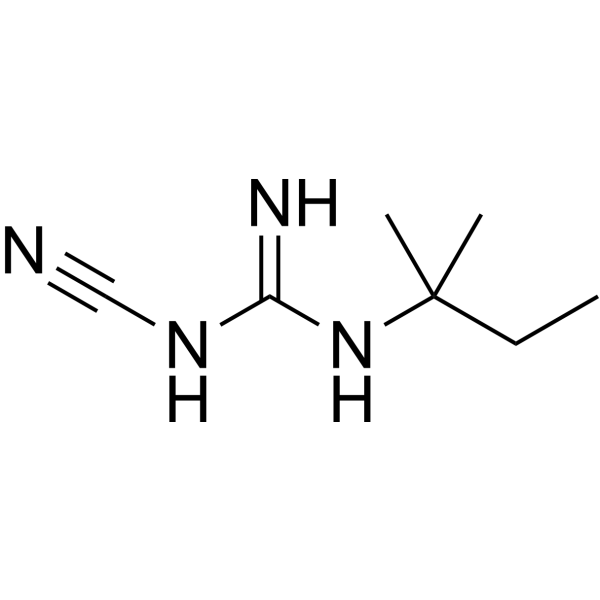
Guancydine (Guancidine) is an orally active antihypertensive agent and vasodilator. Guancydine antagonizes the pressor effects of Angiotensin and Norepinephrine (HY-13715). Guancydine induces vasodilation in renal, mesenteric and cranial vascular beds, reduces peripheral resistance, increases cardiac output and lowers arterial blood pressure. Guancydine increases renal and forearm blood flow, reduces renal and forearm vascular resistance, alters cardiac systolic time, and reverses myocardial hypertrophy in hypertensive rats. Guancydine is applicable for research related to hypertension .
loading...
    loading...
Cat. No.: HY-10227S
Purity:  ≥98.0%
Synonyms: PS-341-d8; LDP-341-d8; NSC 681239-d8
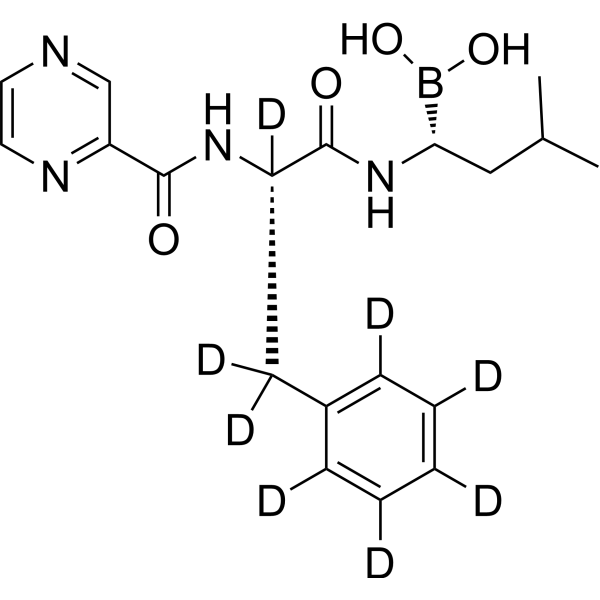
Bortezomib-d8 is the deuterium labeled Bortezomib. Bortezomib (PS-341) is a reversible and selective proteasome inhibitor, and potently inhibits 20S proteasome (Ki=0.6 nM) by targeting a threonine residue. Bortezomib disrupts the cell cycle, induces apoptosis, and inhibits NF-κB. Bortezomib is the first proteasome inhibitor anticancer agent. Bortezomib can be used for the study of multiple myeloma (MM) . Bortezomib effectively inhibits TREM2 expression in tumor-associated macrophages (TAMs) .
loading...
    loading...
Cat. No.: HY-103043
CAS No.: 1400998-20-0
Target:  

Others

Research Areas:  

Cancer

Pz 285 is an anti-cancer agent. Pz 285 shows significant inhibitory effect on the viability of MDA-MB-231 breast cancer cells, with an IC50 of 15.0 μM. Pz 285 exhibits remarkable antitumor effects in the mouse tumor xenograft model constructed with highly lung-metastatic MDA-MB-231 LM24 Her2+ breast cancer cells. Pz 285 can be used for the study of breast cancer, especially metastatic breast cancer .
loading...
    loading...
Cat. No.: HY-103093R
CAS No.: 26615-21-4
Zotepine (Standard) is the analytical standard of Zotepine. This product is intended for research and analytical applications. Zotepine, an antipsychotic agent, is a potent antagonist of 5-HT2A, 5-HT2C, Histamine H1, α1-adrenergic and Dopamine D2 receptors, with Kds of 2.6 nM, 3.2 nM, 3.3 nM, 7.3 nM and 8 nM, respectively. Zotepine exhibits antidepressive and anxiolytic effects in vivo .
loading...
    loading...
Cat. No.: HY-103158
CAS No.: 134470-38-5
Target:  

Lipoxygenase

Research Areas:  

Others

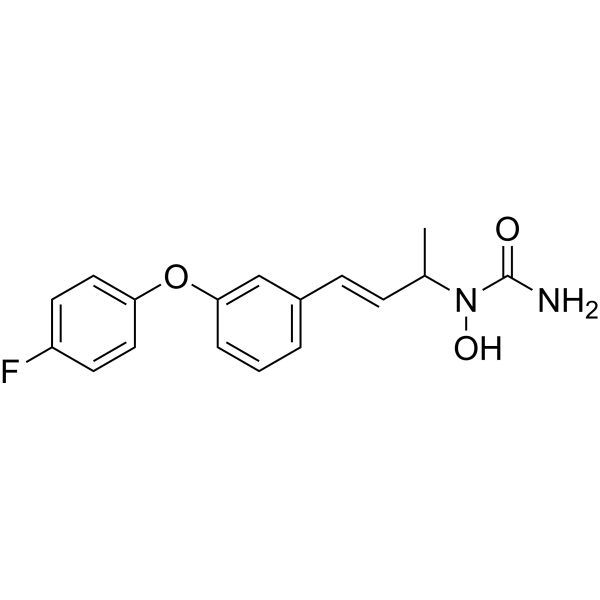
BW B70C is a potent, selective and orally activearachidonic acid 5-lipoxygenase inhibitor. BW B70C inhibits both acute and allergic bronchoconstriction and late-phase eosinophil accumulation subsequent to allergen inhalation in guinea-pigs. BW B70C prevents leukotriene C4 synthesis and reduces leucocyte migration to the airways lumen as well as albumin microvascular leakage. BW B70C has the potential for the research of anti-asthma agent .
loading...
    loading...
Cat. No.: HY-10517AR
CAS No.: 210644-62-5
Synonyms: (Z)-SU6668 (Standard); (Z)-TSU-68 (Standard)
Research Areas:  

Cancer

(Z)-Orantinib (Standard) is the analytical standard of (Z)-Orantinib (HY-10517A). This product is intended for research and analytical applications. (Z)-Orantinib ((Z)-SU6668) is a potent, selective, orally active and ATP competitive inhibitor of Flk‐1/KDR, PDGFRβ, and FGFR1, with IC50s of 2.1, 0.008, and 1.2 μM, respectively. (Z)-Orantinib is a potent antiangiogenic and antitumor agent that induces regression of established tumors .
loading...
    loading...
Cat. No.: HY-105343R
CAS No.: 63631-40-3
Synonyms: [D-Ala2, D-Leu5]-Enkephalin (Standard); DADLE (Standard)
Research Areas:  

Neurological Disease

BW-180C (Standard) is the analytical standard of BW-180C (HY-105343). This product is intended for research and analytical applications. BW-180C ([D-Ala2, D-Leu5]-Enkephalin; DADLE) is an δ opioid receptor (DOR) agonist, which belongs to the enkephalin family. Neuroprotective agent. BW-180C reversibly inhibits cellular transcription in neurons without causing cell injury .
loading...
    loading...
Cat. No.: HY-105904
CAS No.: 54824-20-3
Research Areas:  

Cancer

Pinafide is an orally active anticancer agent. Pinafide binds to double-stranded DNA via intercalation, stabilizes the DNA-topoisomerase II complex, induces photo-induced DNA damage and ROS production, causes lysosomal and mitochondrial dysfunction, impairs DNA and RNA synthesis, and blocks cell growth. Pinafide binds to human serum albumin in vitro, undergoes biotransformation via reduction and acetylation in rats, and can cross the placental barrier of pregnant rats. Pinafide can be used in cancer-related research such as hepatocellular carcinoma .
loading...
    loading...

