
1033 Results for "

Stem

" in MedChemExpress (MCE) Product Catalog:
Products (1033)

1033 Results for "Stem" in MCE Product Catalog:

Cat. No.: HY-N0772R
CAS No.: 24699-16-9
Isomangiferin (Standard) is the analytical standard of Isomangiferin (HY-N0772). This product is intended for research and analytical applications. Isomangiferin is an orally active xanthone C-glucoside, and its chemical structure is similar to Mangiferin (HY-N0290). Isomangiferin is an effective VEGFR-2 kinase inhibitor, which can induces cell apoptosis, inhibit the growth, metastasis and angiogenesis of breast cancer. Isomangiferin exerts anti-inflammatory effects by inhibiting the HMGB1/NLRP3/NF-κB signaling pathway, thereby improving the renal function indicators of diabetic mice. Isomangiferin exhibits inhibitory effects on various bacteria and herpes simplex virus type 1 (HSV-1). Isomangiferin promotes the migration and osteogenic differentiation of bone marrow mesenchymal stem cells (BMSCs) and reduces cell apoptosis and the production of ROS by activating the AMPK/ACC pathway, thereby facilitating fracture healing.
loading...
    loading...
Cat. No.: HY-N17896
CAS No.: 123564-49-8
Pinoresinol-4-O-β-D-apiosyl-(1→2)β-D-glucoside is a lignan compound and a melanogenesis inhibitor with low cytotoxicity. Pinoresinol-4-O-β-D-apiosyl-(1→2)β-D-glucoside is isolable from the stem bark of Acer buergerianum (Acer buergerianum). Pinoresinol-4-O-β-D-apiosyl-(1→2)β-D-glucoside effectively inhibits the melanogenesis process in α-MSH (HY-P0252)-stimulated B16 melanoma cells. Pinoresinol-4-O-β-D-apiosyl-(1→2)β-D-glucoside exhibits extremely high safety towards normal cells, and serves as an ideal tool molecule for studying melanoma mechanisms and developing related whitening products .
loading...
    loading...
Cat. No.: HY-W010713
CAS No.: 2669-65-0
Synonyms: Fimaporfin free base
Target:  

Photosensitizer

Research Areas:  

Cancer

Meso-tetraphenylchlorin (TPCS2a) is a photosensitizer with poor water solubility, which limits its use in the blood circulation. However, TPCS2a@NPs nanoparticles can be prepared based on polylactic-co-polyethylene glycol acid (PLGA) polymer core loaded with TPCS2. Such nanoparticles can be coated with mesenchymal stem cell-derived plasma membranes (mMSCs) to form mMSC-TPCS2a@NPs, which prolongs blood circulation time and improves tumor targeting ability. Compared with uncoated TPCS2a@NPs, mMSC-TPCS2a@NPs can reduce macrophage uptake by 54% to 70% under different conditions. Both nanoparticle forms are effectively accumulated in MCF7 and MDA-MB-231 breast cancer cells, while uptake in normal breast epithelial cells MCF10A is significantly lower .
loading...
    loading...
Cat. No.: HY-112005G
CAS No.: 4004-05-1
Synonyms: Dioleoylphosphatidylethanolamine (GMP); 1,2-Dioleoyl-sn-glycero-3-phosphoethanolamine (GMP)
DOPE GMP is DOPE (HY-112005) produced by using GMP guidelines. GMP small molecules works appropriately as an auxiliary reagent for cell therapy manufacture. DOPE (Dioleoylphosphatidylethanolamine; 1,2-Dioleoyl-sn-glycero-3-phosphoethanolamine) is an orally active inhibitor of ferroptosis with anti-inflammatory and intestinal barrier maintenance activities. DOPE regulates the expression of ACSL4, SLC7A11 and GPX4 to restore the redox system balance, thereby reducing the levels of lipid peroxides, iron ions and intestinal inflammatory factors (IL-1β and IL-6). DOPE promotes the migration and proliferation of intestinal epithelial cells and increases the level of tight junction proteins; it also destabilizes endosomal membranes, mediates the conjugation of RVG peptides with mesenchymal stem cell-derived exosomes to enhance brain targeting. DOPE can be applied to research related to neonatal necrotizing enterocolitis and Alzheimer's disease .
loading...
    loading...
Cat. No.: HY-128795
CAS No.: 2095304-61-1
KH176m is the major active metabolite of KH176 (HY-121577). KH176m is a microsomal prostaglandin E synthase-1 (mPGES-1) inhibitor that can cross the blood-brain barrier, with an IC50 of 0.16 µM against mouse mPGES-1 and 1.51 µM against human mPGES-1. KH176m blocks LPS- or IL-1β-induced PGE2 production, scavenges ROS, inhibits lipid peroxidation, accelerates NADPH consumption, suppresses the growth of prostate cancer spheroids, reduces the CD44 + CD24 − prostate cancer stem cell population, and protects fibroblasts with oxidative phosphorylation defects from redox stress-induced death. KH176m can be used in research related to mitochondrial diseases, inflammatory pain, inflammatory neurological diseases, inflammatory cancers, and prostate cancer .
loading...
    loading...
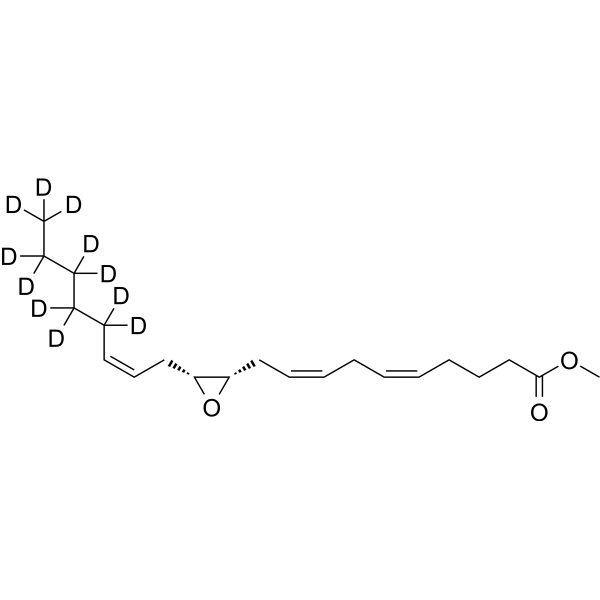
Cat. No.: HY-139938S
Synonyms: 11,12-EET methyl ester-d11; (±)11,12-EpETrE methyl ester-d11
(±)11(12)-EET-d11 methyl ester (11,12-EET methyl ester-d11) is the deuterium labeled (±)11(12)-EET methyl ester (HY-139938). (±)11(12)-EET methyl ester (11,12-EET-methyl ester) is a methylated derivative of 11,12-epoxyeicosatrienoic acid (11,12-EET) (HY-130494). (±)11(12)-EET methyl ester cannot induce β-arrestin recruitment of the G protein-coupled receptor GPR132. (±)11(12)-EET methyl ester fails to enhance the expression of hematopoietic stem and progenitor cell (HSPC) markers. (±)11(12)-EET methyl ester can be used as a negative control molecule to study the structure-function relationship of 11,12-EET, facilitating the analysis of the role of the oxygenated fatty acid-GPR132 signaling axis in hematopoiesis .
loading...
    loading...
Cat. No.: HY-152021S
CAS No.: 2692624-25-0
Research Areas:  

Others

C18 Ceramide-1-phosphate (d18:1/18:0)-d3 is the deuterium labeled C18 Ceramide-1-phosphate (d18:1/18:0) (HY-160850). C18 Ceramide-1-phosphate (d18:1/18:0) is a specific type of long-chain molecule found in murine skin. C18 Ceramide-1-phosphate (d18:1/18:0) promotes migration of both mouse bone marrow-derived multipotent stromal cells and human umbilical vein endothelial cells at concentrations between 0.5-5 μM. C18 Ceramide-1-phosphate (d18:1/18:0)’s levels are higher in CFPAC-1 pancreatic ductal adenocarcinoma cells than in pancreatic cancer stem cells .
loading...
    loading...
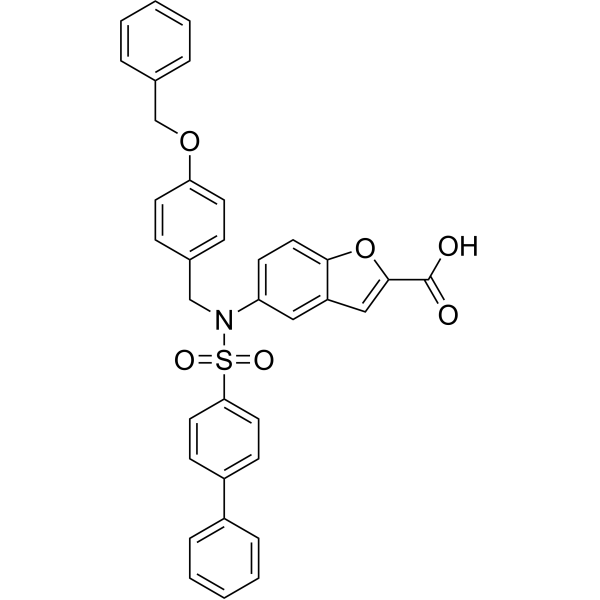
Cat. No.: HY-155847
CAS No.: 3052262-64-0
Purity:  99.80%
Target:  

Phosphatase PD-1/PD-L1

Research Areas:  

Inflammation/Immunology Cancer

LYP-IN-3 is a selective, orally active and reversible lymphoid-tyrosine phosphatase (LYP) inhibitor (IC50 = 2.55 μM, Ki = 0.93 μM). D34 exhibits high selectivity of PTP1B, PTPN12, PTPN5 and SSH2. LYP-IN-3 regulates the T-cell receptor (TCR) signaling by specifically inhibiting LYP. LYP-IN-3 does not significantly inhibit MC38 cell viability; its anti-tumor effect stems from immune regulation. LYP-IN-3 can significantly upregulate PD-L1 or PD-1 expression in different immune cells. LYP-IN-3 facilitates T-cell infiltration and enhances T-cell functions. LYP-IN-3 synergizes with PD-L1 blockade can significantly improve colorectal tumor regression. LYP-IN-3 can be used for the study of colorectal cancer .
loading...
    loading...
Cat. No.: HY-170911
Target:  

PDGFR

Research Areas:  

Cancer

KIT/PDGFRA-IN-1 (compound 19) is a stem cell growth factor receptor (KIT) and platelet-derived growth factor receptor alpha (PDGFRA) inhibitor. KIT/PDGFRA-IN-1 inhibits KIT-wt, KIT-D816H, KIT-T670I, PDGFRA-wt, PDGFRA-D842V, PDGFRA-T674I and PDGFRA-G680R with IC50s of 2.3, 12, 492, 0.8, 99.9, 42.3, and 4.3 μM, respectively. KIT/PDGFRA-IN-1 inhibits GIST-T1, T1-a-D842V and GIST-48B cells (PDGFR- and KIT-Mutant GIST cell Lines) with GR50s of 12, 8900, ≥10 000 nM, respectively .
loading...
    loading...
Cat. No.: HY-DY1114
CAS No.: 53213-81-3
DiOC5(3) (solution) is a mitochondrial Fluorescent dye that alters membrane potential, and it also acts as an inhibitor of NADH-ubiquinone reductase (respiratory complex I). DiOC5(3) (solution) increases the NADH/NAD ratio and induces excessive production of ROS. DiOC5(3) (solution) induces Apoptosis. DiOC5(3) accumulates in the mitochondria of leukemia stem-like cells via organic anion-transporting polypeptides, specifically labels these cells, and inhibits their proliferation. DiOC5(3) (solution) enhances the cellular uptake of Hoechst 33342 (HY-15559), reduces Hoechst 33342-associated cytotoxicity, and improves the resolution of DNA content analysis by flow cytometry. DiOC5(3) (solution) shows no detectable fluorescence signal when excited in the 400-500 nm ultraviolet light range. DiOC5(3) (solution) is applicable to leukemia-related research .
Solvent and concentration: DMSO: 10 mM
loading...
    loading...
Cat. No.: HY-P5832
CAS No.: 836606-84-9
Target:  

TGF-beta/Smad RUNX

Research Areas:  

Metabolic Disease

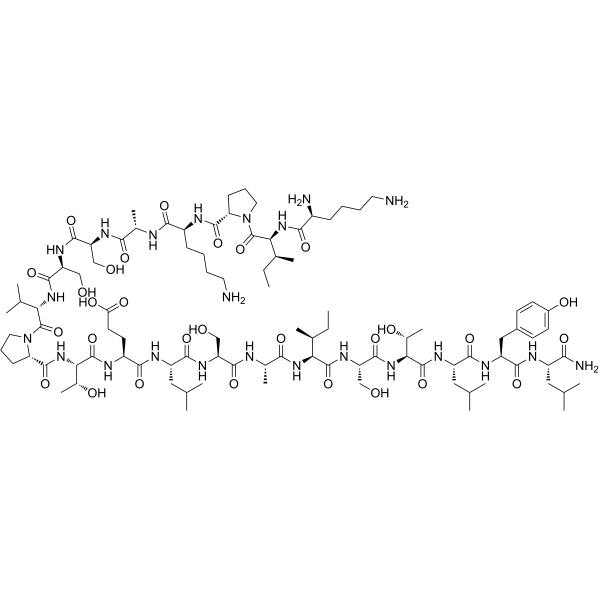
BMP2-derived peptide is an osteogenic inducer and BMP receptor ligand. BMP2-derived peptide binds to BMP receptors on the cell surface to form a complex, activates the downstream Smad signaling pathway, and regulates the expression of osteogenic transcription factors. BMP2-derived peptide effectively promotes the adhesion, proliferation, osteogenic differentiation and mineralization of bone marrow mesenchymal stem cells, significantly up-regulates the mRNA levels of OCN, Runx2 and type I collagen, and increases alkaline phosphatase activity and calcium deposition. BMP2-derived peptide induces osteoblast differentiation and ectopic bone regeneration, and improves cranial bone defect repair. Meanwhile, BMP2-derived peptide enhances the cytocompatibility of mesoporous silica nanoparticles, synergistically increases osteogenic activity with Dexamethasone (HY-14648), serving as an important tool for bone defect repair research .
loading...
    loading...
Cat. No.: HY-W014937
CAS No.: 1137-42-4
Synonyms: 4HBP
4‑Hydroxybenzophenone (4HBP) is a major metabolite of Benzophenone (HY-Y0546) and is orally active. 4-Hydroxybenzophenone triggers endoplasmic reticulum stress and activates the PERK-eIF2α-ATF4-CHOP and IRE1α-XBP1s pathways, and inhibits IκB translation. 4-Hydroxybenzophenone induces endoplasmic reticulum stress, unfolded protein response activation, protein homeostasis imbalance, protein aggregation, oxidative stress, ROS accumulation, mitochondrial membrane potential decrease, ATP depletion, and cytotoxicity. 4-Hydroxybenzophenone induces neural stem cell apoptosis (apoptosis) and affects neuronal differentiation. 4-Hydroxybenzophenone promotes malignant proliferation of hepatocellular carcinoma cells and xenograft tumor growth in nude mice. 4-Hydroxybenzophenone can be used in research related to neurodevelopmental toxicity and hepatocellular carcinoma .
loading...
    loading...
Cat. No.: HY-158231
Synonyms: F127DA
Polyether F127 Diacrylate (F127DA) is an acrylated polyethylene glycol-polypropylene glycol-polyethylene glycol triblock copolymer. Polyether F127 Diacrylate rapidly crosslinks and cures into a gel under ultraviolet or visible light with the action of a photoinitiator. Polyether F127 Diacrylate exhibits excellent thermogelation properties and favorable biosafety. Polyether F127 Diacrylate can upregulate the Integrin-FAK pathway, enhance collagen production, increase the protein and gene expression levels of COL-1/SCX, and promote fibroblastic differentiation of periodontal ligament stem cells. Polyether F127 Diacrylate promotes periodontal ligament regeneration and reduces abnormal healing in a rat model of delayed replanted teeth . Polyether F127 Diacrylate promotes functional osteochondral regeneration in a rat model of osteoarthritis. Polyether F127 Diacrylate supports adipose tissue survival, rendering it suitable for breast reconstruction applications. Polyether F127 Diacrylate can be used in studies related to periodontal ligament injury, breast defect and osteoarthritis .
loading...
    loading...
Cat. No.: HY-N13250
Hawthorn Extract is an orally active hawthorn extract. Hawthorn Extract decreases Bax expression and increases Bcl-2 expression in the aorta. Hawthorn Extract regulates the AMPK signaling pathway, induces apoptosis, enhances the hepatic antioxidant system, and ameliorates symptoms of liver injury, inflammation and cancer. Hawthorn Extract reduces plasma levels of pro-inflammatory factors, increases plasma levels of anti-inflammatory adiponectin, and alleviates atherosclerotic plaque lesions in the aorta. Hawthorn Extract improves symptoms associated with chronic heart failure . Hawthorn Extract inhibits FMLP-induced superoxide anion production, Elastase release, ILB4 generation and calcium signaling in neutrophils, and also reduces LPS-induced cytokine production in neutrophils. Hawthorn Extract induces autophagy and inhibits the proliferation of intestinal stem cells. Hawthorn Extract can be used in research related to atherosclerosis, hepatitis, alcoholic liver disease, non-alcoholic fatty liver disease, hepatocellular carcinoma, chronic heart failure and hypotension .
loading...
    loading...
Cat. No.: HY-W740027
CAS No.: 1160707-78-7
Synonyms: 5-Methyldeoxycytidine-d3
5-Methyl-2'-deoxycytidine-d3 (5-Methyldeoxycytidine-d3) is the deuterium labeled Methyl-2'-deoxycytidine (HY-W012078). 5-Methyl-2'-deoxycytidine (5mdC) is an endogenous substrate of DNA methyltransferases (such as mammalian 5-C-MTase) and binds to DNA dependent on the formation of DNA stem-loop structures. 5-Methyl-2'-deoxycytidine guides de novo DNA methylation by acting as a methylation mark and activates the methylation of adjacent CpG sites in single-stranded DNA through cis action. 5-Methyl-2'-deoxycytidine regulates DNA methylation patterns by recruiting methyltransferases to specific chromatin regions, affecting chromatin condensation and gene expression. Its distribution in plant cells is related to cell proliferation and differentiation stages. The methylation level of 5-Methyl-2'-deoxycytidine is low in proliferating cells and high in differentiated cells .
loading...
    loading...
Cat. No.: HY-L079
4,333 compounds

Blood cancers, also called hematologic cancers, occur when abnormal blood cells start growing out of control, interrupting the function of normal blood cells, which fight off infection and produce new blood cells. Most blood cancers start in the bone marrow, which is where blood is produced. There are three main types of blood cancers: leukemia, lymphoma and myeloma, which afflict millions of children and adults every year, and are often deadly.

Some common blood cancer treatments include stem cell transplantation, chemotherapy, radiation therapy, targeted therapy, immunotherapy or a combination thereof. As we begin to understand the key signaling pathways and molecular drivers of malignant transformation in haematological disorders, new treatment strategies will continue to be developed.

MCE offers a unique collection of 4,333 compounds with identified and potential anti-blood cancer activity. These compounds target blood cancer’s major targets and signaling pathways. MCE anti-blood cancer compound library is a useful tool for anti-blood cancer drugs screening and other related research.

Cat. No.: HY-P702754
Purity:  ≥ 80%, as determined by reducing SDS-PAGE.
Synonyms: FLT3; CD135 Antigen; Fms Related Receptor Tyrosine Kinase 3; FLK-2; CD135; Growth Factor Receptor Tyrosine Kinase Type III; STK1; Receptor Protein-Tyrosine Kinase; FLK2; Fms-Related Tyrosine Kinase 3; Fms-Like Tyrosine Kinase 3; Fetal Liver Kinase 2; Receptor-Type Tyrosine-Protein Kinase FLT3; Fetal Liver Kinase-2; Fms Related Tyrosine Kinase 3; STK-1; Stem Cell Tyrosine Kinase 1; FLT-3; FL Cytokine Receptor
Species:  
Human
Source:  
Sf9 insect cells
loading...
    loading...
Cat. No.: HY-P704615
Purity:  ≥ 90%, as determined by reducing SDS-PAGE.
Synonyms: FLT3; CD135 Antigen; Fms Related Receptor Tyrosine Kinase 3; FLK-2; CD135; Growth Factor Receptor Tyrosine Kinase Type III; STK1; Receptor Protein-Tyrosine Kinase; FLK2; Fms-Related Tyrosine Kinase 3; Fms-Like Tyrosine Kinase 3; Fetal Liver Kinase 2; Receptor-Type Tyrosine-Protein Kinase FLT3; Fetal Liver Kinase-2; Fms Related Tyrosine Kinase 3; STK-1; Stem Cell Tyrosine Kinase 1; FLT-3; FL Cytokine Receptor
Species:  
Cynomolgus
Source:  
HEK293
loading...
    loading...

