1119 Results for "

STAT

" in MedChemExpress (MCE) Product Catalog:
Products (1119)

1119 Results for "STAT" in MCE Product Catalog:

Cat. No.: HY-16782A
CAS No.: 1416216-01-7
Synonyms: ARRY-614 hydrochloride
Pexmetinib hydrochloride (ARRY-614 hydrochloride) is an orally active dual Tie-2 and p38 MAPK inhibitor. Pexmetinib hydrochloride binds to Tie-2 and p38 MAPK in a "DFG-out" conformation, attenuates the phosphorylation of p38, inhibits STAT3 activation, reduces the promoter-binding activity of NFATc1, and decreases the expression of MMPs. Pexmetinib hydrochloride inhibits leukemia cell proliferation, abrogates TNF-α-mediated myelosuppression of healthy hematopoietic stem cells, stimulates hematopoiesis in primary myelodysplastic syndrome (MDS) samples, inhibits RANKL-induced osteoclast formation and bone resorption, and suppresses migration, invasion and induced osteolysis of breast cancer cells. Pexmetinib hydrochloride can be used in research related to myelodysplastic syndrome, acute myeloid leukemia and breast cancer-induced osteolysis .
loading...
    loading...
Cat. No.: HY-170927
Target:  

JAK STAT Apoptosis

Research Areas:  

Cancer

JAK-IN-40 (Compound 46) is the inhibitor for JAK that inhibits JAK1, JAK2 and JAK3 with IC50s of 0.022, 0.759 and 1.601 μM, respectively. JAK-IN-40 inhibits the phosphorylation of STAT3. JAK-IN-40 inhibits the proliferation of cancer cell Ba/F3 and JAK1-TEL Ba/F3 with GI50 of 0.614 μM and 0.193 μM. JAK-IN-40 arrests cell cycle of H1975 and H2087 at G2/M phase, induces apoptosis. JAK-IN-40 exhibits a synergistic antitumor effect with Osimertinib (HY-15772) .
loading...
    loading...
Cat. No.: HY-179497
Target:  

FLT3 VEGFR Akt STAT ERK Apoptosis

Research Areas:  

Cancer

FLT3-IN-37 (Compound 6z) is a potent inhibitor of FLT3-ITD, with IC50 values of 1.5 and 3.4 nM for FLT3-ITD and TEL-VEGFR2, respectively. FLT3-IN-37 exhibits high selectivity for wild-type FLT3 (WT) and c-Kit. FLT3-IN-37 inhibits FLT3 phosphorylation and downregulates the expression of p-Akt, p-STAT5, and p-ERK. FLT3-IN-37 exerts anti-leukemia effects by blocking the cell cycle and inducing apoptosis (apoptosis). FLT3-IN-37 can be used for research on acute myeloid leukemia (AML) .
loading...
    loading...
Cat. No.: HY-180117
Target:  

MMP STAT Apoptosis

Research Areas:  

Cancer

MMP-2/9-IN-2 (Compound 6k) is a MMP-2 and MMP-9 inhibitor, with IC50 values of 29.27 and 24.87 μM respectively. MMP-2/9-IN-2 exhibits good selective toxicity against multiple human hepatoma cell lines. MMP-2/9-IN-2 induces cell cycle arrest and apoptosis, significantly inhibits cell migration and invasion. MMP-2/9-IN-2 inhibits the phosphorylation of the STAT3 signaling pathway. MMP-2/9-IN-2 shows strong anti-tumor activity in a nude mouse xenograft model of HepG2 liver cancer cells .
loading...
    loading...
Cat. No.: HY-184162
CAS No.: 2991567-27-0
Target:  

HSP STAT VEGFR MMP PD-1/PD-L1

Research Areas:  

Cancer

HSP110-IN-1 is a HSP110 inhibitor. HSP110-IN-1 binds to HSP110, inhibits the activity of STAT3, and downregulates the expression of downstream genes VEGF, MMP7 and MMP9. HSP110-IN-1 abrogates IL-6-induced epithelial-mesenchymal transition and inhibits the proliferation of colorectal cancer cells. HSP110-IN-1 remodels the tumor microenvironment by inducing a pro-inflammatory phenotype, regulates macrophages, induces PD-L1 expression, and enhances anti-PD-L1 antibody-mediated tumor regression. HSP110-IN-1 can be used in studies related to colorectal cancer .
loading...
    loading...
Cat. No.: HY-187690
CAS No.: 2170918-46-2
HGR4113 is an orally active anti-inflammatory/antioxidant agent with improved glucose metabolism. HGR4113 inhibits STAT3 phosphorylation, suppresses Th17 differentiation and IL-17 production, reduces oxidative phosphorylation activity, and promotes the differentiation of regulatory T cells among splenic CD4 + T cells. HGR4113 inhibits LPS (HY-D1056)-induced JNK phosphorylation, production of NO, PGE2 and pro-inflammatory cytokines, expression of iNOS and COX-2, as well as nuclear translocation of NF-κB in macrophages, while induces HO-1 expression by activating nuclear translocation of Nrf2. HGR4113 can be used in the research of inflammatory diseases such as type 2 diabetes and Sjögren's syndrome .
loading...
    loading...
Cat. No.: HY-B1114R
CAS No.: 33342-05-1
Synonyms: AR-DF 26 (Standard)
Gliquidone (Standard) is the analytical standard of Gliquidone. This product is intended for research and analytical applications. Gliquidone can bind to the pancreatic β-cells and increases insulin release to regulate blood glucose levels. Gliquidone significantly decreases LPS (HY-D1056)-induced proinflammatory responses and inhibits ERK/STAT3/NF-κB phosphorylation in BV2 microglial cells. Gliquidone can suppress microgliosis, microglial hypertrophy mediated by LPS, and proinflammatory cytokine COX-2 and IL-6 levels in murine model. Gliquidone also exhibits good anticancer activity in lung carcinoma cells. Gliquidone has antioxidant property. Gliquidone can be studied in research for type 2 diabetes and cancers .
loading...
    loading...
Cat. No.: HY-N11011
CAS No.: 57423-72-0
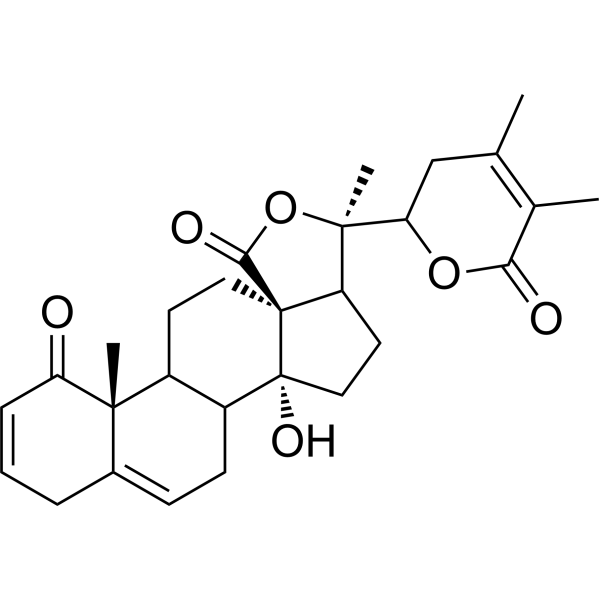
Withaphysalin A is a withanolide compound with anti-inflammatory and antioxidant activities. Withaphysalin A inhibits LPS (HY-D1056)-induced nuclear translocation of NF-κB p65, as well as phosphorylation of STAT3, ERK, JNK and p38 MAPK. Withaphysalin A upregulates the expression of HO-1. Withaphysalin A inhibits LPS-induced production of NO, PGE2, IL-1β, IL-6 and TNF-α. Withaphysalin A downregulates LPS-induced expression of iNOS and COX-2. Withaphysalin A interacts with B-cell activating factor protein (BAFF) to exert inhibitory effects. Withaphysalin A exhibits ELOVL6 inhibitory activity. Withaphysalin A can be used in the research of inflammatory diseases, nephrotic syndrome and chronic myeloid leukemia .
loading...
    loading...
Cat. No.: HY-N2199
CAS No.: 2608-21-1
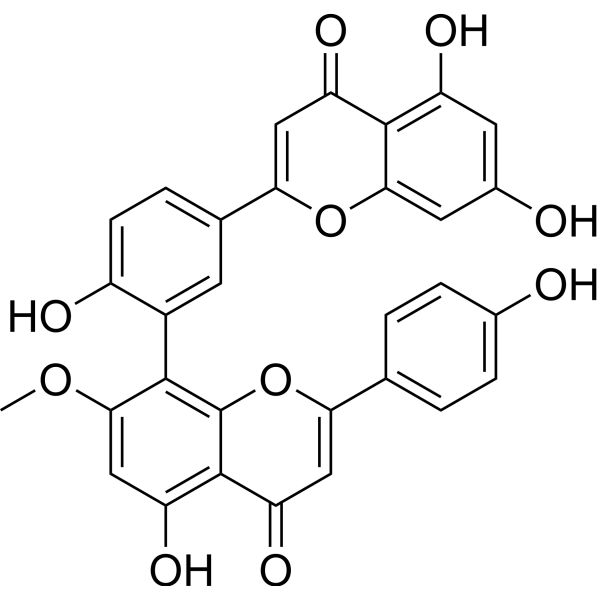
Sotetsuflavone is a flavonoid that can be isolated from Cycas revolute. Sotetsuflavone inhibits phosphorylation of PI3K, Akt, mTOR, JNK, and p38 MAPK; modulates expression of Cyclin D1, CDK4, Bcl-2, Bax, cleaved caspases 3/9, MMP-9, TGF-β, STAT3, and β-catenin. Sotetsuflavone induces G0/G1 cell cycle arrest, apoptosis, autophagy, and intracellular ROS elevation, inhibits cancer cell proliferation. Sotetsuflavone inhibits tumor growth in mouse tumor xenograft models. Sotetsuflavone can be used for the research of non-small cell lung cancer and Crohn’s disease .
loading...
    loading...
Cat. No.: HY-N7064
CAS No.: 256-96-2
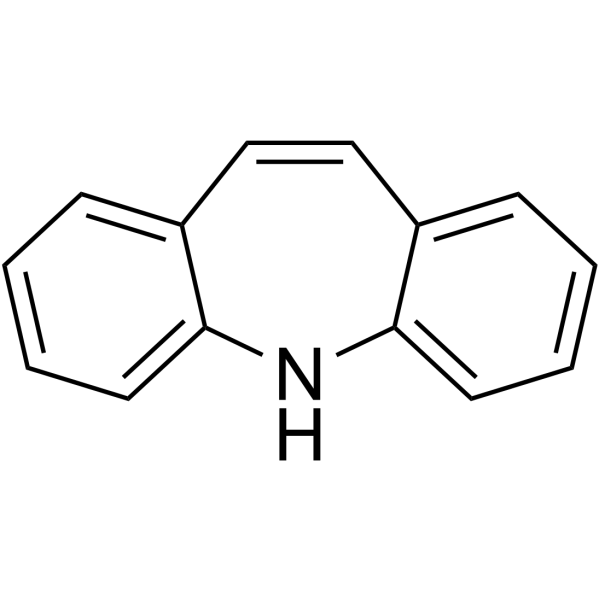
Iminostilbene is a chemical precursor of carbamazepine. Additionally, Iminostilbene is an orally active inhibitor of PKM2 (Pyruvate Kinase M2) and COX2 (Cyclooxygenase-2). Iminostilbene exerts its effects by inhibiting PKM2 and its interaction with HIF-1α and STAT3, reducing COX2 and iNOS expression, and decreasing LPS-induced release of IL-1β, IL-6, TNF-α, and MCP-1, thereby suppressing macrophage-mediated inflammatory responses and improving myocardial ischemia/reperfusion (MI/R) injury. Iminostilbene holds promise for research in inflammation regulation, cardiovascular diseases (such as MI/R injury), and macrophage-mediated immune-related diseases .
loading...
    loading...
Cat. No.: HY-100754CR
CAS No.: 2192215-81-7
Synonyms: PF-06651600 tosylate (Standard)
Ritlecitinib (tosylate) (Standard) is the analytical standard of Ritlecitinib (tosylate) (HY-100754C). This product is intended for research and analytical applications. Ritlecitinib (PF-06651600) tosylate is a highly selective, orally active, irreversible covalent JAK3 inhibitor (IC50=33 nM) without inhibitory activity towards JAK1, JAK2, and TYK2 (IC50 >10 μ M). Ritlecitinib tosylate rapidly inactivates the JAK3 kinase, and blocks signaling and downstream STAT phosphorylation mediated by common gamma chain cytokines such as IL-2 and IL-15. Ritlecitinib tosylate can inhibit Th1/Th17 cell differentiation and function, and effectively suppress preclinical animal models such as alopecia areata, adjuvant-induced arthritis (AIA), and experimental autoimmune encephalomyelitis (EAE) .
loading...
    loading...
Cat. No.: HY-100754R
CAS No.: 1792180-81-4
Synonyms: PF-06651600 (Standard)
Ritlecitinib (Standard) is the analytical standard of Ritlecitinib (HY-100754). This product is intended for research and analytical applications. Ritlecitinib (PF-06651600) is a highly selective, orally active, irreversible covalent JAK3 inhibitor (IC50=33 nM) without inhibitory activity towards JAK1, JAK2, and TYK2 (IC50 >10 μ M). Ritlecitinib rapidly inactivates the JAK3 kinase, and blocks signaling and downstream STAT phosphorylation mediated by common gamma chain cytokines such as IL-2 and IL-15. Ritlecitinib can inhibit Th1/Th17 cell differentiation and function, and effectively suppress preclinical animal models such as alopecia areata, adjuvant-induced arthritis (AIA), and experimental autoimmune encephalomyelitis (EAE) .
loading...
    loading...
Cat. No.: HY-129138R
CAS No.: 2611-67-8
Cyanidin 3,5-diglucoside (chloride) (Standard) is the analytical standard of Cyanidin 3,5-diglucoside (chloride) (HY-129138). This product is intended for research and analytical applications. Cyanidin 3,5-diglucoside chloride is an anthocyanin. Cyanidin 3,5-diglucoside chloride inhibits inflammatory cytokines (IL-1α, IL-1β, and IL-6) expression and NO production. Cyanidin 3,5-diglucoside chloride inhibits the phosphorylation of STAT3, IκB, ERK, p38, and AKT. Cyanidin 3,5-diglucoside chloride inhibits high pressure-induced decrease in GLAST. Cyanidin 3,5-diglucoside chloride exerts anti-inflammatory and skin barrier modulating effects. Cyanidin 3,5-diglucoside chloride can be used in retinal research .
loading...
    loading...
Cat. No.: HY-149209
CAS No.: 3034487-84-5
Purity:  99.76%
Research Areas:  

Metabolic Disease Cancer

LL-K8-22 is a dual degrader of CDK8 and cyclin C HyT, with DC50 values of 2.52 μM and 2.64 μM, respectively. LL-K8-22 inhibits phosphorylation of STAT1 Ser 727, phosphorylation of the C-terminal domain Ser 2/5 of RNA polymerase II, and phosphorylation of Rb. LL-K8-22 represses E2F- and MYC-driven transcriptional programs and exhibits antiproliferative effects. LL-K8-22 synchronously induces proteasome-dependent selective degradation of CDK8 and cyclin C without degrading CDK19, other CDK family members, or other cyclins. LL-K8-22 can be used in the research of triple-negative breast cancer and colon cancer .
loading...
    loading...
Cat. No.: HY-153858
CAS No.: 2470433-36-2
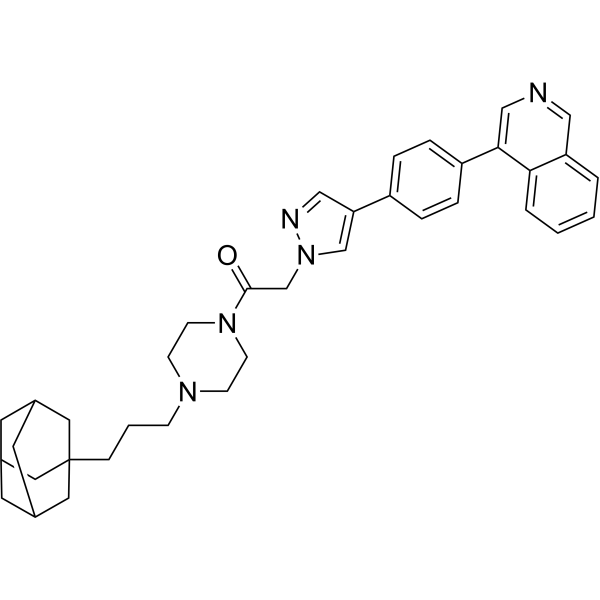
PHI-501 is a dual inhibitor targeting RAF/DDR. PHI-501 exhibits significant anti-proliferative effects in melanoma cell lines and significantly inhibits the colony formation of drug-resistant cells. PHI-501 strongly inhibits ERK and AKT phosphorylation. PHI-501 downregulates the gene sets in drug-resistant cells of TNFA-NFKB, IL6-JAK-STAT3, and KRAS signaling pathways as well as the epithelial-mesenchymal transition (EMT) signaling pathways. PHI-501 demonstrates significant anti-tumor effects in the SK-MEL3DR xenograft model. PHI-501 can be used for research on the problem of drug resistance in melanoma .
loading...
    loading...
Cat. No.: HY-161923
Target:  

EGFR Apoptosis Akt ERK

Research Areas:  

Cancer

EGFR-IN-120 (Compound 11eg) is an orally active EGFR inhibitor. EGFR-IN-120 inhibits EGFR L858R/T790M/C797S with an IC50 value of 0.053 μM, and has a relatively weak effect on EGFR WT (IC50: 1.05 μM). EGFR-IN-120 inhibits the phosphorylation of EGFR and main downstream effectors (STAT3, AKT, and Erk). EGFR-IN-120 induces cell cycle arrest and cell apoptosis in EGFR mutant cells. EGFR-IN-120 inhibits the proliferation of the NSCLC cells harboring EGFR L858R/T790M/C797S with an IC50 of 0.052 μM .
loading...
    loading...
Cat. No.: HY-168954
Target:  

c-Fms Apoptosis Akt ERK STAT

Research Areas:  

Inflammation/Immunology Cancer

CSF1R-IN-26 (Compound III-1) is the inhibitor for CSF-1R with an IC50 of 20.07 nM. CSF1R-IN-26 promotes the polarization of M2 macrophages to M1 macrophages, thereby inducing apoptosis in MC-38 cancer cell. CSF1R-IN-26 inhibits the activation of AKT/ERK/STAT3 signaling pathway. CSF1R-IN-26 reconstructs the tumor immune microenvironment and exhibits antitumor activity in mouse models. CSF1R-IN-26 exhibits pharmacokinetics characteristics in SD rats with a half-life 1.86 hours, and an oral bioavailability of 79.22% .
loading...
    loading...
Cat. No.: HY-173679
CAS No.: 2569517-30-0
Research Areas:  

Infection Cancer

RBN012811 is a highly selective PROTAC-based PARP14 degrader. RBN012811 forms a ternary complex with cereblon by binding to the NAD + site of PARP14, and mediates the specific degradation of PARP14 via the ubiquitin-proteasome pathway (IC50=10 nM). RBN012811 effectively depletes endogenous PARP14 in various cell lines and primary human macrophages, thereby downregulating IL-10 production and IFN-β mRNA levels, increasing phosphorylated STAT1 levels to enhance inflammatory signaling, and inhibiting interferon-induced ADPr condensate formation. RBN012811 also modulates viral replication, exhibiting increased HSV1 replication while reducing VSV replication. RBN012811 has important application value in research related to cancer and viral infections .
loading...
    loading...
Cat. No.: HY-174437B
CAS No.: 3047195-66-1
Research Areas:  

Cancer

FLT3-IN-32 hydrochloride is a potent and orally active FLT3 inhibitor with an IC50s of 0.29 nM, 0.77 nM and 2.07 nM against FLT3-ITD, FLT3-D835Y and FLT-N676K. FLT3-IN-32 hydrochloride reduces the phosphorylation of FLT3 and its downstream signaling molecules (STAT5, MAPK, AKT) to induce FLT3-mutated Ba/F3 cells apoptosis. FLT3-IN-32 hydrochloride shows significant anti-tumor efficacy in n the MV4-11 xenograft model. FLT3-IN-32 hydrochloride can be used for the study of acute myeloid leukemia (AML) .
loading...
    loading...
Cat. No.: HY-175320
Research Areas:  

Cancer

PROTAC c-Met degrader-5 is an orally active c-Met PROTAC degrader. PROTAC c-Met degrader-5 induces c-Met degradation via Cullin-CRBN, with a DC50 value of 0.32 nM, and inhibits the phosphorylation of c-Met and its downstream signaling molecule STAT3. PROTAC c-Met degrader-5 inhibits cancer cell proliferation, migration and invasion, induces apoptosis, alters cell cycle distribution, and suppresses the growth of EBC-1 xenograft tumors. PROTAC c-Met degrader-5 can be used to study MET-driven cancers as well as Tepotinib (HY-14721)-resistant cancers harboring c-Met D1228N and c-Met Y1230H mutations .
loading...
    loading...

