116 Results for "

ER blockade

" in MedChemExpress (MCE) Product Catalog:
Products (116)

116 Results for "ER blockade" in MCE Product Catalog:

Cat. No.: HY-182372
CAS No.: 1638153-78-2
Target:  

Epoxide Hydrolase

Research Areas:  

Neurological Disease

SH-11037 is a potent inhibitor of soluble epoxide hydrolase (sEH) and docks to the substrate binding cleft in the sEH hydrolase domain. SH-11037 dose-dependently suppresses angiogenesis in the choroidal sprouting assay ex vivo and inhibited ocular developmental angiogenesis in zebrafish larvae. SH-11037 reduces choroidal neovascularisation lesion volume in the laser-induced CNV mouse model. SH-11037 synergises with anti-VEGF treatments in vitro and in vivo. SH-11037 induces G2/M phase blockade and retains retinal endothelial cell viability at active concentrations without overt toxicity. SH-11037 can be used for the research of retinal neovascularization and ocular neovascularization .
loading...
    loading...
Cat. No.: HY-188081
CAS No.: 3112733-78-2
Research Areas:  

Cancer

YH-36400 is an orally bioavailable inhibitor of HIF-1α and HIF-2α. YH-36400 disrupts the dimerization of HIF-1α and HIF-1β and triggers proteasomal degradation, thereby inhibiting the transcriptional activities of HIF-1 and HIF-2. YH-36400 reduces the expression of PD-L1 and CD73, reprograms the tumor immune microenvironment, inhibits angiogenesis, and can be used in combination with immune checkpoint blockade therapy. YH-36400 is applicable to research related to breast cancer, lung cancer, melanoma, pancreatic cancer, colorectal cancer, prostate cancer, and head and neck squamous cell carcinoma .
loading...
    loading...
Cat. No.: HY-B0653AS
Synonyms: (S)-(–)-Bupivacaie-d9hydrochloride
Levobupivacaine-d9 ((S)-(–)-Bupivacaie-d9) hydrochloride is deuterium labeled Levobupivacaine hydrochloride (HY-B0653A). Levobupivacaine hydrochloride ((S)-(-)-Bupivacaine monohydrochloride) is a long-acting amide local agent that can suppress or relieve pain. Levobupivacaine hydrochloride exerts agent that can suppress or relieve pain. and analgesic effects through reversible blockade of neuronal sodium channel. Levobupivacaine hydrochloride can inhibit impulse transmission and conduction in cardiovascular and other tissues, possessing certain cardiac and CNS toxicity. Levobupivacaine hydrochloride is metabolized by hepatic cytochrome P450 (CYP450) enzymes in vivo. Levobupivacaine hydrochloride can also induce ferroptosis by miR-489-3p/SLC7A11 signaling in gastric cancer .
loading...
    loading...
Cat. No.: HY-P991740

Research Areas:  

Cancer

IBI-363 is a PD-1/IL-2 bispecific antibody with functions of blocking the PD-1/PD-L1 pathway and activating the IL-2 pathway. The IL-2 arm of IBI-363 retains affinity for IL-2Rα but attenuates binding ability to IL-2Rβ and IL-2Rγ to reduce toxicity. The PD-1 binding arm of IBI-363 enables PD-1 blockade and selective delivery of IL-2. IBI-363 can be used in cancer research, such as non-small cell lung cancer .
loading...
    loading...
Cat. No.: HY-12502B
CAS No.: 111011-53-1
Synonyms: NZ-105 hydrochloride; (±)-Efonidipine hydrochloride
Research Areas:  

Cardiovascular Disease Cancer

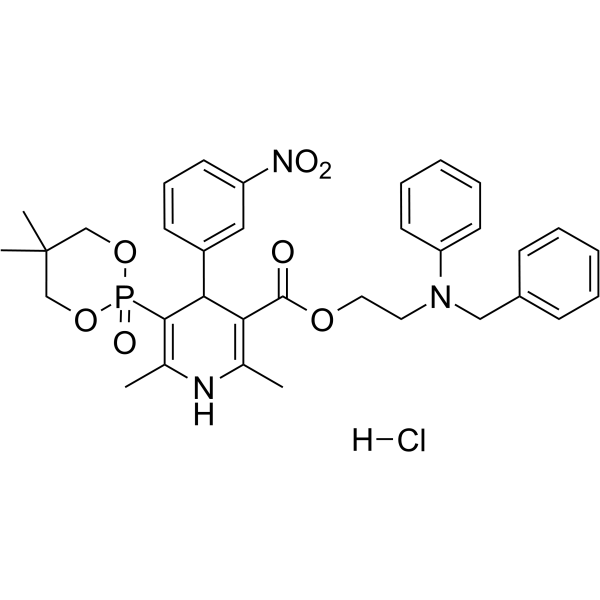
Efonidipine (NZ-105) hydrochloride is an orally active dual L-type and T-type calcium channel blocker (CCB) with IC50 values of 1.8 and 350 nM, respectively. Efonidipine hydrochloride inhibits SARS-CoV-2 main protease. Efonidipine hydrochloride modulates adrenal steroidogenesis by increasing the expression of steroidogenic acute regulatory protein (StAR), dbcAMP-or angiotensin II-induced StAR mRNA expression and DHEA-S production, while suppressing the biosynthesis of aldosterone and cortisol. Efonidipine hydrochloride reduces plasma aldosterone levels in vivo. Efonidipine hydrochloride improves cardiac function in heart failure models by inhibiting T-type calcium channels (via both tonic and use-dependent blockade), independently of blood pressure reduction. Efonidipine hydrochloride can be used for research in hypertension, heart failure, and disorders involving dysregulated steroid hormone synthesis .
loading...
    loading...
Cat. No.: HY-169232
Target:  

PROTACs PD-1/PD-L1

Research Areas:  

Cancer

PCC16 chloride is a dual PROTAC degrader targeting DHHC3 and PD-L1, with a DC50 of 0.103 μM for PD-L1 degradation. PCC16 chloride induces DHHC3 degradation via the ubiquitin-proteasome pathway by recruiting the CRBN E3 ubiquitin ligase (E3 ubiquitin ligase). By targeting DHHC3-which is essential for PD-L1 palmitoylation and membrane stability-PCC16 chloride reduces PD-L1 levels, decreases PD-L1 membrane retention time, and impairs its immunosuppressive function. PCC16 chloride enhances anti-tumor immunity by disrupting PD-L1-mediated immunosuppression. PCC16 chloride can be used in the research of immune checkpoint blockade-resistant cancers .
loading...
    loading...
Cat. No.: HY-P992353

Target:  

LILRB

Research Areas:  

Cancer

ES009 is a high-affinity LILRB2 antagonist, with IC50 values of 14.07 nM and 18.61 nM for inhibiting hLILRB2-huANGPTL3 and hLILRB2-huANGPTL4, respectively. ES009 specifically blocks the interactions between LILRB2 and MHC class I as well as non-MHC ligands, thereby effectively inhibiting receptor activation. ES009 can reprogram anti-inflammatory myeloid cells and induce their conversion to a pro-inflammatory phenotype, and also reverse the T cell suppression mediated by macrophages. When combined with anti-PD-1 blockade therapy, ES009 synergistically enhances T cell activation. ES009 can be used in research related to advanced solid tumors and ovarian cancer .
loading...
    loading...
Cat. No.: HY-P99916
CAS No.: 2449199-61-3
Synonyms: AMG-427

Target:  

FLT3 CD3 TNF Receptor

Research Areas:  

Inflammation/Immunology Cancer

Emirodatamab (AMG-427) is a bispecific T-cell engager (BiTE). Emirodatamab simultaneously binds FLT3 on the surface of acute myeloid leukemia (AML) cells and CD3 on the surface of T cells, thereby precisely recruiting immune effector cells to tumor sites. Emirodatamab potently induces T cell activation, secretion of proinflammatory cytokines (such as IFNγ, TNFα), and specific cytotoxicity, effectively lysing FLT3-positive tumor cells and inhibiting their growth. Emirodatamab not only significantly prolongs survival in mouse xenograft models and eliminates diseased cells in primates, but also exhibits a synergistic enhancement effect when combined with PD-1 blockade therapy. Emirodatamab is used in studies of acute myeloid leukemia, especially relapsed or refractory cases .
loading...
    loading...
Cat. No.: HY-108482
CAS No.: 132746-60-2
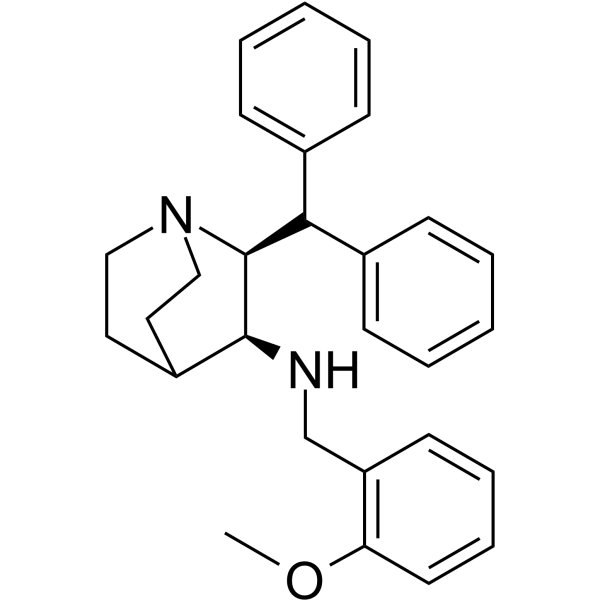
CP-96,345 is a non-peptide selective NK-1 receptor antagonist (Ki = 0.31 nM). CP-96,345 inhibits cell rolling, adhesion, and plasma extravasation, and inhibits degranulation and pancreatic MPO activity. CP-96,345 attenuates neurogenic inflammation, edema, and adhesion molecule expression. CP-96,345 attenuates static contraction- and muscle stretch-evoked pressor reflexes through blockade of NK-1 receptors in the dorsal horn. CP-96,345 impairs post-ischemic recovery of LVDevP, HR, and CF in isolated hearts and increases reperfusion fibrillation. CP-96,345 can be used for research on chronic colitis, myocardial ischemia-reperfusion injury, smoke inhalation and burn injury, acute pancreatitis, oxazolone colitis, and neurogenic inflammation .
loading...
    loading...
Cat. No.: HY-184119
CAS No.: 3061276-55-6
Synonyms: IM502
Pabgraminone C (IM502) is a Fungal metabolite and PI3Kγ inhibitor with an IC50 of 61.7 nM against PI3Kγ. Pabgraminone C shifts the STAT signaling pathway in cells from an immunosuppressive STAT3/STAT6-dominant profile to an immunostimulatory STAT1/STAT2-dominant profile, driving cells toward a pro-inflammatory phenotype. Pabgraminone C reprograms cells from an immunosuppressive state to an immunostimulatory state, reversing their suppressive effect on anti-tumor immunity. Pabgraminone C inhibits established tumor growth and metastasis across multiple cancer types. Pabgraminone C overcomes resistance to PD-1 checkpoint blockade strategies. Pabgraminone C can be used in research related to liver cancer, melanoma, and colorectal cancer .
loading...
    loading...
Cat. No.: HY-P991193

Target:  

TNF Receptor

Research Areas:  

Cancer

NGM-438 is a humanized monoclonal antibody antagonist of LAIR1, with a Ka of 0.26 nM for human LAIR1 and 4.28 nM for cynomolgus monkey LAIR1. NGM-438 blocks the binding of LAIR1 to its Collagen ligand and antagonizes the Collagen-induced LAIR1 signaling pathway. NGM-438 reverses FcγR signaling inhibition in myeloid cells, induces dendritic cells to secrete TNFα, promotes T cell proliferation, and triggers myeloid inflammation and allogeneic T cell responses. NGM-438 sensitizes refractory mouse lung cancer to PD-1 blockade, increases the content of intratumoral CD8 + T cells and the expression of inflammatory genes. NGM-438 is applicable to research related to solid tumors, refractory solid tumors and non-small cell lung cancer .
loading...
    loading...
Cat. No.: HY-155847
CAS No.: 3052262-64-0
Purity:  99.80%
Target:  

Phosphatase PD-1/PD-L1

Research Areas:  

Inflammation/Immunology Cancer

LYP-IN-3 is a selective, orally active and reversible lymphoid-tyrosine phosphatase (LYP) inhibitor (IC50 = 2.55 μM, Ki = 0.93 μM). D34 exhibits high selectivity of PTP1B, PTPN12, PTPN5 and SSH2. LYP-IN-3 regulates the T-cell receptor (TCR) signaling by specifically inhibiting LYP. LYP-IN-3 does not significantly inhibit MC38 cell viability; its anti-tumor effect stems from immune regulation. LYP-IN-3 can significantly upregulate PD-L1 or PD-1 expression in different immune cells. LYP-IN-3 facilitates T-cell infiltration and enhances T-cell functions. LYP-IN-3 synergizes with PD-L1 blockade can significantly improve colorectal tumor regression. LYP-IN-3 can be used for the study of colorectal cancer .
loading...
    loading...
Cat. No.: HY-189235
CAS No.: 3078735-55-1
Target:  

5-HT Receptor

Research Areas:  

Cancer

IHCH-8110 is a peripherally restricted, non-brain-penetrant 5-HT2AR and 5-HT2CR agonist (Ki=47.86 nM) that antagonizes 5-HT2BR. IHCH-8110 induces CXCL10 and IL-18 expression by activating 5-HT2AR on enteric glial cells, thereby promoting CD8 + T cell recruitment and effector polarization, and avoids the risk of cardiac valvulopathy associated with 5-HT2BR activation. IHCH-8110 exhibits a low risk of hERG channel inhibition (IC50=5.96 μM) and is well tolerated, sensitizing immunologically cold colorectal cancer to PD-1 blockade therapy, making it suitable for research related to colorectal cancer .
loading...
    loading...
Cat. No.: HY-12502AR
CAS No.: 111011-76-8
Synonyms: NZ-105 hydrochloride monoethanolate (Standard); (±)-Efonidipine hydrochloride monoethanolate (Standard)
Efonidipine (NZ-105) hydrochloride monoethanolate (Standard) is the analytical standard of Efonidipine hydrochloride monoethanolate (HY-12502AR). This product is intended for research and analytical applications. Efonidipine (NZ-105) hydrochloride monoethanolate is an orally active dual L-type and T-type calcium channel blocker (CCB) with IC50 values of 1.8 and 350 nM, respectively. Efonidipine hydrochloride monoethanolate inhibits SARS-CoV-2 main protease. Efonidipine hydrochloride monoethanolate modulates adrenal steroidogenesis by increasing the expression of steroidogenic acute regulatory protein (StAR), dbcAMP-or angiotensin II-induced StAR mRNA expression and DHEA-S production, while suppressing the biosynthesis of aldosterone and cortisol. Efonidipine hydrochloride monoethanolate reduces plasma aldosterone levels in vivo. Efonidipine hydrochloride monoethanolate improves cardiac function in heart failure models by inhibiting T-type calcium channels (via both tonic and use-dependent blockade), independently of blood pressure reduction. Efonidipine hydrochloride monoethanolate can be used for research in hypertension, heart failure, and disorders involving dysregulated steroid hormone synthesis .
loading...
    loading...
Cat. No.: HY-132184
CAS No.: 87173-80-6
Purity:  ≥99.0%
Synonyms: 5,6-EET; (±)5,6-EpETrE
Research Areas:  

Endocrinology

5,6-Epoxyeicosatrienoic acid (5,6-EET; (±)5,6-EpETrE) is a fully racemic version of the enantiomeric forms biosynthesized from arachidonic acid by cytochrome P450 enzymes. In solution, 5,6-Epoxyeicosatrienoic acid degrades into 5,6-DiHET and 5,6-δ-lactone, which can be converted to 5,6-DiHET and quantified by GC-MS. In neuroendocrine cells, such as the anterior pituitary and pancreatic islets, 5,6-Epoxyeicosatrienoic acid has been implicated in the mobilization of calcium and hormone secretion. 5,6-Epoxyeicosatrienoic acid is an inhibitor of T-type voltage-gated calcium channels (Cav3) that inhibits isoforms Cav3.1, Cav3.2 (IC50=0.54 μM), and Cav3. and decreases nifedipine-resistant phenylephrine-induced vasoconstriction in isolated mouse mesenteric arteries via Cav3.2 blockade when used at a concentration of 3 μM. In addition, it is a substrate of COX-1 and COX-2.
loading...
    loading...
Cat. No.: HY-P990955
CAS No.: 2839652-75-2
Synonyms: ADX-097

Target:  

CD3 Complement System

Research Areas:  

Inflammation/Immunology

Ebribafusp alfa (ADX-097) comprising a humanized anti-C3d monoclonal antibody linked to two moieties of the first five consensus repeats of factor H (fH1-5). Ebribafusp alfa binds C3d and related fragments, catalyzes AP convertase dissociation, acts as a factor I co-factor for C3b cleavage, and delivers fH1-5 moieties to C3d-deposited tissues for local complement inhibition without systemic blockade. Ebribafusp alfa reduces glomerular C3 deposition, proteinuria, urine albumin-creatinine ratios, and urine soluble C5b-9 levels, preserves podocyte foot-process architecture, inhibits skin complement activation, and localizes to UVB-damaged primate skin. Ebribafusp alfa can be used for the research of membranous nephropathy, bullous pemphigoid, discoid lupus erythematosus, C3 glomerulopathy, IgA nephropathy, and lupus nephritis .
loading...
    loading...

