131 Results for "

relapse

" in MedChemExpress (MCE) Product Catalog:
Products (131)

131 Results for "relapse" in MCE Product Catalog:

Cat. No.: HY-101563R
CAS No.: 1616392-22-3
Synonyms: GSK3326595 (Standard); EPZ015938 (Standard)
GSK3326595 (Standard) is the analytical standard of GSK3326595 (HY-101563). This product is intended for research and analytical applications. GSK3326595 is a protein arginine methyltransferase 5 (PRMT5) inhibitor. GSK3326595 decreases SARS-CoV-2 infection, inhibits cancer cell proliferation and induces pro-inflammatory macrophage polarization and increases hepatic triglyceride levels without affecting atherosclerosis. GSK3326595 can be used for research of relapsed/refractory mantle cell lymphoma .
loading...
    loading...
Cat. No.: HY-P992417

Target:  

CD20 Apoptosis

Research Areas:  

Cancer

MT-3724 is a CD20-targeted endotoxin B. MT-3724 binds to CD20, triggers receptor internalization, traffics to the endoplasmic reticulum, and induces permanent ribosomal inactivation to mediate cell killing. MT-3724 can inhibit protein synthesis and promote tumor cell apoptosis. MT-3724 can be used for the research of relapsed or refractory B-cell non-Hodgkin’s lymphomas and diffuse large B-cell lymphoma .
loading...
    loading...
Cat. No.: HY-185428
Research Areas:  

Cancer

TRS-005 is an anti-CD20 ADC, formed by conjugating an anti-CD20 monoclonal antibody to MMAE (HY-15162) via a Val-Cit (HY-140014) linker. TRS-005 targets CD20-positive tumor cells and delivers MMAE into cells through receptor-mediated endocytosis. TRS-005 can be used for research on relapsed/refractory B-cell non-Hodgkin lymphoma (specifically diffuse large B-cell lymphoma) .
loading...
    loading...
Cat. No.: HY-187995
Target:  

Cannabinoid Receptor

Research Areas:  

Neurological Disease

RTICBM-303 is a blood-brain barrier-penetrant cannabinoid receptor type 1 (CB1) inhibitor. RTICBM-303 concentration-dependently decreases the Emax of the agonist CP55,940, increases the binding of [ 3H]CP55,940, and inhibits CB1 receptor signaling. RTICBM-303 selectively reduces cue-induced and drug-priming-induced drug-seeking relapse behaviors in rats. RTICBM-303 can be used in studies related to addictive behaviors .
loading...
    loading...
Cat. No.: HY-10446S1
Pralatrexate- 13C5, 15N is the 13C- and 15N-labeled Pralatrexate (HY-10446). Pralatrexate is an antifolate and is a potent dihydrofolate reductasean (DHFR) inhibitor with a Ki of 13.4 pM. Pralatrexate is a substrate for folylpolyglutamate synthetase with improved cellular uptake and retention. Pralatrexate has antitumor activities and has the potential for relapsed/refractory T-cell lymphoma treatment . Pralatrexate is a click chemistry reagent, it contains an Alkyne group and can undergo copper-catalyzed azide-alkyne cycloaddition (CuAAc) with molecules containing Azide groups.
loading...
    loading...
Cat. No.: HY-185483
AMG-172 is an antibody-drug conjugate (ADC) composed of a fully human IgG1 monoclonal anti-CD27L antibody conjugated to DM1 (HY-19792) via the non-cleavable linker MCC. AMG-172 releases the intracellular active component Lysine-MCC-DM through catabolism. Lysine-MCC-DM inhibits the assembly and disassembly dynamics of Microtubule and induces cell arrest at metaphase. AMG-172 can be used for research on relapsed/refractory clear cell renal cell carcinoma .
loading...
    loading...
Cat. No.: HY-181960
CAS No.: 914302-78-6
Target:  

Histamine Receptor

Research Areas:  

Neurological Disease

BP1.3656B is a selective, orally active, blood-brain barrier-permeable histamine H3 receptor (histamine H3 receptor) inverse agonist/antagonist, with a KB value of 0.08 nM for antagonizing agonist-induced activity and an IC50 value of 0.38 nM for directly inhibiting the basal activity of the receptor. BP1.3656B reduces alcohol consumption, alcohol-seeking behavior, alcohol self-administration, motivation to drink, alcohol relapse, alcohol-induced hyperlocomotion, and binge alcohol intake. BP1.3656B is applicable for the research of alcohol use disorder .
loading...
    loading...
Cat. No.: HY-12288S
Synonyms: RPC-1063-d6
Ozanimod-d6 (RPC-1063-d6) is the deuterium labeled Ozanimod (HY-12288). Ozanimod (RPC-1063) is a CNS-penetrant sphingosine 1-phosphate (S1P) receptor modulator that binds with high affinity selectively to S1P receptor subtypes 1 (S1P1) and 5 (S1P5). Ozanimod has modulate effect for hS1P1 and hS1P5 receptor with EC50s of 1.03 nM and 8.6 nM, respectively. Ozanimod can be used for the research of relapsing multiple sclerosis (MS) .
loading...
    loading...
Cat. No.: HY-171754
Research Areas:  

Cancer

LM-305 is an anti-G protein-coupled receptor class 5 member D (GPRC5D) antibody-drug conjugate (ADC). LM-305 consists of Anti-GPRC5D Antibody (HY-P991197) and VcMMAE (HY-15575). LM-305 exhibits potent cytotoxicity against multiple myeloma cells (NCI-H929 and MM.1R) with IC50 values ranging from 0.1 to 0.3 nM. LM-305 can be used in the study of GPRC5D-related relapsed and refractory multiple myeloma (RRMM) .
loading...
    loading...
Cat. No.: HY-183596
CAS No.: 2941355-21-9
Target:  

Drug Intermediate

Research Areas:  

Cancer

L-His-BPA is a prodrug of L-p-Boronophenylalanine (L-BPA) (HY-W087830), formed by the peptide bond linkage of L-histidine (L-His) (HY-N0832) and L-BPA. L-His-BPA is rapidly cleaved by endogenous proteases to de novo release L-BPA in the systemic circulation. When used in combination with neutron irradiation, L-His-BPA induces complete and durable tumor regression, elicits cancer vaccine responses, and produces abscopal inhibitory effects on unirradiated distant tumors. L-His-BPA can be used in studies of boron neutron capture therapy (BNCT) for relapsed/advanced solid tumors .
loading...
    loading...
Cat. No.: HY-P992389
Target:  

LILRB

Research Areas:  

Cancer

IO-202 is a high-affinity LILRB4/ILT3 binder and myeloid checkpoint inhibitor. IO-202 blocks APOE binding and LILRB4 activation to reverse T-cell suppression and enhance T-cell cytotoxicity, while eliminating LILRB4-high-expressing leukemic blasts via ADCC and ADCP mechanisms. IO-202 promotes dendritic cell maturation and antigen presentation, reshapes the phenotype of tumor-associated macrophages, and reduces myeloid-derived suppressor cells. IO-202 is widely applicable to research on relapsed/refractory acute myeloid leukemia (AML), chronic myelomonocytic leukemia (CMML), and solid tumors .
loading...
    loading...
Cat. No.: HY-106000
CAS No.: 720691-69-0
Purity:  99.09%
Target:  

Histamine Receptor

Research Areas:  

Neurological Disease

GSK239512 is a blood-brain barrier-permeable, orally active H3 receptor antagonist, with a human pKi ranging from <5.5 to 9.92 and a murine pKi ranging from 9.44 to 9.83. GSK239512 modulates cholinergic and monoaminergic neurotransmission, blocks the inhibitory feedback of H3 receptors, and increases the release of pro-cognitive neurotransmitters. GSK239512 induces oligodendrocyte precursor cell differentiation and restores myelin gene expression at the cellular level. GSK239512 reverses Scopolamine (HY-N0296)-induced memory deficits and improves recognition memory in animal models. GSK239512 can be used in research related to Alzheimer's disease, chronic traumatic encephalopathy, relapsing-remitting multiple sclerosis, and schizophrenia .
loading...
    loading...
Cat. No.: HY-156794
CAS No.: 2412555-70-3
Purity:  99.88%
Synonyms: DSP-5336
Research Areas:  

Cancer

Enzomenib (DSP-5336) is an orally active Menin inhibitor (IC50=1.4 nM, Kd=6.0 nM). Enzomenib disrupts the interaction between Menin and KMT2A/MLL fusion proteins, specifically inhibits the expression of leukemia driver genes such as HOX/MEIS1, and upregulates ITGAM. Enzomenib effectively induces cell differentiation, inhibits tumor cell proliferation, and suppresses primitive cell colony formation. Enzomenib reduces disease burden and prolongs survival, but causes adverse reactions including differentiation syndrome and QTc interval prolongation. Enzomenib is used for research on relapsed/refractory acute myeloid leukemia, acute lymphoblastic leukemia, and other hematologic malignancies with mixed lineage leukemia (MLL) rearrangements or NPM1 mutations .
loading...
    loading...
Cat. No.: HY-P10441
CAS No.: 1240687-76-6
Research Areas:  

Inflammation/Immunology

S-palm P0(180-199) is an S-palmitoylated peptide derived from P0 protein. S-palm P0(180-199) induces IL-17+ cells, macrophage infiltration, and anti-P0 antibodies. S-palm P0(180-199) induces chronic inflammatory demyelinating polyneuropathy in rats via active immunization, manifesting as a relapsing-remitting disease driven by persistent T cells, macrophages, Th17 cells and related cytokines, and P0-specific IgG . S-palm P0(180-199) can be used in research related to chronic inflammatory demyelinating polyneuropathy .
loading...
    loading...
Cat. No.: HY-P991183

Target:  

CD28 CD38 CD3

Research Areas:  

Cancer

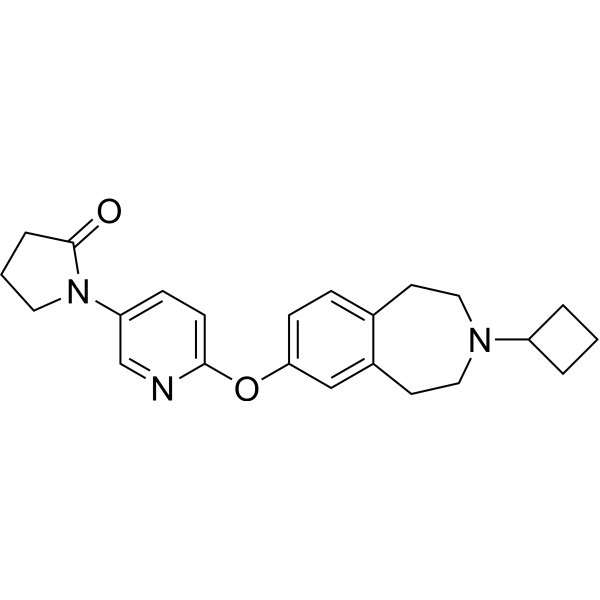
SAR-442257 is a trispecific T-cell engager and monoclonal antibody that binds to CD38, CD3 and CD28. SAR-442257 can target and bind to CD3 and CD28 on T cells, as well as CD38 expressed on tumor cells. SAR-442257 mediates T-cell activation, enhances T-cell activity, induces T-cell degranulation, and drives cytotoxicity against multiple myeloma cells. SAR-442257 functions via CD38 expression, and its in vitro activity correlates with CD38 expression on the surface of multiple myeloma cells. SAR-442257 can be used in studies related to multiple myeloma and relapsed/refractory multiple myeloma .
loading...
    loading...
Cat. No.: HY-156794A
Synonyms: DSP-5336 enantiomer
Enzomenib enantiomer (DSP-5336 enantiomer) is an enantiomer of Enzomenib (HY-156794). Enzomenib (DSP-5336) is an orally active Menin inhibitor (IC50=1.4 nM, Kd=6.0 nM). Enzomenib disrupts the interaction between Menin and KMT2A/MLL fusion proteins, specifically inhibits the expression of leukemia driver genes such as HOX/MEIS1, and upregulates ITGAM. Enzomenib effectively induces cell differentiation, inhibits tumor cell proliferation, and suppresses primitive cell colony formation. Enzomenib reduces disease burden and prolongs survival, but causes adverse reactions including differentiation syndrome and QTc interval prolongation. Enzomenib is used for research on relapsed/refractory acute myeloid leukemia, acute lymphoblastic leukemia, and other hematologic malignancies with mixed lineage leukemia (MLL) rearrangements or NPM1 mutations .
loading...
    loading...
Cat. No.: HY-172736
CAS No.: 3005272-36-3
Synonyms: BMS-986458
Target:  

PROTACs BCL6 CD20

Research Areas:  

Cancer

Toviblideg (BMS-986458) is a highly selective, orally active cereblon-based BCL6 PROTAC degrader and antitumor agent. Toviblideg selectively degrades BCL6 by binding cereblon to the BTB domain of BCL6, thereby regulating the cell cycle, antiproliferative and interferon signaling pathways, and upregulating the expression and distribution of CD20. Toviblideg modulates the phenotype of follicular helper T cells and reduces circulating tumor DNA levels. The combination of Toviblideg with CD20xCD3 bispecific antibody also enhances the efficiency of T cell tumor infiltration and expansion. Toviblideg induces regression of BCL6-positive tumors and prolongs survival, and it is suitable for research related to B-cell non-Hodgkin lymphoma, diffuse large B-cell lymphoma, follicular lymphoma, and relapsed/refractory lymphoma .
loading...
    loading...
Cat. No.: HY-P990905
CAS No.: 2871775-98-1
Synonyms: SAR-443579

Target:  

Interleukin Related

Research Areas:  

Cancer

Bexatamig (SAR-443579) is a trifunctional natural killer cell engager targeting IL-3R α/CD123, NKp46/NCR1/CD335 and Fc gamma RIIIA/CD16a. Bexatamig forms a cytolytic synapse between natural killer cells and CD123-positive tumor cells. By activating natural killer cells to induce tumor cell death, Bexatamig effectively reduces the burden of CD123-positive acute myeloid leukemia (AML) blasts. Bexatamig has been granted FDA Fast Track designation, and is primarily investigated for relapsed or refractory acute myeloid leukemia, B-cell acute lymphoblastic leukemia, and high-risk myelodysplastic syndromes .
loading...
    loading...
Cat. No.: HY-P99916
CAS No.: 2449199-61-3
Synonyms: AMG-427

Target:  

FLT3 CD3 TNF Receptor

Research Areas:  

Inflammation/Immunology Cancer

Emirodatamab (AMG-427) is a bispecific T-cell engager (BiTE). Emirodatamab simultaneously binds FLT3 on the surface of acute myeloid leukemia (AML) cells and CD3 on the surface of T cells, thereby precisely recruiting immune effector cells to tumor sites. Emirodatamab potently induces T cell activation, secretion of proinflammatory cytokines (such as IFNγ, TNFα), and specific cytotoxicity, effectively lysing FLT3-positive tumor cells and inhibiting their growth. Emirodatamab not only significantly prolongs survival in mouse xenograft models and eliminates diseased cells in primates, but also exhibits a synergistic enhancement effect when combined with PD-1 blockade therapy. Emirodatamab is used in studies of acute myeloid leukemia, especially relapsed or refractory cases .
loading...
    loading...
Cat. No.: HY-153201
CAS No.: 910113-34-7
PKR1 antagonist-2 is a non-peptide prokineticin receptor antagonist that preferentially binds to and blocks PK-R1 signaling while also blocking PK-R2. PKR1 antagonist-2 shifts the autoimmune response against myelin from a Th1/Th17 profile toward a Th2 profile, reducing myelin antigen-specific T cell proliferation and the production of proinflammatory cytokines (IFN-γ, TNF, IL-6, IL-17), and increasing the levels of anti-inflammatory cytokines IL-4/IL-10. PKR1 antagonist-2 significantly alleviates disease severity in relapsing-remitting and chronic experimental autoimmune encephalomyelitis (EAE). PKR1 antagonist-2 can be used in research related to multiple sclerosis .
loading...
    loading...

