144 Results for "

cellular responses

" in MedChemExpress (MCE) Product Catalog:
Products (144)

144 Results for "cellular responses" in MCE Product Catalog:

Cat. No.: HY-L054
379 compounds

Endoplasmic reticulum (ER) contributes to the production and folding of approximately one third of cellular proteins, and is thus inextricably linked to the maintenance of cellular homeostasis and the fine balance between health and disease. However, some adverse factors negatively impact ER functions and protein synthesis, resulting in the activation of Endoplasmic reticulum stress (ER stress, ERS) and unfolded protein response (UPR) signaling pathways. The UPR is triggered when ER protein folding capacity is overwhelmed by cellular demand and the UPR initially aims to restore ER homeostasis and normal cellular functions. However, if this fails, then the UPR triggers cell death. Chronic ER stress and defects in UPR signaling are emerging as key contributors to a growing list of human diseases, including diabetes, neurodegeneration and cancer.

MCE Endoplasmic Reticulum Stress Compound Library contains 379 ER stress-related compounds that mainly target PERK, IRE1, ATF6, etc. MCE ER stress library is a useful tool for researching ER stress and related diseases.

Cat. No.: HY-101954AR
CAS No.: 2172788-92-8
Synonyms: ORI-9020 ammonium (Standard); SB-9000 ammonium (Standard)
Target:  

Reference Standards HBV

Research Areas:  

Infection Inflammation/Immunology

Inarigivir ammonium (Standard) is the analytical standard of Inarigivir ammonium (HY-101954A). This product is intended for research and analytical applications. Inarigivir (ORI-9020) ammonium is a dinucleotide antiviral drug that can significantly reduce liver HBV DNA in transgenic mice expressing hepatitis B virus. Inarigivir (ORI-9020) ammonium acts as a RIG-I (Retinoic acid-inducible gene-I) agonist to activate cellular innate immune responses .
loading...
    loading...
Cat. No.: HY-183521
CAS No.: 86111-11-7
Research Areas:  

Cancer

D 15414 is an estrogen receptor ligand and the hydroxylated metabolite of Zindoxifene (HY-106056). D 15414 binds to estrogen receptors and mediates estrogen-like cellular responses. D 15414 stimulates prolactin production, progesterone receptor synthesis and cancer cell proliferation. D 15414 inhibits the growth of hormone-dependent human breast cancer cells. D 15414 can be used in research related to breast cancer and hormone-dependent human breast cancer .
loading...
    loading...
Cat. No.: HY-187788
CAS No.: 2230674-01-6
Target:  

SARS-CoV

Research Areas:  

Infection

N-0385 is an antiviral agent active against SARS-CoV-2 and its Omicron subvariants. N-0385 acts on factors such as TMPRSS2 to block viral entry, reduce infection, regulate metabolism and inhibit inflammatory responses. N-0385 reduces SARS-CoV-2-induced mortality, weight loss, pulmonary pathological changes and cellular damage in animal models. N-0385 can be used in research related to coronavirus infections .
loading...
    loading...
Cat. No.: HY-116762
CAS No.: 202284-85-3
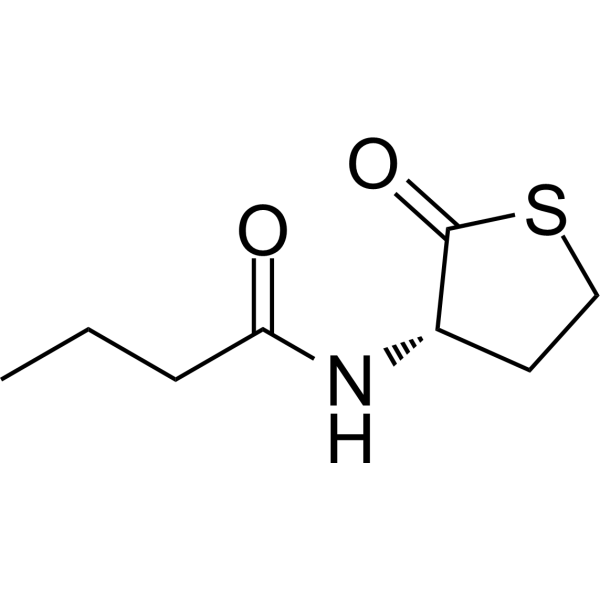
Quorum sensing is a regulatory system used by bacteria to control gene expression in response to increased cell density. The control of bacterial infection by quenching the quorum sensing system of bacteria is a promising research area. The expression of specific target genes, such as transcriptional regulators belonging to the LuxIR protein family, is coordinated by the synthesis of diffusible acyl homoserine lactone (AHL) molecules. N-butyryl-L-Homocysteine thio-lactone is an analog of N-butyryl-L-homoserine lactone, a small, diffusible signaling molecule involved in quorum sensing, thereby controlling gene expression and cellular metabolism . N-butyryl-L-homocysteine thiolactone induces violacein expression in Viola viola mutants that normally fail to produce AHL.
loading...
    loading...
Cat. No.: HY-150750A
Purity:  93.61%
ODN M362 sodium is a TLR9 agonist that acts as a vaccine adjuvant. ODN M362 sodium activates mouse splenocytes, induces apoptosis in human hepatocellular carcinoma cells, upregulates proinflammatory cytokines in human hepatocellular carcinoma cells, and inhibits the proliferation of human hepatocellular carcinoma cells. ODN M362 sodium upregulates the expression of TLR9/TLR6, activates downstream signaling pathways via IRAK4 and IRF7, and strongly amplifies antigen-specific cellular immune responses to participate in innate immune activation. ODN M362 sodium can be used in research related to hepatocellular carcinoma and breast cancer .
loading...
    loading...
Cat. No.: HY-187219
CX-Se13 is an orally active pulmonary fibrosis inhibitor with anti-inflammatory and antioxidant activities. CX-Se13 regulates the Keap1/Nrf2/HO-1/NQO1, YAP/TAZ-TEAD, NF-κB p65 and TGF-β/Smads signaling pathways. CX-Se13 activates the cellular antioxidant defense system, restores redox balance, alleviates inflammatory responses, reduces collagen deposition, decreases pro-inflammatory cytokine levels and inhibits pathological progression. CX-Se13 can be used in studies related to pulmonary fibrosis .
loading...
    loading...
Cat. No.: HY-P991271
Synonyms: NNC-114-0005; NN9828; NNC01140006
NN-8828 (NNC-114-0005; NN9828; NNC01140006) is a human IgG1 monoclonal antibody inhibitor targeting IL-21 that binds and neutralizes soluble IL-21 with a Kd of 0.19 pM. NN-8828 restores the balance between effector T cells and regulatory T cells, inhibits pathological antibody production, and alleviates IL-21-mediated inflammatory responses without inducing antibody-dependent cellular cytotoxicity. NN-8828 exhibits favorable biosafety. NN-8828 can be used in research related to rheumatoid arthritis, type 1 diabetes, and systemic lupus erythematosus .
loading...
    loading...
Cat. No.: HY-165613
CAS No.: 656831-18-4
Synonyms: Dipalmitoyl-S-glyceryl-cysteine; S-[2,3-Bis(palmitoyloxy)propyl]cysteine
Pam2Cys (Dipalmitoyl-S-glyceryl-cysteine; S-[2,3-Bis(palmitoyloxy)propyl]cysteine) is a TLR2 agonist and immunostimulant. Pam2Cys binds to TLR2 to activate dendritic cells and trigger the TLR2-dependent NF-κB signaling pathway. Pam2Cys also induces dendritic cell maturation by upregulating the expression of cell surface MHC II molecules. Pam2Cys activates innate immune signaling pathways, drives pro-inflammatory and antimicrobial responses, enhances the expression of macrophage activation markers, increases phagocytic activity, induces the release of IL-12 and pro-inflammatory cytokines, and polarizes macrophages into a pro-inflammatory, antimicrobial phenotype without interfering with IL-10-induced macrophage polarization. Pam2Cys also serves as the lipid moiety in synthetic lipopeptide vaccines and possesses self-adjuvant properties. Pam2Cys enhances the immunogenicity of conjugated peptide segments and induces cellular and humoral immune responses. However, it does not activate CD4 T cells in mouse splenocyte cultures when used alone. Pam2Cys activates pulmonary TLR2 signaling pathways, triggers innate immune responses, recruits neutrophils and macrophages, induces the secretion of various cytokines, alleviates symptoms and damages associated with influenza A virus infection in mice without impairing adaptive immunity. Pam2Cys can be used in studies related to tuberculosis and influenza A virus infection .
loading...
    loading...
Cat. No.: HY-113469AR
CAS No.: 40732-48-7
Cyclic GMP sodium (Standard) is the analytical standard of Cyclic GMP sodium (HY-113469A). This product is intended for research and analytical applications. Cyclic GMP (cGMP) sodium, an important second messenger, is a major intracellular mediator of extracellular signals such as nitric oxide (NO) and natriuretic peptides (NPs). Effects of Cyclic GMP sodium occur through three main groups of cellular targets: cGMP-dependent protein kinases (PKGs), cGMP-gated cation channels, and PDEs. Cyclic GMP can inhibit both platelet adhesion and aggregation. cGAMP (Cyclic-GMP-AMP) (HY-12512), a conjugate of Cyclic GMP and AMP, can induce IRF3 phosphorylation and nuclear translocation, enhancing antiviral immune responses .
loading...
    loading...
Cat. No.: HY-113469R
CAS No.: 7665-99-8
Cyclic GMP (Standard) is the analytical standard of Cyclic GMP (HY-113469). This product is intended for research and analytical applications. Cyclic GMP (cGMP), an important second messenger, is a major intracellular mediator of extracellular signals such as nitric oxide (NO) and natriuretic peptides (NPs). Effects of Cyclic GMP occur through three main groups of cellular targets: cGMP-dependent protein kinases (PKGs), cGMP-gated cation channels, and PDEs. Cyclic GMP can inhibit both platelet adhesion and aggregation. cGAMP (Cyclic-GMP-AMP) (HY-12512), a conjugate of Cyclic GMP and AMP, can induce IRF3 phosphorylation and nuclear translocation, enhancing antiviral immune responses .
loading...
    loading...
Cat. No.: HY-189372
CAS No.: 3117572-66-1
Target:  

Drug Derivative Fungal

Research Areas:  

Infection

Antifungal agent 180 is a pyrazole-oxadiazole-linked 1,2,4-triazole derivative and a broad-spectrum antifungal agent. Antifungal agent 180 disrupts fungal cellular homeostasis through multiple pathways, damaging the integrity of fungal hyphal cell membranes, increasing membrane permeability, and causing leakage of intracellular nucleic acids and proteins; it induces hyphal shrinkage, collapse, and organelle disintegration; and it causes widespread dysregulation of sterol/lipid metabolism, carbohydrate utilization, mitochondrial respiration, and stress response pathways at both the transcriptomic and proteomic levels. Antifungal agent 180 exhibits protective and curative efficacy against rice blast in vivo. Antifungal agent 180 can be used in research on rice blast and gray mold .
loading...
    loading...
Cat. No.: HY-P5523
CAS No.: 592520-07-5
iE-DAP is a Nod1 agonist. iE-DAP activates NOD1, which in turn activates the NF-κB signaling pathway and MLCK signaling pathway, inducing cellular inflammatory responses and tight junction disruption. iE-DAP downregulates the expression of ZO-1 and Occludin genes. iE-DAP increases the secretion of IL-6, GRO-α, MCP-1, IL-8 and MIP-1β in term human trophoblast cell cultures. iE-DAP triggers preterm birth in pregnant mice, reduces fetal body weight, and induces fetal inflammation. iE-DAP is applicable to research related to mastitis and preterm birth .
loading...
    loading...
Cat. No.: HY-P5523A
iE-DAP dihydrochloride is a Nod1 agonist. iE-DAP dihydrochloride activates NOD1, which in turn activates the NF-κB signaling pathway and MLCK signaling pathway, inducing cellular inflammatory responses and tight junction disruption. iE-DAP dihydrochloride downregulates the expression of ZO-1 and Occludin genes. iE-DAP dihydrochloride increases the secretion of IL-6, GRO-α, MCP-1, IL-8 and MIP-1β in term human trophoblast cell cultures. iE-DAP dihydrochloride triggers preterm birth in pregnant mice, reduces fetal body weight, and induces fetal inflammation. iE-DAP dihydrochloride can be used in studies related to mastitis and preterm birth .
loading...
    loading...
Cat. No.: HY-W654000
Synonyms: Guanosine 3',5'-cyclic-13C,15N2 monophosphate
Cyclic GMP- 13C, 15N2 is 13C and 15N labeled Cyclic GMP (HY-113469). Cyclic GMP (cGMP), an important second messenger, is a major intracellular mediator of extracellular signals such as nitric oxide (NO) and natriuretic peptides (NPs). Effects of Cyclic GMP occur through three main groups of cellular targets: cGMP-dependent protein kinases (PKGs), cGMP-gated cation channels, and PDEs. Cyclic GMP can inhibit both platelet adhesion and aggregation. cGAMP (Cyclic-GMP-AMP) (HY-12512), a conjugate of Cyclic GMP and AMP, can induce IRF3 phosphorylation and nuclear translocation, enhancing antiviral immune responses .
loading...
    loading...
Cat. No.: HY-W767865
Cyclic GMP sodium- 13C5 is the 13C-labeled Cyclic GMP sodium (HY-113469A). Cyclic GMP (cGMP) sodium, an important second messenger, is a major intracellular mediator of extracellular signals such as nitric oxide (NO) and natriuretic peptides (NPs). Effects of Cyclic GMP sodium occur through three main groups of cellular targets: cGMP-dependent protein kinases (PKGs), cGMP-gated cation channels, and PDEs. Cyclic GMP can inhibit both platelet adhesion and aggregation. cGAMP (Cyclic-GMP-AMP) (HY-12512), a conjugate of Cyclic GMP and AMP, can induce IRF3 phosphorylation and nuclear translocation, enhancing antiviral immune responses .
loading...
    loading...
Cat. No.: HY-L228
146 compounds

Lipids are important energy storage substances in the human body. They are involved in the regulation of cell structure and function, as well as signaling pathways and gene expression. Abnormal lipid levels in tissues or their dysregulation can lead to various diseases. These include obesity, type 2 diabetes, non-alcoholic fatty liver disease, neurodegenerative diseases, infections, and cancer. Therefore, maintaining normal levels of lipid metabolism is critical to overall health.

One of the key features of cancer is aberrant lipid metabolism. This includes alterations in lipid uptake, lipid desaturation, neolipogenesis, lipid droplets, and fatty acid oxidation in cancer cells. These changes all contribute to cellular survival in an ever-changing microenvironment. They do this by modulating feed-forward oncogenic signals and key oncogenic functions. Additionally, they affect oxidative stress, other types of stress, immune responses, and intercellular communication. Alterations in lipid metabolism have a strong impact on the properties of cancer stem cells. This includes aspects such as self-renewal, differentiation, invasion, metastasis, drug sensitivity, and resistance. Furthermore, these alterations also modulate T cell responses.

MCE can offer 146 metabolites of lipid metabolism pathways, which can be used for drug screening in cancer, immune-based diseases, metabolic diseases, and other diseases.

Cat. No.: HY-144012A
CAS No.: 474922-84-4
Synonyms: 16:0 PEG350 PE; 1,2-Dipalmitoyl-sn-glycero-3-phosphoethanolamine-N-[methoxy(polyethylene glycol)-350] ammonium
Research Areas:  

Inflammation/Immunology

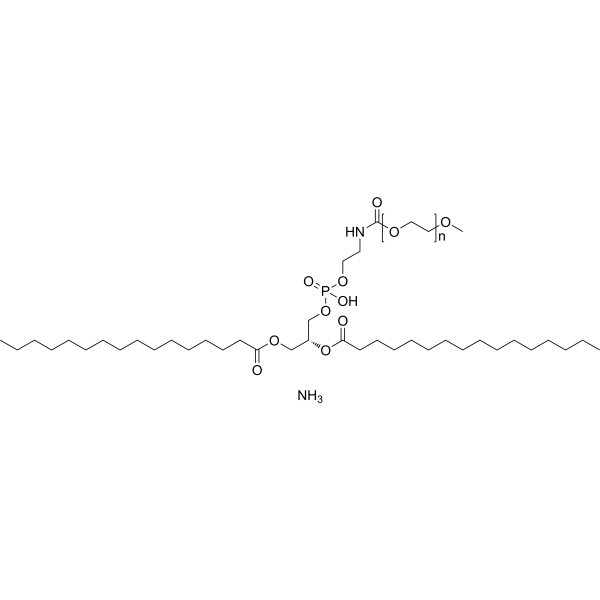
DPPE-PEG350 (16:0 PEG350 PE) is a CD1d lipid antagonist. DPPE-PEG350 blocks alpha-GalCer-dependent ERK tyrosine kinase phosphorylation in cells. DPPE-PEG350 inhibits cellular IL-4 and IFN-gamma production following alpha-GalCer stimulation. DPPE-PEG350 selectively antagonizes iNKT without affecting MHC class II-dependent OVA-specific Th2 responses. DPPE-PEG350 reduces MCP-1 and VCAM-1 protein expression and necrotic core formation in atherosclerotic lesions. DPPE-PEG350 can be used for research on asthma and atherosclerosis .
loading...
    loading...
Cat. No.: HY-185057
CAS No.: 41656-56-8
Synonyms: S-Lactylglutathione; (R)-S-Lactoylglutathione
S-D-Lactoylglutathione (S-Lactylglutathione; (R)-S-Lactoylglutathione) is a multifunctional metabolic intermediate of the glyoxalase system. S-D-Lactoylglutathione activates K + efflux in bacteria by displacing inhibitory glutathione from KefGB channels, thereby acidifying the cytoplasm. In eukaryotic cells, S-D-Lactoylglutathione mediates S-glutathionylation as a substrate of glyoxalase 2. S-D-Lactoylglutathione serves as a sensitive metabolic biomarker for neodymium nitrate neurotoxicity; when used in combination with MSCs-exo, it upregulates glutathione levels, downregulates lactate dehydrogenase and Glo2 levels, and inhibits cellular inflammatory responses and pyroptosis. S-D-Lactoylglutathione can be used in research related to prostate cancer, breast cancer, non-small cell lung cancer, sepsis-associated encephalopathy, and neurotoxicity .
loading...
    loading...
Cat. No.: HY-D1056B4
Synonyms: LPS, from bacterial (Salmonella typhosa)
Lipopolysaccharides, from Salmonella typhosa are lipopolysaccharide endotoxins and TLR-4 activators derived from Salmonella typhosa, classified as S-type LPS, which can activate pathogen-associated molecular patterns (PAMP) of the immune system and induce cellular secretion of migrasomes. Lipopolysaccharides, from Salmonella typhosa exhibit a typical three-part structure: O-antigen, core oligosaccharide, and lipid A. Lipopolysaccharides, from Salmonella typhosa can serve as vaccine adjuvants and demonstrate adjuvant activity targeting B cells in immune responses in vivo .
It is recommended to prepare a solution with concentration ≥2 mg/mL. Vortex thoroughly for more than 10 minutes. Due to the adsorption characteristics of LPS, silanized container or low adsorption centrifuge tubes should be used for aliquoting and storage, and mix thoroughly before use.
loading...
    loading...

