1291 Results for "

mouse+model

" in MedChemExpress (MCE) Product Catalog:
Products (1291)

1291 Results for "mouse+model" in MCE Product Catalog:

Cat. No.: HY-175841
CAS No.: 3075165-36-2
Tau Protein Phosphorylation-IN-1 is a tau protein phosphorylation inhibitor that potently protects PC12 cells against Aβ25–35-induced cytotoxicity (EC50 = 1.93 μM), and can penetrate the blood-brain barrier (BBB).Tau Protein Phosphorylation-IN-1 reverses the hyperphosphorylation of tau, significantly inhibits the expression of certain immune-related cytotoxic factors, suppresses the MAPK and NF-κB signaling pathways, and significantly inhibits the expression of RAGE and the apoptosis factors Bax/Bcl-2, both in vitro and in vivo. Tau Protein Phosphorylation-IN-1 relieves nerve damage, and improves learning and memory in an Alzheimer’s disease (AD) mouse model. Tau Protein Phosphorylation-IN-1 can be used for AD research .
loading...
    loading...
Cat. No.: HY-178281
CAS No.: 931928-13-1
Research Areas:  

Neurological Disease

E0199 is a novel potent dual-target KV7/NaV modulator that activates the KV7 channel (KV7.2/7.3 (EC50 = 12.78 nM), KV7.2 (EC50 = 0.50 μM), and KV7.5 (EC50 = 27.14 nM) channels) while simultaneously blocks the NaV1.7 (IC50 = 0.52 μM), NaV1.8 (IC50 = 0.24 μM), and NaV1.9 (IC50 = 0.16 μM) channels. E0199 shows a potent analgesic effect without affecting heart and skeletal muscle ion channels critically in a chronic constriction injury (CCI) mouse model. E0199 can be used for Neuropathic pain (NP) research .
loading...
    loading...
Cat. No.: HY-178775
Target:  

PI4K Parasite MAP4K PI3K

Research Areas:  

Infection

PI4K-IN-3 (Compound 27) is an orally active PI4K inhibitor with an IC50 of 1.9  nM for Plasmodium vivax PI4K. PI4K-IN-3 has no hERG channel inhibition and mammalian cytotoxicity. PI4K-IN-3 has significant selectivity against the human MINK1 and MAP4K4 kinases but with low selectivity against human PI3Kα and PI4Kβ. PI4K-IN-3 has potent antimalarial activity and significantly reduces parasitaemia in NSG mice mouse models of Plasmodium falciparum malaria .
loading...
    loading...
Cat. No.: HY-178989
CAS No.: 3054148-68-1
Research Areas:  

Cancer

PGK1-IN-2 (Compound 60) is a PGK1 inhibitor with an IC50 of 8.24 μM. PGK1-IN-2 demonstrates a significant ability to inhibit the proliferation of osteosarcoma cells. PGK1-IN-2 interferes with the glycolytic pathway of tumor cells by inhibiting PGK1. PGK1-IN-2 inhibits cell migration and invasion, and induces cell S phase and G2-M phase cycle arrest. PGK1-IN-2 may kill cells by inducing cuproptosis. PGK1-IN-2 shows a significant anti-tumor effect in the MNNG-HOS osteosarcoma xenograft mouse model. PGK1-IN-2 can be used for the study of osteosarcoma .
loading...
    loading...
Cat. No.: HY-179142
CAS No.: 3073624-74-2
COX-2-IN-60 is a potent, orally active, and selective COX-2 inhibitor with an IC50 of 0.06 μM. COX-2-IN-60 exhibits ~100-fold selectivity over COX-1 (IC50 = 5.93 ). COX-2-IN-60 reduces oxidative stress and neuroinflammatory cytokines, and effectively counteracts epileptogenesis. COX-2-IN-60 exhibits significant anticonvulsant effects and protects against hippocampal injury by suppressing oxidative stress (reducing MDA and NO), pro-inflammatory signaling (reducing TNF-α and IL-6), and glial activationin in the Pilocarpine (HY-B0726A)-induced seizure mouse model. COX-2-IN-60 can be used for the research on neuroinflammatory and epilepsy .
loading...
    loading...
Cat. No.: HY-179578
CAS No.: 1262219-89-5
SU212 is a podophyllotoxin-derived ENO1 inhibitor and AMPK activator. SU212 can selectively induce oxidative phosphorylation, reduce glycolysis activity and glucose uptake in tumor cells, and directly bind to ENO1 without affecting these pathways in normal cells. SU212 induces apoptosis and promotes ENO1 degradation via proteasomal and autophagic pathways without inhibiting the catalytic activity. SU212 leads to mitotic arrest and apoptosis in TNBC (triple-negative breast cancer) cells by activating AMPK, demonstrating potent anti-tumor activity in vitro. SU212 inhibits tumor growth and metastasis in syngeneic, xenograft, and diabetic mouse models, exhibiting an excellent safety profile. SU212 can be used in research on t TNBC, diabetes, and fatty liver disease .
loading...
    loading...
Cat. No.: HY-181488
CAS No.: 3097745-69-9
NLRP3-IN-87 is a selective and orally active NLRP3 inhibitor with a Kd of 0.23 μM. NLRP3-IN-87 binds directly to the NLRP3 NACHT domain, disrupts NLRP3-NEK7 and NLRP3-ASC interactions, inhibits ASC oligomerization, and blocks inflammasome assembly. NLRP3-IN-87 suppresses caspase-1 activation and IL-1β secretion. NLRP3-IN-87 exhibits anti-inflammatory and analgesic activity, reducing joint swelling, inflammation, and pain in an MSU (HY-B2130A)-induced acute gout mouse model. NLRP3-IN-87 can be used for the research of gout .
loading...
    loading...
Cat. No.: HY-181722
Research Areas:  

Neurological Disease

σ1R/H3R ligand-1 is a dual σ1R/H3R antagonist with a σ1R Ki of 8.8 nM and an H3R Ki of 31.2 nM. Through the dual action of simultaneously antagonizing σ1R and H3R, σ1R/H3R ligand-1 exhibits potent dose-dependent analgesic activity in mouse models of visceral pain and neuropathic pain. σ1R/H3R ligand-1 can be used for the research of visceral pain and neuropathic pain .
loading...
    loading...
Cat. No.: HY-182365
EED-IN-4 is an orally active, EZH2-selective immunomodulator and EED-H3K27me3 inhibitor (EED, IC50=28.21 nM) with anti-inflammatory activity. In mouse models, EED-IN-4 preferentially and persistently accumulates in lymph nodes after oral administration. By reducing the H3K27me3 level of dendritic cells and inhibiting their migration, EED-IN-4 reduces the infiltration of immune cells into the central nervous system and effectively alleviates spinal cord inflammation. EED-IN-4 shows weak inhibitory activity against hERG channels and is non-mutagenic, with no obvious toxicity observed upon long-term oral administration. EED-IN-4 can be used for the research of multiple sclerosis .
loading...
    loading...
Cat. No.: HY-182685
CAS No.: 2446681-27-0
Research Areas:  

Infection

MMV693183 is an orally active inhibitor of Plasmodium falciparum acetyl-CoA synthetase (AcAS), with an IC50 of 300 nM against Plasmodium falciparum. MMV693183 exhibits potent inhibitory activity against clinical isolates of malaria parasites, including Artemisinin (HY-B0094)-resistant strains. MMV693183 is metabolized in vivo into the active antimetabolite CoA-MMV693183, which exerts effects of killing asexual blood-stage parasites and blocking transmission to Anopheles mosquitoes by binding to and inhibiting the function of acetyl-CoA synthetase, thereby reducing the levels of acetyl-CoA and 4'-phosphopantetheine. In humanized mouse models, MMV693183 shows favorable in vivo efficacy, drug-like properties, and no significant cytotoxicity or off-target activity against human cells. MMV693183 is widely used in malaria-related research as a parasiticide and metabolic disruptor .
loading...
    loading...
Cat. No.: HY-184291
CAS No.: 3114314-82-5
Research Areas:  

Cancer

VCP/p97 IN-4 is a p97/VCP inhibitor (Kd=14.99 μM) targeting the allosteric site of the D1-D2 domain. VCP/p97 IN-4 inhibits the ATPase activity of VCP/p97 in an ATP concentration-independent manner. VCP/p97 IN-4 induces apoptosis, autophagy, mitochondrial stress and mitochondrial membrane depolarization. VCP/p97 IN-4 inhibits the growth of patient-derived colorectal cancer organoids and exhibits in vivo efficacy in a colorectal cancer xenograft mouse model. VCP/p97 IN-4 can be used for the research of colorectal cancer .
loading...
    loading...
Cat. No.: HY-184555
Research Areas:  

Cancer

TP-18 is a potent and orally active dual EP2/EP4 antagonist with IC50 values of 9.5 nM (EP2) and 3.3 nM (EP4). TP-18 effectively depletes a highly immunosuppressive VSIG4high tumor-associated macrophage (TAM) subset and enhances cytotoxic CD8+ T cell-mediated colorectal cancer (CRC) tumor elimination. TP-18 dampens the expression of VSIG4 by blunting EP2/EP4-Gαs-PKA signaling. TP-18 enhances the sensitivity of anti-PD-1 therapy in CRC mouse models and in patient-derived tumor immune organoids. TP-18 can be used to study colorectal cancer .
loading...
    loading...
Cat. No.: HY-185311
CAS No.: 3119435-52-5
NEK7 degrader-3 is an orally active and brain-penetrant NEK7 molecular glue degrader with a DC50 of 33.1 nM. NEK7 degrader-3 mediates interaction between NEK7 and E3 ligase cereblon, promoting proteasomal degradation of NEK7 and attenuating NLRP3 inflammasome-mediated inflammatory responses. NEK7 degrader-3 inhibits caspase-1 activity, cytokine release of IL-1β, IL-1α, and IL-18, and pyroptosis-related plasma membrane permeabilization. NEK7 degrader-3 shows antiinflammatory activity in an LPS (HY-D1056)-induced neuroinflammation mouse model. NEK7 degrader-3 can be used for the research of neuroinflammation .
loading...
    loading...
Cat. No.: HY-186151
CAS No.: 1372406-51-3
Target:  

MDM-2/p53 Apoptosis

Research Areas:  

Cancer

UCI-LC0019 is a mutant p53 reactivator. UCI-LC0019 binds to mutant p53, induces wild-type-like conformational change, restores sequence-specific DNA binding activity, activates p53-dependent transcription programs, and does not act via thiol reactivity or glutathione depletion. UCI-LC0019 inhibits proliferation and induces apoptosis in cancer cells harboring mutant p53, with no significant effect on p53 null or wild-type p53 tumors cells. UCI-LC0019 exhibits anti-tumor activity in xenograft mouse models carrying p53R175H mutant tumors. UCI-LC0019 can be used for the research of cancer, such as ovarian cancer .
loading...
    loading...
Cat. No.: HY-189366
Research Areas:  

Cardiovascular Disease

Antiarrhythmic agent-4 is an orally active cardiac ion channel modulator. Antiarrhythmic agent-4 selectively inhibits pathological late sodium current of the cardiac NaV1.5 channel (IC50 = 2.5 μM) while blocking the hERG (IKr) channel (IC50 = 1.5 μM). Antiarrhythmic agent-4 reduces intracellular sodium/calcium overload, prolongs the cardiac action potential, and avoids conduction block and negative inotropic effects. Antiarrhythmic agent-4 exhibits antiarrhythmic efficacy in an isoproterenol-induced atrial fibrillation model in isolated rabbit hearts and improves survival and cardiac function in a Doxorubicin (HY-15142A)-induced heart failure mouse model. Antiarrhythmic agent-4 can be used for research on atrial fibrillation and heart failure .
loading...
    loading...
Cat. No.: HY-D3101
Target:  

Fluorescent Dye

Research Areas:  

Others

Nile-TPA is a fluorescent probe for polarity detection, which can be used for lipid droplet targeting, cell polarity analysis, in vivo polarity imaging, and blood polarity monitoring in circulating tumor mouse models. The detection mechanism of Nile-TPA relies on the dual intramolecular charge transfer (ICT) effect generated by the electron-donating triphenylamine and Nile Red moieties and the electron-withdrawing carbonyl group; this probe emits strong red fluorescence in a low-polarity environment, and as polarity increases, the fluorescence intensity decreases and a red shift occurs due to changes in the excited-state dipole moment. In spectral tests, its excitation wavelength is 540 nm, and the emission wavelength varies in the range of 550-800 nm depending on solvent polarity; for cell, zebrafish and mouse imaging, Ex/Em = 561/570-620 nm, and for in vivo mouse imaging, Ex/Em = 560/620 nm .
loading...
    loading...
Cat. No.: HY-D3186
CAS No.: 2163840-29-5
HMRef-βGal is a fluorescent probe and a substrate responsive to β-galactosidase (β-galactosidase) (Ex/Em=498 nm/505-600 nm). After being cleaved by β-galactosidase, HMRef-βGal triggers significant fluorescence enhancement via intramolecular spirocyclic function regulation. HMRef-βGal generates bright fluorescence in cancer cells with elevated β-galactosidase activity, enabling visualization of tiny peritoneal metastases in mouse models. HMRef-βGal exhibits low in vitro cytotoxicity and low acute in vivo toxicity in mice. HMRef-βGal can be used for preclinical fluorescence-guided diagnosis and cytoreductive surgery of peritoneal metastases, including compatibility with real-time naked-eye detection and endoscopic imaging, as well as for studies related to peritoneal metastases of ovarian cancer .
loading...
    loading...
Cat. No.: HY-N0648R
CAS No.: 5945-50-6
Monotropein (Standard) is the analytical standard of Monotropein. This product is intended for research and analytical applications. Monotropein is an iridoid glycoside that can be isolated from the roots of Morinda officinalis. Monotropein inhibits the expression of inflammatory mediators in dextran sulfate sodium (DSS)-induced colitis mouse model. Monotropein exerts protective effects against IL-1β-induced apoptosis and catabolic responses on osteoarthritis chondrocytes. Monotropein has cartilage protective activity. Monotropein can alleviate Cisplatin (HY-17394)-induced acute kidney injury by inhibiting oxidative damage, inflammation and apoptosis through activation of Nrf2/HO-1 pathway and inhibition of NF-κB signaling. Monotropein can be studied in research for osteoarthritis, acute kidney injury and acute lung injury .
loading...
    loading...
Cat. No.: HY-N6812
CAS No.: 39089-30-0
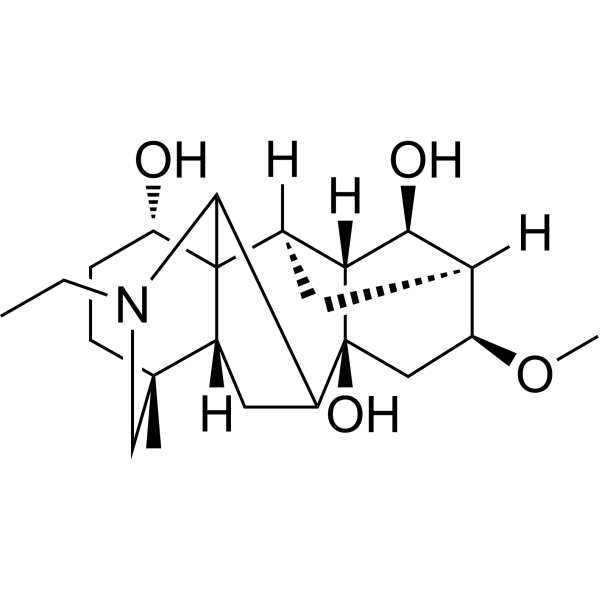
Karacoline is an orally active PPARγ activator and ERK/JNK MAPK inhibitor. Karacoline restricts ROS production, maintains mitochondrial membrane potential, and inhibits pulmonary cell apoptosis. Karacoline inhibits NF-κB pathway activation, reduces acetylation levels of p65 and the expression of MMP14 and MMP9, enhances the expression of type II collagen (collagen II) and aggrecan (aggrecan), and suppresses extracellular matrix degradation. In a mouse model of sepsis-induced acute lung injury, Karacoline alleviates lung injury, inhibits the release of IL-1β, IL-6 and TNF-α, increases the Bcl-2/BAX ratio, and reduces caspase 3 expression. Karacoline can be used in research related to acute lung injury and intervertebral disc degeneration .
loading...
    loading...
Cat. No.: HY-P0267A
CAS No.: 1036322-26-5
Melanotan (MT)-II acetate is a melanocortin receptor agonist. Melanotan (MT)-II acetate activates melanocortin receptor 3 and melanocortin receptor 4, and stimulates the release of central endogenous oxytocin. Melanotan (MT)-II acetate reverses recognition memory impairment, increased anxiety levels and reduced exploratory tendency in zebrafish exposed to short-term high-fat diet. Melanotan (MT)-II acetate improves impaired social behavior indicators in mouse models of autism spectrum disorder. Melanotan (MT)-II acetate induces weight loss, reduces food intake and exerts anorectic effects. Melanotan (MT)-II acetate increases intracavernous pressure and erectile activity in brown rats. Melanotan (MT)-II acetate can be used in studies related to memory impairment, anxiety, reduced exploratory behavior, autism spectrum disorder, obesity and erectile dysfunction .
loading...
    loading...

