
165 Results for "

substrate hydrolysis

" in MedChemExpress (MCE) Product Catalog:
Products (165)

165 Results for "substrate hydrolysis" in MCE Product Catalog:

  • Categories Recommended:
    More
Cat. No.: HY-P3261
CAS No.: 9025-67-6
Research Areas:  

Others

Inulinase is a fructan hydrolase (fructan hydrolase) that catalyzes the hydrolysis of β-(2→1) fructosidic linkages in inulin, producing fructose and oligosaccharides depending on the enzyme's source and type. Inulinase also exhibits hydrolytic activity toward fructose-containing substrates such as sucrose, raffinose and stachyose. Inulinase can be used in studies related to inulin degradation, production of fructose and fructooligosaccharides (FOS), carbohydrate metabolism and food processing .
loading...
    loading...
Cat. No.: HY-P5377
CAS No.: 221055-89-6
Synonyms: Cathepsin K substrate
Target:  

Ser/Thr Protease

Research Areas:  

Others

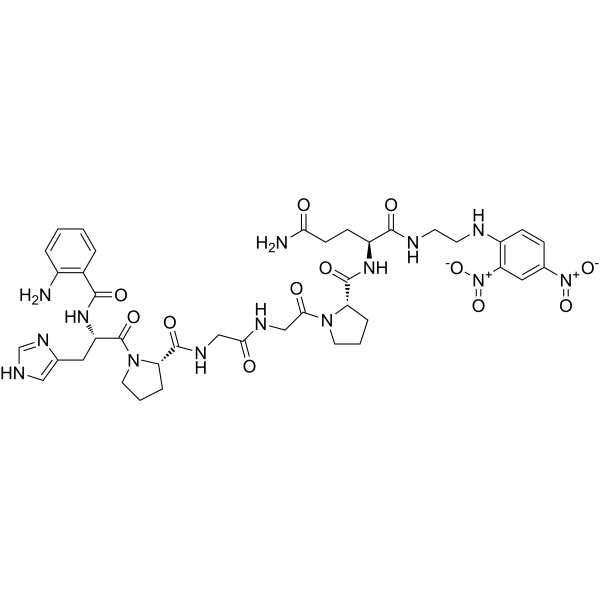
Abz-HPGGPQ-EDDnp (Cathepsin K substrate) is a biological active peptide. (Cathepsins are a class of globular lysosomal proteases, playing a vital role in mammalian cellular turnover. They degrade polypeptides and are distinguished by their substrate specificities. Cathepsin K is the lysosomal cysteine protease involved in bone remodeling and resorption. It has potential as a drug target in autoimmune diseases and osteoporosis.This FRET peptide can be used to monitor selectively cathepsin K activity in physiological fluids and cell lysates. Abz-HPGGPQ-EDDnp [where Abz represents o-aminobenzoic acid and EDDnp represents N -(2, 4-dinitrophenyl)-ethylenediamine], a substrate initially developed for trypanosomal enzymes, is efficiently cleaved at the Gly-Gly bond by cathepsin K. This peptide is resistant to hydrolysis by cathepsins B, F, H, L, S and V, Ex/Em=340 nm/420 nm.)
loading...
    loading...
Cat. No.: HY-P2775A
Target:  

Glycosidase

Research Areas:  

Metabolic Disease

β-Glucosidase(thermostable) is a glucosidase enzyme located in on the brush border of the small intestine that acts upon β1->4 bonds linking two glucose or glucose-substituted molecules (i.e., the disaccharide cellobiose). β-Glucosidase(thermostable) is an exocellulase with specificity for a variety of beta-D-glycoside substrates. It catalyzes the hydrolysis of terminal non-reducing residues in beta-D-glucosides with release of glucose.
loading...
    loading...
Cat. No.: HY-120957
CAS No.: 862913-13-1
Synonyms: AMC-AA; 7-Amino-4-methyl coumarin-arachidonamide
Target:  

FAAH

Research Areas:  

Neurological Disease

AMC Arachidonoyl Amide (AMC-AA; 7-Amino-4-methyl coumarin-arachidonamide) is a fluorescent fatty acid amide substrate used to detect fatty acid amide hydrolase (FAAH) activity. AMC Arachidonoyl Amide releases 7-amino-4-methylcoumarin (AMC) upon hydrolysis by FAAH, producing fluorescence at Ex 360 nm/Em 465 nm, thereby allowing rapid determination of FAAH activity using a cuvette or microplate fluorometer .
loading...
    loading...
Cat. No.: HY-B2220B
CAS No.: 9012-54-8
Research Areas:  

Others

Thermostable cellulase recombinant is a cellulose hydrolase present in hyperthermophiles, which catalyzes the hydrolysis of β-1,4 glycosidic bonds in cellulose. Thermostable cellulase recombinant targets carboxymethyl cellulose (CMC) as its primary substrate, and retains high residual activity even after incubation at high temperatures. The activity of Thermostable cellulase recombinant is inhibited by ionic and non-ionic detergents, and can be enhanced by cobalt ions. Thermostable cellulase recombinant can be applied in the paper industry .
loading...
    loading...
Cat. No.: HY-P2661
CAS No.: 78832-65-2
Research Areas:  

Infection

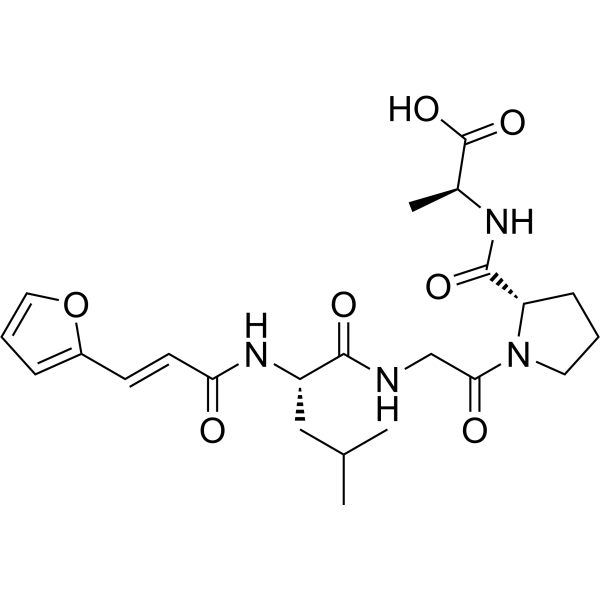
FA-Leu-Gly-Pro-Ala-OH is a furylacryloyl-terminal tetrapeptide that serves as a substrate for bacterial collagenase and spirochete metalloendopeptidase. FA-Leu-Gly-Pro-Ala-OH is specifically hydrolyzed by spirochete collagenase only at the Leu-Gly bond. FA-Leu-Gly-Pro-Ala-OH can be used to determine the equilibrium constant of peptide bond hydrolysis, and also to detect collagenase-mediated cleavage reactions via turbidimetry based on absorbance reduction .
loading...
    loading...
Cat. No.: HY-P2661A
Research Areas:  

Infection

FA-Leu-Gly-Pro-Ala-OH TFA is a furylacryloyl-terminal tetrapeptide that serves as a substrate for bacterial collagenase and spirochete metalloendopeptidase. FA-Leu-Gly-Pro-Ala-OH TFA is specifically hydrolyzed by spirochete collagenase only at the Leu-Gly bond. FA-Leu-Gly-Pro-Ala-OH TFA can be used to determine the equilibrium constant of peptide bond hydrolysis, and also to detect collagenase-mediated cleavage reactions via turbidimetry based on absorbance reduction .
loading...
    loading...
Cat. No.: HY-P2763A
Target:  

Glycosidase

Research Areas:  

Metabolic Disease

β-Glucanase 2(thermostable) is a glucosidase enzyme located in on the brush border of the small intestine that acts upon β1->4 bonds linking two glucose or glucose-substituted molecules (i.e., the disaccharide cellobiose). β-Glucanase 2 (thermostable) is an exocellulase with specificity for a variety of beta-D-glycoside substrates. It catalyzes the hydrolysis of terminal non-reducing residues in beta-D-glucosides with release of glucose.
loading...
    loading...
Cat. No.: HY-P2763B
Target:  

Glycosidase

Research Areas:  

Metabolic Disease

β-Glucanase 1(thermostable) is a glucosidase enzyme located in on the brush border of the small intestine that acts upon β1->4 bonds linking two glucose or glucose-substituted molecules (i.e., the disaccharide cellobiose). β-Glucanase 1 (thermostable) is an exocellulase with specificity for a variety of beta-D-glycoside substrates. It catalyzes the hydrolysis of terminal non-reducing residues in beta-D-glucosides with release of glucose.
loading...
    loading...
Cat. No.: HY-P2775B
Target:  

Glycosidase

Research Areas:  

Metabolic Disease

β-Glucosidase, Rhizobium etli (EC 3.2.1.21), is a glucosidase that acts on the β1→4 glycosidic bond connecting two glucose molecules or glucose-substituted molecules (e.g., disaccharide cellobiose). β-Glucosidase is an exonuclease specific for a variety of β-D-glycosidic substrates. β-Glucosidase catalyzes the hydrolysis of the terminal non-reducing residues of β-D-glucosides, releasing glucose.
loading...
    loading...
Cat. No.: HY-P2775C
Target:  

Glycosidase

Research Areas:  

Metabolic Disease

β-Glucosidase, Clostridium thermocellum (EC 3.2.1.21), is a glucosidase that acts on the β1→4 glycosidic bond connecting two glucose molecules or glucose-substituted molecules (e.g., disaccharide cellobiose). β-Glucosidase is an exonuclease specific for a variety of β-D-glycosidic substrates. β-Glucosidase catalyzes the hydrolysis of the terminal non-reducing residues of β-D-glucosides, releasing glucose.
loading...
    loading...
Cat. No.: HY-P2775D
Target:  

Glycosidase

Research Areas:  

Metabolic Disease

β-Glucosidase, Bacteroides fragilis (EC 3.2.1.21), is a glucosidase that acts on the β1→4 glycosidic bond connecting two glucose molecules or glucose-substituted molecules (e.g., disaccharide cellobiose). β-Glucosidase is an exonuclease specific for a variety of β-D-glycosidic substrates. β-Glucosidase catalyzes the hydrolysis of the terminal non-reducing residues of β-D-glucosides, releasing glucose.
loading...
    loading...
Cat. No.: HY-P3185
CAS No.: 9028-54-0
Research Areas:  

Metabolic Disease

Beta-galactose dehydrogenase is a selective catalyst for β-galactose. Under pH 8.6 conditions, beta-galactose dehydrogenase catalyzes the oxidation of β-galactose, produced by the hydrolysis of lactose by β-galactosidase, with nicotinamide adenine dinucleotide (NAD) to produce reduced nicotinamide adenine dinucleotide (NADH). Beta-galactose dehydrogenase specifically mediates this oxidation reaction for the quantitative detection of the substrate, used in the analysis of lactose concentration in samples such as breast milk .
loading...
    loading...
Cat. No.: HY-Z0041R
CAS No.: 1125-88-8
Research Areas:  

Others

Benzaldehyde dimethyl acetal (Standard) is the analytical standard of Benzaldehyde dimethyl acetal (HY-Z0041). This product is intended for research and analytical applications. Benzaldehyde dimethyl acetal is an acetal and flavor compound with a sweet, woody aroma reminiscent of nuts and bitter almonds. Benzaldehyde dimethyl acetal is used in flavor formulations for imitating cherry, fruit, almond, nut and other flavors. Benzaldehyde dimethyl acetal can act as a hydrolyzable substrate to undergo acid-catalyzed hydrolysis .
loading...
    loading...
Cat. No.: HY-137878
CAS No.: 26112-88-9
Synonyms: PNP-α-NeuNAc
2-O-(p-Nitrophenyl)-α-D-N-acetylneuraminic acid (PNP-α-NeuNAc) is a classic chromogenic substrate for neuraminidase. 2-O-(p-Nitrophenyl)-α-D-N-acetylneuraminic acid releases p-nitrophenol upon enzymatic hydrolysis, allowing quantification of enzyme activity and inhibitory effects via spectrophotometry. 2-O-(p-Nitrophenyl)-α-D-N-acetylneuraminic acid (PNP-α-NeuNAc) acts as a sialyl donor in the process of enzyme-catalyzed trans-sialylation .
loading...
    loading...
Cat. No.: HY-W011063
CAS No.: 21438-66-4
Target:  

Cathepsin

Research Areas:  

Metabolic Disease

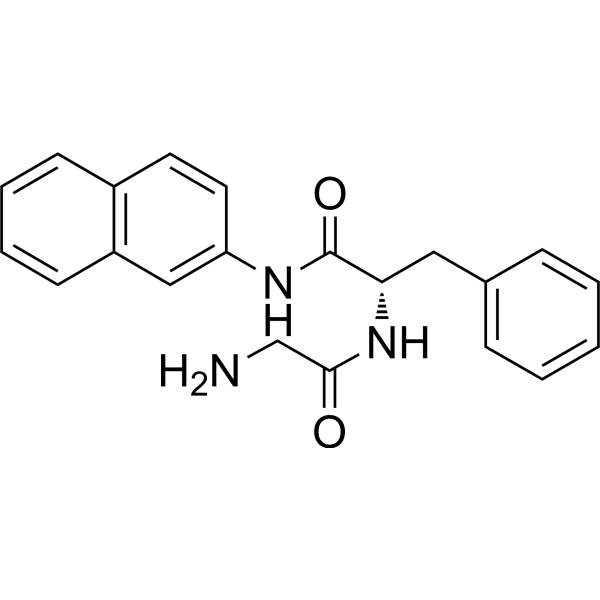
Gly-Phe-β-naphthylamide is a substrate of Cathepsin C (HY-P2922) and belongs to the lysosomal agonist. Gly-Phe-β-naphthylamide can freely pass through the cell membrane and organelle membrane. Gly-Phe-β-naphthylamide will be specifically hydrolyzed by Cathepsin C, ultimately leading to a permeability lysis when it enters the acidic compartment. Gly-Phe-β-naphthylamide can be used to study lysosomal hydrolysis, lysosomal membrane permeability, and the function of cathepsin C .
loading...
    loading...
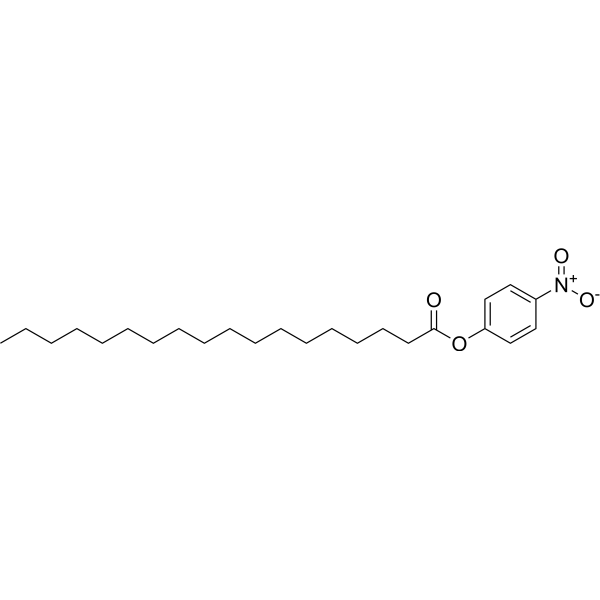
Cat. No.: HY-W099563
CAS No.: 14617-86-8
4-Nitrophenyl stearate, which is an ester formed by the condensation of stearic acid and 4-nitrophenol, is commonly used as a substrate for enzymatic assays, where the hydrolysis of ester bonds by esterase and lipase can be measured by absorbance or ratio In addition, 4-Nitrophenyl stearate has been used as a model compound to study the enzymatic activity and selectivity of lipases and esterases from various sources. The long hydrophobic tail of the molecule makes it suitable for use in lipophilic Good solubility in the environment makes it a useful probe for studying lipid metabolism.
loading...
    loading...
Cat. No.: HY-E71305
Target:  

Glycosidase

Research Areas:  

Others

β-Glucosidase 1A, Bacillus halodurans (EC 3.2.1.21) is a glucosidase enzyme that acts upon β1->4 bonds linking two glucose or glucose-substituted molecules (i.e., the disaccharide cellobiose) . β-Glucosidase is one of the cellulases, enzymes involved in the decomposition of cellulose and related polysaccharides; more specifically, an exocellulase with specificity for a variety of beta-D-glycoside substrates. It catalyzes the hydrolysis of terminal non-reducing residues in beta-D-glucosides with release of glucose.
loading...
    loading...
Cat. No.: HY-E71305A
Target:  

Glycosidase

Research Areas:  

Others

β-Glucosidase 1A, Caldicellulosiruptor saccharolyticus (EC 3.2.1.21) is a glucosidase enzyme that acts upon β1->4 bonds linking two glucose or glucose-substituted molecules (i.e., the disaccharide cellobiose) . β-Glucosidase is one of the cellulases, enzymes involved in the decomposition of cellulose and related polysaccharides; more specifically, an exocellulase with specificity for a variety of beta-D-glycoside substrates. It catalyzes the hydrolysis of terminal non-reducing residues in beta-D-glucosides with release of glucose.
loading...
    loading...
Cat. No.: HY-E71305B
Target:  

Glycosidase

Research Areas:  

Others

β-Glucosidase 1A, Clostridium cellulovorans (EC 3.2.1.21) is a glucosidase enzyme that acts upon β1->4 bonds linking two glucose or glucose-substituted molecules (i.e., the disaccharide cellobiose) . β-Glucosidase is one of the cellulases, enzymes involved in the decomposition of cellulose and related polysaccharides; more specifically, an exocellulase with specificity for a variety of beta-D-glycoside substrates. It catalyzes the hydrolysis of terminal non-reducing residues in beta-D-glucosides with release of glucose.
loading...
    loading...

