150 Results for "

thermosensitive ionic microgels

" in MedChemExpress (MCE) Product Catalog:
Products (150)

150 Results for "thermosensitive ionic microgels" in MCE Product Catalog:

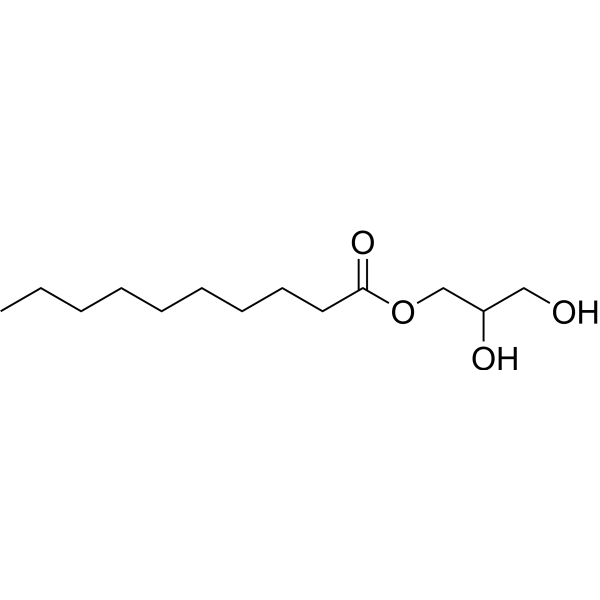
Cat. No.: HY-W099617
CAS No.: 2277-23-8
Synonyms: 1-Decanoyl-rac-glycerol
Research Areas:  

Others

2,3-Dihydroxypropyl decanoate (1-Decanoyl-rac-glycerol) is a derivative of Decanoic acid (HY-W015309) and a non-ionic surfactant, with an IC50 > 100 μM against Shp2-PTP, VHR and HePTP. 2,3-Dihydroxypropyl decanoate is found in the roots of Angelica dahurica (Baizhi). 2,3-Dihydroxypropyl decanoate acts as a component of reverse micelle systems for the encapsulation of proteins and nucleic acids .
loading...
    loading...
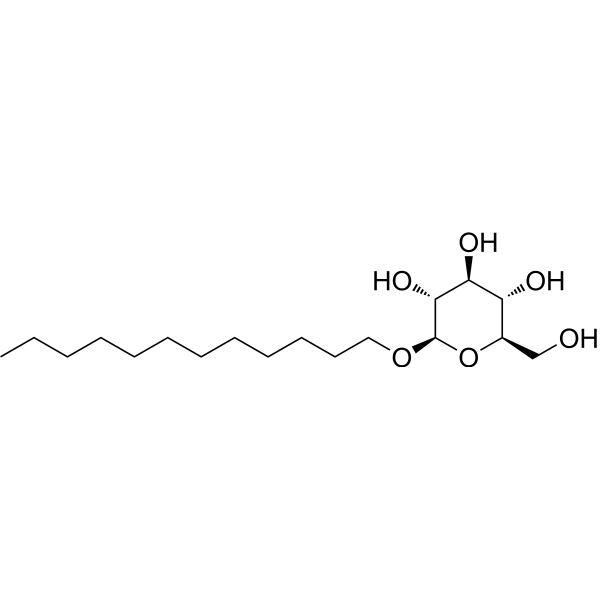
Cat. No.: HY-W142692
CAS No.: 59122-55-3
Dodecyl β-D-glucopyranoside is a non-ionic detergent and surfactant commonly used to solubilize and purify membrane proteins in biochemical research. Dodecyl β-D-glucopyranoside also interacts with bovine serum albumin (BSA) to quench its intrinsic fluorescence. The critical micelle concentration (CMC) of Dodecyl β-D-glucopyranoside (DG) and DG/BSA complex is 2.0 mM and 2.34 mM, respectively. Micelles can be formed in aqueous solutions above this concentration .
loading...
    loading...
Cat. No.: HY-151234
CAS No.: 93-83-4
Synonyms: OADA
Research Areas:  

Infection

Oleic acid diethanolamide (OADA) is a non-ionic, biodegradable surfactant. Oleic acid diethanolamide reduces the surface tension of water, emulsifies free water in diesel fuel to form a stable emulsion, and can be loaded onto sulfonated polystyrene nanoparticles to enhance oil recovery. Oleic acid diethanolamide is one of the nematicidal secondary metabolites produced by Aspergillus flavus. Oleic acid diethanolamide can be used in studies related to biological control of root-knot nematodes, enhanced oil recovery, and diesel fuel emulsion stabilization .
loading...
    loading...
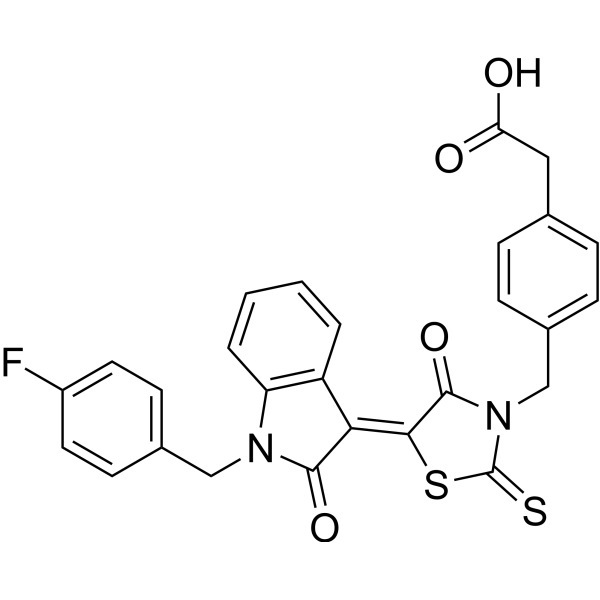
Cat. No.: HY-157521
CAS No.: 3055162-52-9
Target:  

Acyltransferase

AANAT-IN-1 is an arylalkylamine N-acetyltransferase (AANAT) inhibitor with a sheep AANAT IC50 of 9.9 μM. AANAT-IN-1 binds to the active site of sheep AANAT, interacting with amino acid residues via hydrogen bonds, hydrophobic interactions, ionic interactions, and water bridges, inhibiting the enzyme's catalytic activity. AANAT-IN-1 can be used for the researches of circadian rhythm-associated neuropsychiatric conditions, seasonal affective disorder, and other diseases associated with abnormally elevated melatonin levels .
loading...
    loading...
Cat. No.: HY-B2106DR
CAS No.: 9002-92-0
Synonyms: Decaethylene glycol monododecyl ether (C12E10) (Standard); Polidocanol (10) (Standard)
Polyoxyethylene (10) lauryl ether (Standard) is the analytical standard of Polyoxyethylene (10) lauryl ether. This product is intended for research and analytical applications. Polyoxyethylene (10) lauryl ether is a non-ionic surfactant. Polyoxyethylene (10) lauryl ether exhibits unique properties in dissolving liposomes and exerts the minimal interference with endotoxin detection. Polyoxyethylene (10) lauryl ether forms hybrid liposomes with Dimyristoylphosphatidylcholine (DMPC) (HY-109541), which can inhibit the proliferation of human promyelocytic leukemia cells without the administration of any drugs.
loading...
    loading...
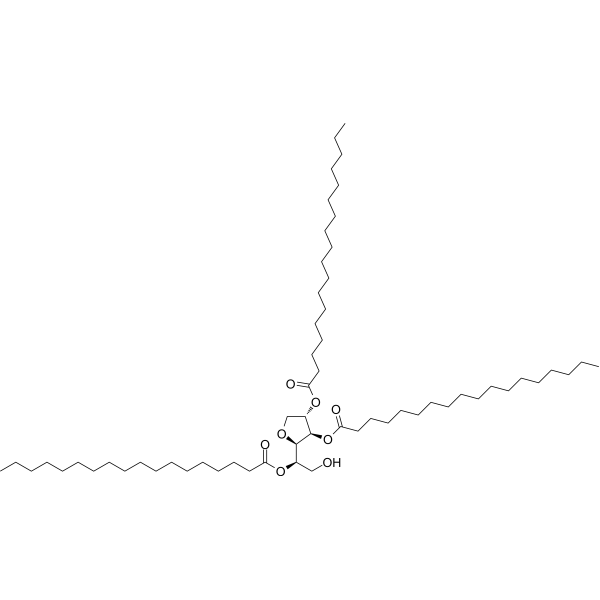
Cat. No.: HY-W131101
CAS No.: 26658-19-5
Sorbitan tristearate is a non-ionic surfactant, with a synergistic effect on skin permeability. Sorbitan tristearate can be used as an excipient, such as emulsifier. Pharmaceutical excipients, or pharmaceutical auxiliaries, refer to other chemical substances used in the pharmaceutical process other than pharmaceutical ingredients. Pharmaceutical excipients generally refer to inactive ingredients in pharmaceutical preparations, which can improve the stability, solubility and processability of pharmaceutical preparations. Pharmaceutical excipients also affect the absorption, distribution, metabolism, and elimination (ADME) processes of co-administered drugs .
loading...
    loading...
Cat. No.: HY-W460471
Tris Buffered Saline is a common buffer reagent in molecular biology, consisting of Tris and NaCl. Tris Buffered Saline can adjust pH and ionic strength and is widely used in DNA/RNA extraction, PCR and protein electrophoresis. Tris Buffered Saline can purify and protect nucleic acid materials and improve reaction efficiency and concentration. In protein electrophoresis, Tris Buffered Saline stabilizes gels and maintains pH. Overall, Tris Buffered Saline offers versatility, good solubility, and low toxicity in molecular biology applications.
loading...
    loading...
Cat. No.: HY-W777582
CAS No.: 1173019-48-1
4-tert-Octylphenol monoethoxylate- 13C6 is the 13C labeled isotope of 4-tert-Octylphenol monoethoxylate (HY-W777582) . 4-tert-Octylphenol monoethoxylate is an alkylphenolethoxylate (APE) and a degradation product of non-ionic surfactants (such as 4-tert-octylphenol polyethoxylate). 4-tert-Octylphenol monoethoxylate also possesses non-steroidal estrogenic activity. Additionally, 4-tert-Octylphenol monoethoxylate has been found in wastewater effluent .
loading...
    loading...
Cat. No.: HY-186083
CAS No.: 36167-80-3
Target:  

mAChR

Research Areas:  

Cardiovascular Disease

Propylbenzilylcholine mustard (PrBCM) is an irreversible, covalently binding selective antagonist targeting rat cardiac muscarinic receptors, with a preference for muscarinic receptor subtypes that show low affinity for agonists. Propylbenzilylcholine mustard inactivates such receptors in a dose- and time-dependent manner in vitro, and its receptor selectivity remains stable across different ionic strengths and in GTP-containing buffer systems. Propylbenzilylcholine mustard can be applied to basic pharmacological studies on the structure and function of muscarinic receptors, especially focusing on the heterogeneity of cardiac muscarinic receptors and related cardiovascular pharmacological research .
loading...
    loading...
Cat. No.: HY-K3120

MCE Serum/Plasma Exosome Isolation and Purification Kit (Magnetic Beads) utilizes a magnetic bead-based method for the isolation and purification of exosomes. The underlying principle is based on the charge-dependent interaction between exosomes and functional polymers on the surface of the magnetic beads under an optimized buffer system, enabling selective adsorption of exosomes. Subsequent adjustment of the ionic strength and pH of the buffer promotes the gentle dissociation of exosomes from the magnetic beads, thereby enabling efficient exosome isolation and purification while maintaining high vesicle integrity and low impurity carryover.

loading...
    loading...
Cat. No.: HY-D3144
CAS No.: 2713577-11-6
Target:  

Fluorescent Dye

Research Areas:  

Others

RhBIV is a thermosensitive rhodamine B (RhB)-derived fluorescent probe that fluorescently labels cellular mitochondria and detects mitochondrial temperature in vitro and in vivo. RhBIV contains a quaternized rhodamine B core, which confers a positive charge for binding to the negatively charged mitochondrial membrane, and an ortho-substituted electron-donating piperidine group; at lower temperatures, RhBIV forms an unstable ion pair form under kinetic control and exhibits strong fluorescence, whereas elevated temperature disrupts or partially interrupts the ion pair form, favoring formation of the conjugated RhBV form and leading to loss of fluorescence. RhBIV exhibits decreased fluorescence responsiveness with increasing temperature over the range of 20-42°C. RhBIV enables biological imaging of cells and mice, mitochondrial thermogenesis imaging, dynamic observation in mitochondrial thermogenesis imaging experiments, and non-invasive imaging of mitochondrial function in living animals (Ex/Em = 520/592 nm) .
loading...
    loading...
Cat. No.: HY-D1739
Research Areas:  

Others

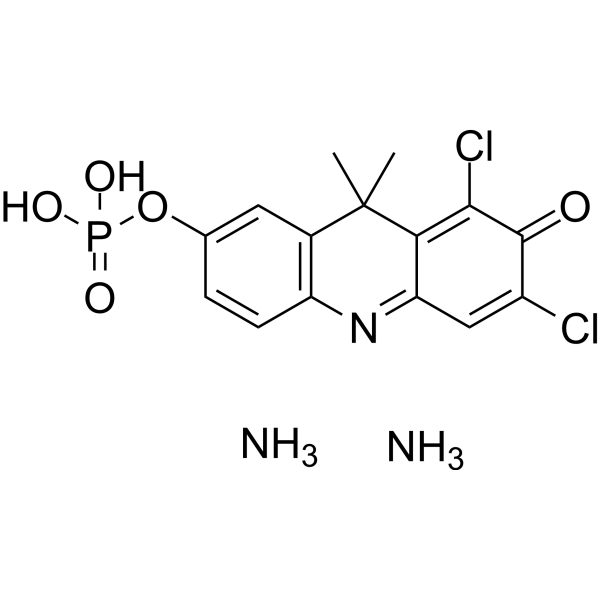
DDAO phosphate diTEA is an amphoteric surfactant derived from DDAO (dimethyldodecylamine oxide). The head group of DDAO in DDAO phosphate diTEA exists in a non-ionic state at pH > 7 and in a cationic state at pH < 5 due to protonation of the oxygen atom. When combined with the anionic surfactant SDS, DDAO can incorporate into mixed micelles, reducing the net micellar charge and attenuating electrostatic repulsion between SDS head groups. DDAO can be used to formulate the ONOO⁻-targeting probe DDAO-PN, which generates significant near-infrared fluorescence at 657 nm .
loading...
    loading...
Cat. No.: HY-148140A
CAS No.: 9041-35-4
Research Areas:  

Others

Cross-linked dextran G 25, coarse is a cross-linked dextran gel chromatography coarse (average particle size D50 = 200-250 μm) that possesses multiple separation activities, including molecular sieve effects, weak anion exchange, and aromatic adsorption. Cross-linked dextran G 25, coarse weakly exchanges cations through immobilized terminal carboxyl groups and repels anions at low ionic strength. Cross-linked dextran G 25, coarse is used for the fractionation of low molecular weight solutes, including peptides, amino acids, nucleotide sugar derivatives, and aromatic compounds .
loading...
    loading...
Cat. No.: HY-148140B
CAS No.: 9041-35-4
Research Areas:  

Others

Cross-linked dextran G 25, medium is a cross-linked dextran gel chromatography medium (average particle size D50 = 120-140 μm) that possesses multiple separation activities, including molecular sieve effects, weak anion exchange, and aromatic adsorption. Cross-linked dextran G 25, medium weakly exchanges cations through immobilized terminal carboxyl groups and repels anions at low ionic strength. Cross-linked dextran G 25, medium is used for the fractionation of low molecular weight solutes, including peptides, amino acids, nucleotide sugar derivatives, and aromatic compounds .
loading...
    loading...
Cat. No.: HY-148140C
CAS No.: 9041-35-4
Research Areas:  

Others

Cross-linked dextran G 25, fine is a cross-linked dextran gel chromatography fine (average particle size D50 = 70-90 μm) that possesses multiple separation activities, including molecular sieve effects, weak anion exchange, and aromatic adsorption. Cross-linked dextran G 25, fine weakly exchanges cations through immobilized terminal carboxyl groups and repels anions at low ionic strength. Cross-linked dextran G 25, fine is used for the fractionation of low molecular weight solutes, including peptides, amino acids, nucleotide sugar derivatives, and aromatic compounds .
loading...
    loading...
Cat. No.: HY-W037619
CAS No.: 487-21-8
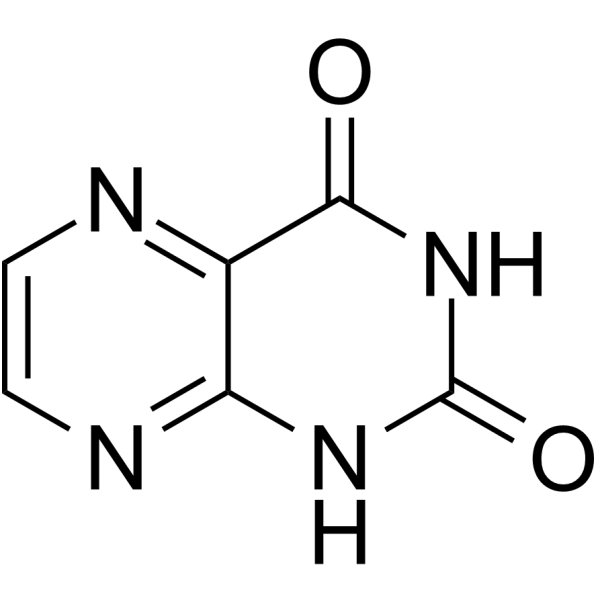
Pteridine-2,4 (1H,3H)-dione is a pteridine derivative (xanthopterin) and a sulfur-containing pteridine compound (2,4-dimercaptopyrimidine). Pteridine-2,4 (1H,3H)-dione possesses metal-binding ability, and forms closed-shell (ionic) interactions with palladium via sulfur and nitrogen atoms. Pteridine-2,4 (1H,3H)-dione derivates can be used in studies related to neuroblastoma, glioma and breast cancer .
loading...
    loading...
Cat. No.: HY-D1005I
CAS No.: 9003-11-6
Poloxamer L61 is a non-ionic triblock copolymer surfactant. Poloxamer L61 effectively achieves intracellular molecular delivery to cancer cells during photoacoustic molecular delivery, and maintains cell viability by promoting cell membrane resealing, thus avoiding irreversible damage caused by laser-induced membrane permeabilization. Poloxamer L61 is a key component of SP1017, a compound related to gene therapy, which regulates the interaction between DNA and extracellular matrix as well as cellular uptake, and significantly enhances the distribution and bioavailability of plasmid DNA in skeletal muscle. Poloxamer L61 can be used in studies on local or systemic therapeutic protein production .
loading...
    loading...
Cat. No.: HY-W010361
CAS No.: 10581-12-1
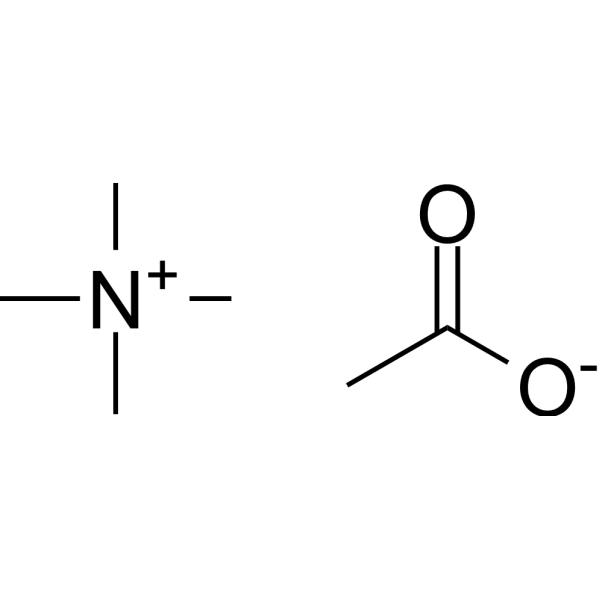
Tetramethylammonium acetate is an organic compound commonly used as a phase transfer catalyst in organic synthesis reactions, especially those involving charged species or polar reagents. It can facilitate the transfer of reactants between two immiscible phases, such as water and organic solvents, by forming stable ion pairs. Additionally, Tetramethylammonium acetate has been used to prepare a variety of organic compounds, including esters, amides, and carboxylic acids. Due to its unique physicochemical properties, it has also been investigated for its potential use in developing new materials such as ionic liquids and liquid crystals. "x" in the formula represents the number of water molecules in the crystal structure, which can vary depending on the preparation method.
loading...
    loading...
Cat. No.: HY-W016638
CAS No.: 479500-35-1
Synonyms: 1-Butyl-1-methylpyrrolidin-1-ium chloride
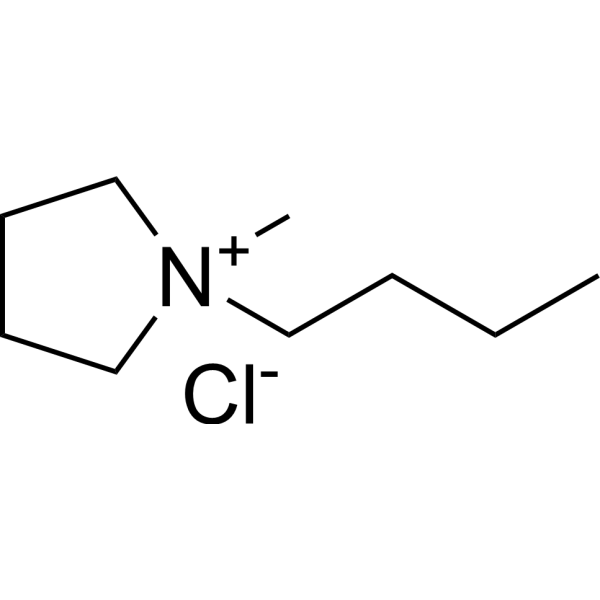
1-Butyl-1-methylpyrrolidin-1-ium chloride, also known as BMIM chloride, belongs to the class of ionic liquids and consists of a positively charged pyrrolidine cation and a negatively charged chloride anion. This compound is commonly used as a solvent for various chemical reactions, especially those involving organic compounds and metals. Its unique physical and chemical properties, such as low volatility, high thermal stability, and tunable solubility, make it useful in a range of applications in catalysis, electrochemistry, and separation science. Furthermore, 1-butyl-1-methylpyrrolidin-1-ium chloride may have potential applications as a green solvent in energy storage devices and various industrial processes.
loading...
    loading...
Cat. No.: HY-101532
CAS No.: 98169-85-8
Purity:  ≥98.0%
Synonyms: β-CDN3; 6A-deoxy-6A-azido-β-cyclodextrin
Research Areas:  

Others

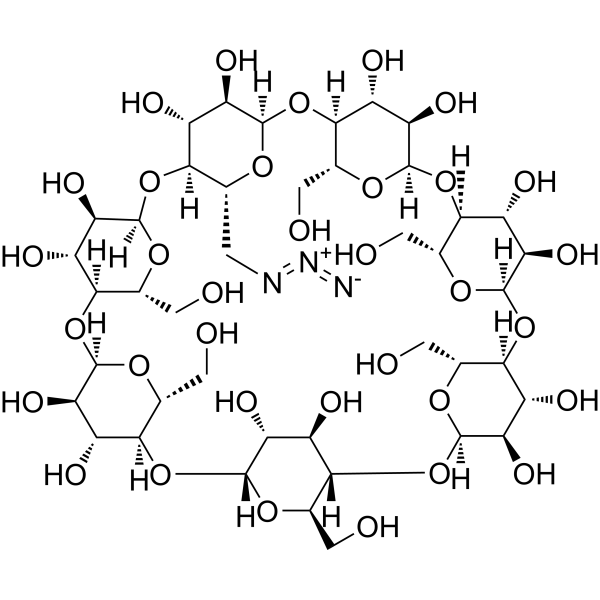
6A-Azido-6A-deoxy-β-cyclodextrin (β-CDN3) is a site-specifically modified β-cyclodextrin with a single azido group replacing the hydroxyl group at the C6 position. 6A-Azido-6A-deoxy-β-cyclodextrin forms a host-guest inclusion complex with Dexamethasone (HY-14648), localizing the drug within its hydrophobic cavity, which restricts the rotational mobility of the drug and places Dexamethasone in a less polar environment. 6A-Azido-6A-deoxy-β-cyclodextrin acts as a coupling agent to graft β-cyclodextrin onto thermosensitive nanogels via strain-promoted alkyne-azide cycloaddition (SPAAC). 6A-Azido-6A-deoxy-β-cyclodextrin also serves as a click chemistry reagent. It contains an azide group and undergoes copper-catalyzed azide-alkyne cycloaddition (CuAAc) with molecules bearing an alkyne group. It also undergoes strain-driven alkyne-azide cycloaddition (SPAAC) with molecules containing DBCO or BCN groups .
loading...
    loading...

