184 Results for "

cell penetrability

" in MedChemExpress (MCE) Product Catalog:
Products (184)

184 Results for "cell penetrability" in MCE Product Catalog:

Cat. No.: HY-A0169
CAS No.: 33320-16-0
Research Areas:  

Cancer

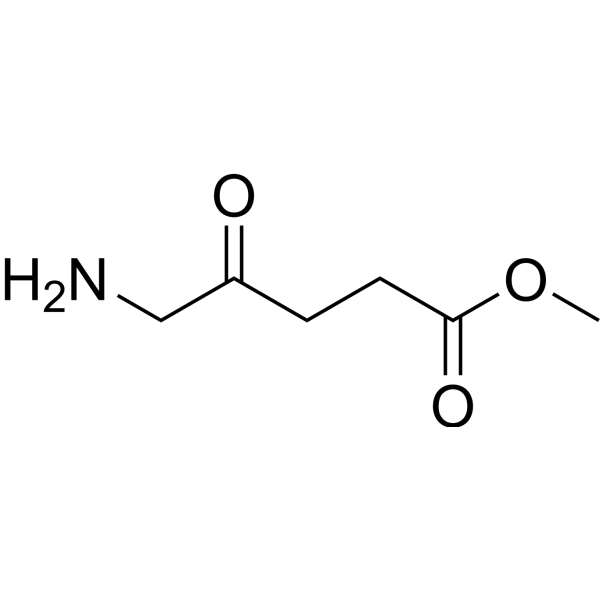
Methyl aminolevulinate is a sensitizer used in photodynamic therapy (PDT). Methyl aminolevulinate penetrates the skin and induces the production of photoactive porphyrins including protoporphyrin IX in cells; upon exposure to appropriate light, it generates ROS, which triggers cellular oxidation and cell death. Methyl aminolevulinate acts as a photo-damage reversing agent through epidermal reconstruction, cytokine-mediated activation of dermal fibroblasts, elastin breakdown, new collagen formation, and compression of dilated capillaries. Methyl aminolevulinate reduces the expression of the proliferation marker Ki-67 and the early skin carcinogenesis marker TP53. Methyl aminolevulinate delays the onset of ultraviolet-induced skin tumors and reduces tumor burden in hairless mice. Methyl aminolevulinate is applicable to research related to actinic keratosis and basal cell carcinoma .
loading...
    loading...
Cat. No.: HY-10510R
CAS No.: 501437-28-1
BI-D1870 (Standard) is the analytical standard of BI-D1870 (HY-10510). This product is intended for research and analytical applications. BI-D1870 is an ATP-competitive, cell permeable and brain penetrated inhibitor of RSK isoforms, with IC50s of 31 nM/24 nM/18 nM/15 nM for RSK1/RSK2/RSK3/RSK4, respectively .
loading...
    loading...
Cat. No.: HY-12678S
Synonyms: NMS-E628-d4; RXDX-101-d4
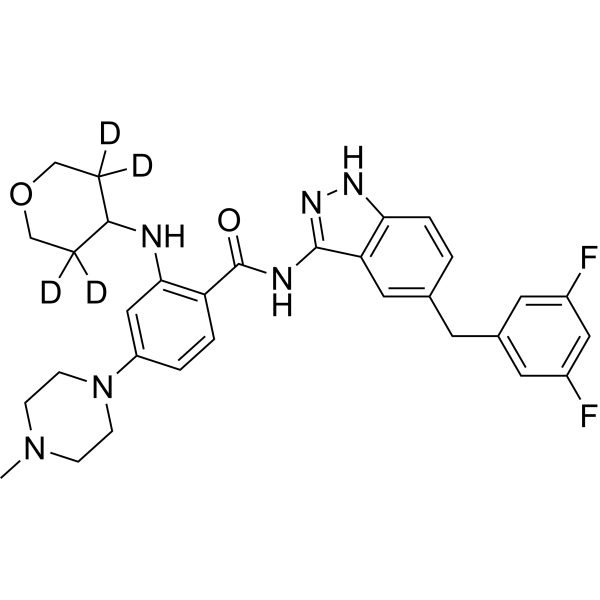
Entrectinib-d4 (NMS-E628-d4; RXDX-101-d4) is the deuterium labeled Entrectinib (HY-12678). Entrectinib is an orally active, BBB-penetrated and centrally active inhibitor of TrkA/B/C, ROS1 and ALK, with IC50 values of 1, 3, 5, 12 and 7 nM, respectively. Entrectinib induces apoptosis and cycle arrest in cancer cells, has antitumor activity, and attenuates bleomycin-induced lung fibrosis in mice .
loading...
    loading...
Cat. No.: HY-168096
CAS No.: 3067565-40-3
iNOs-IN-5 (Compound BN-4) is an inhibitor for iNOS with an IC50 of 0.1707 μM, and reduces NO levels in LPS (HT-D1056)-induced RAW264.7 cells. iNOs-IN-5 reduces the hypoxic injury stimulated ROS and lactate dehydrogenase expression, and exhibits anti-necrosis and anti-apoptosis efficacy. iNOs-IN-5 exhibits anti-cerebral ischemia and neuroprotective activities in SD rat models. iNOs-IN-5 is blood-brain barrier penetrable .
loading...
    loading...
Cat. No.: HY-174339
CAS No.: 2522599-69-3
Neuroprotective agent 12 is an orally active and BBB-penetrable neuroprotective agent. Neuroprotective agent 12 has potent neuroprotective effects with robust anti-oxidation and anti-inflammation. Neuroprotective agent 12 significantly inhibits glutamate- and acrolein-induced cell death, reduces PDE4B expression but increases the HO-1, p-CREB and BDNF levels. Neuroprotective agent 12 exhibits potent neuroprotection in traumatic brain injury (TBI) mice model, promising for TBI and other central nervous system diseases .
loading...
    loading...
Cat. No.: HY-P5910A
Target:  

MDM-2/p53 Apoptosis

Research Areas:  

Cancer

Azurin p28 peptide TFA is a tumor-penetrated antitumor peptide. Azurin p28 peptide TFA redues proteasomal degradation of p53 through formation of a p28: p53 complex. Azurin p28 peptide TFA induces apoptosis or cell cycle arrest. Azurin p28 peptide TFA inhibits p53-positive tumor growths. Azurin p28 peptide TFA shows antiangiogenic effect by inhibiting phosphorylation of VEGFR-2, FAK and Akt .
loading...
    loading...
Cat. No.: HY-W250176
CAS No.: 60828-78-6
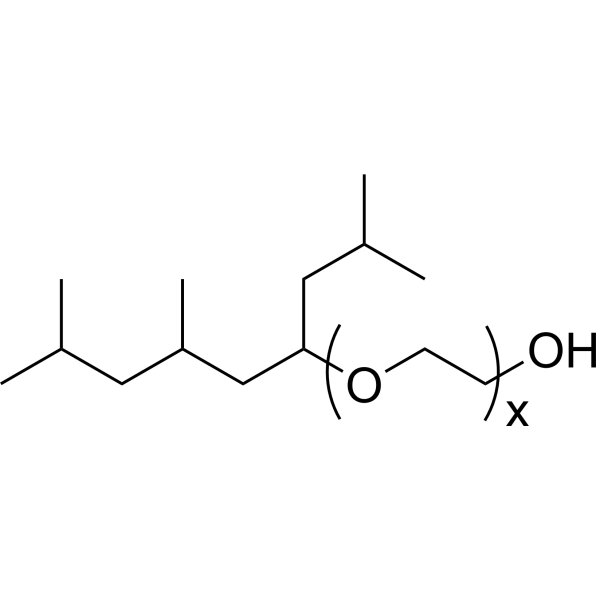
Polyethylene glycol trimethylnonyl ether, is a nonionic surfactant commonly used in various industrial and research applications. It belongs to the family of polyethylene glycol (PEG) ethers with a hydrophilic head and lipophilic tail and is suitable for use in lotions, detergents and solubilizers. Polyethylene glycol trimethylnonyl ether is particularly useful in protein chemistry, where it is used to solubilize and stabilize proteins, such as membrane proteins, for structural analysis techniques. In addition, Polyethylene glycol trimethylnonyl ether has potential applications in drug delivery and other medical fields due to its ability to interact with and penetrate cell membranes.
loading...
    loading...
Cat. No.: HY-W250178
CAS No.: 24233-81-6
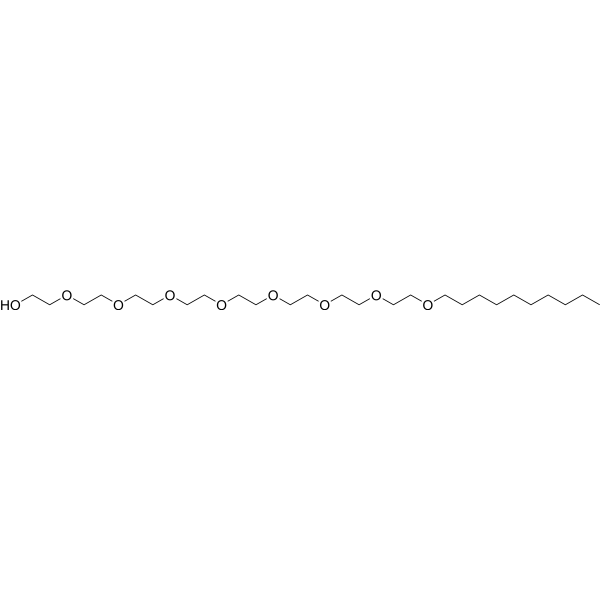
Octaethylene glycol monodecyl ether, is a nonionic surfactant commonly used in various industrial and research applications. It belongs to the family of polyethylene glycol (PEG) ethers with a hydrophilic head and lipophilic tail and is suitable for use in lotions, detergents and solubilizers. Octaethylene glycol monodecyl ether is particularly useful in the study of membrane proteins, where it is used to solubilize and stabilize proteins for structural analysis techniques. In addition, Octaethylene glycol monodecyl ether has the ability to interact with and penetrate cell membranes, so it has potential applications in drug delivery and other medical fields.
loading...
    loading...
Cat. No.: HY-Y0320E
CAS No.: 67-68-5
Dimethyl sulfoxide (suitable for HPLC) is an aprotic solvent that can dissolve water-insoluble therapeutic and toxic agents. Dimethyl sulfoxide (DMSO) has a strong affinity for water and has the ability to rapidly penetrate or enhance the penetration of other substances through biological membranes. Dimethyl sulfoxide also has potential free radical scavenging and anticholinesterase effects and may affect coagulation activity. Dimethyl sulfoxide also induces histamine release from mast cells but is thought to have low systemic toxicity. Dimethyl sulfoxide (suitable for HPLC) is suitable for HPLC .
loading...
    loading...
Cat. No.: HY-178391
Research Areas:  

Cancer

SMU-037 is an orally active and selective ROS1 inhibitor that demonstrates potent activity (IC₅₀ = 6.8 nM) and possesses the ability to penetrate the blood-brain barrier. SMU-037 shows ~25-fold selectivity over ALK, and superior sensitivity against the G2032R mutation. SMU-037 attenuates phosphorylation of ROS1 and downstream MAPK-ERK signaling pathway, leading to cell cycle arrest and apoptosis. SMU-037 effectively suppresses tumor progression in both xenograft and intracranial mouse models. SMU-037 can be used for non-small cell lung cancer (NSCLC) research .
loading...
    loading...
Cat. No.: HY-P11933
Research Areas:  

Others

FAHF is a polypeptide-based dual-signal fluorescent colorimetric probe synthesized by conjugating the 5-carboxyfluorescein (5-FAM) (HY-66022) fluorophore to the Ala-His-Phe-NH2 tripeptide backbone. FAHF achieves highly selective recognition of Cu 2+ via fluorescence quenching and colorimetric change. The FAHF-Cu 2+ complex responds to Glyphosate (HY-B0863) based on the displacement effect, resulting in fluorescence enhancement and a visually distinguishable color change. FAHF can penetrate cell membranes to enable cascade detection of copper (II) and glyphosate in living cells, and it can also be combined with smartphone RGB analysis for semi-quantitative identification .
loading...
    loading...
Cat. No.: HY-P12127
CAS No.: 233273-63-7
Synonyms: BF2-B
Buforin IIb (BF2-B) is an anticancer peptide, as well as an Antibacterial and Antifungal agent. Buforin IIb is derived from histone H2A. Buforin IIb activates SAPK/JNK and p38 MAPK. Buforin IIb induces mitochondria-dependent Apoptosis . Buforin IIb achieves selective targeting by interacting with gangliosides on the surface of cancer cells, and can penetrate cancer cell membranes without causing damage. Buforin IIb exhibits antibacterial activity against Gram-negative bacteria, Gram-positive bacteria and fungi. Buforin IIb can be used in the research of cervical cancer, as well as cancers including leukemia, central nervous system cancer, ovarian cancer, breast cancer, melanoma, colon cancer, non-small cell lung cancer, renal cancer and prostate cancer .
loading...
    loading...
Cat. No.: HY-146691
CAS No.: 2454459-87-9
Target:  

Monoamine Oxidase

Research Areas:  

Neurological Disease

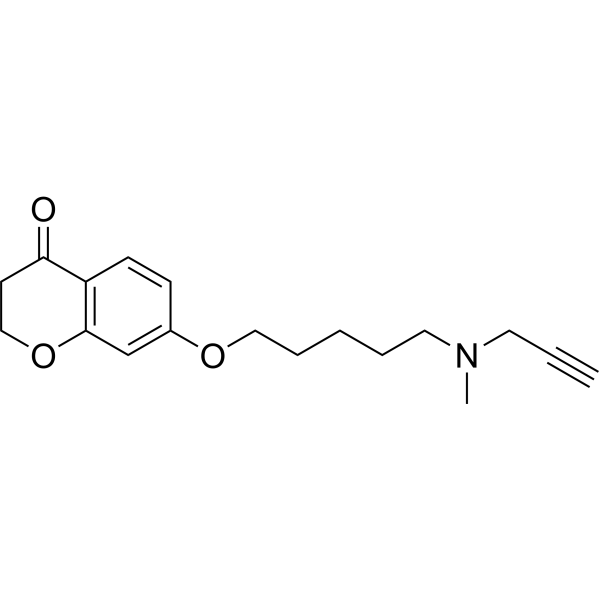
hMAO-B-IN-2 (compound 6j) is an orally active, potent, selective and BBB penetrated and competitive reversible hMAO-B inhibitor, with an IC50 of 4 nM. hMAO-B-IN-2 shows low toxicity and good neuroprotective effects in SH-SY5Y cell. hMAO-B-IN-2 can be used for alzheimer’s disease research . hMAO-B-IN-2 is a click chemistry reagent, itcontains an Alkyne group and can undergo copper-catalyzed azide-alkyne cycloaddition (CuAAc) with molecules containing Azide groups.
loading...
    loading...
Cat. No.: HY-170377
CAS No.: 3035311-43-1
Research Areas:  

Cancer

ER degrader 10 (Compound 51) is a selective, orally active degrader and antagonist for estrogen receptor (ER) with a DC50 of 0.43 nM and an IC50 of 0.56 nM. ER degrader 10 inhibits the proliferation of ER-positive cells with IC50s of 0-15 nM. ER degrader 10 exhibits a weak inhibitory activity against hERG channel with an IC50 >40 μM. ER degrader 10 is blood-brain barrier penetrable with a brain/plasma ratio (Kp) of 3.05. ER degrader 10 exhibits antitumor efficacy in mice model .
loading...
    loading...
Cat. No.: HY-170835
CAS No.: 26151-73-5
Research Areas:  

Infection Inflammation/Immunology

NDM-1 inhibitor-7 (Compound A8) is a NDM-1 inhibitor, with IC50 of 10.284 μM. NDM-1 inhibitor-7 restores the ability of MEM to penetrate the cell wall of gram-negative bacteria. NDM-1 inhibitor-7 effectively restores the antibacterial activity of MEM against NDM-1-positive Escherichia coli. NDM-1 inhibitor-7 demonstrates strong efficacy in both the Galleria mellonella infection model and murine peritonitis infection model .
loading...
    loading...
Cat. No.: HY-173221
MJ210 is a modulator of the NF-κB and MAPK pathways with oral activity and the ability to penetrate the blood-brain barrier, and it exhibits neuroprotective activity. In vitro, 5 μM of MJ210 can increase the survival rate of SH-SY5Y cells treated with Rotenone (HY-B1756) to 81.9% and reduce the level of ROS, etc. In vivo, 5 mg/kg of MJ210 can improve the motor impairment in a rat model of Parkinson's disease. MJ210 can be used in the research of neurological diseases, such as Parkinson's disease .
loading...
    loading...
Cat. No.: HY-W250171
CAS No.: 5698-39-5
Synonyms: Polyoxyethylene (10) cetyl ether
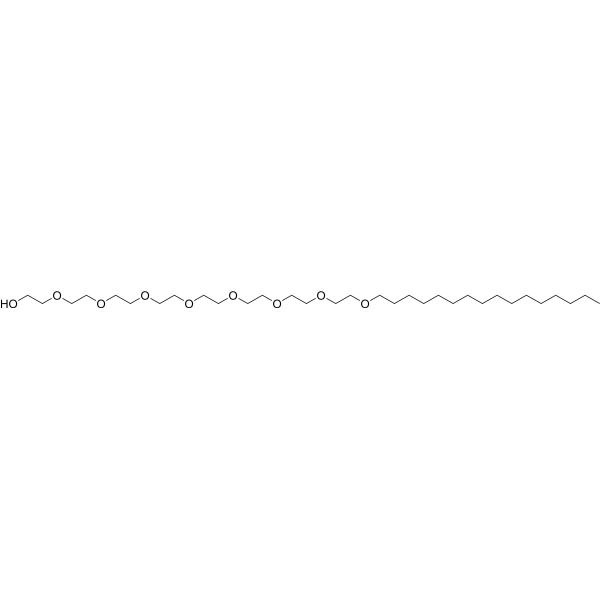
Octaethylene glycol monohexadecyl ether, is a nonionic surfactant commonly used in various industrial and research applications. Octaethylene glycol monohexadecyl ether belongs to the family of polyethylene glycol (PEG) ethers with a hydrophilic head and lipophilic tail, suitable for use in lotions, detergents and solubilizers. Octaethylene glycol monohexadecyl ether is particularly useful in the study of membrane proteins, where it is used to solubilize and stabilize proteins for structural analysis techniques. In addition, Octaethylene glycol monohexadecyl ether has the ability to interact with and penetrate cell membranes, so it has potential applications in drug delivery and other medical fields.
loading...
    loading...
Cat. No.: HY-21200
CAS No.: 375-92-8
Synonyms: 1-Perfluoroheptanesulfonic acid; Perfluoroheptanesulphonic acid; PFHpS
Target:  

PPAR

Perfluoroheptanesulfonic acid (1-Perfluoroheptanesulfonic acid; Perfluoroheptanesulphonic acid; PFHpS) is a per- and polyfluoroalkyl substance (PFAS) that penetrates the skin and induces systemic toxicity and immunotoxicity. Perfluoroheptanesulfonic acid reduces the expression of PPARδ in liver tissue; it induces hepatocyte hypertrophy and necrosis in liver tissue and alters serum biochemical markers associated with liver injury. Perfluoroheptanesulfonic acid upregulates genes related to fatty acid metabolism, cell necrosis and inflammation, reduces the relative weights of the spleen and thymus, suppresses humoral immune responses, and alters the composition of immune cell subsets in the spleen and skin. The plasma concentration of Perfluoroheptanesulfonic acid correlates with food intake. Perfluoroheptanesulfonic acid and perfluorooctanesulfonic acid exhibit synchronous pulse events in influent samples from wastewater treatment plants. Perfluoroheptanesulfonic acid can be used in studies related to liver injury and immune system damage .
loading...
    loading...
Cat. No.: HY-N8210R
CAS No.: 446-71-9
Homoeriodictyol (Standard) is the analytical standard of Homoeriodictyol (HY-N8210). This product is intended for research and analytical applications. Homoeriodictyol is an orally active, bitter-tasting flavanone that can penetrate the blood-brain barrier. Homoeriodictyol enhances synaptic-related protein expression through NCOA4-mediated ferritin autophagy. Homoeriodictyol improves memory impairment in mice by inhibiting the NLRP3 inflammasome. Homoeriodictyol protects human endothelial cells from oxidative damage by activating Nrf2 and inhibiting mitochondrial dysfunction. Homoeriodictyol enhances ROS activity and induces apoptosis, exhibiting anticancer effects. Homoeriodictyol inhibits the survival and migration of androgen-resistant prostate cancer cells in vitro. Homoeriodictyol exerts antinociceptive activity in mice in vivo .
loading...
    loading...
Cat. No.: HY-P11231
CAS No.: 2780353-11-7
Synonyms: FUS(364-369)-TAT
Target:  

Inhibitory Antibodies

Research Areas:  

Cancer

β4-TAT is a kind of β-sheet peptide foldamer. β4-TAT is composed of two parts: the β4 sequence (derived from the β-sheet fragment of the RRM domain of fused in sarcoma (FUS)) and the TAT sequence (a nuclear localization signal peptide that helps the entire peptide penetrate the nuclear membrane). β4-TAT influences FUS aggregation by targeting its RNA recognition motifs (RRM). β4-TAT effectively induces FUS aggregation within cells, leading to the death of cancer cells. β4-TAT can be used for the study of FUS .
loading...
    loading...

