1482 Results for "

Potassium Channel Inhibitor

" in MedChemExpress (MCE) Product Catalog:
Products (1482)

1482 Results for "Potassium Channel Inhibitor" in MCE Product Catalog:

Cat. No.: HY-B1239A
CAS No.: 1679-76-1
Synonyms: Cycloadiphene; Hexahydroadiphenine
Drofenine (Cycloadiphene; Hexahydroadiphenine) is an brain-penetrant antispasmodic agent. Drofenine is a Kv2.1 channel inhibitor with human IC50 of 9.53 μM. Drofenine is a butyrylcholinesterase (BChE) inhibitor with Ki of 0.003 mM, and is a TRPV3 activator. Drofenine blocks Kv2.1-dependent potassium efflux, inhibits Kv2.1/JNK/NF-κB and IkBa/NF-kB signaling, suppresses Kv2.1 mRNA/protein expression. Drofenine suppresses oligomeric Aβ-induced microglial NLRP3 inflammasome activation and neuronal Tau hyperphosphorylation, improves cognitive impairment, promotes neurite outgrowth. Drofenine induces calcium influx in keratinocytes and exert cytotoxicity against keratinocytes. Drofenine ameliorates diabetic peripheral neuropathy -like pathology. Drofenine can be used for the researches of Alzheimer's disease, diabetic peripheral neuropathy and smooth muscle spasm .
loading...
    loading...
Cat. No.: HY-W027553R
CAS No.: 62732-44-9
Synonyms: NIK-247 free base (Standard); Amiridine free base (Standard)
Ipidacrine (Standard) is the analytical reference standard of Ipidacrine. This product is used for research and analytical applications. Ipidacrine is orally active and blood-brain-barrier-penetrant AChE and BuChE inhibitors with IC50 values of 1 μM and 1.9 μM, respectively, which is also a partial agonist of M2-cholinergic receptors and a reversible cholinesterase inhibitor. Ipidacrine has a stimulating effect on neuromuscular transmission and excitation along the nerve fibres with a moderately anti-pain effect. Ipidacrine is an aminopyridines and is structurally similar to Tacrine (HY-111338). Ipidacrine is effective in various amnesia models, improves erectile function and inhibits K + and Na +-channels in the neuronal membrane in diabetic rats. Ipidacrine is promising for research of Alzheimer’s disease, ischaemic stroke, idiopathic neuropathy of the facial nerve, diabetes mellitus-induced erectile dysfunction and other deficits in central or peripheral cholinergic deseases .
loading...
    loading...
Cat. No.: HY-100607AR
CAS No.: 144481-98-1
Synonyms: ONO1101 hydrochloride (Standard)
Landiolol (ONO1101) hydrochloride (Standard) is the analytical standard of Landiolol hydrochloride (HY-100607A). This product is intended for research and analytical applications. Landiolol (ONO1101) hydrochloride is a highly selective, ultra-short-acting competitive inhibitor of β1 adrenergic receptors. Landiolol hydrochloride specifically blocks cardiac β1 receptors, reducing heart rate and myocardial oxygen consumption. Landiolol hydrochloride inhibits TNF-α-induced excessive mitochondrial oxygen consumption and reactive oxygen species production in a sepsis model, alleviating renal injury. Landiolol hydrochloride has little effect on cardiac ion channels (such as L-type calcium current and inward rectifier potassium current) and has a weak negative inotropic effect. Landiolol hydrochloride can be used for perioperative tachycardia control and protection studies of sepsis-related acute kidney injury .
loading...
    loading...
Cat. No.: HY-100607S
Synonyms: ONO1101-d8
Landiolol-d8 (ONO1101-d8) is the deuterium labeled Landiolol (HY-100607). Landiolol (ONO1101) is a highly selective, ultra-short-acting competitive inhibitor of β1 adrenergic receptors. Landiolol specifically blocks cardiac β1 receptors, reducing heart rate and myocardial oxygen consumption. Landiolol inhibits TNF-α-induced excessive mitochondrial oxygen consumption and reactive oxygen species production in a sepsis model, alleviating renal injury. Landiolol has little effect on cardiac ion channels (such as L-type calcium current and inward rectifier potassium current) and has a weak negative inotropic effect. Landiolol can be used for perioperative tachycardia control and protection studies of sepsis-related acute kidney injury .
loading...
    loading...
Cat. No.: HY-182243
CAS No.: 2748366-80-3
Research Areas:  

Cancer

HK2-IN-4 is a selective hexokinase 2 (HK2) inhibitor with an IC50 value of 0.79 μM and a Kd value of 0.41 μM. HK2-IN-4 blocks the interaction between HK2 and voltage-dependent anion channel 1 (VDAC1). HK2-IN-4 reduces lactate and ATP levels in cancer cells. HK2-IN-4 induces the production of apoptosis (apoptosis) markers in cancer cells, including increased p-AMPK/AMPK ratio and Bax levels, as well as decreased Bcl2 levels. HK2-IN-4 inhibits the proliferation of cancer cells with high HK2 expression. HK2-IN-4 can be used in research related to colorectal cancer and non-small cell lung cancer .
loading...
    loading...
Cat. No.: HY-182365
EED-IN-4 is an orally active, EZH2-selective immunomodulator and EED-H3K27me3 inhibitor (EED, IC50=28.21 nM) with anti-inflammatory activity. In mouse models, EED-IN-4 preferentially and persistently accumulates in lymph nodes after oral administration. By reducing the H3K27me3 level of dendritic cells and inhibiting their migration, EED-IN-4 reduces the infiltration of immune cells into the central nervous system and effectively alleviates spinal cord inflammation. EED-IN-4 shows weak inhibitory activity against hERG channels and is non-mutagenic, with no obvious toxicity observed upon long-term oral administration. EED-IN-4 can be used for the research of multiple sclerosis .
loading...
    loading...
Cat. No.: HY-B0551AR
CAS No.: 7081-53-0
Doxapram hydrochloride hydrate (Standard) is the analytical standard of Doxapram hydrochloride hydrate (HY-B0551A). This product is intended for research and analytical applications. Doxapram hydrochloride hydrate is a respiratory stimulant. Doxapram hydrochloride hydrate increases breathing rate and depth by acting on the brain's respiratory centers and peripheral chemoreceptors. Doxapram hydrochloride hydrate inhibits TASK-1, TASK-3, TASK-1/TASK-3 heterodimeric channel function with EC50s of 410 nM, 37 μM, 9 μM, respectively. Doxapram hydrochloride hydrate inhibits the Ca²⁺-activated potassium current (IC50 ≈ 13 μM) and Ca²⁺-independent potassium current (IC50 ≈ 20 μM) in type I cells of the carotid body. Doxapram hydrochloride hydrate significantly prolongs the effective refractory period of the atrium and has an anti-arrhythmic effect. Doxapram hydrochloride hydrate can be used for the study of respiratory depression such as post-anesthesia respiratory depression, chronic obstructive pulmonary disease and apnea of prematurity.
loading...
    loading...
Cat. No.: HY-B0551S
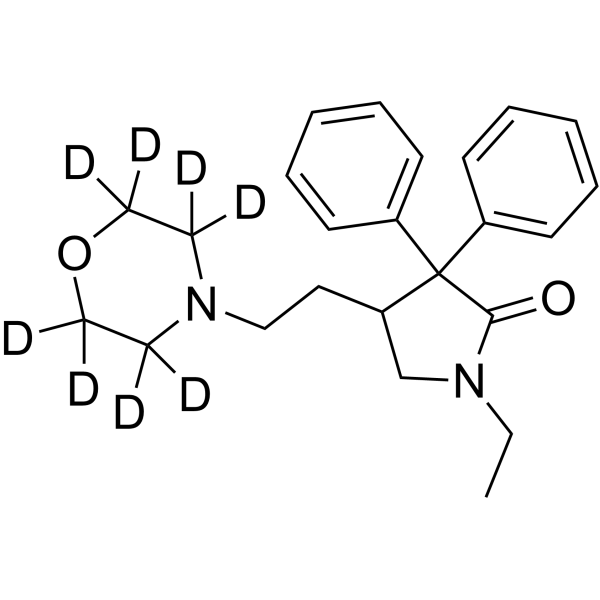
Doxapram-d8 is deuterated labeled Doxapram (HY-B0551). Doxapram is a respiratory stimulant. Doxapram increases breathing rate and depth by acting on the brain's respiratory centers and peripheral chemoreceptors. Doxapram inhibits TASK-1, TASK-3, TASK-1/TASK-3 heterodimeric channel function with EC50s of 410 nM, 37 μM, 9 μM, respectively. Doxapram inhibits the Ca²⁺-activated potassium current (IC50 ≈ 13 μM) and Ca²⁺-independent potassium current (IC50 ≈ 20 μM) in type I cells of the carotid body. Doxapram significantly prolongs the effective refractory period of the atrium and has an anti-arrhythmic effect. Doxapram can be used for the study of respiratory depression such as post-anesthesia respiratory depression, chronic obstructive pulmonary disease and apnea of prematurity.
loading...
    loading...
Cat. No.: HY-W726101
CAS No.: 5996-06-5
Synonyms: O,O-Dimethylisoboldine hydrobromide; S-(+)-Glaucine hydrobromide; NSC 34396 hydrobromide
Glaucine hydrobromide (O,O-Dimethylisoboldine hydrobromide; S-(+)-Glaucine hydrobromide; NSC 34396 hydrobromide) is an alkaloid extracted from Glaucium flavum that possesses various activities, including cough relief, bronchodilation, anti-inflammatory effects, analgesia, antipyretic properties, and anticancer effects. Glaucine hydrobromide acts as a selective and orally active inhibitor of phosphodiesterase 4 (PDE4), with a Ki of 3.4 µM in human bronchial tissues and polymorphonuclear leukocytes. Glaucine hydrobromide induces relaxation of human isolated bronchi by antagonizing calcium channels. Additionally, Glaucine hydrobromide inhibits the activation of NF-κB, leading to a reduction in the expression of the MMP-9 gene, thereby suppressing the migration and invasion of breast cancer cells. Therefore, Glaucine hydrobromide holds potential for research in asthma and breast cancer .
loading...
    loading...
Cat. No.: HY-Y1890B
CAS No.: 61791-12-6
Cremophor EL-10 is a nonionic polyoxyethylene castor oil surfactant with multiple functions including organic solubilizer, mixed zinc anode corrosion inhibitor and dendrite growth inhibitor. By forming a physical barrier to block electrolyte contact and constructing oriented hydration channels to reduce the desolvation energy barrier of Zn 2+ , Cremophor EL-10 achieves a corrosion inhibition efficiency of over 99%. Cremophor EL-10 exerts no significant effects on the mitochondrial activity and cell viability of epithelial cells, making it suitable for in vitro drug delivery and biopharmaceutical research at concentrations ≤10% v/v. However, Cremophor EL-10 may induce sustained non-endothelium-dependent contraction in rat aortic rings and exert concentration-dependent inhibitory effects on acetylcholine-induced endothelium-dependent relaxation responses .
loading...
    loading...
Cat. No.: HY-108400
CAS No.: 87134-87-0
Synonyms: R-(+)-SCH-23390 maleate
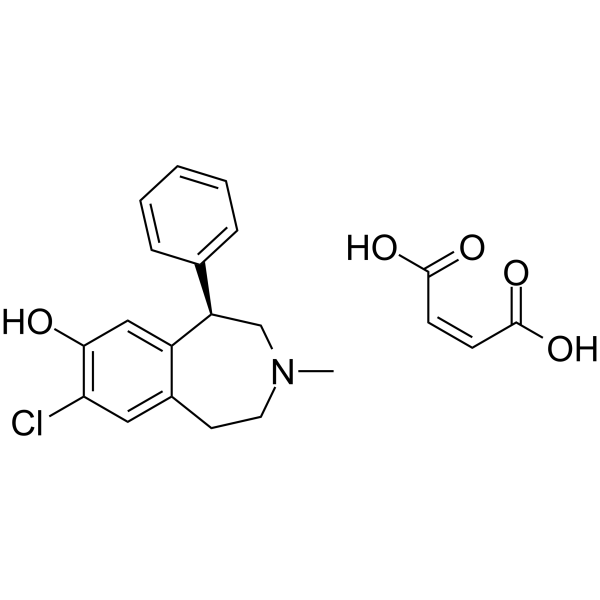
SCH-23390 maleate (R-(+)-SCH-23390 maleate) is a potent and selective dopamine D1-like receptor antagonist with Kis of 0.2 nM and 0.3 nM for the D1 and D5 receptor, respectively. SCH-23390 maleate is a potent and high efficacy human 5-HT2C receptor agonist with a Ki of 9.3 nM. SCH-23390 maleate also binds with high affinity to the 5-HT2 and 5-HT1C receptors. SCH-23390 maleate inhibits G protein-coupled inwardly rectifying potassium (GIRK) channels with an IC50 of 268 nM .
loading...
    loading...
Cat. No.: HY-122351AR
CAS No.: 714229-20-6
Research Areas:  

Others

Advantame (Standard) is the analytical standard of Advantame. This product is intended for research and analytical applications. Advantame is an N-substituted derivative of aspartame. Advantame is a high-intensity, low calorie sweetener. Advantame can interact with plasma protein. Advantame has the potential to produce hypotension and inhibit hERG K + channel to produce carditoxicity. Advantame binds to T1R2/T1R3 taste GPCR to form an oligomeric functional selectivity of biased heteromers with NMBR to induce a significant sialidase activity in vitro. Advantame has maternal toxicity (gastrointestinal disturbances) in the prenatal developmental toxicity study in rabbits .
loading...
    loading...
Cat. No.: HY-12355R
CAS No.: 1230487-00-9
Synonyms: BAF-312 (Standard)
Siponimod (BAF-312) (Standard) is the analytical standard of Siponimod. This product is intended for research and analytical applications. Siponimod is an orally active, blood-brain barrier penetrant dual agonist of S1P1/S1P5, with EC50 values of 0.39 nM and 0.98 nM, respectively. Siponimod induces S1P1 internalization, activates GIRK channels, inhibits lymphocyte egress, reduces peripheral lymphocyte counts, triggers transient bradycardia, prevents synaptic neurodegeneration, promotes remyelination, alleviates demyelination, and prevents the loss of GABAergic interneurons. Siponimod can be used in research related to multiple sclerosis.
loading...
    loading...
Cat. No.: HY-178016
CAS No.: 3097193-89-7
Target:  

Histamine Receptor

Research Areas:  

Neurological Disease

H3R antagonist 8 is a selective nonimidazole histamine H3 receptor antagonist (IC50 = 0.35 μM). H3R antagonist 8 exhibits hERG channel blockade activity (IC50 = 0.67 μM). H3R antagonist 8 inhibits seizures by antagonizing H3 receptor. H3R antagonist 8 reduces tonic hind limb extension (THLE) in mice in the maximal electroshock seizure (MES) model (ED50 = 20.21 mg/kg) and and shortens pentylenetetrazol (PTZ)-induced total movement distance in AB strain zebrafish larvae. H3R antagonist 8 can be used for the study of epilepsy .
loading...
    loading...
Cat. No.: HY-70057S4
Synonyms: FCE 26743-d5; EMD 1195686-d5
Safinamide-d5 (FCE 26743-d5) is deuterium labeled Safinamide. Safinamide is a potent, selective, and reversible monoamine oxidase B (MAO-B) inhibitor (IC50=0.098 μM) over MAO-A (IC50=580 μM) . Safinamide also blocks sodium channels and modulates glutamate (Glu) release, showing a greater affinity at depolarized (IC50=8?μM) than at resting (IC50=262?μM) potentials. Safinamide has neuroprotective and neurorescuing effects and can be used for the study of parkinson disease, ischemia stroke etc.al .
loading...
    loading...
Cat. No.: HY-B0267AR
CAS No.: 1508-65-2
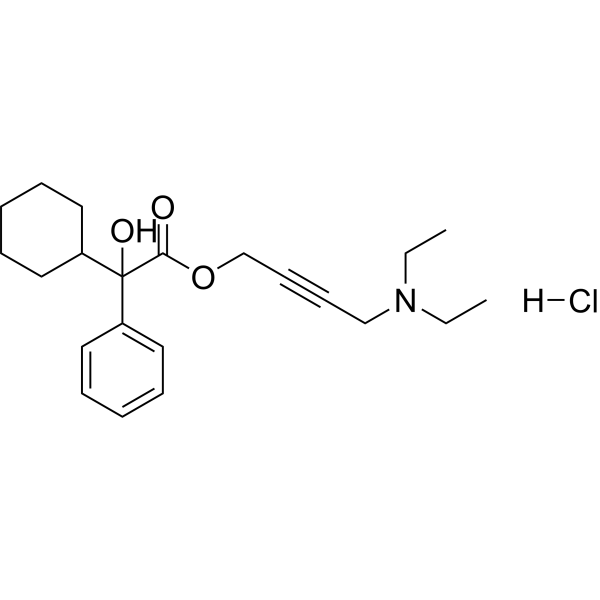
Oxybutynin (chloride) (Standard) is the analytical standard of Oxybutynin (chloride). This product is intended for research and analytical applications. Oxybutynin chloride is an oral active and competitive mAChR antagonist with Kis of 14.3 and 5.55 nM for specific [ 3H]NMS binding in the mouse bladder and cerebral cortex, respectively. Oxybutynin chloride inhibits vascular Kv channels in a manner independent of anticholinergic effect, with an IC50 value of 11.51 μM. Oxybutynin chloride reduces muscle spasm in the bladder and urinary tract, can be used in study of overactive bladder syndrome (OAB) . Oxybutynin (chloride) is a click chemistry reagent, it contains an Alkyne group and can undergo copper-catalyzed azide-alkyne cycloaddition (CuAAc) with molecules containing Azide groups.
loading...
    loading...
Cat. No.: HY-B1033R
CAS No.: 17692-51-2
Metergoline (Standard) is the analytical standard of Metergoline. This product is intended for research and analytical applications. Metergoline is a serotonin (5-HT) receptor and dopamine receptors antagonist, with pKis of 8.64, 8.75 and 8.75 for 5-HT2A, 5-HT2B and 5-HT2C, respectively. Metergoline is a high-affinity ligand for the h5-HT7 receptor, with a Ki of 16 nM. Metergoline is also a reversible neural Na+ channels inhibitor. Metergoline is commonly used for the research of seasonal affective disorder, prolactin hormone regulation .
loading...
    loading...
Cat. No.: HY-B1751A
CAS No.: 50-54-4
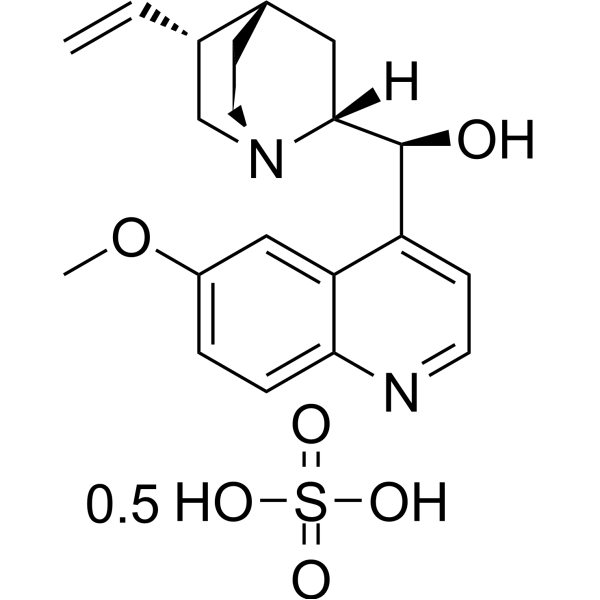
Quinidine sulfate is an orally active antiarrhythmic agent. Quinidine sulfate reduces the expression level of P-gp, inhibits P-gp-mediated efflux, increases the intracellular accumulation of P-gp substrates, induces PARP cleavage and Caspase-3 activation, and elevates the proportion of Apoptotic cells at the sub-G1 phase. Quinidine sulfate exerts sustained block and open-channel block effects on IK(f). Quinidine sulfate alters the urinary metabolic ratio of Amphetamine, modulates the Pentylenetetrazol-induced seizure threshold, and regulates the anticonvulsant effect of Dextromethorphan. Quinidine sulfate can be used in studies related to uterine sarcoma and seizures .
loading...
    loading...
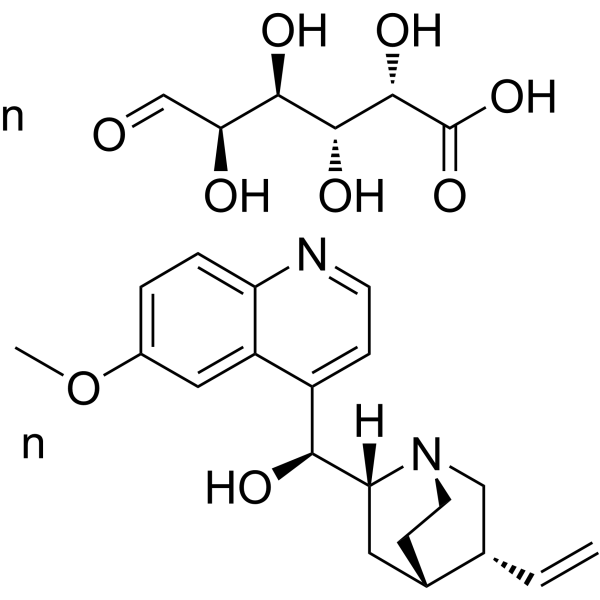
Cat. No.: HY-B1751E
CAS No.: 27555-34-6
Quinidine polygalacturonate is an orally active antiarrhythmic agent. Quinidine polygalacturonate reduces the expression level of P-gp, inhibits P-gp-mediated efflux, increases the intracellular accumulation of P-gp substrates, induces PARP cleavage and Caspase-3 activation, and elevates the proportion of Apoptotic cells at the sub-G1 phase. Quinidine polygalacturonate exerts sustained block and open-channel block effects on IK(f). Quinidine polygalacturonate alters the urinary metabolic ratio of Amphetamine, modulates the Pentylenetetrazol-induced seizure threshold, and regulates the anticonvulsant effect of Dextromethorphan. Quinidine polygalacturonate can be used in studies related to uterine sarcoma and seizures .
loading...
    loading...
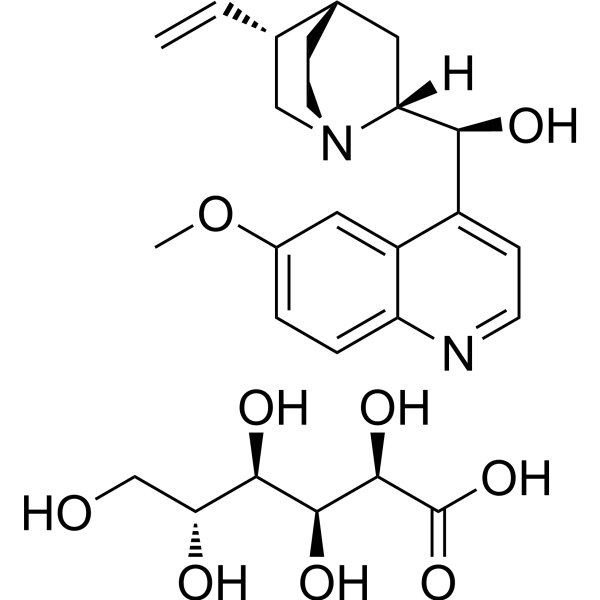
Cat. No.: HY-B1751F
CAS No.: 7054-25-3
Quinidine gluconic acid is an orally active antiarrhythmic agent. Quinidine gluconic acid reduces the expression level of P-gp, inhibits P-gp-mediated efflux, increases the intracellular accumulation of P-gp substrates, induces PARP cleavage and Caspase-3 activation, and elevates the proportion of Apoptotic cells at the sub-G1 phase. Quinidine gluconic acid exerts sustained block and open-channel block effects on IK(f). Quinidine gluconic acid alters the urinary metabolic ratio of Amphetamine, modulates the Pentylenetetrazol-induced seizure threshold, and regulates the anticonvulsant effect of Dextromethorphan. Quinidine gluconic acid can be used in studies related to uterine sarcoma and seizures .
loading...
    loading...

