1618 Results for "

Covalent

" in MedChemExpress (MCE) Product Catalog:
Products (1618)

1618 Results for "Covalent" in MCE Product Catalog:

Cat. No.: HY-P0112
CAS No.: 1027141-02-1
Target:  

Deubiquitinase

Research Areas:  

Neurological Disease Cancer

Z-VAE (OMe)-FMK is a selective inhibitor of UCHL1, with better selectivity over UCHL3 and UCHL5. Z-VAE (OMe)-FMK binds to the active site cleft, covalently modifies the active site cysteine C90 to form a thioether bond, binds to inactive UCHL1 with a misaligned catalytic triad, and acts via a two-step addition-folding/migration/displacement mechanism. Z-VAE (OMe)-FMK stabilizes interactions through hydrogen bonding with oxyanion hole residues and van der Waals interactions with surrounding residues. Z-VAE (OMe)-FMK can be used in research related to colorectal cancer, lung cancer, pancreatic cancer, and Alzheimer's disease .
loading...
    loading...
Cat. No.: HY-P10428
Target:  

HPV

Research Areas:  

Infection

E6AP-mimicking peptide (compound 13) is a high-affinity, selective, irreversible and potent peptide-based covalent HPV16 E6 inhibitor targeting the 16E6 oncoprotein using a cysteine-reactive acrylamide warhead. E6AP-mimicking peptide has a Ki of 17 nM. E6AP-mimicking peptide targets all residues appearing in the binding pocket of E6 to disrupt the binding interface of 16E6 and E6AP. E6AP-mimicking peptide selectively binds and crosslinks to MBP-16E6 in PBS or a protein mixture .
loading...
    loading...
Cat. No.: HY-P10699
CAS No.: 487036-63-5
Research Areas:  

Neurological Disease Cancer

MAX1 is a synthetic β-hairpin peptide that folds rapidly and self-assembles into a β-sheet-rich fibrous hydrogel network via non-covalent crosslinking. MAX1 hydrogel exhibits excellent shear-thinning and self-healing properties, enabling precise delivery via syringe and maintaining local retention after implantation. MAX1 hydrogel can uniformly encapsulate cells while preserving their viability and morphology, and protect growth factors (e.g., NGF) and chemotherapeutic drugs from degradation. MAX1 is applicable for spinal cord injury repair, medulloblastoma treatment, and three-dimensional high-throughput drug screening .
loading...
    loading...
Cat. No.: HY-P6299
CAS No.: 944792-75-0
Research Areas:  

Neurological Disease Cancer

MAX8 is a synthetic β-hairpin peptide that folds rapidly and self-assembles into a β-sheet-rich fibrous hydrogel network via non-covalent crosslinking. MAX8 hydrogel exhibits excellent shear-thinning and self-healing properties, enabling precise delivery via syringe and maintaining local retention after implantation. MAX8 hydrogel can uniformly encapsulate cells while preserving their viability and morphology, and protect growth factors (e.g., NGF) and chemotherapeutic drugs from degradation. MAX8 is applicable for spinal cord injury repair, medulloblastoma treatment, and three-dimensional high-throughput drug screening .
loading...
    loading...
Cat. No.: HY-P990610

Target:  

Akt mTOR PI3K

Research Areas:  

Cancer

KHK-2898 is a monoclonal antibody targeting CD98, which binds to the extracellular domain of CD98 on the tumor cell membrane in a non-covalent antigen-specific mode. KHK-2898 can disrupt the heterodimeric complex formed by CD98 with LAT1 and xCT light chains, reduce the amino acid uptake capacity of tumor cells, block the PI3K/AKT/mTOR proliferative signaling cascade, and mediate antibody-dependent cytotoxicity. KHK-2898 can be used for cancer-related research. The isotype control of KHK-2898 can be found in Human IgG1 kappa, Isotype Control (HY-P99001) .
loading...
    loading...
Cat. No.: HY-W097355
CAS No.: 5241-59-8
Synonyms: D-Phenylalanine amide; H-D-Phe-NH2
Research Areas:  

Cancer

(R)-2-Amino-3-phenylpropanamide (D-Phenylalanine amide) is a non-natural D-α-amino acid derivative and chiral amino acid amide. (R)-2-Amino-3-phenylpropanamide can be converted into D-Phenylalanine (HY-Y0079), which is applicable to the construction of all-D antimicrobial peptides and the synthesis of anti-HIV reagents. (R)-2-Amino-3-phenylpropanamide serves as a reagent for synthesizing benzoxaborole derivative 6, a dual covalent binder of Pseudomonas aeruginosa PBP3. (R)-2-Amino-3-phenylpropanamide is used in colon cancer-related research .
loading...
    loading...
Cat. No.: HY-W591476
CAS No.: 134874-49-0
Synonyms: mPEG1000-SH
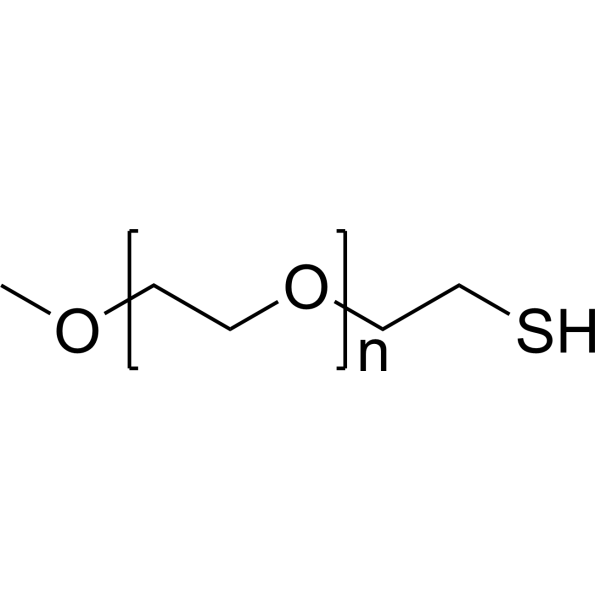
m-PEG1000-thiol (mPEG1000-SH) is a surface modifier that can modify DNA thiolation and is used in the synthesis of gold nanorods (AuNR). m-PEG1000-thiol can load thiolated DNA onto AuNR, form a covalent bond with the surface of gold nanoparticles through the thiol group, and stabilize the nanoparticles by the steric hindrance effect of the polyethylene glycol chain, preventing aggregation and enhancing its biocompatibility. m-PEG1000-thiol can also provide a platform for the subsequent coupling of biomolecules (such as DNA, antibodies) by replacing surfactants (such as CTAB) on the surface of nanoparticles, thereby exerting its activity in promoting the functionalization of nanomaterials [2].
loading...
    loading...
Cat. No.: HY-123048
CAS No.: 171744-39-1
Synonyms: PD022551; NSC 654077
Target:  

HIV

Research Areas:  

Infection

DIBA-1 (PD022551; NSC 654077) is an inhibitor of HIV-1 nucleocapsid protein (NCp7). DIBA-1 displaces zinc from the zinc finger motifs of NCp7, p7NC and Pr55gag via thiol-disulfide exchange, covalently modifies cysteine residues, forms intermolecular disulfide cross-links, and disrupts zinc coordination. DIBA-1 inhibits zinc-dependent binding of NCp7 to HIV Ψ RNA, blocks the early replication process of HIV-1, suppresses the proteolytic processing of Gag precursors, and impairs the maturation and release of viral particles. DIBA-1 can be used in studies related to human immunodeficiency virus type 1 infection .
loading...
    loading...
Cat. No.: HY-12455
CAS No.: 118292-34-5
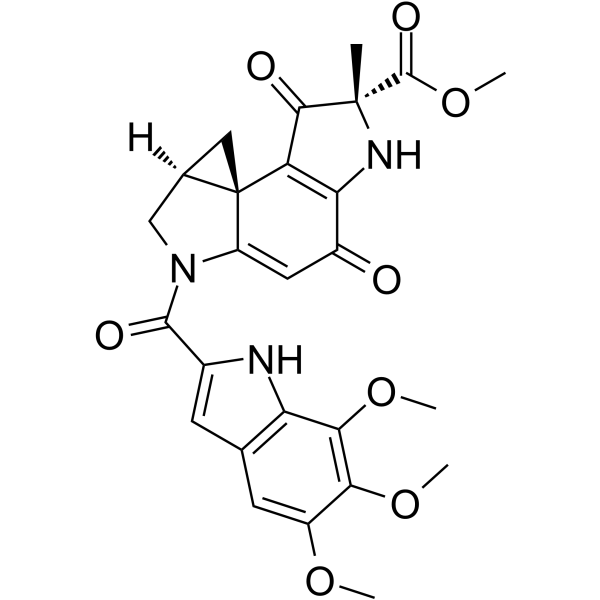
Duocarmycin A is an antitumor antibiotic and DNA alkylating agent with broad-spectrum antibacterial activity, which can serve as a payload for synthesizing antibody-drug conjugates (ADCs). Duocarmycin A selectively binds to the AT-rich minor groove of DNA, forms covalent adducts by alkylating the adenine N3 residue, thereby disrupting DNA structure and inhibiting its replication and transcription. Duocarmycin A induces apoptosis, sub-G1 phase accumulation and chromatin condensation, reduces the levels of pro-caspase-3/9, and induces p53-independent p21 expression. Duocarmycin A is widely used in the research of various malignancies, including leukemia, sarcoma, glioblastoma, as well as multiple solid tumor models such as lung cancer, breast cancer, and colorectal cancer .
loading...
    loading...
Cat. No.: HY-134222A
CAS No.: 16354-58-8
Purity:  ≥98.0%
Synonyms: N-Acetyl-L-serine
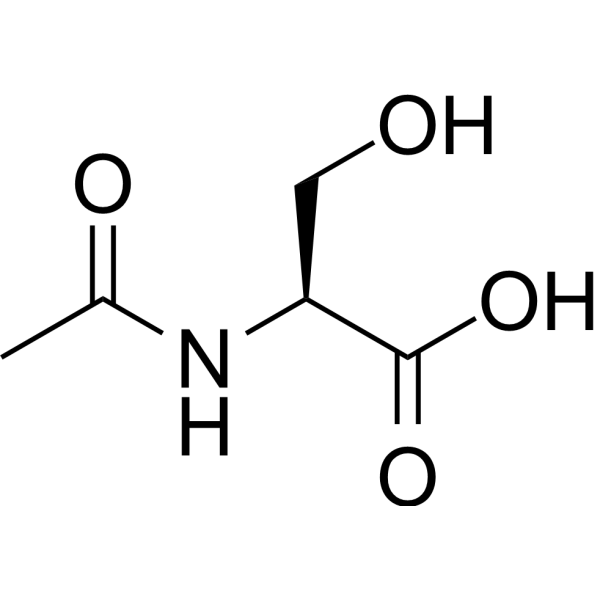
N-Acetylserine (N-Acetyl-L-serine) is a complement pathway modulator targeting activated third complement protein (C3b) and an amino-terminal residue (an N-terminal acetylation modification group). N-Acetylserine reacts with the exposed thioester group of C3b via its hydroxyl group, thereby blocking the covalent binding of glycerol to this thioester group. N-Acetylserine widely exists in soluble proteins of mammalian cells (accounting for approximately 80% of such proteins). N-Acetylserine has a blocking property that prevents direct Edman sequencing of proteins; deblocking is achievable through trifluoroacetic acid-catalyzed N→O acetyl migration followed by β-elimination. N-Acetylserine is suitable for sequencing of proteins with N-terminal acetylserine modification .
loading...
    loading...
Cat. No.: HY-135146R
CAS No.: 2170136-65-7
Synonyms: (R)-GSK3482364 (Standard)
Research Areas:  

Cancer

GSK-3484862 (Standard) is the analytical standard of GSK-3484862 (HY-135146). This product is intended for research and analytical applications. GSK-3484862 is a highly potent non-covalent inhibitor and demethylating agent of DNMT1. GSK-3484862 induces genome-wide DNA demethylation, including the regulatory elements of DNMT3B and the promoter region of TERT, and significantly inhibits cell viability, growth, proliferation and self-renewal. GSK-3484862 blocks the transformation of young AT2 cells, induces apoptosis, and generates transcriptomic features similar to those of senescent cells. GSK-3484862 is widely used in studies related to lung cancer, oral squamous cell carcinoma and lung adenocarcinoma .
loading...
    loading...
Cat. No.: HY-13568R
CAS No.: 51234-28-7
Synonyms: LRCL 3794 (Standard)
Benoxaprofen (Standard) is the analytical standard of Benoxaprofen. This product is intended for research and analytical applications. Benoxaprofen (LRCL 3794) is a nonsteroidal anti-inflammatory agent that blocks the biosynthesis of inflammatory mediators such as leukotrienes and prostaglandins by inhibiting 5-LOX, PGH2 synthase and cytochrome P-450. Benoxaprofen exhibits significant toxicity: it not only alters cellular redox status, uncouples oxidative phosphorylation and disrupts calcium ion homeostasis, but also causes liver injury through the formation of covalent adducts between its active metabolites and hepatic proteins. Benoxaprofen shows strong phototoxicity under ultraviolet irradiation, and induces erythrocyte lysis, mast cell degranulation and histamine release. Benoxaprofen is widely used in studies of urticaria and related phototoxic mechanisms .
loading...
    loading...
Cat. No.: HY-135835
CAS No.: 412319-45-0
Purity:  98.05%
Target:  

Fluorescent Dye

Research Areas:  

Others

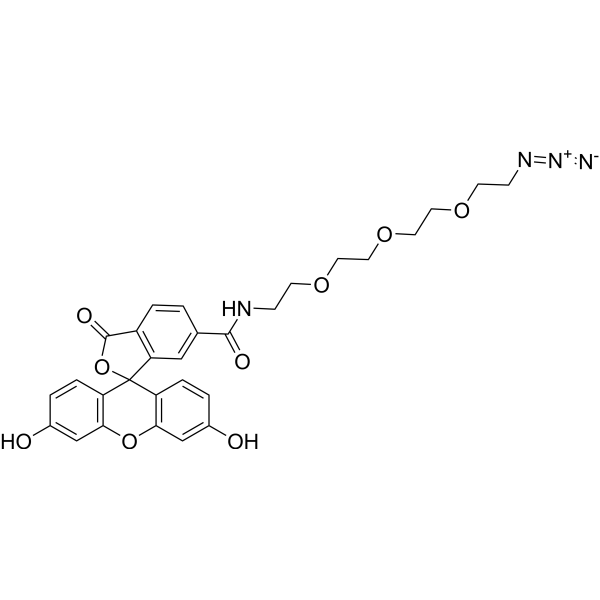
6-FAM-PEG3-Azide is a PEG-modified azide-functionalized fluorescein derivative that is used for labeling oligonucleotides. 6-FAM-PEG3-Azide is also a click chemistry reagent. It contains an Azide group and can undergo a copper-catalyzed azide-alkyne cycloaddition reaction (CuAAc) with molecules containing an Alkyne group. When 6-FAM-PEG3-Azide is co-incubated with boron clusters in a non-covalent manner, it enhances the cellular uptake and membrane permeability of 6-FAM (HY-66021). 6-FAM-PEG3-azide is applicable for fluorescence bioconjugation and probe development-related research .
loading...
    loading...
Cat. No.: HY-145836
CAS No.: 2765240-52-4
Target:  

FGFR

Research Areas:  

Cancer

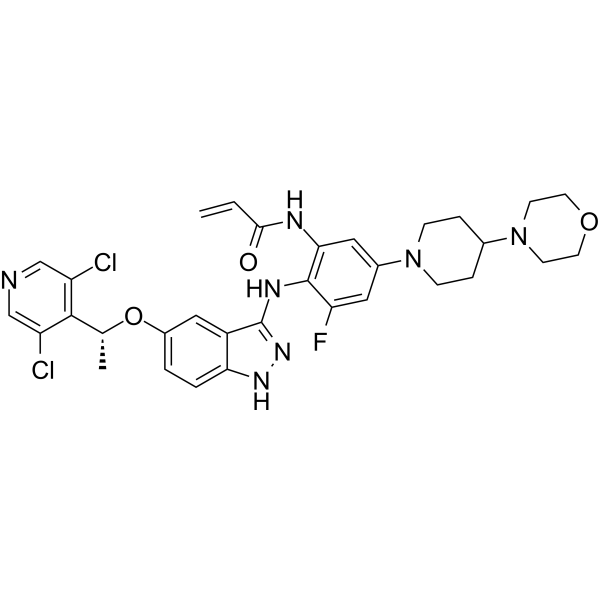
FGFR4-IN-8 (Compound 7v) is an ATP-competitive, highly selective covalent inhibitor of wild-type and gatekeeper mutant FGFR4. FGFR4-IN-8 exhibits excellent potency against FGFR4, FGFR4 V550L, FGFR4 V550M and FGFR4 C552S with IC50s of 0.5, 0.25, 1.6, 931 nM, respectively. FGFR4-IN-8 exhibits potent antiproliferative activity against Hep3B hepatocellular carcinoma cells with the IC50 value of 29 nM. FGFR4-IN-8 demonstrates modest in vivo antitumor efficacy in nude mice bearing the Huh-7 xenograft model .
loading...
    loading...
Cat. No.: HY-146223A
Purity:  98.00%
Target:  

Ras PI3K p38 MAPK Apoptosis

Research Areas:  

Cancer

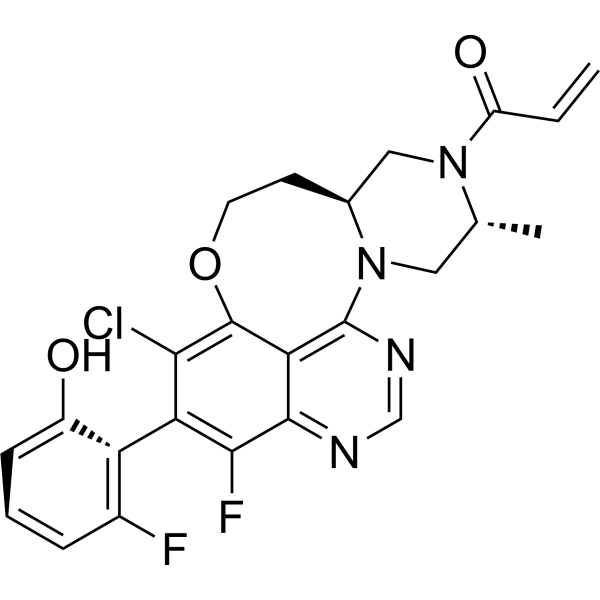
(3R,10R,14aS)-AZD4625 is the isomer of AZD4625 (HY-146223), and can be used as an experimental control. AZD4625 is an orally active, selective irreversible, covalent allosteric GTPase KRASG12C inhibitor with an IC50 of 3 nM. AZD4625 can inhibit the MAPK pathway (with decreased pCRAF, pMEK, and pERK) and the PI3K pathway (with decreased pAKT and pS6), and induce cell apoptosis. AZD4625 has no binding and inhibition of wild-type RAS or isoforms carrying non-KRASG12C mutations. AZD4625 can be used for the study of KRASG12C mutant non-small cell lung cancer .
loading...
    loading...
Cat. No.: HY-147209
Target:  

YAP

Research Areas:  

Metabolic Disease

DC-TEAD3in03 is a subtype-selective and covalent TEAD3 inhibitor with an IC50 of 0.16 μM. DC-TEAD3in03 exhibits the inhibitory activity on TEAD1/2/4 reduced by more than 100 times. DC-TEAD3in03 has the IC50 for TEAD3 of 1.15 μM in the GAL4-TEAD reporter gene experiment in cells, and it does not interfere with the β-catenin pathway. DC-TEAD3in03 reduces the growth rate of the zebrafish tail fin. DC-TEAD3in03 can be used to study the proportional growth of appendages in vertebrates .
loading...
    loading...
Cat. No.: HY-14811
CAS No.: 251111-30-5
Synonyms: ZGN-440; CKD-732 free base
Target:  

MetAP NF-κB

Research Areas:  

Metabolic Disease

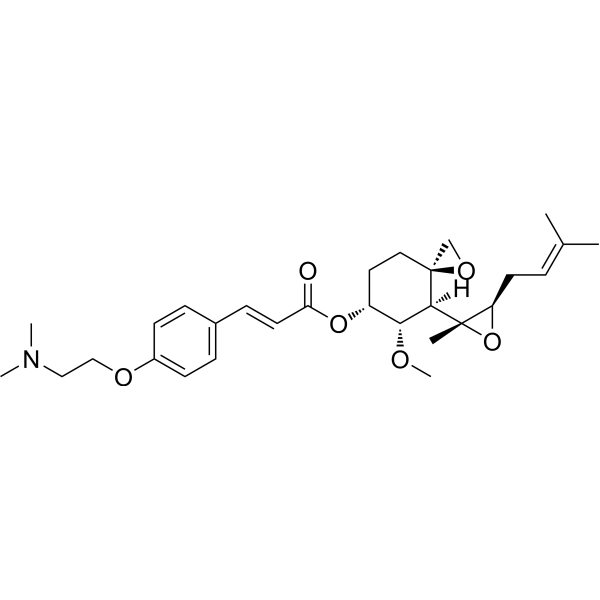
Beloranib (ZGN-440; CKD-732 free base) is a selective, irreversible inhibitor of methionine aminopeptidase MetAP2 that suppresses appetite and increases energy expenditure. Beloranib blocks the enzymatic cleavage of N-terminal methionine from nascent proteins by forming a covalent bond with MetAP2, thereby regulating fatty acid metabolism, adrenergic signaling, and hypothalamic NF-κB expression. Beloranib significantly reduces food intake, body weight, and fat accumulation, while improving glucose tolerance, insulin sensitivity, and lipid metabolism. Beloranib also elevates energy expenditure and fat oxidation levels, without affecting body temperature, spontaneous activity, or the inflammatory cytokine IL-1β. Beloranib can be used in research on obesity and hypothalamic obesity .
loading...
    loading...
Cat. No.: HY-148776
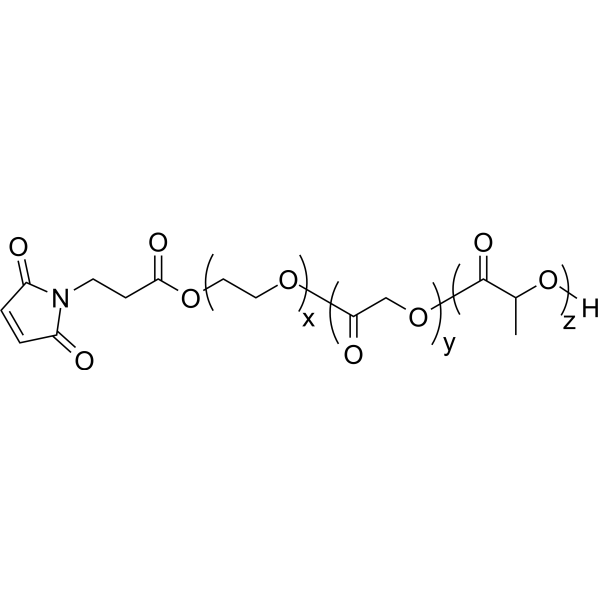
PLGA-PEG-MAL (20kDA-5.0kDA, LA:GA ratio 50:50) is a degradable amphiphilic polymer nanocarrier of poly (lactic acid-co-glycolic acid)-block-poly (ethylene glycol) (PLGA-PEG-Mal) that allows covalent modification of functional molecules. PLGA-PEG-MAL (20kDA-5.0kDA, LA:GA ratio 50:50) serves as a core polymer for nanoparticle synthesis, and also acts as a nanoparticle component for site-specific antibody conjugation to construct artificial antigen-presenting cells. PLGA-PEG-MAL (20kDA-5.0kDA, LA:GA ratio 50:50) is applicable for drug delivery-related research .
loading...
    loading...
Cat. No.: HY-149465
CAS No.: 2298391-60-1
Research Areas:  

Neurological Disease Cancer

STF-1623 is a highly potent, selective, cell-impermeable non-covalent ENPP1 inhibitor, with IC50 values of 0.6 nM and 800 nM against human ENPP1 and ENPP3, respectively. STF-1623 inhibits the hydrolysis of extracellular cGAMP by ENPP1, elevates intratumoral cGAMP levels, and indirectly enhances local cGAS-STING signaling and anti-tumor immunity in tumors. STF-1623 exhibits target-dependent retention in ENPP1-highly expressing tumors, while it undergoes rapid clearance in systemic circulation, and can penetrate into the CSF and brain parenchyma. STF-1623 can be used in studies related to breast cancer, pancreatic cancer, colorectal cancer, glioblastoma, and tumor immunology .
loading...
    loading...
Cat. No.: HY-149933
CAS No.: 871978-21-1
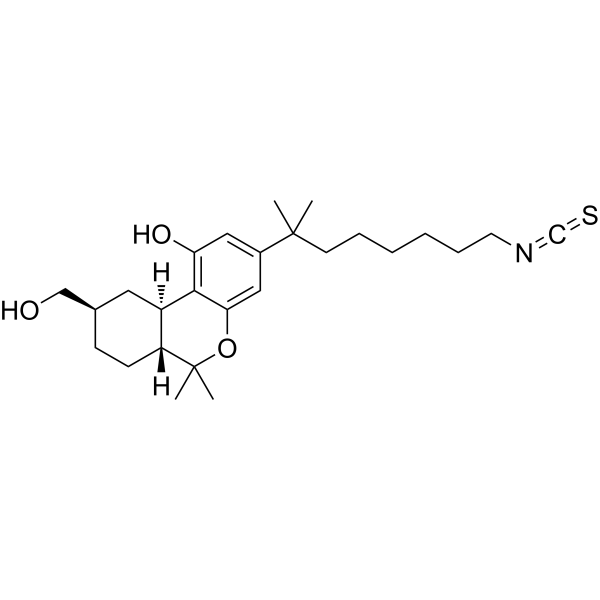
AM841 is a cannabinoid superagonist and a covalent, irreversible full agonist of CB1. AM841 can activate peripheral CB1 receptors to reduce excitatory neurotransmission and GI smooth muscle contractility, and inhibit synaptic transmission. AM841 is peripherally restricted at low doses in mice, with extremely low brain penetration, potently inhibits gastrointestinal motility, and can reverse acute stress-induced hyperaccelerated gastrointestinal transit; at high doses, it can produce the classic tetrad of central cannabinoid phenotypes (analgesia, catalepsy, hypothermia, decreased spontaneous activity). AM841 can improve intestinal inflammation in mouse colitis models. AM841 induces transient stress-induced hyperthermia. AM841 can be used for research on gastrointestinal motility disorders and colitis .
loading...
    loading...

