
202 Results for "

Osteosarcoma

" in MedChemExpress (MCE) Product Catalog:
Products (202)

202 Results for "Osteosarcoma" in MCE Product Catalog:

Cat. No.: HY-183980
Research Areas:  

Cancer

MJ-NR-27 is a bifunctional small molecule of ribonuclease-targeting chimera (RIBOTAC) that targets NRAS mRNA containing a G-quadruplex structure. MJ-NR-27 uses RNase L ligand 3 (HY-177030) as the RNase L ligand, RNA binder 4 (HY-183981) as the RNA binder, and Bis-PEG3-acid (HY-126891) as the linker. MJ-NR-27 achieves target RNA degradation by recruiting ribonuclease RNase L, and significantly induces morphological changes in tumor cells. MJ-NR-27 can be used in cancer research .
loading...
    loading...
Cat. No.: HY-151500
CAS No.: 3026599-90-3
Purity:  99.20%
Research Areas:  

Metabolic Disease

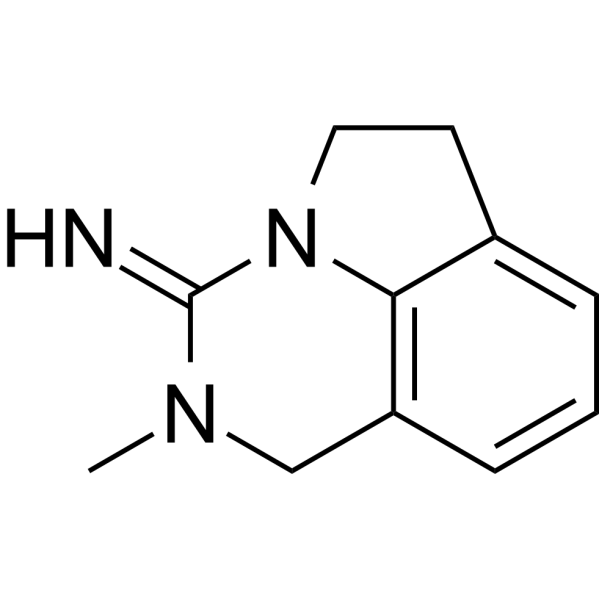
JBSNF-00002 free base is an orally active small molecule inhibitor of the tricyclic nicotinamide N-methyltransferase (NNMT) with IC50 values for human, mouse and monkey sources of NNMT of 33, 210 and 190 nM respectively. JBSNF-00002 free base can reduce endogenous MNA levels in U2OS osteosarcoma cells, with its EC50 being 2.5 μM. JBSNF-00002 free base exhibits significant anti-obesity and anti-diabetic activities in the diet-induced obesity (DIO) model. JBSNF-00002 free base can be used for the study of metabolic diseases such as obesity, type 2 diabetes and non-alcoholic fatty liver disease .
loading...
    loading...
Cat. No.: HY-171656
CAS No.: 946378-12-7
G721-0282 is an orally active CHI3L1 inhibitor. G721-0282 can reduce the expression of inflammatory proteins and cytokines. G721-0282 inhibits the activation of the NF-κB signaling pathway. G721-0282 inhibits neuroinflammation and reduces anxious behavior. G721-0282 significantly inhibits the proliferation of osteosarcoma (OS) cells by suppressing the STAT3 signaling pathway. G721-0282 induces OS cell apoptosis by upregulating pro-apoptotic protein levels and downregulating anti-apoptotic protein levels. G721-0282 can be used for researches on neuroinflammatory conditions and cancer .
loading...
    loading...
Cat. No.: HY-17509S
CAS No.: 2012598-48-8
Synonyms: SC 046-d3; SC 46-d3; SC 59046-d3
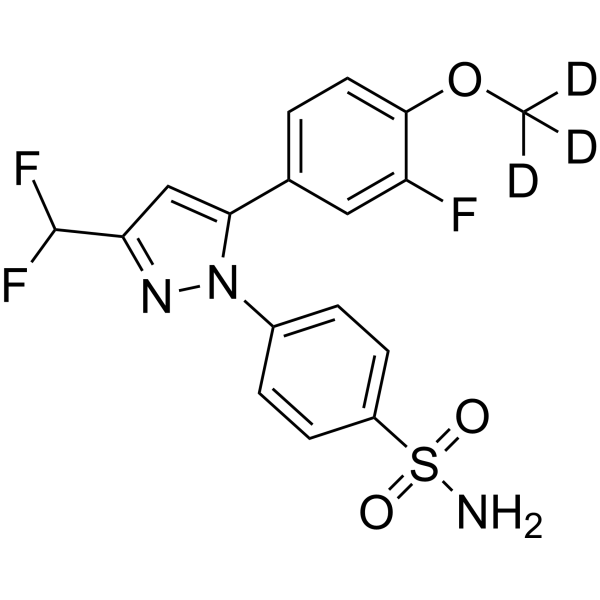
Deracoxib-d3 (SC 046-d3; SC 59046-d3) is the deuterium labeled Deracoxib (HY-17509). Deracoxib, an orally active COX-2 inhibitor, is a veterinary nonsteroidal anti-inflammatory agent used exclusively in dogs. Deracoxib inhibits the COX-2 enzyme to reduce the production of prostaglandins, effectively controlling pain and inflammation after canine soft tissue surgery. Deracoxib reduces the inhibition of COX-1 and lowers the risk of gastrointestinal side effects. Deracoxib induces tumor cell cycle arrest and apoptosis, and shows anti-tumor activity in canine osteosarcoma, breast tumors and bladder transitional cell carcinomas.
loading...
    loading...
Cat. No.: HY-182539
CAS No.: 1202877-06-2
Target:  

CGRP Receptor

Research Areas:  

Others Neurological Disease

DD04107 is a neuronal exocytosis inhibitor with a rat Syt1-C2B domain binding Kd of 2.4 μM. DD04107 interferes with synaptobrevin-syntaxin-SNAP-25 complex formation and Syt1-SNARE complex interaction to block α-calcitonin gene-related peptide (α-CGRP) exocytotic release from primary sensory neurons. DD04107 blocks inflammatory ion channel recruitment to nociceptor plasma membranes. DD04107 can be used for the research of chronic inflammatory pain, neuropathic pain, osteosarcoma pain, chemotherapy-induced peripheral neuropathy, diabetic neuropathy, inflammatory pain .
loading...
    loading...
Cat. No.: HY-N1408
CAS No.: 22255-22-7
Synonyms: trans-trismethoxy Resveratrol; (E)-Resveratrol trimethyl ether; trans-3,5,4'-Trimethoxystilbene
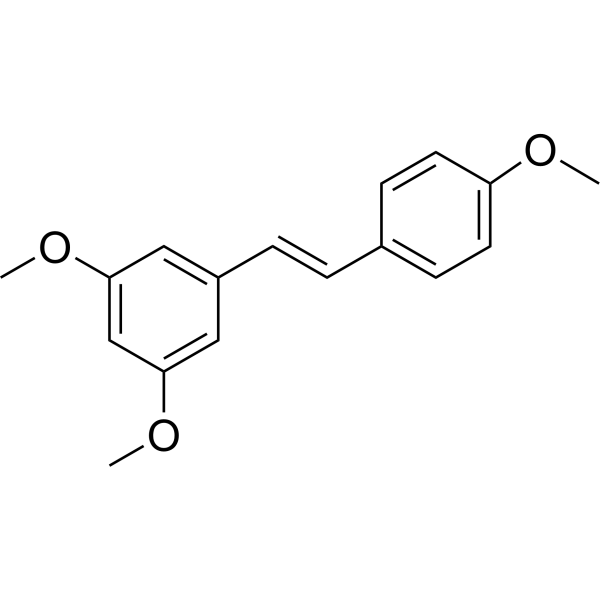
Trans-Trimethoxyresveratrol (trans-trismethoxy Resveratrol; (E)-Resveratrol trimethyl ether; trans-3,5,4'-Trimethoxystilbene) is an orally active natural derivative of Resveratrol (HY-16561). Trans-Trimethoxyresveratrol has an enhanced anticancer profile compared to Resveratrol, exhibiting higher potency than resveratrol, with improved cancer cell proliferation inhibition, induction of cell cycle arrest, decreased metastasis, and increased apoptosis. Trans-Trimethoxyresveratrol causes microtubule disassembling and tubulin depolymerization and exerts anti-angiogenic effects through VEGFR2. Trans-Trimethoxyresveratrol can be used for the studies of anti-angiogenic and anti-cancer (such as non-small cell lung cancer and osteosarcoma) .
loading...
    loading...
Cat. No.: HY-P990208
Anti-Mouse IL-9 Antibody (9C1) is an anti-mouse IL-9 IgG2a monoclonal antibody. Anti-Mouse IL-9 Antibody (9C1) can reduce the activation of NF-κB signaling pathway and decrease the infiltration of inflammatory cells. Anti-Mouse IL-9 Antibody (9C1) effectively reduces Th9 cell-mediated allergic reactions and anti-tumor effects. Anti-Mouse IL-9 Antibody (9C1) can be used for researches on inflammation, infection conditions and cancer such as parasitic infections, allergic reactions, breast cancer and osteosarcoma .
loading...
    loading...
Cat. No.: HY-W703540
CAS No.: 1794780-24-7
Synonyms: SC 046-d4; SC 46-d4; SC 59046-d4
Deracoxib-d4 (SC 046-d4; SC 59046--d4) is deuterium labeled Deracoxib (HY-17509). Deracoxib, an orally active COX-2 inhibitor, is a veterinary nonsteroidal anti-inflammatory agent used exclusively in dogs. Deracoxib inhibits the COX-2 enzyme to reduce the production of prostaglandins, effectively controlling pain and inflammation after canine soft tissue surgery. Deracoxib reduces the inhibition of COX-1 and lowers the risk of gastrointestinal side effects. Deracoxib induces tumor cell cycle arrest and apoptosis, and shows anti-tumor activity in canine osteosarcoma, breast tumors and bladder transitional cell carcinomas.
loading...
    loading...
Cat. No.: HY-12238R
CAS No.: 1127442-82-3
Synonyms: endo-IWR 1 (Standard); IWR-1-endo (Standard)
IWR-1 (Standard) is the analytical standard of IWR-1 (HY-12238). This product is intended for research and analytical applications. IWR-1 (IWR-1-endo) is a tankyrase inhibitor targeting Wnt/β-catenin (IC50 = 180 nM). IWR-1 compromises critical steps of the canonical Wnt signaling, namely translocation of β-catenin to the nucleus and subsequent TCF/LEF activation and expression of Wnt/β-catenin downstream targets. IWR-1 promotes β-catenin phosphorylation by promoting stability of Axin-scaffolded destruction complexes. IWR-1 can be studied in research for anti-tumor purposes, and diseases such as osteosarcoma, colorectal cancer and psoriasis .
loading...
    loading...
Cat. No.: HY-19876
CAS No.: 935481-06-4
Synonyms: Debio-0827
PL37 (Debio-0827) is an orally active, blood-brain barrier permeable dual enkephalinase inhibitor. PL37 inhibits aminopeptidase N, neprilysin, and metalloproteases, thereby blocking the degradation of endogenous enkephalins, elevating enkephalin levels, and activating peripheral μ- and δ-opioid receptors. PL37 induces mitochondrial dysfunction, mitophagy, and apoptosis, inhibits endothelial cell proliferation, migration, invasion, and tube formation, and suppresses hemangioma tumor growth and angiogenesis. PL37 can be used in research related to peripheral neuropathic pain, osteosarcoma-induced hyperalgesia, painful diabetic neuropathy, migraine, bone cancer pain, neuroinflammatory pain, and infantile hemangioma .
loading...
    loading...
Cat. No.: HY-N3387
CAS No.: 30508-27-1
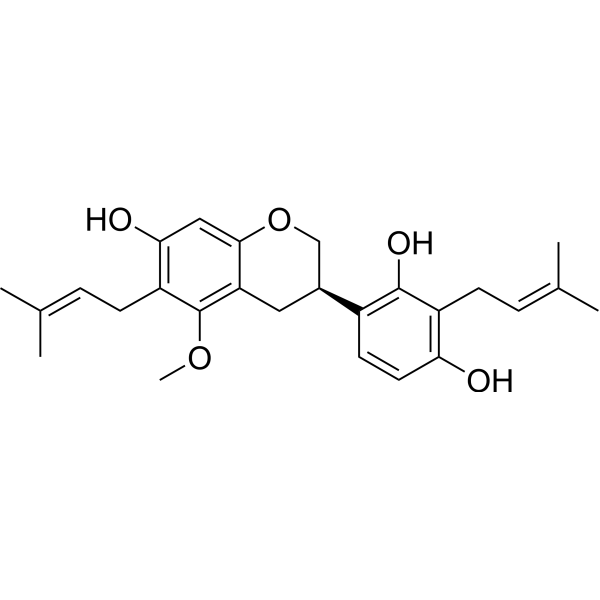
Licoricidin (LCD) is isolated from Glycyrrhiza uralensis Fisch, possesses anti-cancer activities. Licoricidin (LCD) inhibit SW480 cells (IC50=7.2 μM) by inducing cycle arrest, apoptosis and autophagy, and is a potential chemopreventive or chemotherapeutic agent against colorectal cancer . Licoricidin (LCD) inhibits Lung Metastasis by inhibition of tumor angiogenesis and lymphangiogenesis as well as changes in the local microenvironment of tumor tissues the anticarcinogenic effect . Licoricidin enhanced gemcitabine-induced cytotoxicity in Osteosarcoma (OS) cells by inactivation of the Akt and NF-κB pathways in vitro and in vivo . Licoricidin blocks UVA-induced photoaging via ROS scavenging, limits the activity of MMP-1, it can be considered as an active ingredient in new topically applied anti-ageing formulations .
loading...
    loading...
Cat. No.: HY-159756
Target:  

Drug Isomer c-Myc

Research Areas:  

Cancer

KI-MS2-008b is the enantiomer of KI-MS2-008 (HY-159756B). KI-MS2-008 is a selective Max binder. KI-MS2-008 exhibits anticancer activity against Myc-dependent cancers .
loading...
    loading...
Cat. No.: HY-165740
CAS No.: 65988-71-8
Synonyms: Disialoganglioside GD2
Target:  

Apoptosis

Research Areas:  

Cancer

Ganglioside GD2 (Disialoganglioside GD2) is a tumor-associated antigen. Ganglioside GD2 shows limited expression in normal tissues but is overexpressed in multiple tumor types, and thus can serve as a target in cancer. Ganglioside GD2 is associated with tumor development and malignant phenotypes, and its mechanism of action relies on enhancing cell proliferation, motility, migration, adhesion and invasion, with specific effects depending on the tumor type .
loading...
    loading...
Cat. No.: HY-12238G
CAS No.: 1127442-82-3
Synonyms: endo-IWR 1 (GMP); IWR-1-endo (GMP)
IWR-1 (IWR-1-endo) (GMP) is the IWR-1 (HY-12238) produced by using GMP guidelines. GMP small molecules work appropriately as an auxiliary reagent for cell therapy manufacture. IWR-1 (IWR-1-endo) is a tankyrase inhibitor targeting Wnt/β-catenin (IC50 = 180 nM). IWR-1 compromises critical steps of the canonical Wnt signaling, namely translocation of β-catenin to the nucleus and subsequent TCF/LEF activation and expression of Wnt/β-catenin downstream targets. IWR-1 promotes β-catenin phosphorylation by promoting stability of Axin-scaffolded destruction complexes. IWR-1 can be studied in research for anti-tumor purposes, and diseases such as osteosarcoma, colorectal cancer and psoriasis .
loading...
    loading...
Cat. No.: HY-187521
CAS No.: 102537-38-2
Target:  

c-Myc Topoisomerase

Research Areas:  

Cancer

MYCMI-7 hydrobromide is a potent and selective MYC/MYCN inhibitor, with a Kd of 4 μM for MYC and an IC50 of 10 μM for topoisomerase IIα (Topoisomerase IIα). MYCMI-7 hydrobromide binds directly to MYC, selectively inhibits the interactions of MYC:MAX and MYCN:MAX, reduces MYC-driven transcription levels, induces MYC/MYCN protein degradation, and blocks the binding of MYC to chromatin, thereby inducing tumor cell growth arrest, apoptosis and reducing cell viability, while only inducing G1 phase growth arrest in normal cells. MYCMI-7 hydrobromide can be used in research related to MYC-driven acute myeloid leukemia and breast cancer, MYCN-amplified neuroblastoma, glioblastoma, Burkitt's lymphoma, melanoma, colon cancer, osteosarcoma, cervical cancer and histiocytic lymphoma .
loading...
    loading...
Cat. No.: HY-N0484R
CAS No.: 2586-96-1
Liensinine (Standard) is the analytical standard of Liensinine (HY-N0484). This product is intended for research and analytical applications. Liensinine is a bisbenzylisoquinoline alkaloid. By inhibiting the PI3K/AKT and JNK/p38-MAPK signaling pathways, Liensinine suppresses autophagy and apoptosis, clears , and exerts anti-inflammatory, antioxidant and neuroprotective effects. Liensinine activates AMPK and inhibits the expression of HIF-1α and VEGF, thereby suppressing angiogenesis. Liensinine exerts anti-tumor effects through ROS-mediated inhibition of the JAK2/STAT3 signaling pathway. Liensinine can be used for the research of diseases such as Alzheimer's disease, hepatocellular carcinoma, osteosarcoma, sepsis-induced organ injury and stroke .
loading...
    loading...
Cat. No.: HY-N17440
CAS No.: 15127-94-3
2-Methoxyjuglone, a naphthoquinone, is an apoptosis inducer. 2-Methoxyjuglone activates caspase-9 and caspase-3 via the mitochondrial cytochrome c-dependent intrinsic apoptosis cascade. 2-Methoxyjuglone increases pro-apoptotic Bax levels, decreases anti-apoptotic Bcl-2 levels, and promotes mitochondrial cytochrome c release. 2-Methoxyjuglone induces apoptosis morphological features, early apoptosis, S-phase and G2/M-phase cell cycle arrest, and DNA double-strand breaks. 2-Methoxyjuglone exerts activity against Gram-positive bacteria, pathogenic fungi, and phytopathogenic fungi. 2-Methoxyjuglone can be used for the research of hepatocellular carcinoma, osteosarcoma, colon adenocarcinoma, breast cancer, fungal infection, bacterial infection .
loading...
    loading...
Cat. No.: HY-P99757
CAS No.: 2278244-14-5
Synonyms: Hu3F8-BsAb

Target:  

CD3

Research Areas:  

Cancer

Nivatrotamab (Hu3F8-BsAb) is a bispecific antibody targeting GD2 and CD3, with KD values of 5.8 nM and 194 nM, respectively. Nivatrotamab redirects T cells to tumor sites and activates immune synapses, thereby mediating antibody-dependent T cell-mediated cytotoxicity. Nivatrotamab induces specific tumor cytotoxicity, stimulates the release of Th1 cytokines and promotes immune cell infiltration into tumors. In addition, its Fc segment deglycosylation design effectively prevents complement activation and cytokine storm. Nivatrotamab can be widely used in research related to various solid tumors, including melanoma, neuroblastoma, osteosarcoma, small cell lung cancer, breast cancer, Ewing's sarcoma, colon cancer, ovarian cancer and rhabdomyosarcoma .
loading...
    loading...
Cat. No.: HY-15476
CAS No.: 1246086-78-1
Purity:  99.42%
VU 0364439 is a mGlu4 positive allosteric modulator with an EC50 of 19.8 nM. VU 0364439 modulates the GRM4/CBX4/HIF-1α signaling pathway by enhancing GRM4-CBX4 interaction. VU 0364439 can be used for the research of parkinson’s disease .
loading...
    loading...
Cat. No.: HY-181933
CAS No.: 339025-18-2
Target:  

Clathrin Dynamin

Research Areas:  

Infection

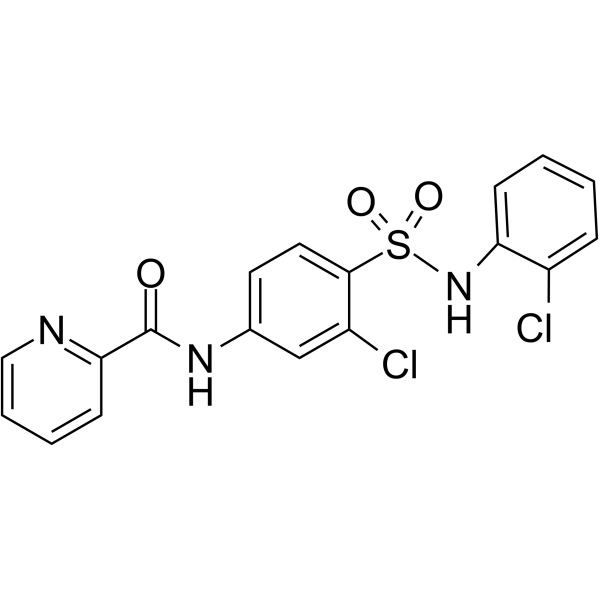
Clathrin-IN-5 (Compound 9) is a Clathrin N-terminal domain-Amphiphysin protein-protein interaction inhibitor with an IC50 of 2.77 μM. Clathrin-IN-5 inhibits the protein-protein interaction between the clathrin N-terminal domain and amphiphysin. Clathrin-IN-5 inhibits clathrin-mediated endocytosis with an IC50 of 4.6 μM. Clathrin-IN-5 inhibits the GTPase activity of Dynamin I with an IC50 of 29.7 μM .
loading...
    loading...

