

202 Results for "

Osteosarcoma

" in MedChemExpress (MCE) Product Catalog:
Products (202)

202 Results for "Osteosarcoma" in MCE Product Catalog:

Cat. No.: HY-P992430
OI-3 is a monoclonal antibody targeting CD146 (MCAM). OI-3 specifically binds to CD146 on the surface of human mesothelioma cells and undergoes endocytosis; both chimeric (chOI-3) and murine (mOI-3) variants possess this activity. When conjugated with 212Pb to form 212Pb-TCMC-OI-3, OI-3 acts as a cytotoxic agent that delivers α-emitting radionuclides to induce targeted cytotoxicity. OI-3 can be used in research related to malignant peritoneal mesothelioma .
loading...
    loading...
Cat. No.: HY-183538
Necroptosis inducer 2 is a necroptosis inducer and copper chelator. Necroptosis inducer 2 chelates intracellular free copper ions, disrupts redox homeostasis, elevates ROS levels, disrupts mitochondrial membrane potential, and induces cancer cell necroptosis. Necroptosis inducer 2 upregulates the necroptosis markers p-MLKL and p-RIP3 expression. Necroptosis inducer 2 exhibits anti-tumor activity in mice. Necroptosis inducer 2 can be used for the research of cancer, such as triple-negative breast cancer .
loading...
    loading...
Cat. No.: HY-119715
CAS No.: 486414-35-1
Target:  

CDK Apoptosis

Research Areas:  

Inflammation/Immunology Cancer

AG-012986 is a pan-CDK inhibitor with Ki values of 44 nM (CDK1), 9.2 nM (CDK4), 94 nM (CDK2), and IC50 values of 22 nM (CDK5), 4 nM (CDK9). AG-012986 causes apoptosis of T-cells by targeting upstream kinases in the p38 Mitogen-activated protein kinase (MAPK) pathway and impairing cellular survival. AG-012986 induces cell cycle arrest, retinoblastoma protein hypophosphorylation, and reduces Ki-67 expression. AG-012986 exerts antiproliferative activity in tumor cells, demonstrates antitumor efficacy in human xenograft models, and causes retinal and peripheral neurotoxicity, plus immune cell toxicity. AG-012986 can be used for the research of colon carcinoma, non-small cell lung carcinoma, lung carcinoma, breast carcinoma, ovarian tumor, pancreatic carcinoma, osteosarcoma, lymphoma, leukemia, retinotoxicity .
loading...
    loading...
Cat. No.: HY-182470
CAS No.: 486414-32-8
Target:  

CDK

AG-012986 (dihydrochloride) is a pan-CDK inhibitor with Ki values of 44 nM (CDK1), 9.2 nM (CDK4), 94 nM (CDK2), and IC50 values of 22 nM (CDK5), 4 nM (CDK9). AG-012986 (dihydrochloride) causes apoptosis of T-cells by targeting upstream kinases in the p38 Mitogen-activated protein kinase (MAPK) pathway and impairing cellular survival. AG-012986 (dihydrochloride) induces cell cycle arrest, retinoblastoma protein hypophosphorylation, and reduces Ki-67 expression. AG-012986 (dihydrochloride) exerts antiproliferative activity in tumor cells, demonstrates antitumor efficacy in human xenograft models, and causes retinal and peripheral neurotoxicity, plus immune cell toxicity. AG-012986 (dihydrochloride) can be used for the research of colon carcinoma, non-small cell lung carcinoma, lung carcinoma, breast carcinoma, ovarian tumor, pancreatic carcinoma, osteosarcoma, lymphoma, leukemia, retinotoxicity .
loading...
    loading...
Cat. No.: HY-N0837R
CAS No.: 60-70-8
Synonyms: NSC17821 (Standard); NSC23880 (Standard)
Veratramine (NSC17821; NSC23880) (Standard) is the analytical standard of Veratramine (HY-N0837). This product is intended for research and analytical applications. Veratramine (NSC17821; NSC23880) is an orally active inhibitor of the PI3K/Akt/mTOR signaling pathway and a SIGMAR1 modulator. Veratramine induces autophagic apoptosis of tumor cells, arrests the cell cycle at the G0/G1 phase, and inhibits epithelial-mesenchymal transition (EMT)-related proteins to reduce tumor migration. Veratramine reduces spinal cord and sciatic nerve pathological damage in a neuropathy model by inhibiting SIGMAR1 binding to NMDAR and phosphorylation of NMDAR Ser896. Veratramine has anti-tumor proliferation, apoptosis induction, anti-inflammatory and neuroprotective activities, and can be used in the study of cancers such as liver cancer and osteosarcoma, as well as diabetic peripheral neuropathy .
loading...
    loading...
Cat. No.: HY-N21985
CAS No.: 1914972-40-9
Camptothecoside is a novel indole glycoside isolated from the fruits of Camptotheca acuminata, and it serves as a biosynthetic intermediate of camptothecin. Camptothecoside shares the same four-ring conjugated system (rings A-D) as camptothecin, but it has a ketal glycoside structure (ring E) at the C-21 position, with a β-D-glucopyranosyl group linked to the C-21 position. Camptothecoside can be used in studies on camptothecin biosynthesis and natural product chemistry .
loading...
    loading...
Cat. No.: HY-178861
Research Areas:  

Cancer

dCDK9-202 is a CDK9 PROTAC degrader with a DC50 of 3.5 nM. dCDK9-202 induces CDK9 degradation via the ubiquitin-proteasome system. dCDK9-202 inhibits the growth of cancer cells in vitro and suppresses tumor growth in mouse xenograft models. dCDK9-202 is applicable for cancer-related research .
loading...
    loading...
Cat. No.: HY-181072
POLRMT-IN-4 is a photoactivated mitochondrial RNA polymerase (POLRMT) inhibitor. POLRMT-IN-4 can be liberated from the photoactivatable prodrug upon irradiation, enables spatiotemporally precise inhibition and localized tissue selectivity. POLRMT-IN-4 disrupts mitochondrial transcription, impairs oxidative phosphorylation, and suppresses cancer cell proliferation. POLRMT-IN-4 can be used in research on various cancers, such as pancreatic cancer .
loading...
    loading...
Cat. No.: HY-182764
Target:  

CDK

Research Areas:  

Cancer

CDK11-IN-1 is an orally active cyclin-dependent kinase 11 (CDK11) inhibitor with an IC50 of 4 nM, and it exhibits high selectivity against other kinases including CDK7 and CDK9. CDK11-IN-1 inhibits tumor growth in lung cancer xenograft models. CDK11-IN-1 can be used for lung cancer research .
loading...
    loading...
Cat. No.: HY-182764A
Target:  

CDK

Research Areas:  

Cancer

CDK11-IN-1 hydrochloride is an orally active cyclin-dependent kinase 11 (CDK11) inhibitor with an IC50 of 4 nM, and it exhibits high selectivity against other kinases including CDK7 and CDK9. CDK11-IN-1 hydrochloride inhibits tumor growth in lung cancer xenograft models. CDK11-IN-1 hydrochloride can be used for lung cancer research .
loading...
    loading...
Cat. No.: HY-N7151
CAS No.: 108354-13-8
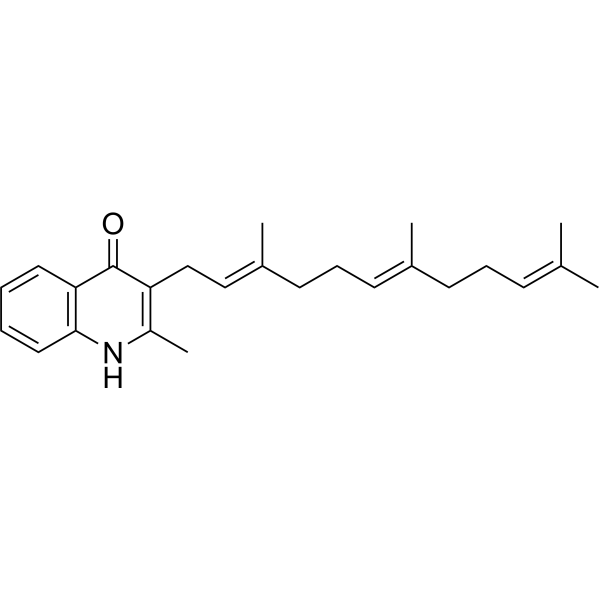
Aurachin D is an antibiotic and selective cytochrome bd oxidase inhibitor. Aurachin D exhibits inhibitory effects against Gram-positive bacteria and a small number of fungi, with an IC50 value of 0.1 μM against Escherichia coli and an IC50 value ranging from 0.13 to 33 μM against Mycobacterium tuberculosis. Aurachin D binds to and inhibits cytochrome bd oxidase, thereby blocking the electron transfer process, disrupting the respiratory chain and energy metabolism of pathogens. Aurachin D can be used in research related to leishmaniasis, malaria, Chagas disease, African trypanosomiasis, and tuberculosis [2] .
loading...
    loading...
Cat. No.: HY-N7151R
CAS No.: 108354-13-8
Aurachin D (Standard) is the analytical standard of Aurachin D (HY-N7151). This product is intended for research and analytical applications. Aurachin D is an antibiotic and selective cytochrome bd oxidase inhibitor. Aurachin D exhibits inhibitory effects against Gram-positive bacteria and a small number of fungi, with an IC50 value of 0.1 μM against Escherichia coli and an IC50 value ranging from 0.13 to 33 μM against Mycobacterium tuberculosis. Aurachin D binds to and inhibits cytochrome bd oxidase, thereby blocking the electron transfer process, disrupting the respiratory chain and energy metabolism of pathogens. Aurachin D can be used in research related to leishmaniasis, malaria, Chagas disease, African trypanosomiasis, and tuberculosis [2] .
loading...
    loading...
Cat. No.: HY-181449
CAS No.: 1644666-57-8
Research Areas:  

Inflammation/Immunology

CAY10729 (Compound 21) is a selective PAD2 inhibitor. CAY10729 inhibits neutrophil extracellular trap formation .
loading...
    loading...
Cat. No.: HY-183102
CAS No.: 384860-40-6
Target:  

Aurora Kinase Apoptosis

Research Areas:  

Cancer

ATC12 is a Aurora-A kinase inhibitor. ATC12 binds to Aurora-A and competes with TPX2 for binding to disrupt the Aurora-A/TPX2 interaction. ATC12 inhibits cancer cell proliferation, induces apoptosis and cellular senescence. ATC12 can be used in the research of breast cancer .
loading...
    loading...
Cat. No.: HY-N15657
CAS No.: 36413-91-9
Geiparvarin is an anticancer agent and an inhibitor of MAO-B (pIC50 = 6.84 μM). Geiparvarin exerts anti-tumor effects by downregulating COX2 expression and inhibiting angiogenesis. Geiparvarin blocks the cell cycle at the G1 phase and induces apoptosis of cancer cells. Geiparvarin has anti-microtubule activity and destroys the cytoskeleton to exert anti-proliferative effects. Geiparvarin has research significance for lung cancer, leukemia, and breast cancer .
loading...
    loading...
Cat. No.: HY-N11231
CAS No.: 7176-02-5
Fucoxanthinol, a carotenoid, is a deacetylated Fucoxanthin (HY-N2302) metabolite with oral activity, and inhibits rat pancreatic lipase with an IC50 of 764 nM. Fucoxanthinol reduces expression of Bcl-2, Bcl-xL, survivin, XIAP, cIAP2, cyclin D1, cyclin D2, cyclin E, CDK4, CDK6, β-catenin, JunD, PPARγ, and induces GADD45α expression. Fucoxanthinol activates caspase-3, caspase-8, caspase-9, Nrf2/Keap1/ARE pathway, and inhibits activation of Akt, NF-κB, AP-1, PDPK1, GSK3β phosphorylation. Fucoxanthinol induces apoptosis, G0/G1 cell cycle arrest, inhibits cancer cell viability, proliferation, migration, invasiveness, tumour growth, adipocyte differentiation, oxidative stress, neurotoxicity, triglyceride absorption, angiogenesis, and obesity-induced inflammation. Fucoxanthinol can be used for the research of osteosarcoma, leukemia, lymphoma, adult T-cell leukemia, prostate cancer, colon cancer, breast cancer, hypertriglyceridaemia, Alzheimer’s disease, Parkinson’s disease, obesity, insulin resistance, malignant melanoma, and type II diabetes .
loading...
    loading...
Cat. No.: HY-109569
CAS No.: 11032-49-8
Vitamin K2 is an orally active proliferation inhibitor. Vitamin K2 induces Autophagy and Apoptosis. Vitamin K2 reduces the levels of proinflammatory cytokines (such as IL-1β, TNF-α, and IL-6). Vitamin K2 inhibits cell growth in leukemia cells. Vitamin K2 can be used for the research of involutional osteoporosis, non-alcoholic fatty liver disease, ulcerative colitis, acute myeloid leukemia, myelodysplastic syndromes, and hepatocellular carcinoma .
loading...
    loading...
Cat. No.: HY-P4821
CAS No.: 83139-29-1
Research Areas:  

Metabolic Disease Cancer

PTH (1-34) amide human is a type 1 PTH/PTHrP receptor agonist. PTH (1-34) amide human activates adenylate cyclase and phospholipase C pathways, thereby mediating mineral ion homeostasis and bone metabolism regulation. PTH (1-34) amide human increases serum calcium, decreases serum phosphorus, regulates renal excretion, while inducing the inhibition of endogenous PTH (1-84) and the increase of 1,25-dihydroxyvitamin D2 and bone resorption. PTH (1-34) amide human stimulates phosphatidylcholine hydrolysis via phospholipase D mediation, and its hypercalcemic effect is inhibited by human PTH-(7-84). PTH (1-34) amide human can be used in the research of diseases related to humoral hypercalcemia of malignancy .
loading...
    loading...
Cat. No.: HY-153939S
Purity:  99.57%
Synonyms: RG7388-d3-1
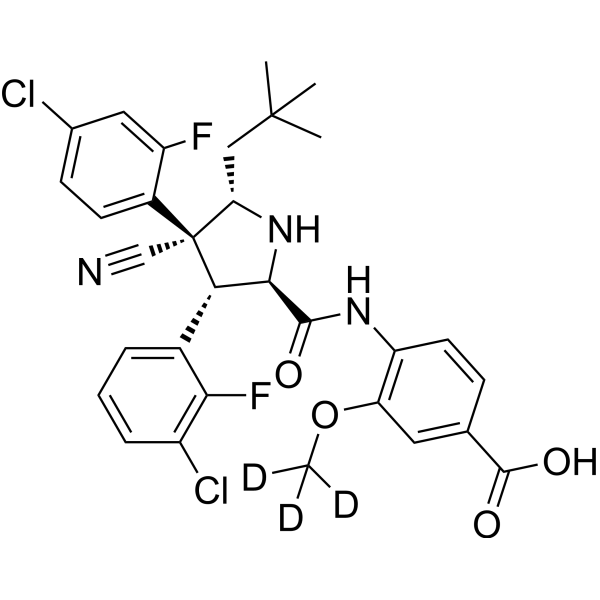
Idasanutlin-d3-1 (RG7388-d3-1) is the deuterated-labeled Idasanutlin (HY-15676). Idasanutlin (RG7388) is an orally bioavailable MDM2 inhibitor with an IC50 of 6 nM. Idasanutlin disrupts MDM2-p53 binding, stabilizes and activates p53, triggering cell cycle arrest, apoptosis, and reduced cancer cell viability. Idasanutlin reduces EGFR protein expression and phosphorylation, suppresses downstream SHP2, MEK1/2, ERK1/2, AKT, mTOR, p70(S6K1), and S6 signaling. Idasanutlin induces mitochondrial ROS production, drives p38 MAPK phosphorylation, upregulates NOXA, and mediates caspase-3-dependent apoptosis and gasdermin E-mediated pyroptosis. Idasanutlin can be used for the research of TP53-mutant non-small cell lung cancer, T-cell acute lymphoblastic leukemia, colorectal carcinoma, melanoma, diffuse large B-cell lymphoma, mantle cell lymphoma, non-Hodgkin lymphoma, severe fever with thrombocytopenia syndrome, neuroblastoma, acute lymphoblastic leukemia, relapsed or refractory acute myeloid leukemia, osteosarcoma, solid tumors, and hematological tumors .
loading...
    loading...
Cat. No.: HY-15676R
CAS No.: 1229705-06-9
Synonyms: RG7388 (Standard)
Idasanutlin (Standard) (RG7388 (Standard)) is the analytical standard of Idasanutlin (HY-15676). This product is intended for research and analytical applications. Idasanutlin (RG7388) is an orally bioavailable MDM2 inhibitor with an IC50 of 6 nM. Idasanutlin disrupts MDM2-p53 binding, stabilizes and activates p53, triggering cell cycle arrest, apoptosis, and reduced cancer cell viability. Idasanutlin reduces EGFR protein expression and phosphorylation, suppresses downstream SHP2, MEK1/2, ERK1/2, AKT, mTOR, p70(S6K1), and S6 signaling. Idasanutlin induces mitochondrial ROS production, drives p38 MAPK phosphorylation, upregulates NOXA, and mediates caspase-3-dependent apoptosis and gasdermin E-mediated pyroptosis. Idasanutlin can be used for the research of TP53-mutant non-small cell lung cancer, T-cell acute lymphoblastic leukemia, colorectal carcinoma, melanoma, diffuse large B-cell lymphoma, mantle cell lymphoma, non-Hodgkin lymphoma, severe fever with thrombocytopenia syndrome, neuroblastoma, acute lymphoblastic leukemia, relapsed or refractory acute myeloid leukemia, osteosarcoma, solid tumors, and hematological tumors .
loading...
    loading...

