

202 Results for "

Osteosarcoma

" in MedChemExpress (MCE) Product Catalog:
Products (202)

202 Results for "Osteosarcoma" in MCE Product Catalog:

Cat. No.: HY-17372R
CAS No.: 162011-90-7
Synonyms: MK 966 (Standard)
Target:  

Reference Standards COX

Research Areas:  

Inflammation/Immunology Cancer

Rofecoxib (Standard) is the analytical standard of Rofecoxib. This product is intended for research and analytical applications. Rofecoxib is a potent, specific and orally active COX-2 inhibitor, with IC50s of 26 and 18 nM for human COX-2 in human osteosarcoma cells and Chinese hamster ovary cells, with a 1000-fold selectivity for COX-2 over human COX-1 (IC50 > 50 μM in U937 cells and > 15 μM in Chinese hamster ovary cells).
loading...
    loading...
Cat. No.: HY-17372S
CAS No.: 544684-93-7
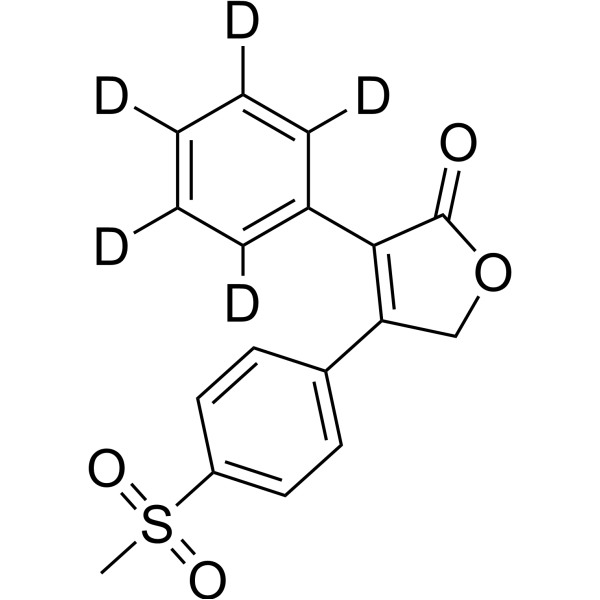
Rofecoxib-d5 is the deuterium labeled Rofecoxib. Rofecoxib is a potent, specific and orally active COX-2 inhibitor, with IC50s of 26 and 18 nM for human COX-2 in human osteosarcoma cells and Chinese hamster ovary cells, with a 1000-fold selectivity for COX-2 over human COX-1 (IC50 > 50 μM in U937 cells and > 15 μM in Chinese hamster ovary cells) .
loading...
    loading...
Cat. No.: HY-N19312
CAS No.: 28164-57-0
Diospyrin is a dinaphthoquinone anticancer agent with pro-apoptotic (apoptosis) activity, glutathione S-transferase (Glutathione S-transferase) inhibitory activity, and topoisomerase (Topoisomerase) I inhibitory activity. Diospyrin is present in the heartwood of various Diospyros plants and can be used for research on Ehrlich ascites carcinoma, acute myeloid leukemia, chronic myeloid leukemia, mammary adenocarcinoma, cervical epithelial carcinoma, malignant cutaneous melanoma, laryngeal epidermoid carcinoma, human osteosarcoma, and human lymphoblastic carcinoma .
loading...
    loading...
Cat. No.: HY-182746
Research Areas:  

Cancer

RG7388-PEG3-Click-F is a fluorinated analog of the MDM2 inhibitor RG7388 (HY-15676), with an IC50 of 16.8 nM against MDM2. [ 18F]RG7388-PEG3-Click-F exhibits high uptake and specificity in MDM2-expressing myeloma cells, and can be used for non-invasive assessment of MDM2 protein expression levels in tumors .
loading...
    loading...
Cat. No.: HY-127009
CAS No.: 68538-85-2
Synonyms: Levofolinic acid; Levofolene
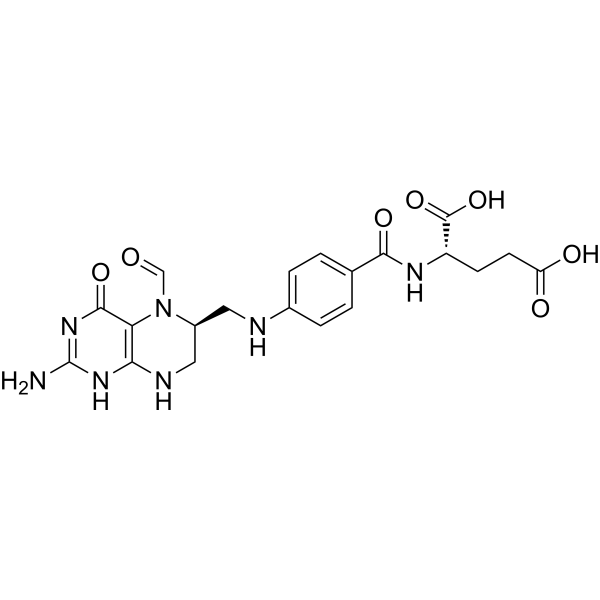
Levoleucovorin (Levofolinic acid; Levofolene) is the pharmacologically and orally active levoisomer of Folinic acid (HY-17556), a synthetic folate analogue. Levoleucovorin can inhibit LOXL2 with an IC50 of 68.81 μM. Levoleucovorin can inhibit cancer cells proliferation, migration and induce apoptosis. Levoleucovorin can be used as a rescue agent for high-dose Methotrexate (HY-14519). Levoleucovorin can reduce the frequency of embryonic malformations. Levoleucovorin can be used for the research of can and endocrinology, such as breast cancer and osteosarcoma .
loading...
    loading...
Cat. No.: HY-13777C
CAS No.: 131654-46-1
Synonyms: CGP 42446 disodium; CGP42446A disodium; ZOL 446 disodium
Target:  

Apoptosis

Research Areas:  

Cancer

Zoledronate (CGP 42446) disodium is a potent bisphosphonate that effectively inhibits osteoclastogenesis, reducing bone turnover and stabilizing the bone matrix. Zoledronate disodium has demonstrated notable effectiveness in managing Paget's disease of bone by suppressing metabolic activity and alleviating bone pain. Zoledronate disodium is being investigated in the ongoing ZiPP trial for its potential to prevent disease progression in patients with Paget's disease. Zoledronate disodium also exhibits diverse anti-tumor effects in osteosarcoma, further highlighting its multifunctional therapeutic applications.
loading...
    loading...
Cat. No.: HY-P991084

Target:  

PD-1/PD-L1

Research Areas:  

Cancer

TQB-2858 is a bifunctional fusion protein composed of a monoclonal antibody against PD-L1 fused with the extracellular domain of TGF-β receptor. TQB-2858 has a high affinity for PD-L1, TGF-β1, and TGF-β3 and exhibited high PD-L1 target occupancy. TQB-2858 can be used for the study of osteosarcoma and alveolar soft part sarcoma (ASPS) .
loading...
    loading...
Cat. No.: HY-172562
CAS No.: 3093583-69-5
Research Areas:  

Cancer

BTR2004 is a potent and selective BET family (BRD2/3/4) PROTAC degrader, with EC50 values of 46, 87, and 777 nM, respectively. By bridging BET family proteins and the CUL3-KLHL20 E3 ubiquitin ligase, BTR2004 forms a ternary complex in the nucleus, thereby mediating the degradation of target proteins via the ubiquitin-proteasome system. BTR2004 can be used in research related to prostate cancer, breast cancer, colorectal cancer, osteosarcoma, and hepatocellular carcinoma .
loading...
    loading...
Cat. No.: HY-N9684
CAS No.: 39941-51-0
Degalactotigonin is a saponin-selective inhibitor targeting the EGFR, GSK3β and Hedgehog/Gli1 pathways and can be isolated from Solanum nigrum (Solanum nigrum). Degalactotigonin inhibits EGFR phosphorylation and the downstream Akt/ERK signaling pathway, and at the same time inhibits the Hedgehog/Gli1 pathway through GSK3β inactivation, thereby inducing cancer cell apoptosis, arresting the cell cycle, and inhibiting migration and invasion. Degalactotigonin can be used in targeted research on malignant tumors such as pancreatic cancer and osteosarcoma .
loading...
    loading...
Cat. No.: HY-P99157
CAS No.: 1895083-75-6
Synonyms: Mab 8H9
Target:  

CD276/B7-H3

Research Areas:  

Neurological Disease Cancer

Omburtamab (Mab 8H9) is a mouse monoclonal immunoglobulin G1 (IgG1) antibody targeting B7-H3. Omburtamab specifically binds to the glycoprotein antigen B7-H3, which is widely expressed on the surface of tumor cells. As a targeting carrier for recombinant toxins, it delivers PE38 to inhibit cellular protein synthesis and induce cytotoxicity in antigen-expressing cancer cells. Omburtamab can be used in research related to glioma, breast cancer, osteosarcoma and neuroblastoma .
loading...
    loading...
Cat. No.: HY-D3415
CAS No.: 3030070-69-7
TOR-G4 is a Fluorescent probe that binds to G-quadruplex (G4) nucleic acid structures. TOR-G4 exhibits a unique fluorescence lifetime when bound to G4 compared to other structures, enabling sensitive discrimination between G4-bound and non-G4-bound states. TOR-G4 mainly colocalizes with RNA in the cytoplasm and nucleolus. TOR-G4 can be used to investigate the roles of RNA G4 in cells. TOR-G4 shows cytotoxicity against osteosarcoma cells .
loading...
    loading...
Cat. No.: HY-110368
CAS No.: 1883548-83-1
Target:  

CDK

Research Areas:  

Cancer

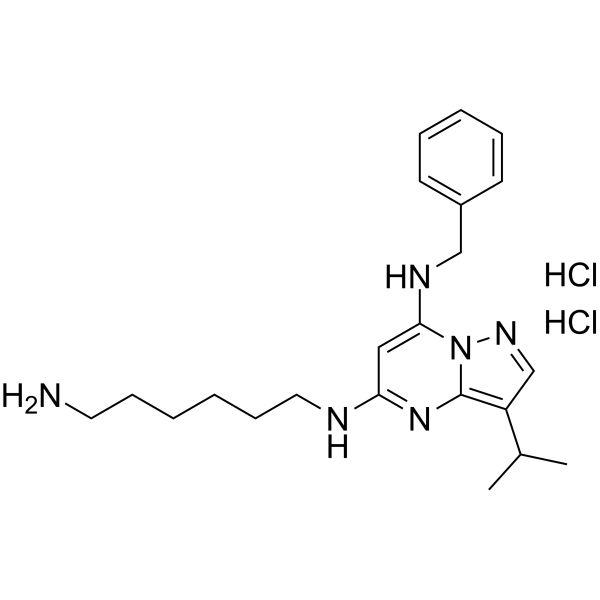
BS-181 dihydrochloride is a potent and selective CDK7 inhibitor (IC50=21 nM) than Seliciclib (HY-30237). BS-181 is also against CDK2, CDK5 and CDK9 with IC50 values of 880 nM, 3000 nM and 4200 nM, respectively (fails to block CDK1, 4 and 6). BS-181 dihydrochloride inhibits a panel of cancer cells growth (IC50=11.5 μM-37.3 μM) and induces cell apoptosis. BS-181 dihydrochloride has the potential for the research of cancer therapy .
loading...
    loading...
Cat. No.: HY-151500B
Purity:  95.64%
Research Areas:  

Metabolic Disease

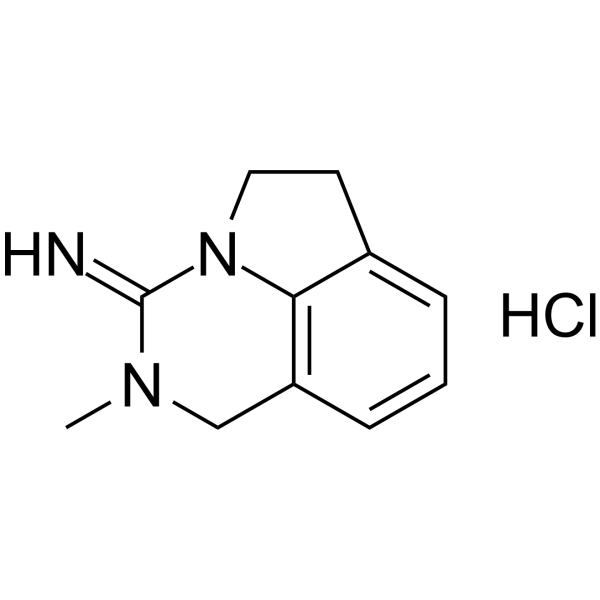
JBSNF-00002 hydrochloride is an orally active small molecule inhibitor of the tricyclic nicotinamide N-methyltransferase (NNMT) with IC50 values for human, mouse and monkey sources of NNMT of 33, 210 and 190 nM respectively. JBSNF-00002 hydrochloride can reduce endogenous MNA levels in U2OS osteosarcoma cells, with its EC50 being 2.5 μM. JBSNF-00002 hydrochloride exhibits significant anti-obesity and anti-diabetic activities in the diet-induced obesity (DIO) model. JBSNF-00002 hydrochloride can be used for the study of metabolic diseases such as obesity, type 2 diabetes and non-alcoholic fatty liver disease .
loading...
    loading...
Cat. No.: HY-151500C
Research Areas:  

Metabolic Disease

JBSNF-00002 is an orally active small molecule inhibitor of the tricyclic nicotinamide N-methyltransferase (NNMT) with IC50 values for human, mouse and monkey sources of NNMT of 33, 210 and 190 nM respectively. JBSNF-00002 can reduce endogenous MNA levels in U2OS osteosarcoma cells, with its EC50 being 2.5 μM. JBSNF-00002 exhibits significant anti-obesity and anti-diabetic activities in the diet-induced obesity (DIO) model. JBSNF-00002 can be used for the study of metabolic diseases such as obesity, type 2 diabetes and non-alcoholic fatty liver disease .
loading...
    loading...
Cat. No.: HY-B0730R
CAS No.: 109552-15-0
Pamidronate (disodium pentahydrate) (Standard) is the analytical standard of Pamidronate (disodium pentahydrate). This product is intended for research and analytical applications. Pamidronate disodium pentahydrate, the second-generation nitrogen-containing bisphosphonate, is an inhibitor of bone loss. Pamidronate disodium pentahydrate significantly inhibits subchondral bone loss in early osteoarthritis by upregulating the expression of osteoprotegerin in cartilage and subchondral bone, and inhibiting the expression of RANKL and MMP-9 in both tissues, as well as TLR-4 in cartilage, thereby alleviating cartilage degeneration. Additionally, Pamidronate disodium pentahydrate can inhibit the signaling of Wnt and β-catenin, and is applicable for research on osteoporosis and osteosarcoma .
loading...
    loading...
Cat. No.: HY-118912
CAS No.: 457937-39-2
BMH-9 (Compound Z54) is a modulator for nuclear receptor subfamily 2, group F, member 6 (NR2F6) (also known as nuclear orphan receptor Ear2) . BMH-9 is an activator for p53 signaling pathway through interaction with DNA. BMH-9 inhibits proliferation of human cancer cells, exhibits antitumor efficacy in NOD-SCID mouse models .
loading...
    loading...
Cat. No.: HY-151500A
Purity:  99.47%
Research Areas:  

Metabolic Disease

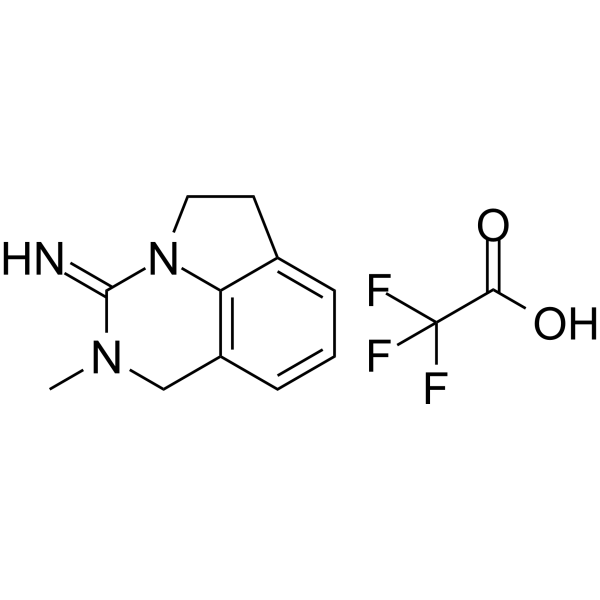
JBSNF-00002 TFA is an orally active small molecule inhibitor of the tricyclic nicotinamide N-methyltransferase (NNMT) with IC50 values for human, mouse and monkey sources of NNMT of 33, 210 and 190 nM respectively. JBSNF-00002 TFA can reduce endogenous MNA levels in U2OS osteosarcoma cells, with its EC50 being 2.5 μM. JBSNF-00002 TFA exhibits significant anti-obesity and anti-diabetic activities in the diet-induced obesity (DIO) model. JBSNF-00002 TFA can be used for the study of metabolic diseases such as obesity, type 2 diabetes and non-alcoholic fatty liver disease .
loading...
    loading...
Cat. No.: HY-174996
CAS No.: 3031840-36-2
Research Areas:  

Cancer

NEP162 is a BRD4 PROTAC degrader based on the E3 ubiquitin ligase GID4, with DC50 values of 1.2 μM and 1.6 μM in SW480 and U2OS cells, respectively, and a Kd value of 0.13 µM for GID4. NEP162 bridges the E3 ligase GID4 and BRD4 to form a ternary complex, promotes polyubiquitination and subsequent degradation of BRD4 via the ubiquitin-proteasome system, reduces the proliferation capacity of tumor cells and induces apoptosis. NEP162 can be used for research on cancers such as osteosarcoma, colorectal cancer and non-small cell lung cancer .
loading...
    loading...
Cat. No.: HY-17509R
CAS No.: 169590-41-4
Synonyms: SC 046 (Standard); SC 46 (Standard); SC 59046 (Standard)
Deracoxib (SC 046; SC 59046) (Standard) is the analytical standard of Deracoxib (HY-17509). This product is intended for research and analytical applications. Deracoxib, an orally active COX-2 inhibitor, is a veterinary nonsteroidal anti-inflammatory agent used exclusively in dogs. Deracoxib inhibits the COX-2 enzyme to reduce the production of prostaglandins, effectively controlling pain and inflammation after canine soft tissue surgery. Deracoxib reduces the inhibition of COX-1 and lowers the risk of gastrointestinal side effects. Deracoxib induces tumor cell cycle arrest and apoptosis, and shows anti-tumor activity in canine osteosarcoma, breast tumors and bladder transitional cell carcinomas
loading...
    loading...
Cat. No.: HY-W250121
CAS No.: 9000-65-1
Tragacanth gum is an orally active anionic composite polysaccharide and multifunctional biomaterial. Tragacanth gum exhibits biocompatibility, mucoadhesion and renoprotective effects, and effectively promotes wound closure and tissue healing. Tragacanth gum can be isolated from Astragalus gummifer. Tragacanth gum acts as an emulsifier and drug delivery carrier, and is also widely used in fields such as 3D scaffolds, tissue engineering and green nanoparticle preparation. High doses of Tragacanth gum may induce reversible forestomach squamous epithelial hyperplasia in mice, but show no mutagenic or carcinogenic activity. Tragacanth gum is commonly used in studies related to diseases including systemic candidiasis, rheumatoid arthritis and osteosarcoma .
loading...
    loading...

