1899 Results for "

coenzyme

" in MedChemExpress (MCE) Product Catalog:
Products (1899)

1899 Results for "coenzyme" in MCE Product Catalog:

Cat. No.: HY-115549
CAS No.: 1364692-88-5
Research Areas:  

Metabolic Disease

AMPK activator 18 is a potent allosteric activator of AMPK complexes containing the β2 isoform. AMPK activator 18activates α2-containing AMPK α2β2γ1 and α2β2γ3 complexes, with EC50 values of 17.2 and 82.1 nM. AMPK activator 18 stimulates β2-AMPK in cells, and glucose uptake by isolated skeletal muscle. AMPK activator 18 induces acetyl-coenzyme A carboxylase (ACC) and AMPK α-T172 phosphorylation. AMPK activator 18 can be used for the research of type 2 diabetes .
loading...
    loading...
Cat. No.: HY-150709S
CAS No.: 2483830-25-5
Purity:  98.13%
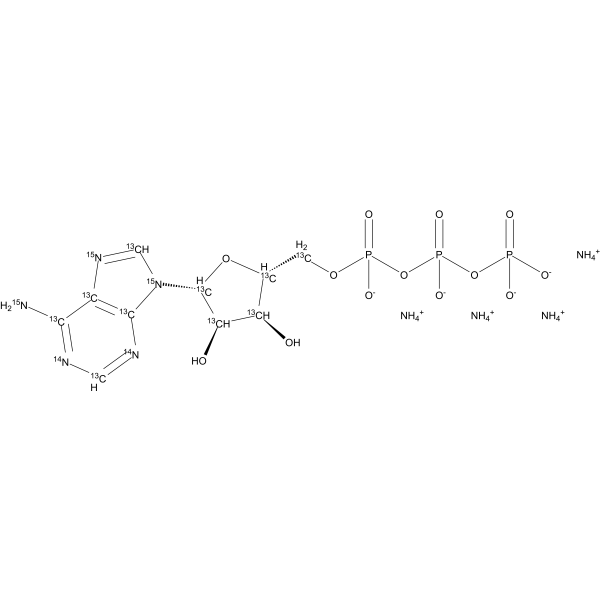
Synonyms: Adenosine 5'-triphosphate-13C10,15N5 ammonium solution (100mM)
ATP- 13C10, 15N5 (Adenosine 5'-triphosphate-ATP- 13C10, 15N5) ammonium solution (100 mM) is the 13C10, 15N5-labeled ATP (HY-B2176). ATP is a central component of energy storage and metabolism in vivo. ATP provides the metabolic energy to drive metabolic pumps and serves as a coenzyme in cells. ATP is an important endogenous signaling molecule in immunity and inflammation. ATP can activate the NLRP3 inflammasome and induce IL-1β and chemokines secretion. ATP has anti-bacterial infection effects and can protect mice against bacterial infection in mice .
loading...
    loading...
Cat. No.: HY-150709S1
Purity:  98.8%
Synonyms: Adenosine 5'-triphosphate-13C10,15N5 dilithium
ATP- 13C10, 15N5 (Adenosine 5'-triphosphate-ATP- 13C10, 15N5) dilithium is the 13C10, 15N5-labeled ATP (HY-B2176). ATP is a central component of energy storage and metabolism in vivo. ATP provides the metabolic energy to drive metabolic pumps and serves as a coenzyme in cells. ATP is an important endogenous signaling molecule in immunity and inflammation. ATP can activate the NLRP3 inflammasome and induce IL-1β and chemokines secretion. ATP has anti-bacterial infection effects and can protect mice against bacterial infection in mice .
loading...
    loading...
Cat. No.: HY-B2176AR
CAS No.: 51963-61-2
Synonyms: Adenosine-5'-triphosphate disodium trihydrate (Standard)
ATP (Adenosine-5'-triphosphate) disodium trihydrate (Standard) is the analytical standard of ATP disodium trihydrate (HY-B2176A). This product is intended for research and analytical applications. ATP disodium trihydrate is a central component of energy storage and metabolism in vivo. ATP disodium trihydrate provides the metabolic energy to drive metabolic pumps and serves as a coenzyme in cells. ATP disodium trihydrate is an important endogenous signaling molecule in immunity and inflammation. ATP disodium trihydrate can activate the NLRP3 inflammasome and induce IL-1β and chemokines secretion. ATP disodium trihydrate has anti-bacterial infection effects and can protect mice against bacterial infection in mice .
loading...
    loading...
Cat. No.: HY-B2176S8
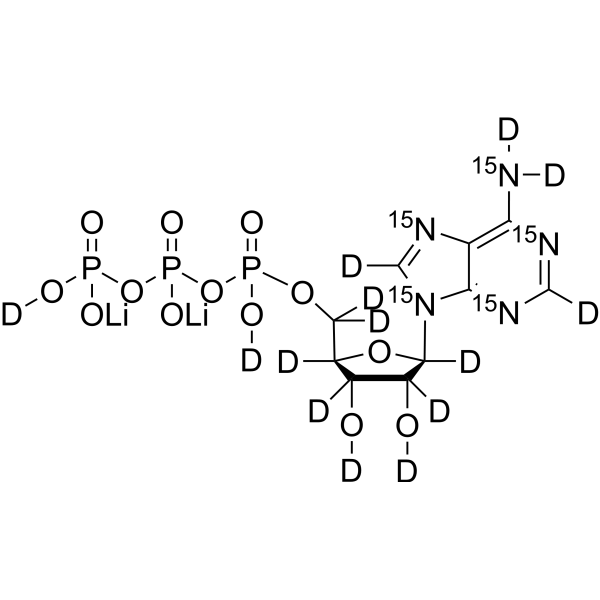
Synonyms: Adenosine 5'-triphosphate-13C10,15N5,d14 dilithium
ATP- 13C10, 15N5,d14 (Adenosine 5'-triphosphate- 13C10, 15N5,d14) dilithium is the 13C-, 15N- and deuterium labeled ATP dilithium. ATP (Adenosine 5'-triphosphate) is a central component of energy storage and metabolism in vivo. ATP provides the metabolic energy to drive metabolic pumps and serves as a coenzyme in cells. ATP is an important endogenous signaling molecule in immunity and inflammation. ATP can activate the NLRP3 inflammasome and induce IL-1β and chemokines secretion. ATP has anti-bacterial infection effects and can protect mice against bacterial infection in mice.
loading...
    loading...
Cat. No.: HY-P1958
CAS No.: 667899-73-2
Research Areas:  

Others

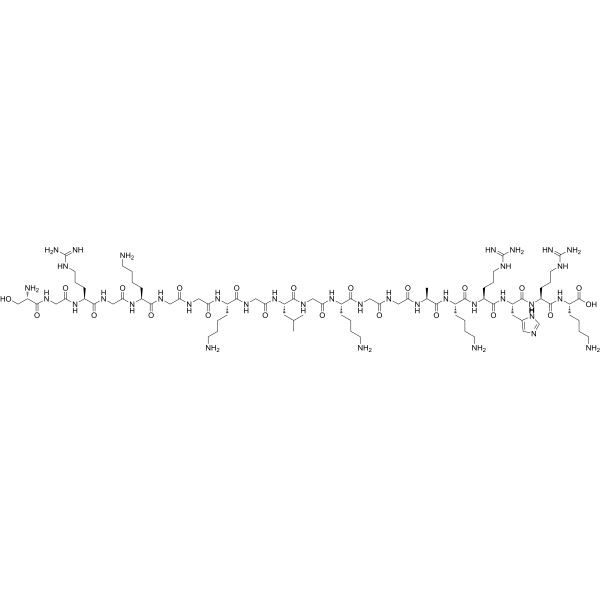
Histone H4 (2-21) is a substrate peptide derived from the N-terminal region of histone H4, which serves as an acyl acceptor for lysine acetyltransferases of the MYST family (KAT). Histone H4 (2-21) participates in enzymatic reactions together with acyl-coenzyme A (acyl-CoA, and undergoes lysine acetylation and propionylation modifications catalyzed by KATs such as MOF. The apparent Km of Histone H4 (2-21) for MOF is 788.8 μM, while in the picNuA4 catalytic system, the Km and Kd values of the H4 peptide are 192 μM and 251 μM, respectively. Histone H4 (2-21) can be used in studies related to histone post-translational modifications, epigenetic regulation, and lysine acylation .
loading...
    loading...
Cat. No.: HY-P78986A
Purity:  ≥ 90%, as determined by reducing SDS-PAGE.
Synonyms: ACAT1; Acetyl-coenzyme A Acetyltransferase 1; Prev. ACAT; MAT; Acetyl-CoA Acetyltransferase, Mitochondrial; T2; Acetoacetyl-CoA Thiolase; Mitochondrial Acetoacetyl-CoA Thiolase; THIL; Testicular Tissue Protein Li 198; Acetyl-CoA Acetyltransferase 1; Aceto
Species:  
Human
Source:  
E. coli
loading...
    loading...
Cat. No.: HY-P703443
Purity:  ≥ 90%, as determined by reducing SDS-PAGE.
Synonyms: PDSS1; Subunit 1 Of Decaprenyl Diphosphate Synthase; Prev. TPRT; Polyprenyl Pyrophosphate Synthetase; COQ1A; Trans-Prenyltransferase (TPT); COQ1; coenzyme Q1 Homolog (Yeast); TPT; Trans-Prenyltransferase; Prenyl (Decaprenyl) Diphosphate Synthase, Subunit
Species:  
Others
Source:  
E. coli
loading...
    loading...
Cat. No.: HY-125863B
CAS No.: 9001-40-5
Synonyms: G6PD (yeast, recombinant)
Glucose 6-phosphate dehydrogenase (yeast, recombinant) (G6PD (yeast, recombinant)) is a recombinant enzyme requiring NADP + as a coenzyme. Glucose 6-phosphate dehydrogenase (yeast, recombinant) catalyzes the oxidative dehydrogenation of glucose-6-phosphate to form 6-phosphoglucono-δ-lactone, as well as the reduction of NADP + to NADPH. Glucose 6-phosphate dehydrogenase (yeast, recombinant) relies on the amino acid Arg-52 to bind NADP +. Glucose 6-phosphate dehydrogenase (yeast, recombinant) undergoes competitive inhibition by NADPH and strong inhibition by zinc ions (Zn 2+). Glucose 6-phosphate dehydrogenase (yeast, recombinant) is an enzyme in the pentose phosphate pathway, which is one of the glucose metabolic pathways. Glucose 6-phosphate dehydrogenase (yeast, recombinant) can be used for the quantitative detection of ATP, glucose and creatine kinase .
loading...
    loading...
Cat. No.: HY-B2176S3
Synonyms: Adenosine 5'-triphosphate-15N5,d14 dilithium
ATP- 15N5,d14 (Adenosine 5'-triphosphate-ATP- 15N5,d14) dilithium is the 15N5,d14-labeled ATP (HY-B2176). ATP is a central component of energy storage and metabolism in vivo. ATP provides the metabolic energy to drive metabolic pumps and serves as a coenzyme in cells. ATP is an important endogenous signaling molecule in immunity and inflammation. ATP can activate the NLRP3 inflammasome and induce IL-1β and chemokines secretion. ATP has anti-bacterial infection effects and can protect mice against bacterial infection in mice .
loading...
    loading...
Cat. No.: HY-P7451
Purity:  ≥ 90%, as determined by reducing SDS-PAGE.
Synonyms: ACADM; Acyl-coenzyme A Dehydrogenase, C-4 To C-12 Straight Chain; Acyl-CoA Dehydrogenase Medium Chain; Medium-Chain Acyl-CoA Dehydrogenase; MCADH; Acyl-CoA Dehydrogenase C-4 To C-12 Straight Chain Isoform 3; MCAD; Acyl-CoA Dehydrogenase, C-4 To C-12 Strai
Species:  
Human
Source:  
E. coli
loading...
    loading...
Cat. No.: HY-P7452
Purity:  ≥ 95%, as determined by reducing SDS-PAGE.
Synonyms: ACOT13; Hotdog-Fold Thioesterase Superfamily Member 2; Prev. THEM2; Palmitoyl-CoA Hydrolase; Thioesterase Superfamily Member 2; Hypothalamus Protein HT012; HT012; PNAS-27; Acyl-CoA Thioesterase 13; Acyl-coenzyme A Thioesterase 13
Species:  
Human
Source:  
HEK293
loading...
    loading...
Cat. No.: HY-L263
89 compounds

Energy metabolism is the most fundamental biochemical process in living organisms, encompassing glycolysis, the TCA cycle, oxidative phosphorylation, the pentose phosphate pathway, and fatty acid oxidation. These core pathways directly regulate cell survival, proliferation, differentiation, and apoptosis. Dysregulation of energy metabolism is closely linked to major diseases including cancer, diabetes, obesity, cardiovascular diseases, neurodegenerative disorders, and ischemia‑reperfusion injury. Targeting these metabolic pathways has become a frontier in drug discovery and mechanistic research.

The MCE Energy Metabolite Compound Library features 89 structurally defined small‑molecule compounds. It covers energy substrates, pathway intermediates, coenzymes and redox carriers, nucleotide derivatives, and microenvironmental modulators. This library is applicable to research areas including tumor metabolism, insulin resistance, mitochondrial dysfunction, oxidative stress, neuroprotection, and cardiometabolic diseases, providing a high‑quality tool for mechanistic studies, biomarker discovery, and high‑throughput drug screening.

Cat. No.: HY-P86761
Synonyms: ACAD 6 antibody; ACAD6 antibody; ACADV_HUMAN antibody; Acadvl antibody; Acyl CoA dehydrogenase very long chain antibody; Acyl coenzyme A dehydrogenase very long chain antibody; LCACD antibody; mitochondrial antibody; Very long chain specific acyl CoA dehydrogenase antibody; Very long chain specific acyl CoA dehydrogenase mitochondrial antibody; ACAD 6 antibody; ACAD6 antibody; ACADV_HUMAN antibody; Acadvl antibody; Acyl CoA dehydrogenase very long chain antibody; Acyl coenzyme A dehydrogenase very long chain antibody; LCACD antibody; mitochondrial antibody; Very long chain specific acyl CoA dehydrogenase antibody; Very long chain specific acyl CoA dehydrogenase mitochondrial antibody; Very long-chain specific acyl-CoA dehydrogenase antibody; VLCAD antibody;

Host:  

Rabbit

Application:  

WB, IHC-P, ICC/IF, IF-Tissue, IP

Reactivity:  

Human

loading...
    loading...
Cat. No.: HY-P811961
Synonyms: ACAD8; Acyl-CoA Dehydrogenase Family Member 8; Acyl-coenzyme A Dehydrogenase Family, Member 8; Activator-Recruited Cofactor 42 KDa Component; Isobutyryl-CoA Dehydrogenase, Mitochondrial; ACAD-8; ARC42; IBDH; Acyl-CoA Dehydrogenase Family, Member 8; Isobutyryl-CoA Dehydrogenase; EC 1.3.8.5; EC 1.3.99; IBD

Host:  

Mouse

Application:  

WB, ICC/IF

Reactivity:  

Human, Mouse, Rat

loading...
    loading...
Cat. No.: HY-P811961A
Synonyms: ACAD8; Acyl-CoA Dehydrogenase Family Member 8; Acyl-coenzyme A Dehydrogenase Family, Member 8; Activator-Recruited Cofactor 42 KDa Component; Isobutyryl-CoA Dehydrogenase, Mitochondrial; ACAD-8; ARC42; IBDH; Acyl-CoA Dehydrogenase Family, Member 8; Isobutyryl-CoA Dehydrogenase; EC 1.3.8.5; EC 1.3.99; IBD

Host:  

Mouse

Application:  

WB, ICC/IF

Reactivity:  

Human, Mouse, Rat

loading...
    loading...
Cat. No.: HY-W1143867
CAS No.: 2226-71-3
4’-Phosphopantetheine is an orally active coenzyme A (CoA) precursor. 4’-Phosphopantetheine is membrane-permeable and acts as a CoA precursor, a prosthetic group, and a reactive oxygen species (ROS) inhibitor. 4’-Phosphopantetheine binds covalently to rat liver fatty acid synthase, modifies the conserved serine residue in the PKS/NRPS carrier protein domain, and serves as a substrate for CoA synthase and PPAT. 4’-Phosphopantetheine undergoes non-catalytic exchange on rat liver fatty acid synthase, with a faster turnover rate than that of the enzyme complex, and restores intracellular CoA levels in cells with impaired de novo biosynthesis. 4’-Phosphopantetheine rescues phenotypes induced by CoA deficiency, normalizes PKAN-related biomarkers, restores mitochondrial enzyme activity, and alleviates vascular endothelial damage. 4’-Phosphopantetheine shows biological stability in serum, acts as a prosthetic group and degradation product of ACP, and inhibits the formation of atherosclerotic plaques. 4’-Phosphopantetheine can be used in the research of brain iron accumulation neurodegenerative diseases, pantothenate kinase-associated neurodegeneration, CoASY protein-associated neurodegenerative diseases, coronary heart disease, and atherosclerosis .
loading...
    loading...
Cat. No.: HY-P86762
Synonyms: ACS3 antibody; Acsl3 antibody; ACSL3_HUMAN antibody; Acyl CoA synthetase long chain family member 3 antibody; FACL3 antibody; Fatty acid coenzyme A ligase long chain 3 antibody; LACS 3 antibody; LACS3 antibody; Lignoceroyl CoA synthase antibody; Long chain acyl CoA synthetase 3 antibody; ACS3 antibody; Acsl3 antibody; ACSL3_HUMAN antibody; Acyl CoA synthetase long chain family member 3 antibody; FACL3 antibody; Fatty acid coenzyme A ligase long chain 3 antibody; LACS 3 antibody; LACS3 antibody; Lignoceroyl CoA synthase antibody; Long chain acyl CoA synthetase 3 antibody; Long chain fatty acid CoA ligase 3 antibody; Long-chain acyl-CoA synthetase 3 antibody; Long-chain-fatty-acid--CoA ligase 3 antibody; PRO2194 antibody;

Host:  

Mouse

Application:  

WB, IHC-P

Reactivity:  

Human

loading...
    loading...
Cat. No.: HY-P81246
Synonyms: ACAT related gene product 1; ACAT-related gene product 1; Acyl coenzyme A:cholesterol acyltransferase related gene 1; Acyl-CoA retinol O-fatty-acyltransferase; Acyl-CoA:diacylglycerol acyltransferase; ARAT; ARGP1; C75990; D15Ertd23e; Dgat; DGAT1; DGAT1_HUMAN; Diacylglycerol O acyltransferase 1; Diacylglycerol O-acyltransferase 1; Diglyceride acyltransferase; EC 2.3.1.20; hCG_24006; MGC139064; Retinol O fatty acyltransferase.

Host:  

Rabbit

Application:  

WB, IHC-P, IHC-F, ICC/IF, ELISA

Reactivity:  

Human

loading...
    loading...

