
8 Results for "

SAPP

" in MedChemExpress (MCE) Product Catalog:
Products (8)

8 Results for "SAPP" in MCE Product Catalog:

1
1 Cited Publications
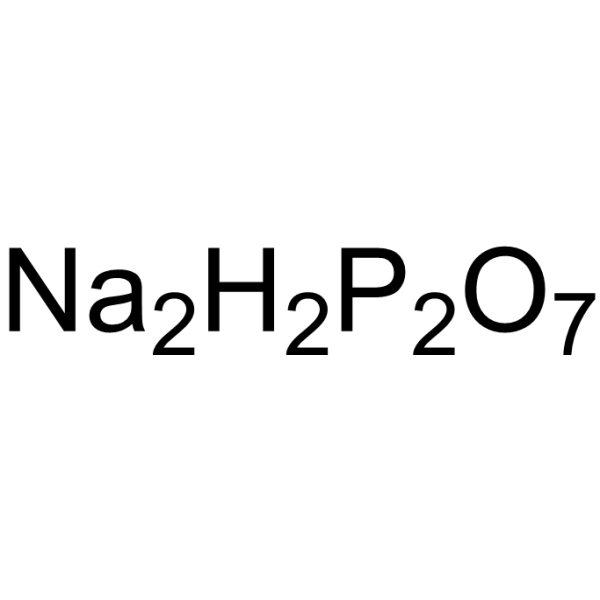
Cat. No.: HY-W105970
CAS No.: 7758-16-9
Synonyms: Disodium pyrophosphate; Sodium acid pyrophosphate; SAPP
Sodium pyrophosphate (Disodium pyrophosphate), a food additive, is an inorganic compound. Sodium pyrophosphate has potential hematotoxic and immunotoxic effects .
loading...
    loading...
Cat. No.: HY-P1378A
Target:  

Amyloid-β

Research Areas:  

Neurological Disease

β-Amyloid (1-43)(human) TFA is more prone to aggregation and has higher toxic properties than the long-known Aβ1-42. β-Amyloid (1-43)(human) TFA shows a correlation with both sAPPα and sAPPβ. β-Amyloid (1-43)(human) TFA could be considered an added Alzheimer's disease (AD) biomarker together with the others already in use .
loading...
    loading...
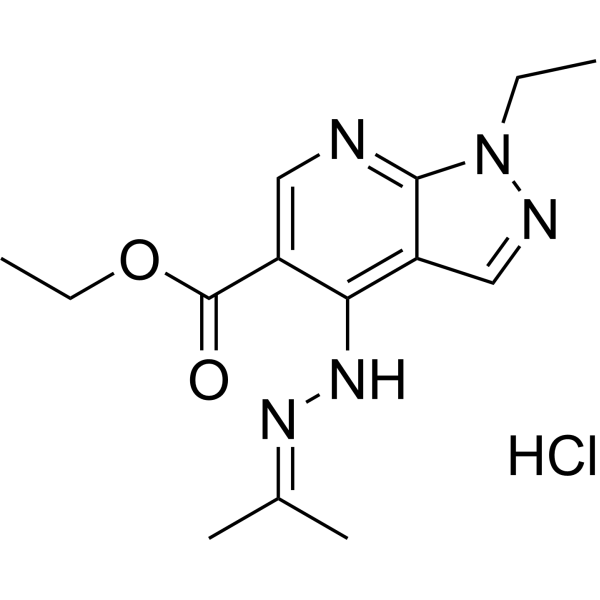
Cat. No.: HY-100936
CAS No.: 35838-58-5
Purity:  98.00%
Synonyms: SQ 20009; EHT 0202 hydrochloride
Etazolate hydrochloride (SQ 20009) is an orally active, selective inhibitor of type 4 phosphodiesterase (PDE4) with an IC50 of 2 μM. Etazolate hydrochloride is a γ-aminobutyric acid A (GABAA) receptor regulator. Etazolate hydrochloride is an α-secretase activator and induced the production of soluble amyloid precursor protein (sAPPα). Etazolate hydrochloride, a pyrazolopyridine class derivative, increases cAMP levels. Etazolate hydrochloride has anxiolyticlike, antidepressant-like and anti-inflammatory effects .
loading...
    loading...
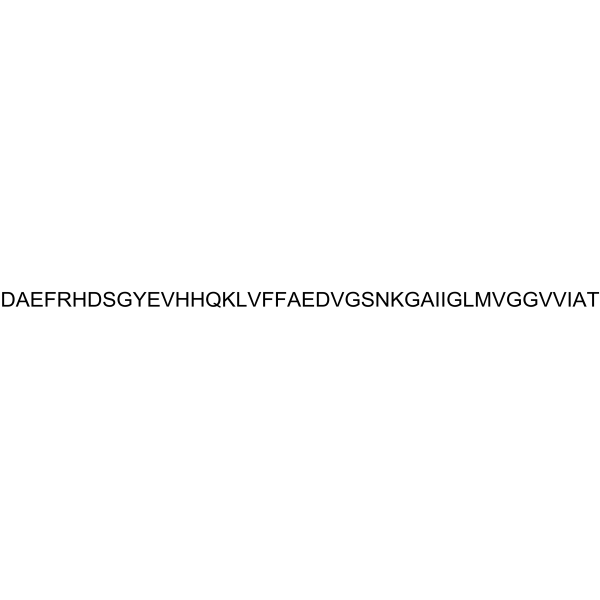
Cat. No.: HY-P1378
CAS No.: 134500-80-4
Target:  

Amyloid-β

Research Areas:  

Neurological Disease

β-Amyloid (1-43)(human) is more prone to aggregation and has higher toxic properties than the long-known Aβ1-42. β-Amyloid (1-43)(human) shows a correlation with both sAPPα and sAPPβ. β-Amyloid (1-43)(human) could be considered an added Alzheimer's disease (AD) biomarker together with the others already in use .
loading...
    loading...
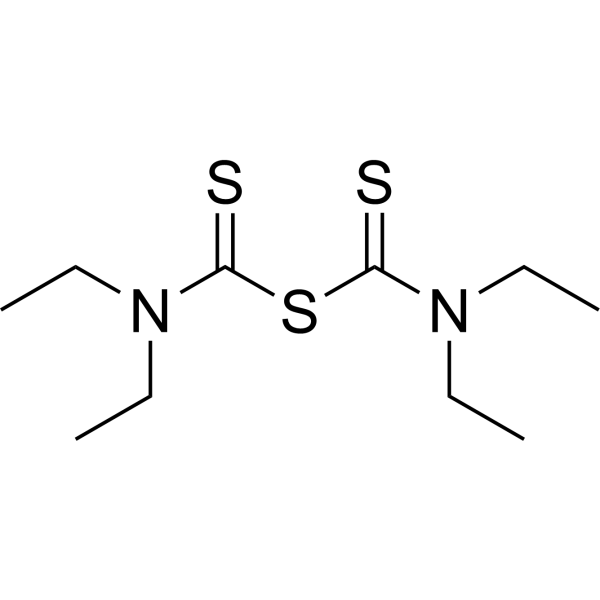
Cat. No.: HY-121817
CAS No.: 95-05-6
Purity:  96.35%
Sulfiram is a very weak aldehyde dehydrogenase (ALDH) inhibitor, with an IC50 value of 413 μM against Saccharomyces cerevisiae ALDH. As a photochemical precursor, Sulfiram undergoes photoconversion to form Disulfiram (HY-B0240), a potent ALDH inhibitor. Sulfiram inhibits the dimerization of the extracellular domain fragment (amino acid residues 230-624) of amyloid precursor protein (APP), alters the monomer-dimer equilibrium, induces conformational changes in the fragment, and enhances the production of sAPPα via α-cleavage of APP. Sulfiram can be used in research related to scabies and Alzheimer's disease .
loading...
    loading...
Cat. No.: HY-118928
CAS No.: 412044-92-9
Synonyms: Demethyl-CHF 2819
Target:  

Cholinesterase (ChE)

Research Areas:  

Neurological Disease

Demethyl-Ganstigmine hydrochloride (Demethyl-CHF 2819) is an orally active AChE inhibitor. Demethyl-Ganstigmine hydrochloride promotes the release of sAPPα from neuroblastoma cells. Demethyl-Ganstigmine hydrochloride increases the concentration of acetylcholine in the prefrontal cortex of rats. Demethyl-Ganstigmine hydrochloride is used in research on neurological diseases such as Alzheimer's disease .
loading...
    loading...
Cat. No.: HY-100936R
CAS No.: 35838-58-5
Synonyms: SQ 20009 (Standard); EHT 0202 hydrochloride (Standard)
Etazolate (hydrochloride) (Standard) is the analytical standard of Etazolate (hydrochloride). This product is intended for research and analytical applications. Etazolate hydrochloride (SQ 20009) is an orally active, selective inhibitor of type 4 phosphodiesterase (PDE4) with an IC50 of 2 μM. Etazolate hydrochloride is a γ-aminobutyric acid A (GABAA) receptor regulator. Etazolate hydrochloride is an α-secretase activator and induced the production of soluble amyloid precursor protein (sAPPα). Etazolate hydrochloride, a pyrazolopyridine class derivative, increases cAMP levels. Etazolate hydrochloride has anxiolyticlike, antidepressant-like and anti-inflammatory effects .
loading...
    loading...
Cat. No.: HY-118972
CAS No.: 1250849-11-6
Target:  

Amyloid-β

Research Areas:  

Neurological Disease

TPI-1917-49 is an agent that can cross the blood-brain barrier and reduce amyloid β (). TPI-1917-49 reduces the production of Aβ peptide segments by promoting the non-amyloidogenic pathway of amyloid precursor protein (APP) (increasing the generation of sAPPα mediated by α-secretase). TPI-1917-49 reduces amyloid plaques in mouse models. TPI-1917-49 can be used in Alzheimer's disease research .
loading...
    loading...

