

1. Search Result
Search Result
Results for "

ARS/Sprague-Dawley rats

" in MedChemExpress (MCE) Product Catalog:

2216

Inhibitors & Agonists

12

Fluorescent Dyes

46

Biochemical Assay Reagents

177

Peptides

1

MCE Kits

23

Inhibitory Antibodies

381

Natural
Products

1

Recombinant Proteins

79

Isotope-Labeled Compounds

3

Antibodies

11

Click Chemistry

22

Oligonucleotides

4

GMP Molecules

Cat. No. Product Name Target Research Areas Chemical Structure
  • HY-W009724
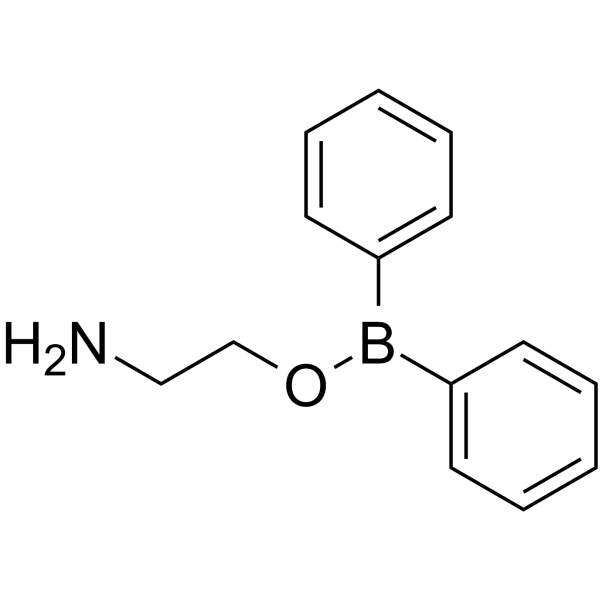
    2-Aminoethyl diphenylborinate
    70+ Cited Publications

    2-APB

    Calcium Channel TRP Channel CRAC Channel Cardiovascular Disease Inflammation/Immunology
    2-Aminoethyl diphenylborinate (2-APB) is a cell-permeable inhibitor of Inositol triphosphate receptor (IP3R). 2-Aminoethyl diphenylborinate also inhibits the store-operated Ca 2+ (SOC) channel and activates some TRP channels (V1, V2 and V3). Additionally, 2-Aminoethyl diphenylborinate has inhibitory effects on vasospasm. At high concentrations, it exhibits specific anti-inflammatory and antioxidant effects in neural tissue .
    2-Aminoethyl diphenylborinate
  • HY-120601
    Alizarin Red S sodium
    5+ Cited Publications

    ARS sodium

    Fluorescent Dye Others
    Alizarin Red S sodium is an anthraquinone derivative dye. When combined with cations such as calcium ions, the functional group of Alizarin Red S sodium can form a coordination bond with the cation through the oxygen atom to show orange-red fluorescence. Alizarin Red S sodium can be used for screening of calcium compounds in synovial fluid and detecting osteoblast differentiation, and can also be used for bone staining in mice. Excitation/emission wavelength: 500/570 nm .
    Alizarin Red S sodium
  • HY-D1005A6

    PEG-PPG-PEG, 2200 (Average)

    Environmental Pollutants Biochemical Assay Reagents Others
    Poloxamer 124 L44 is a block polymer of polyoxyethylene and polyoxypropylene and a hydrophobic surfactant. Poloxamer 124 L44 causes eye irritation and exhibits oral toxicity in albino rats with an LD50 of 5 g/kg. Poloxamer 124 L44 has reversible adverse effects on triglyceride and cholesterol transport in the lymphatic system of rats. Poloxamer 124 L44 can form thermoreversible hydrogels and is used as a food additive and as a drug delivery vehicle in cosmetics, pharmaceuticals, and tissue engineering[1][2][3].
    Poloxamer 124 (L44)
  • HY-P991272

    PF-05230900

    Interleukin Related Inflammation/Immunology
    ATR-107 (PF-05230900) is a humanized monoclonal antibody inhibitor that targets the interleukin-21 receptor (IL-21R). The Ka value of ATR-107 is 2-4 nM in cynomolgus monkeys, 16 nM in mice, and 71 nM in rats. ATR-107 can be used in research related to systemic lupus erythematosus and air pouch inflammation .
    ATR-107
  • HY-B0528A
    Octopamine hydrochloride
    5 Publications Verification

    (±)-p-Octopamine hydrochloride

    Adrenergic Receptor Endogenous Metabolite Neurological Disease Endocrinology
    Octopamine ((±)-p-Octopamine) hydrochloride, a biogenic monoamine structurally related to noradrenaline, acts as a neurohormone, a neuromodulator and a neurotransmitter in invertebrates. Octopamine hydrochloride can stimulate alpha2-adrenoceptors (ARs) in Chinese hamster ovary cells transfected with human alpha2-ARs. Octopamine hydrochloride increased glycogenolysis, glycolysis, oxygen uptake, gluconeogenesis and the portal perfusion pressure .
    Octopamine hydrochloride
  • HY-133668

    Drug Metabolite Cytochrome P450 PPAR Endocrinology Cancer
    Monoethyl phthalate is an orally active PDX-1 activator and the major hydrolytic metabolite of Diethyl phthalate (HY-Y0284) in vivo, with reproductive toxicity. Monoethyl phthalate targets aromatase (aromatase/CYP19A1) and PPAR to induce cell proliferation. The plasma protein binding rate of Monoethyl phthalate in rats and humans is lower than that of Diethyl phthalate. It exhibits significant enterohepatic circulation in rats and mainly accumulates in liver tissues. Monoethyl phthalate shows no estrogenic activity in estrogen-dependent human breast cancer cells. Monoethyl phthalate can be used in studies of reproductive toxicity and related environmental endocrine disruption mechanisms .
    Monoethyl phthalate
  • HY-E70558

    5 alpha Reductase Metabolic Disease
    5α-reductase, Rat (Sprague-Dawley) Liver is an enzyme involved in steroid metabolism and participates in the androgen metabolic pathway. 5α-reductase, Rat (Sprague-Dawley) Liver catalyzes the conversion of testosterone to 5α-dihydrotestosterone (DHT). DHT plays important roles in the development of male sex organs, hair growth, prostate function, and other aspects .
    5α-reductase, Rat(Sprague-Dawley) Liver
  • HY-W102714

    CDTA

    Biochemical Assay Reagents Neurological Disease
    1,2-Cyclohexylenedinitrilotetraacetic acid (CDTA) is a chelating agent. 1,2-Cyclohexylenedinitrilotetraacetic acid has an ability to remove manganese from brain and liver (in vivo) and their sub-cellular fractions (in vitro), of rats pretreated with manganese sulphate .
    1,2-Cyclohexylenedinitrilotetraacetic acid
  • HY-14542A
    Ziprasidone hydrochloride
    3 Publications Verification

    CP-88059 hydrochloride

    5-HT Receptor Dopamine Receptor Neurological Disease
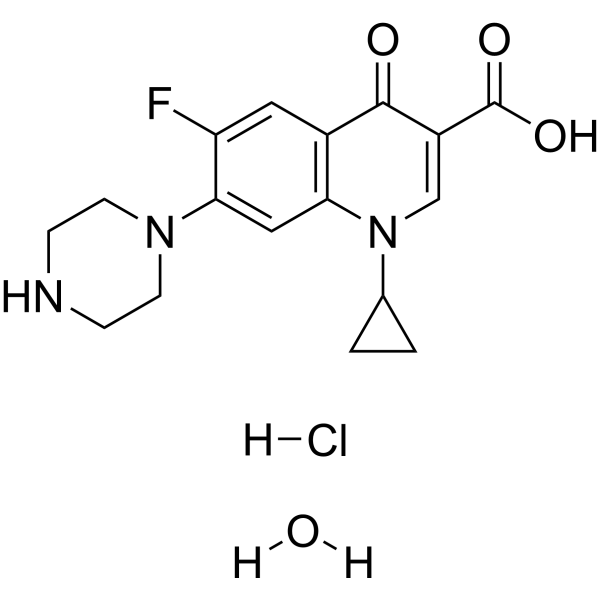
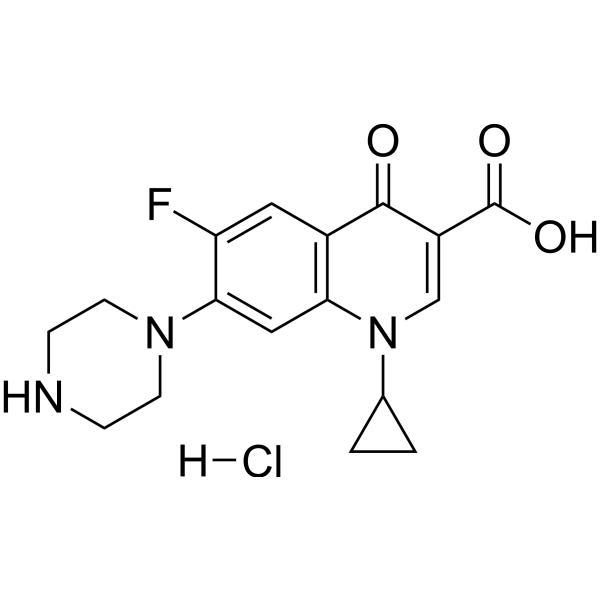
    Ziprasidone (CP-88059) hydrochloride is an orally active combined 5-HT and dopamine receptor antagonist . Ziprasidone hydrochloride has affinities for Rat D2 (Ki=4.8 nM), 5-HT2A (Ki=0.42 nM) and 5-HT1A (Ki=3.4 nM) .
    Ziprasidone hydrochloride
  • HY-U00418
    ARS-1620
    10+ Cited Publications

    Ras Cancer
    ARS-1620 is an atropisomeric selective KRAS G12C inhibitor with desirable pharmacokinetics.
    ARS-1620
  • HY-128522

    Ras Cancer
    ARS-1323-alkyne is a covalent inhibitor probe that covalently binds to the Switch-II pocket (S-IIP) of the KRAS G12C mutant protein. ARS-1323-alkyne visualizes the covalent modification of KRAS G12C and quantitatively measures the binding efficiency of the inhibitor to the target. ARS-1323-alkyne can be used to validate the target occupancy of KRAS G12C inhibitors and the synergistic mechanism of combination therapy .
    ARS-1323-alkyne
  • HY-120601A
    Alizarin Red S
    5+ Cited Publications

    ARS

    Fluorescent Dye Others
    Alizarin Red S (ARS) is an anthraquinone derivative dye. When combined with cations such as calcium ions, the functional group of Alizarin Red S can form a coordination bond with the cation through the oxygen atom to show orange-red fluorescence. Alizarin Red S can be used for screening of calcium compounds in synovial fluid and detecting osteoblast differentiation, and can also be used for bone staining in mice. Excitation/emission wavelength: 500/570 nm .
    Alizarin Red S
  • HY-B0106A

    UCB 6474

    Drug Derivative Neurological Disease
    Etiracetam is a racetam-class nootropic agent. Etiracetam enhances learning and memory in both normal and amnesic rats. Etiracetam can be used in studies related to memory retrieval disorders and amnesic diseases such as Alzheimer's disease .
    Etiracetam
  • HY-N2013
    Aristolactam I
    1 Publications Verification

    Aristololactam; Aristolactam

    Drug Metabolite Aquaporin Cadherin TGF-beta/Smad Endocrinology Cancer
    Aristolactam I is an AQP1 inhibitor and Aristolochic acid I metabolite. Aristolactam I can be isolated from Aristolochia plants. Aristolactam I downregulates Twist1 expression, increases E-cadherin expression, and activates the TGF-β/Smad signaling pathway. Aristolactam I has anticancer activity against breast cancer. Aristolactam I is nephrotoxic. Aristolactam I is mainly used in the study of breast cancer and kidney diseases such as renal interstitial fibrosis .
    Aristolactam I
  • HY-19706
    ARS-853
    5 Publications Verification

    Ras Apoptosis Cancer
    ARS-853 is a cell-active, selective, covalent KRAS G12C inhibitor with an IC50 of 2.5 μM. ARS-853 inhibits mutant KRAS-driven signaling by binding to the GDP-bound oncoprotein and preventing activation .
    ARS-853
  • HY-N2109

    Others Others
    Macranthoidin A is a saponin. Macranthoidin A can be isolated from the plasma of rats administered oral extracts of Lonicera saponins .
    Macranthoidin A
  • HY-123068

    SQ 14551

    Drug Derivative Cardiovascular Disease
    Captopril disulfide (SQ 14551) is an orally active disulfide dimer prodrug. Captopril disulfide is metabolized to Captopril and acts as a Bradykinin potentiator. Captopril disulfide enhances the vasodilatory effect of Bradykinin in anesthetized rats and the contractile response of isolated guinea pig ileum to Bradykinin. Captopril disulfide exhibits antihypertensive activity in spontaneously hypertensive rats. Captopril disulfide can be used in hypertension-related research .
    Captopril disulfide
  • HY-135783
    AT 1001
    1 Publications Verification

    nAChR Neurological Disease Metabolic Disease Inflammation/Immunology
    AT 1001 is an orally effective α3β4 nicotinic acetylcholine receptor (α3β4 nAChR) antagonist with a Ki value of 2.64 nM. AT 1001 reversibly blocks Epibatidine (HY-101078)-induced inward currents in HEK cells transfected with α3β4 nAChR. AT 1001 dose-dependently blocks nicotine self-administration behavior in rats, alleviates gluten-induced gastrointestinal symptoms, blocks tight junction toxin-induced immune responses, and reduces the incidence of type 1 diabetes in rats. AT 1001 can be used in the research of nicotine addiction and celiac disease .
    AT 1001
  • HY-E70558A

    5 alpha Reductase Endocrinology
    5α-Reductase, Rat (Sprague-Dawley) Testis is the enzyme responsible for the conversion of testosterone into 5-alpha dihydrotestosterone (DHT), which is a potent androgen involved in male sexual differentiation.5α-reductase enzyme family is comprised of 3 subfamilies and 5 isoenzyme members: 5αR1, 5αR2, 5αR3, GPSN2, and GPSN2L .
    5α-reductase, Rat(Sprague-Dawley) Testis
  • HY-U00416

    Ras Cancer
    ARS-1323 is a KRAS G12C inhibitor. ARS-1323 specifically binds to the cysteine residue on the mutant K-Ras protein, locks it in the GDP-bound conformation, thereby blocking K-Ras activation and downstream signaling pathways. ARS-1323 can be used to investigate the signal transduction mechanisms and growth characteristics of tumor cells driven by K-Ras G12C .
    ARS-1323
  • HY-162345

    Calcium Channel Cardiovascular Disease
    CK-963 is an activator for cardiac troponin (cTnC) with Ki of 11.5 μM. CK-963 exhibits activity in enhancing cardiac contractility in Sprague-Dawley rats .
    CK-963
  • HY-16386

    Mitochondrial Metabolism Cancer
    PENAO is a potent tumour cell mitochondrial toxin. PENAO inactivates tumor cell mitochondria by targeting inner-membrane adenine nucleotide transferase .
    PENAO
  • HY-B0528AR

    (±)-p-Octopamine hydrochloride (Standard)

    Reference Standards Adrenergic Receptor Endogenous Metabolite Neurological Disease Endocrinology
    Octopamine (hydrochloride) (Standard) is the analytical standard of Octopamine (hydrochloride). This product is intended for research and analytical applications. Octopamine ((±)-p-Octopamine) hydrochloride, a biogenic monoamine structurally related to noradrenaline, acts as a neurohormone, a neuromodulator and a neurotransmitter in invertebrates. Octopamine hydrochloride can stimulate alpha2-adrenoceptors (ARs) in Chinese hamster ovary cells transfected with human alpha2-ARs. Octopamine hydrochloride increased glycogenolysis, glycolysis, oxygen uptake, gluconeogenesis and the portal perfusion pressure .
    Octopamine hydrochloride (Standard)
  • HY-B1562B

    (±)-Bopindolol malonate

    Adrenergic Receptor Renin 5-HT Receptor Cardiovascular Disease Neurological Disease
    Bopindolol ((±)-Bopindolol) malonate is an orally active antagonist of β-adrenoceptors (ARs) with partial agonist activity. Bopindolol malonate is non-selective for β1- and β2-ARs and has low affinity for β3-AR subtype. Bopindolol malonate has intrinsic sympathomimetic as well as membrane stabilizing actions, inhibits renin secretion, and interacts with 5-HT receptors. Bopindolol malonate is a proagent of Pindolol (HY-B0982). Bopindolol malonate can be used for essential and renovascular hypertension research.
    Bopindolol malonate
  • HY-16386A

    Mitochondrial Metabolism Cancer
    PENAO TFA is the trifluoroacetic acid of PENAO (HY-16386). PENAO is a potent tumour cell mitochondrial toxin. PENAO inactivates tumor cell mitochondria by targeting inner-membrane adenine nucleotide transferase .
    PENAO TFA
  • HY-115597

    Calcium Channel Neurological Disease
    BTT-266 is an antagonist forcalcium channel, through suppression of the CaVα1-AID-CaVβ3 interaction, with a Ki of 1.4 μM. BTT-266 modulates the activation of voltage-dependent CaV2.2. BTT-266 exhibits analgesic efficacy against neuropathic pain in rats model .
    BTT-266
  • HY-W250580

    Biochemical Assay Reagents Others
    Dimethicone is an orally active biochemical assay reagents consisting of a fully methylated linear siloxane polymer whose ends are blocked by trimethylsiloxane units. Dimethicone can lubricate hair and physically block the respiratory system of lice to remove lice. Dimethicone has potential applications in cosmetics and daily cleaning products .
    Dimethicone
  • HY-123298
    Chrysotoxine
    1 Publications Verification

    Src Akt Apoptosis Cancer
    Chrysotoxine is a dual inhibitor of Src/Akt. Chrysotoxine suppresses cancer stem cells (CSCs) phenotypes by down-regulating Src/Akt signaling. Chrysotoxine reduces cell viability and increases apoptosis level in H460 and H23 cells instead of non-tumor cell lines. Chrysotoxine shows rapid excretion and low bioavailability in rats. Chrysotoxine is used in cancer research .
    Chrysotoxine
  • HY-B0528

    Adrenergic Receptor Endogenous Metabolite Neurological Disease Endocrinology
    Octopamine is a biogenic monoamine structurally related to noradrenaline, acts as a neurohormone, a neuromodulator and a neurotransmitter in invertebrates. Octopamine can stimulate alpha2-adrenoceptors (ARs) in Chinese hamster ovary cells transfected with human alpha2-ARs. Octopamine increased glycogenolysis, glycolysis, oxygen uptake, gluconeogenesis and the portal perfusion pressure .
    Octopamine
  • HY-131929

    NO Synthase Inflammation/Immunology
    AE-ITU dihydrobromide is the dihydrobromide form of AE-ITU. AE-ITU dihydrobromide is a selective inhibitor for inducible NO synthase (iNOS), and attenuates the liver dysfunction caused by endotoxaemia in rats .
    AE-ITU dihydrobromide
  • HY-105128

    WIN 32729

    3β-HSD Endocrinology
    Epostane (WIN 32729) is an orally active inhibitor for 3β-hydroxysteroid dehydrogenase, with IC50 of 1.45 nM. Epostane blocks ovulation and pregnancy in rats .
    Epostane
  • HY-P1025A

    Neuropeptide Y Receptor Cardiovascular Disease Neurological Disease
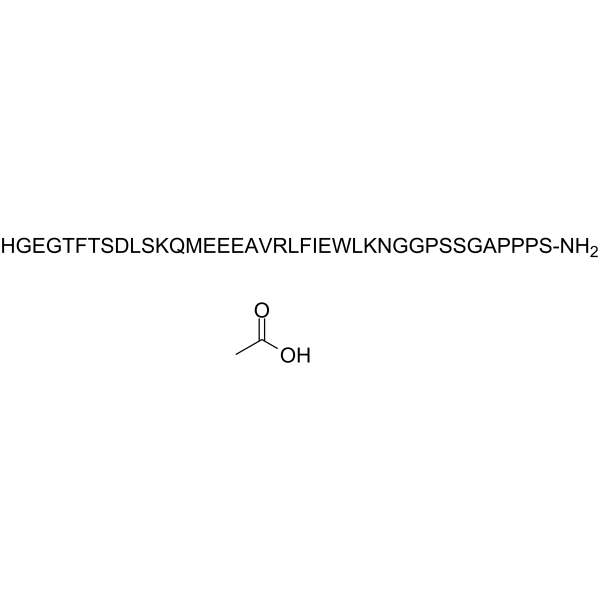
    M40 TFA is the TFA salt form of M40. M40 TFA is an antagonist or a weak agonist for galanin receptor depending on different subtypes of galanin receptors in the brain, hypothalamus, hippocampus, amygdala and pancreas .
    M40 TFA
  • HY-U00417
    ARS-1630
    1 Publications Verification

    Ras Cancer
    ARS-1630, a less active enantiomer of ARS-1620, is a novel inhibitor of mutant K-ras G12C extracted from patent WO 2015054572 A1.
    ARS-1630
  • HY-105454

    Wy-42362

    Sodium Channel Cardiovascular Disease
    Recainam (Wy-42362) is an orally active anti-arrhythmic agent with Class I electrophysiological properties. Recainam suppresses complex ventricular arrhythmias. Racainam exhibits a good pharmacokinetic character in Sprague Dawley rats .
    Recainam
  • HY-N2196

    Others Inflammation/Immunology
    Ajugasterone C is an ecdysteroid isolated from Leuzea carthamoides. Ajugasterone C shows significant inhibitory effect at 100 mg/kg dose on rat paw oedema development due to Carrageenan-induced inflammation in Sprague Dawley rats .
    Ajugasterone C
  • HY-106447

    Adrenergic Receptor Cardiovascular Disease Metabolic Disease
    Losulazine is an antihypertensive agent acting by a sympatholytic mechanism. Losulazine's hypotensive activity depends on the presence of an intact, functional sympathetic nervous system .
    Losulazine
  • HY-161608

    Myosin Cardiovascular Disease
    Myosin modulator 1 (Compound B141) is a modulator for myosin, that inhibits ATPase in rabbits psoas, porcine atria and in porcine ventricle, with IC25s of 0.42, 0.13 and 3.09 μM, respectively. Myosin modulator 1 regulates systolic cardiac performance in Sprague Dawley rats .
    Myosin modulator 1
  • HY-161609

    Myosin Cardiovascular Disease
    Myosin modulator 2 (Compound B172) is a modulator for myosin, that inhibits ATPase in rabbits psoas, porcine atria and in porcine ventricle, with IC25s of 2.013, 2.94 and 20.93 μM, respectively. Myosin modulator 2 regulates systolic cardiac performance in Sprague Dawley rats .
    Myosin modulator 2
  • HY-139117

    Aryl Hydrocarbon Receptor Cardiovascular Disease
    6,2′,4′-Trimethoxyflavone is an AhR antagonist and has failed to show effective protective effects against cerebral ischemia/reperfusion injury in Sprague-Dawley rats .
    6,2′,4′-Trimethoxyflavone
  • HY-P5130

    Endothelin Receptor Cardiovascular Disease
    Big endothelin-1 (rat 1-39) is a 39-residues peptide. Big endothelin-1 (rat 1-39) induces diuretic and natriuretic response in conscious Sprague-Dawley rats. Big endothelin-1 (rat 1-39) raises blood pressure in mice .
    Big endothelin-1 (rat 1-39)
  • HY-162525

    HIV Protease Infection
    GS-9770 is an orally active inhibitor for HIV protease with Ki of 0.16 nM. GS-9770 exhibits antiviral activity aginst HIV-1 strains and HIV-2 strains with EC50 of 1.9-26 nM, and 26 nM. GS-9770 is metabolic stable in human liver microsomes. GS-9770 exhibits good pharmacokinetic characters in Sprague Dawley rats .
    GS-9770
  • HY-N11925

    Others Cardiovascular Disease
    (+)-Osbeckic acid is a vasorelaxatant that can be isolated from Tartary Buckwheat. (+)-Osbeckic acid has a potent vasorelaxant effect in Sprague-Dawley rat thoracic aorta rings with an EC50 of 887 μM .
    (+)-Osbeckic acid
  • HY-15402

    BMS 207940

    Endothelin Receptor Cardiovascular Disease
    Edonentan (BMS 207940) is an antagonist for endothelin receptor (ETA receptor), with a Ki of 10 pM. Edonentan is metabolic stable, exhibits good pharmakokinetic characters in rats. Edonentan regulates the endothelin system, blocks the big Endothelin-induced pressor response in rats model .
    Edonentan
  • HY-19604

    Glucocorticoid Receptor Inflammation/Immunology
    SQ 26490 is an active corticoid, moderate-potency edema formation inhibitor. SQ 26490 inhibits edema formation in rats .
    SQ 26490
  • HY-151360

    Sodium Channel Metabolic Disease
    NHE3-IN-3 (Compound 1) is a Na +/H + exchanger isoform 3 (NHE3) inhibitor with pIC50 of 6.2 and 6.6 against human and rat NHE3, respectively. NHE3-IN-3 shows high (98%) oral bioavailability in Sprague–Dawley rats .
    NHE3-IN-3
  • HY-P10767

    Neurotensin Receptor Neurological Disease
    MD01-67 is a selective macrocyclic compound targeting the neurotensin receptor type 2 (NTS2), with Ki of 2.9 nM. MD01-67 exhibits analgesic and tactile hypersensitivity reducing activity in rats acute/persistent/chronic inflammatory pain models .
    MD01-67
  • HY-162920

    Aminopeptidase Cardiovascular Disease
    QGC583 is an effective selective Aminopeptidase A (APA) inhibitor with oral activity and blood-brain barrier permeability, boasting an IC50 value of 4 nM. QGC583 can inhibit APA activity in the brain, kidneys, and heart of rats .
    QGC583
  • HY-P1025

    Neuropeptide Y Receptor Cardiovascular Disease Neurological Disease
    M40 is an antagonist or a weak agonist for galanin receptor depending on different subtypes of galanin receptors in the brain, hypothalamus, hippocampus, amygdala and pancreas .
    M40
  • HY-158090

    Drug Derivative Cancer
    Triptolide palmitate is the derivative of Triptolide (HY-32735). Triptolide palmitate exhibits cytotoxicity against cancer cell MCF-7 and A549, with IC50 of 7.5 and 6.4 μM. Triptolide palmitate exhibits a half-time T1/2 of 50.4 min in Sprague Dawley rats. Triptolide palmitate can be utilizd as drug carrier .
    Triptolide palmitate
  • HY-W687496

    Vitamin A acid methyl ester

    Drug Derivative Others
    Methyl retinoate (Vitamin A acid methyl ester) is a derivative of vitamin A. Methyl retinoate causes degenerative changes in the seminiferous tubules in Sprague Dawley rats .
    Methyl retinoate

Inquiry Online

Your information is safe with us. * Required Fields.

Salutation


Country or Region *

Applicant Name *


Organization Name *

Department *


Email Address *


Product Name *

Cat. No.


Requested quantity *

Phone Number *


Remarks

Inquiry Online

Inquiry Information

Product Name:
Cat. No.:
Quantity:
MCE Japan Authorized Agent:

