27 Results for "

ATM/ATR

" in MedChemExpress (MCE) Product Catalog:
Products (27)

27 Results for "ATM/ATR" in MCE Product Catalog:

66
66 Publications Verification
Cat. No.: HY-12016
CAS No.: 587871-26-9
Purity:  99.92%
Target:  

ATM/ATR Autophagy

Research Areas:  

Cancer

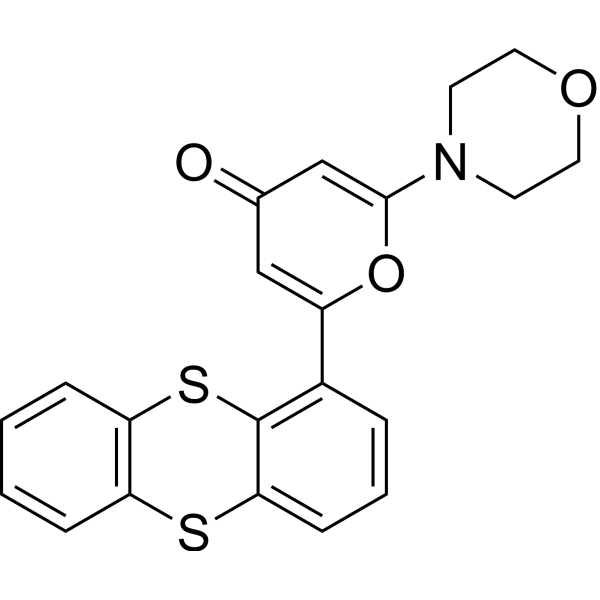
KU-55933 is a potent ATM inhibitor with an IC50 and Ki of 12.9 and 2.2 nM, respectively, and is highly selective for ATM as compared to DNA-PK, PI3K/PI4K, ATR and mTOR.
loading...
    loading...
19
19 Cited Publications
Cat. No.: HY-B0097
CAS No.: 50-91-9
Synonyms: 5-Fluorouracil 2'-deoxyriboside
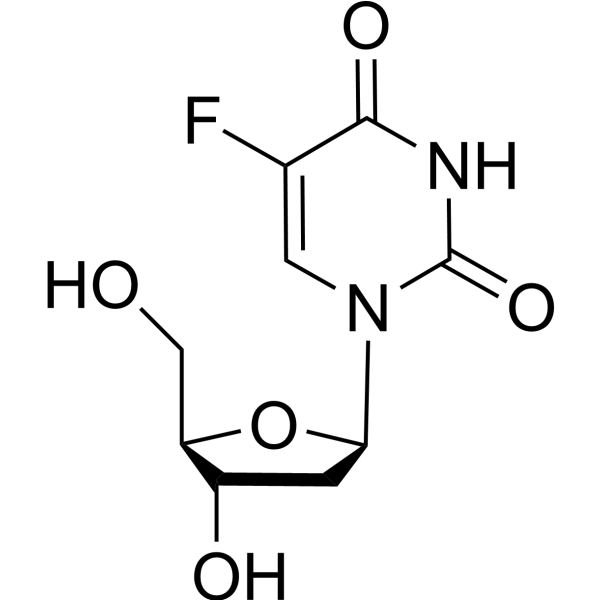
Floxuridine (5-Fluorouracil 2'-deoxyriboside) is a pyrimidine analog and known as an oncology antimetabolite. Floxuridine inhibits Poly(ADP-Ribose) polymerase and induces DNA damage by activating the ATM and ATR checkpoint signaling pathways in vitro. Floxuridine is a extreamly potent inhibitor for S. aureus infection and induces cell apoptosis . Floxuridine has antiviral effects against HSV and CMV .
loading...
    loading...
7
7 Cited Publications
Cat. No.: HY-15520
CAS No.: 905973-89-9
Purity:  99.83%
Target:  

ATM/ATR

Research Areas:  

Cancer

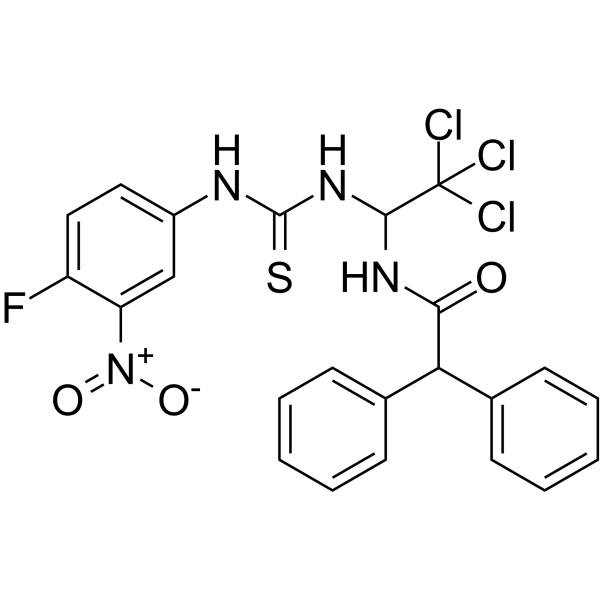
CGK733 is a potent ATM/ATR inhibitor, used for the research of cancer.
loading...
    loading...
5
5 Cited Publications
Cat. No.: HY-16705
CAS No.: 1374601-40-7
Research Areas:  

Cancer

BRD4770 is a histone methyltransferase G9a inhibitor. BRD4770 reduces di- and trimethylation of lysine 9 on histone H3 (H3K9) with an EC50 of 5 μM, and has less or little effect toward H3K27me3, H3K36me3, H3K4me3, and H3K79me3. BRD4770 can activate the ataxia telangiectasia mutated (ATM) pathway and induce cell senescence .
loading...
    loading...
3
3 Cited Publications
Cat. No.: HY-139609
CAS No.: 2417489-10-0
Purity:  99.75%
Synonyms: RP-3500; ATR inhibitor 4
Target:  

ATM/ATR mTOR

Research Areas:  

Cancer

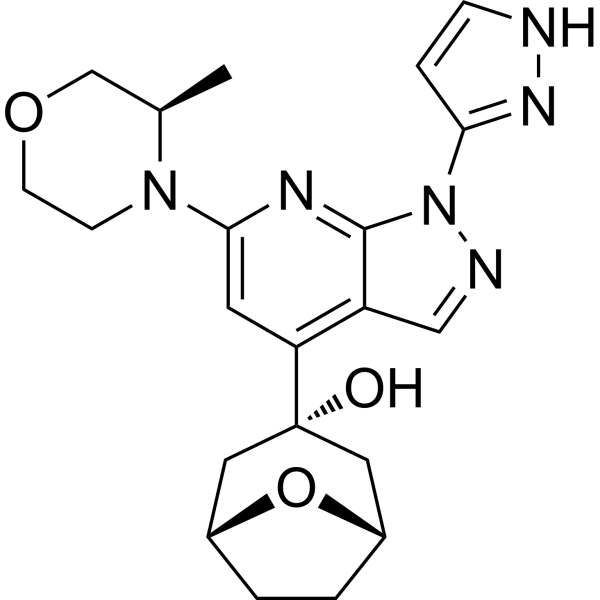
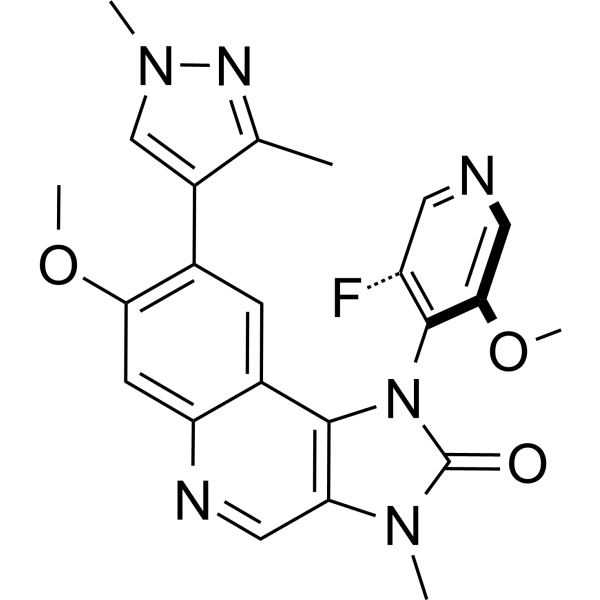
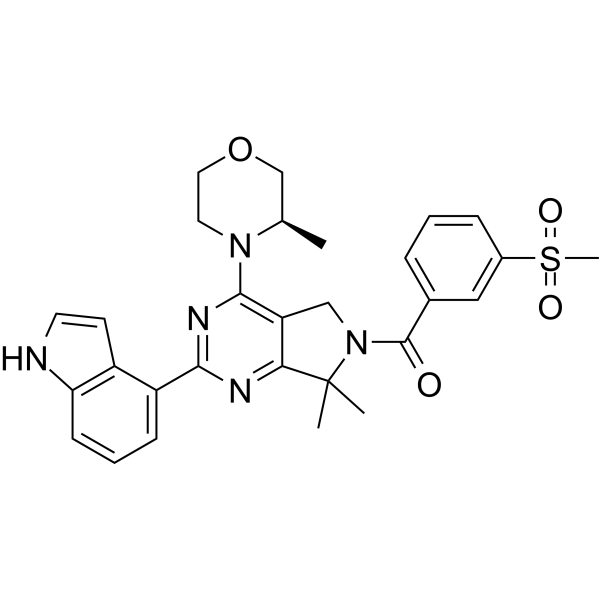
Camonsertib (RP-3500) is an orally active, selective ATR kinase inhibitor (ATRi) with an IC50 of 1.00 nM in biochemical assays. Camonsertib shows 30-fold selectivity for ATR over mTOR (IC50=120 nM) and >2,000-fold selectivity over ATM, DNA-PK, and PI3Kα kinases. Camonsertib has potent antitumor activity .
loading...
    loading...
2
2 Cited Publications
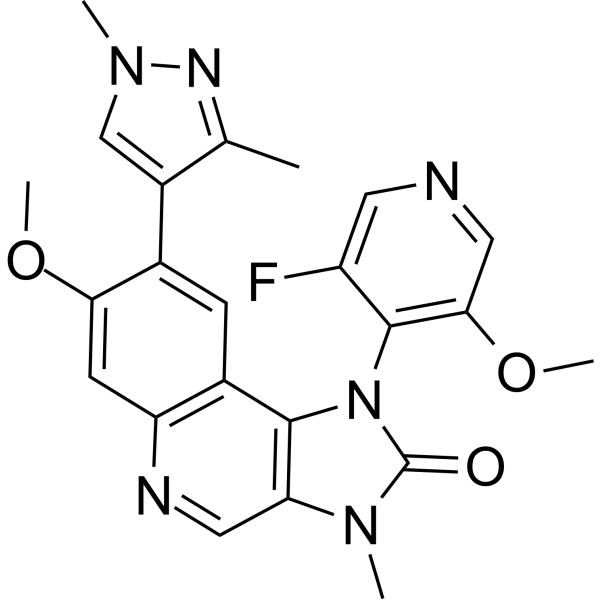
Cat. No.: HY-150617
CAS No.: 2495096-26-7
Purity:  99.94%
Synonyms: M4076; ATM Inhibitor-5
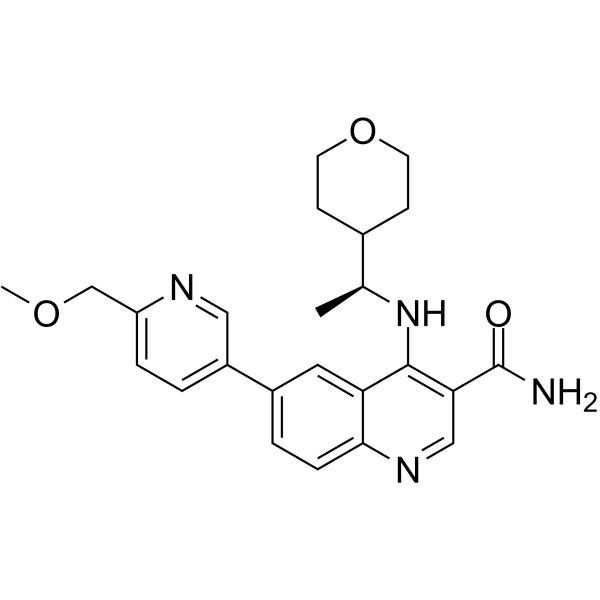
Lartesertib (M4076) is an inhibitor of the serine/threonine protein kinase ATM with high potency. Lartesertib can inhibit the growth of multiple hematopoietic cell lines. Additionally, when combined with the ATR inhibitor Tuvusertib (HY-111451), Lartesertib can promote the death of tumor cells, activate the immune signaling pathway, and exhibit anti-tumor activity .
loading...
    loading...
Cat. No.: HY-157941
CAS No.: 2267316-76-5
Purity:  99.89%
Research Areas:  

Cancer

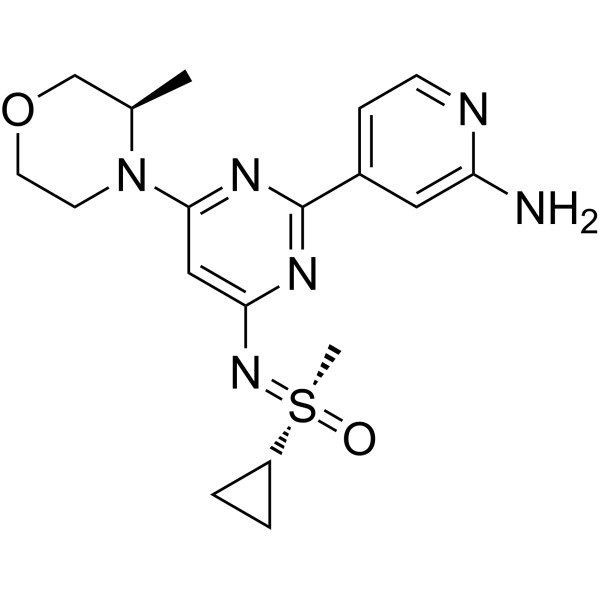
ART0380 is a potent, selective and orally active ATR kinase inhibitor. ART0380 potently inhibits human ATR-ATRIP complex with an IC50 of 51.7 nM. ART0380 binds the ATP pocket of the ATR-ATRIP complex, blocks ATR-dependent Chk1 serine 345 phosphorylation, and induces cell cycle disorder and DNA damage. ART0380 demonstrates potent and selective antitumor activity in preclinical models with varying types of ataxia-telangiectasia mutated (ATM) gene aberrancy. ART0380 can be used for the research of cancer, such as colorectal cancer and prostate cancer .
loading...
    loading...
Cat. No.: HY-171124
Synonyms: AZD9592
Tilatamig samrotecan (AZD9592) is an anti-EGFR/c-MET antibody-drug conjugate (ADC). Tilatamig samrotecan consists of an anti-EGFR/c-MET antibody with the drug-linker conjugate being AZ14170133 (HY-145399) (a topoisomerase I (TOP1i) inhibitor payload). Tilatamig samrotecan induces multiple DNA damage response pathway markers (like ATM, ATR, γH2AX). Tilatamig samrotecan selectively binds to EGFR and c-MET, delivering the cytotoxic payload. Tilatamig samrotecan exerts anti-tumor activity in vivo. Tilatamig samrotecan can be used for non-small cell lung cancer (NSCLC) and head and neck squamous cell carcinoma (HNSCC) research .
loading...
    loading...
Cat. No.: HY-161615
CAS No.: 3010273-12-5
Target:  

PROTACs ATM/ATR Apoptosis

Research Areas:  

Inflammation/Immunology Cancer

PROTAC ATR degrader-2 is a selective ATR PROTAC degrader. PROTAC ATR degrader-2 degrades ATR in acute myeloid leukemia (AML) cells MV-4-11 and MOLM-13, with DC50 values of 22.9 nM and 34.5 nM, respectively. PROTAC ATR degrader-2 has an IC50 of 29.6 nM against ATR, and its IC50 values against ATM and PI3K are both greater than 2000 nM. PROTAC ATR degrader-2 induces apoptosis, DNA damage, and upregulates p53 expression. PROTAC ATR degrader-2 inhibits cancer cell proliferation through the kinase-independent function of ATR protein. PROTAC ATR degrader-2 is applicable to research related to acute myeloid leukemia .
loading...
    loading...
Cat. No.: HY-112198
CAS No.: 2088113-98-6
Purity:  98.13%
Target:  

ATM/ATR

Research Areas:  

Cancer

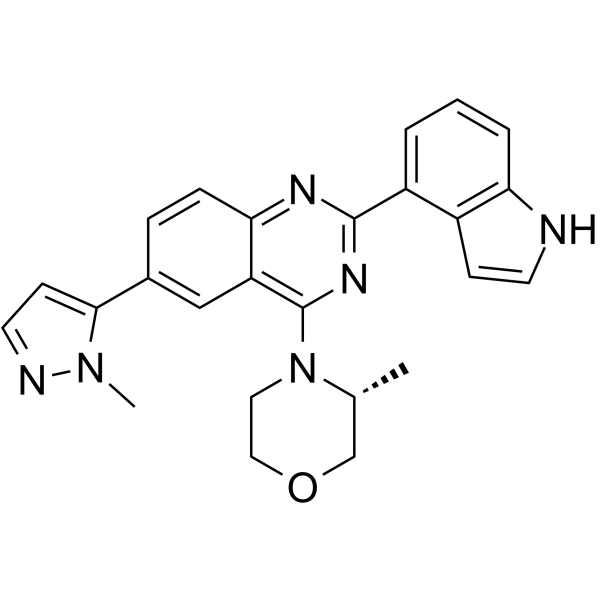
AZ31 is a a potent, highly selective, and orally active ATM inhibitor with an IC50 of <1.2 nM for ATM enzyme, and an IC50 of 46 nM for ATM in cell. AZ31 shows excellent selectivity over ATR (>500-fold) and excellent PIKK-family selectivity and pan-kinase selectivity. AZ31 is a potent radiosensitizer in vitro, it can be used for the research of cancer .
loading...
    loading...
Cat. No.: HY-157767
CAS No.: 3021581-79-0
Target:  

PROTACs ATM/ATR

Research Areas:  

Cancer

Abd110 (compound 42i) is a Lenalidomide-based PROTAC ATR kinase degrader. Abd110 selectively decreases ATR and phospho-ATR without affecting related kinases ATM and DNA-PKcs .
loading...
    loading...
Cat. No.: HY-144217
CAS No.: 2713577-16-1
Purity:  99.91%
Target:  

ATM/ATR

Research Areas:  

Cancer

SKLB-197 showed an IC50 value of 0.013 μM against ATR but very weak or no activity against other 402 protein kinases. It displayed potent antitumor activity against ATM-deficent tumors both in vitro and in vivo.
loading...
    loading...
Cat. No.: HY-118921
CAS No.: 3484-37-5
Ovatodiolide is a compound that can be isolated from Anisomeles indica. Ovatodiolide has anti-bacterial and anti-inflammatory properties. Ovatodiolide also has anti-cancer activity that induces cell cycle G2/M arrest and apoptosis via a ROS-dependent ATM/ATR signaling pathways .
loading...
    loading...
Cat. No.: HY-B0097R
CAS No.: 50-91-9
Synonyms: 5-Fluorouracil 2'-deoxyriboside (Standard)
Floxuridine (Standard) is the analytical standard of Floxuridine. This product is intended for research and analytical applications. Floxuridine (5-Fluorouracil 2'-deoxyriboside) is a pyrimidine analog and known as an oncology antimetabolite. Floxuridine inhibits Poly(ADP-Ribose) polymerase and induces DNA damage by activating the ATM and ATR checkpoint signaling pathways in vitro. Floxuridine is a extreamly potent inhibitor for S. aureus infection and induces cell apoptosis . Floxuridine has antiviral effects against HSV and CMV .
loading...
    loading...
Cat. No.: HY-150617A
CAS No.: 2020089-41-0
Synonyms: (Rac)-M4076; (Rac)-ATM Inhibitor-5
(Rac)-Lartesertib ((Rac)-M4076) is an isoform of Lartesertib (HY-150617). Lartesertib (M4076) is an inhibitor of the serine/threonine protein kinase ATM with high potency. Lartesertib can inhibit the growth of multiple hematopoietic cell lines. Additionally, when combined with the ATR inhibitor Tuvusertib (HY-111451), Lartesertib can promote the death of tumor cells, activate the immune signaling pathway, and exhibit anti-tumor activity .
loading...
    loading...
Cat. No.: HY-W766548
Synonyms: 5-Fluorouracil 2'-deoxyriboside-13C,15N2
Floxuridine- 13C, 15N2 (5-Fluorouracil 2'-deoxyriboside- 13C, 15N2) is the 13C- and 15N-labeled labeled Floxuridine (HY-B0097). Floxuridine (5-Fluorouracil 2'-deoxyriboside) is a pyrimidine analog and known as an oncology antimetabolite. Floxuridine inhibits Poly(ADP-Ribose) polymerase and induces DNA damage by activating the ATM and ATR checkpoint signaling pathways in vitro. Floxuridine is a extreamly potent inhibitor for S. aureus infection and induces cell apoptosis . Floxuridine has antiviral effects against HSV and CMV .
loading...
    loading...
Cat. No.: HY-151915
CAS No.: 3012609-63-8
Target:  

ATM/ATR mTOR

Research Areas:  

Cancer

ATR-IN-20 is a potent ATR (ATM/ATR) inhibitor with an IC50 of 3 nM. ATR-IN-20 possess an inhibitory effect on mTOR (IC50 of 18 nM) while displaying good selectivity against PI3Kα (100 nM), ATM (100 nM), and DNA-PK (662 nM). ATR-IN-20 exhibits excellent pharmacokinetic profile (F = 30%), and has anticancer effects .
loading...
    loading...
Cat. No.: HY-173147
Target:  

CDK

Research Areas:  

Cancer

CDK2-IN-42 (Compound H63) is a CDK12 inhibitor with an IC50 value of 10 nM. CDK2-IN-42 has anti-ESCC (Esophageal Squamous Cell Carcinoma) cell activity. It can block transcriptional elongation, downregulate the core genes in the G1 phase to induce cell cycle arrest, and alter the CDK12-ATM/ATR-CHEK1/CHEK2 signaling axis, resulting in DNA damage. CDK2-IN-42 can effectively inhibit tumor growth in a xenograft mouse model of human ESCC KYSE150. CDK2-IN-42 holds great promise for research in the field of cancer .
loading...
    loading...
Cat. No.: HY-172247
CAS No.: 2954923-16-9
Target:  

ATM/ATR

Research Areas:  

Cancer

ATR-IN-31 is a selective ATR kinase inhibitor with an IC50 of 7 nM. ATR-IN-31 does not significantly inhibit ATM kinase activity. ATR-IN-31 inhibits viability of prostate cancer cells.ATR-IN-31 can be used for the research of prostate cancer .
loading...
    loading...
Cat. No.: HY-N18301
CAS No.: 69506-79-2
Americanin A is a Neolignan. Americanin A can be isolated from the seeds of Phytolacca americana. Americanin A activates ATM and ATR, initiating the subsequent signal transduction cascades that include Chk1, Chk2, and tumor suppressor p53. Americanin A targets selectively Skp2 for degradation and thereby stabilizes p27. Americanin A suppresses the activity of Cyclin B1 and its partner cdc2 to prevent entry into Mitosis. Americanin A induces Apoptosis by producing excessive ROS. Americanin A has anti-cancer activity against colorectal cancer .
loading...
    loading...

