1. Search Result
Search Result
Results for "

Blood-Brain Barrier (BBB)

" in MedChemExpress (MCE) Product Catalog:

241

Inhibitors & Agonists

4

Bibliothèques de criblage

2

Fluorescent Dyes

7

Biochemical Assay Reagents

16

Peptides

1

Inhibitory Antibodies

19

Natural
Products

18

Isotope-Labeled Compounds

1

Click Chemistry

5

Oligonucleotides

Cat. No. Nom du produit Target Áreas de investigación Chemical Structure
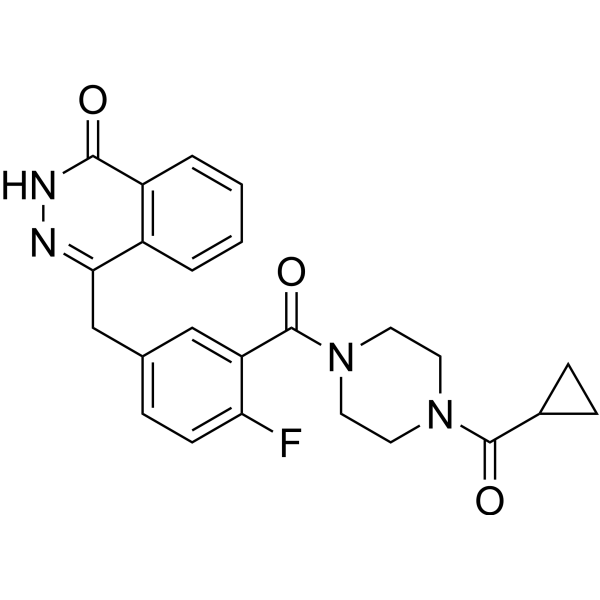
  • HY-10162
    Olaparib
    Maximum Cited Publications
    347 Publications Verification

    AZD2281; KU0059436

    PARP Autophagy Mitophagy Cancer
    Olaparib (AZD2281; KU0059436) is a potent and orally active PARP inhibitor with IC50s of 5 and 1 nM for PARP1 and PARP2, respectively. Olaparib is an autophagy and mitophagy activator. Olaparib cannot cross the intact blood-brain barrier (BBB) .
    Olaparib
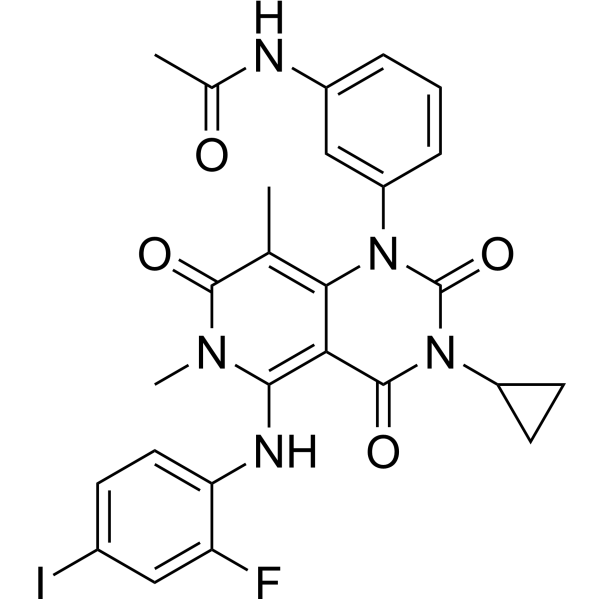
  • HY-10999
    Trametinib
    285+ Cited Publications

    GSK1120212; JTP-74057

    MEK Autophagy Apoptosis Infection Neurological Disease Metabolic Disease Inflammation/Immunology Cancer
    Trametinib (GSK1120212; JTP-74057) is an orally active MEK inhibitor that inhibits MEK1 and MEK2 with IC50s of about 2 nM. Trametinib activates autophagy and induces apoptosis, cross the blood-brain barrier (BBB), used in research related to subarachnoid hemorrhage (SAH) .
    Trametinib
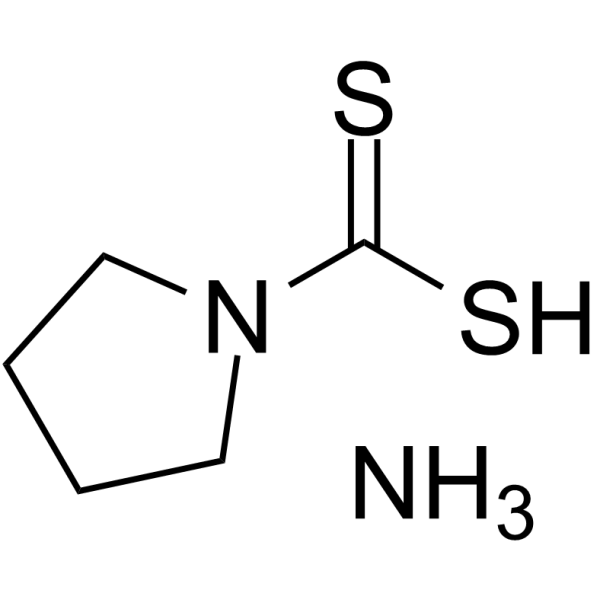
  • HY-18738

    Ammonium pyrrolidinedithiocarbamate; PDTC ammonium; APDC

    NF-κB Inflammation/Immunology Cancer
    Pyrrolidinedithiocarbamate ammonium (Ammonium pyrrolidinedithiocarbamate) is a selective and blood-brain barrier (BBB) permeable NF-κB inhibitor.
    Pyrrolidinedithiocarbamate ammonium
  • HY-110281

    Endogenous Metabolite Cardiovascular Disease Neurological Disease
    Dehydroascorbic acid is an oxidized form of vitamin C that can cross the blood-brain barrier (BBB). Dehydroascorbic acid clears cytotoxic reactive oxygen species (ROS) produced after ischemic stroke by converting to ascorbic acid (AA), thereby reducing neuronal and glial cell damage and stabilizing cerebral microvascular NO signaling to maintain perfusion in the ischemic area. Dehydroascorbic acid can be used in research on ischemic stroke .
    Dehydroascorbic acid
  • HY-14842
    Givinostat
    10+ Cited Publications

    ITF-2357

    HDAC Inflammation/Immunology Cancer
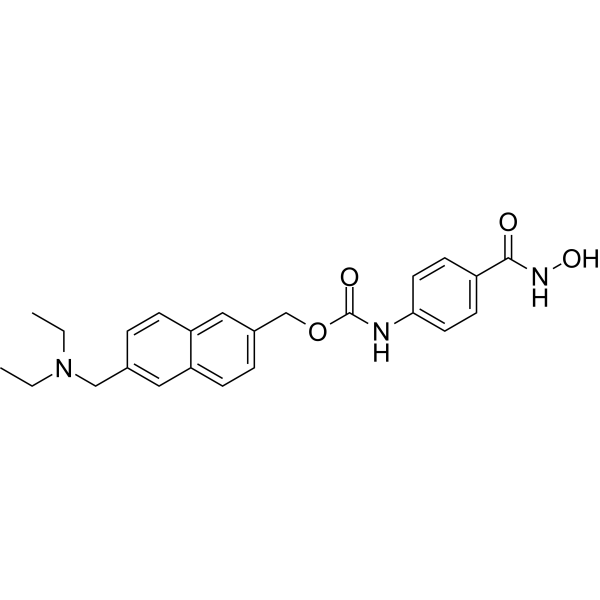
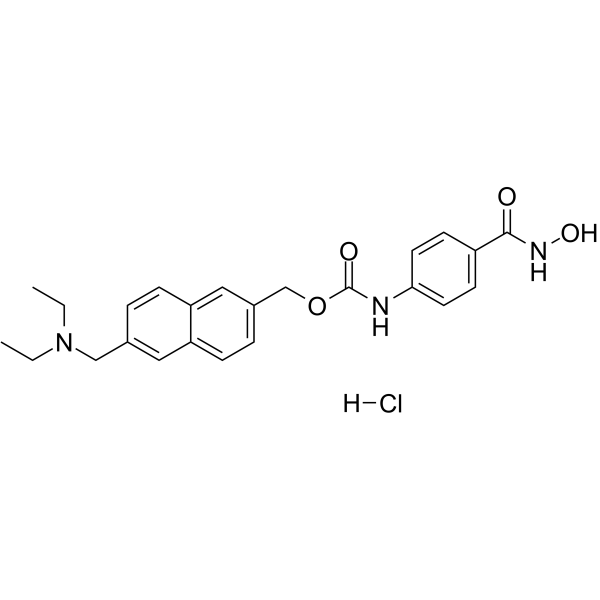
    Givinostat (ITF-2357) is a HDAC inhibitor with an IC50 of 198 and 157 nM for HDAC1 and HDAC3, respectively. Givinostat can be used for Duchenne muscular dystrophy (DMD) research. Givinostat can penetrate the blood-brain barrier (BBB) .
    Givinostat
  • HY-50682
    Azeliragon
    10+ Cited Publications

    TTP488; PF-04494700

    Amyloid-β Neurological Disease Cancer
    Azeliragon (TTP488) is an orally bioavailable inhibitor of the receptor for advanced glycation end products (RAGE) in development as a potential treatment to slow disease progression with mild Alzheimer’s disease (AD) . Azeliragon also can cross the blood-brain barrier (BBB) .
    Azeliragon
  • HY-B0303
    Diphenhydramine
    5+ Cited Publications

    Histamine Receptor Bacterial Endogenous Metabolite iGluR Neurological Disease Inflammation/Immunology Cancer
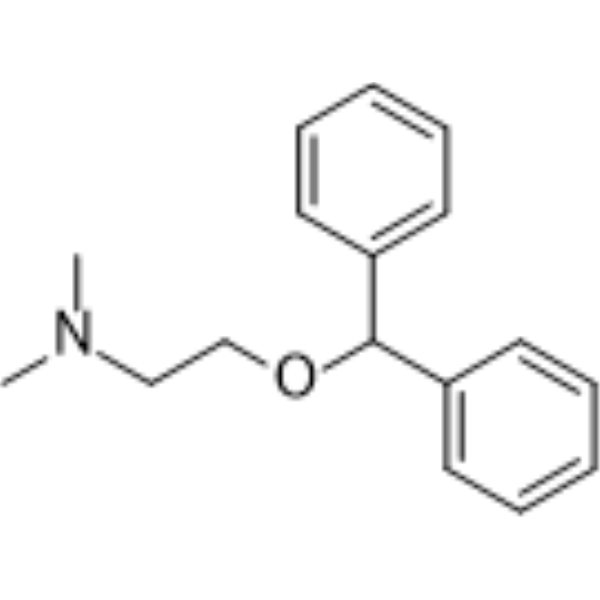
    Diphenhydramine is a first-generation histamine H1-receptor antagonist with anti-cholinergic effect. Diphenhydramine hydrochloride can across the ovine blood-brain barrier (BBB) .
    Diphenhydramine
  • HY-14842B

    ITF-2357 hydrochloride monohydrate

    HDAC Infection Neurological Disease Inflammation/Immunology Cancer
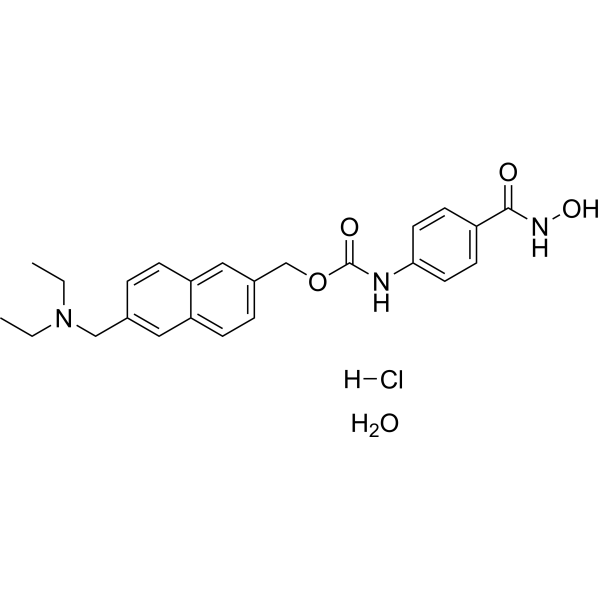
    Givinostat hydrochloride monohydrate (ITF-2357 hydrochloride monohydrate) is a HDAC inhibitor with an IC50 of 198 and 157 nM for HDAC1 and HDAC3, respectively. Givinostat hydrochloride monohydrate can penetrate the blood-brain barrier (BBB) .
    Givinostat hydrochloride monohydrate
  • HY-N7109
    Erucic acid
    2 Publications Verification

    PI3K Endogenous Metabolite Neurological Disease
    Erucic acid, a monounsaturated fatty acid (MUFA), is isolated from the seed of Raphanus sativus L. Erucic acid can readily cross the blood-brain barrier (BBB), it has been reported to normalize the accumulation of very long-chain fatty acids in the brain. Erucic acid can improve cognitive impairment and be effective against dementia .
    Erucic acid
  • HY-N0664
    Aucubin
    Maximum Cited Publications
    10 Publications Verification

    Bacterial Infection Neurological Disease Metabolic Disease Inflammation/Immunology Cancer
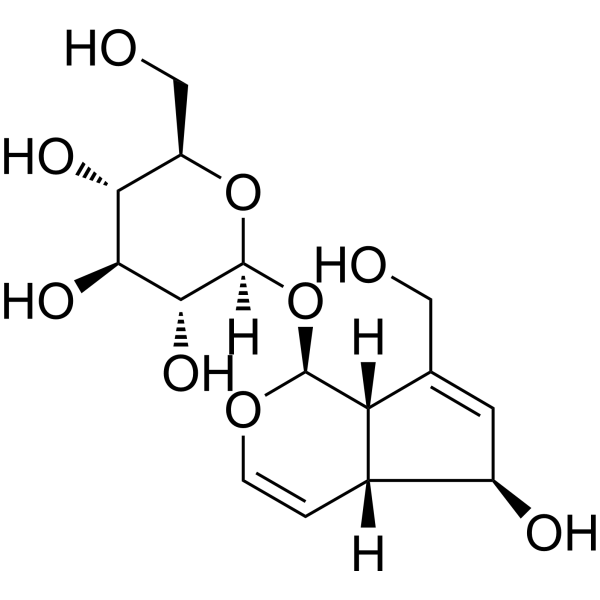
    Aucubin is an iridoid glycoside component that acn be found in E. ulmoides. Aucubin can cross the blood-brain barrier (BBB) and has anti-anxiety, antidepressive and anti-neuroinflammatory effects. Aucubin has many biological activities, such as antioxidant, anti-aging, anti-inflammatory, antimicrobial, anti-fibrotic, anti-cancer, hepatoprotective, neuroprotective and osteoprotective effects .
    Aucubin
  • HY-B0303A
    Diphenhydramine hydrochloride
    5+ Cited Publications

    Histamine Receptor Endogenous Metabolite Bacterial Apoptosis Inflammation/Immunology Endocrinology Cancer
    Diphenhydramine hydrochloride is a first-generation histamine H1-receptor antagonist with anti-cholinergic effect. Diphenhydramine hydrochloride can across the ovine blood-brain barrier (BBB) .
    Diphenhydramine hydrochloride
  • HY-70020B
    Cevimeline hydrochloride
    2 Publications Verification

    AF102B hydrochloride

    mAChR Neurological Disease Cancer
    Cevimeline hydrochloride (AF102B hydrochloride) is a quinuclidine derivative of acetylcholine and a selective and orally active muscarinic M1 and M3 receptor agonist. Cevimeline hydrochloride stimulates secretion by the salivary glands and can be used as a sialogogue for xerostomia . Cevimeline hydrochloride can cross the blood-brain barrier (BBB) .
    Cevimeline hydrochloride
  • HY-15771
    Tirabrutinib
    5+ Cited Publications

    ONO-4059; GS-4059

    Btk Apoptosis Inflammation/Immunology Cancer
    Tirabrutinib (ONO-4059) is an orally active Bruton’s Tyrosine Kinase (BTK) inhibitor (can cross the blood-brain barrier (BBB)), with an IC50 of 6.8 nM. Tirabrutinib irreversibly and covalently binds to BTK and inhibits aberrant B cell receptor signaling. Tirabrutinib can be used in studies of autoimmune diseases and hematological malignancies .
    Tirabrutinib
  • HY-A0168
    Regadenoson
    3 Publications Verification

    CVT-3146

    Adenosine Receptor Cardiovascular Disease Cancer
    Regadenoson (CVT-3146) is a selective A2A adenosine receptor agonist and vasodilator that increases coronary blood flow, can be used in study of myocardial perfusion imaging. Regadenoson also increases the permeability of the blood-brain barrier (BBB) in rodents, can be used to study increased delivery of agents to the human CNS .
    Regadenoson
  • HY-B1410

    MP-328

    Biochemical Assay Reagents Others Cancer
    Ioversol (MP-328) is a nonionic iodinated contrast medium (CM) that is used during a CT scan or x-ray in animal experiment. Ioversol does not damage the blood-brain barrier (BBB) in animal .
    Ioversol
  • HY-119624

    PIKfyve Cancer
    MOMIPP, a macropinocytosis inducer, is a PIKfyve inhibitor. MOMIPP penetrates the blood-brain barrier (BBB) .
    MOMIPP
  • HY-W105835

    Trimagnesium dicitrate

    Toll-like Receptor (TLR) Neurological Disease
    Magnesium citrate (Trimagnesium dicitrate) is an orally active magnesium-containing compound that can cross the blood-brain barrier (BBB). Magnesium citrate can be used as an intestinal cleanser and is studied for its application in laxatives. Magnesium citrate can also increase the pain threshold and is studied for pain-relief purposes .
    Magnesium citrate
  • HY-14842A
    Givinostat hydrochloride
    10+ Cited Publications

    ITF-2357 hydrochloride

    HDAC Inflammation/Immunology Cancer
    Givinostat (ITF-2357) hydrochloride is a HDAC inhibitor with an IC50 of 198 and 157 nM for HDAC1 and HDAC3, respectively. Givinostat hydrochloride can penetrate the blood-brain barrier (BBB). .
    Givinostat hydrochloride
  • HY-15722
    SB-222200
    5+ Cited Publications

    Neurokinin Receptor Neurological Disease Endocrinology
    SB-222200 is a potent, selective, orally active and blood-brain barrier (BBB) penetrant NK-3 receptor antagonist. SB-222200 is developed for central nervous system (CNS) disorders .
    SB-222200
  • HY-17547
    NMS-E973
    2 Publications Verification

    HSP Cancer
    NMS-E973 is a potent and selective inhibitor of HSP90. NMS-E973 binds to the ATP binding site of Hsp90α with a DC50 of <10 nM. NMS-E973 is able to cross the blood-brain barrier (BBB). Antitumor efficacy .
    NMS-E973
  • HY-108625
    SHA 68
    1 Publications Verification

    Neuropeptide S Receptor Neurological Disease
    SHA 68 is a potent and selective non-peptide neuropeptide S receptor (NPSR) antagonist with IC50s of 22.0 and 23.8 nM for NPSR Asn 107 and NPSR Ile 107, respectively. SHA 68 has limited the blood-brain barrier (BBB) penetration and the activity in neuralgia .
    SHA 68
  • HY-13289A
    Nepicastat hydrochloride
    3 Publications Verification

    SYN-117 hydrochloride; RS-25560-197 hydrochloride

    Dopamine β-hydroxylase Cardiovascular Disease
    Nepicastat hydrochloride (SYN-117 hydrochloride) is a selective, potent, and orally active inhibitor of dopamine-beta-hydroxylase. Nepicastat hydrochloride produces concentration-dependent inhibition of bovine (IC50=8.5 nM) and human (IC50=9 nM) dopamine-beta-hydroxylase. Nepicastat hydrochloride can cross the blood-brain barrier (BBB) .
    Nepicastat hydrochloride
  • HY-134494
    MS48107
    2 Publications Verification

    GPR68 Neurological Disease
    MS48107 is a potent and selective positive allosteric modulator of G protein-coupled receptor 68 (GPR68). MS48107 is selective for GPR68 over the closely related proton GPCRs, neurotransmitter transporters, and hERG ion channels. MS48107 can readily cross the blood-brain barrier (BBB) in mice .
    MS48107
  • HY-19838

    GPR139 Neurological Disease
    JNJ-63533054 is a potent, selective and orally active GPR139 agonist with an EC50 of 16 nM for human GPR139 (hGPR139). JNJ-63533054 shows selective for GPR139 over other GPCRs, ion channels, and transporters. JNJ-63533054 can cross the blood-brain barrier (BBB) .
    JNJ-63533054
  • HY-105283

    Sodium Channel Neurological Disease
    PF 04531083 is an orally active and selective NaV1.8 blocker with an IC50 of 0.7 μM. PF 04531083 is a blood-brain barrier (BBB) penetrant compound. PF 04531083 can be used for the research of respiratory system and neuropathic/inflammatory pain .
    PF 04531083
  • HY-76772
    Cevimeline hydrochloride hemihydrate
    2 Publications Verification

    SNI-2011; AF102B hydrochloride hemihydrate

    mAChR Neurological Disease Cancer
    Cevimeline hydrochloride hemihydrate (SNI-2011) is a quinuclidine derivative of acetylcholine and a selective and orally active muscarinic M1 and M3 receptor agonist. Cevimeline hydrochloride hemihydrate stimulates secretion by the salivary glands and can be used as a sialogogue for xerostomia . Cevimeline hydrochloride hemihydrate can cross the blood-brain barrier (BBB) .
    Cevimeline hydrochloride hemihydrate
  • HY-70020
    Cevimeline
    2 Publications Verification

    AF102B

    mAChR Neurological Disease Cancer
    Cevimeline (AF-102B) is a quinuclidine derivative of acetylcholine and a selective and orally active muscarinic M1 and M3 receptor agonist. Cevimeline stimulates secretion by the salivary glands and can be used as a sialogogue for xerostomia . Cevimeline can cross the blood-brain barrier (BBB) .
    Cevimeline
  • HY-136731

    DNA/RNA Synthesis Cancer
    APE1-IN-1 is a potent and blood-brain barrier (BBB) penetrant apurinic/apyrimidinic (AP) endonuclease 1 (APE1) inhibitor with an IC50 value of 2 μM. APE1-IN-1 can potentiate the cytotoxicity of the alkylating agents Methylmethane sulfonate and Temozolomide (HY-17364) to cancer cells .
    APE1-IN-1
  • HY-15771A
    Tirabrutinib hydrochloride
    5+ Cited Publications

    ONO-4059 hydrochloride; GS-4059 hydrochloride

    Btk Apoptosis Inflammation/Immunology Cancer
    Tirabrutinib (ONO-4059) hydrochloride is an orally active Bruton’s Tyrosine Kinase (BTK) inhibitor (can cross the blood-brain barrier (BBB)), with an IC50 of 6.8 nM. Tirabrutinib hydrochloride irreversibly and covalently binds to BTK and inhibits aberrant B cell receptor signaling. Tirabrutinib hydrochloride can be used in studies of autoimmune diseases and hematological malignancies .
    Tirabrutinib hydrochloride
  • HY-P10502

    LDLR Infection
    L57 is a low-density lipoprotein receptor-related protein 1 (LRP1)-binding peptide. L57 exhibits high affinity for LRP1, with an EC50 of 45 nM. L57 possesses blood-brain barrier (BBB) permeability and plasma stability. L57 can serve as a carrier for central nervous system drug delivery .
    L57
  • HY-12763
    GNE-317
    2 Publications Verification

    PI3K mTOR Cancer
    GNE-317 is a PI3K/mTOR inhibitor, is able to cross the blood-brain barrier (BBB).
    GNE-317
  • HY-161683

    JAK Neurological Disease
    Tyk2-IN-19 (Compound 1) is an orally active and blood-brain barrier (BBB) permeable Tyk2 inhibitor. Tyk2-IN-19 can be used for study of neurodegenerative diseases .
    Tyk2-IN-19
  • HY-172706

    Liposome nAChR Neurological Disease
    DSPE-PEG5000-RVG29 is a PEG compound which composed of DSPE and a Rabies virus glycoprotein 29 (RVG29). RVG29 can bind specifically to the nicotinic acetylcholine receptor (nAChR) at the blood-brain barrier (BBB) and cross over the BBB .
    DSPE-PEG5000-RVG29
  • HY-B0303AS

    Isotope-Labeled Compounds Histamine Receptor Endogenous Metabolite Inflammation/Immunology Endocrinology
    Diphenhydramine-d6 (hydrochloride) is the deuterium labeled Diphenhydramine hydrochloride. Diphenhydramine hydrochloride is a first-generation histamine H1-receptor antagonist with anti-cholinergic effect. Diphenhydramine hydrochloride can across the ovine blood-brain barrier (BBB) .
    Diphenhydramine-d6 hydrochloride
  • HY-P0285
    Rabies Virus Glycoprotein
    1 Publications Verification

    RABV Infection
    Rabies Virus Glycoprotein is a 29-amino-acid cell penetrating peptide derived from a rabies virus glycoprotein that can cross the blood-brain barrier (BBB) and enter brain cells.
    Rabies Virus Glycoprotein
  • HY-110278

    mGluR Neurological Disease
    ADX71743 is a highly selective, noncompetitive and brain-penetrant metabotropic glutamate receptor 7 negative allosteric modulator (mGlu7 NAM). ADX71743 can cross the blood-brain barrier (BBB) and possesses anxiolytic activity. .
    ADX71743
  • HY-P11195

    Drug Derivative Neurological Disease
    Angiopep-2 azide is a peptide derivative of Angiopep-2 (HY-P2341) bearing a side chain azide (N3) group. Angiopep-2 exhibits high blood-brain barrier (BBB) penetration capability and can be used for brain compound delivery .
    Angiopep-2 azide
  • HY-132310

    MAGL Neurological Disease
    MAGL-IN-4 is an orally active, selective and reversible monoacylglycerol lipase (MAGL) inhibitor with an IC50 of 6.2 nM. MAGL-IN-4 can penetrate the blood-brain barrier (BBB). MAGL-IN-4 enhances endocannabinoid signaling mostly by the increase in the level of 2-AG via selective MAGL inhibition in the brain .
    MAGL-IN-4
  • HY-P10502A

    LDLR Others
    L57 acetate is a Low-density lipoprotein receptor-related protein 1 (LRP1)-binding peptide. L57 acetate exhibits high affinity to LRP1 with Ki of 45 nM. L57 acetate exhibits blood-brain barrier (BBB) permeability and plasma stability. L57 acetate can be utilized as the carrier for CNS drug delivery .
    L57 acetate
  • HY-134228

    Biochemical Assay Reagents Cancer
    4-Hydroperoxyifosfamide is an anticancer agent that can penetrate the blood-brain barrier (BBB) .
    4-Hydroperoxyifosfamide
  • HY-B0303AS1

    Histamine Receptor Endogenous Metabolite Inflammation/Immunology Endocrinology
    Diphenhydramine-d5 (hydrochloride) is the deuterium labeled Diphenhydramine hydrochloride. Diphenhydramine hydrochloride is a first-generation histamine H1-receptor antagonist with anti-cholinergic effect. Diphenhydramine hydrochloride can across the ovine blood-brain barrier (BBB) .
    Diphenhydramine-d5 hydrochloride
  • HY-B0303R

    Reference Standards Histamine Receptor Bacterial Endogenous Metabolite iGluR Neurological Disease Inflammation/Immunology Cancer
    Diphenhydramine (Standard) is the analytical standard of Diphenhydramine. This product is intended for research and analytical applications. Diphenhydramine is a first-generation histamine H1-receptor antagonist with anti-cholinergic effect. Diphenhydramine hydrochloride can across the ovine blood-brain barrier (BBB) .
    Diphenhydramine (Standard)
  • HY-P10310A

    HIV Infection
    F9170 TFA is an amphipathic peptide with an activity of inactivate HIV-1 virions. F9170 TFA targets the conserved cytoplasmic tail of HIV-1 env and disrupts the integrity of the viral membrane. F9170 TFA is able to cross the blood-brain barrier (BBB) .
    F9170 TFA
  • HY-P10235

    Amylin Receptor Neurological Disease
    Cyclic AC253 is an antagonist for amylin receptor, with IC50 of 0.3 μM. Cyclic AC253 exhibits neuroprotective efficacy against Aβ toxicity and abrogates Aβ-induced impairment of hippocampal long-term potentiation. Cyclic AC253 penetrate blood-brain barrier (BBB) .
    Cyclic AC253
  • HY-137501

    Liposome Others
    306-O12B-3 is a lipidoid that can efficiently deliver ASO both in vitro and in vivo. 306-O12B-3 is used to transport small molecule drugs across the blood-brain barrier (BBB) .
    306-O12B-3
  • HY-137499

    Liposome Endogenous Metabolite Neurological Disease
    NT1-O12B, an endogenous chemical and a neurotransmitter-derived lipidoid (NT-lipidoid), is an effective carrier for enhanced brain delivery of several blood-brain barrier (BBB)-impermeable cargos. Doping NT1-O12B into BBB-impermeable lipid nanoparticles (LNPs) gives the LNPs the ability to cross the BBB. NT-lipidoids formulation not only facilitate cargo crossing of the BBB, but also delivery of the cargo into neuronal cells for functional gene silencing or gene recombination .
    NT1-O12B
  • HY-P0285A
    Rabies Virus Glycoprotein TFA
    1 Publications Verification

    RABV Infection
    Rabies Virus Glycoprotein (TFA) is a 29-amino-acid cell penetrating peptide derived from a rabies virus glycoprotein that can cross the blood-brain barrier (BBB) and enter brain cells .
    Rabies Virus Glycoprotein TFA
  • HY-B0303AR
    Diphenhydramine hydrochloride (Standard)
    5 Publications Verification

    Reference Standards Histamine Receptor Endogenous Metabolite Bacterial Inflammation/Immunology Endocrinology Cancer
    Diphenhydramine (hydrochloride) (Standard) is the analytical standard of Diphenhydramine (hydrochloride). This product is intended for research and analytical applications. Diphenhydramine hydrochloride is a first-generation histamine H1-receptor antagonist with anti-cholinergic effect. Diphenhydramine hydrochloride can across the ovine blood-brain barrier (BBB) .
    Diphenhydramine hydrochloride (Standard)
  • HY-155939

    TGF-β Receptor Cancer
    M4K2163 dihydrochloride is a potent, selective, blood-brain barrier (BBB) permeable activin receptor-like kinase-2 (ALK2) inhibitor, with an IC50 of 19 nM. M4K2163 dihydrochloride can be used in the research of diffuse intrinsic pontine glioma (DIPG) .
    M4K2163 dihydrochloride
  • HY-156432

    Anaplastic lymphoma kinase (ALK) mTOR PARP Caspase Cancer
    ALK-IN-26 is an ALK inhibitor with IC50 value of 7.0 μM for ALK tyrosine kinase. ALK-IN-26 has good pharmacokinetic properties and blood-brain barrier (BBB) permeability. ALK-IN-26 can induce apoptosis, autophagy and necrosis. ALK-IN-26 can be used in glioblastoma studies .
    ALK-IN-26

Demande en ligne

Your information is safe with us. * Required Fields.

Civilité


Country or Region *

Nom du demandeur *


Nom de l'organisation *

Department *


Adresse e-mail *


Nom du produit *

Cat. No.


Requested quantity *

Numéro de téléphone *


Remarques

Demande en ligne

Inquiry Information

Nom du produit:
Cat. No.:
Quantité:
MCE Japan Authorized Agent:

