30 Results for "

CT26 cells

" in MedChemExpress (MCE) Product Catalog:
Products (30)

30 Results for "CT26 cells" in MCE Product Catalog:

4
4 Cited Publications
Cat. No.: HY-132192
CAS No.: 2628506-54-5
Purity:  99.59%
Target:  

PD-1/PD-L1

Research Areas:  

Cancer

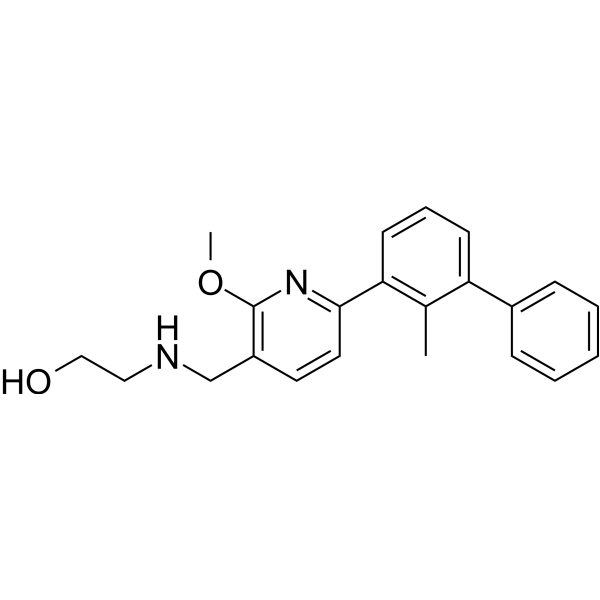
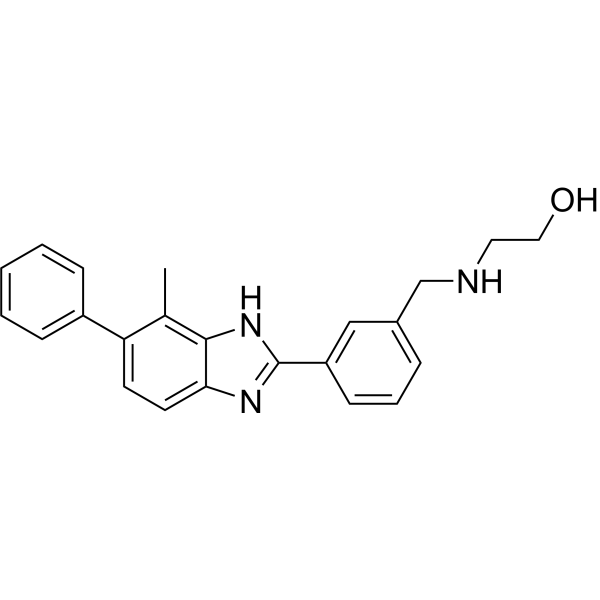
PD-1/PD-L1-IN-9 is a potent and orally active inhibitor of PD-1/PD-L1 interaction, with an IC50 of 3.8 nM. PD-1/PD-L1-IN-9 can enhance the killing activity of tumor cells by immune cells. PD-1/PD-L1-IN-9 also exhibits significant in vivo antitumor activity in a CT26 mouse model .
loading...
    loading...
4
4 Cited Publications
Cat. No.: HY-132192A
Purity:  99.26%
Target:  

PD-1/PD-L1

Research Areas:  

Cancer

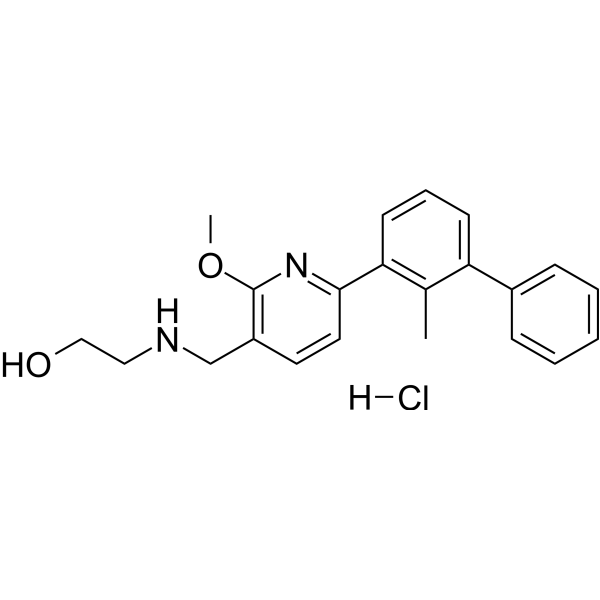
PD-1/PD-L1-IN-9 hydrochloride is a potent and orally active inhibitor of PD-1/PD-L1 interaction, with an IC50 of 3.8 nM. PD-1/PD-L1-IN-9 hydrochloride can enhance the killing activity of tumor cells by immune cells. PD-1/PD-L1-IN-9 hydrochloride also exhibits significant in vivo antitumor activity in a CT26 mouse model .
loading...
    loading...
3
3 Cited Publications
Cat. No.: HY-B0984
CAS No.: 13636-18-5
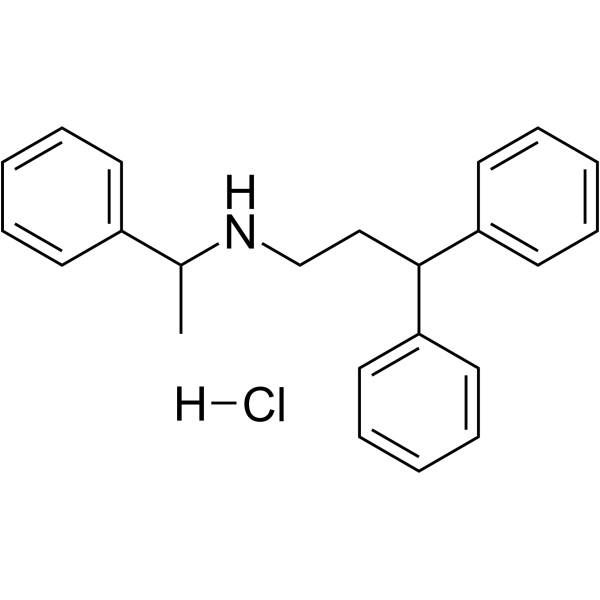
Fendiline hydrochloride, a diphenylalkylamine type of antianginal agent, is an L-type calcium channel blocker (IC50 of 17 µM). Fendiline hydrochloride is also a selective K-Ras inhibitor, and has no effect on H-Ras and N-Ras. Fendiline hydrochloride inhibits K-Ras plasma membrane localization (IC50 of 9.64 μM), inhibits K-Ras signal output and blocks the proliferation of pancreatic, colon, lung, and endometrial cancer cell lines expressing oncogenic mutant K-Ras. Fendiline hydrochloride is a STING agonist and is able to inhibit the growth of multiple refractory cold tumors (MC38, CT26 and B16F10) .
loading...
    loading...
3
3 Cited Publications
Cat. No.: HY-B0984A
CAS No.: 13042-18-7
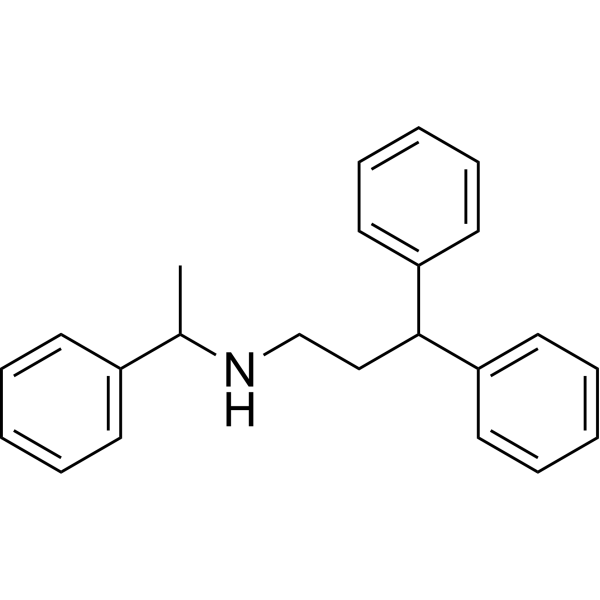
Fendiline, a diphenylalkylamine type of antianginal agent, is an L-type calcium channel blocker (IC50 of 17 µM). Fendiline is also a selective K-Ras inhibitor, and has no effect on H-Ras and N-Ras. Fendiline inhibits K-Ras plasma membrane localization (IC50 of 9.64 μM), inhibits K-Ras signal output and blocks the proliferation of pancreatic, colon, lung, and endometrial cancer cell lines expressing oncogenic mutant K-Ras. Fendiline is a STING agonist and is able to inhibit the growth of multiple refractory cold tumors (MC38, CT26 and B16F10) .
loading...
    loading...
2
2 Cited Publications
Cat. No.: HY-N3389
CAS No.: 66056-19-7
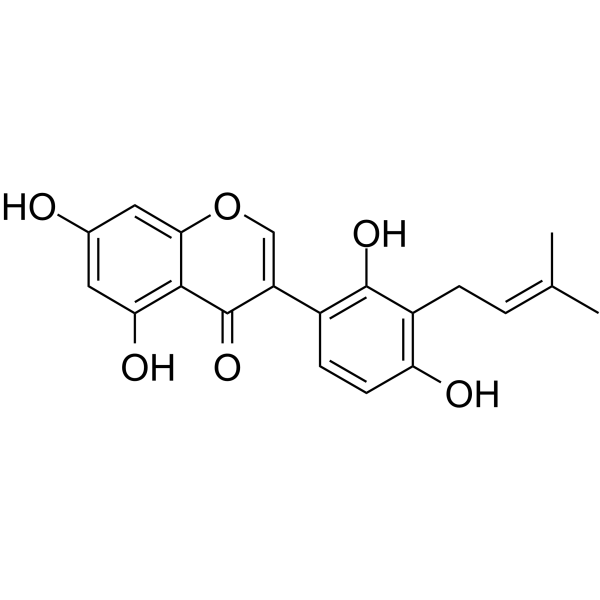
Licoisoflavone A is an orally active isoflavone. Licoisoflavone A inhibits proliferation, induces apoptosis, and causes G1/S phase arrest in colorectal cancer (CRC) cells. Licoisoflavone A inhibits the CDK2-Cyclin E1 axis. Licoisoflavone A inhibits lipid peroxidation with an IC50 of 7.2 μM. Licoisoflavone A shows a dose-dependent inhibition effect on SARS-CoV-2 infection. Licoisoflavone A exhibits significant anti-tumor efficacy in mice bearing CT26 cell subcutaneous xenografts. Licoisoflavone A can be used for the study of colorectal cancer and SARS-CoV-2 infection .
loading...
    loading...
1
1 Cited Publications
Cat. No.: HY-P990680
Anti-Mouse CD40 Antibody (FGK4.5/FGK45) is an agonistic rat-derived IgG2a monoclonal antibody targeting mouse CD40. Anti-Mouse CD40 Antibody (FGK4.5/FGK45) enhances T cells responses, dendritic cells maturation and NK cells activation. Anti-Mouse CD40 Antibody (FGK4.5/FGK45) can be used for the researches of cancer, infection, inflammation and immunology, such as CT26 tumor, vesicular stomatitis virus (VSV) infection and transplantation .
loading...
    loading...
1
1 Cited Publications
Cat. No.: HY-P1684
CAS No.: 1319725-20-6
Synonyms: FOXP3 inhibitor P60
Peptide P60 is a FOXP3 inhibitor. Peptide P60 reduces the nuclear translocation of FOXP3 and impairs FOXP3-mediated inhibition of NF-κB and NFAT activity. Peptide P60 inhibits the immunosuppressive activity of regulatory T cells and restores the proliferation and activation of effector T cells. Peptide P60 induces lymphoproliferative autoimmune syndrome in neonatal ICR mice and reduces the number of CD4 +CD25 +Foxp3 + T cells in the spleen. Peptide P60 enhances the efficacy of AH1 (HY-P4193) peptide vaccine and recombinant adenovirus-based HCV NS3 vaccine in BALB/c mice, including protective effects against CT26 tumor implantation. Peptide P60 can be used in studies related to tumor immunity, viral infection and lymphoproliferative autoimmune syndrome .
loading...
    loading...
Cat. No.: HY-P10439
CAS No.: 2349354-64-7
Target:  

PD-1/PD-L1

Research Areas:  

Inflammation/Immunology Cancer

CVRARTR is a programmed cell death ligand-1 (PD-L1) antagonist with a KD of 281 nM. CVRARTR induces the internalization of PD-L1 and downregulates PD-L1 on the cell surface. CVRARTR restores cytokine secretion and T cell proliferation in cell CT26. CVRARTR exhibits antitumor efficacy against in CT26 homograft mouse model. CVRARTR can be used in melanoma research .
loading...
    loading...
Cat. No.: HY-162275
CAS No.: 861224-48-8
Research Areas:  

Cancer

JMJD1C-IN-1 is an orally active and selective inhibitor of JMJD1C (IC50 = 0.59 μM, Kd = 1.96 μM). JMJD1C-IN-1 inhibits the binding of JMJD1C to H3K9me2 peptide substrate in the HTRF assay (IC50 = 1.47 μM). JMJD1C-IN-1 disrupts intratumoral regulatory T (Treg) cell fitness by dual mechanisms: promoting H3K9me2 accumulation to downregulate PD1 expression and reducing STAT3 demethylation to enhance STAT3 activation. JMJD1C-IN-1 demonstrates dose-dependent antitumor efficacy in multiple mouse tumor models (MCA205 fibrosarcoma, B16-F10 melanoma, LLC lung cancer, Hepa1-6 hepatocellular carcinoma, CT26 colorectal cancer). JMJD1C-IN-1 can be used for the study of tumor immunotherapy by selectively targeting intratumoral Treg cells .
loading...
    loading...
Cat. No.: HY-176806
CAS No.: 606967-53-7
Synonyms: Doxorubicin-LNAA-Boc
Target:  

Drug Derivative

Research Areas:  

Cancer

Legubicin (Doxorubicin-LNAA-Boc) is a novel conjugate of Doxorubicin (HY-15142A) and a Legumain-cleavable peptide linker. Legubicin is activated by Legumain to release leucine-doxorubicin while sparing normal tissues. Legubicin inhibits tumor cell growth and reduces DNA binding in non-legumain expressing cells. Legubicin completely arrests tumor growth in mice bearing CT26 tumors. Legubicin can be used for the study of colon carcinoma (CRC) .
loading...
    loading...
Cat. No.: HY-155971
CAS No.: 2614183-36-5
Purity:  99.44%
Target:  

Autophagy

Research Areas:  

Inflammation/Immunology Cancer

VISTA-IN-2 (Compound 1) is an inhibitor of V-domain Ig suppressor of T-cell activation (VISTA). VISTA-IN-2 induces VISTA degradation in cells through an autophagic mechanism. VISTA-IN-2 rescues VISTA-mediated immunosuppression, and enhances antitumor activity of immune cells. VISTA-IN-2 also activates the antitumor immunity and inhibits tumor growth in a CT26 mouse model .
loading...
    loading...
Cat. No.: HY-B0984R
CAS No.: 13636-18-5
Fendiline (hydrochloride) (Standard) is the analytical standard of Fendiline (hydrochloride). This product is intended for research and analytical applications. Fendiline hydrochloride, a diphenylalkylamine type of antianginal agent, is an L-type calcium channel blocker (IC50 of 17 µM). Fendiline hydrochloride is also a selective K-Ras inhibitor, and has no effect on H-Ras and N-Ras. Fendiline hydrochloride inhibits K-Ras plasma membrane localization (IC50 of 9.64 μM), inhibits K-Ras signal output and blocks the proliferation of pancreatic, colon, lung, and endometrial cancer cell lines expressing oncogenic mutant K-Ras. Fendiline hydrochloride is a STING agonist and is able to inhibit the growth of multiple refractory cold tumors (MC38, CT26 and B16F10) .
loading...
    loading...
Cat. No.: HY-155068
CAS No.: 2417298-29-2
Purity:  98.04%
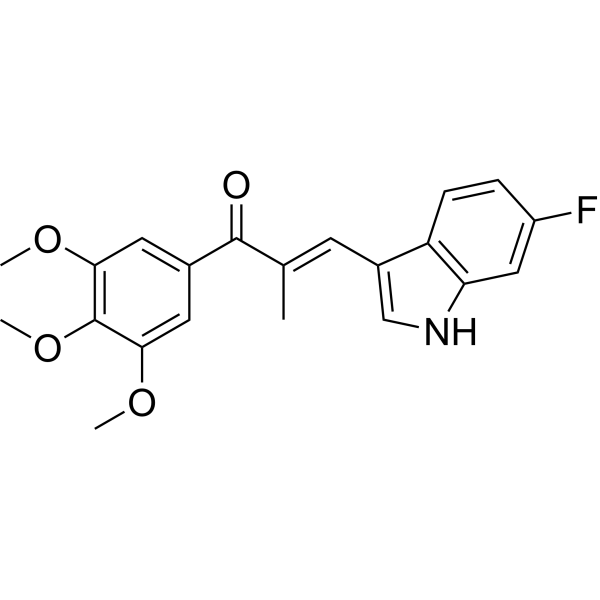
FC-11 is a tubulin inhibitor. FC-116 inhibits the proliferation of colorectal cancer (CRC) cells, with IC50 values of 4.52 nM for HCT116 cells and 18.69 nM for CT26 cells. FC-11 can induce ER stress to generate excess ROS, leading to mitochondrial damage, thereby promoting apoptosis in colorectal cancer (CRC) cells by targeting microtubules. FC-116 exerts potent anti-tumor effects in vivo. FC-11 can be used for the study of colorectal cancer .
loading...
    loading...
Cat. No.: HY-169859
CAS No.: 3035217-40-1
EP4 receptor antagonist 7 (Compound 14) is an antagonist of the prostaglandin E2 (PGE2) receptor subtype EP4 with an IC50 value of 1.1 nM. EP4 receptor antagonist 7 inhibits PGE2-induced β-arrestin recruitment in HEK293 cells with an IC50 value of 0.9 nM. EP4 receptor antagonist 7 decreases PGE2-induced expression of mRNA encoding IL-4, macrophage mannose receptor 1 (Mrc1), chitinase-like protein 3 (Chil3), chemokine (C-X-C) motif ligand 1 (Cxcl1), triggering receptor expressed on myeloid cells 2 (Trem2), and arginase-1 (Arg1), in RAW 264.7 macrophages. EP4 receptor antagonist 7 combined with an anti-PD-1 antibody inhibits tumor growth and increases infiltration of CD 8+ T cells into tumors in a CT26 murine colon cancer model .
loading...
    loading...
Cat. No.: HY-179211
Target:  

HSP MHC

Research Areas:  

Cancer

CliMB-325 is an HSP90 inhibitor that can induce MHC-I (EC50 = 498 nM) expression on the surface of CT26 murine colorectal cancer cells. CliMB-325 enhances T cell activation and exhibits lower toxicity. CliMB-325 can be used for the study of colorectal cancer .
loading...
    loading...
Cat. No.: HY-178954
CAS No.: 2456309-77-4
Research Areas:  

Cancer

IDO1-IN-32 (Compound 45) is a potent and orally effective IDO1 inhibitor with an IC50 of 10 pM. IDO1-IN-32 exhibits significant anti-proliferative activity against Hela cells. IDO1-IN-32 can significantly inhibit tumor growth in CT26 and LCC transplanted mouse models by activating anti-tumor immunity. IDO1-IN-32 can be used for research on colon cancer and breast cancer .
loading...
    loading...
Cat. No.: HY-178378
G9a-IN-4 is a G9a inhibitor with high selectivity (IC50 = 32 nM). G9a-IN-4 shows high selectivity against the other tested lysine/arginine methyltransferases. G9a-IN-4 exhibits high enzymatic activity against G9a and more potent antiproliferative effects against all tested cancer cells. G9a-IN-4 significantly suppresses the H3K9me2 level. G9a-IN-4 triggers autophagy by inducing the production of ROS, thus leading to cell apoptosis and cell cycle arrest at G0/G1 in CT26 colon cells. G9a-IN-4 can be used for the study of colon cancer .
loading...
    loading...
Cat. No.: HY-178032
PARP1-IN-44, an Olaparib (HY-10162) derivative, is an orally active PARP1 inhibitor (IC50 = 0.6 nM), and also inhibits PARP2 (IC50 = 1.0 nM) and PARP7 (IC50 = 7.5 nM). PARP1-IN-44 has selective antiproliferative activity against BRCA-deficient cancer cells with minimal toxicity to normal cells. PARP1-IN-44 induces G2/M phase arrest, promotes apoptosis, elevates ROS levels, disrupts mitochondrial membrane potential. PARP1-IN-44 suppresses PARylation while increasing γH2AX accumulation. PARP1-IN-44 activates the cGAS-STING pathway, upregulating IFN-β and CXCL10 expression. PARP1-IN-44 enhancing CD8+ T cell infiltration in a CT26 tumor mouse model, demonstrating robust in vivo antitumor efficacy .
loading...
    loading...
Cat. No.: HY-169239
CAS No.: 2607107-76-4
Target:  

MAGL

Research Areas:  

Cancer

MAGL-IN-20 (compound ±34) is a reversible monoacylglycerol lipase (MAGL) inhibitor. MAGL-IN-20 exhibits appreciable antiproliferative activities against several cancer cells, including H460, HT29, CT-26, Huh7 and HCCLM-3. .
loading...
    loading...
Cat. No.: HY-162766
CAS No.: 3040164-45-9
Target:  

Apoptosis

Research Areas:  

Cancer

Antitumor agent-184 (compound 12aa) induces cell apoptosis, with the IC50s of 2.35 μM, 7.32 μM and 10.31 μM in B16-F10 cells, 4T1 cells and CT26 cells, respectively .
loading...
    loading...

