



Search Result
Results for "
Chimeric peptide
" in MedChemExpress (MCE) Product Catalog:
| Cat. No. |
Product Name |
Target |
Research Areas |
Chemical Structure |
-
- HY-15940
-
|
5(6)-FAM; 5-(and-6)-Carboxyfluorescein mixed isomers
|
Fluorescent Dye
|
Cancer
|
|
5(6)-Carboxyfluorescein (5(6)-FAM) is an amine-reactive pH-sensitive green fluorescent probe. 5(6)-Carboxyfluorescein (5(6)-FAM) can be used to label proteins, peptides and nucleotides. 5(6)-Carboxyfluorescein can be used for the detection of tumour areas in vivo .
|
-
-
- HY-P3508
-
|
|
MDM-2/p53
|
Cancer
|
|
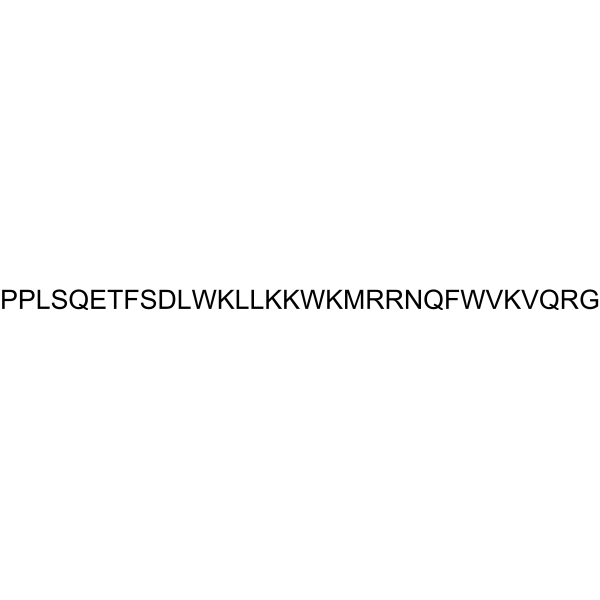
PNC-27, a chimeric p53-penetratin peptide binds to HDM-2 in a p53 peptide-like structure, induces selective membrane-pore formation and leads to cancer cell lysis. PNC-27 is an anticancer peptide. PNC-27 can be used in acute myeloid leukemia research .
|
-
-
- HY-P4086
-
|
|
RABV
nAChR
|
Neurological Disease
Cancer
|
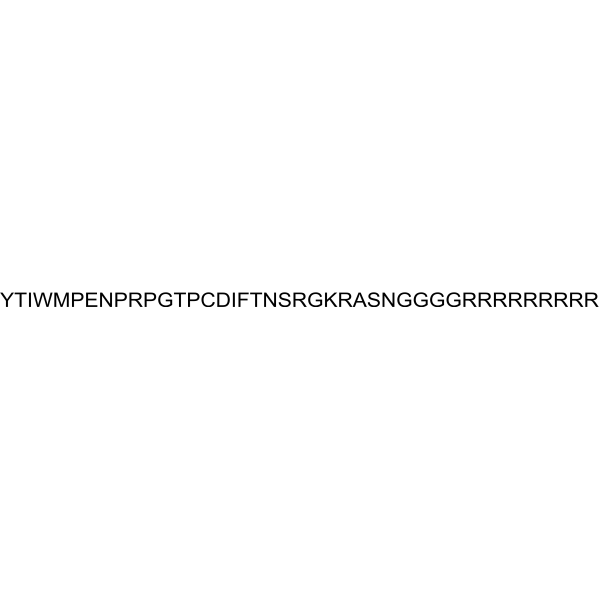
Chimeric Rabies Virus Glycoprotein Fragment (RVG-9R) is a cell-penetrating peptide that is synthesized by adding nona-arginine motif to the carboxy terminus of RVG (rabies virus glycoprotein). Chimeric Rabies Virus Glycoprotein Fragment (RVG-9R) binds to nAChR on neuronal cells to mediate receptor-mediated endocytosis and targeted siRNA delivery. Chimeric Rabies Virus Glycoprotein Fragment (RVG-9R) protects complexed siRNA from degradation, enhances transcellular siRNA delivery in neuronal cells, and promotes efficient, pecific gene silencing. Chimeric Rabies Virus Glycoprotein Fragment (RVG-9R) can be used for the researches of neurological disease and cancer .
|
-
-
- HY-P3508A
-
|
|
MDM-2/p53
|
Cancer
|
|
PNC-27 acetate, a chimeric p53-penetratin peptide binds to HDM-2 in a p53 peptide-like structure, induces selective membrane-pore formation and leads to cancer cell lysis. PNC-27 acetate is an anticancer peptide. PNC-27 acetate can be used in acute myeloid leukemia research .
|
-
-
- HY-P4119
-
|
|
Biochemical Assay Reagents
|
Others
|
|
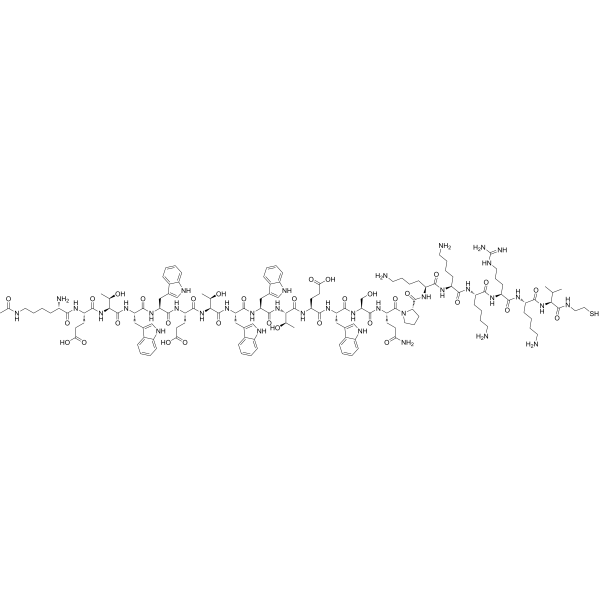
Pep-1-Cysteamine is an amphipathic chimeric cell-penetrating peptide. Pep-1-Cysteamine can penetrate biological membranes in an energy-independent manner without forming transmembrane pores, and efficiently deliver active proteins into cells, with its translocation dominated by electrostatic interactions and membrane perturbation .
|
-
-
- HY-P1135
-
|
|
Neuropeptide Y Receptor
|
Neurological Disease
|
|
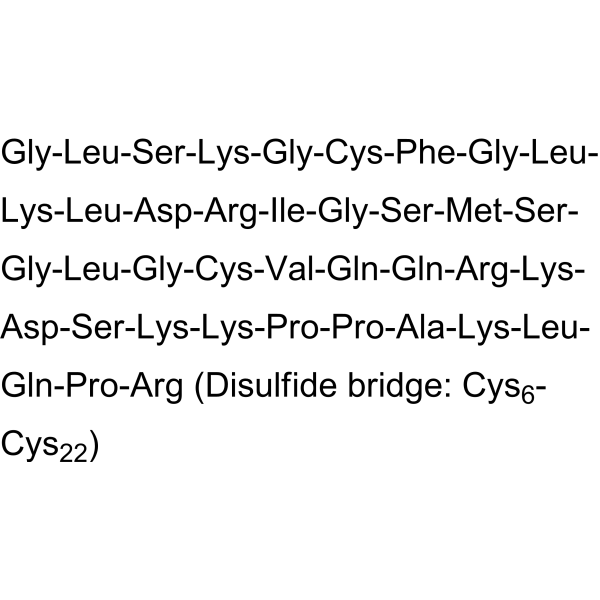
M1145, a chimeric peptide, is a selective galanin receptor type 2 (GAL2) agonist, with a Ki of 6.55 nM. M1145 shows more than 90-fold higher affinity for GAL2 over GAL1 (Ki=587 nM) and a 76-fold higher affinity over GalR3 (Ki=497 nM). M1145 has an additive effect on the signal transduction of galanin .
|
-
-
- HY-P3203A
-
|
|
TNF Receptor
|
Inflammation/Immunology
|
|
DSTYSLSSTLTLSK TFA is a generic human peptide and can be used for infliximab quantitative detection . Infliximab (Avakine) is a chimeric monoclonal IgG1 antibody that specifically binds to TNF-α.
|
-
-
- HY-P3743
-
|
|
Src
Others
|
Others
|
|
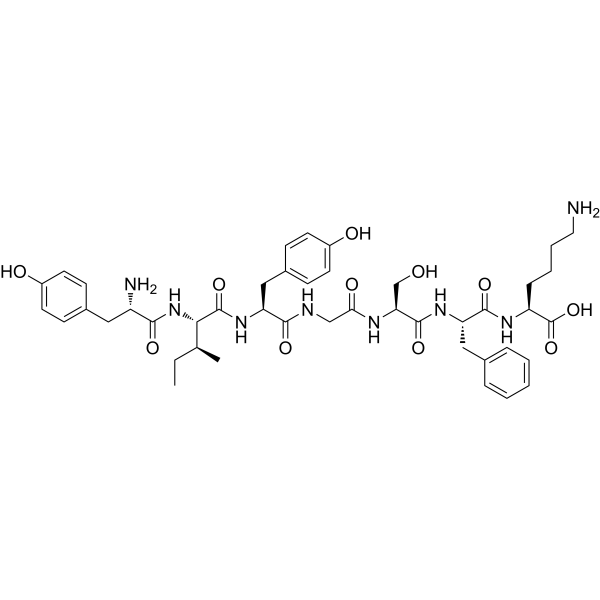
p60c-src Substrate is an efficient and specific substrate for p60c-src protein tyrosine kinase (PTK). p60c-src Substrate can be used to synthesize chimeric branched peptides .
|
-
-
- HY-P991158
-
|
|
TGF-β Receptor
|
Neurological Disease
|
|
Rinvatercept, a fusion protein, is a glycyl (1)-chimeric N-terminal (1-108)-peptide (2-109) combined from the sequences of the extracellular domains of the human ACVR2A/B, and is fused via a G3 peptide linker (110-112) to an immunoglobulin G1 (IgG1) Fc fragment. Rinvatercept can be used for research of neuromuscular disease .
|
-
-
- HY-P3149
-
|
|
TNF Receptor
|
Inflammation/Immunology
|
|
LEESGGGLVQPGGSMK, a proteolysis peptide, is a component of Infliximab. LEESGGGLVQPGGSMK can be used for quantitative analysis of Infliximab. Infliximab is a chimeric monoclonal IgG1 antibody that specifically binds to TNF-α .
|
-
-
- HY-P10417
-
|
|
Integrin
IFNAR
|
Cancer
|
|
RTDLDSLRTYTL is an Alpha (v) beta (6) integrin (avb6) inhibitor with high affinity and specificity. RTDLDSLRTYTL binds to avb6 integrin, a peptide sequence that activates cytotoxicity and cytokine production in T cells, such as interferon-gamma. RTDLDSLRTYTL is designed through a chimeric T cell antigen receptor (CAR) so that T cells can be redirected to specifically recognize and attack tumor cells. RTDLDSLRTYTL can be used in the research of cancer immunotherapy and targeted drug development .
|
-
-
- HY-P11090
-
|
|
MHC
|
Inflammation/Immunology
|
|
TpD is a chimeric T-helper epitope. TpD has a special site that cathepsin can cut. Immunization with TpD produces a strong antibody response. TpD promotes long-term CD4 immune responses in animals and humans. TpD binds well to many human MHC class II types, mainly HLA-DRB1. It also binds some other HLA alleles like DRB3, DRB4, DRB5, DP, and DQ. TpD can be used to improve the immune response of peptide vaccines .
|
-
-
- HY-P5765
-
|
|
Neuropeptide Y Receptor
|
Neurological Disease
|
|
Galanin (1-13)-spantide I is a chimeric peptide composed of the N-terminal fragment of galanin (amino acids 1-13) and spantide, a known substance P receptor antagonist. Galanin (1-13)-spantide I has a high affinity for spinal galanin receptor (Kd=1.16 nM). Galanin (1-13)-spantide I can be used to study the effects of galanin on feeding behavior .
|
-
-
- HY-P11457
-
|
|
Bacterial
|
Infection
|
|
cCBD-LL37 is a chimeric antimicrobial peptide modified with a collagen-binding domain (cCBD) (TKKTLRT). cCBD-LL37 has improved retention on collagen after PBS washing and varying electrostatic conditions. cCBD-LL37 binds to collagen involves both specific and non-specific interactions, initiated by long-range electrostatic forces that transitions to close range or hydrophobic interactions. cCBD-LL37 has potent antimicrobial activity with improved structural stability under different ionic strengths and pH conditions (pH 5.5-8). cCBD-LL37 can be used for biomaterials like collagen-based wound dressings research .
|
-
-
- HY-P3149B
-
|
|
TNF Receptor
|
Inflammation/Immunology
|
|
LEESGGGLVQPGGSMK acetate, a proteolysis peptide, is a component of Infliximab. LEESGGGLVQPGGSMK acetate can be used for quantitative analysis of Infliximab. Infliximab is a chimeric monoclonal IgG1 antibody that specifically binds to TNF-α .
|
-
-
- HY-P3203
-
-
-
- HY-P3149A
-
|
|
TNF Receptor
|
Inflammation/Immunology
|
|
LEESGGGLVQPGGSMK TFA, a proteolysis peptide, is a component of Infliximab. LEESGGGLVQPGGSMK TFA can be used for quantitative analysis of Infliximab. Infliximab is a chimeric monoclonal IgG1 antibody that specifically binds to TNF-α .
|
-
-
- HY-P10832
-
|
|
Apoptosis
Ras
Raf
MEK
ERK
Caspase
PARP
Bcl-2 Family
|
Cancer
|
|
ATWLPPRAANLLMAAS is a chimeric peptide with anti-angiogenic and potent anti-tumor effects. ATWLPPRAANLLMAAS can inhibit the proliferation, viability, migration, and invasion of human hepatocellular carcinoma cells, and induce apoptosis. .
|
-
-
- HY-P5169
-
|
|
Apolipoprotein
Amino Acid Derivatives
|
Inflammation/Immunology
|
|
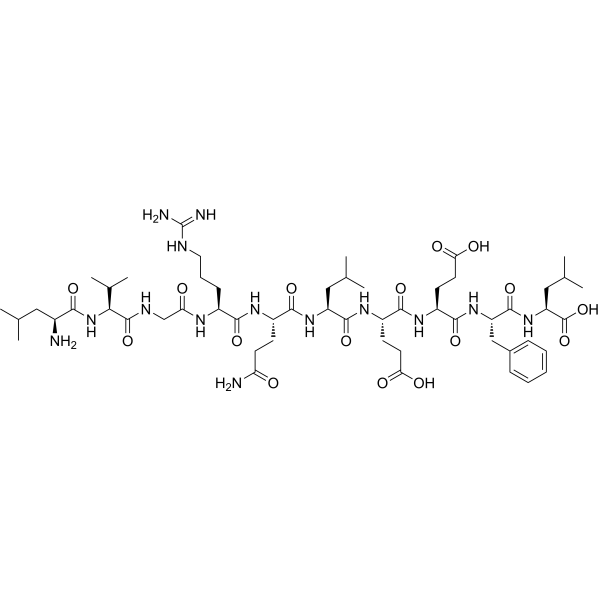
LVGRQLEEFL (mouse) can be named as G * peptide, corresponding to amino acids 113 to 122 in apolipoprotein J ([113,122] apoJ)}. LVGRQLEEFL (mouse) exhibits anti-inflammatory and anti-atherogenic properties. LVGRQLEEFL (mouse) can be added to an apoJ mimetic, to form HM-10/10 peptide, which is a mimetic peptide and a novel chimeric high density lipoprotein. HM-10/10 peptide protects retinal pigment epithelium (RPE) and photoreceptors from oxidant induced cell death .
|
-
-
- HY-P5169A
-
|
|
Apolipoprotein
Amino Acid Derivatives
|
Inflammation/Immunology
|
|
LVGRQLEEFL (mouse) TFA can be named as G * peptide, corresponding to amino acids 113 to 122 in apolipoprotein J ([113,122] apoJ)}. LVGRQLEEFL (mouse) TFA exhibits anti-inflammatory and anti-atherogenic properties. LVGRQLEEFL (mouse) TFA can be added to an apoJ mimetic, to form HM-10/10 peptide, which is a mimetic peptide and a novel chimeric high density lipoprotein. HM-10/10 peptide protects retinal pigment epithelium (RPE) and photoreceptors from oxidant induced cell death .
|
-
-
- HY-P1135A
-
|
|
Neuropeptide Y Receptor
|
Neurological Disease
|
|
M1145 TFA, a chimeric peptide, is a selective galanin receptor type 2 (GAL2) agonist, with a Ki of 6.55 nM. M1145 TFA shows more than 90-fold higher affinity for GAL2 over GAL1 (Ki=587 nM) and a 76-fold higher affinity over GalR3 (Ki=497 nM). M1145 TFA has an additive effect on the signal transduction of galanin .
|
-
-
- HY-P11220
-
|
|
Bacterial
Interleukin Related
|
Infection
|
|
Hs02 is a cationic amphiphilic antibacterial peptide derived from human proteins, and it is the membrane-active module of the core chimeric peptide Chim2. Hs02 exhibits broad-spectrum and potent antibacterial activity against various human pathogenic bacteria with the MIC for Staphylococcus aureus and Escherichia coli of as low as 2 μM, and the MBC is 2-4 μM. Hs02 primarily kills bacteria by disrupting the integrity of the bacterial cell membrane, and it has a relatively low selectivity for eukaryotic cell membranes. Hs02 induces the release of IL-12 but does not induce the release of IL-6, indicating its potential for pro-inflammatory or immune activation. Hs02 can be used in antibacterial and immunomodulatory research .
|
-
-
- HY-P10417B
-
|
|
Integrin
IFNAR
|
Cancer
|
|
RTDLDSLRTYTL TFA is an Alpha (v) beta (6) integrin (avb6) inhibitor with high affinity and specificity. RTDLDSLRTYTL TFA binds to avb6 integrin, a peptide sequence that activates cytotoxicity and cytokine production in T cells, such as interferon-gamma. RTDLDSLRTYTL TFA is designed through a chimeric T cell antigen receptor (CAR) so that T cells can be redirected to specifically recognize and attack tumor cells. RTDLDSLRTYTL TFA can be used in the research of cancer immunotherapy and targeted drug development .
|
-
| Cat. No. |
Product Name |
Type |
-
- HY-15940
-
|
5(6)-FAM; 5-(and-6)-Carboxyfluorescein mixed isomers
|
Fluorescent Dye
|
|
5(6)-Carboxyfluorescein (5(6)-FAM) is an amine-reactive pH-sensitive green fluorescent probe. 5(6)-Carboxyfluorescein (5(6)-FAM) can be used to label proteins, peptides and nucleotides. 5(6)-Carboxyfluorescein can be used for the detection of tumour areas in vivo .
|
| Cat. No. |
Product Name |
Target |
Research Area |
-
- HY-P3508
-
|
|
MDM-2/p53
|
Cancer
|
|
PNC-27, a chimeric p53-penetratin peptide binds to HDM-2 in a p53 peptide-like structure, induces selective membrane-pore formation and leads to cancer cell lysis. PNC-27 is an anticancer peptide. PNC-27 can be used in acute myeloid leukemia research .
|
-
- HY-P4086
-
|
|
RABV
nAChR
|
Neurological Disease
Cancer
|
Chimeric Rabies Virus Glycoprotein Fragment (RVG-9R) is a cell-penetrating peptide that is synthesized by adding nona-arginine motif to the carboxy terminus of RVG (rabies virus glycoprotein). Chimeric Rabies Virus Glycoprotein Fragment (RVG-9R) binds to nAChR on neuronal cells to mediate receptor-mediated endocytosis and targeted siRNA delivery. Chimeric Rabies Virus Glycoprotein Fragment (RVG-9R) protects complexed siRNA from degradation, enhances transcellular siRNA delivery in neuronal cells, and promotes efficient, pecific gene silencing. Chimeric Rabies Virus Glycoprotein Fragment (RVG-9R) can be used for the researches of neurological disease and cancer .
|
-
- HY-P3508A
-
|
|
MDM-2/p53
|
Cancer
|
|
PNC-27 acetate, a chimeric p53-penetratin peptide binds to HDM-2 in a p53 peptide-like structure, induces selective membrane-pore formation and leads to cancer cell lysis. PNC-27 acetate is an anticancer peptide. PNC-27 acetate can be used in acute myeloid leukemia research .
|
-
- HY-P4119
-
|
|
Biochemical Assay Reagents
|
Others
|
|
Pep-1-Cysteamine is an amphipathic chimeric cell-penetrating peptide. Pep-1-Cysteamine can penetrate biological membranes in an energy-independent manner without forming transmembrane pores, and efficiently deliver active proteins into cells, with its translocation dominated by electrostatic interactions and membrane perturbation .
|
-
- HY-P3203A
-
|
|
TNF Receptor
|
Inflammation/Immunology
|
|
DSTYSLSSTLTLSK TFA is a generic human peptide and can be used for infliximab quantitative detection . Infliximab (Avakine) is a chimeric monoclonal IgG1 antibody that specifically binds to TNF-α.
|
-
- HY-P3743
-
|
|
Src
Peptides
|
Others
|
|
p60c-src Substrate is an efficient and specific substrate for p60c-src protein tyrosine kinase (PTK). p60c-src Substrate can be used to synthesize chimeric branched peptides .
|
-
- HY-P11023
-
|
|
Peptides
|
Metabolic Disease
Inflammation/Immunology
Cancer
|
|
E16-uPA24 is a chimeric peptide targeting urokinase-type plasminogen activator receptor (uPAR). E16-uPA24 modifies senescent cells surface with polyglutamic acid, promoting immune cell-mediated responses through glutamate recognition. E16-uPA24 induces immune clearance of senescent cells and restores tissue homeostasis by enhancing immune cells recruitment and directly coupling senescent cells and immune cells. E16-uPA24 can be used for tissue degeneration, chronic inflammatory disease and age-related tumorigenesis research .
|
-
- HY-P4119A
-
|
|
Peptides
|
Others
|
|
Pep-1-Cysteamine TFA is a chimeric cell-penetrating peptide (CPP) with a primary amphipathicity. Pep-1-Cysteamine TFA has the ability to translocate across biological membranes and introduce active proteins inside cells .
|
-
- HY-P5129
-
|
|
Peptides
|
Others
|
|
ASB20123 is a CNP/ghrelin chimeric peptide. ASB20123 stimulate bone growth. ASB20123 can be used in research of growth disorders and dwarfism .
|
-
- HY-P3149
-
|
|
TNF Receptor
|
Inflammation/Immunology
|
|
LEESGGGLVQPGGSMK, a proteolysis peptide, is a component of Infliximab. LEESGGGLVQPGGSMK can be used for quantitative analysis of Infliximab. Infliximab is a chimeric monoclonal IgG1 antibody that specifically binds to TNF-α .
|
-
- HY-P10417
-
|
|
Integrin
IFNAR
|
Cancer
|
|
RTDLDSLRTYTL is an Alpha (v) beta (6) integrin (avb6) inhibitor with high affinity and specificity. RTDLDSLRTYTL binds to avb6 integrin, a peptide sequence that activates cytotoxicity and cytokine production in T cells, such as interferon-gamma. RTDLDSLRTYTL is designed through a chimeric T cell antigen receptor (CAR) so that T cells can be redirected to specifically recognize and attack tumor cells. RTDLDSLRTYTL can be used in the research of cancer immunotherapy and targeted drug development .
|
-
- HY-P11090
-
|
|
MHC
|
Inflammation/Immunology
|
|
TpD is a chimeric T-helper epitope. TpD has a special site that cathepsin can cut. Immunization with TpD produces a strong antibody response. TpD promotes long-term CD4 immune responses in animals and humans. TpD binds well to many human MHC class II types, mainly HLA-DRB1. It also binds some other HLA alleles like DRB3, DRB4, DRB5, DP, and DQ. TpD can be used to improve the immune response of peptide vaccines .
|
-
- HY-P5765
-
|
|
Neuropeptide Y Receptor
|
Neurological Disease
|
|
Galanin (1-13)-spantide I is a chimeric peptide composed of the N-terminal fragment of galanin (amino acids 1-13) and spantide, a known substance P receptor antagonist. Galanin (1-13)-spantide I has a high affinity for spinal galanin receptor (Kd=1.16 nM). Galanin (1-13)-spantide I can be used to study the effects of galanin on feeding behavior .
|
-
- HY-P11457
-
|
|
Bacterial
|
Infection
|
|
cCBD-LL37 is a chimeric antimicrobial peptide modified with a collagen-binding domain (cCBD) (TKKTLRT). cCBD-LL37 has improved retention on collagen after PBS washing and varying electrostatic conditions. cCBD-LL37 binds to collagen involves both specific and non-specific interactions, initiated by long-range electrostatic forces that transitions to close range or hydrophobic interactions. cCBD-LL37 has potent antimicrobial activity with improved structural stability under different ionic strengths and pH conditions (pH 5.5-8). cCBD-LL37 can be used for biomaterials like collagen-based wound dressings research .
|
-
- HY-P11229
-
|
|
Peptides
|
Infection
Inflammation/Immunology
|
|
GGGGSGGGGS is a chimeric peptide composed of four peptides. GGGGSGGGGS can efficiently bind to small intestinal submucosa (SIS) membranes. GGGGSGGGGS can be used for research on infectious or inflammatory conditions .
|
-
- HY-P3149B
-
|
|
TNF Receptor
|
Inflammation/Immunology
|
|
LEESGGGLVQPGGSMK acetate, a proteolysis peptide, is a component of Infliximab. LEESGGGLVQPGGSMK acetate can be used for quantitative analysis of Infliximab. Infliximab is a chimeric monoclonal IgG1 antibody that specifically binds to TNF-α .
|
-
- HY-P3203
-
-
- HY-P3149A
-
|
|
TNF Receptor
|
Inflammation/Immunology
|
|
LEESGGGLVQPGGSMK TFA, a proteolysis peptide, is a component of Infliximab. LEESGGGLVQPGGSMK TFA can be used for quantitative analysis of Infliximab. Infliximab is a chimeric monoclonal IgG1 antibody that specifically binds to TNF-α .
|
-
- HY-P10832
-
|
|
Apoptosis
Ras
Raf
MEK
ERK
Caspase
PARP
Bcl-2 Family
|
Cancer
|
|
ATWLPPRAANLLMAAS is a chimeric peptide with anti-angiogenic and potent anti-tumor effects. ATWLPPRAANLLMAAS can inhibit the proliferation, viability, migration, and invasion of human hepatocellular carcinoma cells, and induce apoptosis. .
|
-
- HY-P5169
-
|
|
Apolipoprotein
Amino Acid Derivatives
|
Inflammation/Immunology
|
|
LVGRQLEEFL (mouse) can be named as G * peptide, corresponding to amino acids 113 to 122 in apolipoprotein J ([113,122] apoJ)}. LVGRQLEEFL (mouse) exhibits anti-inflammatory and anti-atherogenic properties. LVGRQLEEFL (mouse) can be added to an apoJ mimetic, to form HM-10/10 peptide, which is a mimetic peptide and a novel chimeric high density lipoprotein. HM-10/10 peptide protects retinal pigment epithelium (RPE) and photoreceptors from oxidant induced cell death .
|
-
- HY-P5169A
-
|
|
Apolipoprotein
Amino Acid Derivatives
|
Inflammation/Immunology
|
|
LVGRQLEEFL (mouse) TFA can be named as G * peptide, corresponding to amino acids 113 to 122 in apolipoprotein J ([113,122] apoJ)}. LVGRQLEEFL (mouse) TFA exhibits anti-inflammatory and anti-atherogenic properties. LVGRQLEEFL (mouse) TFA can be added to an apoJ mimetic, to form HM-10/10 peptide, which is a mimetic peptide and a novel chimeric high density lipoprotein. HM-10/10 peptide protects retinal pigment epithelium (RPE) and photoreceptors from oxidant induced cell death .
|
-
- HY-P10021
-
-
- HY-P1135A
-
|
|
Neuropeptide Y Receptor
|
Neurological Disease
|
|
M1145 TFA, a chimeric peptide, is a selective galanin receptor type 2 (GAL2) agonist, with a Ki of 6.55 nM. M1145 TFA shows more than 90-fold higher affinity for GAL2 over GAL1 (Ki=587 nM) and a 76-fold higher affinity over GalR3 (Ki=497 nM). M1145 TFA has an additive effect on the signal transduction of galanin .
|
-
- HY-P11220
-
|
|
Bacterial
Interleukin Related
|
Infection
|
|
Hs02 is a cationic amphiphilic antibacterial peptide derived from human proteins, and it is the membrane-active module of the core chimeric peptide Chim2. Hs02 exhibits broad-spectrum and potent antibacterial activity against various human pathogenic bacteria with the MIC for Staphylococcus aureus and Escherichia coli of as low as 2 μM, and the MBC is 2-4 μM. Hs02 primarily kills bacteria by disrupting the integrity of the bacterial cell membrane, and it has a relatively low selectivity for eukaryotic cell membranes. Hs02 induces the release of IL-12 but does not induce the release of IL-6, indicating its potential for pro-inflammatory or immune activation. Hs02 can be used in antibacterial and immunomodulatory research .
|
-
- HY-P10417B
-
|
|
Integrin
IFNAR
|
Cancer
|
|
RTDLDSLRTYTL TFA is an Alpha (v) beta (6) integrin (avb6) inhibitor with high affinity and specificity. RTDLDSLRTYTL TFA binds to avb6 integrin, a peptide sequence that activates cytotoxicity and cytokine production in T cells, such as interferon-gamma. RTDLDSLRTYTL TFA is designed through a chimeric T cell antigen receptor (CAR) so that T cells can be redirected to specifically recognize and attack tumor cells. RTDLDSLRTYTL TFA can be used in the research of cancer immunotherapy and targeted drug development .
|
| Cat. No. |
Product Name |
Target |
Research Area |
Image |
-
- HY-P991158
-
|
|
TGF-β Receptor
|
Neurological Disease
|
|
Rinvatercept, a fusion protein, is a glycyl (1)-chimeric N-terminal (1-108)-peptide (2-109) combined from the sequences of the extracellular domains of the human ACVR2A/B, and is fused via a G3 peptide linker (110-112) to an immunoglobulin G1 (IgG1) Fc fragment. Rinvatercept can be used for research of neuromuscular disease .
|
-
(5)
Your information is safe with us. * Required Fields.
Inquiry Information
- Product Name:
- Cat. No.:
- Quantity:
- MCE Japan Authorized Agent:

