1. Search Result
Search Result
Results for "

Enterobacter

" in MedChemExpress (MCE) Product Catalog:

32

Inhibitors & Agonists

1

Peptides

5

Natural
Products

2

Recombinant Proteins

Cat. No. Nombre del producto Target Áreas de investigación Chemical Structure
  • HY-A0086

    SCH-20569 sulfate

    Bacterial Antibiotic Infection
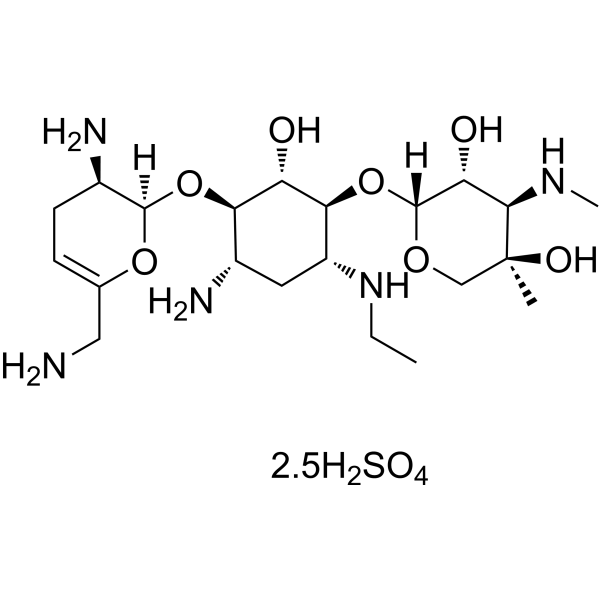
    Netilmicin (Sch 20569) sulfate is a broad-spectrum semisynthetic aminoglycoside antibiotic. Netilmicin sulfate exhibits antibacterial activity against aminoglycoside-susceptible gram-negative strains and aminoglycoside-resistant strain, such as Escherichia coli, Pseudomonas aeruginosa, Proteus, Staphylococcus aureus, Streptococcus, Serratia, and Enterobacter, with MIC of 0.125-8 μg/mL .
    Netilmicin sulfate
  • HY-N9691

    α-Curcumene

    Fungal Bacterial Infection
    Curcumene (α-Curcumene) is a monocyclic sesquiterpene found in the essential oil of rhizomes of Curcuma aromatica Salisb. Curcumene has antifungal and antibacterial activities. Curcumene can be used for the research of infection .
    Curcumene
  • HY-N2840
    Allitol
    1 Publications Verification

    Allodulcitol

    Others Metabolic Disease
    Allitol (Allodulcitol) is an orally active rare sugar alcohol found in Itea virginica L, Tylopilus plumbeoviolaceus. Allitol has anti-obesity and hypoglycaemic activities. Allitol reduces carcass and total body fat mass, increases cecal weight, surface area, and short-chain fatty acid production, and upregulates cecal microbial enzymes linked to butyrate metabolism. Allitol can be used for the researches of obesity and diabetes .
    Allitol
  • HY-B0771A

    SCE-2787 hydrochloride

    Antibiotic Bacterial Penicillin-binding protein (PBP) Infection
    Cefozopran (SCE-2787) hydrochloride is a potent antibiotic with broad-spectrum antibacterial activity. Cefozopran hydrochloride binds PBPs, induces cell wall destruction, cell elongation, filamentation, irregular septa formation, and bactericidal, bacteriolytic activity. Cefozopran hydrochloride reduces bacterial counts and eradicates bacteria in mouse respiratory, urinary, and thigh muscle infections. Cefozopran hydrochloride can be used for the research of bacterial infections .
    Cefozopran hydrochloride
  • HY-B1824
    Cefpirome sulfate
    1 Publications Verification

    HR-810 sulfate

    Bacterial Antibiotic Infection
    Cefpirome (HR-810) sulfate is a cephalosporin antibiotic that can cross cell membranes and the blood-brain barrier. Cefpirome sulfate binds to penicillin-binding proteins with high affinity, thereby inhibiting bacterial cell wall synthesis. Cefpirome sulfate exhibits bactericidal and growth-inhibitory activities against Gram-negative bacteria, Gram-positive bacteria, and susceptible anaerobic bacteria (including some β-lactamase-producing strains) .
    Cefpirome sulfate
  • HY-N14257

    Bacterial Antibiotic Acetyl-CoA Carboxylase Infection
    Andrimid is a peptide Antibiotic and acetyl-CoA carboxylase inhibitor. Andrimid is produced by symbiotic bacteria of the genus *Enterobacter* residing in the brown planthopper Nilaparvata lugens. Andrimid exhibits strong specific activity against Xanthomonas campestris pv. oryzae. Andrimid shows no or only weak activity against Gram-positive and Gram-negative bacteria, including most plant pathogenic bacteria. Andrimid can be used in studies related to bacterial infections and rice bacterial blight .
    Andrimid
  • HY-W008030

    Bacterial Infection
    3-Aminobiphenyl is a chemical isomer of 4-ABP. 3-Aminobiphenyl can inhibit the growth of human intestinal bacteria Bifidobacterium infantis ATCC 15697, B. bifidium ATCC 11863, Clostridium perfringens ATCC 13124, Escherichia coli ATCC 25922, E. coli ATCC 35218, Enterobacter cloacae ATCC 13047 and Salmonella typhimurium TA98, TA100, YG1041. 3-Aminobiphenyl can be used as a biomarker of exposure to aromatic amines from cigarette smoke .
    3-Aminobiphenyl
  • HY-127054

    Sch 20569

    Antibiotic Bacterial Infection
    Netilmicin (Sch 20569) is a broad-spectrum semisynthetic aminoglycoside antibiotic. Netilmicin exhibits antibacterial activity against aminoglycoside-susceptible gram-negative strains and aminoglycoside-resistant strain, such as Escherichia coli, Pseudomonas aeruginosa, Proteus, Staphylococcus aureus, Streptococcus, Serratia, and Enterobacter, with MIC of 0.125-8 μg/mL .
    Netilmicin
  • HY-B0771

    SCE-2787

    Antibiotic Bacterial Penicillin-binding protein (PBP) Infection
    Cefozopran (SCE-2787) is a potent antibiotic with broad-spectrum antibacterial activity. Cefozopran binds PBPs, induces cell wall destruction, cell elongation, filamentation, irregular septa formation, and bactericidal, bacteriolytic activity. Cefozopran reduces bacterial counts and eradicates bacteria in mouse respiratory, urinary, and thigh muscle infections. Cefozopran can be used for the research of bacterial infections .
    Cefozopran
  • HY-U00380

    Antibiotic Beta-lactamase Bacterial Infection
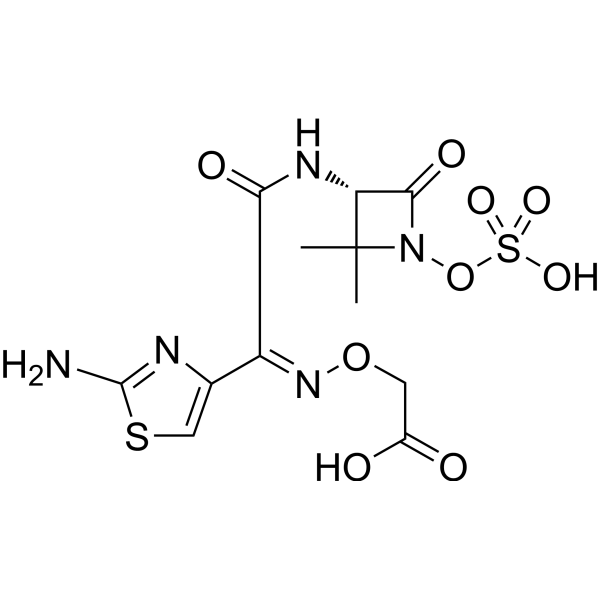
    Tigemonam is an orally active monobactam antibiotic with a Ki of 0.86 μM against Enterobacter cloacae P99 β-lactamase and 50.8 μM against Escherichia coli TEM-1 β-lactamase. Tigemonam binds to penicillin-binding proteins 1a, 3, and 4, inhibits bacterial cell wall synthesis, and exhibits bactericidal activity against aerobic gram-negative bacteria including Enterobacteriaceae, Haemophilus influenzae, and Neisseria gonorrhoeae. Tigemonam resists hydrolysis by multiple β-lactamase enzymes, reduces bacterial load in systemic, pyelonephritic, lung, and thigh muscle infections in rodents, and shows minimal difference between minimum inhibitory and bactericidal concentrations. Tigemonam can be used for the research of gram-negative bacterial infections, acute pyelonephritis, lung infection, and thigh muscle infection .
    Tigemonam
  • HY-D0200

    Adipodihydrazide

    Bacterial Drug Intermediate Biochemical Assay Reagents Infection
    Adipic acid dihydrazide (Adipodihydrazide) is an antibacterial agent and crosslinking agent. Adipic acid dihydrazide can be used for the preparation of hydrogels. Adipic acid dihydrazide exhibits antibacterial activity against both Gram-positive and Gram-negative bacteria, such as Enterobacter aerogenes (MIC: 0.081 mg/mL) and Salmonella enterica (MIC: 0.99 mg/mL). Adipic acid dihydrazide is also an important intermediate that can be utilized in the synthesis of other active compounds .
    Adipic acid dihydrazide
  • HY-P5735

    Bac-7

    Bacterial Infection
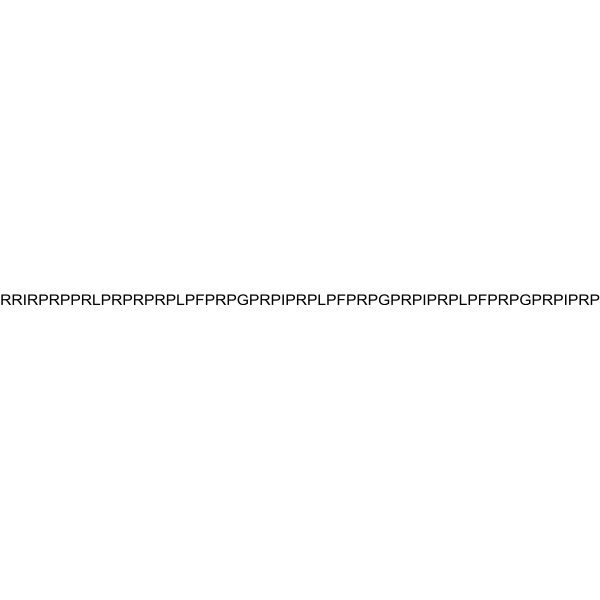
    Bactenecin 7 is an antibacterial peptide active against the growth of Enterobacter cloacae (MICs, 25 to 200μg/ml) .
    Bactenecin 7
  • HY-139698

    LCB10-0200

    Antibiotic Bacterial Infection
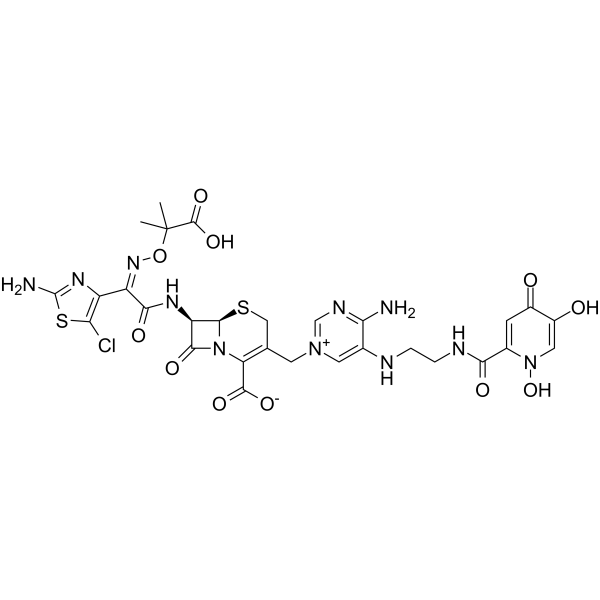
    GT-1 (LCB10-0200), a siderophore-linked cephalosporin, is effective against clinical isolates of P. aeruginosa, Klebsiella oxytoca, Proteus spp., Serratia marcescens, and Enterobacter aerogenes.
    GT-1
  • HY-W923644

    Aegelinol; (-)-Smyrinol

    Bacterial Infection
    (-)-Decursinol (Aegelinol; (-)-Smyrinol) is a natural pyranocoumarin compound tant can be isolated from the roots of Apiaceae plants such as Ferulago campestris. (-)-Decursinol inhibits both Gram-positive bacteria (Staphylococcus aureus ATCC 13709, Enterococcus faecalis ATCC 14428) and Gram-negative bacteria (Salmonella typhii ATCC 19430, Enterobacter cloacae ATCC 10699, Enterobacter aerogenes ATCC 13048) with minimum inhibitory concentrations (MIC) ranging from 16 to 64 μg/mL. (-)-Decursinol possesses antioxidant activity. (-)-Decursinol can be used for the study of bacterial infections .
    (-)-Decursinol
  • HY-105213

    MC-352

    Antibiotic Bacterial Infection
    YM-17K (MC-352) is a macrolide antibiotic. YM-17K exhibits antimicrobial activity against Gram-positive bacteria, Gram-negative bacteria, and anaerobic bacteria. YM-17K exhibits stable activity in serum and is less affected by pH values .
    YM-17K
  • HY-139746

    Beta-lactamase Bacterial Infection
    FPI-1602 is a β-lactamase inhibitor. FPI-1602 displays marked antimicrobial activity against P. aeruginosa, E. coli, and Enterobacter spp. .
    FPI-1602
  • HY-120583A

    Bacterial Infection
    LY 255262 is an antibacterial agent. LY 255262 exhibits potent inhibitory effects against a variety of Gram-positive and Gram-negative bacteria in vitro. LY 255262 has MIC values of 64, 0.25, 0.5, 0.25, 0.25, 1, and 1 μg/mL for Staphylococcus aureus, Streptococcus pneumoniae, Haemophilus influenza, Escherichia coli, Klebsiella, Enterobacter aerogenes, and Serratia, respectively. LY 255262 has a relatively weak inhibitory effect on Pseudomonas (MIC >128 μg/mL). LY 255262 can be used in antibacterial research .
    LY 255262
  • HY-122260

    Bacterial Infection
    S-25932 is a potent 4-quinolones antibacterial agent. S-25932 shows broad gram-negative antibacterial activity. S-25932 shows inhibition for Enterobacter aerogenes, Enterobacter addlomerans, Enterobacter coloacae, Escherichia coli with MIC90 values of 1.0, 2.0, 1.0, 0.25 µg/mL, respectively .
    S-25932
  • HY-124879

    Bacterial Infection
    MF 961 is a quinolone biocide. The MIC50 values ​of MF 961 against E. coli, Klebsiella sp., Enterobacter sp., Citrobacter sp., Citrobacter sp., and Shlgella sp. are all in the range of 0-25 mg/L .
    MF 961
  • HY-N15583

    Fungal Infection
    Purpuride is a sesquiterpene ester found in aciduric fungi. Purpuride shows moderate antibacterial activities against Candida albicans, Enterobacter aerogenes and Pseudomonas aeruginosa with MIC values ranging from 1.2 to 3.3 μM .
    Purpuride
  • HY-118051

    Antibiotic Infection
    LY 186826 is a γ-lactam antibiotic containing an aminothioazole methoxyacetic acid side chain at the C-7 position. LY186826 exhibits potent antibacterial activity against a wide range of Gram-positive and Gram-negative bacteria. LY186826 is inactivated by β-lactamases and Enterobacterases, showing stronger activity against Enterobacter strains.
    LY 186826
  • HY-144284

    Bacterial Infection
    MsbA-IN-5 (compound 40) is a potent and highly selective MsbA inhibitor with an IC50 value of 2 nM. MsbA-IN-5 has inhibitory activity against Escherichia coli, Klebsiella pneumoniae, and Enterobacter cloacae with MICs of 12 μM, 12 μM and 25 μM, respectively. MsbA-IN-5 can be used for researching anti-Gram-negative bacteria .
    MsbA-IN-5
  • HY-A0086R

    SCH-20569 sulfate (Standard)

    Reference Standards Bacterial Antibiotic Infection
    Netilmicin sulfate (Standard) is the analytical standard of Netilmicin sulfate (HY-A0086). This product is intended for research and analytical applications. Netilmicin (Sch 20569) sulfate is a broad-spectrum semisynthetic aminoglycoside antibiotic. Netilmicin sulfate exhibits antibacterial activity against aminoglycoside-susceptible gram-negative strains and aminoglycoside-resistant strain, such as Escherichia coli, Pseudomonas aeruginosa, Proteus, Staphylococcus aureus, Streptococcus, Serratia, and Enterobacter, with MIC of 0.125-8 μg/mL .
    Netilmicin sulfate (Standard)
  • HY-172109

    DNA/RNA Synthesis Infection
    DNA Gyrase-IN-15 (Compound 11) is an antimicrobial agent and inhibitor of DHPS and DNA gyrase, with IC50s of 1.73 and 0.07 µM, respectively. DNA Gyrase-IN-15 shows antimicrobial activity against Enterococcus faecalis (MIC of 15.62 µg/mL), Acinetobacter baumannii, Enterobacter species (MIC of 7.81 µg/mL), Pseudomonas aeruginosa, Klebsiella pneumoniae and Staphylococcus aureus. DNA Gyrase-IN-15 also shows antibiofilm activity against Enterococcus faecalis .
    DNA Gyrase-IN-15
  • HY-P3000B

    Biochemical Assay Reagents Metabolic Disease
    Myo-Inositol Dehydrogenase, Enterobacter aerogenes (EC 1.1.1.18) is an oxidoreductase that acts on the donor CH-OH group and uses NAD+ or NADP+ as the acceptor. Myo-Inositol Dehydrogenase, Enterobacter aerogenes (EC 1.1.1.18) is involved in inositol metabolism and inositol phosphate metabolism.
    Myo-Inositol Dehydrogenase, Enterobacter aerogenes
  • HY-P2725A

    Biochemical Assay Reagents Metabolic Disease
    Glycerol Dehydrogenase, Enterobacter aerogenes (EC 1.1.1.6) is an enzyme in the oxidoreductase family that utilizes the NAD+ to catalyze the oxidation of glycerol to form glycerone (dihydroxyacetone).
    Glycerol Dehydrogenase, Enterobacter aerogenes
  • HY-P2998C

    Biochemical Assay Reagents Metabolic Disease
    β-Lactamase, Enterobacter cloacae (EC 3.5.2.6) inactivates β-lactam antibiotics by breaking open the β-lactam ring.
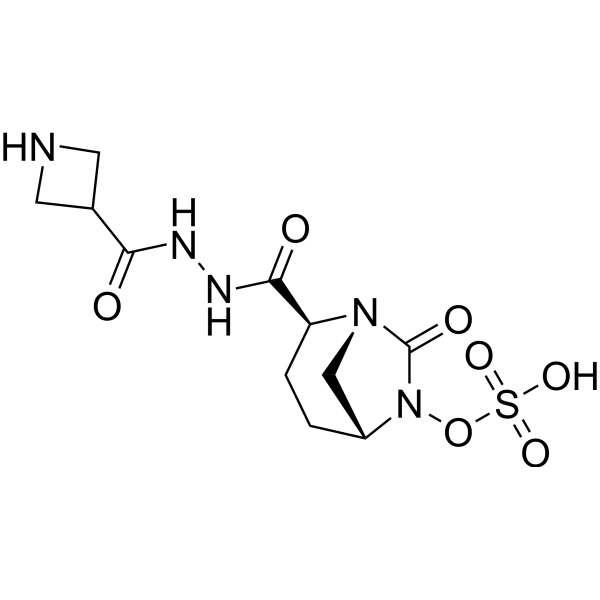
    β-Lactamase, Enterobacter cloacae
  • HY-112027

    Ciprofloxacin impurity E

    Bacterial Infection
    Decarboxy ciprofloxacin (Decarboxylated ciprofloxacin) is an antibacterial agent. Decarboxy ciprofloxacin displays antibacterial activities against Staphylococcus aureus, Staphylococcus epidermidis, Enterococcus faecalis, Bacillus subtilis, Enterobacter cloacae, Serratia marcescens and especially potent activity against Escherichia coli .
    Decarboxy ciprofloxacin
  • HY-181939

    Bacterial Infection
    Antibacterial agent 329 (Compound 9c) is an antibacterial agent. Antibacterial agent 329 inhibits the activity of MraY. Antibacterial agent 329 exhibits antibacterial activity against Escherichia coli K12 and Bacillus subtilis W23 with a MIC of 16 μg/mL, but shows no activity against Pseudomonas fluorescens Pf-5. Antibacterial agent 329 exerts antibacterial activity against Acinetobacter baumannii 19606, Staphylococcus aureus MRSA USA300 JE2, Enterobacter cloacae 19434, Klebsiella pneumoniae 700603 and Enterococcus faecium 19434, with MIC values of 8, 8, 16-32, 16-32 and 16 μg/mL, respectively, while it shows no activity against Pseudomonas aeruginosa NCTC 13437 .
    Antibacterial agent 329
  • HY-185351

    Ampicillin/Sulbactam combination

    Bacterial Antibiotic Infection
    Ampicillin sodium and Sulbactam sodium are formed by mixing HY-B0522A Ampicillin sodium with HY-B0334A Sulbactam sodium (each 1.5 g of this product contains 1 g amoxicillin sodium and 0.5 g sulbactam sodium). Ampicillin is a β-lactam antimicrobial, whereas sulbactam is a β-lactamase inhibitor. Ampicillin has a broad spectrum of bactericidal activity against many gram-positive and gram-negative aerobic and anaerobic bacteria. However, ampicillin is degraded by beta-lactamases. The combination of ampicillin and sulbactam demonstrates synergy in addressing bacterial strains resistant to ampicillin, thus providing broader coverage. Bacteria susceptible to ampicillin/sulbactam include Haemophilus influenzae, Escherichia coli, Acinetobacter, Klebsiella, Staphylococcus aureus, Enterobacter, and anaerobes.
    Ampicillin sodium and Sulbactam sodium
  • HY-W740077

    SCE-2787 dihydrochloride

    Antibiotic Bacterial Penicillin-binding protein (PBP) Infection
    Cefozopran (SCE-2787) dihydrochloride is a potent antibiotic with broad-spectrum antibacterial activity. Cefozopran dihydrochloride binds PBPs, induces cell wall destruction, cell elongation, filamentation, irregular septa formation, and bactericidal, bacteriolytic activity. Cefozopran dihydrochloride reduces bacterial counts and eradicates bacteria in mouse respiratory, urinary, and thigh muscle infections. Cefozopran dihydrochloride can be used for the research of bacterial infections .
    Cefozopran dihydrochloride
  • HY-182622

    Antibiotic Bacterial Infection
    Etimicin is a fourth-generation semisynthetic aminoglycoside antibiotic. Etimicin exhibits broad spectrum of activity against gram-positive, gram-negative, and aminoglycoside-resistant bacterial strains, with lower ototoxicity and nephrotoxicity. Etimicin exerts rapid, concentration-dependent bactericidal activity against bacteria. Etimicin can be used for the research of bacterial infections .
    Etimicin

Consulta en línea

Your information is safe with us. * Required Fields.

Saludo


Country or Region *

Nombre del solicitante *


Nombre de la Organizaciòn *

Department *


Direcciòn del E-mail *


Nombre del producto *

Cat. No.


Requested quantity *

Número de teléfono *


Observaciones

Consulta en línea

Inquiry Information

Nombre del producto:
Cat. No.:
Cantidad:
MCE Japan Authorized Agent:

