27 Results for "

Entresto tablets

" in MedChemExpress (MCE) Product Catalog:
Products (27)

27 Results for "Entresto tablets" in MCE Product Catalog:

263
263 Publications Verification
Cat. No.: HY-K0011

MCE Protease Inhibitor Cocktail, mini-Tablet (EDTA-Free) is a blend of 5 pan-protease inhibitors for protection of protein integrity. The 25 pcs is defined as the base specification. All larger sizes correspond to incremental volumes of this base.

loading...
    loading...
1
1 Cited Publications
Cat. No.: HY-B2221B1
CAS No.: 9004-62-0
Research Areas:  

Others

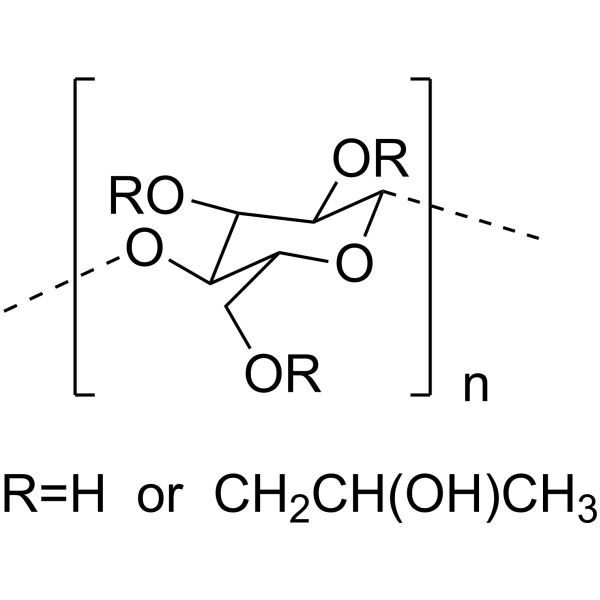
Hydroxyethyl cellulose, Viscosity(2%):150mPa.s is a class of nonionic cellulose ether gel-forming polymers with pH-independent drug release properties. When used as a tablet coating, Hydroxyethyl cellulose, Viscosity(2%):150mPa.s regulates the water permeation rate, thereby altering the drug release lag time; the higher the viscosity, the longer the drug release lag time. When used as a hydrogel thickener, it increases the dynamic viscosity of the system. Hydroxyethyl cellulose, Viscosity(2%):150mPa.s can be used in organic synthesis-related research, such as pharmaceutical excipients, hydrogel thickeners, etc.
loading...
    loading...
1
1 Cited Publications
Cat. No.: HY-Y0532
CAS No.: 128-09-6
Synonyms: Succinchlorimide
N-Chlorosuccinimide (Succinchlorimide) is an oxidizing, hydrolyzable biochemical reagent with bactericidal and amoebicidal activities. N-Chlorosuccinimide can either form N-chloramines via concerted transfer of Cl + or hydrolyze in aqueous solution to produce hypochlorous acid/hypochlorite. N-Chlorosuccinimide is effective in killing Shigella dysenteriae, Escherichia typhi and cysts of Entamoeba histolytica. N-Chlorosuccinimide can be formulated into fast-dispersing, fully soluble water purification tablets. N-Chlorosuccinimide is used in studies related to bacterial infections and parasitic infections .
loading...
    loading...
Cat. No.: HY-B1620D
CAS No.: 9003-39-8
Synonyms: PVP K25; Polyvidone K25; Povidone K25
Polyvinylpyrrolidone K25 is a multifunctional synthetic polymer. Polyvinylpyrrolidone K25 is a versatile excipient for both conventional formulations and novel controlled or targeted delivery systems. Polyvinylpyrrolidone K25 is a preferable binder for granules and tablets .
loading...
    loading...
Cat. No.: HY-100557
CAS No.: 9004-64-2
Purity:  ≥97.0%
Hydroxypropyl Cellulose is an orally active cellulose ether and surfactant. Hydroxypropyl cellulose is divided into high-substituted HPC (HHPC) and low-substituted HPC (LHPC). Hydroxypropyl Cellulose reduces inflammatory mediators (IL-6, IL-1β). Hydroxypropyl Cellulose improves colitis and obesity. Hydroxypropyl Cellulose can be used as a pharmaceutical excipient, such as coating agent, emulsifier, suspension, tablet, thickener, viscosifier .
loading...
    loading...
Cat. No.: HY-W115746
CAS No.: 9004-57-3
Synonyms: Ethyl cellulose N-100
Research Areas:  

Others

Ethyl cellulose (viscosity 100 cP) is a non-toxic cellulose derivative with unique properties including oil gel formation, active ingredient delivery and film-forming ability. Ethyl cellulose (viscosity 100 cP) can serve as a pharmaceutical excipient, such as a coating agent, flavoring agent, tablet filler, etc. .
loading...
    loading...
Cat. No.: HY-N7393
CAS No.: 64519-82-0
Synonyms: Palatinitol
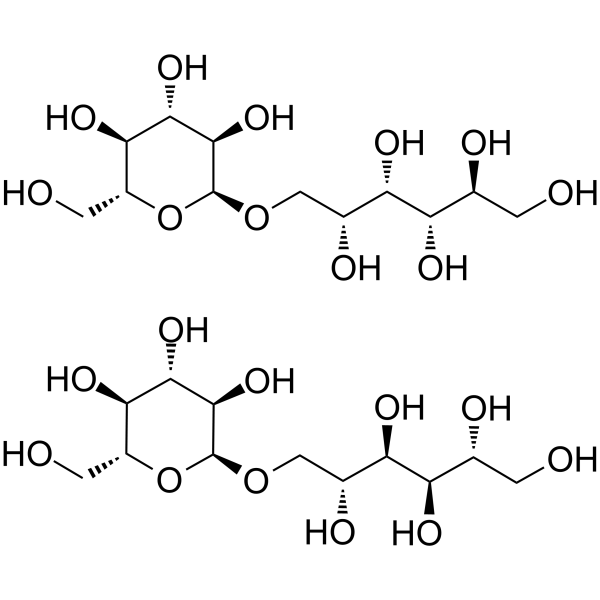
Isomalt (Palatinitol), a well-tolerated, non-toxic polyol and a protein-stabilizing excipient, stabilizes lactate dehydrogenase (LDH) moderately during freeze-drying, and performs better during storage. Isomalt is traditionally used as a sweetening agent in the food industry and as a tabletting excipient for pharmaceutical purposes .
loading...
    loading...
Cat. No.: HY-B1073
CAS No.: 26155-31-7
Target:  

Parasite

Research Areas:  

Infection

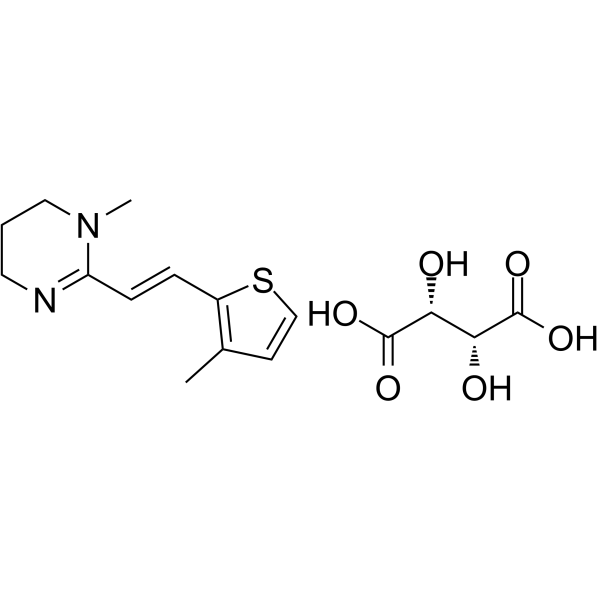
Morantel tartrate is an anthelmintic agent. Sustained-release three-layer composite tablets of Morantel tartrate are administered orally and release after exposure to rumen fluid. Morantel tartrate reduces the fecal egg output and worm burden of gastrointestinal nematodes in Hereford calves. Morantel tartrate is used in research related to gastrointestinal nematode infections .
loading...
    loading...
Cat. No.: HY-N0899
CAS No.: 11088-09-8
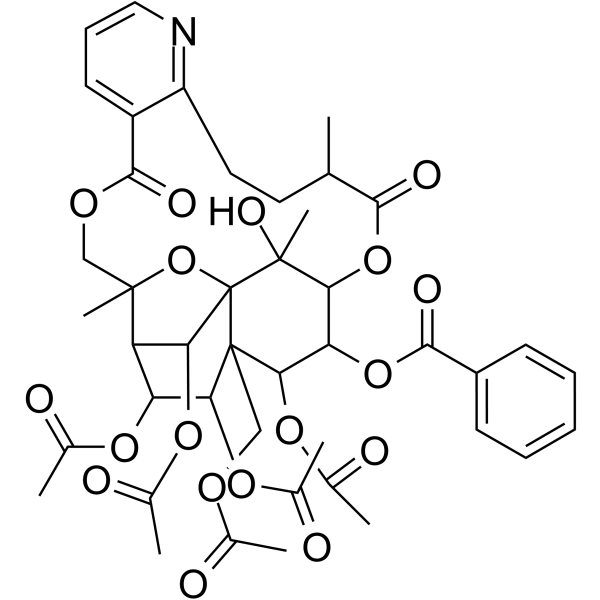
Wilforine is an orally active JAK-STAT pathway inhibitor with immunomodulatory effects and the ability to inhibit osteoclast fusion. Wilforine disrupts lipid raft integrity, reprograms cholesterol and glycosphingolipid metabolic pathways, regulates NF-κB and the complement system, and modulates the expression of various interleukins. Wilforine also inhibits the Wnt11/β-catenin signaling pathway and suppresses the proliferation of fibroblast-like synoviocytes. Wilforine can serve as a quality and pharmacokinetic marker for Tripterygium glycoside tablets, and can be applied to research on related diseases such as rheumatoid arthritis, inflammatory osteolysis, and SAPHO syndrome .
loading...
    loading...
Cat. No.: HY-W011963
CAS No.: 1421-65-4
Synonyms: Levodopa methylester hydrochloride
Melevodopa (Levodopa methylester) hydrochloride is an orally active methylated prodrug of Levodopa (HY-N0304), a dopamine precursor. When used in combination with Carbidopa (HY-B0311) in an effervescent tablet formulation, Melevodopa hydrochloride inhibits motor fluctuations in Parkinson's disease. Melevodopa hydrochloride suppresses subcutaneous tumor growth, pulmonary metastasis proliferation, and primary mass invasiveness of melanoma. Melevodopa hydrochloride induces lipid peroxidation by increasing malondialdehyde levels in melanoma and improves the survival rate of melanoma-bearing mice. Melevodopa hydrochloride can be used in research related to Parkinson's disease (with motor fluctuations) and melanoma .
loading...
    loading...
Cat. No.: HY-W099558
CAS No.: 4070-80-8
Synonyms: Sodium 2-octadecylfumarate
Research Areas:  

Others

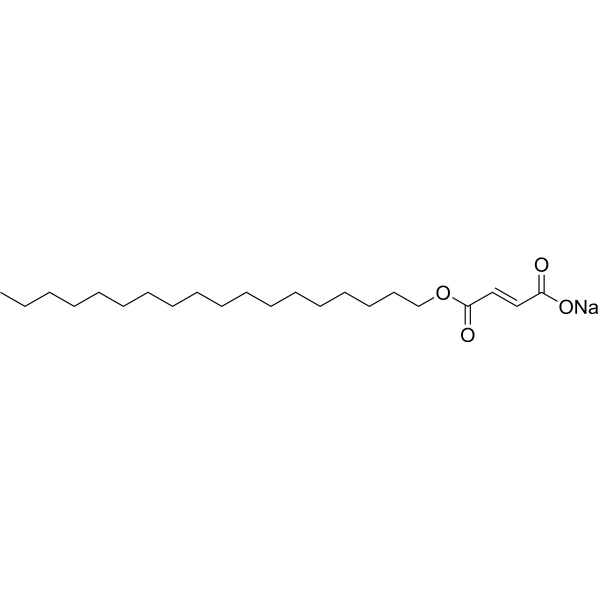
Sodium stearyl fumarate (Sodium 2-octadecylfumarate) is a tablet lubricant. Sodium stearyl fumarate reduces die wall friction, sticking, and picking during tableting. Sodium stearyl fumarate exerts a taste-masking effect. Sodium stearyl fumarate better promotes drug dissolution .
loading...
    loading...
Cat. No.: HY-154739A
CAS No.: 112945-52-5
Research Areas:  

Others

Amorphous silica can be used as an excipient, such as viscosifier, suspending agent, tablet disintegrating agent, adsorbent dispersing agent as liquid in powders. Pharmaceutical excipients, or pharmaceutical auxiliaries, refer to other chemical substances used in the pharmaceutical process other than pharmaceutical ingredients. Pharmaceutical excipients generally refer to inactive ingredients in pharmaceutical preparations, which can improve the stability, solubility and processability of pharmaceutical preparations. Pharmaceutical excipients also affect the absorption, distribution, metabolism, and elimination (ADME) processes of co-administered drugs .
loading...
    loading...
Cat. No.: HY-B2221B2
CAS No.: 9004-62-0
Research Areas:  

Others

Hydroxyethyl cellulose, Viscosity (2%):40000mPa.s is a class of nonionic cellulose ether gel-forming polymers with pH-independent drug release properties. When used as a tablet coating, Hydroxyethyl cellulose, Viscosity (2%):40000mPa.s regulates the water permeation rate, thereby altering the drug release lag time; the higher the viscosity, the longer the drug release lag time. When used as a hydrogel thickener, it increases the dynamic viscosity of the system. Hydroxyethyl cellulose, Viscosity (2%):40000mPa.s can be used in organic synthesis-related research, such as pharmaceutical excipients, hydrogel thickeners, etc.
loading...
    loading...
Cat. No.: HY-B2221B3
CAS No.: 9004-62-0
Research Areas:  

Others

Hydroxyethyl cellulose, Viscosity (2%):6000mPa.s is a class of nonionic cellulose ether gel-forming polymers with pH-independent drug release properties. When used as a tablet coating, Hydroxyethyl cellulose, Viscosity (2%):6000mPa.s regulates the water permeation rate, thereby altering the drug release lag time; the higher the viscosity, the longer the drug release lag time. When used as a hydrogel thickener, it increases the dynamic viscosity of the system. Hydroxyethyl cellulose, Viscosity (2%):6000mPa.s can be used in organic synthesis-related research, such as pharmaceutical excipients, hydrogel thickeners, etc.
loading...
    loading...
Cat. No.: HY-Y0850U2
CAS No.: 9002-89-5
Synonyms: Polyvinyl alcohol (Mw 130000, 87-89% hydrolyzed, ~2700 polymerization); Poly(Ethenol) (Mw 130000, 87-89% hydrolyzed, ~2700 polymerization)
PVA (Polyvinyl alcohol; Poly(Ethenol)) (Mw 130000, 87-89% hydrolyzed, ~2700 polymerization) is a non-toxic, biodegradable, and highly biocompatible semicrystalline synthetic polymer. PVA (Mw 130000, 87-89% hydrolyzed, ~2700 polymerization) acts as a coating agent to improve tableting performance, and can be cross-linked with sodium trimetaphosphate to prepare tubular vascular grafts or form hydrogels for use as artificial articular cartilage and sustained-release matrices for growth factors. PVA (Mw 130000, 87-89% hydrolyzed, ~2700 polymerization) enhances the redox cycle of iron species in photo-assisted Fenton reactions to simultaneously generate hydrogen peroxide and degrade pollutants, enabling integrated sustainable waste management and water treatment. PVA (Mw 130000, 87-89% hydrolyzed, ~2700 polymerization) is used in the manufacture of biodegradable films and in studies of dry or minimally invasive ex vivo wounds, but cannot form freeze-thaw cross-linked solid sheets for wound dressings .
loading...
    loading...
Cat. No.: HY-W115746B
CAS No.: 9004-57-3
Ethyl cellulose (viscosity 300 cP) is a non-toxic cellulose derivative with unique properties including oil gel formation, active ingredient delivery and film-forming ability . Ethyl cellulose (viscosity 300 cP) can serve as a pharmaceutical excipient, such as a coating agent, flavoring agent, tablet filler, etc. .
loading...
    loading...
Cat. No.: HY-W115746A
CAS No.: 9004-57-3
Ethyl cellulose (viscosity 10 cP) is a non-toxic, biodegradable polymer with unique properties such as oleogel formation, active ingredient delivery, and film-forming ability in the food and pharmaceutical fields. Ethyl cellulose (viscosity 10 cP) can serve as a pharmaceutical excipient, including as a coating agent, flavoring agent, and tablet filler .
loading...
    loading...
Cat. No.: HY-W250721E
CAS No.: 9007-20-9
Synonyms: Carboxy polymethylene (copolymer)
Research Areas:  

Others

Carbomer copolymer can be used as an excipient, such as Bioadhesives, emulsifiers, release modifiers, suspending agents, tablet binders, viscosity enhancers, etc. Pharmaceutical excipients, or pharmaceutical auxiliaries, refer to other chemical substances used in the pharmaceutical process other than pharmaceutical ingredients. Pharmaceutical excipients generally refer to inactive ingredients in pharmaceutical preparations, which can improve the stability, solubility and processability of pharmaceutical preparations. Pharmaceutical excipients also affect the absorption, distribution, metabolism, and elimination (ADME) processes of co-administered drugs .
loading...
    loading...
Cat. No.: HY-154703
CAS No.: 12511-31-8
Research Areas:  

Others

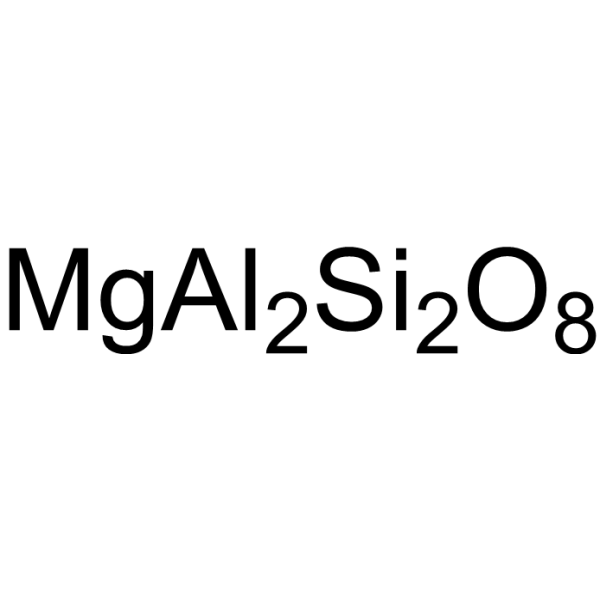
Aluminum magnesium silicate can be used as an excipient, such as adsorbent, stabilizer, suspending agent, disintegrant for tablet and capsule, binder for tablet, thickener. Pharmaceutical excipients, or pharmaceutical auxiliaries, refer to other chemical substances used in the pharmaceutical process other than pharmaceutical ingredients. Pharmaceutical excipients generally refer to inactive ingredients in pharmaceutical preparations, which can improve the stability, solubility and processability of pharmaceutical preparations. Pharmaceutical excipients also affect the absorption, distribution, metabolism, and elimination (ADME) processes of co-administered drugs .
loading...
    loading...
Cat. No.: HY-27979
CAS No.: 9010-88-2
Research Areas:  

Others

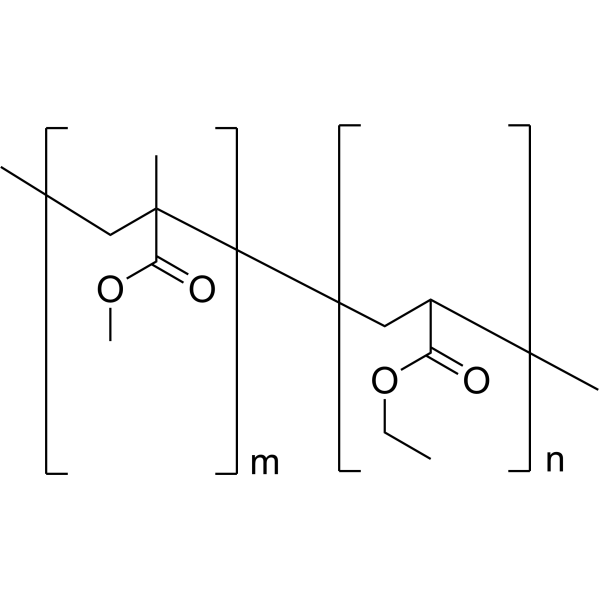
Ethyl acrylate-methyl methacrylate copolymer can be used as an excipient, such as sustained-release coating materials, matrix sustained-release tablet binders and retarders. Pharmaceutical excipients, or pharmaceutical auxiliaries, refer to other chemical substances used in the pharmaceutical process other than pharmaceutical ingredients. Pharmaceutical excipients generally refer to inactive ingredients in pharmaceutical preparations, which can improve the stability, solubility and processability of pharmaceutical preparations. Pharmaceutical excipients also affect the absorption, distribution, metabolism, and elimination (ADME) processes of co-administered drugs .
loading...
    loading...

