7 Results for "

FASTK

" in MedChemExpress (MCE) Product Catalog:
Products (7)

7 Results for "FASTK" in MCE Product Catalog:

12
12 Cited Publications
Cat. No.: HY-13287
CAS No.: 1025065-69-3
Purity:  99.35%
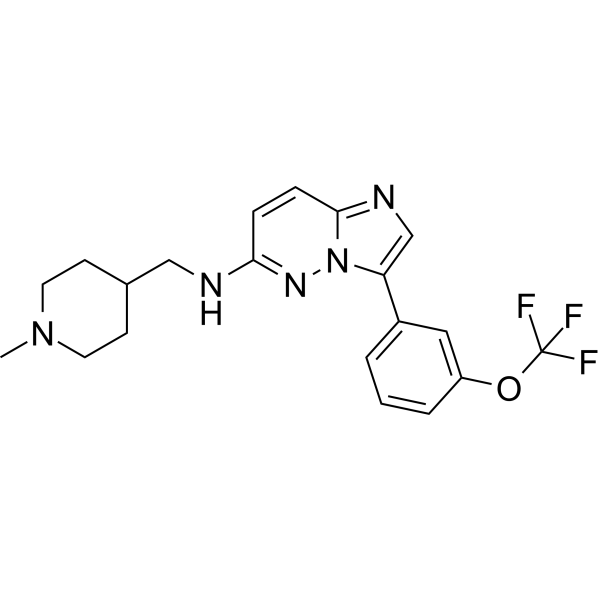
SGI-1776 free base is an orally active Pim kinase and FLT3 inhibitor with IC50 values of 7 nM, 363 nM, 69 nM, and 44 nM for Pim-1, Pim-2, Pim-3, and FLT3, respectively. SGI-1776 free base downregulates C/EBP-α, PPAR-γ, FAS, Leptin, and RANTES, and decreases STAT-3 phosphorylation. SGI-1776 free base induces Apoptosis, cell cycle arrest, mitochondrial depolarization, and reduces RNA synthesis, protein synthesis, and Mcl-1. SGI-1776 free base inhibits adipogenesis and lipid accumulation. SGI-1776 free base has anticancer activity against leukemia .
loading...
    loading...
Cat. No.: HY-P10227
CAS No.: 2040964-58-5
Synonyms: ONL-1204
Xelafaslatide (ONL-1204) is a Fas receptor antagonist. Xelafaslatide blocks the Fas receptor signaling pathway and inhibits downstream apoptosis and inflammatory pathways. Xelafaslatide suppresses neuroinflammation and microglial activation in glaucoma models, protects retinal ganglion cells and prevents axonal degeneration. Xelafaslatide is applicable to relevant research on glaucoma .
loading...
    loading...
Cat. No.: HY-N12717
CAS No.: 79786-01-9
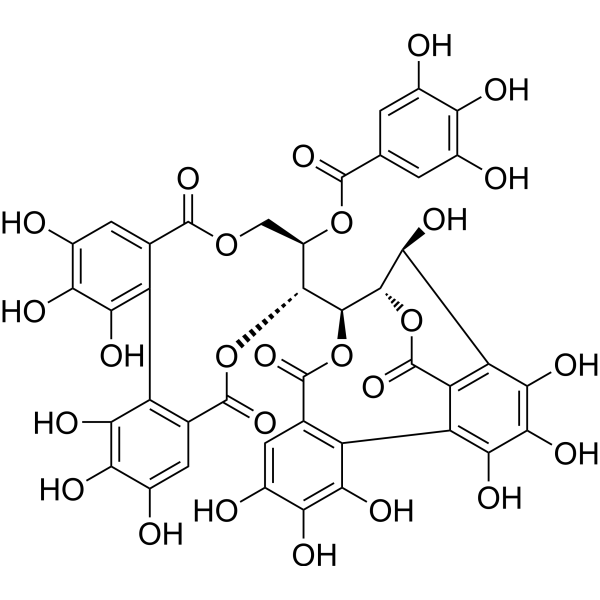
Casuarinin is an orally active antiproliferative, anti-inflammatory, antifungal, virucidal and gastroprotective agent. Casuarinin upregulates the expression of p21/WAF1, Fas/APO-1, mFasL, sFasL and HSP-70, arrests cell cycle, induces apoptosis and inhibits cancer cell proliferation. Casuarinin inhibits TNF-α-induced phosphorylation of MAPK and activation of NF-κB, downregulates the expression of iNOS, NF-κB, COX-2 and ICAM-1, and reduces the production of proinflammatory mediators. Casuarinin attenuates ethanol-induced activation of caspase-3 and elevation of TNF-α, inhibits the growth of Candida albicans, and inhibits HSV-2. Casuarinin can be used in research related to mammary adenocarcinoma, inflammatory skin diseases, gastric ulcers, candidiasis and herpes simplex virus infections .
loading...
    loading...
Cat. No.: HY-N12378
CAS No.: 514-51-2
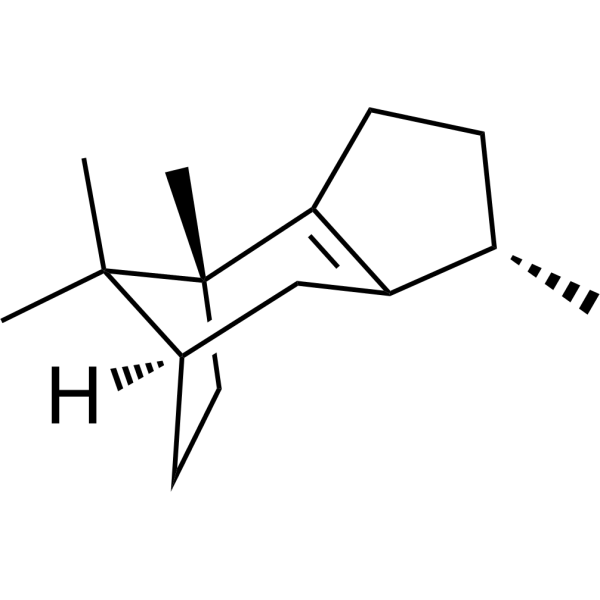
β-Patchoulene is an orally active anti-inflammatory, antioxidant, and anti-apoptotic agent. β-Patchoulene inhibits the NF-κB, TLR4, and cAMP/PKA/CREB signaling pathways; activates the Sirt1/Nrf2 and AMPK signaling pathways; and targets Fas/FasL, Caspase-3, ERK1/2, ROCK1/MLC2 for inhibition. β-Patchoulene regulates cytokine secretion, inflammatory cell infiltration, lipid peroxidation, cell polarization, gut microbiota, and lipid metabolism, restores barrier function, mitochondrial function, and cell viability, and exhibits repellent activity against Spodoptera exigua larvae. β-Patchoulene can be used in research related to various inflammatory, ischemic, fibrosis-associated diseases, as well as hepatocellular carcinoma .
loading...
    loading...
Cat. No.: HY-RS04756
Research Areas:  

Others

FASTK Human Pre-designed siRNA Set A contains three designed siRNAs for FASTK gene (Human), as well as a negative control, a positive control, and a FAM-labeled negative control.

loading...
    loading...
Cat. No.: HY-13287A
CAS No.: 1173928-26-1
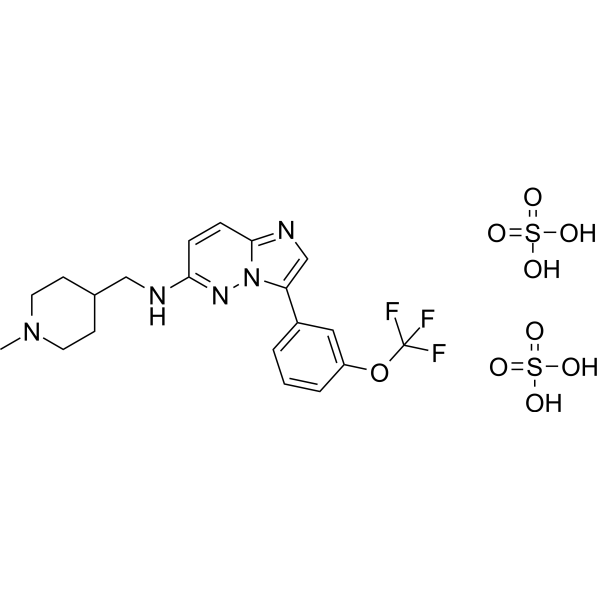
SGI-1776 is an orally active Pim kinase and FLT3 inhibitor with IC50 values of 7 nM, 363 nM, 69 nM, and 44 nM for Pim-1, Pim-2, Pim-3, and FLT3, respectively. SGI-1776 downregulates C/EBP-α, PPAR-γ, FAS, Leptin, and RANTES, and decreases STAT-3 phosphorylation. SGI-1776 induces Apoptosis, cell cycle arrest, mitochondrial depolarization, and reduces RNA synthesis, protein synthesis, and Mcl-1. SGI-1776 inhibits adipogenesis and lipid accumulation. SGI-1776 has anticancer activity against leukemia .
loading...
    loading...
Cat. No.: HY-N15205
CAS No.: 159278-74-7
Rhinacanthin C is an orally active naphthoquinone ester and P-gp inhibitor (IC50 = 5.20 μM). Rhinacanthin C exerts effects in ameliorating hepatic steatosis, insulin resistance, and inflammation by inhibiting P-gp, BCRP, OATP1B1/1B3, and multiple CYP enzymes, downregulating lipid synthesis-related factors such as ACC and FAS, and upregulating AMPKα phosphorylation and SIRT1. Rhinacanthin C can be used in research on non-alcoholic fatty liver disease, diabetes, abnormal osteolysis, Alzheimer's disease, and inflammation .
loading...
    loading...

