



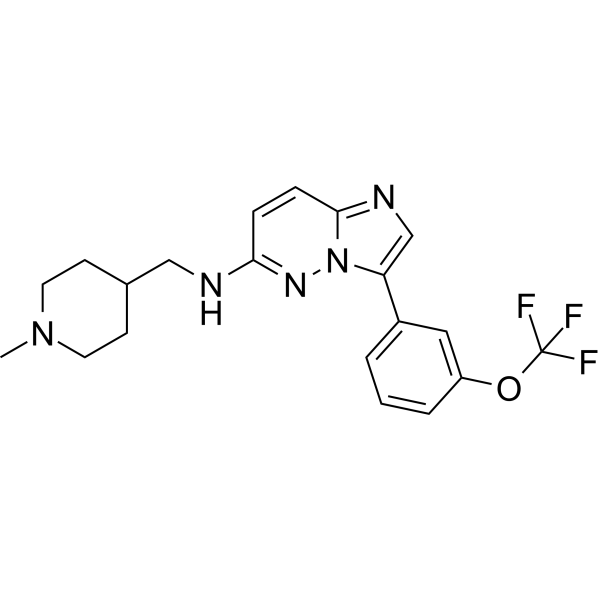
SGI-1776 free base
Based on 12 publication(s) in Google Scholar
SGI-1776 free base is an orally active Pim kinase and FLT3 inhibitor with IC50 values of 7 nM, 363 nM, 69 nM, and 44 nM for Pim-1, Pim-2, Pim-3, and FLT3, respectively. SGI-1776 free base downregulates C/EBP-α, PPAR-γ, FAS, Leptin, and RANTES, and decreases STAT-3 phosphorylation. SGI-1776 free base induces Apoptosis, cell cycle arrest, mitochondrial depolarization, and reduces RNA synthesis, protein synthesis, and Mcl-1. SGI-1776 free base inhibits adipogenesis and lipid accumulation. SGI-1776 free base has anticancer activity against leukemia.
For research use only. We do not sell to patients.
- Purity : 99.96%
- CAS No.: 1025065-69-3
- Formula: C20H22F3N5O
- Molecular Weight:405.42
-
Storage:Powder -20°C, 3 years , 4°C, 2 years ; In solvent -80°C, 2 years , -20°C, 1 year

To place orders, for customer services and technical support, please contact: MedChemExpress USA
Tel: 609-228-6898 E-mail: [email protected] [email protected]


-
 Biological Activity
-
Chemical Information
-
Solvent & Solubility
- Protocols
- Purity & Documentation
- References
-
 Help & FAQs


-
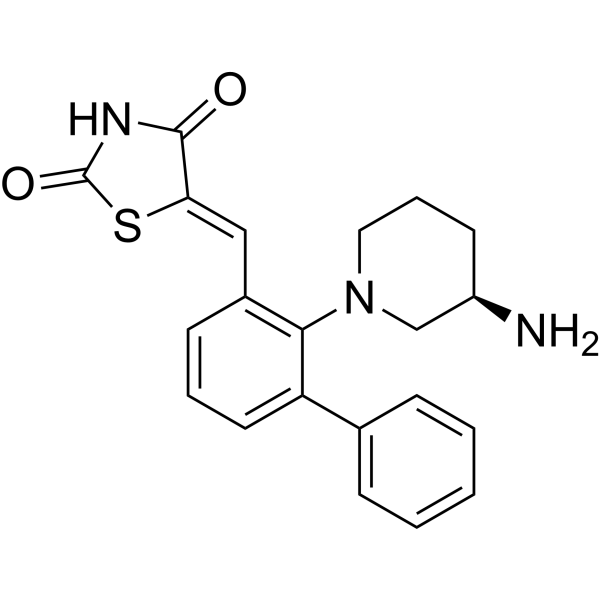
HY-15604
AZD1208PIM Inhibitor -
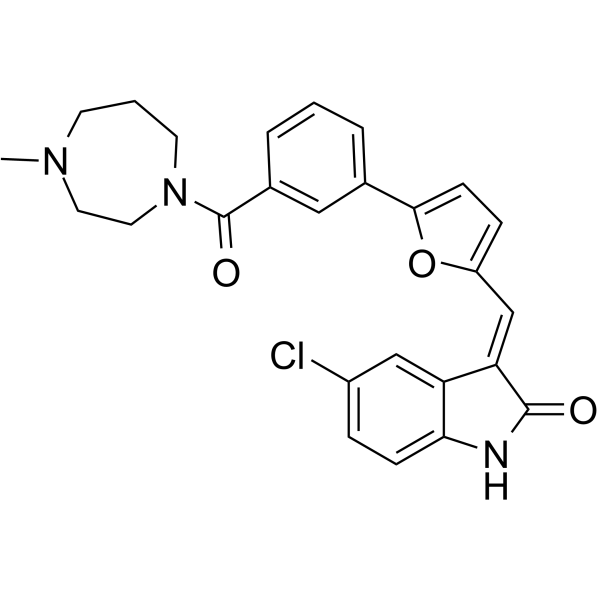
HY-18095
CX-6258Pim Kinases Inhibitor -
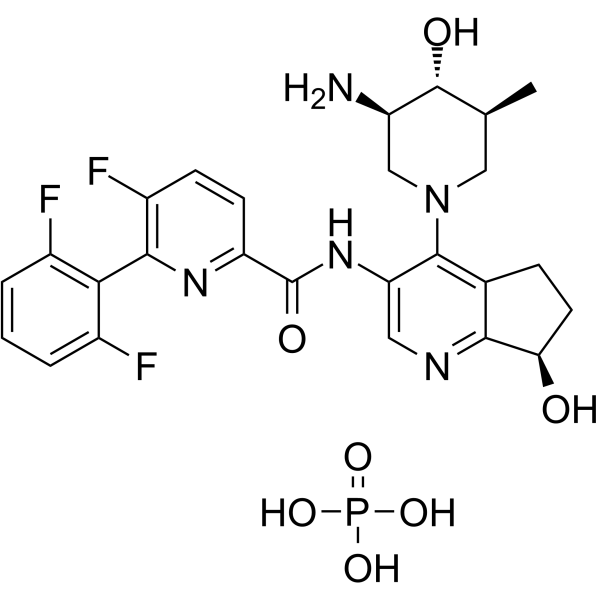
HY-101870B
Uzansertib phosphatePIM Inhibitor -
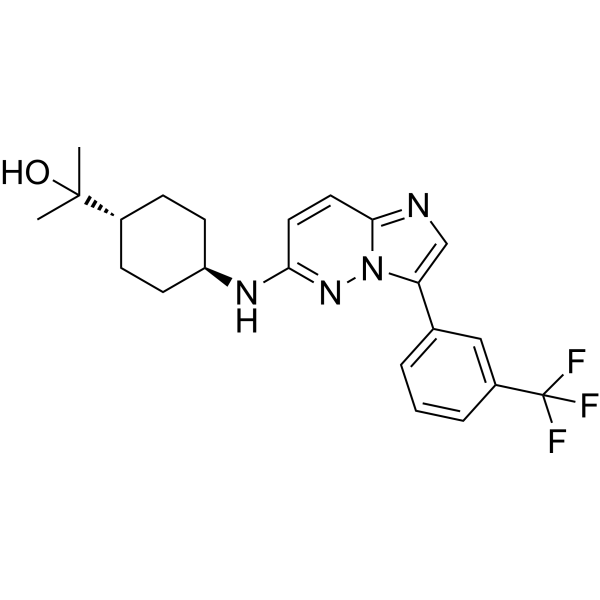
HY-101126
NuvisertibPIM Kinase Inhibitor -
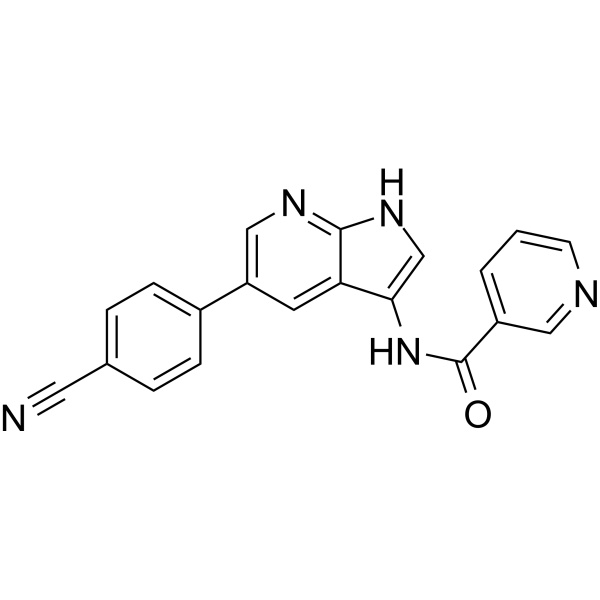
HY-10371
Pim1/AAK1-IN-1Pim1/AKK1/MST2/LKB1 Inhibitor -
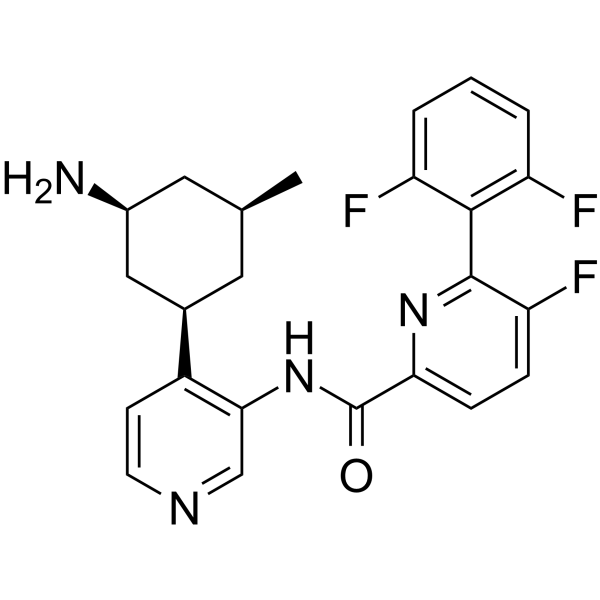
HY-19322
PIM447PIM Kinase Inhibitor -
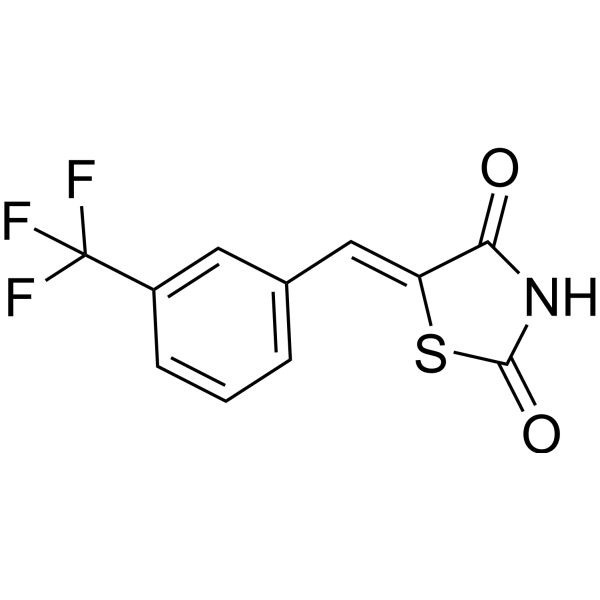
HY-16576A
SMI-4aPim-1 Inhibitor -
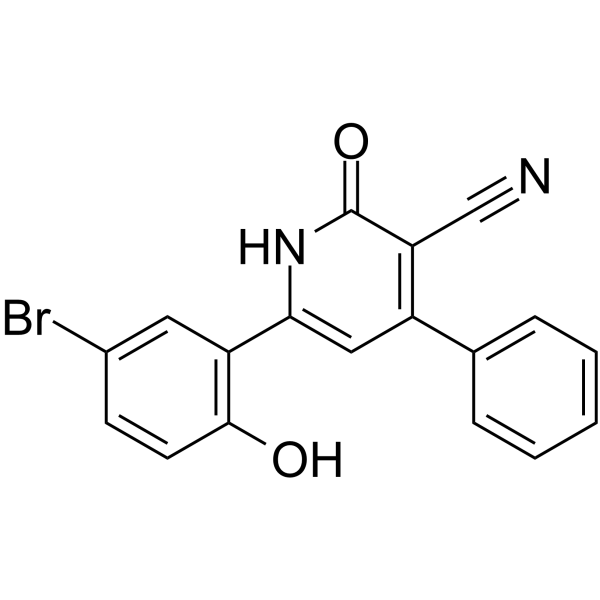
HY-18086
TCS PIM-1 1Pim-1 Inhibitor -
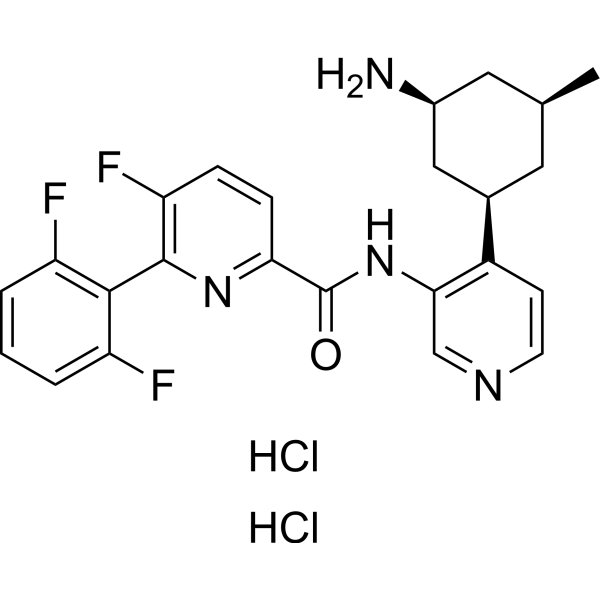
HY-19322B
PIM-447 dihydrochloridePIM Kinase Inhibitor -
HY-N4149
QuercetagetinPim Inhibitor -
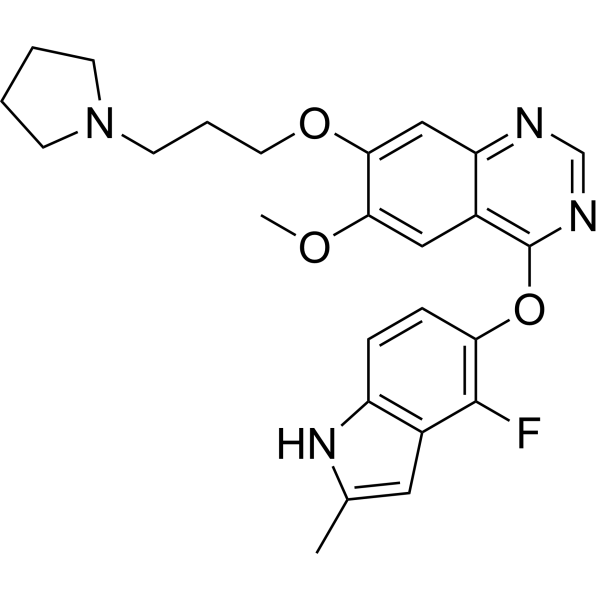
HY-10205
CediranibVEGFR2 Inhibitor -
HY-10940
Pifithrin-μp53 and HSP70 Inhibitor
Publications Citing Use of MedChemExpress (MCE) SGI-1776 free base
More- Science. 2017 Dec 1;358(6367):eaan4368. [Abstract]
- Sci Transl Med. 2018 Jul 18;10(450):eaaq1093. [Abstract]
- Adv Sci (Weinh). 2025 Jul 6:e03487. [Abstract]
- Cell Death Dis. 2018 Feb 22;9(3):307. [Abstract]
- Phytomedicine. 2026 May 15:157:158301. [Abstract]
- Cell Chem Biol. 2024 Feb 15;31(2):326-337.e11. [Abstract]
- J Med Chem. 2021 Nov 11;64(21):15702-15715. [Abstract]
- Front Cell Infect Microbiol. 2024 Nov 29:14:1502770. [Abstract]
- Food Chem Toxicol. 2026 Nov:217:116309.
- eNeuro. 2019 Aug 22;6(4):ENEURO.0003-19.2019. [Abstract]
- Anticancer Drugs. 2024 Jan 1;35(1):46-54. [Abstract]
- Patent. US20180263995A1.
 Customer Validation & Images

-
WB
All DNA/RNA Synthesis Isoforms
More

Biological Activity
Description
|
Mcl-1 |
PIM1 7 nM (IC50) |
PIM2 363 nM (IC50) |
PIM3 69 nM (IC50) |
PPAR-γ |
Stat-3 |
Cellular Effect
|
Cell Line

|
Type | Value | Description | References |
|---|---|---|---|---|
| CHO | IC50 |
<1 μM
Compound: SGI-1776
|
Inhibition of human ERG expressed in CHO cells by automated patch clamp method
Inhibition of human ERG expressed in CHO cells by automated patch clamp method
|
[PMID: 25589932] |
| HL-60 | GI50 |
1.28 μM
Compound: SGI-1776
|
Antiproliferative activity against human HL-60 cells assessed as reduction of cell viability incubated for 72 hrs by trypan blue staining based cell counting analysis
Antiproliferative activity against human HL-60 cells assessed as reduction of cell viability incubated for 72 hrs by trypan blue staining based cell counting analysis
|
[PMID: 34515481] |
| K562 | GI50 |
2.19 μM
Compound: SGI-1776
|
Antiproliferative activity against human K562 cells assessed as reduction of cell viability incubated for 72 hrs by trypan blue staining based cell counting analysis
Antiproliferative activity against human K562 cells assessed as reduction of cell viability incubated for 72 hrs by trypan blue staining based cell counting analysis
|
[PMID: 34515481] |
| K562 | IC50 |
2.29 μM
Compound: 29; SGI-776
|
Antiproliferative activity against human K562 cells
Antiproliferative activity against human K562 cells
|
[PMID: 34607244] |
| KMS-11 | EC50 |
5 μM
Compound: 1; SGI-1776
|
Antiproliferative activity against luciferase expressing human KMS11 cells after 72 hrs by Cell-TiterGlo assay
Antiproliferative activity against luciferase expressing human KMS11 cells after 72 hrs by Cell-TiterGlo assay
|
[PMID: 26505898] |
| LNCaP | IC50 |
6.85 μM
Compound: SGI-1776
|
Antiproliferative activity against human LNCAP cells after 96 hrs by MTT assay
Antiproliferative activity against human LNCAP cells after 96 hrs by MTT assay
|
[PMID: 26804231] |
| MOLM-13 | GI50 |
0.13 μM
Compound: SGI-1776
|
Antiproliferative activity against human MOLM13 cells assessed as reduction of cell viability incubated for 72 hrs by trypan blue staining based cell counting analysis
Antiproliferative activity against human MOLM13 cells assessed as reduction of cell viability incubated for 72 hrs by trypan blue staining based cell counting analysis
|
[PMID: 34515481] |
| MV4-11 | IC50 |
0.03 μM
Compound: SGI1776
|
Growth inhibition of human MV4-11 cells
Growth inhibition of human MV4-11 cells
|
[PMID: 29871845] |
| NCI-H1299 | EC50 |
200 nM
Compound: SGI-1776
|
Inhibition of PIM1 in human NCI-H1299 cells assessed as reduction in BAD phosphorylation at Ser-112 residue incubated for 4 hrs by ELISA
Inhibition of PIM1 in human NCI-H1299 cells assessed as reduction in BAD phosphorylation at Ser-112 residue incubated for 4 hrs by ELISA
|
[PMID: 30802730] |
| PC-3 | GI50 |
4.86 μM
Compound: SGI-1776
|
Antiproliferative activity against human PC3 cells after 96 hrs by MTT assay
Antiproliferative activity against human PC3 cells after 96 hrs by MTT assay
|
[PMID: 26979485] |
| PC-3 | IC50 |
4.83 μM
Compound: 29; SGI-776
|
Antiproliferative activity against human PC-3 cells
Antiproliferative activity against human PC-3 cells
|
[PMID: 34607244] |
| PC-3 | IC50 |
4.86 μM
Compound: SGI-1776
|
Antiproliferative activity against human PC3 cells after 96 hrs by MTT assay
Antiproliferative activity against human PC3 cells after 96 hrs by MTT assay
|
[PMID: 26804231] |
| WI-38 | IC50 |
1700 nM
Compound: SGI-1776
|
Growth inhibition of human WI38 cells after 48 hrs by CCK8 assay
Growth inhibition of human WI38 cells after 48 hrs by CCK8 assay
|
[PMID: 28523101] |
In Vitro
SGI-1776 (3-10 µM; 24 h) inhibits clonogenic survival of MV-4-11 cells, reducing colony formation to approximately 5% of control at 10 µM[2].
SGI-1776 (2.5-5 μM; 72 h) reduces colony formation in SACC-83 and SACC-LM cells[3].
SGI-1776 inhibits the proliferation of mouse ALL and hALL cell lines, with IC50 values of approximately 1 mM and 2.5 mM, respectively[5].
SGI-1776 (0.1-10 µM; 24 hours) selectively reduces Mcl-1 protein levels in MV-4-11, MOLM-13, and OCI-AML-3 AML cell lines without altering Bcl-2, Bcl-xL, Bak, or Bax[2].
SGI-1776 reduces the viability and clonogenic survival of 9 hAML cell lines, inhibits proliferation and induces apoptosis, while decreasing Bad phosphorylation and increasing p27 expression[7].
SGI-1776 (1-10 μM; 24 h) induces apoptosis in primary AML cells, with an average increase of 5-19%[8].
SGI-1776 (2.5-5 μM; 72 h) induces early apoptosis in SACC-83 and SACC-LM cells in a dose-dependent manner[3].
SGI-1776 (2.5-5 μM; 72 h) increases caspase-3 activity in SACC-83 and SACC-LM cells, with higher activity in SACC-LM cells[3].
SGI-1776 (5-10 µM; 8 days of differentiation) reduces triglyceride content in differentiating 3T3-L1 adipocytes, with the greatest reduction at 10 µM and activity at 5 µM[1].
SGI-1776 (5-10 µM; 8-day differentiation) does not significantly reduce 3T3-L1 adipocyte viability at 5 µM after 8 days, whereas 10 µM causes a slight decrease[1].
SGI-1776 (5 µM; days 0-8) inhibits 3T3-L1 adipogenesis mainly when present during the early differentiation stage, and incubation on days 0-8 produces the highest inhibition rate[1].
MedChemExpress (MCE) has not independently confirmed the accuracy of these methods. They are for reference only.
-
Cell Line:3T3-L1 preadipocytes differentiated into mature adipocytes
-
Concentration:5 and 10 µM
-
Incubation Time:8-day differentiation
-
Result:SGI-1776 for 8 days markedly reduced lipid droplets in a concentration-dependent manner compared with mock control cells.
10 µM SGI-1776 completely blocked accumulation of lipid droplets.
Light microscopy confirmed the SGI-1776-mediated lipid-reducing effect.
SGI-1776 at 5 and 10 µM reduced Oil Red O staining relative to control.
-
Cell Line:3T3-L1 adipocytes
-
Concentration:5 and 10 µM
-
Incubation Time:8-day differentiation
-
Result:Induced a slight decrease in viability at 10 µM, but not at 5 µM.
SGI-1776 at 5 µM for 8 days did not markedly affect the number of 3T3-L1 adipocytes.
-
Cell Line:3T3-L1 preadipocytes/adipocytes
-
Concentration:5 µM
-
Incubation Time:days 2, 5, 8 during differentiation; 2, 4, 8, 24 h after MDI induction
-
Result:Markedly inhibited adipogenesis-dependent protein expression of C/EBP-α and PPAR-γ during adipocyte differentiation, particularly on days 5 and 8.
Markedly decreased phosphorylation levels of STAT-3 on day 2 during adipocyte differentiation.
Did not markedly affect phosphorylation levels of STAT-5.
Suppressed STAT-3 phosphorylation during early stages of adipogenesis induced by MDI at 2, 4, 8 and 24 h.
Did not markedly alter total protein levels of STAT-3 and STAT-5 during adipocyte differentiation.
Markedly suppressed FAS protein expression on days 5 and 8.
-
Cell Line:MV-4-11, MOLM-13, and OCI-AML-3
-
Concentration:0.1, 0.3, 1, 3, 10 µM; DMSO vehicle control
-
Incubation Time:24 h
-
Result:Induced a dose-dependent increase in annexin/PI-positive cells in MV-4-11, MOLM-13, and OCI-AML-3 cells.
In MV-4-11, annexin/PI-positive cells were 6% at 0 µM, 6% with DMSO, 13% at 0.1 µM, 20% at 0.3 µM, 26% at 1 µM, 28% at 3 µM, and 75% at 10 µM.
MOLM-13 and OCI-AML-3 showed dose-dependent increases in annexin/PI-positive cells.
Higher apoptosis occurred in MV-4-11 and MOLM-13, which are FLT3-ITD positive.
In Vivo
SGI-1776 (200 mg/kg/dose; oral; daily × 5 per week) shows in vivo activity in ALL xenografts, reducing tumor proliferation compared with untreated mice[5].
MedChemExpress (MCE) has not independently confirmed the accuracy of these methods. They are for reference only.
-
Animal Model:NOD-SCID (female)[2]
-
Dosage:50 mg/kg (daily 5 days/week for 3 weeks); 75 mg/kg (daily 5 days/week for 3 weeks); 100 mg/kg (twice weekly for 3 weeks); 200 mg/kg (twice weekly for 3 weeks)
-
Administration:p.o.; daily 5 days/week for 3 weeks (50, 75 mg/kg); twice weekly for 3 weeks (100, 200 mg/kg)
-
Result:In MV-4-11 xenografts, oral SGI-1776 produced potent and sustained antitumor activity.
Tumors in the 75 mg/kg and 200 mg/kg groups disappeared or became almost impalpable within 1 week after administration.
On day 22, 8 of 9 mice given 75 mg/kg SGI-1776 and all 10 mice given 200 mg/kg experienced complete regression; 3 mice in the 75 mg/kg group and 1 mouse in the 200 mg/kg group experienced minor regrowth by the end of the observation period.
Administration of 50 mg/kg SGI-1776 on a daily schedule or 100 mg/kg on a twice-weekly schedule resulted in some antitumor effect; no regressions were observed on day 18, but T/C was 13% after 50 mg/kg and 11% after 100 mg/kg on day 22.
Potent efficacy was achieved with an intermittent dosing schedule (2 oral doses/week) at 100 or 200 mg/kg.
-
Animal Model:NOD/SCID[5]
-
Dosage:200 mg/kg/dose; 100 mg/kg/dose (survival studies)
-
Administration:gavage; daily ×5 per week
-
Result:Alone or with rapamycin decreased in vivo tumor proliferation over time compared with untreated mice.
At 200 mg/kg/dose, no difference in survival could be detected.
Survival studies at 100 mg/kg/dose were ongoing.
- Western Blot
- Mitochondrial membrane-potential fluorescent assay
- Annexin V plus membrane-impermeant dye apoptosis staining
- BrdU Incorporation Assay
- Protocol for Cell Cycle
- Kinase activity and phosphorylation assays
- 3T3-L1 preadipocyte-to-adipocyte differentiation
- Detection of Apoptosis
- TUNEL staining for apoptotic DNA fragmentation
- Flow cytometric DNA-content cell-cycle staining
- Apoptosis Solutions
- Protocol for Kinase activity and phosphorylation assays
- Lipid Droplets: Oil Red O/Sudan Dye Lipid Staining
Clinical Trial
| NCT Number | Sponsor | Condition | Start Date |
Phase
|
|---|---|---|---|---|
| NCT01329991 | Plexxikon| | 2011-05 | PHASE1 |


Chemical Information
-
CAS No. 1025065-69-3
-
Appearance Solid
-
Molecular Weight 405.42
-
Formula C20H22F3N5O
-
Color White to yellow
-
SMILES
CN1CCC(CC1)CNC2=NN3C(C=C2)=NC=C3C4=CC=CC(OC(F)(F)F)=C4
-
Shipping
Room temperature in continental US; may vary elsewhere.
-
Storage
Powder -20°C 3 years 4°C 2 years In solvent -80°C 2 years -20°C 1 year


Publications (12)
-
Journal Impact Factor
-
Most Recent
-
Science
2017 Dec 1;358(6367):eaan4368. PMID: 29191878 -
Sci Transl Med
PP2A inhibition is a druggable MEK inhibitor resistance mechanism in KRAS-mutant lung cancer cells. [Abstract]2018 Jul 18;10(450):eaaq1093. PMID: 30021885 -
Adv Sci (Weinh)
PIM1 Attenuates Innate Immunity to Foster Coronavirus Replication through Ubiquitin Ligase β-TrCP-Mediated IFNAR1 Degradation. [Abstract]2025 Jul 6:e03487. PMID: 40619619 -
Cell Death Dis
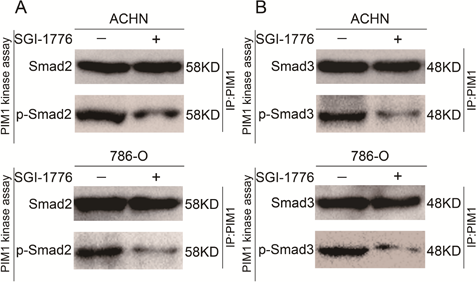
PIM1 mediates epithelial-mesenchymal transition by targeting Smads and c-Myc in the nucleus and potentiates clear-cell renal-cell carcinoma oncogenesis. [Abstract]2018 Feb 22;9(3):307. PMID: 29472550
SGI-1776 free base purchased from MedChemExpress. Usage Cited in: Cell Death Dis. 2018 Feb 22;9(3):307. [Abstract]
PIM1 directly phosphorylated Smad2 and Smad3 and that inhibition of PIM1 kinase activity with SGI-1776 significantly reduces the protein levels of p-Smad2 and p-Smad3
-
Phytomedicine
6''-O-acetylsaikosaponin D targets STAT3-mediated transcriptional remodeling to induce ferroptosis and apoptosis. [Abstract]2026 May 15:157:158301. PMID: 42166974 -
Cell Chem Biol
2024 Feb 15;31(2):326-337.e11. PMID: 38016478 -
J Med Chem
Discovery of a Dual Tubulin and Poly(ADP-Ribose) Polymerase-1 Inhibitor by Structure-Based Pharmacophore Modeling, Virtual Screening, Molecular Docking, and Biological Evaluation. [Abstract]2021 Nov 11;64(21):15702-15715. PMID: 34670362 -
Front Cell Infect Microbiol
ZIKV prM hijacks PIM1 kinase for phosphorylation to prevent ubiquitin-mediated degradation and facilitate viral replication. [Abstract]2024 Nov 29:14:1502770. PMID: 39679197 -
-
eNeuro
2019 Aug 22;6(4):ENEURO.0003-19.2019. PMID: 31387876 -
Anticancer Drugs
2024 Jan 1;35(1):46-54. PMID: 37449977 -


Solvent & Solubility
In Vitro:
DMSO : 125 mg/mL (308.32 mM; Need ultrasonic; Hygroscopic DMSO has a significant impact on the solubility of product, please use newly opened DMSO)
Please refer to the solubility information to select the appropriate solvent. Once prepared, please aliquot and store the solution to prevent product inactivation from repeated freeze-thaw cycles.
Storage method and period of stock solution: -80°C, 2 years; -20°C, 1 year. When stored at -80°C, please use it within 2 years. When stored at -20°C, please use it within 1 year.
Please refer to the solubility information to select the appropriate solvent. Once prepared, please aliquot and store the solution to prevent product inactivation from repeated freeze-thaw cycles.
Storage method and period of stock solution: -80°C, 2 years; -20°C, 1 year. When stored at -80°C, please use it within 2 years. When stored at -20°C, please use it within 1 year.
Concentration (start) × Volume (start) = Concentration (final) × Volume (final)
In Vivo:
Select the appropriate dissolution method based on your experimental animal and administration route.
- For the following dissolution methods, please ensure to first prepare a clear stock solution using an In Vitro approach and then sequentially add co-solvents:
- To ensure reliable experimental results, the clarified stock solution can be appropriately stored based on storage conditions. As for the working solution for In Vivo experiments, it is recommended to prepare freshly and use it on the same day.
- The percentages shown for the solvents indicate their volumetric ratio in the final prepared solution. If precipitation or phase separation occurs during preparation, heat and/or sonication can be used to aid dissolution.
Add each solvent one by one: 10% DMSO 40% PEG300 5% Tween-80 45% Saline
Solubility: ≥ 2.08 mg/mL (5.13 mM); Clear solution
This protocol yields a clear solution of ≥ 2.08 mg/mL (saturation unknown).
Taking 1 mL working solution as an example, add 100 μL DMSO stock solution (20.8 mg/mL) to 400 μL PEG300, and mix evenly; then add 50 μL Tween-80 and mix evenly; then add 450 μL Saline to adjust the volume to 1 mL.
Preparation of Saline: Dissolve 0.9 g sodium chloride in ddH₂O and dilute to 100 mL to obtain a clear Saline solution.
Add each solvent one by one: 10% DMSO 90% (20% SBE-β-CD in Saline)
Solubility: ≥ 2.08 mg/mL (5.13 mM); Clear solution
This protocol yields a clear solution of ≥ 2.08 mg/mL (saturation unknown).
Taking 1 mL working solution as an example, add 100 μL DMSO stock solution (20.8 mg/mL) to 900 μL 20% SBE-β-CD in Saline, and mix evenly.
Preparation of 20% SBE-β-CD in Saline (4°C, storage for one week): 2 g SBE-β-CD powder is dissolved in 10 mL Saline, completely dissolve until clear.
In Vivo Dissolution Calculator
Please enter the basic information of animal experiments:
-
-
-
-
Recommended: Prepare an additional quantity of animals to account for potential losses during experiments.
Please enter your animal formula composition:
-
%DMSO +
Recommended: Keep the proportion of DMSO in working solution below 2% if your animal is weak.
-
%+
-
+%Tween-80 + +
-
%Saline +
The co-solvents required include: DMSO, . All of co-solvents are available by MedChemExpress (MCE). , Tween 80. All of co-solvents are available by MedChemExpress (MCE).
Working solution concentration: 0.22 mg/mL
Method for preparing stock solution: mg drug dissolved in μL DMSO. Stock solution concentration: mg/mL.
1. Take μL DMSO stock solution;
2. Add μL .
μL , mix evenly;
3. Then add μL Tween 80, mix evenly;
4. Then add μL
Please ensure that the stock solution in the first step is dissolved to a clear state, and add co-solvents in sequence. You can use ultrasonic heating (ultrasonic cleaner, recommended frequency 20-40 kHz), vortexing, etc. to assist dissolution.


Purity & Documentation
-
Data Sheet (289 KB)
-
SDS (396 KB)
- English - EN (396 KB)
- Français - FR (396 KB)
- Deutsch - DE (396 KB)
- Norwegian - NO (396 KB)
- Español - ES (396 KB)
- Swedish - SV (396 KB)
- Italian - IT (396 KB)
- Korean - KR (396 KB)
- Portuguese - PT (396 KB)
-
Handling Instructions (2659 KB)
References
[1]. Park YK, et al. The novel anti-adipogenic effect and mechanisms of action of SGI-1776, a Pim-specific inhibitor, in 3T3-L1 adipocytes. International Journal of Molecular Medicine. 2016 Jan 1;37(1):157-64. [Content Brief]
[2]. Chen LS, et al. Mechanisms of cytotoxicity to Pim kinase inhibitor, SGI-1776, in acute myeloid leukemia. Blood. 2011 Jul 21;118(3):693-702. [Content Brief]
[3]. Hou X, et al. Biochemical changes of salivary gland adenoid cystic carcinoma cells induced by SGI-1776. Experimental cell research. 2017 Mar 15;352(2):403-411. [Content Brief]


Complete Stock Solution Preparation Table
Please refer to the solubility information to select the appropriate solvent. Once prepared, please aliquot and store the solution to prevent product inactivation from repeated freeze-thaw cycles.
Storage method and period of stock solution: -80°C, 2 years; -20°C, 1 year. When stored at -80°C, please use it within 2 years. When stored at -20°C, please use it within 1 year.
| Optional Solvent | Concentration Solvent Mass | 1 mg | 5 mg | 10 mg | 25 mg |
|---|---|---|---|---|---|
| DMSO | 1 mM | 2.4666 mL | 12.3329 mL | 24.6658 mL | 61.6644 mL |
| 5 mM | 0.4933 mL | 2.4666 mL | 4.9332 mL | 12.3329 mL | |
| 10 mM | 0.2467 mL | 1.2333 mL | 2.4666 mL | 6.1664 mL | |
| 15 mM | 0.1644 mL | 0.8222 mL | 1.6444 mL | 4.1110 mL | |
| 20 mM | 0.1233 mL | 0.6166 mL | 1.2333 mL | 3.0832 mL | |
| 25 mM | 0.0987 mL | 0.4933 mL | 0.9866 mL | 2.4666 mL | |
| 30 mM | 0.0822 mL | 0.4111 mL | 0.8222 mL | 2.0555 mL | |
| 40 mM | 0.0617 mL | 0.3083 mL | 0.6166 mL | 1.5416 mL | |
| 50 mM | 0.0493 mL | 0.2467 mL | 0.4933 mL | 1.2333 mL | |
| 60 mM | 0.0411 mL | 0.2055 mL | 0.4111 mL | 1.0277 mL | |
| 80 mM | 0.0308 mL | 0.1542 mL | 0.3083 mL | 0.7708 mL | |
| 100 mM | 0.0247 mL | 0.1233 mL | 0.2467 mL | 0.6166 mL |


SGI-1776 free base Related Classifications
HY-13287 Related Classifications
 Powered by Bioz