1. Search Result
Search Result
Results for "

FKBPs

" in MedChemExpress (MCE) Product Catalog:

134

Inhibitors & Agonists

2

Fluorescent Dyes

2

Biochemical Assay Reagents

1

Peptides

7

Natural
Products

9

Isotope-Labeled Compounds

2

Click Chemistry

36

Oligonucleotides

1

GMP Molecules

Cat. No. Product Name Target Research Areas Chemical Structure
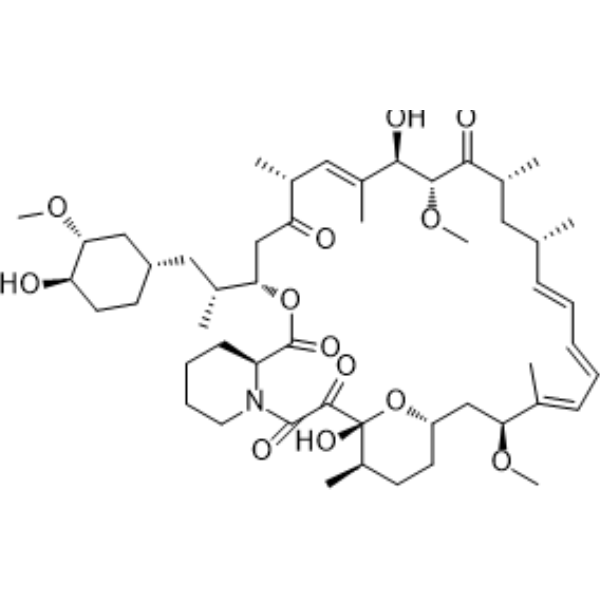
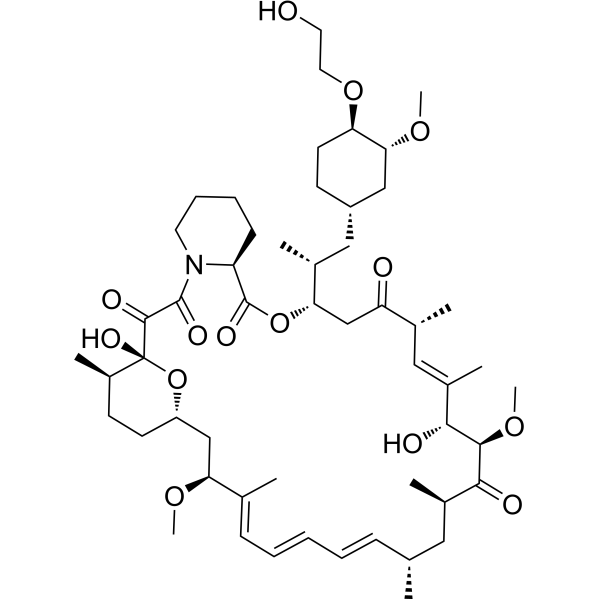
  • HY-10218
    Everolimus
    110+ Cited Publications

    RAD001; SDZ-RAD

    mTOR FKBP Autophagy Apoptosis Bacterial Infection Neurological Disease Metabolic Disease Inflammation/Immunology Cancer
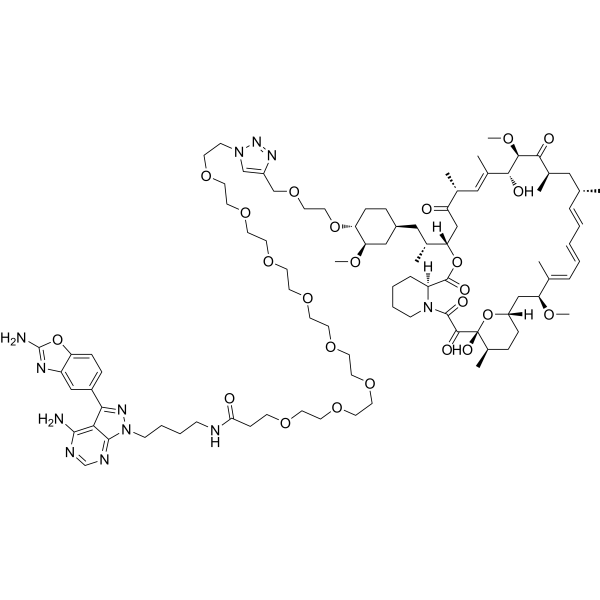
    Everolimus (RAD001) is a Rapamycin (HY-10219) derivative and a potent, selective, orally active, blood-brain barrier-permeable mTOR1 inhibitor. Everolimus binds to FKBP-12 to generate an immunosuppressive complex. Everolimus inhibits tumor cells proliferation and induces cell apoptosis and autophagy. Everolimus has potent immunosuppressive and anticancer activities .
    Everolimus
  • HY-13992
    AP20187
    45+ Cited Publications

    B/B Homodimerizer

    FKBP Metabolic Disease
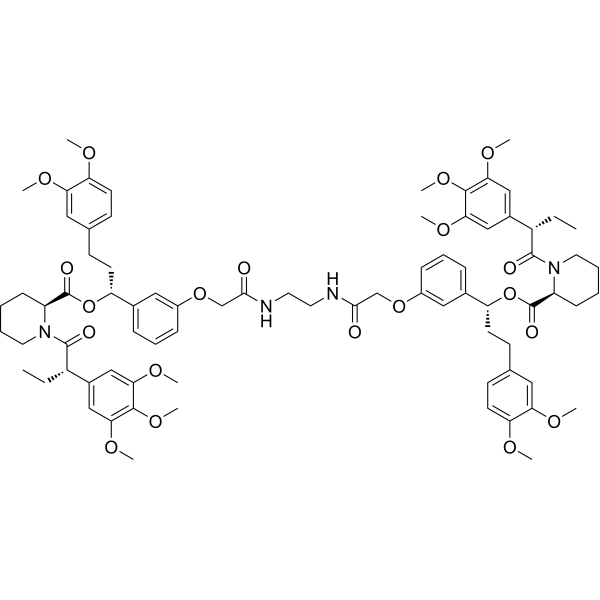
    AP20187 (B/B Homodimerizer) is a cell-permeable ligand used to dimerize FK506-binding protein (FKBP) fusion proteins and initiate biological signaling cascades and gene expression or disrupt protein-protein interactions.
    AP20187
  • HY-112210
    Shield-1
    5+ Cited Publications

    Shld1

    FKBP Others
    Shield-1 (Shld1) is a specific, cell-permeant and high-affinity ligand of FK506-binding protein-12 (FKBP), and reverses the instability by binding to mutated FKBP (mtFKBP), allowing conditional expression of mtFKBP-fused proteins. Shield-1 can stabilize proteins tagged with a mutated FKBP12-derived destabilization domain (DD) .
    Shield-1
  • HY-16046
    Rimiducid
    50+ Cited Publications

    AP1903

    FKBP Apoptosis Cancer
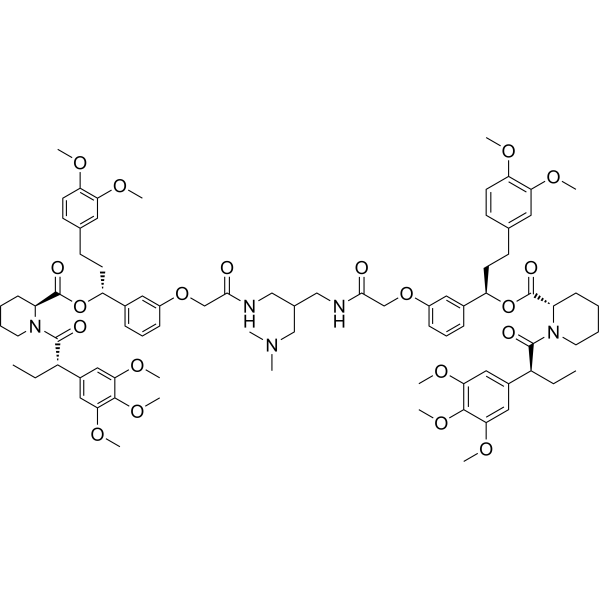
    Rimiducid (AP1903) is a dimerizer agent that acts by cross-linking the FKBP domains. Rimiducid (AP1903) dimerizes the Caspase 9 suicide switch and rapidly induces apoptosis.
    Rimiducid
  • HY-145514
    dTAGV-1 TFA
    5 Publications Verification

    PROTACs FKBP Cancer
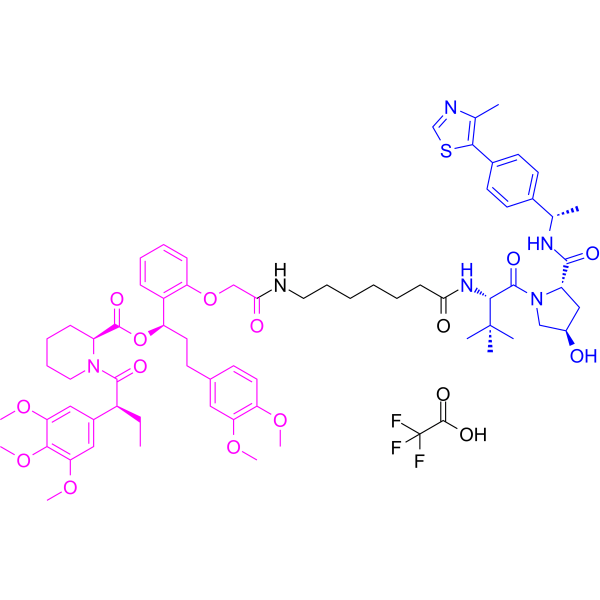
    dTAGV-1 TFA is a potent and selective degrader of FKBP12 F36V-tagged proteins PROTAC degrader. dTAGV-1 TFA can induce degradation of FKBP12 F36V-Nluc in vivo. (Pink: Target Protein Ligand (HY-114420); Black: Linker (HY-W012001); Blue: VHL Ligand (HY-112078); VHL Ligan+Linker (HY-173628A))
    dTAGV-1 TFA
  • HY-145514C
    dTAGV-1 hydrochloride
    5 Publications Verification

    FKBP PROTACs Cancer
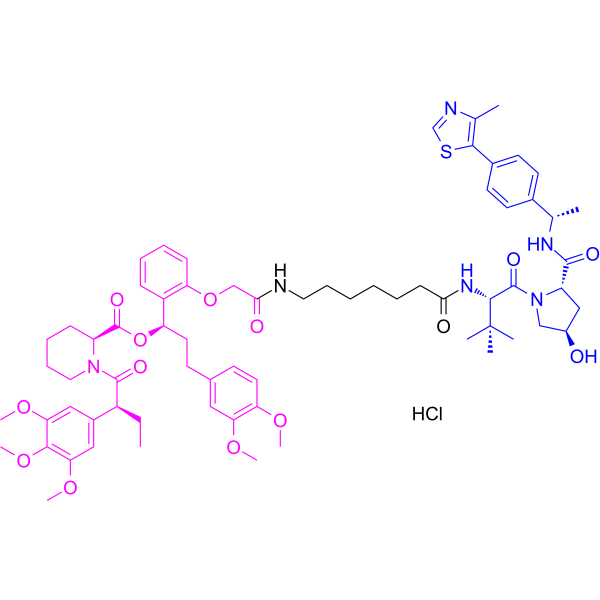
    dTAGV-1 hydrochloride is a potent and selective degrader of FKBP12 F36V-tagged proteins PROTAC degrader. dTAGV-1 hydrochloride can induce degradation of FKBP12 F36V-Nluc in vivo. (Pink: Target Protein Ligand (HY-114420); Black: Linker (HY-W012001); Blue: VHL Ligand (HY-112078); VHL Ligan+Linker (HY-173628A)) .
    dTAGV-1 hydrochloride
  • HY-114872
    SLF
    1 Publications Verification

    Ligands for Target Protein for PROTAC FKBP Cancer
    SLF is a synthetic ligand for FK506-binding protein (FKBP) with an affinity of 3.1 μM for FKBP51 and an IC50 of 2.6 μM for FKBP12. SLF can be used in the synthesis of PROTAC .
    SLF
  • HY-114434
    AP1867
    4 Publications Verification

    FKBP Cancer
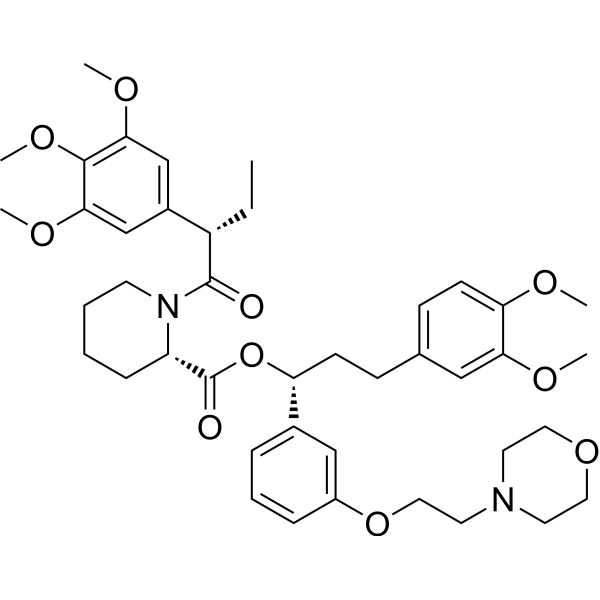
    AP1867 is a synthetic FKBP12 F36V-directed ligand .
    AP1867
  • HY-147098
    dTAG-47
    1 Publications Verification

    PROTACs FKBP Cancer
    dTAG-47 is a FKBP12F36V PROTAC degrader. dTAG-47 efficiently degrades FKBP12F36V-MELK(sg3R) in MELK ⁻/⁻ MDA-MB-468-FKBP12F36V-MELK(sg3R) cells. dTAG-47 can be used for the research of basal-like breast cancers (BBC). (Pink: FKBP12F36V ligand (HY-114420), Blue: CRBN Ligand (HY-W087383), Black: Linker (HY-42773), E3 ligase ligand-linker conjugate (HY-175952)) .
    dTAG-47
  • HY-153806

    ZZY05-092

    FKBP Cancer
    RapaBlock is a potent, non-immunosuppressive and brain-impermeable FKBP12 ligand .
    RapaBlock
  • HY-114421
    FKBP12 PROTAC dTAG-13
    5+ Cited Publications

    dTAG-13

    PROTACs FKBP Cancer
    FKBP12 PROTAC dTAG-13 (dTAG-13), a PROTAC-based heterobifunctional degrader, is a selective degrader of FKBP12 F36V with expression of FKBP12F36V in-frame with a protein of interest. FKBP12 PROTAC dTAG-13 effectively engages FKBP12 F36V and CRBN, thereby selectively degrading FKBP12 F36V .
    FKBP12 PROTAC dTAG-13
  • HY-161157

    PROTACs Cancer
    dTAG-13-NEG is a negative control of dTAG-13 (HY-114421). dTAG-13, a PROTAC-based heterobifunctional degrader, is a selective degrader of FKBP12 F36V with expression of FKBP12F36V in-frame with a protein of interest .
    dTAG-13-NEG
  • HY-145514A

    PROTACs FKBP Cancer
    dTAGV-1-NEG is a diastereomer and as a heterobifunctional negative control of dTAGV-1. dTAGV-1 is an FKBP12 F36V-selective degrader .
    dTAGV-1-NEG
  • HY-130835

    RC32

    PROTACs FKBP Cancer
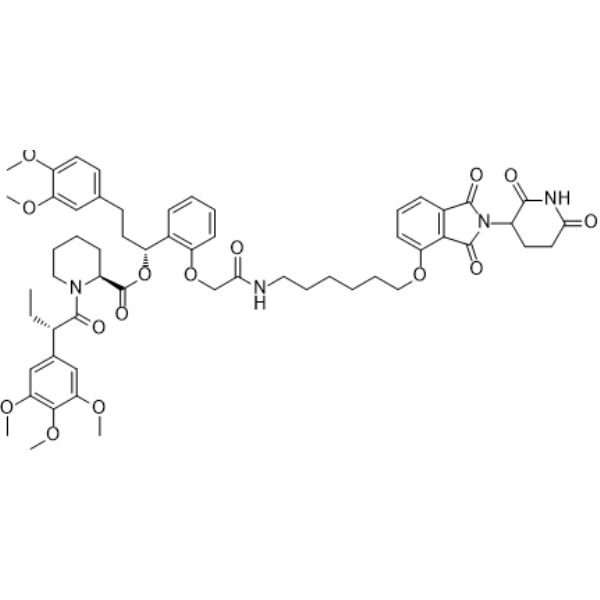
    FKBP12 PROTAC RC32 (RC32) is a potent FKBP12 degrader based on PROTAC technology. FKBP12 PROTAC RC32 contains conjugation of Rapamycin (HY-10219) and a ligand for an Cereblon E3 ubiquitin ligase (Pomalidomide; HY-10984) .
    FKBP12 PROTAC RC32
  • HY-102079
    SAFit1
    1 Publications Verification

    FKBP Neurological Disease Metabolic Disease
    SAFit1 is a FK506 binding protein 51 (FKBP51)-specific inhibitor with a Ki of 4±0.3 nM .
    SAFit1
  • HY-103634
    dFKBP-1
    1 Publications Verification

    PROTACs FKBP Cancer
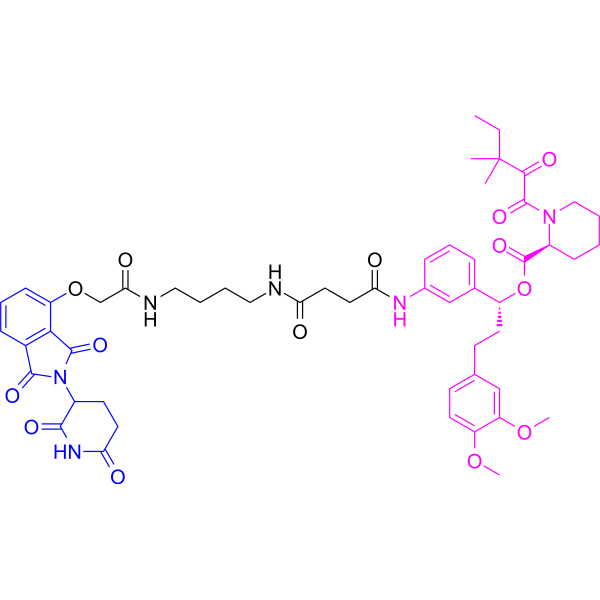
    dFKBP-1 is a potent and PROTAC-based FKBP12 degrader. dFKBP-1 incorporates the ligand SLF (HY-114872) of FKBP12, the Thalidomide based Cereblon ligand and a linker .
    dFKBP-1
  • HY-123941
    FKBP12 PROTAC dTAG-7
    3 Publications Verification

    dTAG-7

    PROTACs FKBP Epigenetic Reader Domain Others
    FKBP12 PROTAC dTAG-7 (dTAG-7) is a heterobifunctional PROTAC degrader. FKBP12 PROTAC dTAG-7 targets FKBP12 F36V and BET BRD4. FKBP12 PROTAC dTAG-7 enables rapid and selective degradation of target proteins, and is suitable for cellular and in vivo studies to analyze protein functions and validate targets . (Pink: target protein ligand (HY-114420); Black: linker (HY-128844); Blue: CRBN Ligand (HY-103597); CRBN Ligand+linker: (HY-W722323))
    FKBP12 PROTAC dTAG-7
  • HY-163807

    PROTACs FKBP Cancer
    22-SLF is a PROTAC degrader, that degrades FK506-binding protein 12 (FKBP12) with a DC50 of 0.5 µM. 22-SLF interacts with C227 and C228 in FBXO22 to induce a ternary complex between FKBP12 and FBXO22, and degrades FKBP12 in a FBXO22-dependent manner. 22-SLF can be used for fundamental cancer research as a probe to study the FBXO22 degradation pathway. (Pink: FKBP12 ligand (HY-114872); Black: Linker (HY-163821); Blue: FBXO22 ligand (HY-163826)) .
    22-SLF
  • HY-10218S

    RAD001-d4; SDZ-RAD-d4

    mTOR FKBP Autophagy Apoptosis Cancer
    Everolimus-d4 is the deuterium labeled Everolimus. Everolimus (RAD001) is a Rapamycin derivative and a potent, selective and orally active mTOR1 inhibitor. Everolimus binds to FKBP-12 to generate an immunosuppressive complex. Everolimus inhibits tumor cells proliferation and induces cell apoptosis and autophagy. Everolimus has potent immunosuppressive and anticancer activities .
    Everolimus-d4
  • HY-145514D
    dTAGV-1
    5 Publications Verification

    PROTACs FKBP Cancer
    dTAGV-1 is a potent and selective degrader of FKBP12 F36V-tagged proteins PROTAC degrader. dTAGV-1 can induce degradation of FKBP12 F36V-Nluc in vivo. (Pink: Target Protein Ligand (HY-114420); Black: Linker (HY-W012001); Blue: VHL Ligand (HY-112078); VHL Ligan+Linker (HY-173628A)) .
    dTAGV-1
  • HY-156820

    Epigenetic Reader Domain Cancer
    HLDA-221 is a non-covalent regulated induced proximity targeting chimeras (RIPTAC). The binding of HLDA-221 to BRD4-BD1 is significantly increased after pre-incubation with FKBP. HLDA-221 can be used in cancer research .
    HLDA-221
  • HY-10218R

    RAD001 (Standard); SDZ-RAD (Standard)

    Reference Standards mTOR FKBP Autophagy Apoptosis Bacterial Cancer
    Everolimus (Standard) is the analytical standard of Everolimus. This product is intended for research and analytical applications. Everolimus (RAD001) is a Rapamycin (HY-10219) derivative and a potent, selective and orally active mTOR1 inhibitor. Everolimus binds to FKBP-12 to generate an immunosuppressive complex. Everolimus inhibits tumor cells proliferation and induces cell apoptosis and autophagy. Everolimus has potent immunosuppressive and anticancer activities .
    Everolimus (Standard)
  • HY-129610

    PROTACs FKBP Cancer
    KB02-SLF is a PROTAC-based nuclear FKBP12 degrader (molecular glue). KB02-SLF promotes nuclear FKBP12 degradation by covalently modifying DCAF16 (E3 ligase) and can improve the durability of protein degradation in biological systems. SLF binds ubiquitin E3 ligase ligand KB02 via a linker to form KB02-SLF .
    KB02-SLF
  • HY-P4581

    Suc-ALPF-pNA

    FKBP Others
    Suc-Ala-Leu-Pro-Phe-pNA (Suc-ALPF-pNA) is a synthetic polypeptide substrate that targets FK506-binding protein (FKBP). Suc-Ala-Leu-Pro-Phe-pNA can be used to determine peptidyl-prolyl cis-trans isomerase activity via the chymotrypsin-coupled assay. Suc-Ala-Leu-Pro-Phe-pNA serves as a substrate for human FK506-binding protein hFKBP-12 in the chymotrypsin-FKBP coupled PPIase assay. Suc-Ala-Leu-Pro-Phe-pNA is applicable for the detection and research of PPIase activity .
    Suc-Ala-Leu-Pro-Phe-pNA
  • HY-135345
    PROTAC FKBP Degrader-3
    1 Publications Verification

    PROTACs FKBP Cancer
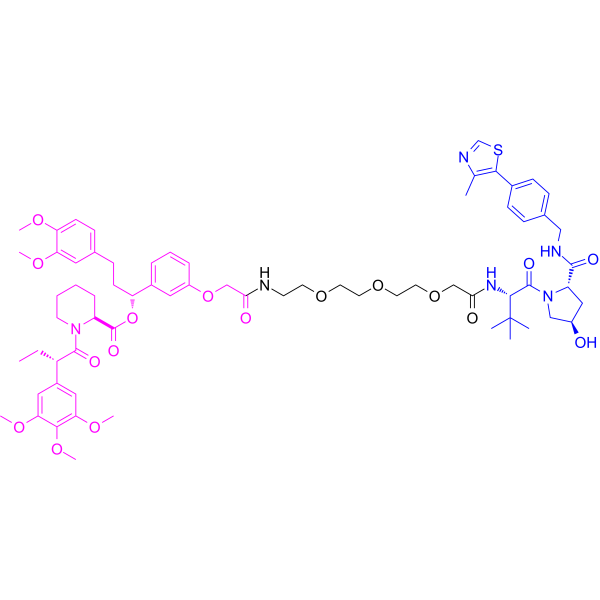
    PROTAC FKBP Degrader-3 is a PROTAC that comprises a FKBP ligand binding group, a linker and an von Hippel-Lindau binding group. PROTAC FKBP Degrader-3 is a potent FKBP degrader .
    PROTAC FKBP Degrader-3
  • HY-107452

    PROTAC FKBP12-binding moiety 1

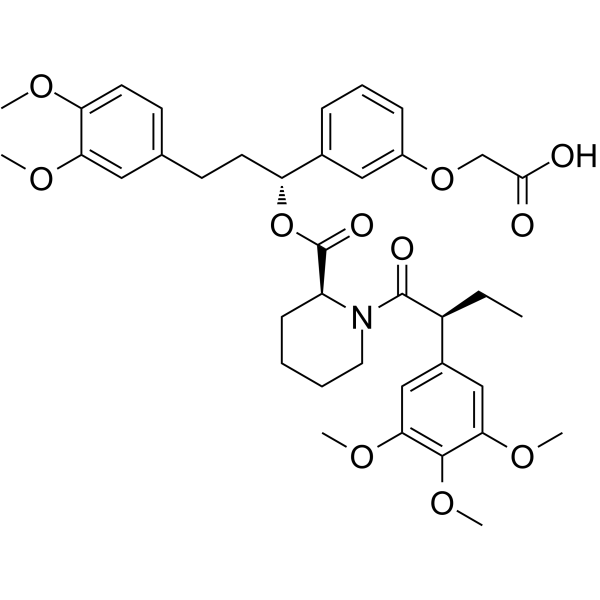
    Ligands for Target Protein for PROTAC FKBP Cancer
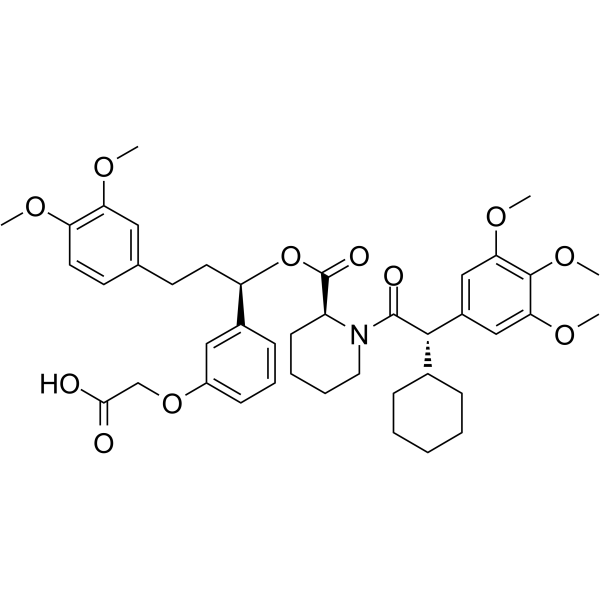
    SLF-amido-C2-COOH (PROTAC FKBP12-binding moiety 1) is a synthetic ligand for FKBP (SLF). SLF-amido-C2-COOH (PROTAC FKBP12-binding moiety 1) can be used in the synthesis of PROTACs .
    SLF-amido-C2-COOH
  • HY-114872A
    SLF TFA
    1 Publications Verification

    Ligands for Target Protein for PROTAC FKBP Cancer
    SLF TFA is a synthetic ligand for FK506-binding protein (FKBP) with an affinity of 3.1 μM for FKBP51 and an IC50 of 2.6 μM for FKBP12. SLF TFA can be used in the synthesis of PROTAC .
    SLF TFA
  • HY-106345

    FKBP Calcium Channel Neurological Disease Inflammation/Immunology
    ILS-920 is a nonimmunosuppressive Rapamycin analog with reduced immunosuppressive activity and potent neuroprotective activity. ILS-920 binds selectively to the immunophilin FKBP52 and to the β1-subunit of L-type voltage-gated calcium channels (VGCC). ILS-920 shows 200-fold selectivity for FKBP52 versus FKBP12 .
    ILS-920
  • HY-129363

    Ligands for Target Protein for PROTAC FKBP Cancer
    AP1867-3-(aminoethoxy), the AP1867 (HY-114434) based moiety, is a synthetic ligand for FKBP. AP1867-3-(aminoethoxy) can be used in the synthesis of PROTAC FKBP12 F36V degrader .
    AP1867-3-(aminoethoxy)
  • HY-161794A

    FKBP Cancer
    SP3N hydrochloride is a specific degrader of the prolyl isomerase (FKBP12). The alkylamine of SP3N hydrochloride is metabolized to a reactive aldehyde (SP3CHO), which recruits the SCF FBXO22 ligase for FKBP12 degradation. SP3N hydrochloride may be used in research for cancer .
    SP3N hydrochloride
  • HY-131344

    mTOR Autophagy Cancer
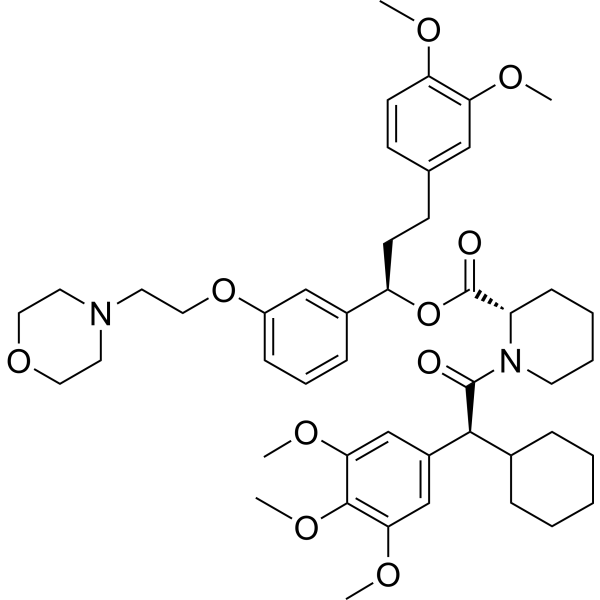
    mTOR inhibitor-8 is an mTOR inhibitor and autophagy inducer. mTOR inhibitor-8 inhibits the activity of mTOR via FKBP12 and induces autophagy of A549 human lung cancer cells .
    mTOR inhibitor-8
  • HY-172265

    PROTACs FKBP Cancer
    FKBP12 PROTAC FM4 is a PROTAC degrader of FKBP12, with a DC50 value of 0.09-0.22 nM. FKBP12 PROTAC FM4 inhibits global protein synthesis, induces apoptosis, and selectively reduces the viability of cervical cancer cells expressing MTH1-E6 and FKBP12 F36V-tagged SARS1. FKBP12 PROTAC FM4 is applicable to research related to HPV-positive cervical cancer .
    FKBP12 PROTAC FM4
  • HY-159758

    Others Neurological Disease Cancer
    EcDHFR/FKBP12 F36V binder-1 (compound 1) is a bifunctional molecule that combines the Escherichia coli dihydrofolate reductase domain (EcDHFR) with the FKBP12 F36V domain .
    EcDHFR/FKBP12 F36V binder-1
  • HY-134184

    AUTACs Autophagy Inflammation/Immunology Cancer
    AUTAC2 is a FKBP12-targeting autophagy-mediated degrader (AUTAC). AUTAC2 contains an FBnG (p-Fluorobenzyl Guanine) and an SLF (c ligand of FKBP) moiety. SLF binds non-covalently to FKBP12 .
    AUTAC2
  • HY-176502

    FKBP Cancer
    FKBP12 ligand-3 (compound dj) is a high-affinity ligand targeting FKBP12. FKBP12 ligand-3 can be used to selectively enhance the binding of heterobifunctional molecules to BRD4, enriching the drug intracellularly through the "CellTrap" effect to form a ternary complex of FKBP12-ligand-BRD4. This ternary complex has inhibitory activity against BRD4, thereby inhibiting the expression of BRD4 target genes (such as MYC) and inducing tumor cell death. FKBP12 ligand-3 can be used for selective cancer research based on differences in intracellular presenter protein levels .
    FKBP12 ligand-3
  • HY-113646

    FKBP Others
    Shield-2 is an efficient stabilizing ligand binding to the FKBP (F36V) protein with a dissociation constant of 29 nM. Shield-2 binds tightly to the FKBP mutants destabilizing domains and prevents degradation, thus providing small molecule regulation over intracellular protein levels .
    Shield-2
  • HY-W017542

    Drug Intermediate Biochemical Assay Reagents Others
    L-Pyrohomoglutamic acid is an amino acid building block. L-Pyrohomoglutamic acid can be used to synthesize ligands for FK506-binding proteins (FKBPs) and histone deacetylase (HDAC) inhibitors .
    L-Pyrohomoglutamic acid
  • HY-158131

    FKBP HSP Neurological Disease Cancer
    FKBP51-Hsp90-IN-2 (Compound E08) is a selective FKBP51-Hsp90 protein-protein interaction inhibitor with IC50 values of 0.4 µM and 5 µM for FKBP51 and FKBP52, respectively. FKBP51-Hsp90-IN-2 also effectively stimulates cellular energy metabolism and neurite growth. FKBP51-Hsp90-IN-2 can be used in research on neurodegenerative diseases and cancer .
    FKBP51-Hsp90-IN-2
  • HY-158130

    FKBP HSP Neurological Disease Metabolic Disease Cancer
    FKBP51-Hsp90-IN-1 (Compound D10) is a selective inhibitor of the FKBP51-Hsp90 protein-protein interaction, with an IC50 value of 0.1 μM against FKBP51. FKBP51-Hsp90-IN-1 can be used in the research of stress-related diseases, Alzheimer's disease, and metabolic disorders .
    FKBP51-Hsp90-IN-1
  • HY-176476

    Epigenetic Reader Domain FKBP Cancer
    BRD4/FKBP12 degrader-1(a1d) is a BRD4/FKBP12 degrader with anti-cancer activity (BRD4 ligand: HY-78695, FKBP12 ligand: HY-176501, linker: HY-140212) .
    BRD4/FKBP12 degrader-1
  • HY-172266

    Target Protein Ligand-Linker Conjugates Others
    FKBP12 Ligand-Linker Conjugate 2 is a conjugate of the FKBP12 target protein ligand and a linker, and it can be used for the synthesis of FKBP12 PROTAC FM4 (HY-172265) .
    FKBP12 Ligand-Linker Conjugate 2
  • HY-W520748

    FKBP Cancer
    MJC13 is an FKBP52-targeted agent with anti-tumor activity that can be used in prostate cancer research .
    MJC13
  • HY-176501

    FKBP Cancer
    FKBP12 ligand-2 (compound d) is a high affinity ligand targeting FKBP12. FKBP12 ligand-2 can be used to selectively enhance the binding of heterobifunctional molecules to BRD4, enriching the drug intracellularly through the "CellTrap" effect to form a ternary complex of FKBP12-ligand-BRD4. This ternary complex has inhibitory activity against BRD4, thereby inhibiting the expression of BRD4 target genes (such as MYC) and inducing tumor cell death. FKBP12 ligand-2 can be used for selective cancer research based on differences in intracellular presenter protein levels .
    FKBP12 ligand-2
  • HY-170987

    Target Protein Ligand-Linker Conjugates FKBP Cancer
    FKBP12 Ligand-Linker Conjugate 1 is the conjugate composed of a target protein ligand for FKBP12 and a linker. FKBP12 Ligand-Linker Conjugate 1 can be used for synthesis of PROTAC degrader MC-25B (HY-170983) .
    FKBP12 Ligand-Linker Conjugate 1
  • HY-170983

    FKBP Cancer
    MC-25B is a specific FKBP12 PROTAC degrader. MC-25B degrades FKBP12 with a DC50 of 0.35 μM and a Dmax of 89%. MC-25B facilitates the degradation of nuclear-localized FKBP12 through a DCAF16-dependent mechanism. (Pink: FKBP12 ligand (HY-170988); Blue: E3 ligase ligand HY-170986); Black: linker (HY-128844); FKBP12 ligand+ linker (HY-170987)) .
    MC-25B
  • HY-173082

    PROTACs FKBP Cancer
    10-SLF is a PROTAC FKBP12 degrader. 10-SLF induces a ternary complex between FKBP12 and FBXW7-R465C, and promotes FBXW7-R465C-dependent proteasomal degradation of FKBP12. 10-SLF selectively reduces FKBP12 levels in cells expressing FBXW7-R465C. Pink: FKBP12 ligand (HY-170988); Black: linker (HY-W004640); Blue: E3 ligase ligand .
    10-SLF
  • HY-170988

    FKBP Ligands for Target Protein for PROTAC Cancer
    FKBP12 ligand-1 is a targeting protein ligand of MC-25B (HY-170983), which is a specific FKBP12 PROTAC .
    FKBP12 ligand-1
  • HY-161794

    FKBP Cancer
    SP3N is a specific degrader of the prolyl isomerase (FKBP12). The alkylamine of SP3N is metabolized to a reactive aldehyde (SP3CHO), which recruits the SCF FBXO22 ligase for FKBP12 degradation. SP3N may be used in research for cancer .
    SP3N
  • HY-145712

    FKBP Cancer
    ElteN378 is an inhibitors of FKBP12e. ElteN378 can be used in study Alzheimer disease, Parkinson disease, Amyotrophic Lateral Sclerosis, proliferation disorders and cancer .
    ElteN378
  • HY-10218S1

    RAD001-13C2,d4; SDZ-RAD-13C2,d4

    Isotope-Labeled Compounds Bacterial Autophagy FKBP mTOR Apoptosis Cancer
    Everolimus- 13C2,d4 (RAD001- 13C2,d4) is 13C labeled Everolimus. Everolimus (RAD001) is a Rapamycin (HY-10219) derivative and a potent, selective and orally active mTOR1 inhibitor. Everolimus binds to FKBP-12 to generate an immunosuppressive complex. Everolimus inhibits tumor cells proliferation and induces cell apoptosis and autophagy. Everolimus has potent immunosuppressive and anticancer activities .
    Everolimus-13C2,d4

Inquiry Online

Your information is safe with us. * Required Fields.

Salutation


Country or Region *

Applicant Name *


Organization Name *

Department *


Email Address *


Product Name *

Cat. No.


Requested quantity *

Phone Number *


Remarks

Inquiry Online

Inquiry Information

Product Name:
Cat. No.:
Quantity:
MCE Japan Authorized Agent:

