
1. Search Result
Search Result
Results for "

FOCUS

" in MedChemExpress (MCE) Product Catalog:

63

Inhibitors & Agonists

25

Screening Libraries

1

Fluorescent Dye

2

Biochemical Assay Reagents

3

Peptides

2

Inhibitory Antibodies

4

Natural
Products

1

Recombinant Proteins

1

Isotope-Labeled Compounds

Cat. No. Product Name Target Research Areas Chemical Structure
  • HY-P3239
    Belantamab mafodotin
    1 Publications Verification

    GSK2857916; Belantamab mafodotin-blm

    Antibody-Drug Conjugates (ADCs) Cancer
    Belantamab mafodotin (GSK2857916) is composed of humanized and focused monoclonal antibody against B cell maturation antigen (BCMA) and McMMAF. The antibody portion is Belantamab (HY-P9980), and the drug-linker conjugate for ADC is McMMAF (HY-15578). Belantamab mafodotin has anti-myeloma activity .
    Belantamab mafodotin
  • HY-E70336

    Endogenous Metabolite Others
    Peroxidase, Lignin is a biocatalyst and a key enzyme in new biocatalyst technology. Enzyme engineering focuses on enhancing enzyme reaction kinetics, substrate selectivity, and activity under harsh conditions such as low or high pH. By introducing stimulus responsiveness to these enzyme modifications, dynamic control of activity is also possible .
    Peroxidase, Lignin
  • HY-P4486

    Pro-Gly-Pro

    Drug Derivative Others
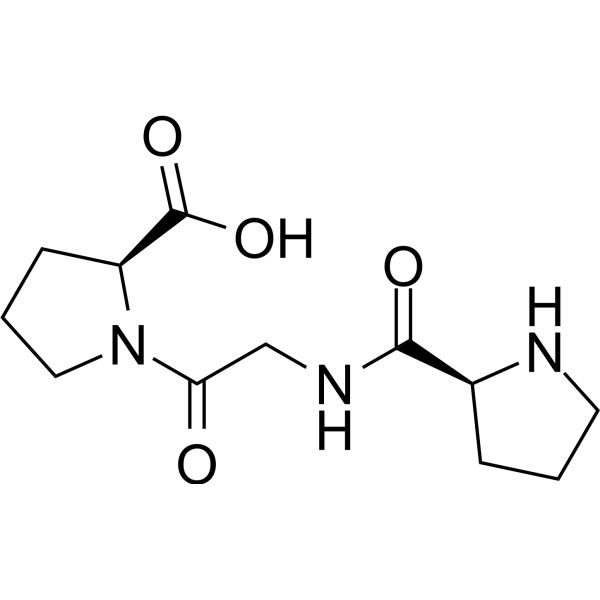
    H-Pro-Gly-Pro-OH is a collagen-derived matrikine that has classically been described as a neutrophil chemoattractant. H-Pro-Gly-Pro-OH is perfectly positioned to focus neutrophils on the site required and direct a localized repair response. H-Pro-Gly-Pro-OH activates the transcription of neurotrophins and their receptor genes after cerebral ischemia .
    H-Pro-Gly-Pro-OH
  • HY-135712

    Acid Orange GG

    Environmental Pollutants Biochemical Assay Reagents Others
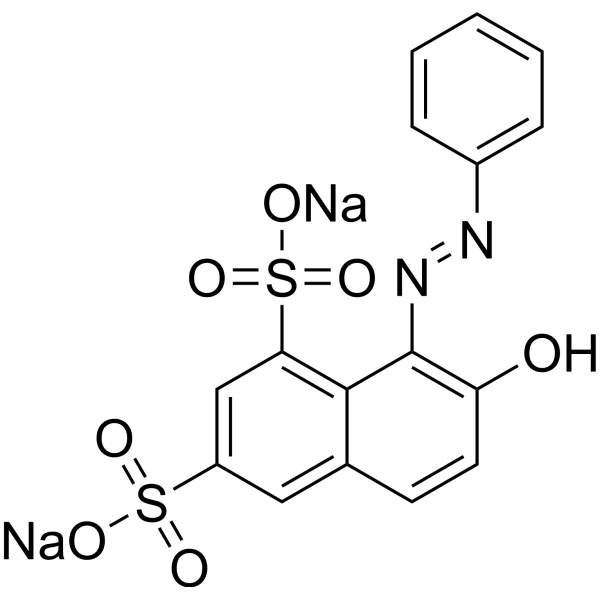
    Orange G is an azo dye commonly found in textile wastewater and is mainly used for textile dyeing. Orange G has a coloring function and can give textiles a specific color. The stability and potential hazards of Orange G in the environment are often used to study the removal effects of various wastewater treatment technologies on difficult-to-degrade organic pollutants, especially the degradation of azo dyes. Related research focuses on how to destroy the azo bond of Orange G through chemical, physical or biological methods to achieve harmless treatment to solve the problem of textile wastewater pollution .
    Orange G
  • HY-B0827
    Dinotefuran
    4 Publications Verification

    MTI-446

    Environmental Pollutants Parasite nAChR Infection Cardiovascular Disease
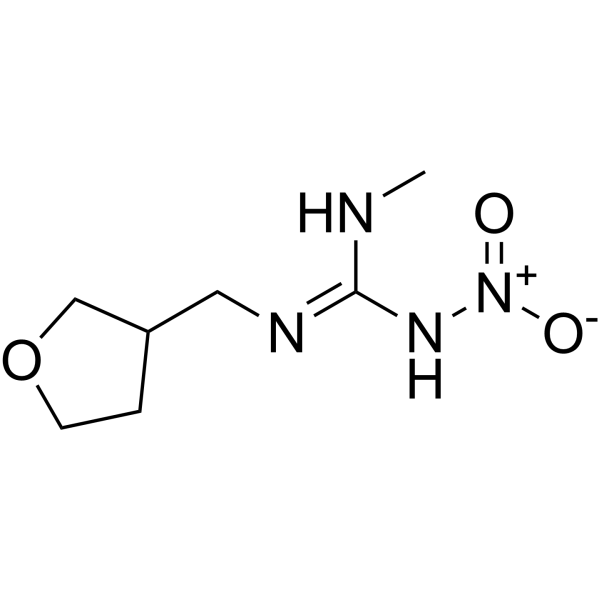
    Dinotefuran is an orally active and competitive inhibitor and insecticide targeting insect nicotinic acetylcholine receptors (nAChRs). Dinotefuran blocks neural signaling and induces neural dysfunction in insects. Dinotefuran binds to [ 3H]epibatidine in the neural cord membrane of American cockroach with an IC50 of 890 nM and to [ 3H]α-bungarotoxin with an IC50 of 36.1 μM. Dinotefuran exhibits knockdown activity (KD50=0.351 nmol/g) and lethal activity (LD50=0.173 nmol/g) against German cockroach. Dinotefuran is mainly used for agricultural pest control, such as field control of piercing-sucking and chewing insects (e.g., aphids, planthoppers), while its environmental toxicological effects (e.g., oxidative stress and reproductive neurotoxicity on earthworms) are also a research focus to assess ecological risks .
    Dinotefuran
  • HY-P10580

    Tie PI3K Akt Cadherin Claudin Cardiovascular Disease Infection Inflammation/Immunology
    Vasculotide is a blood-brain barrier (BBB)-penetrant Tie2 agonist. Vasculotide binds to a unique domain of Tie2, induces receptor clustering to drive phosphorylation, activates downstream PI3K/Akt and eNOS pathways, enhances inter-endothelial cell junctions (such as VE-cadherin and claudin-5), and inhibits inflammatory adhesion molecules, ultimately stabilizing the vascular endothelial barrier and reducing its permeability . Vasculotide alleviates pulmonary microvascular leakage and microcirculatory dysfunction caused by cardiopulmonary bypass, acts as an adjuvant radioprotective agent to reduce acute radiation dermatitis, and promotes BBB recovery after focused ultrasound (FUS). Combination of Vasculotide with antibiotics reduces lung injury .
    Vasculotide
  • HY-109540

    AF-0150

    Heme Oxygenase (HO) Interleukin Related Inflammation/Immunology
    Perfluorohexane (AF-0150) is a perfluorocarbon. Perfluorohexane is also an enhancer of high-intensity focused ultrasound (HIFU) therapy. Perfluorohexane increases HO-1 and IL-10. Perfluorohexane exerts an antioxidant effect. Perfluorohexane alleviates lung injury induced by LPS (HY-D1056A1). Perfluorohexane improves the efficiency and precision of HIFU and reduces damage to surrounding normal tissues. Perfluorohexane can be used in the study of acute lung injury .
    Perfluorohexane
  • HY-E70333

    AR2000

    Endogenous Metabolite Others
    Microgranulated pectolytic enzyme is a biocatalyst and a key enzyme in new biocatalyst technology. Enzyme engineering focuses on enhancing enzyme reaction kinetics, substrate selectivity, and activity under harsh conditions such as low or high pH. By introducing stimulus responsiveness to these enzyme modifications, dynamic control of activity is also possible .
    Microgranulated pectolytic enzyme
  • HY-E70332

    Endogenous Metabolite Others
    Lipase, Aspergillus niger is a biocatalyst and a key enzyme in new biocatalyst technology. Enzyme engineering focuses on enhancing enzyme reaction kinetics, substrate selectivity, and activity under harsh conditions such as low or high pH. By introducing stimulus responsiveness to these enzyme modifications, dynamic control of activity is also possible .
    Lipase, Aspergillus niger
  • HY-N0131R
    Stigmasterol (Standard)
    10+ Cited Publications

    Stigmasterin (Standard)

    Reference Standards MMP Endogenous Metabolite Inflammation/Immunology
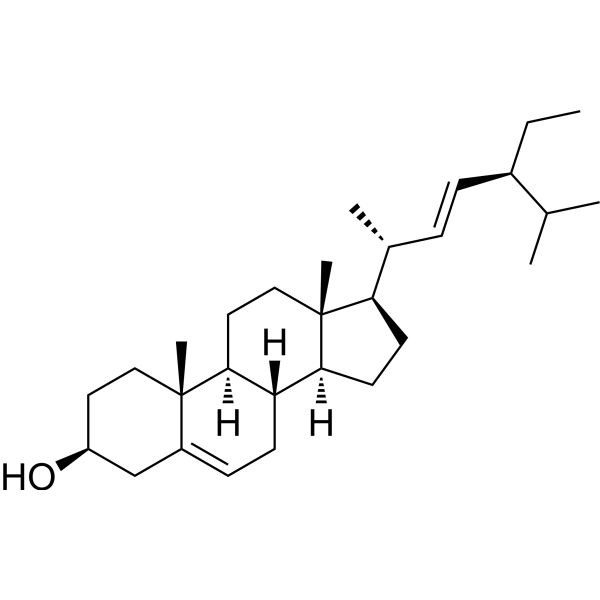
    Stigmasterol (Standard) is the analytical standard of Stigmasterol (HY-N0131). This product is intended for research and analytical applications. Stigmasterol is a plant sterol which has been focused on the cholesterol-lowering activity and is valued as an anti-stiffness factor in the therapy of rheumatic diseases.
    Stigmasterol (Standard)
  • HY-164410

    Notch Cancer
    MO-I-1100 is an inhibitor of ASPH (Aspartyl-(Asparaginyl)-β-hydroxylase) enzymatic activity. MO-I-1100 suppresses HCC cell migration, invasion and anchorage independent growth. MO-I-1100 shows antitumor effects through inhibiting Notch signaling cascade in HCC .
    MO-I-1100
  • HY-E70335

    Endogenous Metabolite Others
    Colipase, Porcine is a biocatalyst and a key enzyme in new biocatalyst technology. Enzyme engineering focuses on enhancing enzyme reaction kinetics, substrate selectivity, and activity under harsh conditions such as low or high pH. By introducing stimulus responsiveness to these enzyme modifications, dynamic control of activity is also possible .
    Colipase, Porcine
  • HY-E70353

    Endogenous Metabolite Others
    Trypsin-Chymotrypsin 6:1 is a biocatalyst and a key enzyme in new biocatalyst technology. Enzyme engineering focuses on enhancing enzyme reaction kinetics, substrate selectivity, and activity under harsh conditions such as low or high pH. By introducing stimulus responsiveness to these enzyme modifications, dynamic control of activity is also possible .
    Trypsin-Chymotrypsin 6:1
  • HY-E70312

    Endogenous Metabolite Others
    High-efficiency lipase,Candida antarctica (Immobilized on hydrophilic carrier) is a biocatalyst and a key enzyme in new biocatalyst technology. Enzyme engineering focuses on enhancing enzyme reaction kinetics, substrate selectivity, and activity under harsh conditions such as low or high pH. By introducing stimulus responsiveness to these enzyme modifications, dynamic control of activity is also possible .
    High-efficiency lipase,Candida antarctica (Immobilized on hydrophilic carrier)
  • HY-160900
    RN-1665
    1 Publications Verification

    TRP Channel Others
    RN-1665 is an orally active TRPV4 antagonist that exhibits excellent selectivity for related TRP receptors such as TRPV1, TRPV3 and TRPM8. RN-1665 is a TRPV4 probe for focus screens, with IC50s of 0.26 μM and 0.39 μM for hTRPV4 and rTRPV4 from human and rat, respectively .
    RN-1665
  • HY-P10580A

    Cadherin Tie Claudin PI3K Akt Cardiovascular Disease Infection Inflammation/Immunology
    Vasculotide TFA is a blood-brain barrier (BBB)-penetrant Tie2 agonist. Vasculotide TFA binds to a unique domain of Tie2, induces receptor clustering to drive phosphorylation, activates downstream PI3K/Akt and eNOS pathways, enhances inter-endothelial cell junctions (such as VE-cadherin and claudin-5), and inhibits inflammatory adhesion molecules, ultimately stabilizing the vascular endothelial barrier and reducing its permeability . Vasculotide TFA alleviates pulmonary microvascular leakage and microcirculatory dysfunction caused by cardiopulmonary bypass, acts as an adjuvant radioprotective agent to reduce acute radiation dermatitis, and promotes BBB recovery after focused ultrasound (FUS). Combination of Vasculotide TFA with antibiotics reduces lung injury .
    Vasculotide TFA
  • HY-W010934

    Biochemical Assay Reagents Others
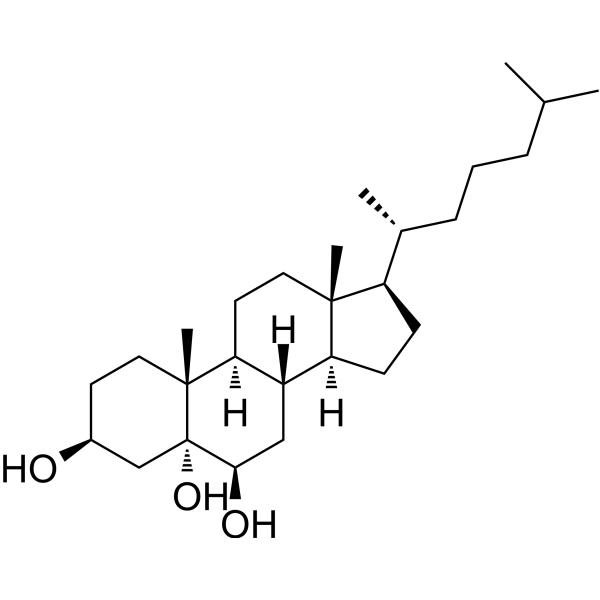
    3β,5α,6β-Trihydroxycholestane is a steroid that occurs naturally in the body and is also found in certain foods. It belongs to a class of compounds known as cholestanes, which are closely related to the better known cholesterol. This particular compound is formed from cholesterol through a series of enzymatic reactions in the liver and other organs. It has been studied for its potential health benefits, including its ability to reduce inflammation and oxidative stress in the body. Some research suggests that it may also play a role in regulating blood sugar levels and improving insulin sensitivity. Despite these potential benefits, 3β,5α,6β-Trihydroxycholestane is not widely used as a supplement or medicine due to its relatively low content, focus on natural resources and limited research. However, researchers continue to investigate its potential uses and effects on human health.
    3β,5α,6β-Trihydroxycholestane
  • HY-158812

    Drug Derivative Metabolic Disease
    Eicosapentaenoyl-L-carnitine chloride is a long-chain acylcarnitine composed of Eicosapentaenoic Acid (HY-B0660) and L-Carnitine (HY-B0399). The levels of Eicosapentaenoyl-L-carnitine chloride are increased in the eyes of mice fed a diet high in n-3/n-6 polyunsaturated fatty acids (PUFAs) in a mouse model of myopia induced by out-of-focus lenses .
    Eicosapentaenoyl-L-carnitine chloride
  • HY-E70337

    Endogenous Metabolite Others
    Heparanase 1, Human is a biocatalyst and a key enzyme in new biocatalyst technology. Enzyme engineering focuses on enhancing enzyme reaction kinetics, substrate selectivity, and activity under harsh conditions such as low or high pH. By introducing stimulus responsiveness to these enzyme modifications, dynamic control of activity is also possible .
    Heparanase 1, Human
  • HY-130325

    NO Synthase Neurological Disease
    α-Guanidinoglutaric acid is a guanidino compound first found in cobaltinduced epileptogenic focus tissue in the cerebral cortex of cats. α-Guanidinoglutaric acid induces epileptic seizures in rats after intraventricular administration .
    α-Guanidinoglutaric acid
  • HY-E70331

    Endogenous Metabolite Others
    Acid Stable Protease is a biocatalyst and a key enzyme in new biocatalyst technology. Enzyme engineering focuses on enhancing enzyme reaction kinetics, substrate selectivity, and activity under harsh conditions such as low or high pH. By introducing stimulus responsiveness to these enzyme modifications, dynamic control of activity is also possible .
    Acid Stable Protease
  • HY-E70354

    Endogenous Metabolite Others
    Protease for flavors is a biocatalyst and a key enzyme in new biocatalyst technology. Enzyme engineering focuses on enhancing enzyme reaction kinetics, substrate selectivity, and activity under harsh conditions such as low or high pH. By introducing stimulus responsiveness to these enzyme modifications, dynamic control of activity is also possible .
    Protease for flavors
  • HY-E70347

    Endogenous Metabolite Others
    Tn5 Transposase is a biocatalyst and a key enzyme in new biocatalyst technology. Enzyme engineering focuses on enhancing enzyme reaction kinetics, substrate selectivity, and activity under harsh conditions such as low or high pH. By introducing stimulus responsiveness to these enzyme modifications, dynamic control of activity is also possible .
    Tn5 Transposase
  • HY-D0234

    ortho-Cresolphthalein

    Endogenous Metabolite Others
    o-Cresolphthalein (ortho-Cresolphthalein) is a biocatalyst and a key enzyme in new biocatalyst technology. Enzyme engineering focuses on enhancing enzyme reaction kinetics, substrate selectivity, and activity under harsh conditions such as low or high pH. By introducing stimulus responsiveness to these enzyme modifications, dynamic control of activity is also possible .
    o-Cresolphthalein
  • HY-E70352

    Endogenous Metabolite Others
    Trypsin-Chymotrypsin 1:250 is a biocatalyst and a key enzyme in new biocatalyst technology. Enzyme engineering focuses on enhancing enzyme reaction kinetics, substrate selectivity, and activity under harsh conditions such as low or high pH. By introducing stimulus responsiveness to these enzyme modifications, dynamic control of activity is also possible .
    Trypsin-Chymotrypsin 1:250
  • HY-W074888

    Endogenous Metabolite Inflammation/Immunology
    N-Lauroyl-L-glutamic acid is an amino acid derivative with anti-asthmatic activity. N-Lauroyl-L-glutamic acid has been found to improve asthma symptoms in studies. The potential application of N-Lauroyl-L-glutamic acid is mainly focused on the suppression of respiratory diseases. N-Lauroyl-L-glutamic acid may help improve the quality of life of patients .
    N-Lauroyl-L-glutamic acid
  • HY-16387

    VEGFR Others
    PF-00337210 is a potent and selective inhibitor of VEGFRs, designed for treating age-related macular degeneration via intravitreal injection. The formulation strategy focused on developing an ophthalmic solution that would precipitate upon injection into the vitreous, ensuring sustained drug delivery. Challenges included maintaining low dosing volumes, selecting safe excipients for intravitreal use, and addressing the drug's unique physicochemical properties. The final formulation, an isotonic solution in a citrate-buffered vehicle with NaCl, demonstrated stability, potency, and recovery through intravitreal dosing syringes. It formed a depot upon injection into vitreous humor, representing a novel nonpolymeric in situ-forming depot formulation for intravitreal drug delivery .
    PF 00337210
  • HY-161648

    Drug Derivative Cancer
    Anticancer agent 222 (Compound 19) is an orally active anticancer agent that exhibits significant anticancer activity against Huh7, FOCUS, SNU475, SNU182, HepG2, and Hep3B cells (IC50 = 2.9–9.3 μM) .
    Anticancer agent 222
  • HY-N0131S1

    Stigmasterin-d5-1

    Isotope-Labeled Compounds MMP Endogenous Metabolite Inflammation/Immunology
    Stigmasterol-d5-1 is deuterium labeled Stigmasterol. Stigmasterol is a plant sterol which has been focused on the cholesterol-lowering activity and is valued as an anti-stiffness factor in the therapy of rheumatic diseases .
    Stigmasterol-d5-1
  • HY-E70338

    Endogenous Metabolite Others
    Ketoamine oxidase is a biocatalyst and a key enzyme in new biocatalyst technology. Enzyme engineering focuses on enhancing enzyme reaction kinetics, substrate selectivity, and activity under harsh conditions such as low or high pH. By introducing stimulus responsiveness to these enzyme modifications, dynamic control of activity is also possible .
    Ketoamine oxidase
  • HY-E70345

    Endogenous Metabolite Others
    Homocysteine methyltransferase is a biocatalyst and a key enzyme in new biocatalyst technology. Enzyme engineering focuses on enhancing enzyme reaction kinetics, substrate selectivity, and activity under harsh conditions such as low or high pH. By introducing stimulus responsiveness to these enzyme modifications, dynamic control of activity is also possible .
    Homocysteine methyltransferase
  • HY-E70325

    Endogenous Metabolite Others
    Maltogenic amylase is a biocatalyst and a key enzyme in new biocatalyst technology. Enzyme engineering focuses on enhancing enzyme reaction kinetics, substrate selectivity, and activity under harsh conditions such as low or high pH. By introducing stimulus responsiveness to these enzyme modifications, dynamic control of activity is also possible .
    Maltogenic amylase
  • HY-E70324

    Endogenous Metabolite Others
    Amoxicillin acylase (Immobilized) is a biocatalyst and a key enzyme in new biocatalyst technology. Enzyme engineering focuses on enhancing enzyme reaction kinetics, substrate selectivity, and activity under harsh conditions such as low or high pH. By introducing stimulus responsiveness to these enzyme modifications, dynamic control of activity is also possible .
    Amoxicillin acylase (Immobilized)
  • HY-E70322

    Endogenous Metabolite Others
    Cefaclor acylase (Immobilized) is a biocatalyst and a key enzyme in new biocatalyst technology. Enzyme engineering focuses on enhancing enzyme reaction kinetics, substrate selectivity, and activity under harsh conditions such as low or high pH. By introducing stimulus responsiveness to these enzyme modifications, dynamic control of activity is also possible .
    Cefaclor acylase (Immobilized)
  • HY-E70323

    Endogenous Metabolite Others
    Cephalexin acylase (Immobilized) is a biocatalyst and a key enzyme in new biocatalyst technology. Enzyme engineering focuses on enhancing enzyme reaction kinetics, substrate selectivity, and activity under harsh conditions such as low or high pH. By introducing stimulus responsiveness to these enzyme modifications, dynamic control of activity is also possible .
    Cephalexin acylase (Immobilized)
  • HY-E70346

    Endogenous Metabolite Others
    S-Adenosylmethionine synthetase is a biocatalyst and a key enzyme in new biocatalyst technology. Enzyme engineering focuses on enhancing enzyme reaction kinetics, substrate selectivity, and activity under harsh conditions such as low or high pH. By introducing stimulus responsiveness to these enzyme modifications, dynamic control of activity is also possible .
    S-Adenosylmethionine synthetase
  • HY-E70326

    Endogenous Metabolite Others
    Acid Protease, Aspergillus niger is a biocatalyst and a key enzyme in new biocatalyst technology. Enzyme engineering focuses on enhancing enzyme reaction kinetics, substrate selectivity, and activity under harsh conditions such as low or high pH. By introducing stimulus responsiveness to these enzyme modifications, dynamic control of activity is also possible .
    Acid Protease, Aspergillus niger
  • HY-E70320

    Endogenous Metabolite Others
    Cefadroxil acylase (Immobilized) is a biocatalyst and a key enzyme in new biocatalyst technology. Enzyme engineering focuses on enhancing enzyme reaction kinetics, substrate selectivity, and activity under harsh conditions such as low or high pH. By introducing stimulus responsiveness to these enzyme modifications, dynamic control of activity is also possible .
    Cefadroxil acylase (Immobilized)
  • HY-E70340

    Endogenous Metabolite Others
    Lipoamide dehydrogenase, porcine is a biocatalyst and a key enzyme in new biocatalyst technology. Enzyme engineering focuses on enhancing enzyme reaction kinetics, substrate selectivity, and activity under harsh conditions such as low or high pH. By introducing stimulus responsiveness to these enzyme modifications, dynamic control of activity is also possible .
    Lipoamide dehydrogenase, porcine
  • HY-E70344

    Endogenous Metabolite Others
    Cystathionine γ-lyase is a biocatalyst and a key enzyme in new biocatalyst technology. Enzyme engineering focuses on enhancing enzyme reaction kinetics, substrate selectivity, and activity under harsh conditions such as low or high pH. By introducing stimulus responsiveness to these enzyme modifications, dynamic control of activity is also possible .
    Cystathionine γ-lyase
  • HY-E70330

    Endogenous Metabolite Others
    Neutral Proteinase, Bacillus sp. is a biocatalyst and a key enzyme in new biocatalyst technology. Enzyme engineering focuses on enhancing enzyme reaction kinetics, substrate selectivity, and activity under harsh conditions such as low or high pH. By introducing stimulus responsiveness to these enzyme modifications, dynamic control of activity is also possible .
    Neutral Proteinase, Bacillus sp.
  • HY-E70328

    Endogenous Metabolite Others
    Alkalophilic Proteinase, Streptomyces sp is a biocatalyst and a key enzyme in new biocatalyst technology. Enzyme engineering focuses on enhancing enzyme reaction kinetics, substrate selectivity, and activity under harsh conditions such as low or high pH. By introducing stimulus responsiveness to these enzyme modifications, dynamic control of activity is also possible .
    Alkalophilic Proteinase, Streptomyces sp
  • HY-E70315

    Endogenous Metabolite Others
    Fungal Endo- and Exo- chitosanases is a biocatalyst and a key enzyme in new biocatalyst technology. Enzyme engineering focuses on enhancing enzyme reaction kinetics, substrate selectivity, and activity under harsh conditions such as low or high pH. By introducing stimulus responsiveness to these enzyme modifications, dynamic control of activity is also possible .
    Fungal Endo- and Exo- chitosanases
  • HY-E70329

    Endogenous Metabolite Others
    P-Hydroxybenzoate hydroxylase, native microorganism is a biocatalyst and a key enzyme in new biocatalyst technology. Enzyme engineering focuses on enhancing enzyme reaction kinetics, substrate selectivity, and activity under harsh conditions such as low or high pH. By introducing stimulus responsiveness to these enzyme modifications, dynamic control of activity is also possible .
    P-Hydroxybenzoate hydroxylase, native microorganism
  • HY-E70341

    Endogenous Metabolite Others
    Histamine N-methyl transferase, rat is a biocatalyst and a key enzyme in new biocatalyst technology. Enzyme engineering focuses on enhancing enzyme reaction kinetics, substrate selectivity, and activity under harsh conditions such as low or high pH. By introducing stimulus responsiveness to these enzyme modifications, dynamic control of activity is also possible .
    Histamine N-methyl transferase, rat
  • HY-E70283

    rEGCase II assisted by Activator II

    Endogenous Metabolite Others
    Recombinant endoglycoceramidase II assisted by activator II is a biocatalyst and a key enzyme in new biocatalyst technology. Enzyme engineering focuses on enhancing enzyme reaction kinetics, substrate selectivity, and activity under harsh conditions such as low or high pH. By introducing stimulus responsiveness to these enzyme modifications, dynamic control of activity is also possible .
    Recombinant endoglycoceramidase II assisted by activator II
  • HY-E70334

    Endogenous Metabolite Others
    Carboxypeptidase Y, Baker's yeast (S. cerevisiae) is a biocatalyst and a key enzyme in new biocatalyst technology. Enzyme engineering focuses on enhancing enzyme reaction kinetics, substrate selectivity, and activity under harsh conditions such as low or high pH. By introducing stimulus responsiveness to these enzyme modifications, dynamic control of activity is also possible .
    Carboxypeptidase Y, Baker's yeast (S. cerevisiae)
  • HY-E70348

    Endogenous Metabolite Others
    L-Methionine γ-lyase, pseudomonas putida is a biocatalyst and a key enzyme in new biocatalyst technology. Enzyme engineering focuses on enhancing enzyme reaction kinetics, substrate selectivity, and activity under harsh conditions such as low or high pH. By introducing stimulus responsiveness to these enzyme modifications, dynamic control of activity is also possible .
    L-Methionine γ-lyase, pseudomonas putida
  • HY-134460

    Endogenous Metabolite Others
    4-Methylumbelliferyl α-L-fucopyranoside is an α-L-fucosidase. α-L-fucosidase can enhance capacitation of porcine sperm and protect sperm from premature acrosome reaction. Compared with human liver α-L-fucosidase, 4-Methylumbelliferyl α-L-fucopyranoside has considerable hydrophobicity and isoelectric focusing properties .
    4-Methylumbelliferyl α-L-fucopyranoside
  • HY-159987

    HBV Infection
    AB-161 is an orally active HBV RNA destabilizer and a PAPD5/7 inhibitor, with its primary action focused in the liver. AB-161 treats Hepatitis B Virus (HBV) infection by lowering the levels of Hepatitis B surface antigen (HBsAg), with an EC50 value of 2.2 nM for HBsAg. AB-161 can be used in the field of HBV infection research .
    AB-161

Inquiry Online

Your information is safe with us. * Required Fields.

Salutation


Country or Region *

Applicant Name *


Organization Name *

Department *


Email Address *


Product Name *

Cat. No.


Requested quantity *

Phone Number *


Remarks

Inquiry Online

Inquiry Information

Product Name:
Cat. No.:
Quantity:
MCE Japan Authorized Agent:

