1. Search Result
Search Result
Results for "

Fusarium oxysporum

" in MedChemExpress (MCE) Product Catalog:

31

Inhibitors & Agonists

17

Natural
Products

Cat. No. Product Name Target Research Areas Chemical Structure
  • HY-W053519

    Drug Intermediate Infection
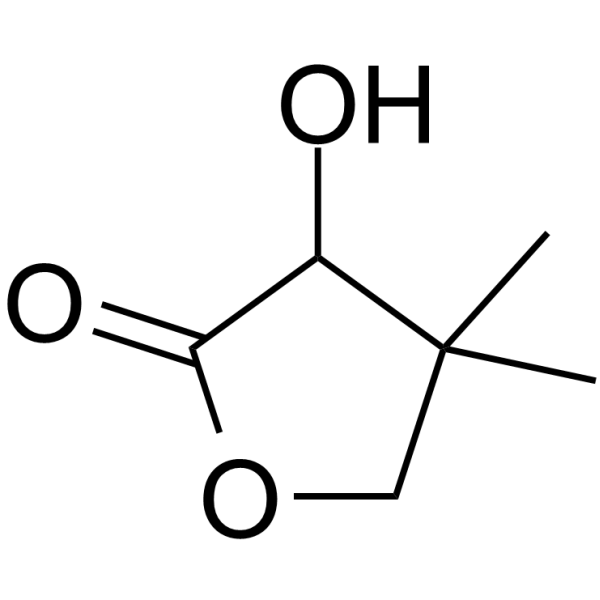
    DL-Pantolactone is a γ-lactone that can be hydrolyzed to Pantoic acid (HY-W399035) by the lactonohydrolase of Fusarium oxysporum. DL-Pantolactone also can be used in the preparation of 3,5-dinitrobenzoyl-DL-pantolactone .
    DL-Pantolactone
  • HY-N6723

    Ceramidase Acyltransferase Infection Cancer
    Fumonisin B2 is a selective ceramide synthase inhibitor and carcinogenic mycotoxin with toxicity comparable to that of Fumonisin B1 (HY-N6719). Fumonisin B2 inhibits de novo sphingolipid biosynthesis by blocking the amide bond formation between fatty acids and dihydrosphingosine, which leads to a massive intracellular accumulation of free dihydrosphingosine, altered sphingosine levels, subsequent inhibition of cell proliferation, and induction of cell death. Fumonisin B2 is used to investigate the pathogenesis of diseases associated with Fusarium verticillioides contamination, including equine leukoencephalomalacia, porcine pulmonary edema syndrome, human esophageal cancer, and rat hepatocellular carcinoma .
    Fumonisin B2
  • HY-Y0603

    m-Hydroxyacetophenone

    Drug Intermediate Fungal Others
    3-Hydroxyacetophenone (m-Hydroxyacetophenone) is a hydroxy-substituted alkyl phenyl ketone and also a plant defensin in carnations. 3-Hydroxyacetophenone has antifusarium activity. In addition, 3-Hydroxyacetophenone can be used to synthesize Rivastigmine (HY-17368) .
    3-Hydroxyacetophenone
  • HY-113430

    5-Heneicosylresorcinol

    Fungal Infection
    5-n-Heneicosylresorcinol (5-Heneicosylresorcinol) is an active n-alkyl(enyl)resorcinols (AR) occurring in cereal products from Colombia. Antifungal activity .
    5-n-Heneicosylresorcinol
  • HY-N8420

    Fungal Infection Cancer
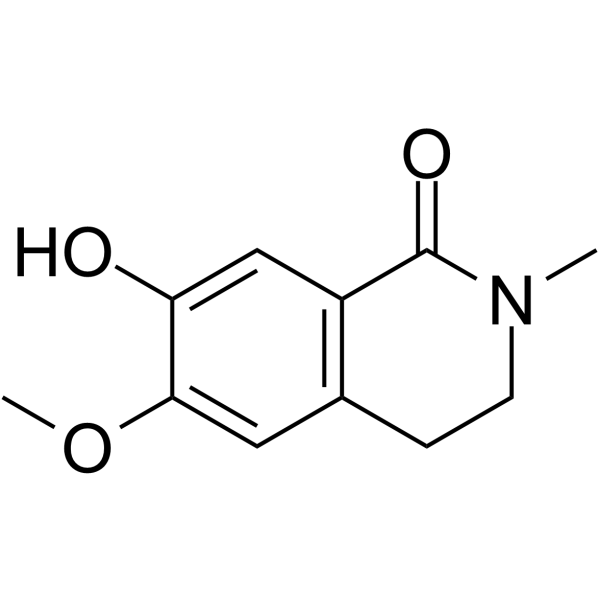
    Thalifoline is an isoquinoline alkaloid. Thalifoline exerts cytotoxic effects on cancer cells. Thalifoline inhibits the growth of Fusarium oxysporum f. sp. lycopersici. Thalifoline can be used in research related to lung adenocarcinoma, colon cancer, oral epidermoid carcinoma, and fungal infections .
    Thalifoline
  • HY-N9768

    9-oxo-ODA

    Fungal PPAR Infection
    (10E,12E)-9-Oxo-10,12-octadecadienoic acid (9-oxo-ODA) is a PPARα agonist that can be isolated from the basidiomycete Gomphus floccosus. (10E,12E)-9-Oxo-10,12-octadecadienoic acid enhances fatty acid oxidation through PPARα activation, thereby inhibiting triglyceride accumulation. (10E,12E)-9-Oxo-10,12-octadecadienoic acid also has antifungal (Fungal) activity .
    (10E,12E)-9-Oxo-10,12-octadecadienoic acid
  • HY-W047478

    NSC 10154

    Fungal Interleukin Related Infection Inflammation/Immunology Cancer
    3-Methylcarbazole (NSC 10154) is a carbazole alkaloid with an IC50 of 25 μg/mL against human fibrosarcoma cells. 3-Methylcarbazole inhibits mycelial growth and conidial germination of a variety of phytopathogenic fungi. 3-Methylcarbazole exhibits anti-inflammatory and antitumor activities. 3-Methylcarbazole can be used in studies related to fibrosarcoma, phytopathogenic fungal infections and inflammatory diseases .
    3-Methylcarbazole
  • HY-135445

    21-Norrapamycin

    Fungal Infection
    Prolylrapamycin (21-Norrapamycin) is the derivative of Rapamycin (HY-10219). Prolylrapamycin exhibits antifungal activity, that inhibits Candida albicans, Saccharomyces cerevisiae, and Fusarium oxysporum with MIC of 0.125-2 μg/mL .
    Prolylrapamycin
  • HY-W097929

    2,4,6-Trichloroanisole

    Olfactory Receptor Drug Metabolite Biochemical Assay Reagents HCN Channel Others
    Tyrene (2,4,6-Trichloroanisole) is an off-flavor compound, cyclic nucleotide-gated (CNG) channel inhibitor, and olfactory transduction attenuator. Tyrene is formed by microbial O-methylation of 2,4,6-trichlorophenol. Tyrene inhibits channel activity in olfactory receptor cells by partitioning into the plasma membrane lipid bilayer, and also suppresses odorant- and cAMP-induced currents in individual olfactory receptor cells. Tyrene causes cork taint in wine. Tyrene also produces off-flavors in potato chips, dried fruits, coffee, and drinking water .
    Tyrene
  • HY-142003

    Fungal Infection
    27-O-Demethylrapamycin, a Rapamycin (HY-10219) derivative, is an antifungal agent. 27-O-Demethylrapamycin inhibits Candida albicans, Saccharomyces cerevisiae, and Fusarium oxysporum .
    27-O-Demethylrapamycin
  • HY-N3348

    Fungal Infection Inflammation/Immunology
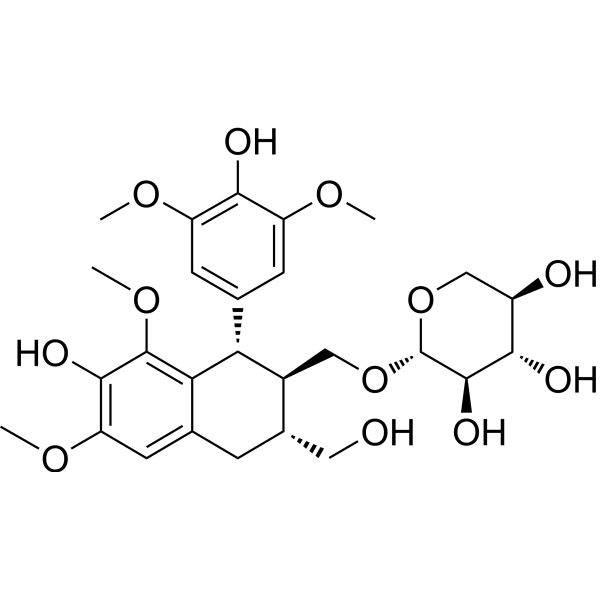
    Lyoniside is a lignan glycoside with antioxidant, allelopathic and antifungal activities, which can be isolated from the rhizomes and stems of bilberry (Vaccinium myrtillus L.). Lyoniside exhibits radical scavenging properties with an IC50 value of 23 μg/mL in DPPH assay. Lyoniside inhibits the mycelial growth of Fusarium oxysporum and Mucor hiemalis at 50 μg/mL with inhibitory rates of 78% and 80%, respectively .
    Lyoniside
  • HY-155658

    Fungal Infection
    Antifungal agent 62 (Compound 3a) is a fungicidal agent with excellent fungicidal activities against Fusarium oxysporum f.sp. cucumerinum. Antifungal agent 62 can be used for antiviral and fungicidal research .
    Antifungal agent 62
  • HY-155669

    Fungal Infection
    Antifungal agent 64 (Compound 5c) is a fungicidal agent with excellent fungicidal activities against Fusarium oxysporum f.sp. cucumerinum. Antifungal agent 64 can be used for antiviral and fungicidal research .
    Antifungal agent 64
  • HY-155670

    Fungal Infection
    Antifungal agent 65 (Compound 5d) is a fungicidal agent with excellent fungicidal activities against Fusarium oxysporum f.sp. cucumerinum. Antifungal agent 65 can be used for antiviral and fungicidal research .
    Antifungal agent 65
  • HY-155660

    Fungal Infection
    Antifungal agent 63 (Compound 3i) is a fungicidal agent with excellent fungicidal activities against Fusarium oxysporum f.sp. cucumerinum. Antifungal agent 63 can be used for antiviral and fungicidal research .
    Antifungal agent 63
  • HY-W104752

    Bacterial Fungal Infection Neurological Disease Metabolic Disease Inflammation/Immunology Cancer
    5-(Pyridin-4-yl)-1,3,4-oxadiazole-2-thiol (Compound 3n) is an antimicrobial and antioxidant agent, that inhibits Escherichia coli and Staphylococcus epidermidis, with MIC of 8 and 4 μg/mL. 5-(Pyridin-4-yl)-1,3,4-oxadiazole-2-thiol exhibits antioxidant activity with IC50 of 17.47 μM using DPPH free radical-scavenging method .
    5-(Pyridin-4-yl)-1,3,4-oxadiazole-2-thiol
  • HY-132968

    Fungal Infection
    Antifungal agent 20 exhibits remarkable antifungal activity against Colletotrichum gloeosprioides, Rhizoctonia solani, Phytophthora nicotianae var. nicotianae, Diplodia pinea, Colletotrichum acutatum, and Fusarium oxysporum f. sp. niveum.
    Antifungal agent 20
  • HY-W053519R

    Drug Intermediate Reference Standards Infection
    DL-Pantolactone (Standard) is the analytical standard of DL-Pantolactone (HY-W053519). This product is intended for research and analytical applications. DL-Pantolactone is a γ-lactone that can be hydrolyzed to Pantoic acid (HY-W399035) by the lactonohydrolase of Fusarium oxysporum. DL-Pantolactone also can be used in the preparation of 3,5-dinitrobenzoyl-DL-pantolactone.
    DL-Pantolactone (Standard)
  • HY-N15498

    Insecticide Infection
    Gibepyrone D is an α-pyrone compound found in Gibberella fujikuroi and the endophytic fungus Fusarium oxysporum 162. Gibepyrone D exhibits significant lethal activity against nematodes with an LC50 value of 134 μg/mL (72 h) against the J2 larvae of Meloidogyne incognita. Gibepyrone D is promising for research of nematicides .
    Gibepyrone D
  • HY-147814

    Bacterial Fungal Infection
    KFU-127 (Compound 6b) is a broad spectrum topical antimicrobial capable of one-shot targeting of bacterial and fungal-bacterial biofilms. KFU-127 is considerably toxic for eukaryotic cells . KFU-127 is a click chemistry reagent, it contains an Alkyne group and can undergo copper-catalyzed azide-alkyne cycloaddition (CuAAc) with molecules containing Azide groups.
    KFU-127
  • HY-N15755

    Bacterial Fungal Infection
    Sepiumol A is a polyphenolic compound that can be isolated from the bark of Periploca sepium Bunge. Sepiumol A has antibacterial and antifungal activities. Sepiumol A can be added to e-cigarette liquid to exert antibacterial effects and reduce the sweetness and greasiness during smoking .
    Sepiumol A
  • HY-171699

    Bacterial Infection
    Antibacterial agent 339 is an antibacterial agent. Antibacterial agent 339 inhibits the growth of Fusarium oxysporum f.sp.cubense Race 4 with a MIC of 50.5 μM. Antibacterial agent 339 shows low toxicity in mice. FLT3-IN-30 can be used for the research of banana wilt .
    Antibacterial agent 339
  • HY-125048

    229-B; Streptothricin D

    Bacterial Infection
    Racemomycin B (229-B; Streptothricin D), the main component from Streptomyces lavendulae OP-2, is a streptothricin antibiotic containing three β-lysine groups. RM-B exhibits antimicrobial activity against plant pathogenic microorganisms and effectively inhibits the growth of Brassica rapa L. roots at 50 ppm. RM-B showed a minimum inhibitory concentration (MIC) of 0.4 μg/ml against Pseudomonas syringae pv. tabaci IFO-3508 and a MIC range of 0.1-2.0 μg/ml against six strains of Fusarium oxysporum, showing stronger antimicrobial activity than RM-A and RM-C. The biological activity of racemomycin compounds increases with the increase in the number of β-lysine groups.
    Racemomycin B
  • HY-183295

    Fungal Reactive Oxygen Species (ROS) Infection
    Antifungal agent 160 is a cytochrome bc1 complex inhibitor with activity against Alternaria solani, Gibberella zeae, Colletotrichum gloeosporioides, and Fusarium oxysporum f. sp. melonis. Antifungal agent 160 impairs ATP synthesis, suppresses ATPase activity, induces ROS bursts, compromises plasma membrane integrity, and suppresses fungal growth. Antifungal agent 160 can be used for the research of fungal infection .
    Antifungal agent 160
  • HY-W016983

    Drug Derivative Others
    3-Phenylphenol is a secondary metabolite. 3-Phenylphenol can induce the hbp gene cluster in Pseudomonas sp. strain P1B16. 3-Phenylphenol can bind to the Sge1 transcription factor of Fusarium oxysporum f. sp. cubense and disrupt the function of virulence regulators. 3-Phenylphenol can be used in studies related to banana fusarium wilt .
    3-Phenylphenol
  • HY-Y0603R

    Drug Intermediate Fungal Reference Standards Others
    3-Hydroxyacetophenone (Standard) is the analytical standard of 3-Hydroxyacetophenone (HY-Y0603). This product is intended for research and analytical applications. 3-Hydroxyacetophenone (m-Hydroxyacetophenone) is a hydroxy-substituted alkyl phenyl ketone and also a plant defensin in carnations. 3-Hydroxyacetophenone has antifusarium activity. In addition, 3-Hydroxyacetophenone can be used to synthesize Rivastigmine (HY-17368) .
    3-Hydroxyacetophenone (Standard)
  • HY-N16428

    NSC 356436

    Endogenous Metabolite Fungal Bacterial Infection Cancer
    Neoaspergillic acid (NSC 356436) (Compound 2) is a microbial secondary metabolite. Neoaspergillic acid can be isolated from the endophytic fungus Aspergillus sp. SPH2. Neoaspergillic acid has potent antifungal activity against Alternaria alternata, Botrytis cinerea and Fusarium oxysporum. Neoaspergillic acid appears during the exponential phase of fungal growth. Neoaspergillic acid also antitumor and antibacterial effects .
    Neoaspergillic acid
  • HY-N16462

    Bacterial Infection
    2-(2-Heptenyl)-3-methyl-4(1H)-quinolone is a quinoline alkaloid found in Burkholderia sp. VY81. 2-(2-Heptenyl)-3-methyl-4(1H)-quinolone is promising for research of bacterial diseases in rice (e.g., soft rot) and other plant pathogens (e.g., Pythium ultimum, Fusarium oxysporum) .
    2-(2-Heptenyl)-3-methyl-4(1H)-quinolone
  • HY-183091

    Fungal Infection
    Antifungal agent 159 is an antifungal agent with broad-spectrum activity against phytopathogenic fungi. Antifungal agent 159 binds tightly to the active sites of exo-β-(1,3)-glucanase, topoisomerase II-DNA-nucleotide, dihydrofolate reductase, sterol 14-α demethylase and chitin synthase. Antifungal agent 159 can be used in studies related to phytopathogenic fungal infections .
    Antifungal agent 159
  • HY-W743904

    Drug Derivative Fungal Infection
    Quininone is a Quinine (HY-D0143) derivative that exhibits in vitro antifungal activity. Quininone can be used for antifungal research .
    Quininone
  • HY-W988754

    Herbicide Others
    O-(2,4-Dichlorophenyl) O-methyl isopropylphosphoramidothioate (Zytron) is a herbicide. At conventional application doses, Zytron exerts no adverse effects on molds, actinomycetes or soil bacteria in field plots or model systems. Zytron can be degraded by Aspergillus clavatus .
    O-(2,4-Dichlorophenyl) O-methyl isopropylphosphoramidothioate

Inquiry Online

Your information is safe with us. * Required Fields.

Salutation


Country or Region *

Applicant Name *


Organization Name *

Department *


Email Address *


Product Name *

Cat. No.


Requested quantity *

Phone Number *


Remarks

Inquiry Online

Inquiry Information

Product Name:
Cat. No.:
Quantity:
MCE Japan Authorized Agent:

