

20 Results for "

GLP-1 release

" in MedChemExpress (MCE) Product Catalog:
Products (20)

20 Results for "GLP-1 release" in MCE Product Catalog:

43
43 Cited Publications
Art. -Nr.: HY-P0014B
Target:  

GLP Receptor

Forschungsgebiete:  

Metabolic Disease

Liraglutide (TFA) is an agonist of glucagon-like peptide 1 receptor (GLP-1). Liraglutide (TFA) can activate GLP-1, leading to the release of insulin in the presence of increased glucose concentration. Liraglutide (TFA) also reduces glucagon secretion in a glucose-dependent manner. Liraglutide (TFA) can be studied in research on type 2 diabetes .
loading...
    loading...
2
2 Cited Publications
Art. -Nr.: HY-107648
CAS. Nr.: 55-45-8
Reinheit:  99.81%
Target:  

mAChR

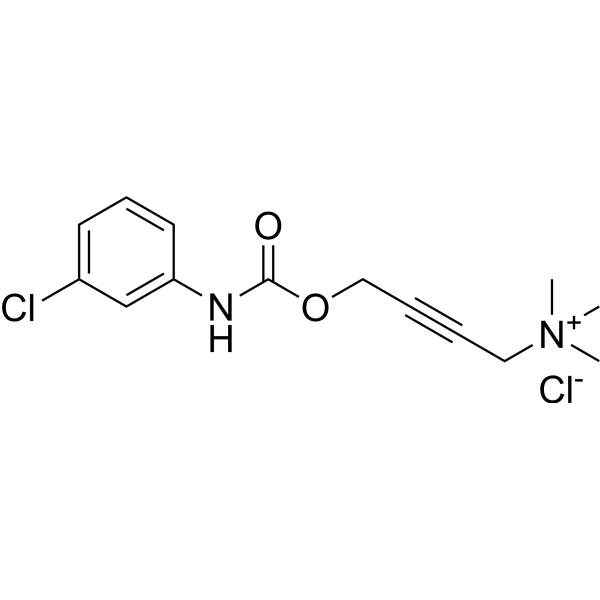
McN-A-343 is a selective M1 muscarinic agonist that stimulates muscarinic transmission in sympathetic ganglia. McN-A-343 produces a significant inhibitory effect on Muscarine (HY-121404)-evoked catecholamine secretion from the isolated perfused rat adrenal gland. McN-A-343 is involved in the regulation of neuronal firing and activates enteroendocrine L cells to release glucagon-like peptide 1 (GLP-1) and modulates the secretion of α-melanocyte stimulating hormone (α-MSH) from the pituitary gland in the central nervous system. McN-A-343 reduces colonic inflammation and oxidative stress in Acetic acid (HY-Y0319)-induced ulcerative colitis (UC) mice. McN-A-343 can be used for the study of ulcerative colitis .
loading...
    loading...
Art. -Nr.: HY-160734
CAS. Nr.: 2685823-26-9
Synonyms: GSBR-1290
Target:  

GLP Receptor

Forschungsgebiete:  

Metabolic Disease

Aleniglipron (GSBR-1290) is an orally active glucagon-like peptide-1 receptor (GLP-1R) agonist, with an EC50 value of less than 0.1 nM in HDB cell lines in cAMP stimulation assays. Aleniglipron selectively activates the Gαs-cAMP signaling pathway of GLP-1R without β-arrestin recruitment. Aleniglipron induces insulin release, promotes glucose clearance, reduces food intake and decreases body weight. Aleniglipron is applicable to research related to type 2 diabetes and obesity .
loading...
    loading...
Art. -Nr.: HY-106539
CAS. Nr.: 182815-44-7
Reinheit:  ≥95.0%
Colesevelam hydrochloride is an orally active bile acid sequestrant, lipid-lowering agent, and glycemic control agent. Colesevelam hydrochloride binds bile acids in the gastrointestinal tract to form nonabsorbable complexes, interrupts enterohepatic recirculation and increases fecal bile acid elimination. Colesevelam hydrochloride modulates FXR, TGR5, and Cyp7a1 activity and triggers cAMP signaling and GLP-1 release. Colesevelam hydrochloride alters hepatic lipid and glucose metabolism, suppresses hepatic glycogenolysis, reduces hepatic triglyceride and cholesterol levels, and increases LDL-C (low-density lipoprotein cholesterol) clearance. Colesevelam hydrochloride can be used for the research of type 2 diabetes mellitus, hypercholesterolemia, and alcohol-related liver disease .
loading...
    loading...
Art. -Nr.: HY-P3622
CAS. Nr.: 215777-46-1
Target:  

GCGR

Forschungsgebiete:  

Metabolic Disease

(Ser8)-GLP-1 (7-36) amide, human is a glucagon-like peptide 1 amide derived from glucagonogen, a cleavage product of the GLP-1 (1-36) amide peptide. (Ser8)-GLP-1 (7-36) amide, human is an entero-insulinotropic hormone that causes glucose-dependent release of insulin from pancreatic β-cells and affects gastrointestinal motility and secretion .
loading...
    loading...
Art. -Nr.: HY-N9536
CAS. Nr.: 86631-38-1
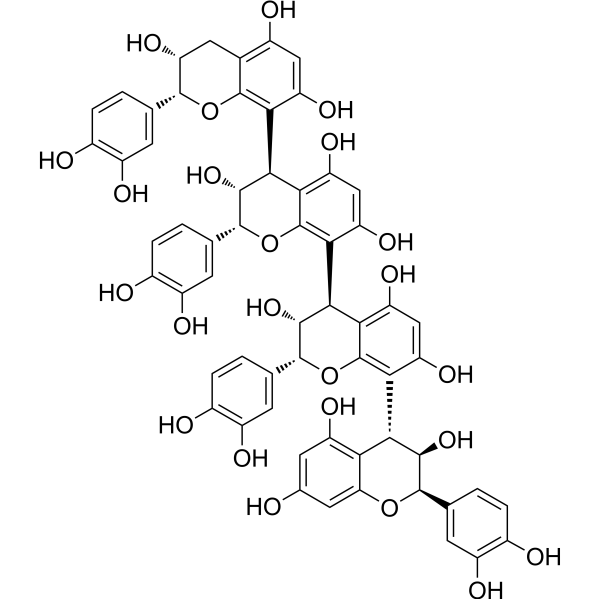
Cinnamtannin A2, a tetrameric procyanidin, can increases GLP-1 and insulin secretion in mice. Cinnamtannin A2 could upregulate the expression of corticotrophin releasing hormone. Cinnamtannin A2 exhibits antioxidant, anti-diabetic and nephroprotective effect .
loading...
    loading...
Art. -Nr.: HY-P4764
CAS. Nr.: 819048-44-7
Synonyms: Ac-(d-Arg)-CEH-(d-Phe)-RWC-NH2
Forschungsgebiete:  

Metabolic Disease

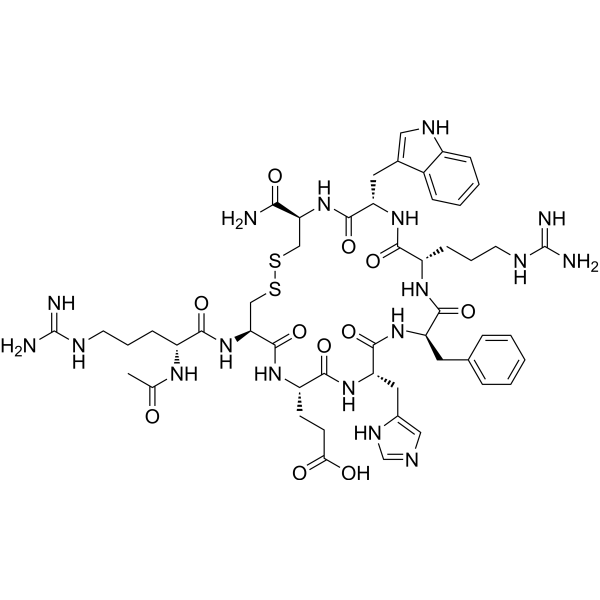
LY2112688 (Ac-(d-Arg)-CEH-(d-Phe)-RWC-NH2) is a synthetic peptide selective melanocortin 4 receptor (MC4R) agonist with a Ki of 0.13 nM for human MC4R and Ki values of 165, 74, and 1713 nM for human MC1R, MC3R, and MC5R, respectively. LY2112688 activates MC4R-mediated cAMP signaling and promotes PYY and GLP-1 release by activating peripheral MC4R in enteroendocrine L cells; Kir7.1 signaling in MC4R neurons is involved in its sustained suppression of food intake. LY2112688 inhibits food intake in vivo and can elevate heart rate and blood pressure. LY2112688 is useful for research on obesity, energy homeostasis, and MC4R signaling .
loading...
    loading...
Art. -Nr.: HY-P10302
Forschungsgebiete:  

Metabolic Disease

GLP-1R/GIPR AgonIST-1 is a double-receptor agonist for GLP-1 (glucagon-like peptide-1) and GIP (glucose-dependent insulin releasing peptide). GLP-1R/GIPR agonist-1 lowers blood sugar by mimicking the action of endogenous hormones GLP-1 and GIP, enhancing insulin secretion while inhibiting glucagon secretion. GLP-1R/GIPR agonist-1 can be used in the study of metabolic diseases such as diabetes, obesity, and non-alcoholic steatohepatitis (NASH) .
loading...
    loading...
Art. -Nr.: HY-P990990
CAS. Nr.: 2803875-75-2
Synonyms: YN011; YN012; YN015

Target:  

GLP Receptor

Efsubaglutide alfa is a long-acting humanised GLP-1 receptor agonist . Efsubaglutide alfa binds specifically to the GLP-1 receptor, enhancing glucose-dependent insulin secretion, suppressing glucagon release, and promoting β-cell proliferation and increased β-cell mass. Efsubaglutide alfa improves glucose tolerance, increases pancreatic insulin content, and enhances β-cell secretory responses in isolated human islets. Efsubaglutide alfa reduces liver steatosis, lowers NAFLD Activity Scores, improves perisinusoidal collagen features, reduces serum ALT and AST levels, improves fasting glucose and triglyceride levels, and reduces body weight, liver weight and liver-to-body weight ratio. Efsubaglutide alfa can be used for the research of type 2 diabetes. Efsubaglutide alfa can be used for the research of metabolic dysfunction-associated steatohepatitis .
loading...
    loading...
Art. -Nr.: HY-14292
CAS. Nr.: 247016-69-9
Target:  

Dipeptidyl Peptidase

Forschungsgebiete:  

Metabolic Disease

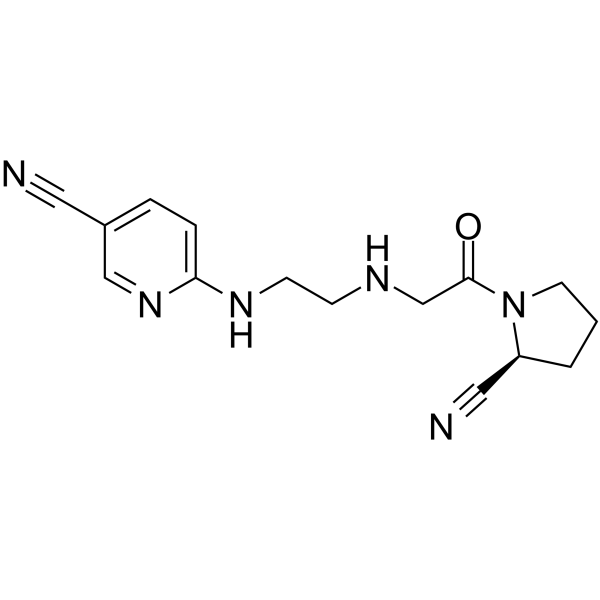
NVP-DPP728 is a potent, reversible and nitrile-dependent dipeptidyl peptidase IV (DPP-IV) inhibitor. NVP-DPP728 can inhibit human DPP-IV amidolytic activity with a Ki of 11 nM. NVP-DPP728 inhibits degradation of glucagon-like peptide-1 (GLP-1) and thereby potentiates insulin release in response to glucose intake. NVP-DPP728 can be used for researching diabetes .
loading...
    loading...
Art. -Nr.: HY-178780
CAS. Nr.: 2137977-29-6
Synonyms: MKP10241
Target:  

GPR119

Deziglipel (MKP10241) is an orally active GPR119 agonist (human EC50: 3.7 nM; IC50 > 7.2 μM). Deziglipel activates GPR119 to increase cAMP levels, promotes active GLP-1 release, reduces blood glucose and HbA1c, decreases body weight and feed intake, and resolves MASH via altered lipid, cytokine, and liver enzyme levels. Deziglipel shows low hERG channel inhibition, minimal CYP450 inhibition, no PXR activation, and no significant transporter inhibition. Deziglipel can be used for the research of type 2 diabetes mellitus, obesity, MASH/MASLD, and metabolic disorders .
loading...
    loading...
Art. -Nr.: HY-120493A
CAS. Nr.: 1449742-87-3
Forschungsgebiete:  

Metabolic Disease

AM-6226 is a potent and orally active G protein coupled receptor 40 (GPR40) full agonist with an EC50 of 0.12 μM. AM-6226 can activate the GPR40 receptors on pancreatic β cells and enteroendocrine L cells, promote insulin secretion in a glucose-dependent manner and also increase the release of incretin hormones (GLP-1, GIP), thereby avoiding the risk of hypoglycemia. AM-6226 can be used for the research of metabolic disease, such as diabetes .
loading...
    loading...
Art. -Nr.: HY-171851
CAS. Nr.: 3047875-57-7
Target:  

GCGR

Forschungsgebiete:  

Metabolic Disease

GLP-1R agonist 32 (Compound 111) is an orally active and highly potent GLP-1R agonist with an EC50 value of 0.017 nM. GLP-1R agonist 32 exerts glucose-regulating activity by activating GLP-1R to stimulate cAMP production, promoting insulin secretion, inhibiting glucagon release, and delaying gastric emptying. GLP-1R agonist 32 is promising for research of type 2 diabetes, obesity, and related metabolic disorders .
loading...
    loading...
Art. -Nr.: HY-176770
CAS. Nr.: 3074089-99-6
Target:  

GLP Receptor

Forschungsgebiete:  

Metabolic Disease

GLP-1R agonist 34 (Compound 1) is an orally active small molecule glucagon-like peptide-1 receptor (GLP-1R) agonist. GLP-1R agonist 34 promotes insulin secretion, inhibits glucagon release, and delays gastric emptying, thereby effectively lowering blood glucose levels. GLP-1R agonist 34 is promising for research of metabolic diseases, including type 2 diabetes, obesity, and non-alcoholic steatohepatitis (NASH) .
loading...
    loading...
Art. -Nr.: HY-P3671
CAS. Nr.: 68059-94-9
Target:  

GnRH Receptor

Forschungsgebiete:  

Endocrinology

[D-Glp1,D-Phe2,D-Trp3,6]-LH-RH is a Luteinizing-hormone-releasing hormone (LHRH) analogue. [D-Glp1,D-Phe2,D-Trp3,6]-LH-RH acts as a GnRH receptor antagonist .
loading...
    loading...
Art. -Nr.: HY-109692
CAS. Nr.: 1079821-35-4
GPR120 Agonist 5 (compound 12) is an agonist targeting GPR120 (EC50=1.2 μM). GPR120 Agonist 5 promotes the release of glucagon-like 1 (GLP-1) by binding to the GPR120 receptor, which in turn binds to its receptors on pancreatic beta cells, increasing insulin secretion and thereby lowering blood sugar levels. GPR120 Agonist 5 also helps reduce chronic low-grade inflammation, which plays an important role in the pathogenesis of obesity, insulin resistance, and type 2 diabetes. GPR120 Agonist 5 can be used to investigate the mechanism of action of GPR120 in metabolic and inflammatory diseases .
loading...
    loading...
Art. -Nr.: HY-182300
CAS. Nr.: 171092-64-1
Forschungsgebiete:  

Metabolic Disease

FE 999011 is an orally active dipeptidyl peptidase IV (DPP-IV) inhibitor with IC50 values of 7 nM and 3 nM against human and rat sources, respectively. FE 999011 acts as a glucose tolerance-improving agent and a GLP-1 receptor activator, which reduces blood glucose fluctuation, promotes GLP-1 release and decreases the insulin-glucose ratio. FE 999011 regulates lipid metabolism, delays the onset of diabetes, stabilizes food and water intake, reduces hypertriglyceridemia, prevents the elevation of free fatty acids, and delays the progression of impaired glucose tolerance to disease. FE 999011 can be used in relevant studies of type 2 diabetes .
loading...
    loading...
Art. -Nr.: HY-120493
CAS. Nr.: 1142222-28-3
Forschungsgebiete:  

Metabolic Disease

(rel)-AM-6226 is the relative stereoisomer of AM-6226 (HY-120493A). AM-6226 is a potent, orally active full agonist of G protein-coupled receptor 40 (GPR40) with an EC50 value of 0.12 μM. AM-6226 activates GPR40 receptors on pancreatic β-cells and enteroendocrine L-cells, promotes insulin secretion in a glucose-dependent manner, and increases the release of incretin hormones (GLP-1, GIP), thus avoiding the risk of hypoglycemia. AM-6226 can be used in the research of metabolic diseases such as diabetes .
loading...
    loading...
Art. -Nr.: HY-186096
Forschungsgebiete:  

Metabolic Disease

LP-856866 is an orally active ACSL5 inhibitor, with IC50 values of 8 nM and 4 nM against mouse and human ACSL5, respectively, and IC50 values of 6 nM and 17 nM against mouse and human ACSL1, respectively. LP-856866 induces delayed gastric emptying, promotes GLP-1 release, reduces food intake, decreases body weight and body fat mass, preserves lean body mass, improves glucose homeostasis, enhances insulin sensitivity, reduces hepatic lipid accumulation, and lowers serum triglyceride and total cholesterol levels. LP-856866 is applicable to research on diet-induced obesity .
loading...
    loading...
Art. -Nr.: HY-189613
Target:  

Dipeptidyl Peptidase

Forschungsgebiete:  

Metabolic Disease

EOS34295 is a dipeptidyl peptidase-IV (DPP-IV) inhibitor predicted to have oral activity. EOS34295 competitively binds to key residues in the active site of DPP-IV, inhibiting its enzymatic activity and blocking the degradation of incretins such as GLP-1/GIP, ultimately promoting insulin release to improve glycemic control. EOS34295 can be used in the study of type 2 diabetes .
loading...
    loading...
  • 1

