1. Search Result
Search Result
Results for "

Galleria mellonella

" in MedChemExpress (MCE) Product Catalog:

18

Inhibitors & Agonists

1

Peptides

2

Natural
Products

Cat. No. Product Name Target Research Areas Chemical Structure
  • HY-A0148A
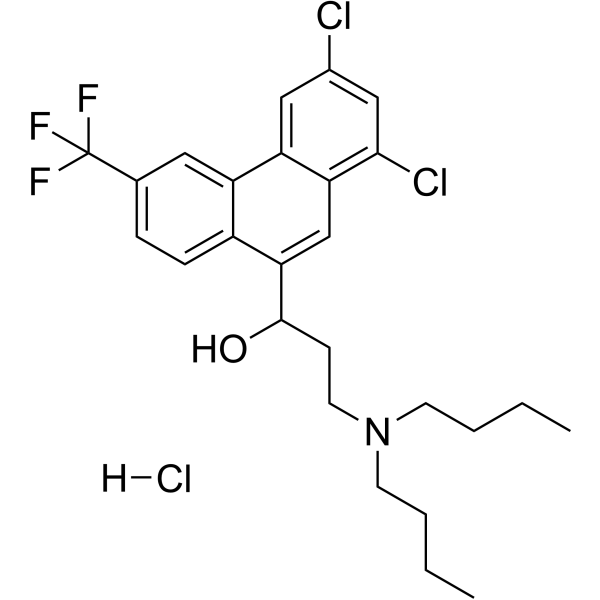
    Halofantrine hydrochloride
    2 Publications Verification

    SKF-102886; WR-171669 hydrochloride

    Parasite Fungal Reactive Oxygen Species (ROS) Potassium Channel Infection
    Halofantrine hydrochloride (SKF-102886 hydrochloride; WR-171669 hydrochloride) is a blocker that delays the delayed rectifier potassium current by inhibiting human ERG channels, and it is a potent antimalarial agent with oral activity. Halofantrine hydrochloride inhibits the Cap1-dependent oxidative stress response of Candida albicans, suppresses ROS responses, and enhances the antifungal (Fungal) activity of oxidative damage agents. Halofantrine hydrochloride exhibits antifungal activity in the Galleria mellonella model, and shows antimalarial activity against Plasmodium strains both in vitro and in animal models. Halofantrine hydrochloride can be used in studies related to invasive candidiasis, falciparum malaria, and vivax malaria .
    Halofantrine hydrochloride
  • HY-N0853A
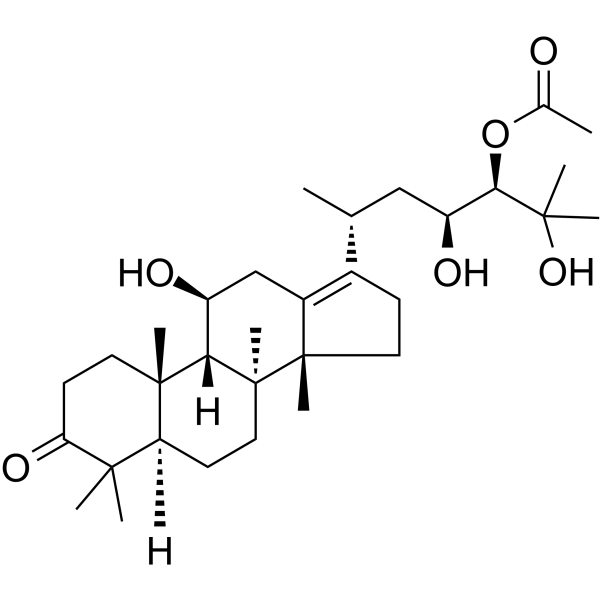
    Alisol A 24-acetate
    1 Publications Verification

    Alisol A 24-monoacetate; Alisol A monoacetate

    AMPK Carnitine Palmitoyltransferase (CPT) Acyltransferase Fatty Acid Synthase (FASN) Acetyl-CoA Carboxylase Bcl-2 Family PPAR Nuclear Factor of activated T Cells (NFAT) PI3K Akt PKA ERK Apoptosis Autophagy Cardiovascular Disease Infection Neurological Disease Metabolic Disease Endocrinology
    Alisol A 24-acetate (Alisol A monoacetate) is an orally active derivative of protostane-type tetracyclic triterpenoid. Alisol A 24-acetate upregulates the expression of adiponectin, AMPKα, CPT1, and ACOX1; downregulates the expression of SREBP-1c, ACC, FAS, Bcl-2, Bcl-xl, PPAR-γ, perilipin A, and NFATc1; inhibits the activity of PI3K/Akt/mTOR and HMGR; and activates the PKA and ERK signaling pathways. Alisol A 24-acetate regulates cell apoptosis (apoptosis), autophagy (Autophagy, hepatic lipid accumulation, inflammatory response, neuroprotection, MRSA membrane integrity, and osteoclast differentiation. Alisol A 24-acetate can be used in research related to non-alcoholic fatty liver disease, nephrotoxicity, obesity, global cerebral ischemia-reperfusion injury, bacterial infection, and osteoporosis .
    Alisol A 24-acetate
  • HY-137640A

    PKA Inflammation/Immunology
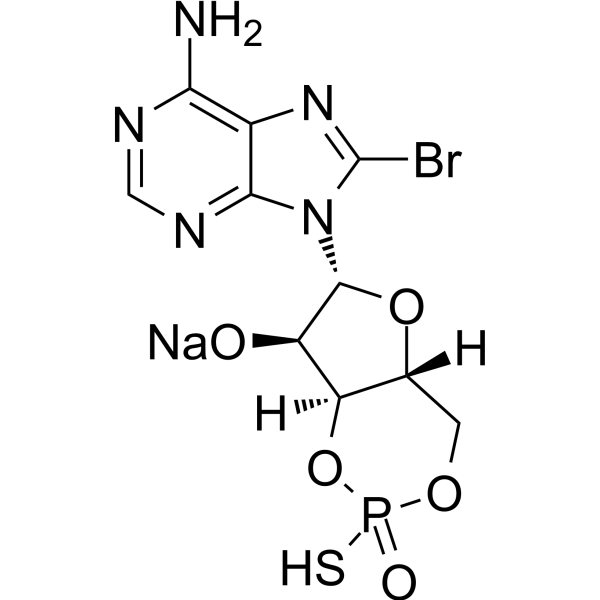
    Sp-8-Br-cAMPS sodium is a cAMP analog, which performs a protein kinase A (PKA) activating activity with EC50 of 360 nM. Sp-8-Br-cAMPS sodium inhibits proliferation of T cells and the haemocyte non-self response in Lepidoptera larve .
    Sp-8-Br-cAMPS sodium
  • HY-A0148

    SKF-102886 free base; WR-171669

    Parasite Fungal Potassium Channel Reactive Oxygen Species (ROS) Infection Cancer
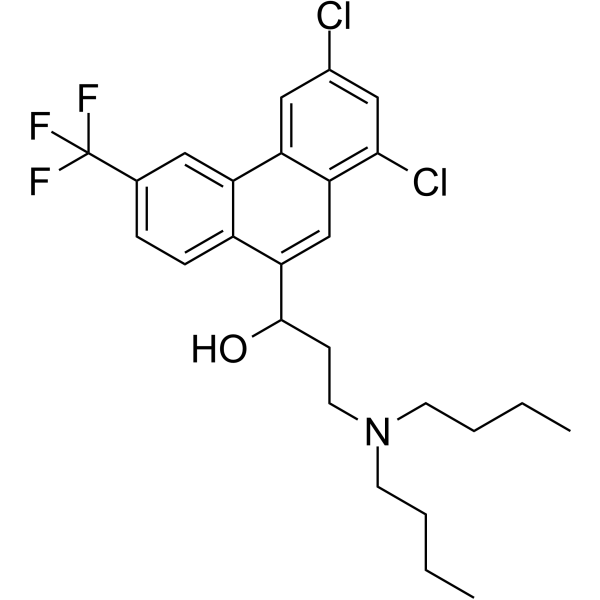
    Halofantrine (SKF-102886 hydrochloride; WR-171669 hydrochloride) is a blocker that delays the delayed rectifier potassium current by inhibiting human ERG channels, and it is a potent antimalarial agent with oral activity. Halofantrine inhibits the Cap1-dependent oxidative stress response of Candida albicans, suppresses ROS responses, and enhances the antifungal (Fungal) activity of oxidative damage agents. Halofantrine exhibits antifungal activity in the Galleria mellonella model, and shows antimalarial activity against Plasmodium strains both in vitro and in animal models. Halofantrine can be used in studies related to invasive candidiasis, falciparum malaria, and vivax malaria .
    Halofantrine
  • HY-168948

    Bacterial Infection
    Quorum sensing-IN-9 (Compound 7d) inhibits quorum sensing in Pseudomonas aeruginosa by binding PqsR proteins. Quorum sensing-IN-9 inhibits the expression of quorum sensing systems related genes lasB, rhlA and pqsA, blocks the generation of virulence factors elastase, pyocyanin and rhamnolipid. Quorum sensing-IN-9 destorys the motility of P. aeruginosa, inhibits the biofilm formation, decreasing the virulence and pathogenicity of P. aeruginosa. Quorum sensing-IN-9 exhibits anti-infectious activity in Galleria mellonella larval model .
    Quorum sensing-IN-9
  • HY-178949

    Antibiotic Bacterial DNA/RNA Synthesis Infection
    MRSA antibiotic 3 (Compound C8) is a small-molecule antibiotic active against Methicillin (HY-121544)-resistant Staphylococcus aureus (MRSA), showing a MIC of 0.5 μg/mL against the standard S. aureus strain (ATCC 29213). MRSA antibiotic 3 potently inhibits the ATPase activity of S. aureus DNA gyrase with an IC50 of 0.32 μM. MRSA antibiotic 3 exhibits strong inhibitory activity against five clinical MRSA isolates, with MIC values ranging from 0.5 to 1 μg/mL. MRSA antibiotic 3 demonstrates negligible cytotoxicity at effective antibacterial concentrations and causes no hemolysis in erythrocytes even at extremely high concentrations. MRSA antibiotic 3 shows significant protective effects in both Galleria mellonella infection and murine sepsis models .
    MRSA antibiotic 3
  • HY-170835

    Beta-lactamase Bacterial Infection Inflammation/Immunology
    NDM-1 inhibitor-7 (Compound A8) is a NDM-1 inhibitor, with IC50 of 10.284 μM. NDM-1 inhibitor-7 restores the ability of MEM to penetrate the cell wall of gram-negative bacteria. NDM-1 inhibitor-7 effectively restores the antibacterial activity of MEM against NDM-1-positive Escherichia coli. NDM-1 inhibitor-7 demonstrates strong efficacy in both the Galleria mellonella infection model and murine peritonitis infection model .
    NDM-1 inhibitor-7
  • HY-W033728

    Bacterial Infection
    Platinum(COD)dichloride (Compound Pt1) is an Antibacterial agent. Platinum(COD)dichloride shows antibacterial activity against a panel of gram-positive bacteria including Vancomycin (HY-B0671) and Methicillin (HY-121544) resistant Staphylococcus aureus .
    Platinum(COD)dichloride
  • HY-P1991

    Parasite Infection
    Isariin D is a cyclodepsipeptide isolated from the fungus Isaria felina, which exhibits significant insecticidal activity against Galleria mellonella larvae .
    Isariin D
  • HY-161124

    Bacterial Infection
    SrtA-IN-2 (compound Y40), a ML346 (HY-18669) analog, is a Sortase A (SrtA) inhibitor. SrtA-IN-2 shows inhibitory activity on Staphylococcus aureus SrtA and shows inhibitory effects on biofilm formation. SrtA-IN-2 is an antivirulence agent against S. aureus infections .
    SrtA-IN-2
  • HY-A0148AR

    SKF-102886 (Standard); WR-171669 hydrochloride (Standard)

    Reference Standards Parasite Fungal Potassium Channel Reactive Oxygen Species (ROS) Infection
    Halofantrine hydrochloride (Standard) is the analytical standard of Halofantrine hydrochloride. This product is intended for research and analytical applications. Halofantrine hydrochloride (SKF-102886 hydrochloride; WR-171669 hydrochloride) is a blocker that delays the delayed rectifier potassium current by inhibiting human ERG channels, and it is a potent antimalarial agent. Halofantrine hydrochloride inhibits the Cap1-dependent oxidative stress response of Candida albicans, suppresses ROS responses, and enhances the antifungal (Fungal) activity of oxidative damage agents. Halofantrine hydrochloride exhibits antifungal activity in the Galleria mellonella model, and shows antimalarial activity against Plasmodium strains both in vitro and in animal models. Halofantrine hydrochloride can be used in studies related to invasive candidiasis, falciparum malaria, and vivax malaria.
    Halofantrine hydrochloride (Standard)
  • HY-182675

    Antibiotic Bacterial Infection
    Antibiotic adjuvant 5 (Compound 2) acts as an Antibiotic adjuvant. Antibiotic adjuvant 5 enhances the activity of Azithromycin (HY-17506), Clarithromycin (HY-17508), Doripenem (HY-B0187) and Rifampin (HY-B0272) against *Pseudomonas aeruginosa* PAO1. When used in combination with Azithromycin, Antibiotic adjuvant 5 increases the survival rate of *Galleria mellonella* during *Pseudomonas aeruginosa* PAO1 infection. Antibiotic adjuvant 5 is applicable for the research of *Pseudomonas aeruginosa* infection .
    Antibiotic adjuvant 5
  • HY-183711

    Bacterial Heme Oxygenase (HO) Infection
    Antibacterial agent 344 is an antibacterial agent with potent biofilm inhibition (IC50 = 0.27 μM). Antibacterial agent 344 inhibits heme oxygenase (HemO), impairs iron homeostasis, virulence factor production, and motility. Antibacterial agent 344 synergizes with Ciprofloxacin (HY-B0356) and Tobramycin (HY-B0441), enhancing their efficacy and delaying the development of resistance. Antibacterial agent 344 improves bacterial-infected Galleria mellonella survival, and reduces bacterial load in mice wounds. Antibacterial agent 344 can be used for the research of Pseudomonas aeruginosa infections .
    Antibacterial agent 344
  • HY-181751

    Bacterial Infection
    FabI-IN-1 is a FabI (enoyl-acyl carrier protein reductase) inhibitor with a Ki of 0.32 μM against E. coli FabI. FabI-IN-1 inhibits exhibits activity against Gram-negative bacteria including Escherichia coli (MIC = 6.25 μM) and Klebsiella pneumoniae. FabI-IN-1 rescues Galleria mellonella larvae from lethal Escherichia coli infection. FabI-IN-1 exerts a synergistic effect with Colistin (HY-113678) against Escherichia coli. FabI-IN-1 can be used for the research of gram-negative bacterial infection .
    FabI-IN-1
  • HY-182942

    Bacterial Elastase Infection
    PV-DPD-19 is an autoinducer-2 (AI-2) quorum sensing inhibitor. PV-DPD-19 reduces AI-2 production and inhibits the expression of multiple MSCRAMMs. In co-culture systems with Staphylococcus aureus, PV-DPD-19 decreases the production of pyocyanin and Elastase in Pseudomonas aeruginosa. PV-DPD-19 impairs the adhesion ability of Staphylococcus aureus to lung epithelial cells. PV-DPD-19 inhibits biofilm formation of Pseudomonas aeruginosa (MBIC50 = 27 μg/mL) and Staphylococcus aureus (MBIC50 = 35 μg/mL). PV-DPD-19 shows no cytotoxicity in both in vitro lung epithelial cell models and in vivo Galleria mellonella larva models .
    PV-DPD-19
  • HY-181713

    Bacterial G-quadruplex Infection
    Antibiofilm agent-19 is an antibiofilm agent with iron-chelating activity. Antibiofilm agent-19 potently inhibits biofilm formation by wild-type PAO1 and the hyper-biofilm mutant strain PAO1-ΔwspF. Antibiofilm agent-19 promotes the formation of c-di-GMP G-quadruplexes and disrupts iron acquisition systems. It can be used in studies on antibacterial adjuvants .
    Antibiofilm agent-19
  • HY-181404

    Fungal P-glycoprotein Infection
    PA36-2 is an Mdr1 inhibitor and azole resistance reversal agent, with a IC50 of 1.0 μg/mL and a Kd of 4.209 μM against Candida albicans Mdr1. By effectively inhibiting the activity of the Mdr1 efflux pump, PA36-2 prevents the pumping of substrates out of cells, enhances the intracellular accumulation of azole antibiotics, and exerts a synergistic effect with antifungal agents such as Fluconazole (FLC) (HY-B0101). PA36-2 can be used in the research of azole-resistant candidiasis .
    PA36-2
  • HY-183275

    DNA/RNA Synthesis Bacterial Reactive Oxygen Species (ROS) Infection
    Antibacterial agent 340 is a DNA gyrase inhibitor. Antibacterial agent 340 exhibits broad-spectrum bactericidal activity against Gram-positive and Gram-negative bacteria. Antibacterial agent 340 disrupts bacterial cell membrane integrity, induces reactive oxygen species (ROS) accumulation, and inhibits and eradicates bacterial biofilms. Antibacterial agent 340 can be used for the research of bacterial infections .
    Antibacterial agent 340

Inquiry Online

Your information is safe with us. * Required Fields.

Salutation


Country or Region *

Applicant Name *


Organization Name *

Department *


Email Address *


Product Name *

Cat. No.


Requested quantity *

Phone Number *


Remarks

Inquiry Online

Inquiry Information

Product Name:
Cat. No.:
Quantity:
MCE Japan Authorized Agent:

