1. Search Result
Search Result
Isoforms Recommended: KDM4
Results for "

KDM4A

" in MedChemExpress (MCE) Product Catalog:

18

Inhibitors & Agonists

1

Recombinant Proteins

1

Isotope-Labeled Compounds

3

Antibodies

3

Oligonucleotides

Cat. No. Product Name Target Research Areas Chemical Structure
  • HY-148807

    QC8222 free base; TACH 101 free base

    Histone Demethylase Apoptosis Cancer
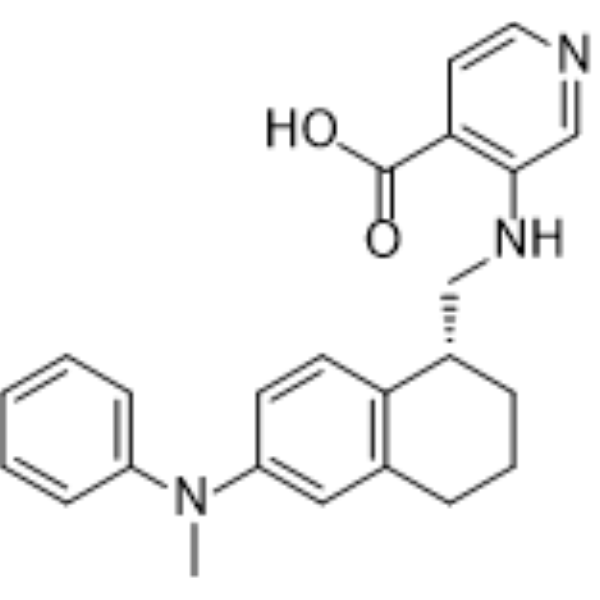
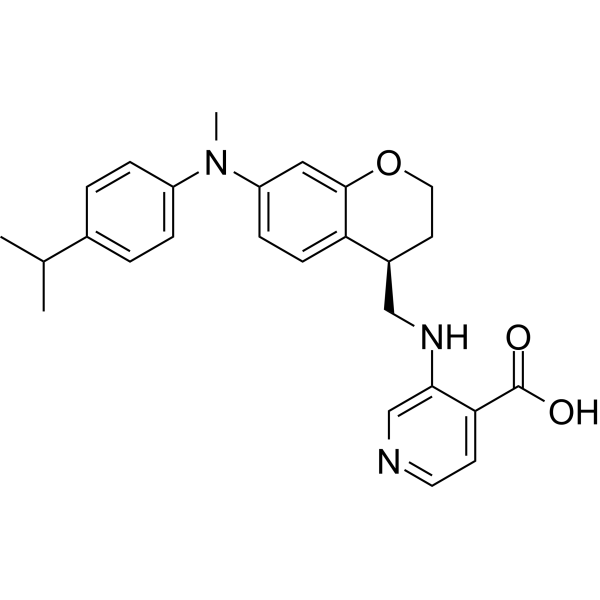
    Zavondemstat (QC8222 free base; TACH 101 free base) is an orally active pan-KDM4 inhibitor, with a IC50 ≤ 0.08 μM against human KDM4A-D and a Kᵢ of 0.52 μM against human KDM4C. Zavondemstat induces cell apoptosis, causes S-phase cell cycle arrest, reduces the population of tumor-initiating cells and inhibits cancer cell proliferation. Zavondemstat suppresses tumor growth and induces tumor regression in mouse xenograft models. Zavondemstat can be used for the research of various cancers including colorectal cancer, esophageal squamous cell carcinoma and triple-negative breast cancer .
    Zavondemstat
  • HY-104048
    QC6352
    Maximum Cited Publications
    11 Publications Verification

    Histone Demethylase Cancer
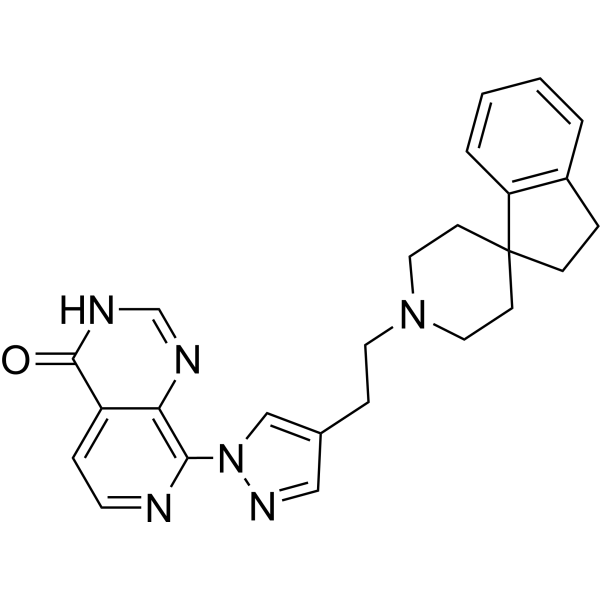
    QC6352 is an orally active KDM4 inhibitor with anti-tumor and anti-proliferative activity. QC6352 has in vivo inhibitory effects on PDX models of breast and colon cancer and reduces the number of chemoresistant cell populations. QC6352 inhibits KDM4 different isoforms with IC50s of 104 nM (KDM4A), 56 nM (KDM4B), 35 nM (KDM4C), and 104 nM (KDM4D), respectively. QC6352 has moderate inhibitory activity against KDM5 with an IC50 of 750 nM (KDM5B) .
    QC6352
  • HY-100760
    Toxoflavin
    5+ Cited Publications

    Xanthothricin; Toxoflavine; PKF-118-310

    β-catenin Bacterial Antibiotic Histone Demethylase Infection Cancer
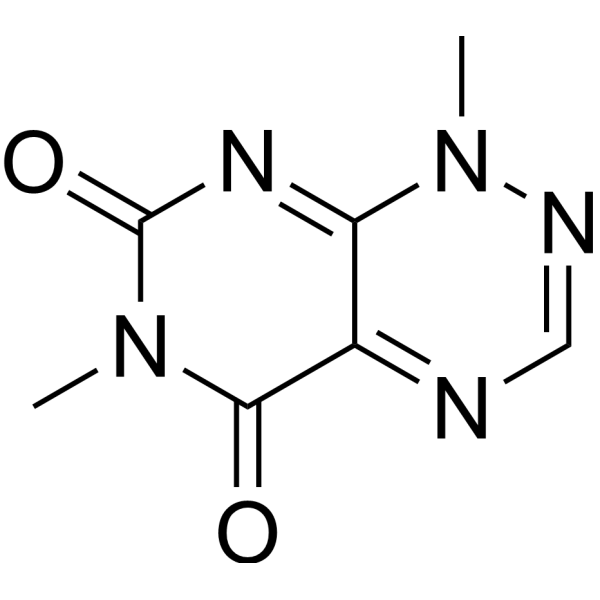
    Toxoflavin (Xanthothricin) is an antagonist of transcription factor 4 (TCF4)/β-catenin complex, also acts as an inhibitor of KDM4A, with antitumor and antibiotic activity .
    Toxoflavin
  • HY-107573
    KDM2/7-IN-1
    1 Publications Verification

    Histone Demethylase Cancer
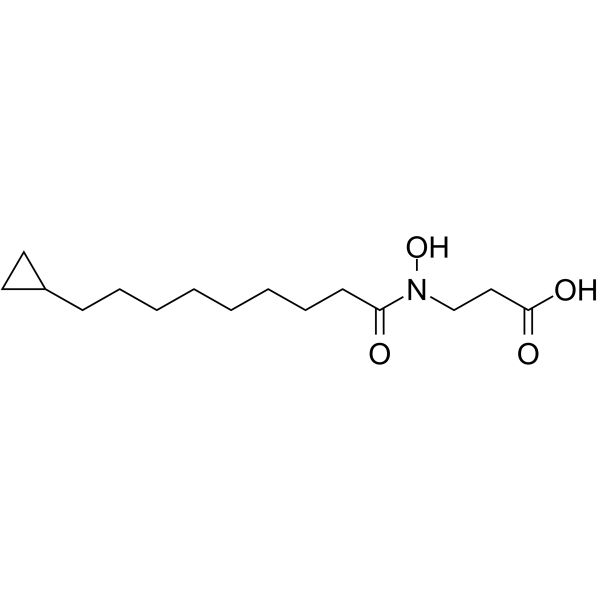
    KDM2/7-IN-1 (TC-E 5002) is a selective histone demethylase KDM2/7 subfamily inhibitor (IC50 values are 0.2, 1.2, 6.8, 55, 83, >100 and >120 μM for KDM7A, KDM7B, KDM2A, KDM5A, KDM4C, KDM6A and KDM4A respectively). KDM2/7-IN-1 inhibits growth of HeLa and KYSE-150 cancer cells in vitro .
    KDM2/7-IN-1
  • HY-110154

    Histone Demethylase Cancer
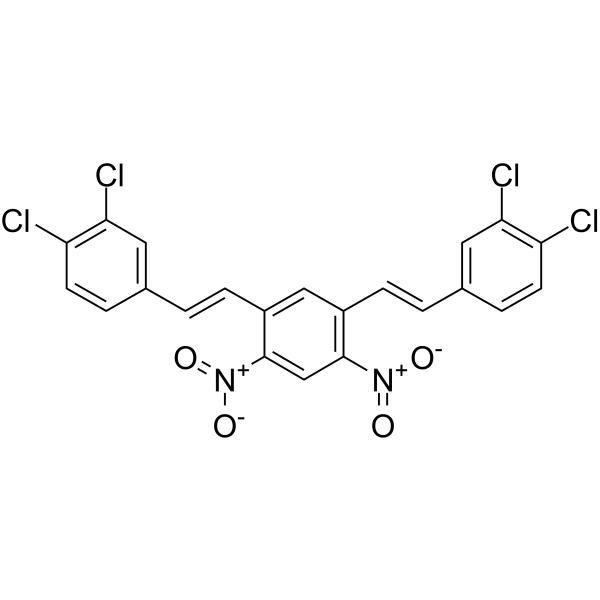
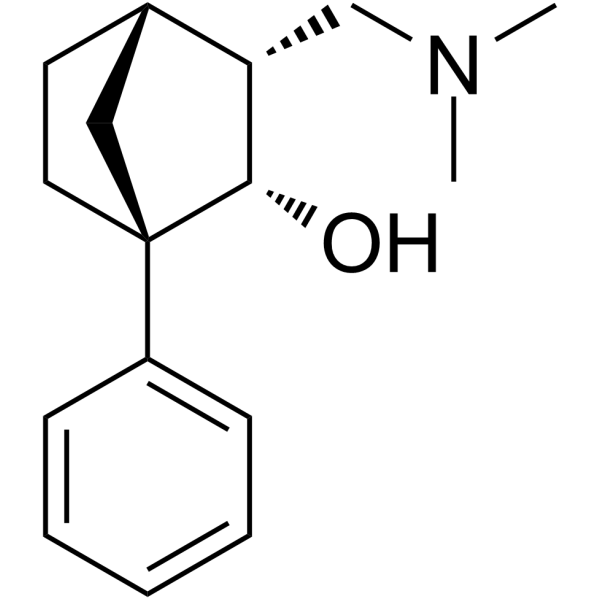
    NSC636819 is a competitive and selective inhibitor of KDM4A/KDM4B. KDM4A/KDM4B are potential progression factors for prostate cancer. NSC636819 has the potential for the research of cancer diseases, especially prostate cancer .
    NSC636819
  • HY-RS07213

    Small Interfering RNA (siRNA) Others

    KDM4A Human Pre-designed siRNA Set A contains three designed siRNAs for KDM4A gene (Human), as well as a negative control, a positive control, and a FAM-labeled negative control.

    KDM4A Human Pre-designed siRNA Set A
    KDM4A Human Pre-designed siRNA Set A
  • HY-RS17467

    Small Interfering RNA (siRNA) Others

    Kdm4a Mouse Pre-designed siRNA Set A contains three designed siRNAs for Kdm4a gene (Mouse), as well as a negative control, a positive control, and a FAM-labeled negative control.

    Kdm4a Mouse Pre-designed siRNA Set A
    Kdm4a Mouse Pre-designed siRNA Set A
  • HY-RS23925

    Small Interfering RNA (siRNA) Others

    Kdm4a Rat Pre-designed siRNA Set A contains three designed siRNAs for Kdm4a gene (Rat), as well as a negative control, a positive control, and a FAM-labeled negative control.

    Kdm4a Rat Pre-designed siRNA Set A
    Kdm4a Rat Pre-designed siRNA Set A
  • HY-128343

    Histone Demethylase Cancer
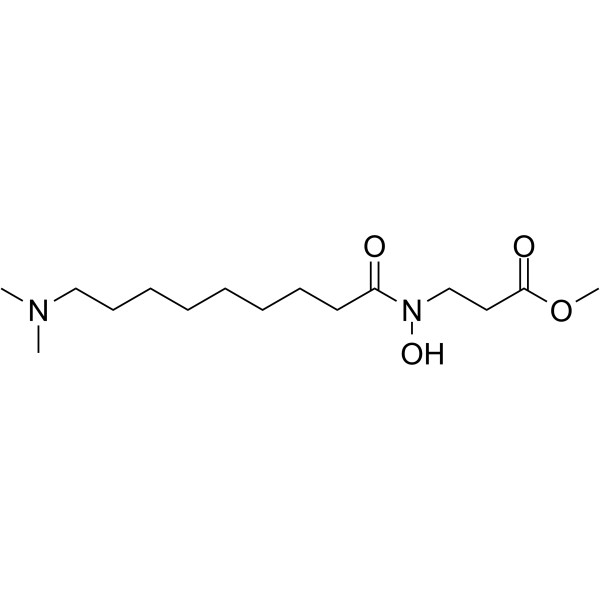
    KDM4-IN-2 (Compound 19a) is a potent and selective KDM4/KDM5 dual inhibitor with Kis of 4 and 7 nM for KDM4A and KDM5B, respectively .
    KDM4-IN-2
  • HY-150619

    Histone Demethylase Cancer
    KDM4-IN-4 (compound 47) is a potent histone lysine demethylase 4 (KDM4) inhibitor with a modest affinity binding to ~80 μM for KDM4A-Tudor domain. KDM4-IN-4 can inhibit H3K4Me3 binding to the Tudor domain in cells with an EC50 value of 105 μM. KDM4-IN-4 can be used for researching anticancer .
    KDM4-IN-4
  • HY-120766

    Histone Demethylase Cancer
    NCDM-32B is a potent and selective KDM4 inhibitor, with IC50 values of 3.0 μM for KDM4A and 1.0 μM for KDM4C in in vitro enzyme assays. NCDM-32B specifically increases global H3K9me3/me2 levels in basal breast cancer cells. NCDM-32B impairs the viability of KDM4C-amplified basal breast cancer cell lines (HCC1954 and Colo824). NCDM-32B can be used for the study of breast cancer .
    NCDM-32B
  • HY-173135

    PROTACs Histone Demethylase Apoptosis Cancer
    PROTAC KDM4 degrader-1 is a KDM4 PROTAC degrader that degrades KDM4A-C with DC50 values of 37.53, 39.93, and 49.41 nM, respectively, while sparing KDM4D. PROTAC KDM4 degrader-1 induces cell cycle arrest, apoptosis and antiproliferative activity in esophageal cancer cells. PROTAC KDM4 degrader-1 can be used for the research of esophageal cancer .
    PROTAC KDM4 degrader-1
  • HY-148807A

    QC8222; TACH 101

    Apoptosis Histone Demethylase Cancer
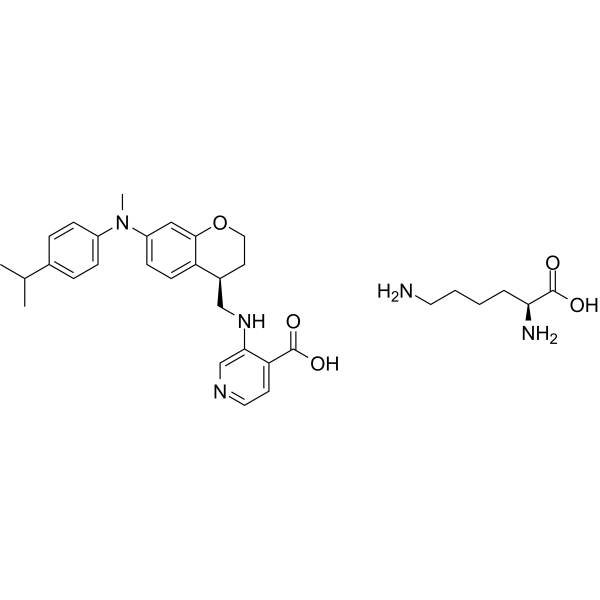
    Zavondemstat (QC8222; TACH 101) L-lysine is an orally active pan-KDM4 inhibitor, with a IC50 ≤ 0.08 μM against human KDM4A-D and a Kᵢ of 0.52 μM against human KDM4C. Zavondemstat L-lysine induces cell apoptosis, causes S-phase cell cycle arrest, reduces the population of tumor-initiating cells and inhibits cancer cell proliferation. Zavondemstat L-lysine suppresses tumor growth and induces tumor regression in mouse xenograft models. Zavondemstat L-lysine can be used for the research of various cancers including colorectal cancer, esophageal squamous cell carcinoma and triple-negative breast cancer .
    Zavondemstat L-lysine
  • HY-100760S

    Xanthothricin-13C4; Toxoflavine-13C4; PKF-118-310-13C4

    Isotope-Labeled Compounds β-catenin Bacterial Antibiotic Infection Cancer
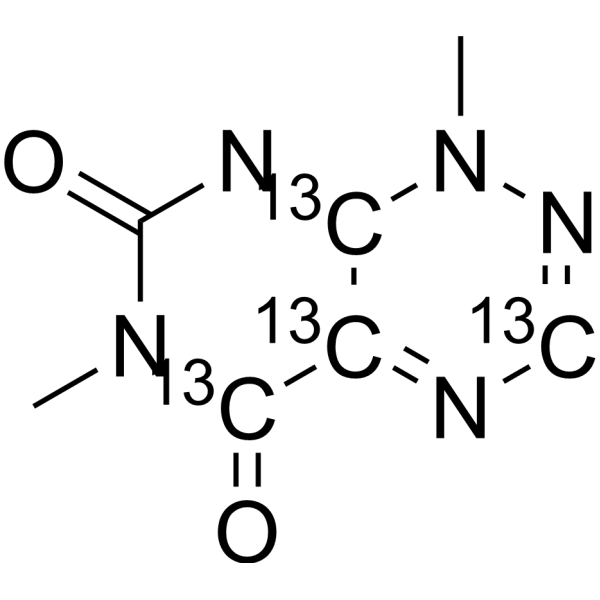
    Toxoflavin- 13C4 is the 13C-labeled Toxoflavin. Toxoflavin (Xanthothricin) is an antagonist of transcription factor 4 (TCF4)/β-catenin complex, also acts as an inhibitor of KDM4A, with antitumor activity . Antibiotic properties.
    Toxoflavin-13C4
  • HY-100760R

    Xanthothricin (Standard); Toxoflavine (Standard); PKF-118-310 (Standard)

    Reference Standards β-catenin Bacterial Antibiotic Histone Demethylase Infection Cancer
    Toxoflavin (Standard) is the analytical standard of Toxoflavin. This product is intended for research and analytical applications. Toxoflavin (Xanthothricin) is an antagonist of transcription factor 4 (TCF4)/β-catenin complex, also acts as an inhibitor of KDM4A, with antitumor and antibiotic activity[1][2].
    Toxoflavin (Standard)
  • HY-148807C

    QC8222 sodium; TACH 101 sodium

    Apoptosis Histone Demethylase Cancer
    Zavondemstat (QC8222; TACH 101) sodium is an orally active pan-KDM4 inhibitor, with a IC50 ≤ 0.08 μM against human KDM4A-D and a Kᵢ of 0.52 μM against human KDM4C. Zavondemstat sodium induces cell apoptosis, causes S-phase cell cycle arrest, reduces the population of tumor-initiating cells and inhibits cancer cell proliferation. Zavondemstat sodium suppresses tumor growth and induces tumor regression in mouse xenograft models. Zavondemstat sodium can be used for the research of various cancers including colorectal cancer, esophageal squamous cell carcinoma and triple-negative breast cancer .
    Zavondemstat sodium
  • HY-104048R

    Reference Standards Histone Demethylase Cancer
    QC6352 (Standard) is the analytical standard of QC6352 (HY-104048). This product is intended for research and analytical applications. QC6352 is an orally active KDM4 inhibitor with anti-tumor and anti-proliferative activity. QC6352 has in vivo inhibitory effects on PDX models of breast and colon cancer and reduces the number of chemoresistant cell populations. QC6352 inhibits KDM4 different isoforms with IC50s of 104 nM (KDM4A), 56 nM (KDM4B), 35 nM (KDM4C), and 104 nM (KDM4D), respectively. QC6352 has moderate inhibitory activity against KDM5 with an IC50 of 750 nM (KDM5B) .
    QC6352 (Standard)
  • HY-183618

    PROTACs Histone Demethylase Cancer
    DW-229 is a PROTAC degrader derived from Deferiprone (HY-B0568), targeting Fe(II)/α‑ketoglutarate‑dependent histone lysine demethylases (KDMs). DW-229 degrades KDM2A, KDM3A, KDM5B, KDM4A‑C, KDM5C, KDM6B in breast cancer cells. DW-229 shows IC50 < 0.5 μM against MCF‑7 cells and IC50 of 8.87 μM against MDA‑MB‑231 cells, with high cancer cell selectivity. DW-229 can be used for the research of breast cancer, liver cancer, prostate cancer, lung cancer .
    DW-229

Inquiry Online

Your information is safe with us. * Required Fields.

Salutation


Country or Region *

Applicant Name *


Organization Name *

Department *


Email Address *


Product Name *

Cat. No.


Requested quantity *

Phone Number *


Remarks

Inquiry Online

Inquiry Information

Product Name:
Cat. No.:
Quantity:
MCE Japan Authorized Agent:

