



Toxoflavin
Based on 9 publication(s) in Google Scholar
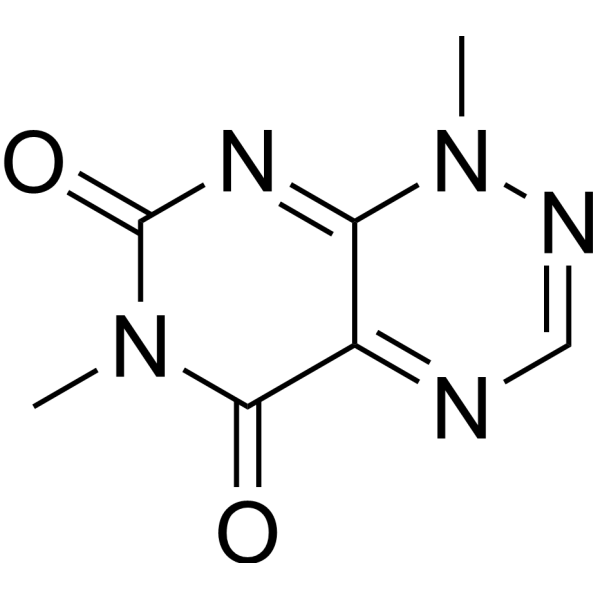
Toxoflavin (Xanthothricin) is an antagonist of transcription factor 4 (TCF4)/β-catenin complex, also acts as an inhibitor of KDM4A, with antitumor and antibiotic activity.
For research use only. We do not sell to patients.
- Purity : 99.88%
- CAS No.: 84-82-2
- Formula: C7H7N5O2
- Molecular Weight:193.16
-
Storage:Powder -20°C, 3 years , 4°C, 2 years ; In solvent -80°C, 6 months , -20°C, 1 month

To place orders, for customer services and technical support, please contact: MedChemExpress USA
Tel: 609-228-6898 E-mail: [email protected] [email protected]


-
 Biological Activity
-
Chemical Information
-
Solvent & Solubility
- Protocols
- Purity & Documentation
- References
-
 Help & FAQs


-
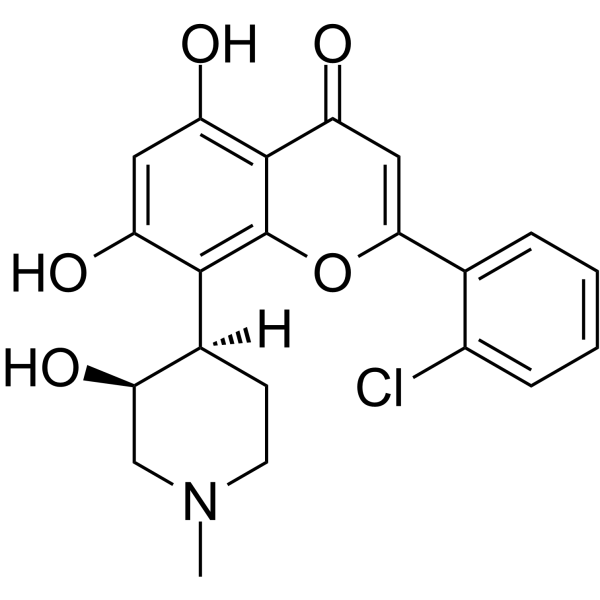
HY-10005
FlavopiridolCDK Inhibitor -
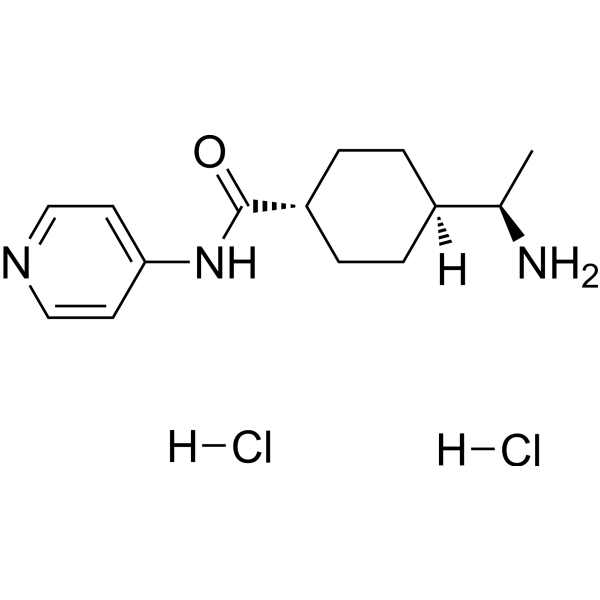
HY-10583
Y-27632 dihydrochlorideROCK Inhibitor -
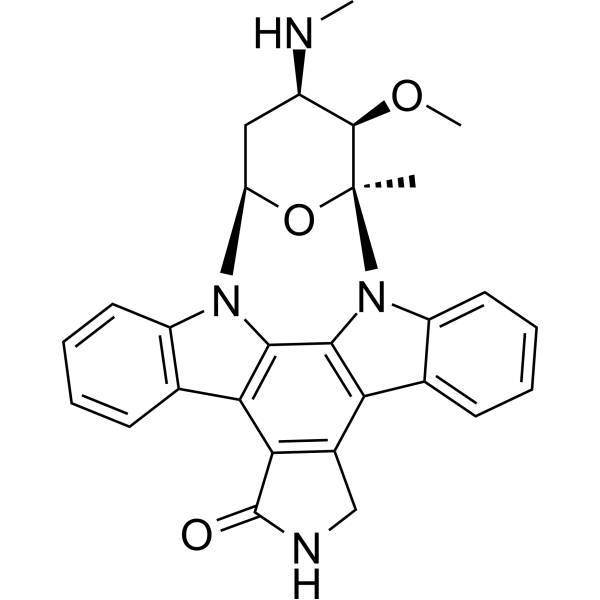
HY-15141
StaurosporinePKC/PKA Inhibitor -
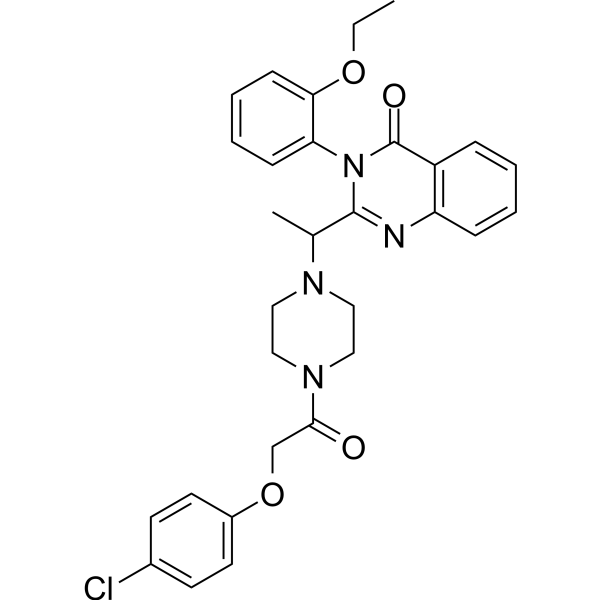
HY-15763
ErastinFerroptosis Inducer -
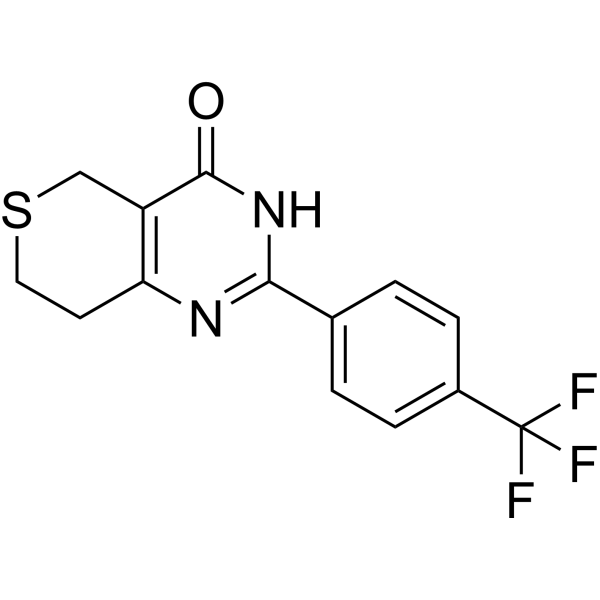
HY-15147
XAV-939Tankyrase Inhibitor -
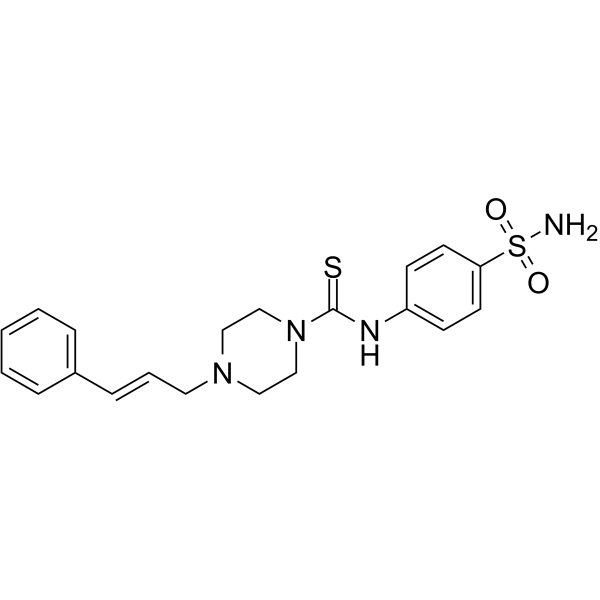
HY-101486
LF3β-Catenin/TCF4 Interaction Antagonist -
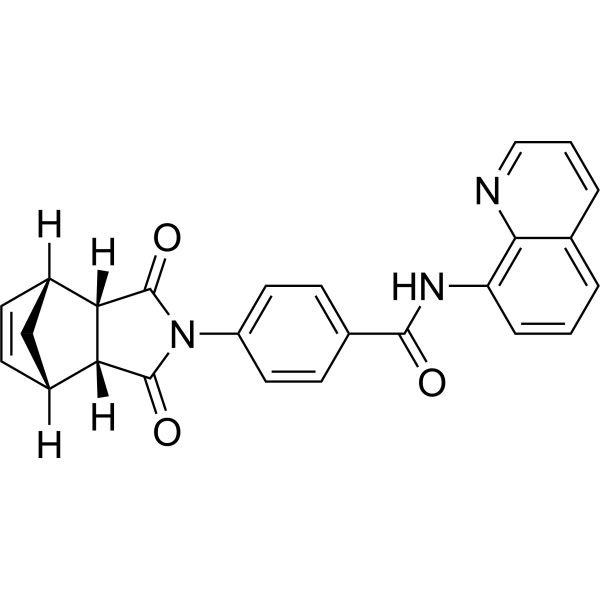
HY-12238
IWR-1Wnt Signaling Inhibitor -
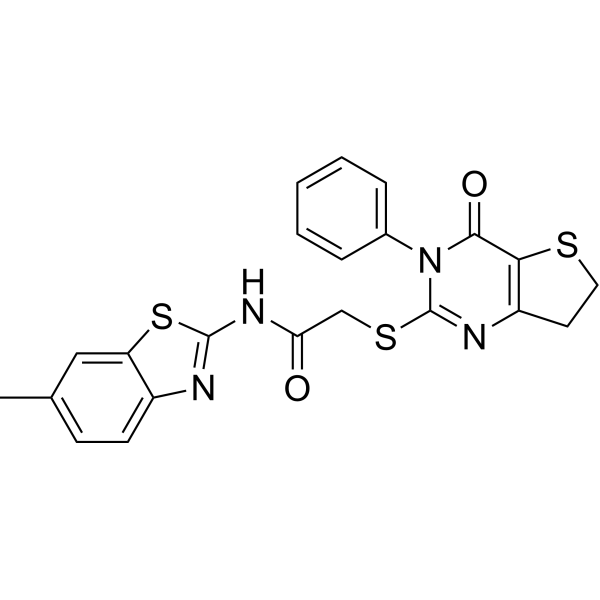
HY-13912
IWP-2Wnt Production Inhibitor -
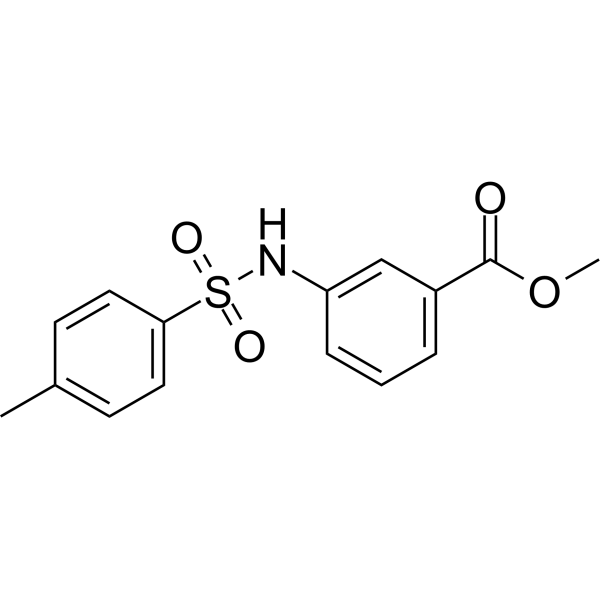
HY-120697
MSABWnt/β-Catenin Inhibitor -
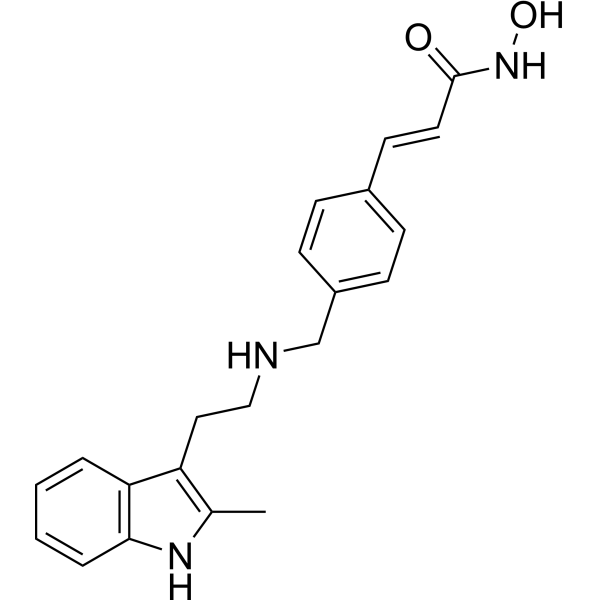
HY-10224
PanobinostatHDAC Inhibitor -
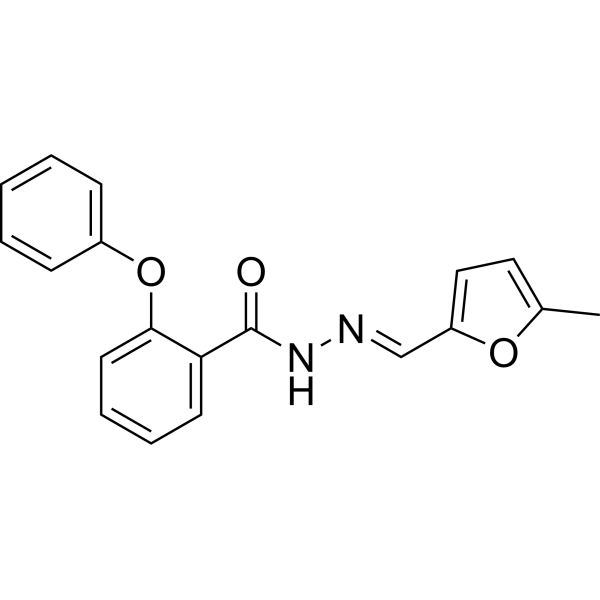
HY-101130
PNU-74654β-catenin/TCF Interaction Inhibitor -

HY-100760R
Toxoflavin (Standard)Antimicrobial Toxin
Publications Citing Use of MedChemExpress (MCE) Toxoflavin
More- Proc Natl Acad Sci U S A. 2024 Nov 12;121(46):e2406555121. [Abstract]
- Mol Med. 2024 Nov 5;30(1):199. [Abstract]
- Br J Cancer. 2024 Oct;131(7):1212-1223. [Abstract]
- Cell Rep. 2026 Mar 30;45(4):117200. [Abstract]
- J Nutr Biochem. 2025 Nov 11:149:110184. [Abstract]
- Comput Struct Biotechnol J. 2023 Jan 16:21:956-964. [Abstract]
- Mol Microbiol. 2022 Jun;117(6):1384-1404. [Abstract]
- J Nat Med. 2025 Apr 8. [Abstract]
- bioRxiv. 2021 Dec.
All Antibiotic Isoforms
More

Biological Activity
Description
IC50 & Target
Cellular Effect
|
Cell Line

|
Type | Value | Description | References |
|---|---|---|---|---|
| A549 | IC50 |
0.022 μM
Compound: Toxoflavin
|
Antiproliferative activity against human A549 cells assessed as reduction in cell growth measured after 72 hrs by Alamar blue assay
Antiproliferative activity against human A549 cells assessed as reduction in cell growth measured after 72 hrs by Alamar blue assay
|
[PMID: 31784197] |
| HCT-116 | IC50 |
2.86 μM
Compound: 88; PKF118-310
|
Antiproliferative activity against human HCT-116 cells assessed as reduction in cell proliferation incubated for 72 hrs by MTS assay
Antiproliferative activity against human HCT-116 cells assessed as reduction in cell proliferation incubated for 72 hrs by MTS assay
|
[PMID: 33445154] |
| HepG2 | IC50 |
4.5 μM
Compound: Toxoflavin
|
Antiproliferative activity against human HepG2 cells assessed as reduction in cell growth measured after 24 hrs by MTS assay
Antiproliferative activity against human HepG2 cells assessed as reduction in cell growth measured after 24 hrs by MTS assay
|
[PMID: 31784197] |
| Huh-7 | CC50 |
0.1986 μM
Compound: GNF-Pf-67
|
NOVARTIS: Cytotoxicity against human hepatocellular carcinoma cell line (Huh7)
NOVARTIS: Cytotoxicity against human hepatocellular carcinoma cell line (Huh7)
|
[PMID: 18579783] |
In Vitro
Toxoflavin (Xanthothricin) exhibits dose-dependent cytotoxicity against the 3 hepatoma cell lines, and with IC50s of 0.66 μM, 0.36 μM and 0.98 μM for Hep40 cells, HepG2 cells and Huh7 cells respectively[1].
MedChemExpress (MCE) has not independently confirmed the accuracy of these methods. They are for reference only.


Chemical Information
-
CAS No. 84-82-2
-
Appearance Solid
-
Molecular Weight 193.16
-
Formula C7H7N5O2
-
Color Light yellow to yellow
-
SMILES
O=C(C1=NC=NN(C)C1=N2)N(C)C2=O
-
Synonyms
Xanthothricin; Toxoflavine; PKF-118-310
-
Shipping
Room temperature in continental US; may vary elsewhere.
-
Storage
Powder -20°C 3 years 4°C 2 years In solvent -80°C 6 months -20°C 1 month


Publications (9)
-
Journal Impact Factor
-
Most Recent
-
Proc Natl Acad Sci U S A
Bioenergetic suppression by redox-active metabolites promotes antibiotic tolerance in Pseudomonas aeruginosa. [Abstract]2024 Nov 12;121(46):e2406555121. PMID: 39503891 -
Mol Med
MGST1 facilitates novel KRASG12D inhibitor resistance in KRASG12D-mutated pancreatic ductal adenocarcinoma by inhibiting ferroptosis. [Abstract]2024 Nov 5;30(1):199. PMID: 39501138 -
Br J Cancer
DRD4 promotes chemo-resistance and cancer stem cell-like phenotypes by mediating the activation of the Akt/β-catenin signaling axis in liver cancer. [Abstract]2024 Oct;131(7):1212-1223. PMID: 39174739 -
Cell Rep
Shear stress-induced Piezo1 activates CD99L2 to facilitate the initiation of blood circulation. [Abstract]2026 Mar 30;45(4):117200. PMID: 41915472 -
J Nutr Biochem
Maternal carbohydrate-programming enhances carbohydrate utilization in zebrafish offspring by histone H3K9 methylation. [Abstract]2025 Nov 11:149:110184. PMID: 41232653 -
Comput Struct Biotechnol J
A deep tabular data learning model predicting cisplatin sensitivity identifies BCL2L1 dependency in cancer. [Abstract]2023 Jan 16:21:956-964. PMID: 36733702 -
Mol Microbiol
Phenazines and toxoflavin act as interspecies modulators of resilience to diverse antibiotics. [Abstract]2022 Jun;117(6):1384-1404. PMID: 35510686 -
J Nat Med
Inhibitory effects of reumycin produced by Streptomyces sp. TPMA0082 on virulence factors of Pseudomonas aeruginosa. [Abstract]2025 Apr 8. PMID: 40195206 -


Solvent & Solubility
In Vitro:
DMSO : 25 mg/mL (129.43 mM; Need ultrasonic; Hygroscopic DMSO has a significant impact on the solubility of product, please use newly opened DMSO)
H2O : 10 mg/mL (51.77 mM; ultrasonic and warming and heat to 60°C)
Please refer to the solubility information to select the appropriate solvent. Once prepared, please aliquot and store the solution to prevent product inactivation from repeated freeze-thaw cycles.
Storage method and period of stock solution: -80°C, 6 months; -20°C, 1 month. When stored at -80°C, please use it within 6 months. When stored at -20°C, please use it within 1 month.
* Note: If you choose water as the stock solution, please dilute it to the working solution, then filter and sterilize it with a 0.22 μm filter before use.
Please refer to the solubility information to select the appropriate solvent. Once prepared, please aliquot and store the solution to prevent product inactivation from repeated freeze-thaw cycles.
Storage method and period of stock solution: -80°C, 6 months; -20°C, 1 month. When stored at -80°C, please use it within 6 months. When stored at -20°C, please use it within 1 month.
* Note: If you choose water as the stock solution, please dilute it to the working solution, then filter and sterilize it with a 0.22 μm filter before use.
Concentration (start) × Volume (start) = Concentration (final) × Volume (final)
In Vivo:
Select the appropriate dissolution method based on your experimental animal and administration route.
- For the following dissolution methods, please ensure to first prepare a clear stock solution using an In Vitro approach and then sequentially add co-solvents:
- To ensure reliable experimental results, the clarified stock solution can be appropriately stored based on storage conditions. As for the working solution for In Vivo experiments, it is recommended to prepare freshly and use it on the same day.
- The percentages shown for the solvents indicate their volumetric ratio in the final prepared solution. If precipitation or phase separation occurs during preparation, heat and/or sonication can be used to aid dissolution.
Add each solvent one by one: 10% DMSO 40% PEG300 5% Tween-80 45% Saline
Solubility: ≥ 2.5 mg/mL (12.94 mM); Clear solution
This protocol yields a clear solution of ≥ 2.5 mg/mL (saturation unknown).
Taking 1 mL working solution as an example, add 100 μL DMSO stock solution (25.0 mg/mL) to 400 μL PEG300, and mix evenly; then add 50 μL Tween-80 and mix evenly; then add 450 μL Saline to adjust the volume to 1 mL.
Preparation of Saline: Dissolve 0.9 g sodium chloride in ddH₂O and dilute to 100 mL to obtain a clear Saline solution.
Add each solvent one by one: 10% DMSO 90% (20% SBE-β-CD in Saline)
Solubility: ≥ 2.5 mg/mL (12.94 mM); Clear solution
This protocol yields a clear solution of ≥ 2.5 mg/mL (saturation unknown).
Taking 1 mL working solution as an example, add 100 μL DMSO stock solution (25.0 mg/mL) to 900 μL 20% SBE-β-CD in Saline, and mix evenly.
Preparation of 20% SBE-β-CD in Saline (4°C, storage for one week): 2 g SBE-β-CD powder is dissolved in 10 mL Saline, completely dissolve until clear.
For the following dissolution methods, please prepare the working solution directly:
It is recommended to prepare fresh solutions and use them promptly within a short period of time.
The percentages shown for the solvents indicate their volumetric ratio in the final prepared solution. If precipitation or phase separation occurs during preparation, heat and/or sonication can be used to aid dissolution.
Add each solvent one by one: PBS
Solubility: 100 mg/mL (517.71 mM); Clear solution; Need ultrasonic and warming and heat to 60°C
In Vivo Dissolution Calculator
Please enter the basic information of animal experiments:
-
-
-
-
Recommended: Prepare an additional quantity of animals to account for potential losses during experiments.
Please enter your animal formula composition:
-
%DMSO +
Recommended: Keep the proportion of DMSO in working solution below 2% if your animal is weak.
-
%+
-
+%Tween-80 + +
-
%Saline +
The co-solvents required include: DMSO, . All of co-solvents are available by MedChemExpress (MCE). , Tween 80. All of co-solvents are available by MedChemExpress (MCE).
Working solution concentration: 0.22 mg/mL
Method for preparing stock solution: mg drug dissolved in μL DMSO. Stock solution concentration: mg/mL.
1. Take μL DMSO stock solution;
2. Add μL .
μL , mix evenly;
3. Then add μL Tween 80, mix evenly;
4. Then add μL
Please ensure that the stock solution in the first step is dissolved to a clear state, and add co-solvents in sequence. You can use ultrasonic heating (ultrasonic cleaner, recommended frequency 20-40 kHz), vortexing, etc. to assist dissolution.


Purity & Documentation
-
Data Sheet (277 KB)
-
SDS (479 KB)
- English - EN (479 KB)
- Français - FR (479 KB)
- Deutsch - DE (479 KB)
- Norwegian - NO (479 KB)
- Español - ES (479 KB)
- Swedish - SV (479 KB)
- Italian - IT (479 KB)
- Korean - KR (479 KB)
- Portuguese - PT (479 KB)
-
Handling Instructions (2659 KB)
References
[1]. Wei W, et al. Small molecule antagonists of Tcf4/beta-catenin complex inhibit the growth of HCC cells in vitro and in vivo. Int J Cancer. 2010 May 15;126(10):2426-36. [Content Brief]
[2]. Franci G, et al. Identification and characterization of PKF118-310 as a KDM4A inhibitor. Epigenetics. 2017 Mar 4;12(3):198-205. [Content Brief]


Complete Stock Solution Preparation Table
Please refer to the solubility information to select the appropriate solvent. Once prepared, please aliquot and store the solution to prevent product inactivation from repeated freeze-thaw cycles.
Storage method and period of stock solution: -80°C, 6 months; -20°C, 1 month. When stored at -80°C, please use it within 6 months. When stored at -20°C, please use it within 1 month.
| Optional Solvent | Concentration Solvent Mass | 1 mg | 5 mg | 10 mg | 25 mg |
|---|---|---|---|---|---|
| H2O / DMSO | 1 mM | 5.1771 mL | 25.8853 mL | 51.7706 mL | 129.4264 mL |
| 5 mM | 1.0354 mL | 5.1771 mL | 10.3541 mL | 25.8853 mL | |
| 10 mM | 0.5177 mL | 2.5885 mL | 5.1771 mL | 12.9426 mL | |
| 15 mM | 0.3451 mL | 1.7257 mL | 3.4514 mL | 8.6284 mL | |
| 20 mM | 0.2589 mL | 1.2943 mL | 2.5885 mL | 6.4713 mL | |
| 25 mM | 0.2071 mL | 1.0354 mL | 2.0708 mL | 5.1771 mL | |
| 30 mM | 0.1726 mL | 0.8628 mL | 1.7257 mL | 4.3142 mL | |
| 40 mM | 0.1294 mL | 0.6471 mL | 1.2943 mL | 3.2357 mL | |
| 50 mM | 0.1035 mL | 0.5177 mL | 1.0354 mL | 2.5885 mL | |
| DMSO | 60 mM | 0.0863 mL | 0.4314 mL | 0.8628 mL | 2.1571 mL |
| 80 mM | 0.0647 mL | 0.3236 mL | 0.6471 mL | 1.6178 mL | |
| 100 mM | 0.0518 mL | 0.2589 mL | 0.5177 mL | 1.2943 mL |
* Note: If you choose water as the stock solution, please dilute it to the working solution, then filter and sterilize it with a 0.22 μm filter before use.


Toxoflavin Related Classifications
HY-100760 Related Classifications
 Powered by Bioz