95 Results for "

L929

" in MedChemExpress (MCE) Product Catalog:
Products (95)

95 Results for "L929" in MCE Product Catalog:

8
8 Publications Verification
Cat. No.: HY-125402
CAS No.: 1601496-05-2
Purity:  99.18%
Synonyms: GSK'843
Target:  

RIP kinase Apoptosis

Research Areas:  

Inflammation/Immunology

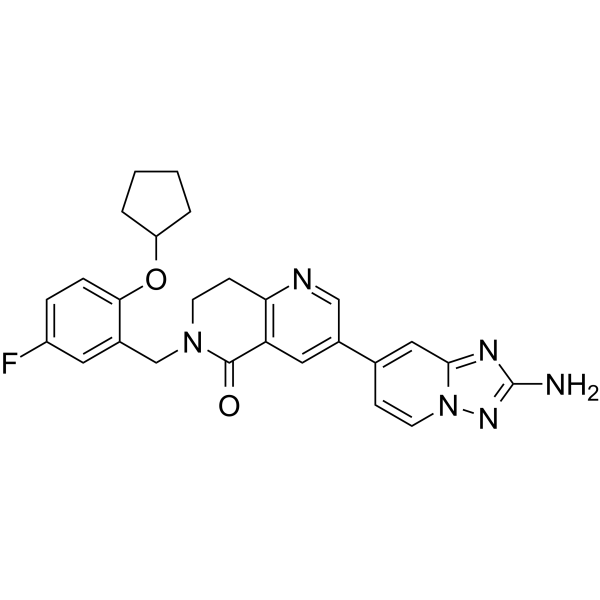
GSK-843 (GSK'843) is a receptor-interacting protein kinase 3 (RIP3 or RIPK3) inhibitor, which binds RIP3 kinase domain with an IC50 of 8.6 nM, and inhibits kinase activity with an IC50 of 6.5 nM. GSK-843 can be used for the research of inflammation .
loading...
    loading...
3
3 Cited Publications
Cat. No.: HY-Y0850
CAS No.: 9002-89-5
Polyvinyl alcohol (Mw 146000-186000, 99+% hydrolyzed) is a non-biodegradable, hydrophilic, odorless biomedical polymer with cell adhesion/proliferation inhibition, peripheral nerve regeneration induction, dissolution enhancement, and non-toxic, biocompatible properties .
loading...
    loading...
3
3 Cited Publications
Cat. No.: HY-128067
CAS No.: 1428-95-1
Purity:  99.14%
Synonyms: Hexamethylene amiloride; HMA
Research Areas:  

Infection Cancer

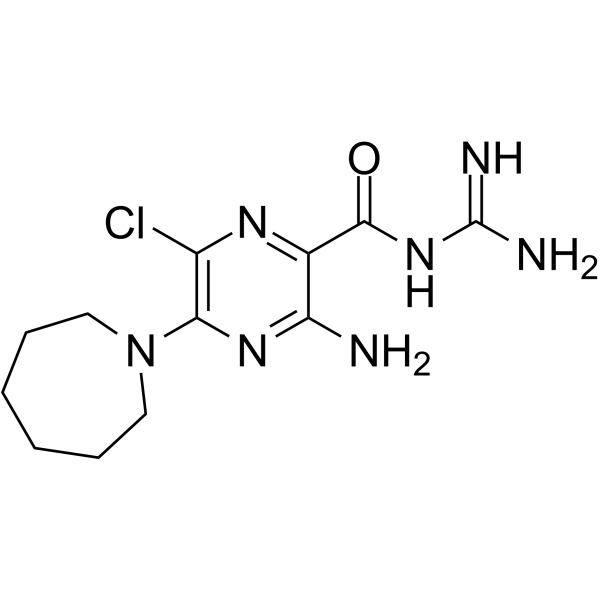
5-(N,N-Hexamethylene)-amiloride (Hexamethylene amiloride) derives from an amiloride and is a potent Na +/H + exchanger inhibitor, which decreases the intracellular pH (pHi) and induces apoptosis in leukemic cells. 5-(N,N-Hexamethylene)-amiloride (Hexamethylene amiloride) is also an inhibitor of the HIV-1 Vpu virus ion channel and inhibits mouse hepatitis virus (MHV) replication and human coronavirus 229E (HCoV229E) replication in cultured L929 cells with EC50s of 3.91 μM and 1.34 μM, respectively .
loading...
    loading...
2
2 Cited Publications
Cat. No.: HY-148983
CAS No.: 7803-49-8
Hydroxylamine (50% w/w in water) is an inorganic highly reactive compound and antibacterial agent. Hydroxylamine (50% w/w in water) acutely activates the transport activity of GLUT1, inhibits Monoamine oxidase activity. Hydroxylamine (50% w/w in water) inhibits nitrite oxidizing bacteria. Hydroxylamine (50% w/w in water) activates glucose uptake. Hydroxylamine (50% w/w in water) can be used in the research of inflammatory diseases and allergies[1][2][3][4] .
loading...
    loading...
1
1 Cited Publications
Cat. No.: HY-W140974
CAS No.: 727699-84-5
Target:  

STING

Research Areas:  

Cancer

SN-001 is a STING inhibitor with an IC50 of 3.82 μM .
loading...
    loading...
1
1 Cited Publications
Cat. No.: HY-171658
CAS No.: 3070346-91-4
R1-ICR-5 is a highly selective RIPK1 PROTAC degrader. Mediated by VHL, R1-ICR-5 induces the degradation of RIPK1, which in turn dysregulates the TNFR1 and TLR3/4 signaling hubs, enhances the signaling outputs of NF-κB, MAPK and IFN, and simultaneously promotes RIPK3 activation and necroptosis (necroptosis). R1-ICR-5 can be used in the research of triple-negative breast cancer and skin inflammation .
loading...
    loading...
1
1 Cited Publications
Cat. No.: HY-137709A
Research Areas:  

Metabolic Disease

2'2'-cGAMP disodium, a synthetic CDN, binds STING in the immune response, inducing IFN-β. 2'2'-cGAMP disodium binds weaker binding to STING than 2'3'-cGAMP (HY-100564) but stronger than other CDNs .
loading...
    loading...
Cat. No.: HY-L929
2,527 compounds

In drug discovery and development (R&D) area, target binding and druggability optimization are core processes. Among these attributes, high solubility is critical for a compound to achieve druggability, as it directly impacts the progress of drug R&D. Superior solubility ensures the rapid dissolution and uniform distribution of drug molecules in vivo, thereby enhancing bioavailability and effectively mitigating issues such as suboptimal efficacy, increased dosage requirements, or exacerbated toxic and side effects arising from insufficient solubility.

From the perspective of medicinal chemistry, high-solubility drug fragments serve as high-quality "molecular building blocks". Based on these fragments, lead compounds with potential druggability can be rapidly screened out, which significantly shortens the drug R&D cycle and reduces R&D costs. Meanwhile, the high-solubility drug fragment library can provide diverse options for drug development in different therapeutic areas, offer solutions for the solubility defects of existing clinical drugs, and facilitate the development of novel, highly effective targeted drugs with higher bioavailability and better safety profiles.

MCE has collected and compiled 2,527 experimentally validated small-molecule fragments with high solubility. These fragments can be directly used for drug molecular design, providing high-quality pre-validated solubility fragments that significantly improve the efficiency of lead compound screening and accelerate the progress of drug R&D.

Cat. No.: HY-P99796
CAS No.: 1167985-17-2
Synonyms: ATN-103; PF-5230896

Target:  

TNF Receptor

Research Areas:  

Inflammation/Immunology

Ozoralizumab (ATN-103) is an anti-TNFα humanized antibody. Ozoralizumab is a humanized trivalent nanobody compound that consists of two anti-human TNFα nanobodies and an anti-human serum albumin (HSA) nanobody. Ozoralizumab can be used in research of arthritis .
loading...
    loading...
Cat. No.: HY-W004761
CAS No.: 13675-18-8
Synonyms: Hypodiboric acid
Tetrahydroxydiboron (Hypodiboric acid) acts as a hydrogel initiator and bioadhesion promoter, with broad-spectrum antibacterial activity, ROS scavenging capacity, and osteogenic induction properties. Tetrahydroxydiboron initiates rapid gelation by generating free radicals through reactions with vinyl monomers and dissolved oxygen, overcoming oxygen inhibition without deoxygenation or external triggers. Tetrahydroxydiboron achieves strong bioadhesion via interaction with carboxymethyl chitosan. Tetrahydroxydiboron can be used in the research of periodontitis and related inflammatory diseases .
loading...
    loading...
Cat. No.: HY-152846
CAS No.: 2268739-68-8
Synonyms: GDC-8264
Flizasertib (GDC-8264) is an orally active, reversible and selective RIP1 inhibitor with Ki app values of 0.00071 μM and 0.0013 μM for human and cynomolgus monkey RIP1 kinase, respectively. Flizasertib blocks RIP1 autophosphorylation but does not affect RIP1 protein stability. Flizasertib inhibits pro-inflammatory cytokines (CCL3, CCL4, and IL-1β) production. Flizasertib results in inhibition of colitis and ileitis. Flizasertib can be used in the research of cardiac surgery-associated acute kidney injury .
loading...
    loading...
Cat. No.: HY-N3266
CAS No.: 99353-00-1
Methyl rosmarinate is an orally active hydroxycinnamic acid. Methyl rosmarinate exhibits an IC50 of 24.70 μM and a Ki of 15.29 μM against PTP1B, an IC50 of 41.46 μg/mL against BChE, a Ki of 0.61 mM against mushroom tyrosinase, and an IC50 of 2.50 μM against SARS-CoV-2 3CLpro. Methyl rosmarinate downregulates the phosphorylation levels of ERK, JNK, p38, Smad2 and Smad3. Methyl rosmarinate activates erythrocyte BPGM and promotes the production of 2,3-BPG. Methyl rosmarinate induces apoptosis of fibroblasts. Methyl rosmarinate prolongs the survival time of hypoxic mice. Methyl rosmarinate improves insulin sensitivity. Methyl rosmarinate binds to SARS-CoV-2 3CLpro and inhibits viral replication. Methyl rosmarinate induces glioblastoma cell death. Methyl rosmarinate activates the TGR5/AMPK axis and reduces the levels of ROS and MDA. Methyl rosmarinate shows inhibitory activity against MMP-1. Methyl rosmarinate can be used in research related to pulmonary fibrosis, hypoxia-induced injury, type 2 diabetes, Alzheimer's disease, hyperpigmentation disorders, COVID-19, glioblastoma and myocardial ischemia-reperfusion injury .
loading...
    loading...
Cat. No.: HY-161247
CAS No.: 2641482-08-6
Target:  

5-HT Receptor

Research Areas:  

Metabolic Disease

5HT2A antagonist 2 is an orally active, selective antagonist for 5HT2A with IC50 of 14 nM. 5-HT2A antagonist 2 exhibits good chemical, hepatocyte, and plasma stability, without significant cytotoxicity in cell lines VERO, HFL-1, L929, NIH3T3, CHO-K1 .
loading...
    loading...
Cat. No.: HY-170872
Research Areas:  

Cancer

PT-129 is a G3BP1/G3BP2 PROTAC degrader. PT-129 inhibits the formation of stress granules, disassembles pre-existing stress granules, disrupts stress granule-mediated ATF4 trafficking via migratory exocytosis, and suppresses cancer cell proliferation. PT-129 is applicable to the research of lung cancer and melanoma .
loading...
    loading...
Cat. No.: HY-134467
CAS No.: 98570-83-3
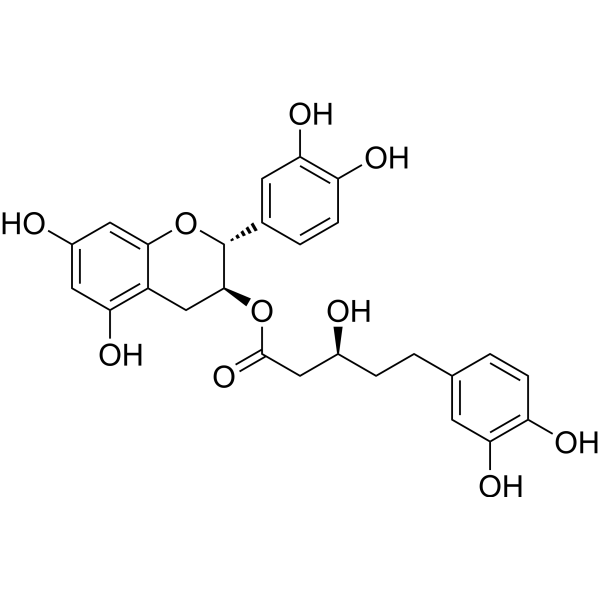
Phylloflavan is an antileishmanial (Antileishmanial) agent with an EC50 of 3.2 nM against intracellular amastigotes of Leishmania donovani. Phylloflavan is isolated from Phyllocldus plants. Phylloflavan induces moderate levels of NO release. Phylloflavan also inhibits the cytopathic effect of encephalomyocarditis virus on L929 fibroblasts (38 U/mL) .
loading...
    loading...
Cat. No.: HY-W250121
CAS No.: 9000-65-1
Tragacanth gum is an orally active anionic composite polysaccharide and multifunctional biomaterial. Tragacanth gum exhibits biocompatibility, mucoadhesion and renoprotective effects, and effectively promotes wound closure and tissue healing. Tragacanth gum can be isolated from Astragalus gummifer. Tragacanth gum acts as an emulsifier and drug delivery carrier, and is also widely used in fields such as 3D scaffolds, tissue engineering and green nanoparticle preparation. High doses of Tragacanth gum may induce reversible forestomach squamous epithelial hyperplasia in mice, but show no mutagenic or carcinogenic activity. Tragacanth gum is commonly used in studies related to diseases including systemic candidiasis, rheumatoid arthritis and osteosarcoma .
loading...
    loading...
Cat. No.: HY-W391506
CAS No.: 9011-14-7
Synonyms: Poly(methyl methacrylate), beads; PMMA
Research Areas:  

Others

Poly (methyl methacrylate) (Poly(methyl methacrylate), beads; PMMA) is an amorphous glassy acrylic thermoplastic polymer belonging to the acrylate family, synthesized from methyl methacrylate monomers. Poly (methyl methacrylate) drives biochemical processes including free volume expansion induced by inelastic deformation, yield stress and strain softening regulated by physical aging, acid hydrolysis to polymethacrylic acid, multi-stage combustion, oxygen-dependent thermal decomposition, primary amine-mediated polypentanimide formation, and grafting/crosslinking-based copolymer and composite formation. Poly (methyl methacrylate) exhibits histocompatibility, low toxicity, low inflammatory potential, and fracture resistance; it can form functional blends and composites for biomedical and dental applications; it also allows performance-enhancing chemical and mechanical modifications. Poly (methyl methacrylate) is applicable to studies related to cranial repair .
loading...
    loading...
Cat. No.: HY-W196368
CAS No.: 2217-60-9
Thymohydroquinone is a COX-2 inhibitor and anti-SARS-CoV-2 agent that induces cytotoxicity, antiproliferative effects and inhibits tumor growth. Thymohydroquinone cannot scavenge superoxide radicals via σ (hydrogen atom transfer) and π-π attacks with superoxide anions. Thymohydroquinone can be used in research related to squamous cell carcinoma, fibrosarcoma and coronavirus disease 2019 (SARS-CoV-2 infection) .
loading...
    loading...
Cat. No.: HY-170949
CAS No.: 2925028-15-3
Research Areas:  

Inflammation/Immunology

STING-IN-11 (Compound 42) is an orally active STING inhibitor with an IC50 of 37.8 nM. STING-IN-11 can block the palmitoylation of the STING protein and STING downstream signaling, and inhibit STING-mediated inflammation. STING-IN-11 has good in vivo safety and can be used for the research of STING-related inflammatory and autoimmune diseases .
loading...
    loading...
Cat. No.: HY-W749867
CAS No.: 6766-87-6
Synonyms: Calcium disodium EDTA dihydrate
CaⅡ-EDTA disodium dihydrate (Calcium disodium EDTA dihydrate) is an orally active metal chelating reagent, exhibits bactericidal activities against periodontal pathogens Aggregatibacter actinomycetemcomitans, Prevotella intermedia and Porphyromonas gingivalis . CaⅡ-EDTA disodium dihydrate is effective chelating antidotes for lead- and cadmium poisoning .
loading...
    loading...

