189 Results for "

LC-MS

" in MedChemExpress (MCE) Product Catalog:
Products (189)

189 Results for "LC-MS" in MCE Product Catalog:

5
5 Cited Publications
Cat. No.: HY-103663
CAS No.: 1951408-58-4
Purity:  99.18%
Research Areas:  

Cancer

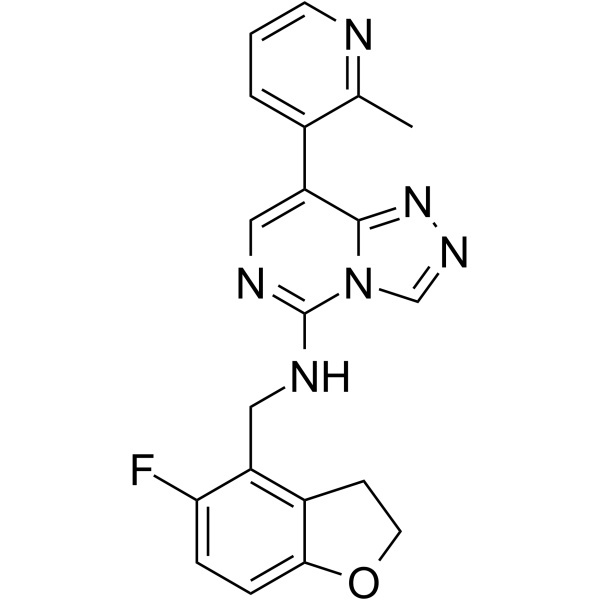
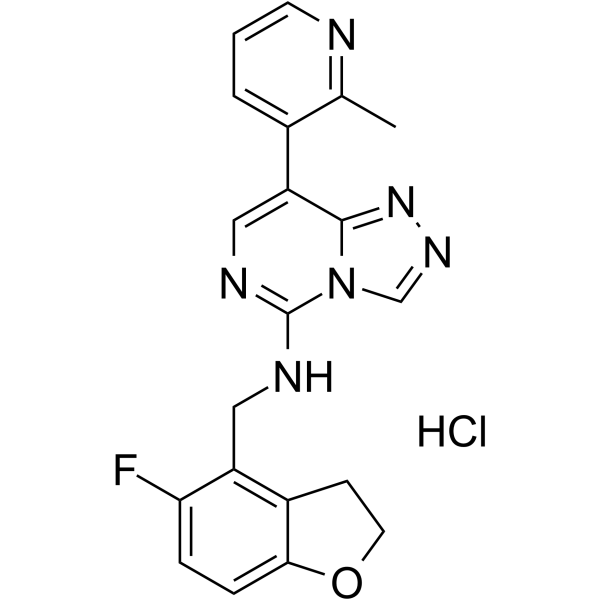
MAK683 is an embryonic ectoderm development (EED) inhibitor extracted from patent US20160176882 A1, compound example 2. MAK683 exhibits IC50s of 59, 89, 26 nM in EED Alphascreen binding, LC-MS and ELISA assay .
loading...
    loading...
1
1 Cited Publications
Cat. No.: HY-108309
CAS No.: 1984-15-2
Purity:  ≥98.0%
Synonyms: Methylenediphosphonic acid
Research Areas:  

Others

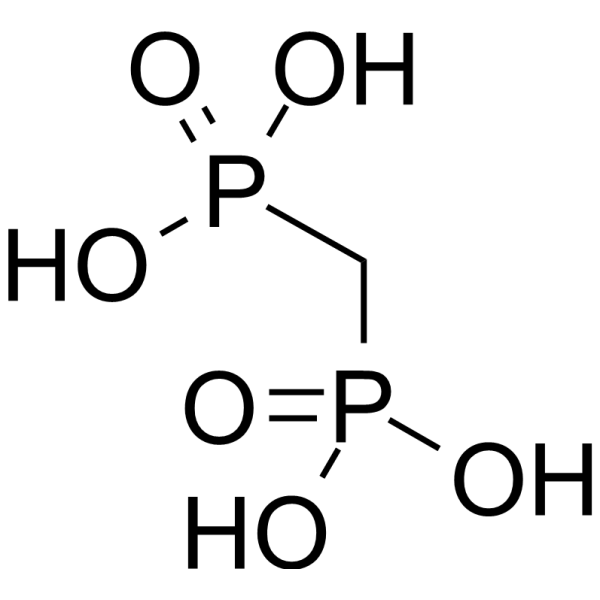
Medronic acid (Methylenediphosphonic acid) is a methylene-substituted bisphosphonate. Medronic acid has an affinity for the surface of hydroxyapatite crystals in the bone matrix and adheres to them. Medronic acid can be used in complex with radioisotopes in bone imaging. Due to its strong metal chelating ability, medronic acid is also used as a water treatment chemical. In addition, medronic acid is used as a solvent additive to improve peak shape and signal of metal-sensitive metabolites in LC/MS analysis .
loading...
    loading...
1
1 Cited Publications
Cat. No.: HY-P0048
CAS No.: 52435-06-0
Synonyms: Surfagon
Target:  

GnRH Receptor

Research Areas:  

Others

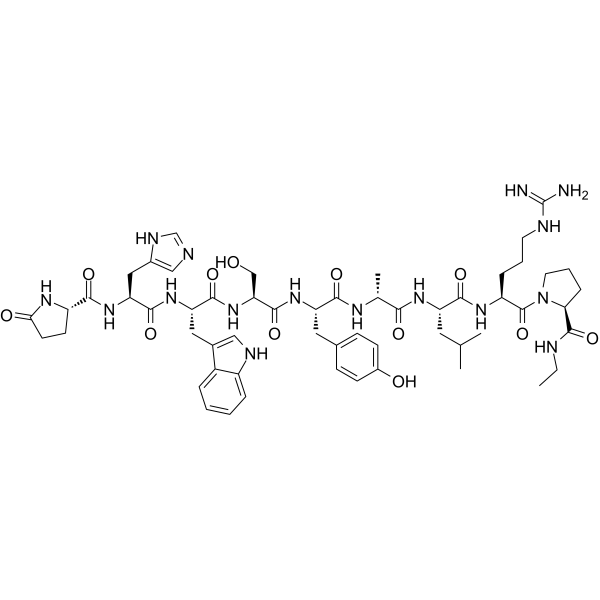
(Des-Gly10,D-Ala6,Pro-NHEt9)-LHRH (Surfagon, Mwt 1167.34 Da) is an agonist of gonadotropin-releasing hormone (GnRH). (Des-Gly10,D-Ala6,Pro-NHEt9)-LHRH can be used as an internal standard for the LC-MS analysis of leuprorelide acetate. (Des-Gly10,D-Ala6,Pro-NHEt9)-LHRH has potential applications in biochemical analysis and fertility .
loading...
    loading...
Cat. No.: HY-P11307
CAS No.: 1334608-28-4
Target:  

Proteasome

Research Areas:  

Cancer

Biotin-epoxomicin is a Proteasome subunit binder. Biotin-epoxomicin serves as an affinity reagent for identifying proteasomal catalytic subunits, and facilitates affinity purification of active proteasomal subunits for LC-MS identification. Biotin-epoxomicin can be used to study solid tumors derived from B16 melanoma .
loading...
    loading...
Cat. No.: HY-130189
CAS No.: 4775-80-8
Purity:  99.38%
Target:  

Drug Metabolite

Research Areas:  

Others

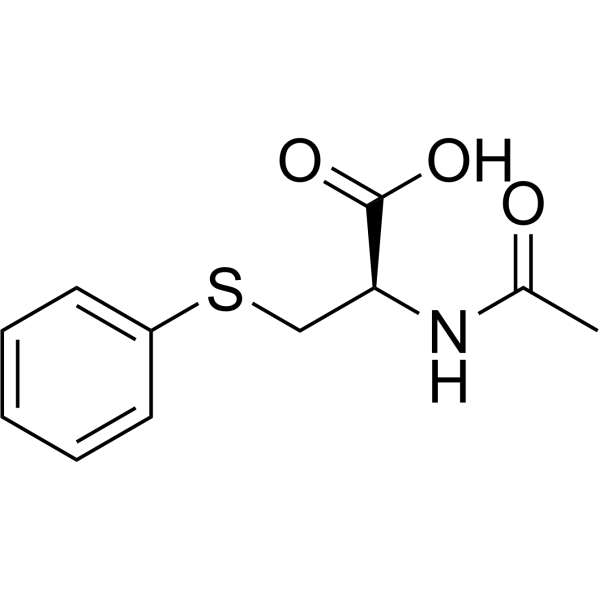
S-Phenylmercapturic acid, a metabolite of benzene, can be used as a biomarker, identified by GC, HPLC (UV or fluorescence detection), GC-MS, LC-MS/MS or immunoassay .
loading...
    loading...
Cat. No.: HY-133706S
CAS No.: 760179-80-4
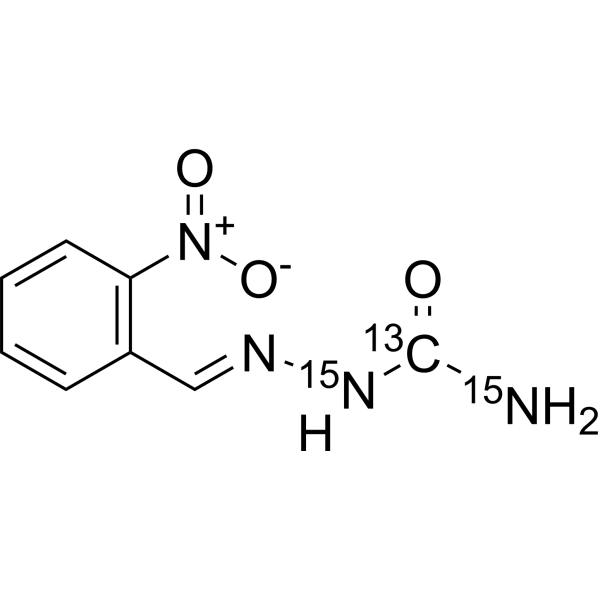
2-Nitrobenzaldehyde semicarbazone- 13C, 15N2 is used for analysis of semicarbazide in the LC-MS/MS method .
loading...
    loading...
Cat. No.: HY-130189R
CAS No.: 4775-80-8
Research Areas:  

Others

S-Phenylmercapturic acid (Standard) is the analytical standard of S-Phenylmercapturic acid. This product is intended for research and analytical applications. S-Phenylmercapturic acid, a metabolite of benzene, can be used as a biomarker, identified by GC, HPLC (UV or fluorescence detection), GC-MS, LC-MS/MS or immunoassay .
loading...
    loading...
Cat. No.: HY-N7717
CAS No.: 5096-70-8
Synonyms: (–)-(1R)-N-methyLCoclaurine
(-)-N-methylcoclaurine ((-)-(1R)-N-methylcoclaurine) is a benzylisoquinoline alkaloid and melanogenesis inhibitor with an IC50 of 6.5 μM that can be found in the flower buds of Nelumbo nucifera. (-)-N-methylcoclaurine inhibits theophylline-stimulated melanogenesis in melanoma cells. (-)-N-methylcoclaurine can be used for the research of skin hyperpigmentation disorders .
loading...
    loading...
Cat. No.: HY-103663A
CAS No.: 2170606-94-5
Research Areas:  

Cancer

MAK683 hydrochloride is an embryonic ectoderm development (EED) inhibitor extracted from patent US20160176882 A1, compound example 2. MAK683 exhibits IC50s of 59, 89, 26 nM in EED Alphascreen binding, LC-MS and ELISA assay .
loading...
    loading...
Cat. No.: HY-E70271
CAS No.: 27843-61-4
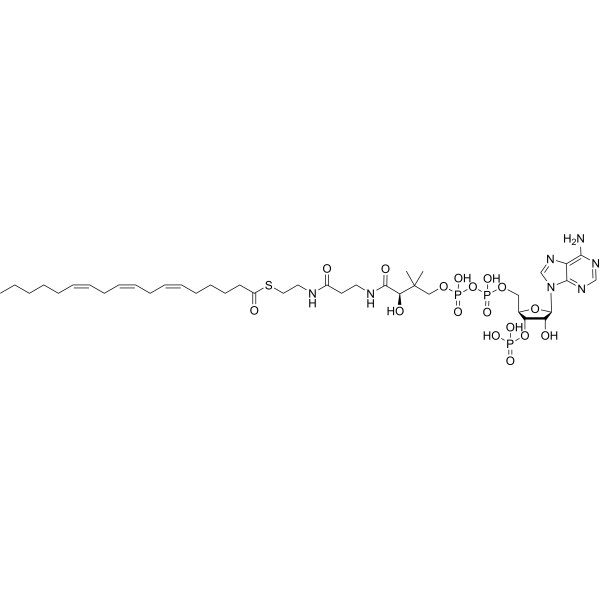
Synonyms: 6Z,9Z,12Z-Octadecatrienoyl-coenzyme A; γ-LinolenoyLCoenzyme A; 6Z,9Z,12Z-Octadecatrienoyl-CoA
Target:  

Endogenous Metabolite

Research Areas:  

Metabolic Disease

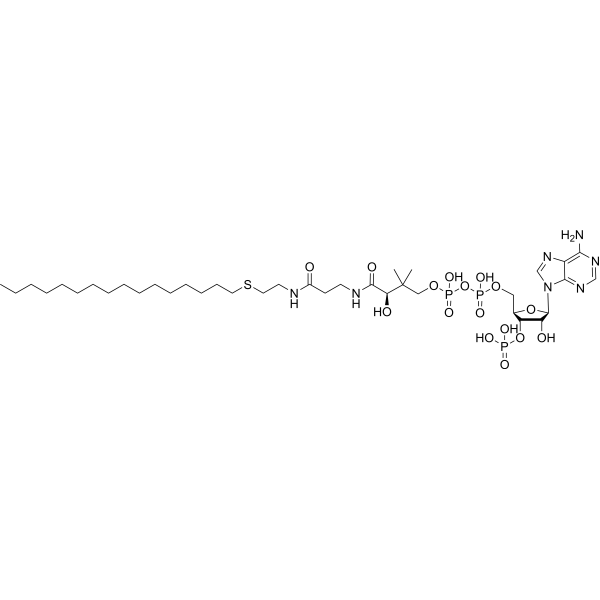
γ-Linolenoyl-CoA (C18:3(n6)-CoA) is a fatty acyl-CoA that can be used for lipidomics analysis of fatty acid-coenzyme A (FA-CoA) through LCMS/MS .
loading...
    loading...
Cat. No.: HY-B0870S
CAS No.: 1309928-44-6
Bensulfuron-methyl-d6 is a deuterated Bensulfuron-methyl (HY-B0870). Bensulfuron-methyl is a kind of sulfonylurea herbicide widely used to control broad-leaf weeds in rice paddies .
loading...
    loading...
Cat. No.: HY-108353S
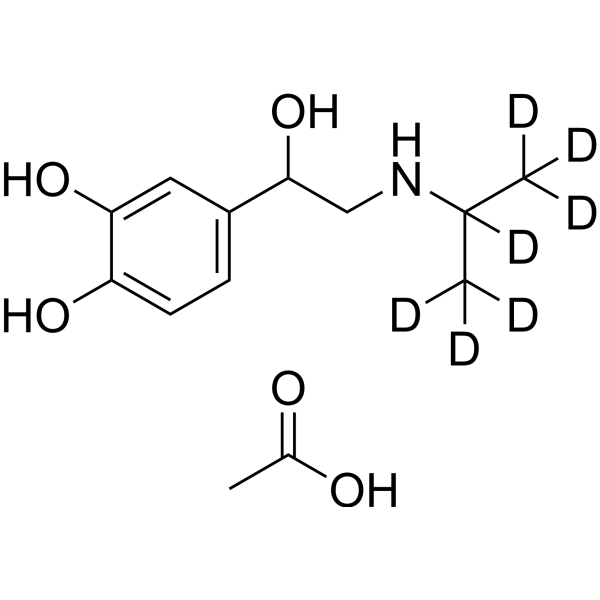
Isoprenalin-d7 acetate is an internal standard for the determination of isoproterenol by GC- or LC-MS .
loading...
    loading...
Cat. No.: HY-136520A
CAS No.: 247568-68-9
Research Areas:  

Metabolic Disease

(R)-Xanthoanthrafil is a phosphodiesterase-5 (PDE5) inhibitor. (R)-Xanthoanthrafil selectively inhibits PDE5, increasing cyclic guanosine monophosphate (cGMP) levels, leading to smooth muscle relaxation and promoting penile erection. (R)-Xanthoanthrafil can be used to study erectile dysfunction .
loading...
    loading...
Cat. No.: HY-W750595
CAS No.: 13392-24-0
Target:  

Drug Derivative

Research Areas:  

Cancer

6-(L-1,2,3-Trihydroxybutyl)-pterin is a derivative of L-biopterin (HY-102015) and is the oxidized form of tetrahydro-L-biopterin (BH4) as well as D-biopterin. Co-ingestion of 6-(L-1,2,3-Trihydroxybutyl)-pterin (0.5%) with the carcinogen 4-dimethylaminoazobenzene reduces the incidence of 4-dimethylaminoazobenzene-induced liver tumors in rats. 6-(L-1,2,3-Trihydroxybutyl)-pterin has been used as an internal standard for the LC-MS quantification of biopterin and neopterin in rat plasma.
loading...
    loading...
Cat. No.: HY-157601
Target:  

17β-HSD

Research Areas:  

Metabolic Disease

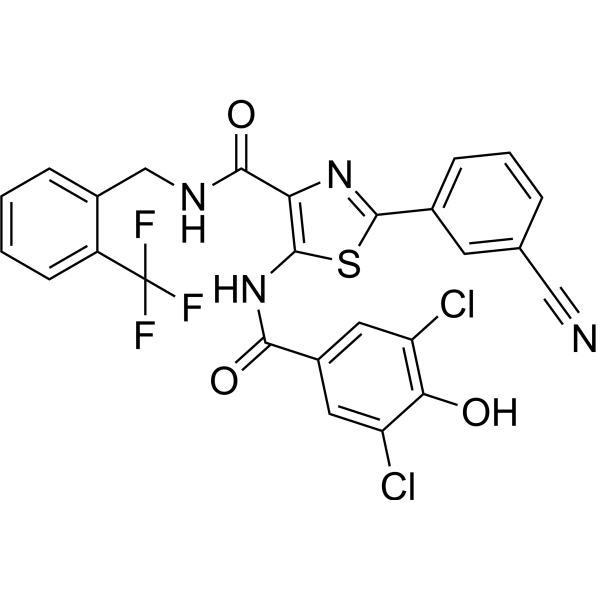
HSD17B13-IN-4 (Compound 95) is an inhibitor of hydroxysteroid 17β-dehydrogenase 13 (HSD17B13) with a Ki value of ≤ 50 nM for the estradiol substrate LCMS. HSD17B13-IN-4 can be used in the research of liver diseases, metabolic disorders, or cardiovascular diseases such as NAFLD or NASH, or drug-induced liver injury (DILI) .
loading...
    loading...
Cat. No.: HY-157613
Target:  

17β-HSD

Research Areas:  

Metabolic Disease

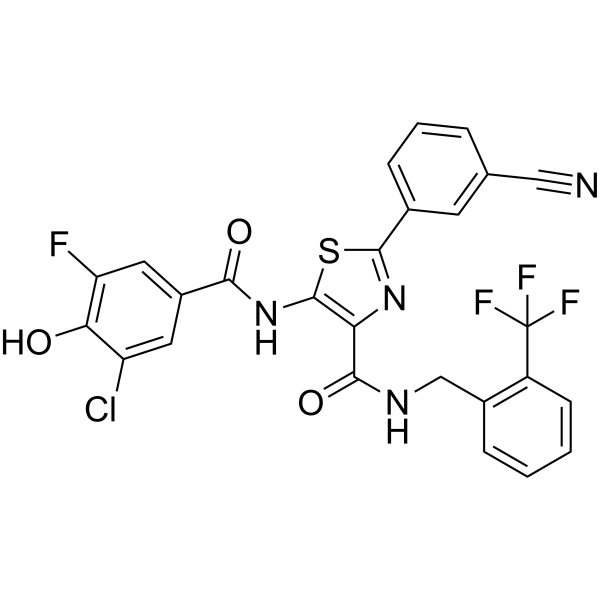
HSD17B13-IN-5 (Compound 96) is an inhibitor of hydroxysteroid 17β-dehydrogenase 13 (HSD17B13) with a Ki value of ≤ 50 nM for the estradiol substrate LCMS. HSD17B13-IN-5 can be used in the research of liver diseases, metabolic disorders, or cardiovascular diseases such as NAFLD or NASH, or drug-induced liver injury (DILI) .
loading...
    loading...
Cat. No.: HY-103663R
CAS No.: 1951408-58-4
Research Areas:  

Cancer

MAK683 (Standard) is the analytical standard of MAK683 (HY-103663). This product is intended for research and analytical applications. MAK683 is an embryonic ectoderm development (EED) inhibitor extracted from patent US20160176882 A1, compound example 2. MAK683 exhibits IC50s of 59, 89, 26 nM in EED Alphascreen binding, LC-MS and ELISA assay .
loading...
    loading...
Cat. No.: HY-E71359
Research Areas:  

Others

Trypsin-N B65 is a mass spectrometry-grade protease specifically designed for mass spectrometry-based enzymatic digestion of denatured proteins, suitable for LC-MS/MS analysis. It is a key tool enzyme for proteomics research.
loading...
    loading...
Cat. No.: HY-W653727
CAS No.: 139542-32-8
Synonyms: Prochloraz-desimidazole-formylamino
Target:  

Drug Metabolite

Research Areas:  

Others

BTS44596 (Prochloraz-desimidazole-formylamino) is a metabolite of the antifungal agent Prochloraz (HY-B0845). BTS44596 is one of the core target analytes for regulatory monitoring of Prochloraz residue limits in fruits and vegetables as well as for simultaneous detection via LC-MS/MS .
loading...
    loading...
Cat. No.: HY-L262
4,293 compounds

Natural products are small-molecule compounds produced in nature, derived from animals, plants, and microorganisms, including both primary and secondary metabolites. With their structural diversity and favorable biological activities, natural products have long been an important source for drug discovery. Traditional natural product research has often focused on isolating single active components, whereas metabolomics emphasizes a holistic approach—comprehensively detecting all metabolites in a sample and systematically capturing both known and unknown constituents. Consequently, mass spectrometry‑based metabolomics databases have become a key technological support for screening known components and identifying unknown compounds from natural sources.

MCE Mass Spectrometry Natural Product Library contains 4,293 natural products, covering multiple structural classes, including sugars and glycosides, phenylpropanoids, quinones, flavonoids, terpenoids, etc. All compounds have undergone rigorous quality control by LC/MS and other analytical methods, and can serve as high‑purity reference standards for metabolite identification.

