
1. Search Result
Search Result
Results for "

Listeria monocytogenes

" in MedChemExpress (MCE) Product Catalog:

33

Inhibitors & Agonists

5

Biochemical Assay Reagents

7

Peptides

10

Natural
Products

2

Recombinant Proteins

2

Oligonucleotides

Cat. No. 상품명 Target 연구분야 Chemical Structure
  • HY-N7079

    D-Isoascorbic acid; D-Araboascorbic acid

    Environmental Pollutants Biochemical Assay Reagents Bacterial Cardiovascular Disease Metabolic Disease
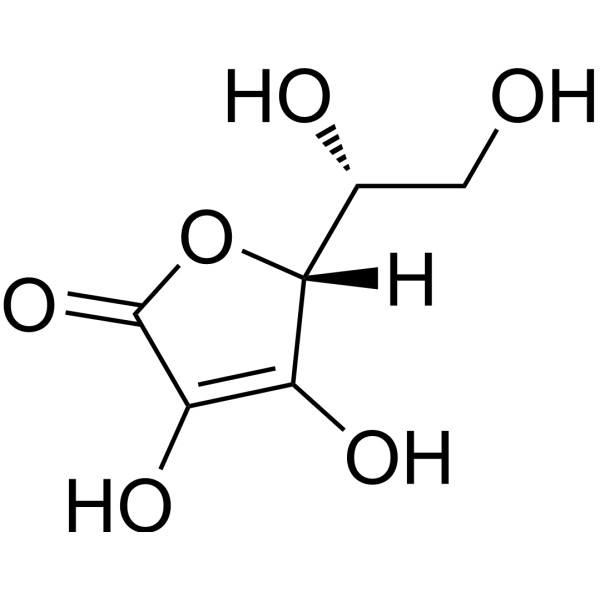
    Erythorbic acid is an orally active compound. Erythorbic acid improves the radiation resistance of Listeria monocytogenes. Erythorbic acid can react with free radicals and reduce oxidative damage. Erythorbic acid has weak antiscorbic activity. Erythorbic acid can prevent oxidative discoloration in meat products .
    Erythorbic acid
  • HY-160225
    ISD sodium
    4 Publications Verification

    STING Interleukin Related Inflammation/Immunology
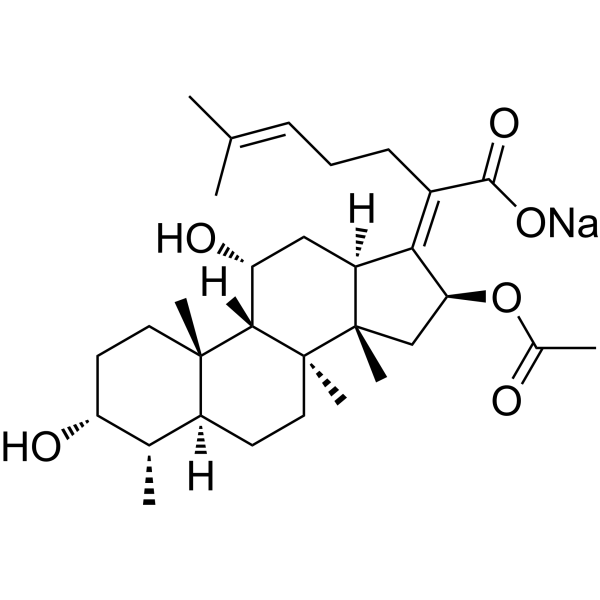
    ISD sodium is an interferon-stimulatory DNA, a 45 bp non-CpG double-stranded oligonucleotide derived from the genome of Listeria monocytogenes. ISD sodium potently induces type I interferon production via the cGAS‑STING‑TBK1‑IRF3 pathway .
    ISD sodium
  • HY-P10352A

    Bacterial Infection
    Pediocin PA-1 TFA is a class IIa bacteriocin that specifically binds to membrane proteins of susceptible Gram-positive bacteria (such as Listeria monocytogenes) to form voltage-independent hydrophilic pores, leading to dissipation of proton motive force, ATP depletion and cell death. Pediocin PA-1 TFA shows no significant activity against intact Gram-negative bacteria, strains carrying immunity genes and obligate anaerobic commensal gut microbiota, and its bactericidal function depends on the integrity of disulfide bonds, with activity lost upon reduction. Pediocin PA-1 TFA can be used not only as a food biopreservative but also for research on listeriosis .
    Pediocin PA 1 TFA
  • HY-N7079A

    D-Isoascorbic acid sodium; D-Araboascorbic acid sodium

    Environmental Pollutants Biochemical Assay Reagents Bacterial Cardiovascular Disease Metabolic Disease
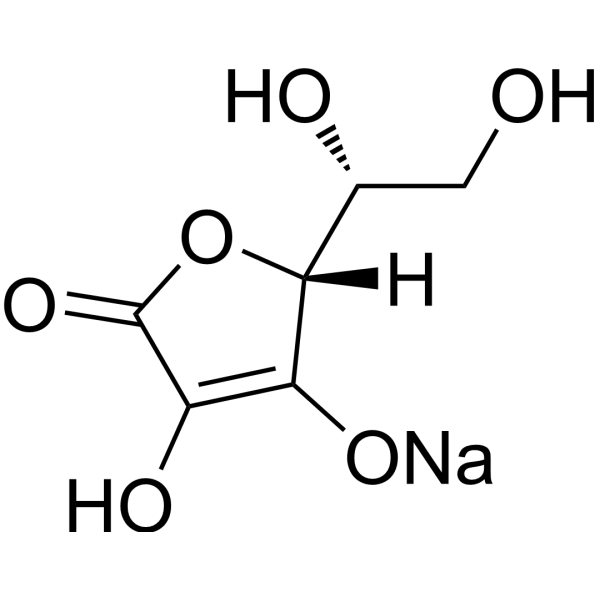
    Sodium erythorbate is an orally active sodium salt form of isoascorbic acid. Sodium erythorbate improves the radiation resistance of Listeria monocytogenes. Sodium erythorbate can react with free radicals and reduce oxidative damage. Sodium erythorbate has weak antiscorbic activity. Sodium erythorbate can prevent oxidative discoloration in meat products .
    Sodium erythorbate
  • HY-B1350A
    Fusidic acid sodium salt
    2 Publications Verification

    Sodium fusidate; SQ-16360

    Bacterial Antibiotic Interleukin Related Infection Inflammation/Immunology
    Fusidic acid sodium salt is an orally available antibacterial agent that inhibits bacterial protein synthesis by preventing the release of translation elongation factor G (EF-G) from ribosomes. Fusidic acid sodium salt inhibits the inhibitory and activating effects of interleukins IL-1 and IL-6 on glucose-induced insulin production and exhibits antidiabetic effects in a rat model. Fusidic acid sodium salt improves the symptoms of colitis in rats and inhibits the growth of Toxoplasma gondii and Listeria monocytogenes EGD in vitro, but not in mice .
    Fusidic acid sodium salt
  • HY-107863

    Oligolevulose

    Biochemical Assay Reagents Bacterial Infection Metabolic Disease
    Fructooligosaccharides (Oligolevulose) are a class of orally active dietary fibers and prebiotics. Fructooligosaccharides exist in foods such as breast milk, wheat, honey, onions, garlic and bananas. Fructooligosaccharides resist hydrolysis by the body's digestive enzymes and stimulate the growth of beneficial intestinal bacteria through colonic fermentation. Fructooligosaccharides significantly prevent bone loss in the femur and lumbar spine .
    Fructooligosaccharides
  • HY-W088066

    Bacterial Infection
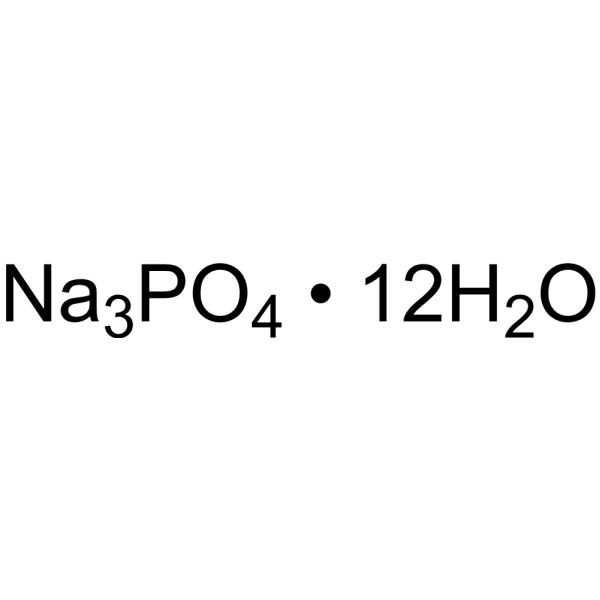
    Trisodium phosphate dodecahydrate is an Antibacterial agent. Trisodium phosphate dodecahydrate reduces the counts of Escherichia coli O157:H7 and Salmonella typhimurium attached to the surfaces of beef fat and fascia. Trisodium phosphate dodecahydrate modulates the growth parameters of Listeria monocytogenes in vitro: low concentrations shorten the lag phase and increase the maximum growth rate, while high concentrations prolong the lag phase and decrease the maximum growth rate. Trisodium phosphate dodecahydrate is used in poultry processing .
    Trisodium phosphate (dodecahydrate)
  • HY-13451
    Finafloxacin
    1 Publications Verification

    Antibiotic Bacterial Infection
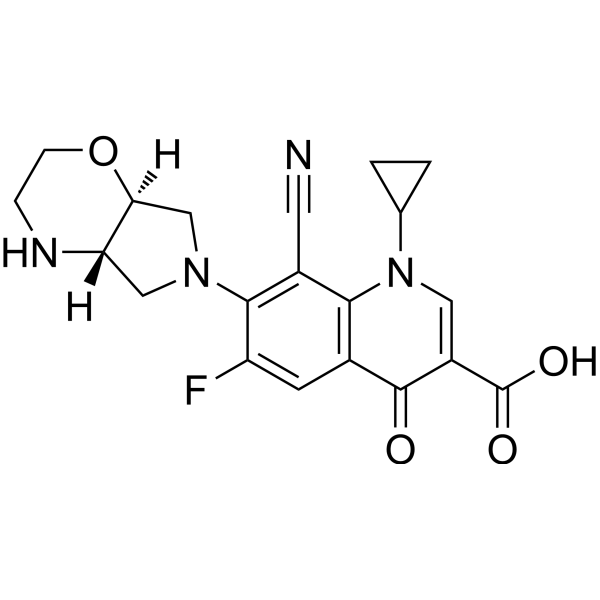
    Finafloxacin is an orally active fourth-generation fluoroquinolone broad-spectrum antibiotic. Finafloxacin exhibits stronger antibacterial activity in acidic pH environments and is not easily affected by bacterial multidrug efflux transporters. Finafloxacin is effective against a variety of extracellular pathogenic bacteria, and can also accumulate in macrophages, showing excellent antibacterial activity against intracellular Staphylococcus aureus, Listeria monocytogenes, Legionella pneumophila, Burkholderia pseudomallei, and other pathogens. Finafloxacin has been approved by the U.S. FDA for research on acute otitis externa mediated by Pseudomonas aeruginosa. Finafloxacin is also used in studies related to diseases such as melioidosis, inhalational tularemia, and inhalational plague .
    Finafloxacin
  • HY-W094710

    Sodium hydrogen diacetate

    Environmental Pollutants Bacterial Infection
    Sodium diacetate (Sodium hydrogen diacetate) is a multifunctional biochemical reagent with antibacterial (bacteria) and antifungal (fungi) activities. Sodium diacetate exerts its antimicrobial effect mainly by effectively penetrating the cell walls of microorganisms and interfering with enzyme interactions. Sodium diacetate inhibits the growth and survival of fungi such as Botrytis cinerea, as well as bacteria such as Listeria and Escherichia coli. Sodium diacetate inhibits the growth of endothelial cells. Sodium diacetate can be used in the synthesis of food preservatives, flavoring agents and pH control additives .
    Sodium diacetate
  • HY-141633

    Bacterial Infection
    Sucrose monolaurate is a glycolipid surfactant . Sucrose monolaurate interacts with bacterial DNA, disrupts cell membrane permeability, and exerts excellent inhibitory and bactericidal effects against a variety of foodborne pathogens (especially Gram-positive bacteria). Sucrose monolaurate significantly reduces liquid surface tension, and acts as a synergist for chlorine-based disinfectants in food cleaning and disinfection to improve the removal efficiency of pathogens on the surface of agricultural products .
    Sucrose monolaurate
  • HY-P10352

    Bacterial Infection
    Pediocin PA 1 is a class IIa bacteriocin that specifically binds to membrane proteins of susceptible Gram-positive bacteria (such as Listeria monocytogenes) to form voltage-independent hydrophilic pores, leading to dissipation of proton motive force, ATP depletion and cell death. Pediocin PA 1 shows no significant activity against intact Gram-negative bacteria, strains carrying immunity genes and obligate anaerobic commensal gut microbiota, and its bactericidal function depends on the integrity of disulfide bonds, with activity lost upon reduction. Pediocin PA 1 can be used not only as a food biopreservative but also for research on listeriosis .
    Pediocin PA 1
  • HY-139410

    c-Fms Inflammation/Immunology
    Sodium caseinates is a kind of sodium salts of major milk proteins, which act as protein-based biopolymers and innate immune system activators. Sodium caseinates induce granulopoiesis, activation and differentiation, promote the production of M-CSF, and increase serum levels of G-CSF and GM-CSF. Sodium caseinates inhibit the proliferation and reduce the viability of leukemia macrophage-like cells, thereby significantly improving the survival rate of mice inoculated with leukemia cells. Sodium caseinates can serve as carriers for probiotics in edible films and exhibit anti-Listeria activity. Sodium caseinates effectively protect vitamin A from degradation, enhance its stability, bioaccessibility and bioavailability, and regulate protein digestibility when complexed with vitamin A. Sodium caseinates can be applied to research related to acute monocytic leukemia and vitamin A deficiency .
    Sodium caseinates
  • HY-E70127

    Brasan; Dasen

    Ser/Thr Protease COX Bacterial Prostaglandin Receptor Interleukin Related Cardiovascular Disease Infection Neurological Disease Inflammation/Immunology Cancer
    Serratiopeptidase (Brasan; Dasen) is an orally active zinc-containing metalloprotease belonging to the serralysin family. Serratiopeptidase reduces the release of inflammatory mediators such as prostaglandins, thromboxanes and interleukins by inhibiting COX, thereby relieving pain, swelling and redness. Serratiopeptidase exhibits antibiofilm, mucolytic and wound-healing activities. As a serine protease, Serratiopeptidase has the ability to dissolve blood clots, fibrin and atherosclerotic plaques. Serratiopeptidase degrades amyloid fibrils and has potential anti-Alzheimer's effects. Serratiopeptidase shows cytotoxicity against colon cancer cells .
    Serratiopeptidase
  • HY-134635

    Bacterial Fungal HIV CDK Infection Cancer
    Dehydrozingerone is a ginger-derived component and cyclin D1 inhibitor that downregulates cyclin D1 expression and induces cell cycle G1 phase arrest. Dehydrozingerone reduces the proliferative capacity of castration-resistant prostate cancer cells under in vitro conditions. Dehydrozingerone reduces subcutaneous tumor growth by inhibiting cell proliferation and angiogenesis. Dehydrozingerone exerts antibacterial and antifungal activities via its α,β-unsaturated carbonyl conjugated system. Dehydrozingerone can be used in studies related to castration-resistant prostate cancer, bacterial infections, and food spoilage fungal infections .
    Dehydrozingerone
  • HY-Y1329

    Environmental Pollutants Biochemical Assay Reagents Bacterial Infection
    Trisodium phosphate is a food additive. Trisodium phosphate affects the growth parameters (lag phase, maximum growth rate) of Listeria monocytogenes and increases the sensitivity of Gram-negative bacteria to Lysozyme (HY-P1068) and Nisin (HY-P1607) .
    Trisodium phosphate
  • HY-W016647

    N-Formylmethionine

    Endogenous Metabolite Bacterial Infection Metabolic Disease
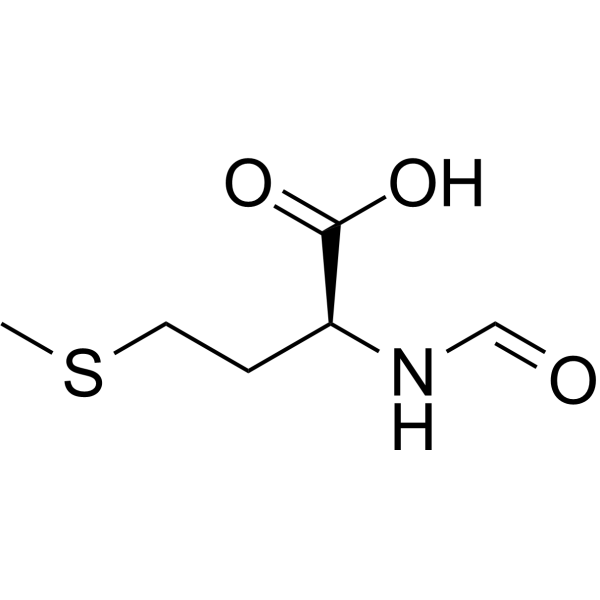
    For-Met-OH (N-Formylmethionine) can be involved in the translation process of bacteria, chloroplasts, and mitochondria. For-Met-OH plays different roles in different species and organelles, such as promoting the formation of protein complexes in mitochondria and acting as a degradation signal in bacteria and yeast. The level of For-Met-OH is closely related to certain diseases, for example, For-Met-OH is a potential biomarker for metabolic disorders and poor prognosis in critically ill patients .
    For-Met-OH
  • HY-P2455

    Listeriolysin O (91-99)

    Bacterial Infection Inflammation/Immunology
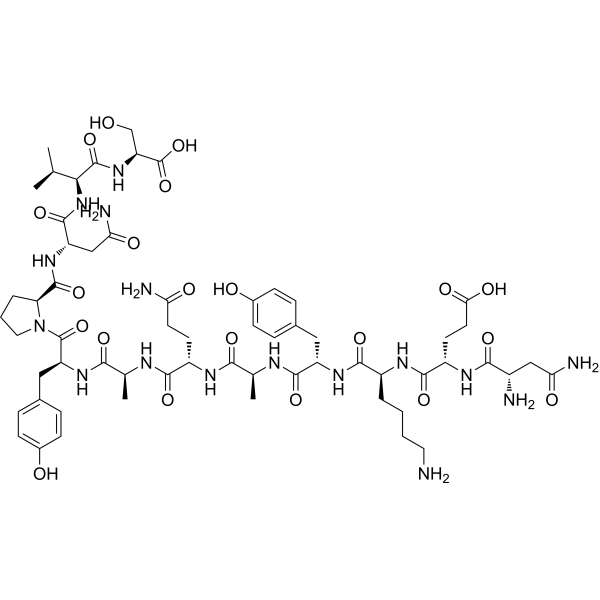
    LLO (91-99) (Listeriolysin O (91-99)) is an exotoxin and class I MHC-restricted T-cell epitope of listeriolysin (LLO). LLO (91-99) is processed by antigen-presenting cells, binds to MHC class I molecules and is presented to the cell surface. LLO (91-99) induces CTL responses and effectively eliminates Listeria from infected cells. LLO (91-99) can be used in the research of Listeria infections (e.g., listeriosis) .
    LLO (91-99)
  • HY-N7079R

    D-Isoascorbic acid (Standard); D-Araboascorbic acid (Standard)

    Biochemical Assay Reagents Reference Standards Bacterial Cardiovascular Disease Metabolic Disease
    Erythorbic acid (Standard) (D-Isoascorbic acid (Standard)) is the analytical standard of Erythorbic acid (HY-N7079). This product is intended for research and analytical applications. Erythorbic acid is an orally active compound. Erythorbic acid improves the radiation resistance of Listeria monocytogenes. Erythorbic acid can react with free radicals and reduce oxidative damage. Erythorbic acid has weak antiscorbic activity. Erythorbic acid can prevent oxidative discoloration in meat products.
    Erythorbic acid (Standard)
  • HY-N11102

    dTDP-L-Rhamnose

    Endogenous Metabolite Bacterial Infection
    Thymidine-5'-diphosphate-L-rhamnose (dTDP-L-Rhamnose) is a key activated nucleotide sugar in bacteria, with a KD value of 13 μM for Listeria monocytogenes RmlT. Thymidine-5'-diphosphate-L-rhamnose acts as a high-energy donor for L-Rhamnose (HY-N1420), and is specifically used for the synthesis of bacterial cell wall polysaccharides, capsules and virulence factors .
    Thymidine-5'-diphosphate-L-rhamnose
  • HY-P11074

    Bacterial Infection
    Sakacin P is an antimicrobial peptide that targets Gram-positive bacteria (such as Listeria monocytogenes) and belongs to Class IIa bacteriocin. Sakacin P has almost no antimicrobial activity against Gram-negative bacteria. Sakacin P exerts its antimicrobial activity by interacting with bacterial cell membranes and destroying membrane integrity. Sakacin P can be used for the study of Listeria contamination and antimicrobial drugs in the food industry.
    Sakacin P
  • HY-W088066A

    Bacterial Infection
    Trisodium phosphate dodecahydrate, 98% is an Antibacterial agent. Trisodium phosphate dodecahydrate, 98% reduces the counts of Escherichia coli O157:H7 and Salmonella typhimurium attached to the surfaces of beef fat and fascia. Trisodium phosphate dodecahydrate, 98% modulates the growth parameters of Listeria monocytogenes in vitro: low concentrations shorten the lag phase and increase the maximum growth rate, while high concentrations prolong the lag phase and decrease the maximum growth rate. Trisodium phosphate dodecahydrate, 98% is used in poultry processing .
    Trisodium phosphate (dodecahydrate), 98%
  • HY-126461

    Bacterial Fungal Infection
    Salazinic acid has antibacterial activity against bacteria and fungi. Salazinic acid does not show antibacterial activity against Listeria monocytogenes, Pseudomonas aeruginosa, Yersinia enterocolitica, and Enterococcus faecalis, but it does have antibacterial activity against Pseudomonas aeruginosa and Salmonella typhimurium .
    Salazinic acid
  • HY-P10296

    Endogenous Metabolite Infection
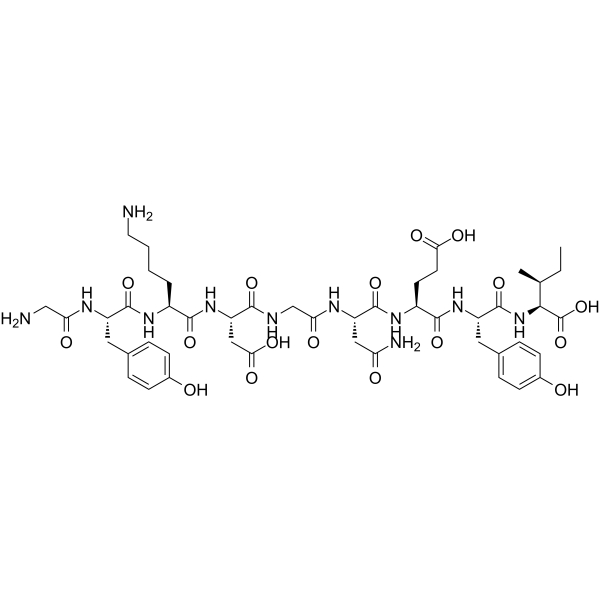
    p60 (217–225) is the subdominant epitope of Listeria monocytogenes, which combines with H-2K d MHC class I molecules .
    p60 (217–225)
  • HY-121160

    SM1213; Therafectin

    Bacterial Infection Cancer
    Amiprilose (SM1213; Therafectin) is a potent inhibitor against Hepatocellular carcinoma (HCC). Amiprilose induces lymphokine-induced macrophage activation directly to kill Listeria monocytogenes .
    Amiprilose
  • HY-N11102A

    dTDP-L-Rhamnose disodium

    Endogenous Metabolite Bacterial Infection
    Thymidine-5'-diphosphate-L-rhamnose (dTDP-L-Rhamnose) disodium is a key activated nucleotide sugar in bacteria, with a KD value of 13 μM for Listeria monocytogenes RmlT. Thymidine-5'-diphosphate-L-rhamnose disodium acts as a high-energy donor for L-Rhamnose (HY-N1420), and is specifically used for the synthesis of bacterial cell wall polysaccharides, capsules and virulence factors .
    Thymidine-5'-diphosphate-L-rhamnose disodium
  • HY-169219

    Bacterial Cancer
    DK06 (compund DK06) inhibits the growth of Listeria monocytogenes, disrupts biofilm formation and reduces extracellular polymeric substances .
    DK06
  • HY-P10134

    Bacterial Infection
    Salivaricin B is a broad-spectrum bacteriocin produced by Lactobacillus salivarius M7, capable of inhibiting the growth of Listeria monocytogenes, Bacillus cereus, Brochothrix thermosphacta, Enterococcus faecalis, and various lactobacilli .
    Salivaricin B
  • HY-147948

    DNA/RNA Synthesis Bacterial Infection
    DNA Gyrase-IN-4 (compound 8p) is a potent DNA gyrase inhibitor, with an IC50 of 0.13 μM. DNA Gyrase-IN-4 shows excellent antibacterial activity against Staphylococcus aureus, Listeria monocytogenes, Salmonella and Escherichia coli, with MIC values of 0.05, 0.05, 0.05, and 8 μg/mL, respectively .
    DNA Gyrase-IN-4
  • HY-W039699

    2-(4-Methylphenyl)propionic acid

    COX Bacterial Drug Intermediate Infection
    2-(p-Tolyl) propanoic acid (2-(4-methylphenyl) propionic acid) acts as an Antimicrobial agent intermediate. 2-(p-Tolyl) propanoic acid inhibits COX-1 and COX-2 enzymes, with IC50 values of 38.23 μM and 64.30 μM, respectively. 2-(p-Tolyl) propanoic acid is applicable to research on E. coli, Enterococcus faecalis, Listeria monocytogenes, and Staphylococcus aureus .
    2-(p-Tolyl)propanoic acid
  • HY-160225F

    STING Interleukin Related Inflammation/Immunology
    Biotin-labeled ISD sodium is a biotin-labeled form of ISD sodium (HY-160225). ISD sodium is an interferon-stimulatory DNA, a 45 bp non-CpG double-stranded oligonucleotide derived from the Listeria monocytogenes genome. ISD sodium can potently induce type I interferon production via the cGAS‑STING‑TBK1‑IRF3 pathway .
    Biotin-labeled ISD sodium
  • HY-N7079AR

    D-Isoascorbic acid sodium (Standard); D-Araboascorbic acid sodium (Standard)

    Biochemical Assay Reagents Bacterial Reference Standards Cardiovascular Disease Metabolic Disease
    Sodium erythorbate (Standard) (D-Isoascorbic acid (sodium) (Standard)) is the analytical standard of Sodium erythorbate (HY-N7079A). This product is intended for research and analytical applications. Sodium erythorbate is an orally active sodium salt form of isoascorbic acid. Sodium erythorbate improves the radiation resistance of Listeria monocytogenes. Sodium erythorbate can react with free radicals and reduce oxidative damage. Sodium erythorbate has weak antiscorbic activity. Sodium erythorbate can prevent oxidative discoloration in meat products .
    Sodium erythorbate (Standard)
  • HY-N19824

    Fungal Infection
    Koninginin D is a potent antifungal agent that can be isolated from fungi including Trichoderma applanatum. Koninginin D inhibits growth of various fungal species including Gaeumannomyces graminis var. tritici, Bipolaris sorokiniana and so on. Koninginin D can be used for the research of fungal infection .
    Koninginin D
  • HY-182056

    Bacterial Infection
    Antibacterial agent 331 is an antibacterial agent with anti-biofilm activity. Antibacterial agent 331 exhibits activity against a variety of Gram-positive and Gram-negative bacteria. Antibacterial agent 331 eliminates MRSE 62 and promotes the repair of infected wounds in mouse models. Antibacterial agent 331 can be used for research on infections .
    Antibacterial agent 331

온라인 문의

Your information is safe with us. * Required Fields.

호칭


Country or Region *

고객명 *


회사명 *

Department *


메일주소 *


상품명 *

Cat. No.


Requested quantity *

전화번호 *


비고

온라인 문의

Inquiry Information

상품명:
Cat. No.:
수량:
MCE Japan Authorized Agent:

