





3858 Results for "

Lys-

" in MedChemExpress (MCE) Product Catalog:
Products (3858)

3858 Results for "Lys-" in MCE Product Catalog:

268
268 Publications Verification
Referencia número: HY-P0175
No. CAS: 1236188-16-1
Synonyms: 740YPDGFR; PDGFR 740Y-P
Target:  

PI3K Autophagy

Áreas de investigación:  

Cancer

740 Y-P (740YPDGFR; PDGFR 740Y-P) is a potent and cell-permeable PI3K activator. 740 Y-P readily binds GST fusion proteins containing both the N- and C- terminal SH2 domains of p85 but fails to bind GST alone .
loading...
    loading...
135
135 Cited Publications
Referencia número: HY-P1410A
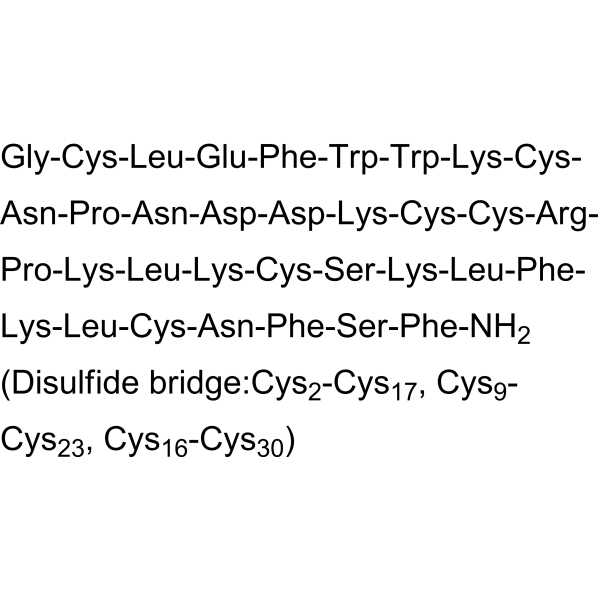
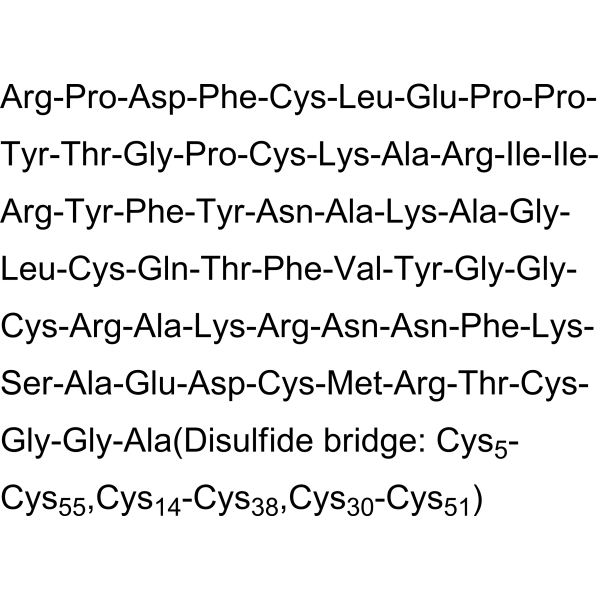
GsMTx4 TFA is a spider venom peptide that selectively inhibits cationic-permeable mechanosensitive channels (MSCs) belonging to the Piezo and TRP channel families. GsMTx4 TFA also blocks cation-selective stretch-activated channels (SACs) , attenuates lysophosphatidylcholine (LPC)-induced astrocyte toxicity and microglial reactivity. GsMTx4 TFA is an important pharmacological tool for identifying the role of these excitatory MSCs in normal physiology and pathology .
loading...
    loading...
135
135 Cited Publications
Referencia número: HY-P1410
No. CAS: 1209500-46-8
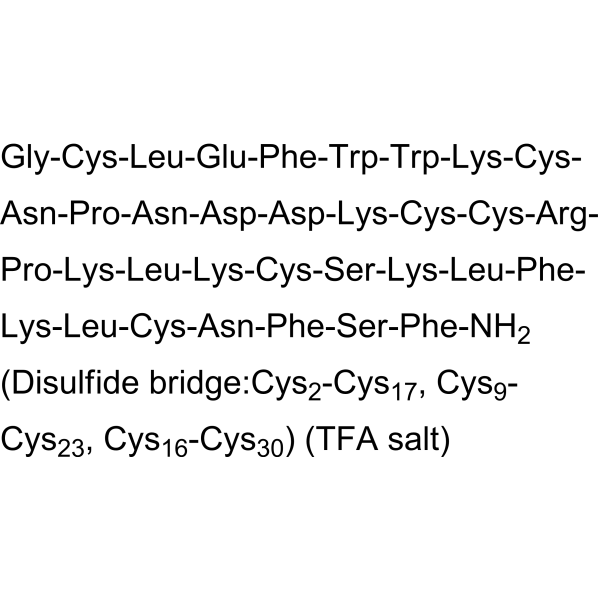
GsMTx4 is a spider venom peptide that selectively inhibits cationic-permeable mechanosensitive channels (MSCs) belonging to the Piezo and TRP channel families. GsMTx4 also blocks cation-selective stretch-activated channels (SACs) , attenuates lysophosphatidylcholine (LPC)-induced astrocyte toxicity and microglial reactivity. GsMTx4 is an important pharmacological tool for identifying the role of these excitatory MSCs in normal physiology and pathology .
loading...
    loading...
72
72 Cited Publications
Referencia número: HY-13443
No. CAS: 141758-74-9
Pureza:  99.95%
Synonyms: Exenatide
Target:  

GLP Receptor Apoptosis

Áreas de investigación:  

Cardiovascular Disease Metabolic Disease

Exendin‑4 (Exenatide) is an orally active, blood-brain barrier-permeable glucagon-like peptide-1 receptor (GLP‑1 receptor) agonist that resists degradation mediated by dipeptidyl peptidase IV. Exendin‑4 mediates multiple glucose-regulating effects, including stimulation of glucose-dependent insulin secretion, inhibition of glucagon production, increase in β-cell mass, delay of gastric emptying, reduction of food intake, improvement of peripheral insulin sensitivity, and restoration of normal islet structure. Exendin‑4 inhibits oxidative stress, alleviates inflammatory responses, and reduces neuronal apoptosis. Exendin‑4 reduces the aggregation level of mutant huntingtin, improves motor function, prolongs survival time, and regulates the expression levels of leptin and ghrelin. Exendin‑4 can be used in research related to type 2 diabetes, acute ischemic stroke, and Huntington's disease .
loading...
    loading...
72
72 Cited Publications
Referencia número: HY-13443A
No. CAS: 914454-01-6
Pureza:  99.91%
Synonyms: Exenatide acetate
Target:  

GLP Receptor Apoptosis

Áreas de investigación:  

Cardiovascular Disease Metabolic Disease

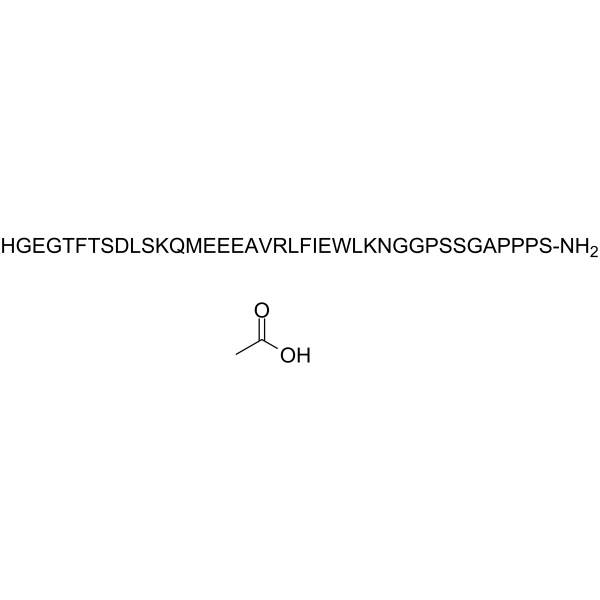
Exendin-4 acetate (Exenatide acetate) is an orally active, blood-brain barrier-permeable glucagon-like peptide-1 receptor (GLP‑1 receptor) agonist that resists degradation mediated by dipeptidyl peptidase IV. Exendin-4 acetate mediates multiple glucose-regulating effects, including stimulation of glucose-dependent insulin secretion, inhibition of glucagon production, increase in β-cell mass, delay of gastric emptying, reduction of food intake, improvement of peripheral insulin sensitivity, and restoration of normal islet structure. Exendin-4 acetate inhibits oxidative stress, alleviates inflammatory responses, and reduces neuronal apoptosis. Exendin-4 acetate reduces the aggregation level of mutant huntingtin, improves motor function, prolongs survival time, and regulates the expression levels of leptin and ghrelin. Exendin-4 acetate can be used in research related to type 2 diabetes, acute ischemic stroke, and Huntington's disease .
loading...
    loading...
51
51 Cited Publications
Referencia número: HY-P0128
No. CAS: 131602-53-4
Synonyms: Amyloid beta-peptide (25-35); Aβ25-35; β-Amyloid peptide (25-35)
Target:  

Amyloid-β

Áreas de investigación:  

Neurological Disease

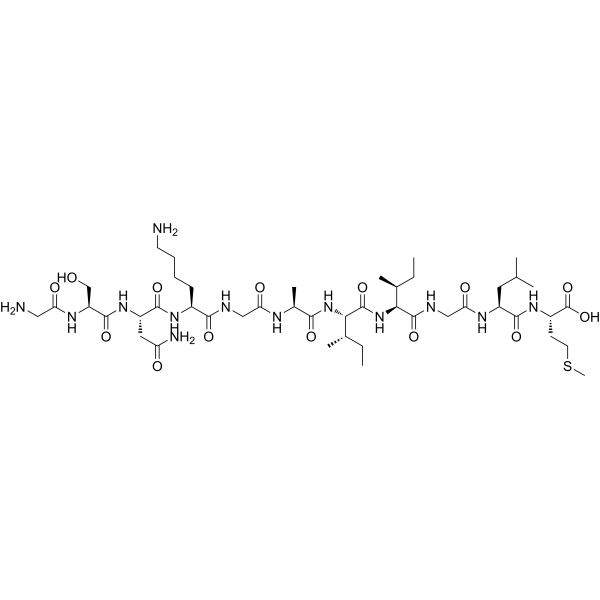
β-Amyloid (25-35) (Amyloid beta-peptide (25-35)) is the fragment Aβ(25-35) of the Alzheimer's amyloid β-peptide, has shown neurotoxic activities in cultured cells .
loading...
    loading...
51
51 Cited Publications
Referencia número: HY-P0128A
No. CAS: 131602-53-4
Synonyms: Amyloid beta-peptide (25-35), HFIP-treated; Aβ25-35, HFIP-treated; β-Amyloid peptide (25-35), HFIP-treated
Target:  

Amyloid-β

Áreas de investigación:  

Neurological Disease

β-Amyloid (25-35) (Amyloid beta-peptide (25-35)), HFIP-treated is a β-Amyloid (25-35) (HY-P0128) treated with HFIP. β-Amyloid (25-35) (Amyloid beta-peptide (25-35)) is the fragment Aβ(25-35) of the Alzheimer's amyloid β-peptide, has shown neurotoxic activities in cultured cells .
loading...
    loading...
46
46 Cited Publications
Referencia número: HY-P0264
No. CAS: 133514-43-9
Synonyms: Avexitide
Target:  

GLP Receptor

Exendin (9-39) amide (Avexitide) is a competitive GLP-1R antagonist. Exendin (9-39) amide blocks the Semaglutide (HY-114118)-induced increase in insulin secretion and also attenuates the hypoglycemic effect of Semaglutide. Exendin (9-39) amide abolishes the islet-protective effect of Liraglutide. Exendin (9-39) amide can be used in research on type 2 diabetes and type 1 diabetes .
loading...
    loading...
46
46 Cited Publications
Referencia número: HY-P0264A
No. CAS: 2051593-46-3
Synonyms: Avexitide acetate
Target:  

GLP Receptor

Áreas de investigación:  

Metabolic Disease Inflammation/Immunology

Exendin (9-39) amide acetate (Avexitide acetate) is a competitive GLP-1R antagonist. Exendin (9-39) amide acetate blocks the Semaglutide (HY-114118)-induced increase in insulin secretion and also attenuates the hypoglycemic effect of Semaglutide. Exendin (9-39) amide acetate abolishes the islet-protective effect of Liraglutide. Exendin (9-39) amide acetate can be used in research on type 2 diabetes and type 1 diabetes .
loading...
    loading...
45
45 Cited Publications
Referencia número: HY-P0151
No. CAS: 213546-53-3
Target:  

NF-κB

Áreas de investigación:  

Inflammation/Immunology

SN50 is a cell permeable inhibitor of NF-κB translocation.
loading...
    loading...
37
37 Cited Publications
Referencia número: HY-P0017
No. CAS: 9087-70-1
Aprotinin is a bovine pancreatic trypsin inhibitor (BPTI) inhibitor which inhibits trypsin and chymotrypsin with Kis of 0.06 pM and 9 nM, respectively.
loading...
    loading...
35
35 Cited Publications
Referencia número: HY-P0319
No. CAS: 402750-12-3
Áreas de investigación:  

Others

3X FLAG peptides are FLAG-tagged peptides containing three repeats of the Asp-Tyr-Lys-Xaa-Xaa-Asp motif. 3X FLAG peptide can be used for protein separation and purification, and competitive elution with target proteins.
loading...
    loading...
35
35 Cited Publications
Referencia número: HY-P0319A
Target:  

Inhibitory Antibodies

Áreas de investigación:  

Others

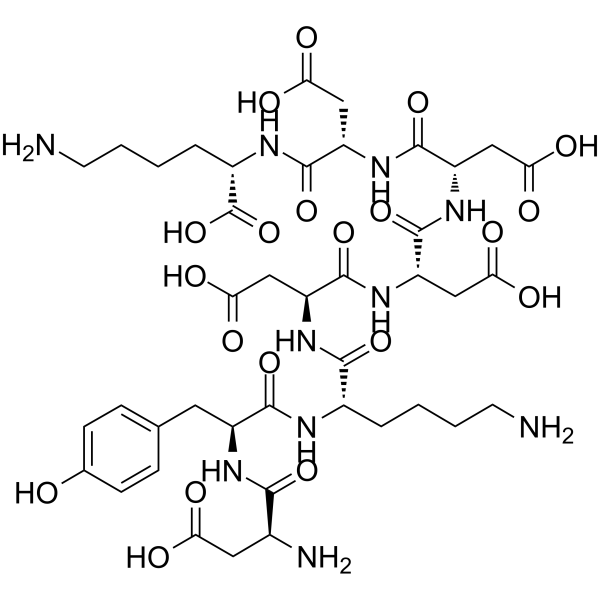
3X FLAG peptide TFA is a FLAG-tagged peptide containing three repeats of the Asp-Tyr-Lys-Xaa-Xaa-Asp motif. 3X FLAG peptide TFA can be used for protein separation and purification, and competitive elution with target proteins.
loading...
    loading...
34
34 Cited Publications
Referencia número: HY-P0201
No. CAS: 33507-63-0
Synonyms: Neurokinin P
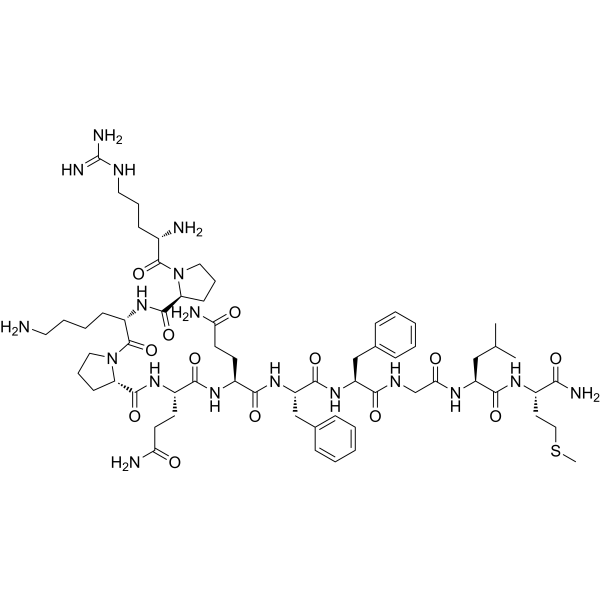
Substance P (Neurokinin P) is a CNS-penetrant neuropeptide, acting as a neurotransmitter and as a neuromodulator in the CNS. The endogenous receptor for substance P is neurokinin 1 receptor (NK1-receptor, NK1R).
loading...
    loading...
34
34 Cited Publications
Referencia número: HY-P0201A
No. CAS: 148470-19-3
Synonyms: Neurokinin P TFA
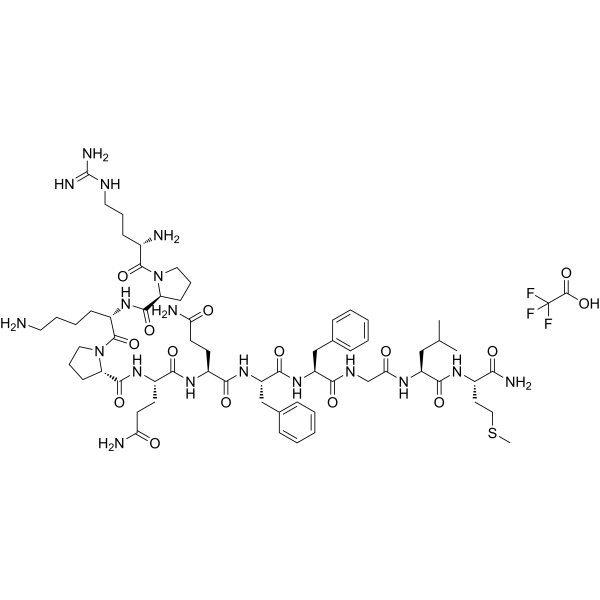
Substance P TFA (Neurokinin P TFA) is a CNS-penetrant neuropeptide, acting as a neurotransmitter and as a neuromodulator in the CNS. The endogenous receptor for substance P is neurokinin 1 receptor (NK1-receptor, NK1R) .
loading...
    loading...
32
32 Cited Publications
Referencia número: HY-P0023
No. CAS: 161552-03-0
Target:  

Integrin

Áreas de investigación:  

Cancer

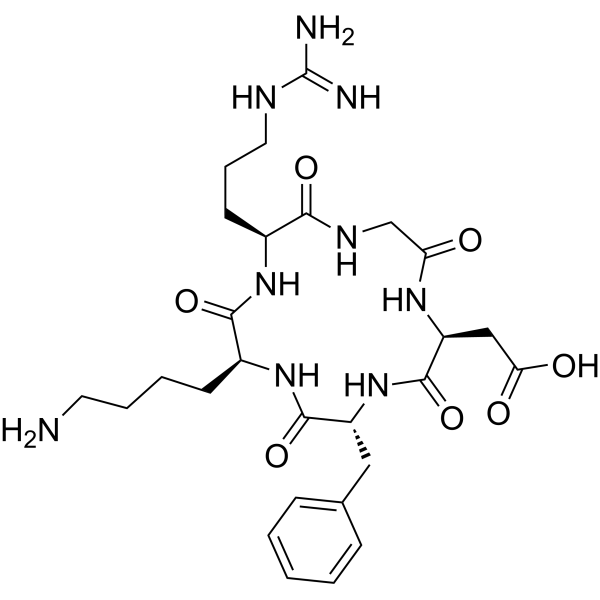
Cyclo(-RGDfK) is a potent and selective inhibitor of the αvβ3 integrin, with an IC50 of 0.94 nM. Cyclo(-RGDfK) potently targets tumor microvasculature and cancer cells through the specific binding to the αvβ3 integrin on the cell surface .
loading...
    loading...
32
32 Cited Publications
Referencia número: HY-P0023A
No. CAS: 500577-51-5
Target:  

Integrin

Áreas de investigación:  

Cancer

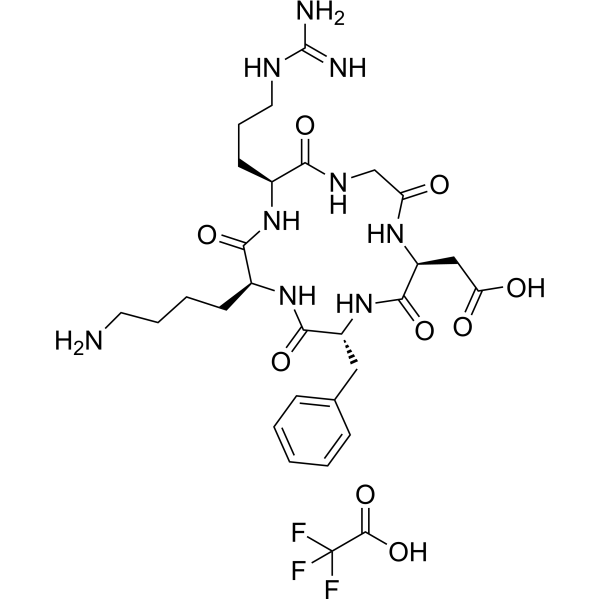
Cyclo(-RGDfK) TFA is a potent and selective inhibitor of the αvβ3 integrin, with an IC50 of 0.94 nM . Cyclo(-RGDfK) TFA potently targets tumor microvasculature and cancer cells through the specific binding to the αvβ3 integrin on the cell surface .
loading...
    loading...
27
27 Cited Publications
Referencia número: HY-P0223
No. CAS: 98849-88-8
Áreas de investigación:  

Inflammation/Immunology

FLAG peptide is a multifunctional fusion tag for the purification of recombinant proteins. FLAG peptide maintances the natural folding of its fusing proteins. FLAG peptide can be removed by enterokinase, and eluted under non-denaturing conditions .
loading...
    loading...
27
27 Cited Publications
Referencia número: HY-P0223A
Áreas de investigación:  

Others

FLAG peptide TFA is the TFA salt form of FLAG peptide (HY-P0223). FLAG peptide TFA is a multifunctional fusion tag for the purification of recombinant proteins. FLAG peptide TFA maintances the natural folding of its fusing proteins. FLAG peptide TFA can be removed by enterokinase, and eluted under non-denaturing conditions .
loading...
    loading...
27
27 Cited Publications
Referencia número: HY-P1363
Synonyms: Amyloid β-peptide (1-42) (human) TFA
Target:  

Amyloid-β

Áreas de investigación:  

Neurological Disease

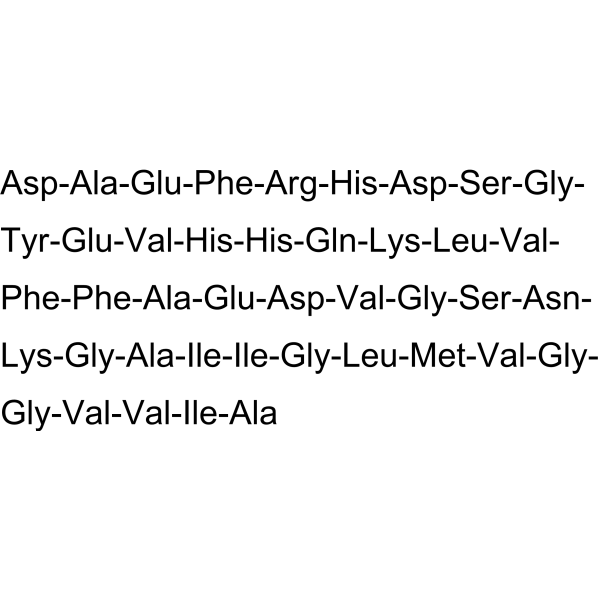
β-Amyloid (1-42) (Amyloid β-peptide (1-42), human TFA, a 42-amino acid peptide that has not been treated with HFIP, is a brain-penetrant amyloid protein fragment, which can be used in research on Alzheimer's disease and Down’s syndrome. β-Amyloid (1-42), human TFA remaining as a monomer exhibits antioxidant and neuroprotective effects. β-Amyloid (1-42), human TFA, after being monomericized by HFIP and dissolved in DMSO to form the stock solution, on the one hand, can form soluble oligomers (AβOs) when incubated at 4 °C, which have synaptic toxicity and neurotoxicity; on the other hand, it can be incubated at 37 °C to form insoluble fibrils, with lower neurotoxicity, and participating in the oxidative damage process. Aβ42 oligomers bind to various neuronal surface receptors (such as PrPc, mGluR5, NMDA receptors, etc.), triggering oxidative stress, calcium homeostasis imbalance, and synaptic toxicity via activating downstream signaling pathways, leading to neuronal dysfunction and death .
loading...
    loading...

