1. Search Result
Search Result
Isoforms Recommended: MDM2 MDM2 MDM2
Results for "

MDM2

" in MedChemExpress (MCE) Product Catalog:

239

Inhibitors & Agonists

3

Screening Libraries

1

Biochemical Assay Reagents

16

Peptides

2

Inhibitory Antibodies

4

Natural
Products

2

Recombinant Proteins

4

Isotope-Labeled Compounds

8

Antibodies

4

Click Chemistry

3

Oligonucleotides

Targets Recommended:
Cat. No. Product Name Target Research Areas Chemical Structure
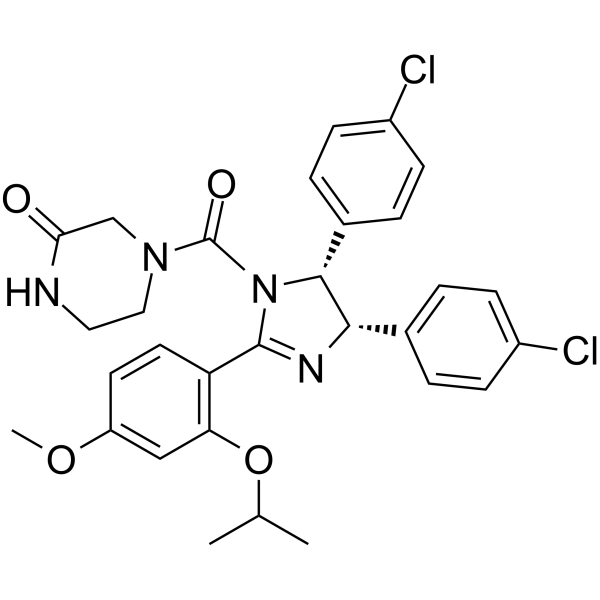
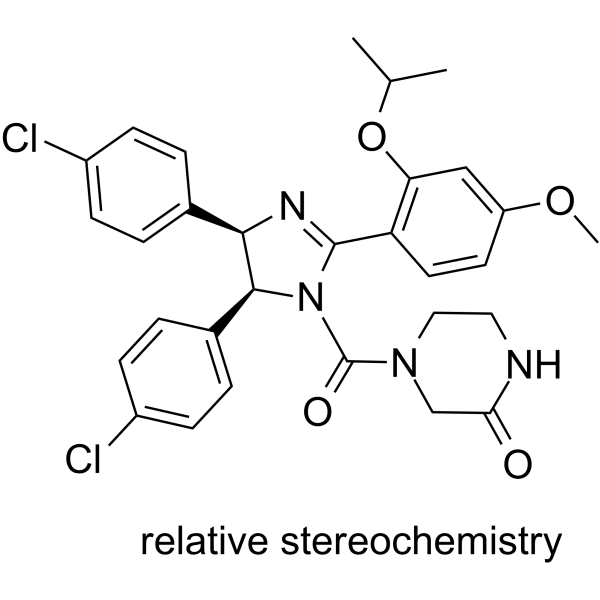
  • HY-50696
    Nutlin-3
    40+ Cited Publications

    MDM-2/p53 E1/E2/E3 Enzyme Cancer
    Nutlin-3 is a commercial available p53-MDM2 inhibitor, with Ki of 90 nM.
    Nutlin-3
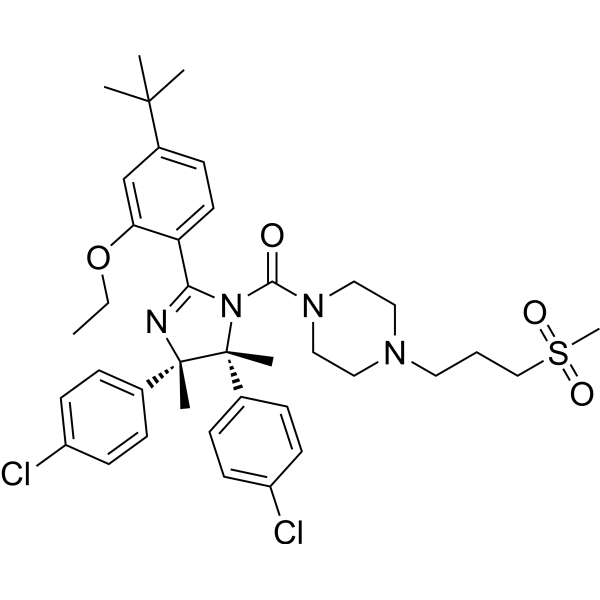
  • HY-15676
    Idasanutlin
    50+ Cited Publications

    RG7388

    MDM-2/p53 E1/E2/E3 Enzyme Cancer
    Idasanutlin (RG7388) is a potent and selective MDM2 antagonist, inhibiting p53-MDM2 binding, with an IC50 of 6 nM.
    Idasanutlin
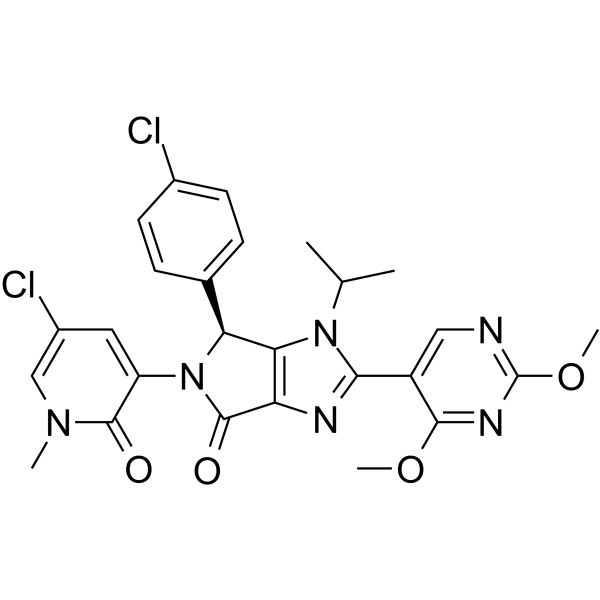
  • HY-152859

    BI 907828

    E1/E2/E3 Enzyme MDM-2/p53 Cancer
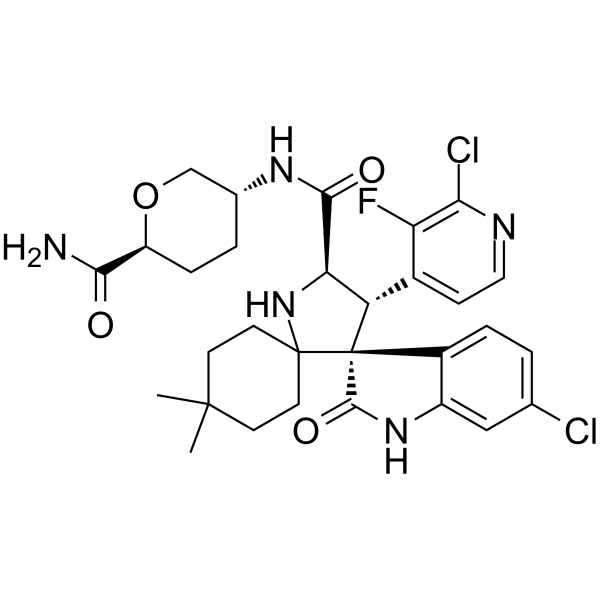
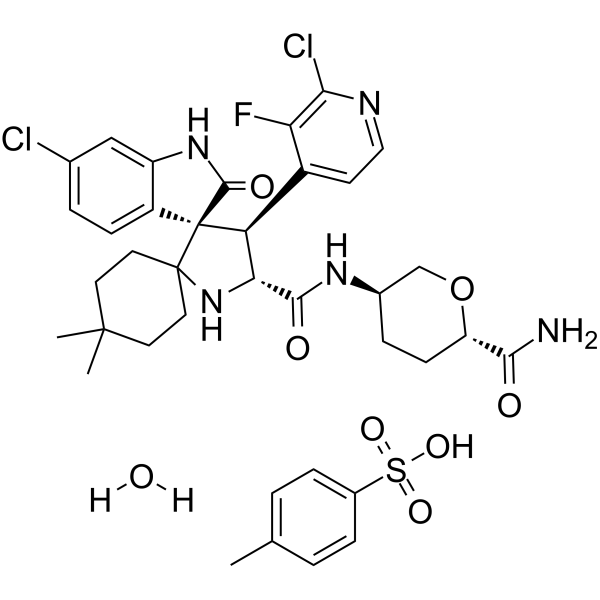
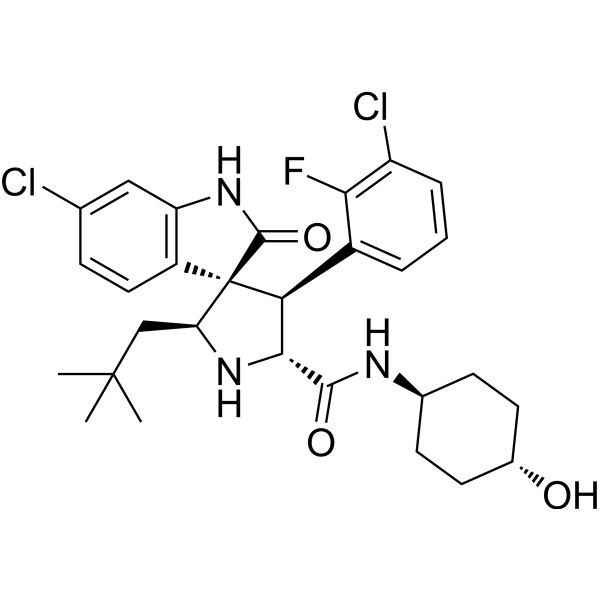
    Brigimadlin (BI 907828) is an orally active E3 ubiquitin-protein ligase MDM-2 inhibitor, preventing MDM-2 from negatively regulating the tumor suppressor p53. Brigimadlin can be used for antineoplastic research [2] .
    Brigimadlin
  • HY-10959
    RG7112
    20+ Cited Publications

    RO5045337

    MDM-2/p53 E1/E2/E3 Enzyme Neurological Disease Cancer
    RG7112 is a potent, selective, orally active and blood-brain barrier crossed MDM2-p53 inhibitor, with an IC50 of 18 nM and a KD of 11 nM for binding to MDM2 .
    RG7112
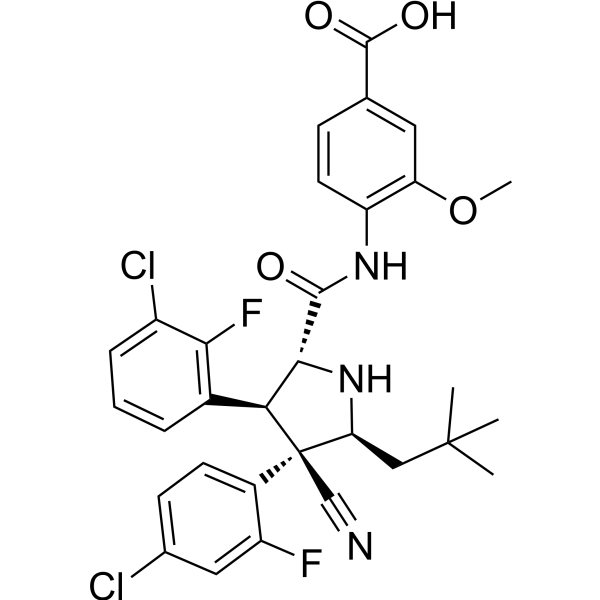
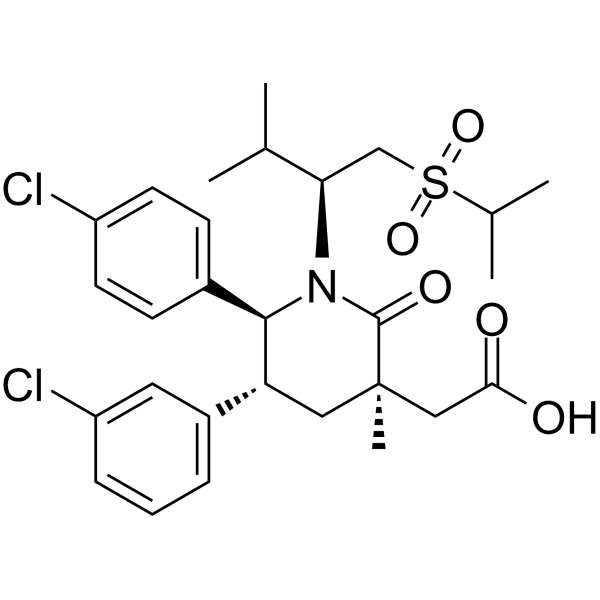
  • HY-12296
    Navtemadlin
    20+ Cited Publications

    AMG 232; KRT-232

    MDM-2/p53 E1/E2/E3 Enzyme Cancer
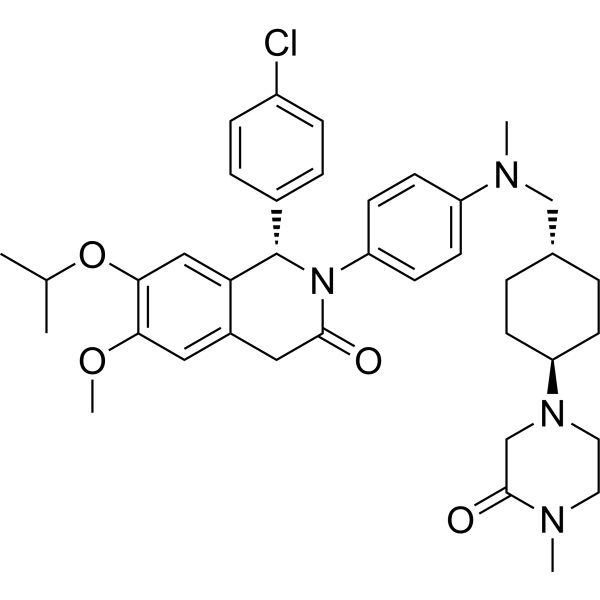
    Navtemadlin (AMG 232) is a potent, selective and orally available inhibitor of p53-MDM2 interaction, with an IC50 of 0.6 nM. Navtemadlin binds to MDM2 with a Kd of 0.045 nM [2].
    Navtemadlin
  • HY-101518
    Alrizomadlin
    4 Publications Verification

    APG-115; AA-115

    MDM-2/p53 E1/E2/E3 Enzyme Apoptosis Cancer
    Alrizomadlin (APG-115) is an orally active MDM2 protein inhibitor binding to MDM2 protein with IC50 and Ki values of 3.8 nM and 1 nM, respectively . Alrizomadlin blocks the interaction of MDM2 and p53 and induces cell-cycle arrest and apoptosis in a p53-dependent manner [2] .
    Alrizomadlin
  • HY-170451

    KT-253

    PROTACs MDM-2/p53 Apoptosis Cancer
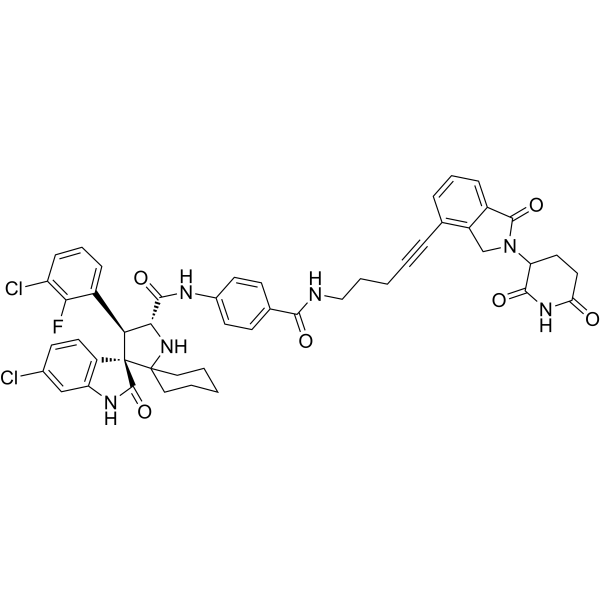
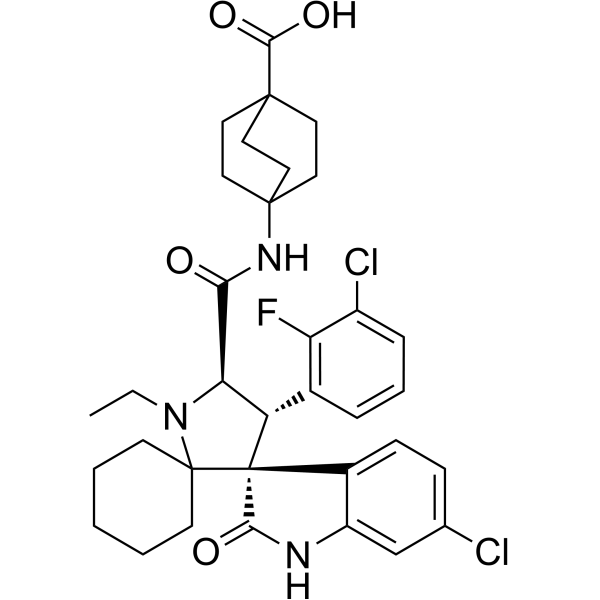
    Seldegamadlin (KT-253) is a selective p53 stabilizer and a MDM2 PROTAC degrader (DC50 = 0.4 nM). Seldegamadlin inhibits the proliferation of cancer cell RS4;11 with an IC50 of 0.3 nM, arrests the cell cycle at G2/M phase, and induces apoptosis. Seldegamadlin upregulates p53 activity and overcomes the p53-MDM2 feedback loop. Seldegamadlin can be used for the study of hematologic and solid tumors, such as acute myeloid leukemia (AML) and acute lymphoblastic leukemia (ALL). (Pink: ligand for target protein MDM2 ligand 4 (HY-170452); Black: linker (HY-W001478); Blue: ligand for E3 ligase cereblon (HY-163927)) [2] .
    Seldegamadlin
  • HY-100892
    MX69
    2 Publications Verification

    MDM-2/p53 IAP E1/E2/E3 Enzyme Cancer
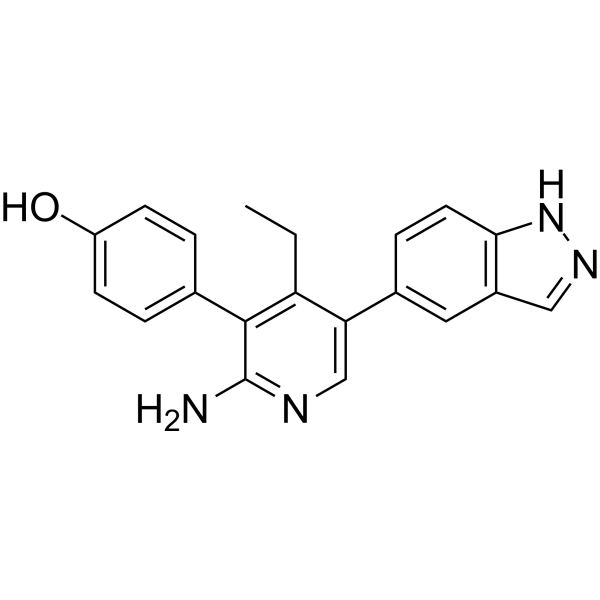
    MX69 is an inhibitor of MDM2/XIAP, used for cancer treatment.
    MX69
  • HY-18986
    SAR405838
    3 Publications Verification

    MI-77301

    MDM-2/p53 E1/E2/E3 Enzyme Apoptosis Cancer
    SAR405838 (MI-77301), an analog of MI-773, is a highly potent and selective MDM2-p53 interaction inhibitor. SAR405838 binds to MDM2 with a Ki of 0.88 nM. SAR405838 induces apoptosis and has potent antitumor activity [2].
    SAR405838
  • HY-128841
    PROTAC MDM2 Degrader-2
    1 Publications Verification

    PROTACs MDM-2/p53 E1/E2/E3 Enzyme Cancer
    PROTAC MDM2 Degrader-2 is an MDM2 PROTAC degrader. PROTAC MDM2 Degrader-2 can induce the self-ubiquitination and degradation of MDM2, thereby upregulating the level of p53 protein. PROTAC MDM2 Degrader-2 has anti-tumor activity and can be used in the study of cancer . (Blue: MDM2 ligand (HY-128836); Black: linker (HY-128833))
    PROTAC MDM2 Degrader-2
  • HY-112816
    MA242
    1 Publications Verification

    MDM-2/p53 Apoptosis Cancer
    MA242 is a specific dual inhibitor of MDM2 and NFAT1. MA242 directly binds both MDM2 and NFAT1 with high affinity, induces their protein degradation, and inhibits NFAT1-mediated transcription of MDM2. MA242 induces apoptosis in pancreatic cancer cell lines regardless of p53 status .
    MA242
  • HY-128837

    Ligands for E3 Ligase Ligands for Target Protein for PROTAC Cancer
    Nutlin carboxylic acid is the Nutlin 3-based MDM2 ligand. Nutlin carboxylic acid can be connected to the ligand for protein by a linker to form PROTAC .
    Nutlin carboxylic acid
  • HY-130684

    Ligands for E3 Ligase MDM-2/p53 Cancer
    MDM2 ligand 5 is a Ligand for E3 Ligase that can be used for the synthesis of PROTACs .
    MDM2 ligand 5
  • HY-134823
    MD-222
    1 Publications Verification

    MDM-2/p53 PROTACs E1/E2/E3 Enzyme Cancer
    MD-222 is the first-in-class highly potent PROTAC degrader of MDM2. MD-222 consists of ligands for Cereblon and MDM2. MD-222 induces rapid degradation of the MDM2 protein and activation of wild-type p53 in cells. MD-222 has anticancer effects [2].
    MD-222
  • HY-15335
    Nutlin-3b
    1 Publications Verification

    MDM-2/p53 E1/E2/E3 Enzyme Cancer
    Nutlin-3b, the inactive form of Nutlin-3 (HY-50696), is a p53/MDM2 inhibitor with an IC50 of 13.6 μM. Nutlin-3b is 150 times less potent in binding to MDM2 than Nutlin-3a (HY-10029). Nutlin-3b is promising for research of cancers [2] .
    Nutlin-3b
  • HY-110182
    SP-141
    4 Publications Verification

    MDM-2/p53 Cancer
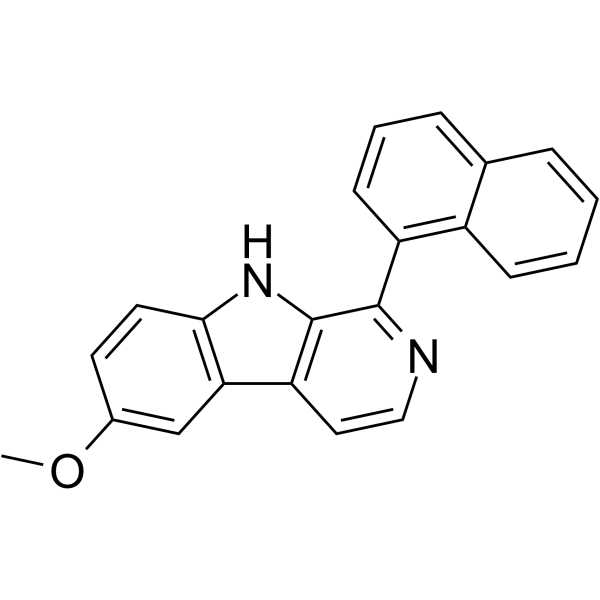
    SP-141 is a specific inhibitor of MDM2. SP-141 promotes MDM2 auto-ubiquitination and degradation. SP-141 might be used for the research of pancreatic cancer and breast cancer cells .
    SP-141
  • HY-13423
    Tenovin-1
    5 Publications Verification

    MDM-2/p53 Dihydroorotate Dehydrogenase Sirtuin Autophagy Cancer
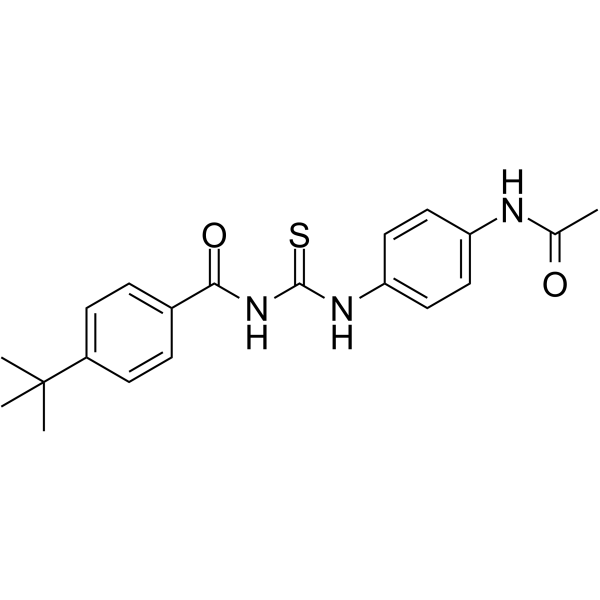
    Tenovin-1, a p53 activator, protects p53 from MDM2-mediated degradation. Tenovin-1 acts through inhibition of the protein-deacetylating activities of SirT1 and SirT2. Tenovin-1 is also a dihydroorotate dehydrogenase (DHODH) inhibitor [2].
    Tenovin-1
  • HY-158684

    PROTACs MDM-2/p53 Apoptosis Cancer
    YX-02-030 is a VHL-dependent MDM2 PROTAC degrader with a Kd of 35 nM. YX-02-030 recruits the VHL E3 ligase to form a ternary complex, leading to ubiquitination and proteasome-mediated degradation of MDM2. YX-02-030 inhibits MDM2-p53 and VHL-HIF1α binding with IC50 values of 63 and 1350 nM. YX-02-030 activates TAp73, upregulates p53 family target genes and induces apoptosis. YX-02-030 demonstrates on-target efficacy in TNBC xenograft-bearing mice, extending survival without normal cell toxicity .
    YX-02-030
  • HY-153215

    Ligands for E3 Ligase Cancer
    MEL24 is an Mdm2 E3 ligase inhibitor that reduces cell survival and increases sensitivity to DNA damaging agents in a p53-dependent manner for in vitro antitumor studies .
    MEL24
  • HY-70027A

    MDM-2/p53 E1/E2/E3 Enzyme Cancer
    p53 and MDM2 proteins-interaction-inhibitor dihydrochloride is an inhibitor of the interaction between p53 and MDM2 proteins.
    p53 and MDM2 proteins-interaction-inhibitor dihydrochloride
  • HY-128832

    MDM2 Ligand-Linker Conjugates 1; E3 ligase Ligand-Linker Conjugates 48

    E3 Ligase Ligand-Linker Conjugates Cancer
    Nutlin-C1-amido-PEG4-C2-N3 is a synthesized E3 ligase ligand-linker conjugate that incorporates the Nutlin 3 based MDM2 ligand and 4-unit PEG linker used in PROTAC technology. Nutlin-C1-amido-PEG4-C2-N3 is a click chemistry reagent, it contains an Azide group and can undergo copper-catalyzed azide-alkyne cycloaddition reaction (CuAAc) with molecules containing Alkyne groups. It can also undergo strain-promoted alkyne-azide cycloaddition (SPAAC) reactions with molecules containing DBCO or BCN groups.
    Nutlin-C1-amido-PEG4-C2-N3
  • HY-128840

    PROTACs MDM-2/p53 Cancer
    PROTAC MDM2 Degrader-1 (Compound 15a) is a MDM2 PROTAC degrader. The structures of both Linker ends of PROTAC MDM2 Degrader-1 are MDM2 ligands. PROTAC MDM2 Degrader-1 can not only block the binding of p53-MDM2, but also degrade the target MDM2 protein by utilizing the function of the E3 ligase of MDM2 itself, thus exerting an anti-tumor effect. (Pink: MDM2 ligand 2 (HY-128836); Black: Linker (HY-128844); Blue: E3 ligase Ligand 15 (HY-128836))
    PROTAC MDM2 Degrader-1
  • HY-128842
    PROTAC MDM2 Degrader-3
    1 Publications Verification

    PROTACs MDM-2/p53 Cancer
    PROTAC MDM2 Degrader-3 is a MDM2 self-degrading (dimeric) PROTAC. PROTAC MDM2 Degrader-3 can be used in cancer research .
    PROTAC MDM2 Degrader-3
  • HY-141584

    MDM-2/p53 Cancer
    ATSP-7041, a selective dual peptide inhibitor of MDM2 and MDMX, effectively reactivates the p53 tumor suppressor pathway in a mechanism-dependent manner in p53-positive cancers .
    ATSP-7041
  • HY-128843

    PROTACs MDM-2/p53 E1/E2/E3 Enzyme Cancer
    PROTAC MDM2 Degrader-4 is a MDM2 degrader based on PROTAC technology. PROTAC MDM2 Degrader-4 composes of a potent MDM2 inhibitor, linker, and the MDM2 ligand for E3 ubiquitin ligase .
    PROTAC MDM2 Degrader-4
  • HY-P1755

    MDM-2/p53 Cancer
    p53 (17-26) is a peptide derived from the P53 MDM2 binding domain, with a Kd of 50 nM for MDM2. p53 (17-26) causes cell lysis by damaging cancer cells and nuclear membranes, and induces cancer cell necrosis. p53 (17-26) exhibits antitumor activity and is applicable to research related to pancreatic cancer [2].
    p53 (17-26)
  • HY-163357

    CDK MDM-2/p53 Cancer
    CDK2/MDM2-IN-1 (III-13) is a dual inhibitor of CDK2/MDM2 with an IC50 value of 2.60 nM for CDK2. CDK2/MDM2-IN-1 has antitumor activity .
    CDK2/MDM2-IN-1
  • HY-169240

    MDM-2/p53 Cancer
    MX69-102 (compound MX69-102) is an MDM-2/p53 inhibitor, inducing MDM2 degradation, resulting in p53 activation and cancer cell apoptosis. MX69-102 shows effective inhibition on xenografted human MDM2-overexpressing ALL in SCID mice. .
    MX69-102
  • HY-70027

    MDM-2/p53 E1/E2/E3 Enzyme Cancer
    p53 and MDM2 proteins-interaction-inhibitor (chiral) (Compound 32) is an inhibitor of the interaction between p53 and MDM2 proteins.
    p53 and MDM2 proteins-interaction-inhibitor (chiral)
  • HY-148833

    MDM-2/p53 Cancer
    MDM2-p53-IN-16 is a MDM2-p53 complex inhibitor with an IC50 value of 4.3 nM to dissociate human p53/MDM2 complex. MDM2-p53-IN-16 reactivates p53, and induces Glioblastoma Multiforme (GBM) cell apoptosis and cell-cycle arrest. MDM2-p53-IN-16 can be used for the cancer research .
    MDM2-p53-IN-16
  • HY-RS08265

    Small Interfering RNA (siRNA) Others

    Mdm2 Mouse Pre-designed siRNA Set A contains three designed siRNAs for Mdm2 gene (Mouse), as well as a negative control, a positive control, and a FAM-labeled negative control.

    Mdm2 Mouse Pre-designed siRNA Set A
    Mdm2 Mouse Pre-designed siRNA Set A
  • HY-15676A

    RG7388 (enantiomer)

    MDM-2/p53 Drug Isomer Apoptosis Cancer
    Idasanutlin enantiomer is the isomer of Idasanutlin (HY-15676), and can be used as an experimental control. Idasanutlin (RG7388) is a potent and selective MDM2 antagonist, inhibiting p53-MDM2 binding, with an IC50 of 6 nM.
    Idasanutlin (enantiomer)
  • HY-128836

    Ligands for E3 Ligase Others
    (4R,5S)-Nutlin carboxylic acid is a MDM2 ligand and also a nutlin-3 derivative. (4R,5S)-Nutlin carboxylic acid can be linked to target protein ligands via a linker to form a PROTAC that can be used for targeting PARP1 .
    (4R,5S)-Nutlin carboxylic acid
  • HY-RS08264

    Small Interfering RNA (siRNA) Others

    MDM2 Human Pre-designed siRNA Set A contains three designed siRNAs for MDM2 gene (Human), as well as a negative control, a positive control, and a FAM-labeled negative control.

    MDM2 Human Pre-designed siRNA Set A
    MDM2 Human Pre-designed siRNA Set A
  • HY-W340839

    MDM-2/p53 E1/E2/E3 Enzyme Cancer
    p53-MDM2-IN-1 (Example 30) is an inhibitor of p53-MDM2/X protein interaction with an Ki value of 23.35 µM. p53-MDM2-IN-1 can be used for anti-tumor research .
    p53-MDM2-IN-1
  • HY-W340313

    MDM-2/p53 E1/E2/E3 Enzyme Cancer
    p53-MDM2-IN-4 (Example 4) is an inhibitor of p53-MDM2/X protein interaction, with a Ki value of 3.079 μM. p53-MDM2-IN-4 can be used in anti-tumor research .
    p53-MDM2-IN-4
  • HY-148106

    Ligands for E3 Ligase Cancer
    MEL23 is a MDM2 E3 ligase inhibitor that blocks the E3 ligase activity of the MDM2-MDMX complex. MEL23 inhibits Mdm2 and p53 ubiquitination in cells, reduce viability of cells with wild-type p53. MEL23 stabilizes MDM2 via a mechanism independent of p53 transcription .
    MEL23
  • HY-174458

    PROTACs MDM-2/p53 IKZF Family Casein Kinase Cancer
    MD-4251 is an orally active MDM2 PROTAC degrader. MD-4251 potently degrades MDM2 in RS4;11 cells (DC50: 0.2 nM) and actives p53. MD-4251 shows strong antiproliferative activity against acute leukemia cells (wild-type p53) with minimal efficacy in mutant type. MD-4251 induces complete tumor regression in RS4;11 xenograft mice model . Pink: MDM2 ligand (HY-130684); Blue: CRBN ligase ligand (HY-W883326); Black: linker
    MD-4251
  • HY-170452

    MDM-2/p53 Ligands for Target Protein for PROTAC Cancer
    MDM2 ligand 4 is the ligand for MDM2 that can be used for synthesis of PROTAC degrader KT-253 (HY-170451) .
    MDM2 ligand 4
  • HY-123950

    MDM-2/p53 Apoptosis Cancer
    MMRi64 disrupts Mdm2-MdmX interactions. MMRi64 downregulates Mdm2 and MdmX in leukemia cells. MMRi64 induces p53 accumulation, and induces the apoptotic arm of the p53 pathway in leukemia/lymphoma cells. MMRi64 can be used for cancer research .
    MMRi64
  • HY-14967
    NSC 66811
    1 Publications Verification

    MDM-2/p53 Cancer
    NSC 66811 is a MDM2-p53 inhibitor, with a Ki of 120 nM for binding to MDM2 .
    NSC 66811
  • HY-P5930

    MDM2 32-46

    Ligands for E3 Ligase Cancer
    HOXB7 8–25 (MDM2 32-46) is an MDM2-derived peptide epitope and can elicit antigen-specifc and tumor-reactive CD4 + T cell responses .
    HOXB7 8–25
  • HY-158685

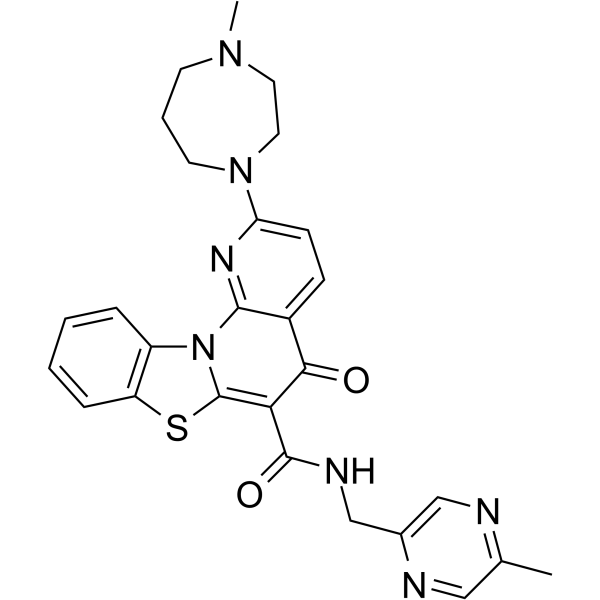
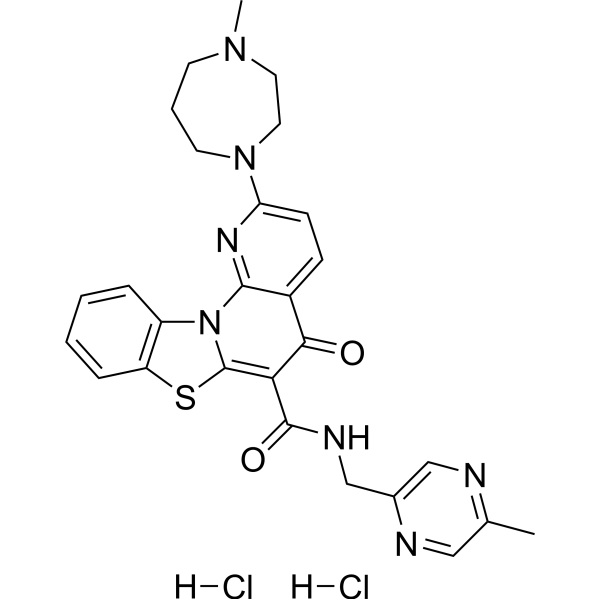
    MDM-2/p53 Cancer
    RG7112D is a potent MDM2 inhibitor with IC50s of 11 nM and >10000 nM and for MDM2-p53 and VHL-HIF1α by binding HTRF assay, respectively. RG7112D is coupled by an amide bond to VHL-Amine, resulting in a bi-functional molecule, YX-02-030. YX-02-03, a MDM2-PROTAC, potently inhibits MDM2-p53 binding (HTRF IC50=63nM). RG7112D can stabilize MDM2 protein and increase p53 protein levels .
    RG7112D
  • HY-133760

    MDM-2/p53 Cancer
    MI-888 is an orally active MDM2 inhibitor with a Ki of 0.44 nM. MI-888 can inhibit the MDM2-p53 interaction. MI-888 has favorable pharmacokinetic properties and anti-tumor activity .
    MI-888
  • HY-124791

    MDM-2/p53 PARP Cancer
    MMRi6 is a Mdm2-MdmX RING domain inhibitor that can disrupt Mdm2-MdmX RING-RING interaction in vitro. MMRi6 inhibits MdmX-stimulated Mdm2 autoubiquitination and Mdm2-MdmX-mediated p53 polyubiquitination in vitro without affecting NEDD4-1 autoubiquitination. MMRi6 induces p53 stabilization and accumulation and induces PARP cleavage in wt-p53 Emu-myc lymphoma cells. MMRi6 inhibits the growth of wt-p53 and p53-null Emu-myc lymphoma cells with IC50s of approximately 0.5 μM and 3 μM, respectively. MMRi6 can be used for the study of leukemia/lymphoma .
    MMRi6
  • HY-RS08266

    Small Interfering RNA (siRNA) Others

    Mdm2 Rat Pre-designed siRNA Set A contains three designed siRNAs for Mdm2 gene (Rat), as well as a negative control, a positive control, and a FAM-labeled negative control.

    Mdm2 Rat Pre-designed siRNA Set A
    Mdm2 Rat Pre-designed siRNA Set A
  • HY-70028

    MDM-2/p53 E1/E2/E3 Enzyme Cancer
    p53 and MDM2 proteins-interaction-inhibitor (racemic) (Compound 2j) is an inhibitor of the interaction between p53 and MDM2 proteins.
    p53 and MDM2 proteins-interaction-inhibitor (racemic)
  • HY-149250

    MDM-2/p53 Apoptosis Cancer
    MDMX/MDM2-IN-2 is a potent p53-MDM2/MDMX dual inhibitors with Kis of 0.23 μM and 2.45 μM for MDM2 and MDMX, respectively. MDMX/MDM2-IN-2 inhibits the binding of p53 and MDM2 proteins. MDMX/MDM2-IN-2 restores the function of p53 and enables cell cycle arrest and apoptosis. MDMX/MDM2-IN-2 inhibits cell migration and invasion. MDMX/MDM2-IN-2 has antitumor activity .
    MDMX/MDM2-IN-2
  • HY-174266

    MDM-2/p53 Cancer
    WB156 is a dual MDM2 and GSPT1 degrader. WB156 can recruit CRBN (Cereblon, a substrate receptor of the E3 ubiquitin-ligase complex) to induce the ubiquitination-proteasome pathway-mediated degradation of MDM2 and GSPT1. WB156 is promising for research of cancers, such as leukemia .
    WB156
  • HY-150620

    MDM-2/p53 Cancer
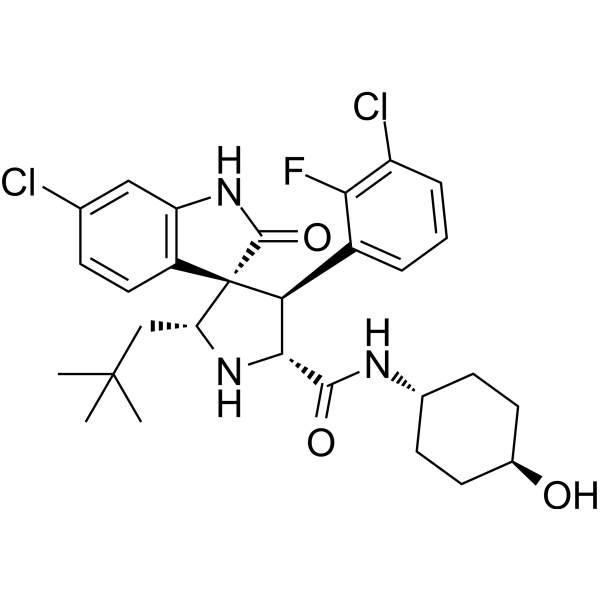
    BI-0282 (Compound 1) is a potent MDM2-p53 interaction inhibitor .
    BI-0282

Inquiry Online

Your information is safe with us. * Required Fields.

Salutation


Country or Region *

Applicant Name *


Organization Name *

Department *


Email Address *


Product Name *

Cat. No.


Requested quantity *

Phone Number *


Remarks

Inquiry Online

Inquiry Information

Product Name:
Cat. No.:
Quantity:
MCE Japan Authorized Agent:

