
32 Results for "

MHC-I

" in MedChemExpress (MCE) Product Catalog:
Products (32)

32 Results for "MHC-I" in MCE Product Catalog:

  • Isoforms Recommended:
  • Targets Recommended:
54
54 Cited Publications
Cat. No.: HY-123606
CAS No.: 1652629-23-6
GSK484 is a PAD4 inhibitor that effectively inhibits protein citrullination and the formation of neutrophil extracellular traps (NETs) by blocking the catalytic activity of PAD4. GSK484 suppresses the production of histone H3, MHC-I expression, CD8 + T cell activation, proliferation and inflammatory cytokine release. GSK484 reduces inflammation and bone destruction in collagen-induced rheumatoid arthritis, alleviates pain and mast cell activation in sickle cell disease, and improves myocardial ischemia-reperfusion injury and experimental colitis. In addition, GSK484 restores intestinal microbial homeostasis by reversing ferroptosis-induced dysbiosis. GSK484 can be used to study the disease mechanisms of rheumatoid arthritis, sickle cell disease, thrombosis, myocardial injury, colitis and other conditions .
loading...
    loading...
1
1 Cited Publications
Cat. No.: HY-158301
CAS No.: 2929308-79-0
Purity:  99.94%
MY-1B is a covalent inhibitor of the RNA Methyltransferase NSUN2 (IC50: 1.3 μM). MY-1B stereoselectively ligands active-site cysteine residues (C271) of NSUN2. MY-1B can stereoselectively and covalently bind to PSME1, disrupting the proteasome regulatory complex and downregulating the presentation of specific MHC-I subtypes .
loading...
    loading...
Cat. No.: HY-D1474
CAS No.: 33628-03-4
Target:  

Wnt

Research Areas:  

Cancer

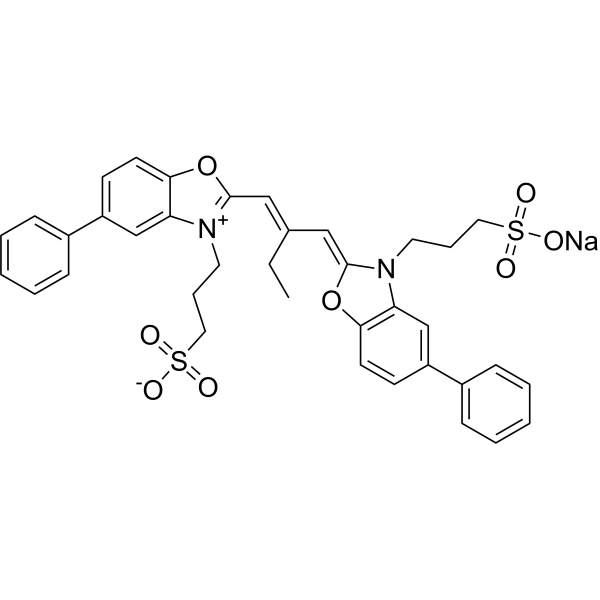
WNT7A-IN-1 sodium (1365-0109), a WNT7A inhibitor, disrupts the protein-protein interaction between WNT7A and its receptor FZD5, resulting in the upregulation of MHC-I expression. WNT7A-IN-1 sodium significantly increases the expression of MHC-I and p-p65,while concurrently reducing the expression of active β-catenin . WNT7A-IN-1 sodium (compound F) is also a photographic sensitizer in the green spectral region .
loading...
    loading...
Cat. No.: HY-171860
CAS No.: 3066894-28-5
Target:  

PROTACs HIV

Research Areas:  

Infection Cancer

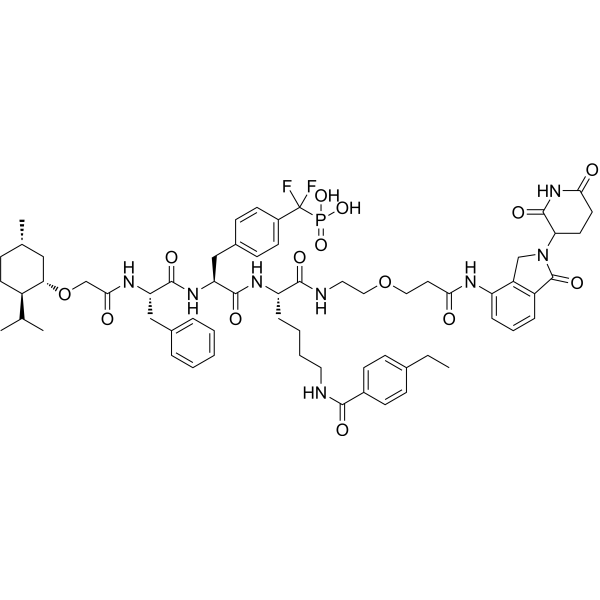
FC-14369 is a PROTAC degrader targeting the HIV-1 Nef protein, with a DC50 value of 160 nM. Through its bifunctional structure, FC-14369 binds to Nef and the Cereblon E3 ubiquitin ligase, induces Nef ubiquitination and proteasomal degradation, restores the expression of cell-surface CD4 and MHC-I, and inhibits HIV-1 replication. FC-14369 can be used in research on HIV infection and AIDS. FC-14369 is applicable to studies related to HIV-1 infection .
loading...
    loading...
Cat. No.: HY-170411
CAS No.: 29133-39-9
Target:  

Wnt

Research Areas:  

Cancer

WNT7A-IN-1 (1365-0109), a WNT7A inhibitor, disrupts the protein-protein interaction between WNT7A and its receptor FZD5, resulting in the upregulation of MHC-I expression. WNT7A-IN-1 significantly increases the expression of MHC-I and p-p65,while concurrently reducing the expression of active β-catenin. WNT7A-IN-1 (compound F) is also a photographic sensitizer in the green spectral region .
loading...
    loading...
Cat. No.: HY-P990193

Target:  

MHC

Research Areas:  

Inflammation/Immunology

Anti-Mouse MHC Class I (H-2Kd, H-2Dd) Antibody (34-1-2S) is an anti-mouse MHC Class I (H-2Kd, H-2Dd) IgG2a monoclonal antibody. Anti-Mouse MHC Class I (H-2Kd, H-2Dd) Antibody (34-1-2S) can block the interaction between Ly49 and MHC-I. Anti-Mouse MHC Class I (H-2Kd, H-2Dd) Antibody (34-1-2S) can be used for the construction of acute lung injury models .
loading...
    loading...
Cat. No.: HY-162965
CAS No.: 901728-48-1
Target:  

Proteasome

Research Areas:  

Cancer

Immunoproteasome activator 1 (compound A) is a selective immunoproteasome activator that increases the presentation of individual MHC-I–bound peptides by over 100-fold. Immunoproteasome activator 1 binds to the proteasome structural subunit PSMA1 and promotes the association of the proteasome activator PA28α/β (PSME1/PSME2) with immunoproteasomes .
loading...
    loading...
Cat. No.: HY-P5412
CAS No.: 331941-87-8
Synonyms: Listeriolysin O 190 peptide
Target:  

Peptides

Research Areas:  

Others

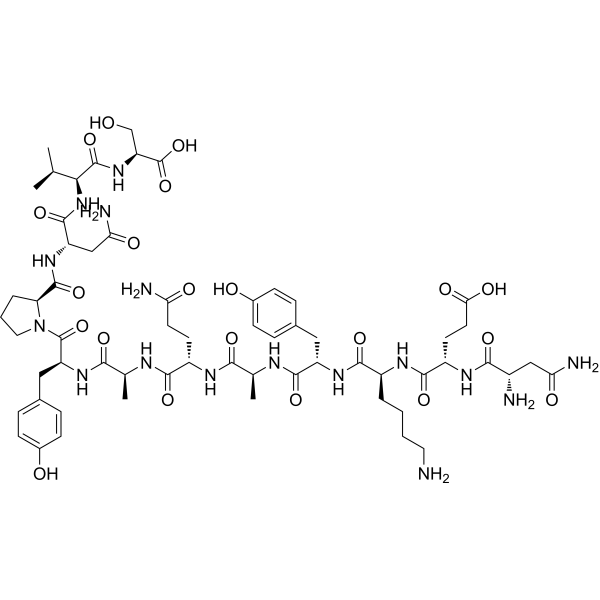
LLO (190-201) (Listeriolysin O 190 peptide) is a biological active peptide. (This peptide is a major histocompatibility complex class II (MHC-II)-restricted peptide, LLO190 (NEKYAQAYPNVS), from the listeriolysin O protein of Listeria monocytogenes, which generates an LLO190-specific Th response. This peptide subsequently challenge recombinant L. monocytogenes expressing the MHC-I-restricted epitope of ovalbumin (Ova257, SIINFEKL).)
loading...
    loading...
Cat. No.: HY-160151
Research Areas:  

Cancer

TP1L is a potent and selective T-cell protein tyrosine phosphatase (TC-PTP) PROTAC degrader, with a DC50 value of 35.8 nM. TP1L elevates the phosphorylation level of TC-PTP substrates including pSTAT1 and pJAK1. TP1L selectively enhances IFN-γ signaling and increases MHC-I expression. TP1L activates TCR signaling through increases phosphorylation of LCK. TP1L enhances CAR-T cell mediated tumor killing efficacy through activation of the CAR-T cells. TP1L can be used for the study of cancer. (Pink: TC-PTP ligand: (HY-138964), Blue: E3 ligase CRBN Ligand (HY-A0003), Black: Linker: (HY-140002)) .
loading...
    loading...
Cat. No.: HY-179211
Target:  

HSP MHC

Research Areas:  

Cancer

CliMB-325 is an HSP90 inhibitor that can induce MHC-I (EC50 = 498 nM) expression on the surface of CT26 murine colorectal cancer cells. CliMB-325 enhances T cell activation and exhibits lower toxicity. CliMB-325 can be used for the study of colorectal cancer .
loading...
    loading...
Cat. No.: HY-171883
CAS No.: 1332485-18-3
BI-5756 is a CETP inhibitor and cannabinoid receptor 1 (CB1) agonist. BI-5756 can significantly increase HDL-C levels and reduce LDL-C levels. BI-5756 can also enhance the function of regulatory T cells while maintaining T cell-mediated anti-tumor activity. BI-5756 can directly inhibit the growth of tumor cells and upregulate the expression of MHC I, MHC II, and CD80 on tumor cells. BI-5756 has a protective effect in graft-versus-host disease models. BI-5756 can be used in research on tumors, graft-versus-host disease, and metabolic diseases .
loading...
    loading...
Cat. No.: HY-175459
Target:  

PROTACs FAK

Research Areas:  

Inflammation/Immunology Cancer

PROTAC FAK degrader 3 is a selective FAK PROTAC degrader (DC50 = 1.08 nM). PROTAC FAK degrader 3 induces FAK degradation dependent on the ubiquitin-proteasome system and its binding to FAK and CRBN. PROTAC FAK degrader 3 upregulates MHC-I gene transcription and tumor cell surface expression by inhibiting the non-catalytic activity of FAK, leading to increased antigen presentation and activation of cytotoxic CD8 T cells. PROTAC FAK degrader 3 enhances in vivo anti-tumor activity by promoting MHC-I expression and enhancing T cell activation. PROTAC FAK degrader 3 can be used in cancer research targeting FAK degradation in ovarian cancer, hepatocellular carcinoma, and other cancers .
loading...
    loading...
Cat. No.: HY-171859
CAS No.: 3066893-65-7
Target:  

PROTACs HIV

Research Areas:  

Infection Cancer

FC-14367 is a PROTAC degrader targeting HIV-1 Nef protein. FC-14367 forms a ternary complex by binding Nef and Cereblon E3 ubiquitin ligase, inducing Nef ubiquitination and proteasomal degradation, restoring cell-surface CD4 and MHC-I expression and inhibiting HIV-1 replication. FC-14367 can be used in research on HIV infection and AIDS . (Black: Glycolic acid (HY-W015967); Blue: 2-(2,6-Dioxopiperidin-3-yl)phthalimidine (HY-138793))
loading...
    loading...
Cat. No.: HY-P10535
CAS No.: 872141-81-6
Target:  

Peptides

Research Areas:  

Others

The AAV-8 NSL epitope is a specific CD8+ T cell epitope identified from the capsid of an adeno-associated virus (AAV) serotype 8. The AAV-8 NSL epitope has a high affinity for MHC I molecules and is able to bind to MHC I molecules, thereby activating CD8+ T cells. The AAV-8 NSL epitope can be used to study the impact of T cell-mediated immune responses on AAV-mediated gene transfer .
loading...
    loading...
Cat. No.: HY-P10433
CAS No.: 916850-24-3
Target:  

Apoptosis

Research Areas:  

Cancer

EGFRvIII peptide is an EGFRvIII-derived epitope for binding to MHC I molecules. EGFRvIII peptide induces apoptosis, and causes specific immune responses against glioblastoma, especially in combination with Flagellin B .
loading...
    loading...
Cat. No.: HY-P5745
CAS No.: 921621-38-7
Research Areas:  

Cancer

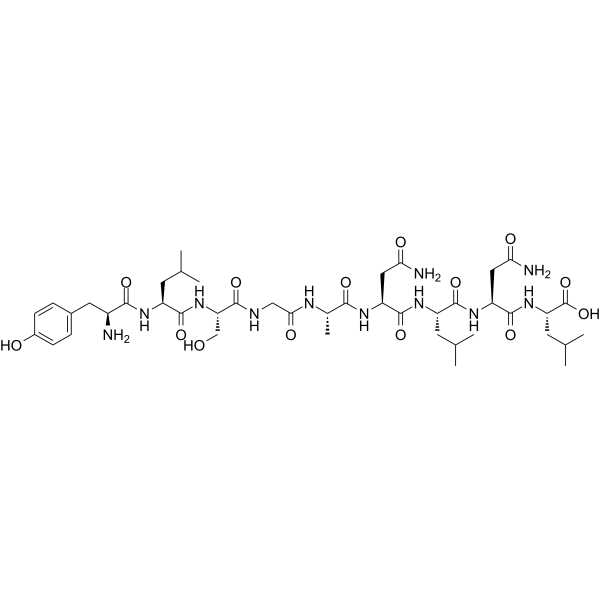
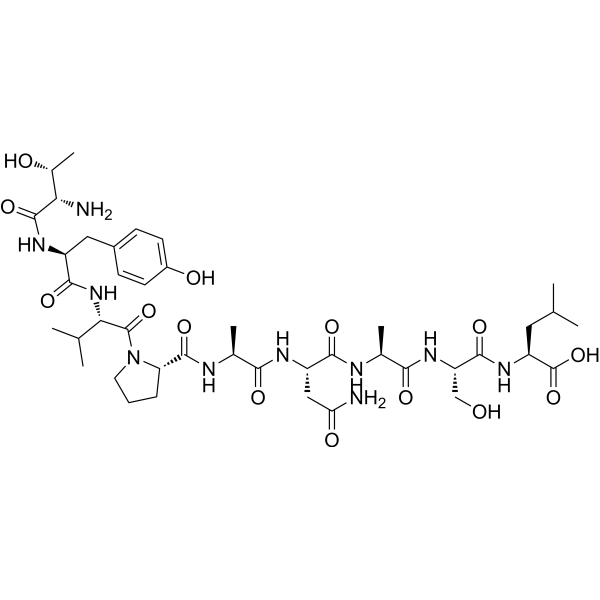
TYVPANASL is a MHC I-binding CD8 T cell epitope of nine amino acids from HER2/neu. TYVPANASL can be used to prepare J-LEAPS vaccine .
loading...
    loading...
Cat. No.: HY-P5745A
Target:  

MHC EGFR

Research Areas:  

Cancer

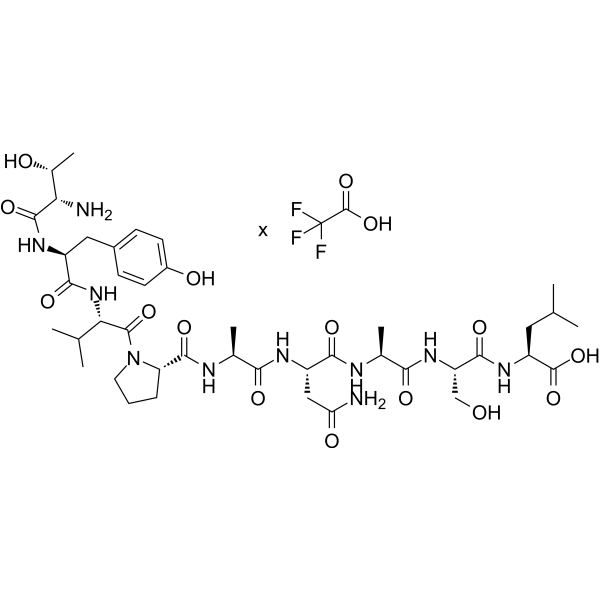
TYVPANASL TFA is a MHC I-binding CD8 T cell epitope of nine amino acids from HER2/neu. TYVPANASL TFA can be used to prepare J-LEAPS vaccine .
loading...
    loading...
Cat. No.: HY-184379
CAS No.: 2358714-71-1
Target:  

HIV

Research Areas:  

Infection

SRI-37264 is a HIV-1 Nef inhibitor with a Kd value of 162 nM. SRI-37264 binds directly to HIV-1 Nef, disrupts the Nef·MHC-I·AP-1 μ1 complex, and inhibits the Nef-dependent enhancement of HIV-1 infectivity. SRI-37264 restores MHC-I expression on the surface of HIV-infected primary cells. SRI-37264 inhibits HIV-1 replication in primary macrophages. SRI-37264 is applicable to research related to HIV-1 infection .
loading...
    loading...
Cat. No.: HY-184499
CAS No.: 2420554-24-9
Target:  

MHC Aminopeptidase

Research Areas:  

Cancer

GRWD5769 is an orally potent ERAP1 inhibitor. GRWD5769 regulates the peptide repertoire presented by MHC-I, alters TCR diversity/clonality, reprograms antigen-experienced T cells, induces novel T cell responses, drives tumor cell killing, and alleviates T cell exhaustion. GRWD5769 can be used in the research of advanced solid malignancies, microsatellite-stable colorectal cancer, non-small cell lung cancer, bladder cancer, hepatocellular carcinoma, head and neck squamous cell carcinoma, and cervical cancer .
loading...
    loading...
Cat. No.: HY-P11397
CAS No.: 176510-49-9
Target:  

MHC

Research Areas:  

Cancer

VLPDVFIRCV, a melanoma antigen-derived peptide, is the intron sequence (nt 38-67) of the N-acetylglucosamine transferase V (GnT-V) gene. VLPDVFIRCV has a high affinity for MHC-I class molecules, but it cannot activate the immune response against natural tumor cells. The cytotoxic T lymphocytes (CTL) induced by VLPDVFIRCV can specifically lyse T2 cells loaded with this peptide in the chromium release experiment. VLPDVFIRCV can be used for vaccine design research .
loading...
    loading...

