
56 Results for "

Mcl-1 protein

" in MedChemExpress (MCE) Product Catalog:
Products (56)

56 Results for "Mcl-1 protein" in MCE Product Catalog:

11
11 Publications Verification
Cat. No.: HY-N0763
CAS No.: 523-50-2
Synonyms: Isopsoralen
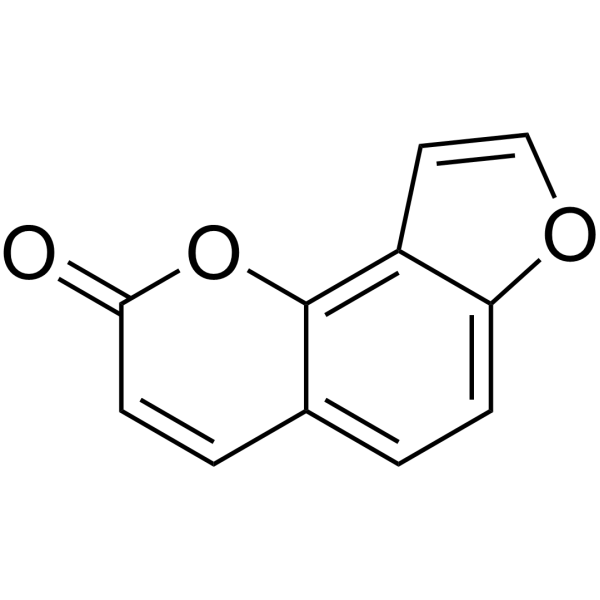
Angelicin is a furanocoumarin compound that functions as an inhibitor of NF-κB and MAPK signaling pathways, exhibiting anti-inflammatory, antiviral, and antitumor activities. It suppresses the lytic replication of γ-herpesviruses, such as MHV-68, early during viral infection, potentially inhibiting RTA gene expression (IC50=28.95 μM). Angelicin also mitigates inflammation by inhibiting the phosphorylation and nuclear translocation of NF-κB, and the phosphorylation of p38 and JNK. Furthermore, it induces apoptosis in neuroblastoma cells by downregulating anti-apoptotic proteins like Bcl-2, Bcl-xL, and Mcl-1, while activating caspase-9 and caspase-3.
loading...
    loading...
7
7 Cited Publications
Cat. No.: HY-15464A
CAS No.: 866541-93-7
Purity:  98.93%
Synonyms: AT-101 (acetic acid); (-)-Gossypol acetic acid; (R)-Gossypol acetic acid
Target:  

Bcl-2 Family Autophagy

Research Areas:  

Cancer

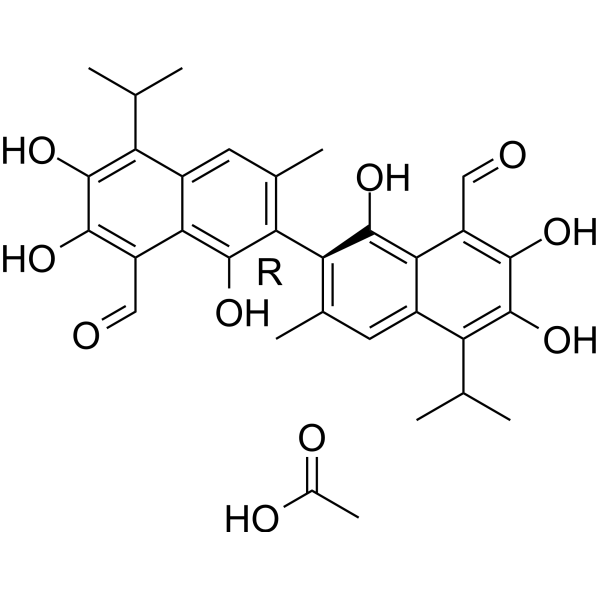
(R)-(-)-Gossypol acetic acid (AT-101 (acetic acid)) is the levorotatory isomer of a natural product Gossypol. AT-101 is determined to bind to Bcl-2, Mcl-1 and Bcl-xL proteins with Kis of 260±30 nM, 170±10 nM, and 480±40 nM, respectively.
loading...
    loading...
3
3 Cited Publications
Cat. No.: HY-15464
CAS No.: 90141-22-3
Purity:  98.82%
Synonyms: AT-101; R-(-)-gossypol acetic acid
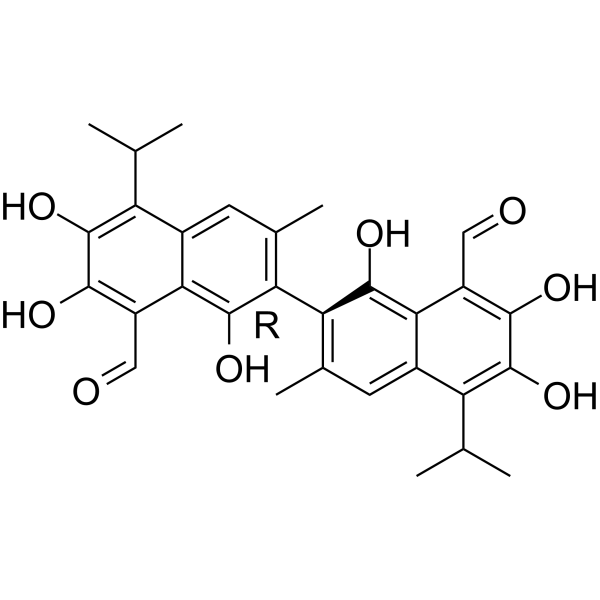
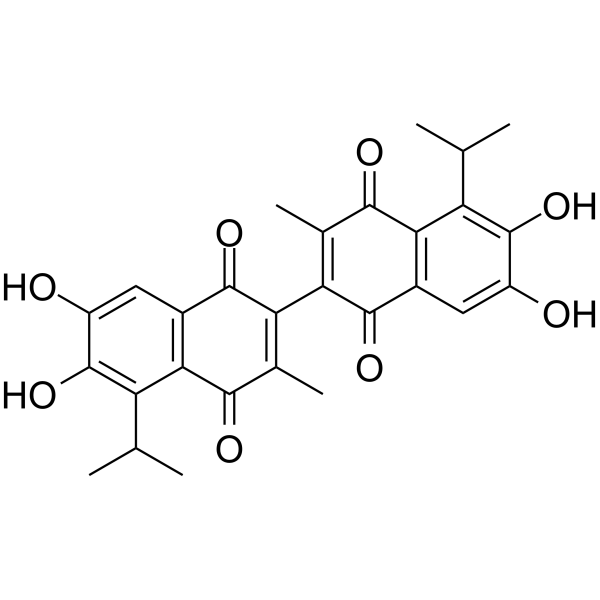
(R)-(-)-Gossypol (AT-101) is the levorotatory isomer of a natural product Gossypol. AT-101 is determined to bind to Bcl-2, Mcl-1 and Bcl-xL proteins with Kis of 260±30 nM, 170±10 nM, and 480±40 nM, respectively.
loading...
    loading...
2
2 Cited Publications
Cat. No.: HY-103019
CAS No.: 1610408-97-3
Purity:  99.89%
Synonyms: (+)-BAY-1251152; (+)-VIP152; (S)-Enitociclib
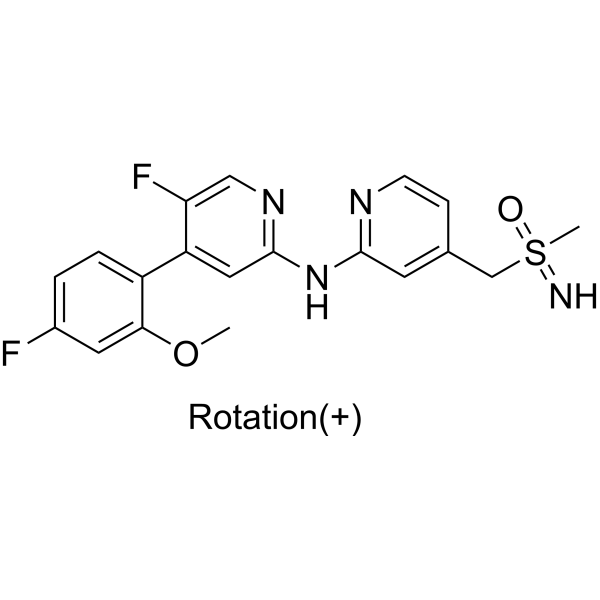
Enitociclib ((+)-BAY-1251152; (+)-VIP152) is a selective CDK9 inhibitor (IC50=3 nM) that inhibits transcriptional elongation by blocking Ser2/Ser5 phosphorylation of RNA polymerase II. Enitociclib specifically depletes key short-lived proteins such as c-MYC, MCL-1 and induces tumor cell apoptosis. Enitociclib also interferes with the production of enhancer RNAs (eRNA) and enhancer-promoter interactions, and downregulates oncogene expression at the epigenetic level. Enitociclib exerts synergistic effects with agents including Bortezomib (HY-10227), Lenalidomide (HY-A0003), Pomalidomide (HY-10984), Venetoclax (HY-15531) and Paclitaxel (HY-B0015), and even reverses paclitaxel resistance. Enitociclib serves as a vital research tool for various malignancies such as double-hit diffuse large B-cell lymphoma, multiple myeloma and pancreatic ductal adenocarcinoma .
loading...
    loading...
1
1 Cited Publications
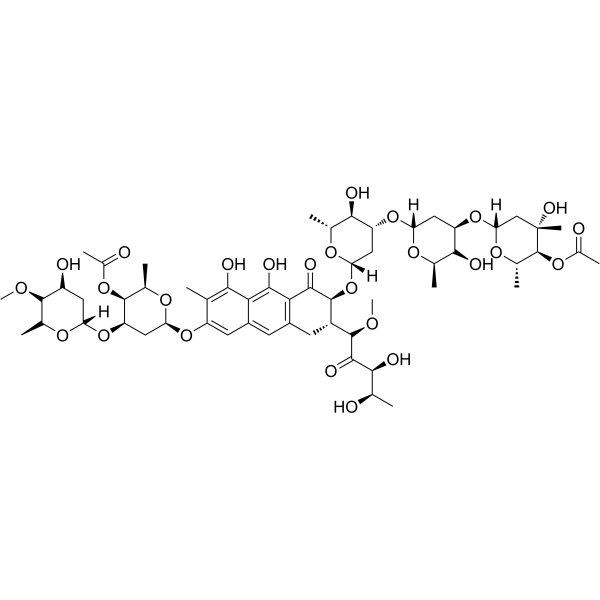
Cat. No.: HY-W040129
CAS No.: 7059-24-7
Chromomycin A3 is an inhibitor that selectively binds to GC-rich DNA sequences. Chromomycin A3 targets the DNA minor groove after forming a dimer with Mg 2+. Chromomycin A3 inhibits DNA replication and transcription, blocks the binding of Sp1 transcription factor to target gene promoters, downregulates the expression of anti-apoptotic proteins such as FLIP, Mcl-1, and XIAP, and induces S-phase cycle arrest and caspase-dependent apoptosis in tumor cells. Chromomycin A3 can antagonize oxidative stress induced by glutathione depletion and neuronal apoptosis induced by Camptothecin (HY-15660). Chromomycin A3 can be used in basic research on malignant tumors such as cholangiocarcinoma, and is a potential chemosensitizer and GC-rich region probe .
loading...
    loading...
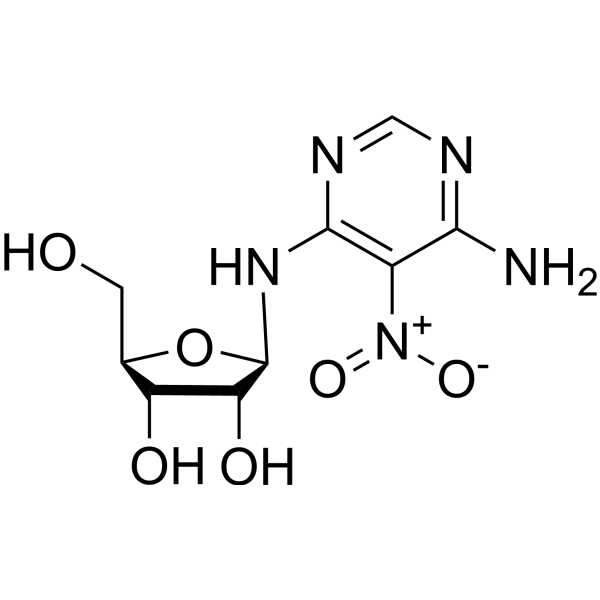
Cat. No.: HY-118341
CAS No.: 105798-74-1
Purity:  ≥95.0%
Clitocine, an adenosine nucleoside analog isolated from mushroom, is a potent and efficacious readthrough agent. Clitocine acts as a suppressor of nonsense mutations and can induce the production of p53 protein in cells harboring p53 nonsense-mutated alleles. Clitocine can induce apoptosis in multidrug-resistant human cancer cells by targeting Mcl-1. Anticancer activity .
loading...
    loading...
Cat. No.: HY-132307
CAS No.: 2598978-56-2
Purity:  98.40%
Target:  

Bcl-2 Family Apoptosis

Research Areas:  

Cancer

Mcl-1 inhibitor 6 is an orally active, selective myeloid cell leukemia 1 (Mcl-1) protein inhibitor with a Kd of 0.23 nM and a Ki of 0.02 μM. Mcl-1 inhibitor 6 possesses superior selectivity over other Bcl-2 family members (Bcl-2, Bcl2A1, Bcl-xL, and Bcl-w, Kd>10 μM). Mcl-1 inhibitor 6 is a potent antitumor agent .
loading...
    loading...
Cat. No.: HY-162858
CAS No.: 2329719-65-3
Research Areas:  

Cancer

BRD-810 is a potent and selective MCL1 inhibitor with a Kd of 0.3 nM. BRD-810 can specifically block the BH3 binding groove of MCL1, while having little effect on other anti-apoptotic proteins (such as Bcl-2, Bcl-xL). BRD-810 effectively destroys the MCL1-BAK complex (IC50 = 1.2 nM) in cancer cells, rapidly activates Caspase and induces cell apoptosis. BRD-810 can be used in the research of various cancers such as hematological tumors and solid tumors .
loading...
    loading...
Cat. No.: HY-176142
Research Areas:  

Cancer

YX0798 is a selective and orally active CDK9 inhibitor (Kd: 0.28 nM). YX0798 downregulates the oncoprotein c-MYC and pro-survival protein MCL-1. YX0798 disrupts the cell cycle and results in transcriptomic reprogramming, eventually leading to cell apoptosis. YX0798 has antitumor activity .
loading...
    loading...
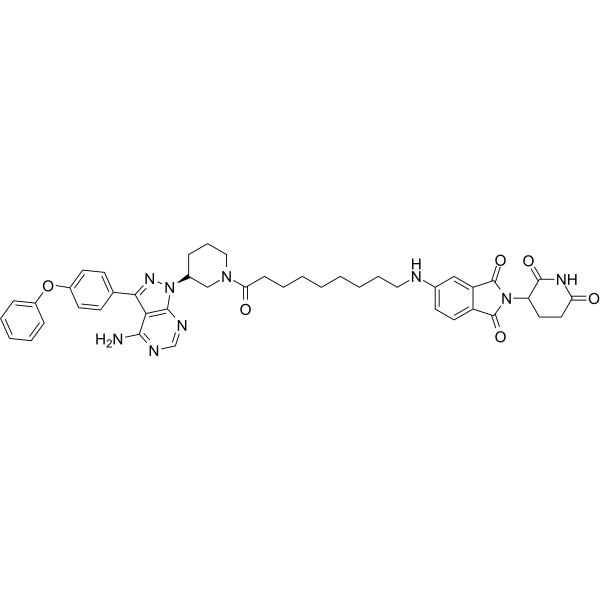
Cat. No.: HY-153803
CAS No.: 2864408-92-2
Purity:  98.99%
GBD-9 is a degrader based on the E3 ubiquitin ligase CRBN that targets BTK and the G1 to S phase transition protein GSPT1. GBD-9 has both PROTAC and molecular glue properties by inducing ubiquitination and proteasomal degradation of target proteins. GBD-9 can efficiently degrade wild-type and mutant BTK (such as C481S mutation) and GSPT1. GBD-9 significantly inhibits tumor cell proliferation by inducing G1 phase arrest in cancer cells, downregulating anti-apoptotic proteins (BCL-2, MCL-1) and activating Caspase-3 to induce apoptosis. GBD-9 is mainly used in the research of hematological tumors such as diffuse large B-cell lymphoma (DLBCL) and acute myeloid leukemia (AML) .
loading...
    loading...
Cat. No.: HY-112811
CAS No.: 2435721-30-3
Target:  

PROTACs CDK

Research Areas:  

Cancer

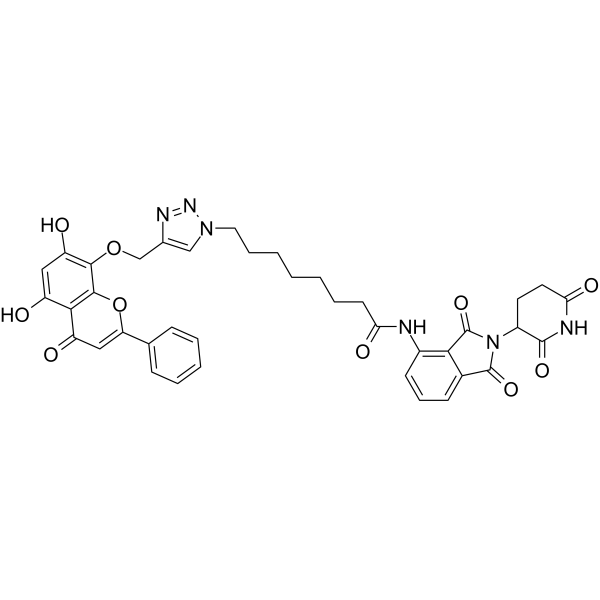
PROTAC CDK9 degrader-2 is a PROTAC degrader targeting CDK9, with an IC50 of 523 nM. PROTAC CDK9 degrader-2 selectively degrades CDK9 via the cereblon-dependent ubiquitin-proteasome pathway and inhibits the proliferation of cancer cells overexpressing CDK9. PROTAC CDK9 degrader-2 can be used for cancer research .
loading...
    loading...
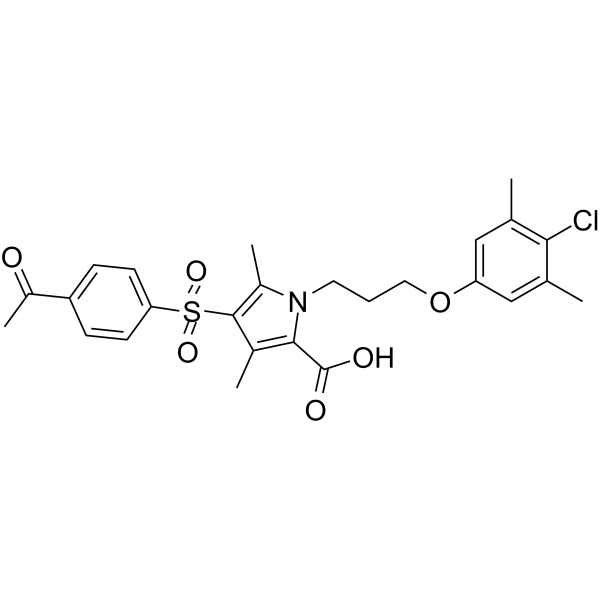
Cat. No.: HY-155472
CAS No.: 892250-00-9
Purity:  ≥98.0%
Target:  

Bcl-2 Family

Research Areas:  

Cancer

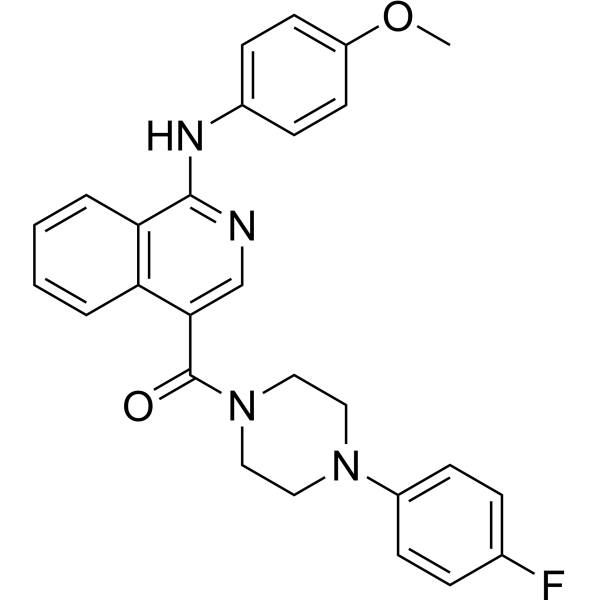
Mcl-1 inhibitor 17 is a Mcl-1 protein inhibitor. Mcl-1 inhibitor 17 can be used for the research of cancer and other diseases .
loading...
    loading...
Cat. No.: HY-N8146
CAS No.: 53729-52-5
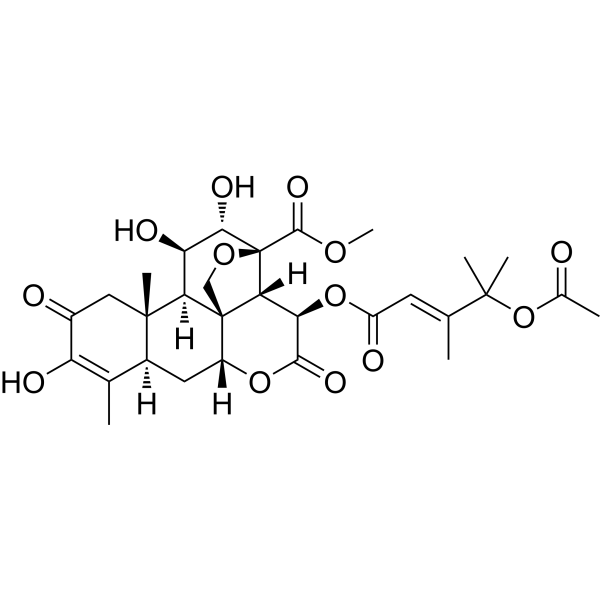
Bruceantinol is a quassinoid that can be isolated from Brucea javanica, inhibits pepper mottle virus (PepMoV) in pepper. Bruceantinol is a STAT3 inhibitor demonstrating potent antitumor activity in in vitro and in vivo human colorectal cancer (CRC) models. Bruceantinol has potent anti-leukemic activity. Bruceantinol strongly inhibits STAT3 DNA-binding ability (IC50 = 2.4 pM), blocks the constitutive and IL-6-induced STAT3 activation, and suppresses transcription of MCL-1, PTTG1, survivin and c-Myc. Bruceantinol binds with CDK2/4/6 to facilitate protein degradation through proteasome pathway. Bruceantinol can dose- and time-dependently reduces the cell growth, impede cell proliferation, disrupts the cell cycle, and induces necrosis in MCF-7 cells and apoptosis in MDA-MB-231 cells .
loading...
    loading...
Cat. No.: HY-112591
CAS No.: 906718-66-9
Purity:  96.00%
Synonyms: XMH95
Research Areas:  

Cancer

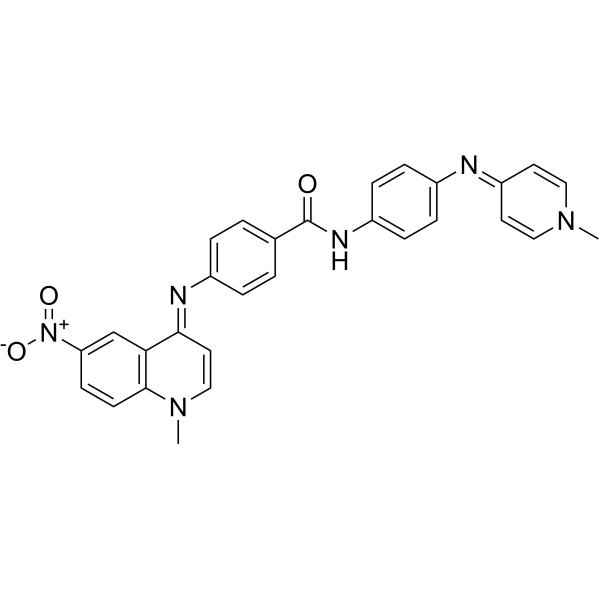
NSC260594 induces Apoptosis. NSC260594 binds the shallow groove of the Mcl-1 protein, and inhibits Mcl-1 expression through down-regulation of Wnt signaling proteins. NSC260594 can also recognize G9-G10-A11-G12 RNA tetraloop of HIV and prevent the binding of the Gag protein within the 5’-UTR. NSC260594 inhibits tumor growth, and can be used for research of Triple-negative breast cancers (TNBCs) .
loading...
    loading...
Cat. No.: HY-19551
CAS No.: 886578-07-0
Synonyms: ApoG2
Apogossypolone (ApoG2) is an orally active Bcl-2 family proteins inhibitor with Ki values of 35, 25 and 660 nM for Bcl-2, Mcl-1 and Bcl-XL, respectively. Apogossypolone shows antitumor activities, induces cell apoptosis and autophagy . Apogossypolone also has antifungal activity .
loading...
    loading...
Cat. No.: HY-P2343
Target:  

Apoptosis

Research Areas:  

Cancer

BH3 hydrochloride, a BBB penetrated peptide, provoke apoptosis either by direct activation of pro-apoptotic Bax/Bak or by neutralizing anti-apoptotic Bcl-2 proteins (Bcl-2, Bcl-XL, Bcl-w, Mcl-1 and A-1) via their BH3 domian .
loading...
    loading...
Cat. No.: HY-120113
CAS No.: 1383727-17-0
Purity:  99.37%
Research Areas:  

Others

SC-2001 is a compound structurally related to obatoclax that has better antitumor effects than obatoclax in liver cancer cell lines, downregulating Mcl-1 protein levels, inhibiting STAT3 phosphorylation, inducing apoptosis, and enhancing SHP1 expression and activity.
loading...
    loading...
Cat. No.: HY-160438B
Target:  

Bcl-2 Family Survivin

Research Areas:  

Cancer

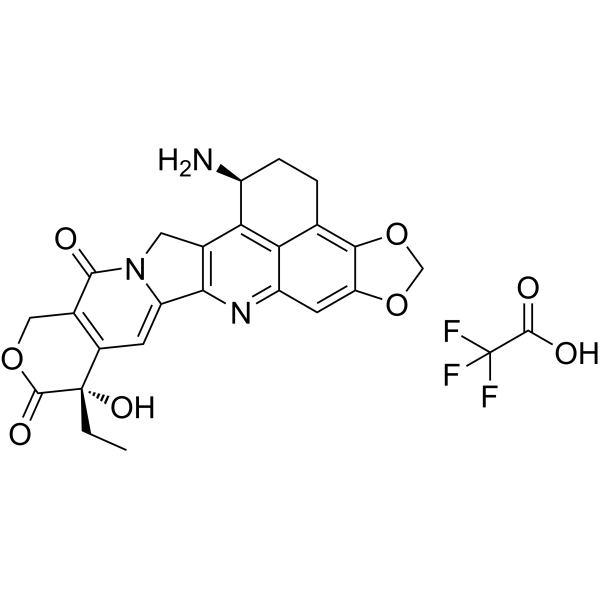
PBX-7011 TFA is a derivative of camptothecin (HY-16560), which inhibits expressions of the cancer related survival genes DDX5, Survivin, Mcl-1 and XIAP in cells FaDu, degrades DDX5 proteins and exhibits anticancer activity .
loading...
    loading...
Cat. No.: HY-156795
CAS No.: 3020773-91-2
Research Areas:  

Cancer

CDK9/CycT1 degrader-1 is an autophagy-anchored bifunctional degrader that mediates the degradation of the CDK9/cyclin T1 protein complex. CDK9/CycT1 degrader-1 binds both CDK9 and LC3B simultaneously to form a ternary complex, achieving target protein degradation via the autophagy-lysosome pathway. CDK9/CycT1 degrader-1 downregulates the protein levels of Mcl‑1 and c‑Myc and induces apoptosis. PROTAC CDK9/CycT1 Degrader-2 is applicable to cancer-related research .
loading...
    loading...
Cat. No.: HY-178499
Target:  

CDK c-Myc Bcl-2 Family

Research Areas:  

Neurological Disease Cancer

CDK9-IN-44 (Compound 7) is a selective CDK9 inhibitor (IC50=7.6 μM). CDK9-IN-44 inhibits CDK9/cyclin T1 kinase activity, blocking transcriptional elongation, reducing the expression of pro-cancer proteins (such as MCL1, c-MYC), and inducing tumor cell apoptosis. CDK9-IN-44 is promising for research of glioblastoma (GBM) and central nervous system (CNS) disorders .
loading...
    loading...

